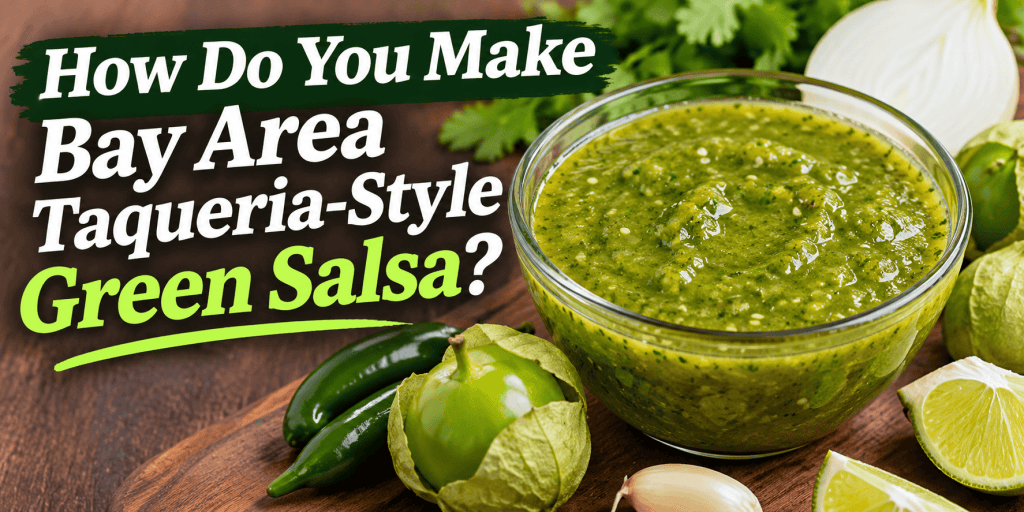
Walk into almost any popular Bay Area taqueria, order a Mission-style burrito, a plate of carne asada tacos, or a super burrito loaded with rice, beans, and meat, and there is a good chance you will find a container of bright green salsa waiting to take your meal to the next level.
Bay Area taqueria-style green salsa is known for its fresh flavor, tangy kick, smooth texture, and just the right amount of heat. Some versions are thin and pourable, while others are creamy, rich, and almost avocado-like.
From San Francisco’s Mission District to Oakland, Richmond, San Jose, and communities throughout the Bay Area, green salsa is an essential part of the local taqueria experience.
The good news is that you do not need to visit your favorite taco shop to enjoy it.
With fresh tomatillos, jalapeños, cilantro, garlic, and a few simple ingredients, you can make delicious Bay Area-style green salsa right in your own kitchen.
What Is Bay Area Taqueria-Style Green Salsa?
Bay Area taqueria-style green salsa is a Mexican-inspired salsa verde commonly served alongside tacos, burritos, quesadillas, and other taqueria favorites.
Although recipes vary from restaurant to restaurant, many versions begin with tomatillos, green chiles, cilantro, onion, garlic, and lime juice.
Unlike traditional red salsa made with tomatoes and dried or fresh red chiles, green salsa gets its color and tangy flavor primarily from tomatillos and green peppers.
Some Bay Area taquerias serve a roasted tomatillo salsa with a slightly smoky flavor. Others offer a smooth, creamy green sauce made with avocado or emulsified oil.
There is no single official Bay Area green salsa recipe. However, the fresh, tangy, spicy, and pourable style commonly found in local taco shops is easy to recreate at home.
Why Does Bay Area Taqueria Green Salsa Taste So Good?
The secret to excellent taqueria-style green salsa is balancing several important flavors.
Tanginess: Tomatillos provide a naturally tart flavor that cuts through rich meats, cheese, sour cream, and guacamole.
Heat: Jalapeños and serrano peppers add a spicy kick without overpowering the other ingredients.
Freshness: Cilantro, onion, and lime juice brighten the salsa.
Savory depth: Garlic and roasted vegetables add complexity.
Texture: Blending the ingredients creates a smooth consistency that spreads evenly throughout a burrito or taco.
The best versions balance these elements so that no single ingredient dominates.
A great green salsa should complement the food rather than overwhelm it.
Authentic-Inspired Bay Area Taqueria-Style Green Salsa Recipe
This homemade recipe creates a bright, tangy, medium-spicy green salsa inspired by the sauces served at Bay Area taquerias.
Recipe details
Prep time
10 minutes
Cook time
10 minutes
Total time
20 minutes
Yield
About 2 cups
Ingredients
-
1 pound fresh tomatillos, husked and rinsed
-
2 jalapeño peppers
-
1 serrano pepper (optional, for extra heat)
-
½ small white onion
-
2 garlic cloves, peeled
-
½ cup fresh cilantro, loosely packed
-
2 tablespoons fresh lime juice
-
½ teaspoon salt, or to taste
-
¼ teaspoon ground cumin (optional)
-
¼ cup water, plus more as needed
-
1 tablespoon neutral oil (optional, for a silkier texture)
Step-by-Step Instructions
Step 1: Prepare the tomatillos
Remove the papery husks from the tomatillos and rinse them thoroughly under cool water.
Tomatillos naturally have a slightly sticky coating, which should be washed away before cooking.
Cut any unusually large tomatillos in half so they cook evenly.
Step 2: Roast the vegetables
Preheat your oven’s broiler.
Place the tomatillos, jalapeños, serrano pepper, onion, and garlic on a baking sheet.
Broil for approximately 5–10 minutes, turning as necessary, until the vegetables soften and develop lightly charred spots.
Watch the garlic carefully because it can burn faster than the other ingredients. Remove it once lightly browned.
Roasting develops a deeper flavor and gives the salsa a subtle smokiness.
For a brighter, less smoky salsa, you can simmer the tomatillos and peppers in water for 5–8 minutes instead.
Step 3: Let the vegetables cool slightly
Remove the roasted vegetables from the oven and allow them to cool for several minutes.
If you prefer a milder salsa, remove some or all of the seeds and membranes from the peppers.
For a spicier salsa, leave them intact.
Remember that serrano peppers are generally hotter than jalapeños.
Step 4: Blend the salsa
Transfer the roasted tomatillos, peppers, onion, and garlic to a blender.
Add the cilantro, lime juice, salt, cumin if using, and water.
Blend until smooth.
For a more traditional rustic salsa verde, pulse the ingredients several times instead of blending them completely.
For the smooth, pourable consistency associated with many Bay Area taquerias, blend until the mixture becomes uniform.
Step 5: Adjust the consistency
Check the salsa’s thickness.
If it seems too thick, add water one tablespoon at a time until it reaches your preferred consistency.
Taqueria-style salsa is often thinner than chunky restaurant-style salsa because it needs to pour easily over tacos and into burritos.
If you want a slightly silkier texture, blend in the optional tablespoon of neutral oil.
Step 6: Taste and adjust
Taste the salsa before serving.
Add more salt if the flavor seems flat.
Add a little extra lime juice if you prefer a brighter, tangier flavor.
If the salsa tastes too acidic, blending in a little more roasted onion can help balance it.
If it is too spicy, add additional cooked tomatillos.
Step 7: Chill and serve
Transfer the salsa to a clean container and refrigerate until chilled.
Although it can be served immediately, allowing it to rest for 30 minutes helps the flavors come together.
Stir before serving.
Your homemade Bay Area taqueria-style green salsa is now ready for tacos, burritos, and more.
How Do You Make Creamy Bay Area Taqueria Green Salsa?
One of the most recognizable green sauces at some Bay Area taco shops is a smooth, creamy salsa that looks almost like a thin avocado sauce.
Not every creamy green salsa contains avocado.
Some taquerias create a creamy consistency by blending cooked peppers with oil, allowing the ingredients to emulsify.
Others use avocado to create a richer texture.
Creamy Avocado Green Salsa
To make an avocado-based version, prepare the original green salsa recipe and add:
-
1 ripe avocado
-
2 tablespoons additional water
-
1 tablespoon extra lime juice
-
Additional salt to taste
Blend everything until completely smooth.
The avocado creates a velvety consistency that works especially well with carne asada, grilled chicken, and crispy tacos.
Because avocado oxidizes after exposure to air, this version is best enjoyed fresh.
Creamy Green Salsa Without Avocado
For an avocado-free creamy salsa, try blending:
-
4 cooked jalapeños, stems removed
-
2 cooked garlic cloves
-
¼ small white onion, cooked
-
¼ cup neutral oil
-
2 tablespoons water
-
1 tablespoon lime juice
-
½ teaspoon salt
Blend the cooked vegetables with the water, lime juice, and salt until smooth.
With the blender running, slowly drizzle in the oil until the sauce becomes creamy.
This produces an emulsified green chile sauce with a rich, smooth texture.
Use caution when blending hot ingredients. Let them cool first, avoid overfilling the blender, and follow the manufacturer’s instructions for venting steam.
The result is a creamy, spicy green sauce without dairy or avocado.
Should You Roast or Boil Tomatillos for Green Salsa?
Both methods work, but they create slightly different flavors.
Roasted Tomatillo Salsa
Roasting tomatillos develops deeper, slightly smoky flavors.
The natural sugars in the vegetables become more pronounced, and the lightly charred edges add complexity.
Roasted salsa is an excellent choice for grilled meats, especially carne asada and al pastor.
Boiled Tomatillo Salsa
Boiling or simmering tomatillos produces a cleaner, brighter flavor.
The salsa generally tastes fresher and more acidic, with less smokiness.
This preparation is particularly useful when you want a smooth, tangy sauce that complements a heavily seasoned burrito.
Which Method Is Better?
Neither is automatically more authentic.
Different taquerias use different cooking methods, and some combine cooked and raw ingredients.
For a smoky green salsa, roast the vegetables.
For a brighter, tangier salsa, simmer them.
If you want a balance of both flavors, roast half the tomatillos and simmer the other half.
What Makes Green Salsa Spicy?
The heat in green salsa primarily comes from the peppers.
Jalapeños provide moderate heat and a fresh green chile flavor.
Serrano peppers are generally hotter and produce a sharper, more intense kick.
Some recipes also use other green chiles, including roasted Anaheim peppers or poblanos.
How to Control the Heat
For mild green salsa, use one jalapeño with the seeds and membranes removed and skip the serrano.
For medium salsa, use two jalapeños.
For hot salsa, use two jalapeños and one serrano.
For extra-hot salsa, increase the serranos gradually while keeping the tomatillos and other ingredients balanced.
Pepper heat varies considerably, so taste as you go.
Removing the pale internal membranes, where much of the capsaicin is concentrated, can help reduce the heat.
How Do You Make Green Salsa Taste Like a Taqueria?
Making salsa at home is easy, but getting that recognizable taco-shop flavor requires attention to a few details.
1. Use fresh tomatillos
Fresh tomatillos provide the bright acidity that makes salsa verde distinctive.
Look for firm tomatillos with healthy-looking husks.
Avoid vegetables that are excessively soft, shriveled, or moldy.
2. Do not skip the salt
Salt brings the flavors together and helps balance the tartness of the tomatillos.
Add it gradually and taste after blending.
3. Use white onion
White onion provides a sharp, clean flavor that works particularly well in Mexican salsas.
Yellow onion can be substituted, but it has a slightly different sweetness.
4. Add fresh cilantro
Cilantro gives green salsa its fresh, herbaceous flavor.
Use both the leaves and tender stems.
5. Blend until smooth
Many taco-shop green salsas are smooth rather than chunky.
A high-speed blender can help create that consistency.
6. Avoid making it too thick
Green salsa should spread easily over tacos and burrito fillings.
Add water gradually until the texture is right.
7. Let the flavors develop
Freshly blended salsa can taste sharper than salsa that has rested briefly.
Refrigerating it for 30 minutes allows the flavors to blend.
What Is the Difference Between Green Salsa and Salsa Verde?
The terms green salsa and salsa verde are often used interchangeably.
Salsa verde simply means “green sauce” in Spanish.
In Mexican cooking, salsa verde commonly refers to a sauce made with tomatillos and green chiles.
However, not every green sauce is the same.
Some green salsas are made with avocado, cilantro, jalapeños, or other green ingredients.
A taqueria may offer several green sauces, including a tangy tomatillo salsa and a creamy avocado or chile-based sauce.
The name alone does not always tell you exactly which ingredients are used.
What Foods Go Best With Bay Area Green Salsa?
One of the best things about taqueria-style green salsa is its versatility.
It works with everything from simple street tacos to enormous San Francisco-style burritos.
Mission-Style Burritos
Green salsa is a natural addition to a Mission-style burrito filled with rice, beans, meat, cheese, sour cream, and guacamole.
The acidity helps balance the richness of the other ingredients.
Carne Asada Tacos
Grilled beef and tangy green salsa are an excellent combination.
The salsa brightens the smoky, savory flavor of the meat.
Al Pastor Tacos
The tartness of tomatillos complements the sweet, spicy, and savory flavors of marinated pork.
Carnitas Burritos
Slow-cooked pork can be rich and fatty.
Green salsa adds acidity and freshness that balances the meat.
Breakfast Burritos
Green salsa works beautifully with scrambled eggs, potatoes, cheese, bacon, and sausage.
Chicken Quesadillas
A smooth green salsa adds moisture and flavor to crispy tortillas filled with melted cheese and seasoned chicken.
Nachos
Drizzle green salsa over tortilla chips, beans, cheese, jalapeños, and grilled meat for a fresh alternative to traditional red salsa.
How Do You Make Green Salsa for Mission-Style Burritos?
When making green salsa specifically for a Mission-style burrito, consistency matters.
A thick, chunky salsa may not spread evenly throughout the filling.
A smoother, slightly thinner sauce is easier to distribute.
For burritos, follow these adjustments:
-
Blend the salsa completely smooth.
-
Add 2–4 additional tablespoons of water if needed.
-
Use slightly more lime juice for brightness.
-
Keep the heat at a medium level.
-
Refrigerate before assembling the burrito.
Add a few tablespoons of salsa directly over the meat, rice, and beans before rolling the tortilla.
You can also serve extra salsa on the side for dipping.
This approach gives the burrito flavor throughout without making it excessively wet.
Can You Make Bay Area Green Salsa Without Tomatillos?
Yes, although the flavor will be different.
Tomatillos provide a distinctive tartness that is difficult to duplicate exactly.
If you cannot find them, you can prepare a green chile salsa using roasted peppers, cilantro, onion, garlic, and lime juice.
Easy Green Salsa Without Tomatillos
Ingredients
-
2 roasted poblano peppers
-
2 roasted jalapeños
-
¼ white onion
-
2 garlic cloves
-
½ cup cilantro
-
2 tablespoons lime juice
-
¼ cup water
-
Salt to taste
Instructions
-
Roast the peppers until softened and lightly charred.
-
Allow them to cool, then remove the stems and most of the charred skin if desired.
-
Add the peppers, onion, garlic, cilantro, lime juice, and water to a blender.
-
Blend until smooth.
-
Season with salt and adjust the consistency.
This version has a roasted green chile flavor rather than the tartness of traditional tomatillo salsa.
It is particularly good with grilled chicken, steak, and breakfast burritos.
Why Is Restaurant Green Salsa Sometimes Creamier Than Homemade Salsa?
Several factors can affect the texture of restaurant green salsa.
Some taquerias use avocado, which creates a naturally creamy consistency.
Others blend cooked peppers with neutral oil, producing an emulsion.
Cooking the vegetables until tender also helps create a smoother sauce.
A powerful commercial blender can produce a finer texture than some home blenders.
Finally, the ratio of liquid to vegetables makes a difference.
If your homemade salsa is too thick, add water gradually and blend again.
If you want a creamier texture, experiment with avocado or a small amount of oil.
How Long Does Homemade Green Salsa Last?
Homemade green salsa should be refrigerated promptly in a clean, airtight container.
For best quality, use tomatillo-based green salsa within 3–4 days.
Avocado-based green salsa is best consumed within 1–2 days because its color and flavor deteriorate more quickly.
Keep the salsa refrigerated at 40°F or below.
Do not leave it at room temperature for more than two hours, or more than one hour when temperatures exceed 90°F.
Discard salsa that develops mold, unusual odors, or other signs of spoilage. However, harmful bacteria do not always cause noticeable changes.
Can You Freeze Green Salsa?
Yes.
Tomatillo-based green salsa freezes well, although its texture may change slightly after thawing.
Allow the cooked salsa to cool, transfer it to freezer-safe containers, and leave space for expansion.
For best quality, use frozen salsa within approximately 2–3 months.
Thaw it in the refrigerator and stir or blend before serving.
Avocado-based green salsa generally does not freeze as well because the texture can become watery.
Common Mistakes When Making Green Salsa
Even a simple salsa recipe can go wrong if the ingredients are not balanced.
Using Too Much Lime Juice
Tomatillos are naturally acidic.
Adding excessive lime juice can make the salsa unpleasantly sour.
Start with a small amount and adjust after tasting.
Adding Too Much Water
Too much water can dilute the flavor.
Add water gradually until the salsa reaches the desired consistency.
Burning the Garlic
Burned garlic can introduce a bitter flavor.
Remove garlic from the oven as soon as it becomes lightly browned.
Using Too Many Peppers
Excessive heat can overwhelm the freshness of the tomatillos and cilantro.
Start with fewer peppers and increase the heat gradually.
Not Adding Enough Salt
Underseasoned salsa often tastes flat.
A little additional salt can make a significant difference.
Overcooking the Tomatillos
Tomatillos should become tender, but prolonged cooking can dull their fresh flavor.
Cook them just until softened.
Frequently Asked Questions About Bay Area Taqueria-Style Green Salsa
Is Bay Area green salsa the same as Mexican salsa verde?
Bay Area green salsa is often a version of Mexican salsa verde, but recipes vary. Some taquerias use roasted tomatillos, while others serve creamy green sauces made with avocado or emulsified peppers.
What gives green salsa its green color?
The green color comes primarily from tomatillos, green chiles, cilantro, and sometimes avocado.
Is green salsa hotter than red salsa?
Not necessarily. The heat depends on the type and quantity of peppers used. Either red or green salsa can be mild or extremely spicy.
Why does taqueria green salsa taste tangy?
Tomatillos naturally contain acids that give salsa verde its characteristic tartness. Lime juice can increase that brightness.
Can you use canned tomatillos?
Yes. Canned tomatillos can work when fresh ones are unavailable, although their flavor and texture may differ. Drain them before blending and adjust the salt and lime juice to taste.
Can you make green salsa without cilantro?
Yes. Simply omit the cilantro. The salsa will still have a tangy tomatillo flavor, although it will lose some of its herbal freshness.
What is the best pepper for green salsa?
Jalapeños are excellent for medium heat, while serranos provide a hotter, sharper flavor. Combining the two gives the salsa a more complex chile flavor.
Why does homemade green salsa sometimes taste bitter?
Bitterness can come from burned garlic, heavily charred ingredients, or certain peppers. Avoid burning the vegetables and balance the salsa with salt and additional tomatillos if necessary.
Can you make green salsa ahead of time?
Yes. Tomatillo-based green salsa can be prepared a day ahead and refrigerated. Its flavors often become more balanced after resting.
Is Bay Area taqueria green salsa healthy?
Green salsa made primarily with tomatillos, peppers, cilantro, onion, and garlic is generally low in calories and contains vegetables. Creamy versions made with oil or avocado have more calories and fat, although avocado also provides unsaturated fats.
Final Thoughts: Making Bay Area Taqueria-Style Green Salsa at Home
Bay Area taqueria-style green salsa is one of those simple condiments that can completely transform a meal.
Whether you prefer the bright, tangy flavor of roasted tomatillos or the smooth richness of a creamy green sauce, the key is using fresh ingredients and balancing the heat, acidity, salt, and texture.
You do not need complicated ingredients or professional cooking equipment to make a delicious version at home.
A handful of tomatillos, fresh peppers, cilantro, garlic, onion, and lime juice can produce a salsa that brings the familiar flavors of a Bay Area taco shop into your kitchen.
Serve it with carne asada tacos, carnitas, chicken quesadillas, breakfast burritos, or a homemade San Francisco Mission-style super burrito.
Once you find the right balance of tanginess, spice, and consistency, you may discover that homemade green salsa deserves a permanent place in your refrigerator.
Because sometimes, the difference between a good burrito and a great Bay Area-style burrito is the salsa.
Leave a Reply