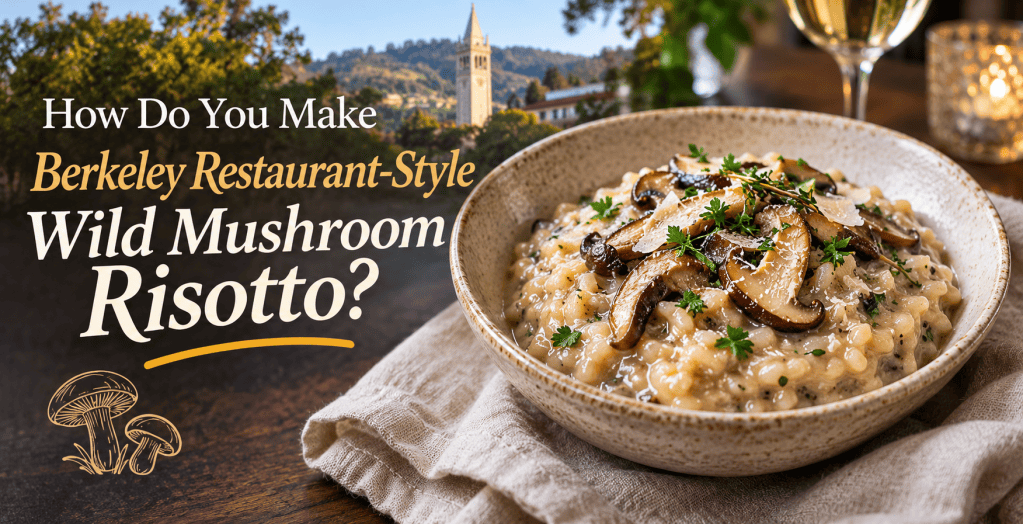
Berkeley, California, is known for its farm-to-table dining culture, seasonal ingredients, and restaurants that turn simple foods into memorable meals. One dish that perfectly captures this approach to cooking is wild mushroom risotto.
Rich, creamy, earthy, and full of savory flavor, Berkeley restaurant-style wild mushroom risotto combines tender Arborio rice, fresh mushrooms, aromatic herbs, white wine, Parmesan cheese, and warm vegetable broth. The result is a comforting yet elegant dish that tastes like something served at an upscale Berkeley restaurant.
The best part is that you do not need professional culinary training or expensive equipment to make it at home.
With the right ingredients, a little patience, and a few restaurant-inspired techniques, you can prepare a creamy wild mushroom risotto that rivals dishes served in some of the East Bay’s favorite dining establishments.
What Makes Berkeley Restaurant-Style Wild Mushroom Risotto Special?
Berkeley’s restaurant scene has long embraced fresh California produce, locally grown ingredients, and seasonal cooking.
Wild mushroom risotto fits naturally into this culinary tradition because it highlights the deep, earthy flavors of mushrooms without requiring complicated preparation.
Unlike ordinary rice dishes, risotto develops its creamy texture through a cooking process that gradually releases starch from the rice.
Restaurant-style wild mushroom risotto typically features several characteristics that distinguish it from basic homemade versions.
A combination of mushrooms: Using several mushroom varieties creates a deeper, more complex flavor than using only white button mushrooms.
Creamy Arborio rice: Short-grain Italian rice releases starch as it cooks, producing risotto’s signature silky consistency.
Fresh herbs: Thyme, parsley, and occasionally rosemary complement the natural earthiness of mushrooms.
White wine: Dry white wine adds acidity that balances the richness of butter and cheese.
Quality Parmesan: Freshly grated Parmesan contributes savory flavor and helps create a smooth finish.
Seasonal ingredients: Berkeley-inspired cooking emphasizes fresh, high-quality ingredients whenever possible.
The goal is a risotto that feels luxurious without becoming overly heavy.
Berkeley Restaurant-Style Wild Mushroom Risotto Recipe
Main Course or Side Dish | California-Inspired Italian Cuisine
Prep Time
15 minutes
Cook Time
35–40 minutes
Total Time
50–55 minutes
Servings
4 servings
Difficulty: Moderate
Ingredients
For the wild mushrooms:
-
12 ounces mixed mushrooms, such as cremini, shiitake, oyster, or chanterelle
-
2 tablespoons olive oil
-
1 tablespoon unsalted butter
-
2 garlic cloves, minced
-
1 teaspoon fresh thyme leaves
-
¼ teaspoon salt
-
¼ teaspoon freshly ground black pepper
For the risotto:
-
1½ cups Arborio rice
-
5 cups vegetable broth, plus more if needed
-
2 tablespoons unsalted butter, divided
-
1 tablespoon olive oil
-
1 small shallot, finely chopped
-
2 garlic cloves, minced
-
½ cup dry white wine
-
¾ cup freshly grated Parmesan cheese
-
1 teaspoon fresh thyme leaves
-
1 tablespoon fresh parsley, chopped
-
Salt and black pepper to taste
Optional garnishes:
-
Additional Parmesan cheese
-
Fresh parsley
-
Sautéed wild mushrooms
-
A drizzle of high-quality olive oil
-
A small amount of truffle oil
How Do You Make Berkeley-Style Wild Mushroom Risotto Step by Step?
The secret to restaurant-quality risotto is building flavor gradually while maintaining the proper cooking temperature.
Step 1: Prepare the Mushrooms
Begin by cleaning the mushrooms with a soft brush or slightly damp paper towel.
Trim any tough stems and slice larger mushrooms into bite-sized pieces.
Heat 2 tablespoons of olive oil and 1 tablespoon of butter in a large skillet over medium-high heat.
Add the mushrooms in a single layer, working in batches if necessary.
Allow them to cook undisturbed for approximately 2–3 minutes before stirring.
Continue cooking for another 4–5 minutes until the mushrooms develop golden-brown edges.
Add the minced garlic, fresh thyme, salt, and black pepper.
Cook for another 30–60 seconds, stirring frequently.
Remove the mushrooms from the heat and set aside.
Restaurant tip: Browning mushrooms separately prevents them from steaming in the risotto and helps preserve their rich flavor and satisfying texture.
Step 2: Warm the Vegetable Broth
Pour the vegetable broth into a medium saucepan.
Heat over medium-low heat until the broth is hot but not rapidly boiling.
Keep it warm throughout the risotto cooking process.
Adding warm broth helps the rice cook steadily without repeatedly lowering the temperature of the pan.
This small detail makes a noticeable difference in the final texture.
Step 3: Sauté the Shallots and Garlic
In a large, heavy-bottomed saucepan or Dutch oven, heat 1 tablespoon of olive oil and 1 tablespoon of butter over medium heat.
Add the finely chopped shallot.
Cook for approximately 2–3 minutes until softened and translucent.
Stir in the minced garlic and cook for another 30 seconds.
Avoid browning the garlic, which can create bitterness.
The shallots and garlic should smell fragrant and slightly sweet.
Step 4: Toast the Arborio Rice
Add the uncooked Arborio rice directly to the saucepan.
Stir continuously for approximately 2 minutes, coating the grains in the butter and olive oil.
The edges of the rice should begin to look slightly translucent while the centers remain opaque.
Toasting the rice develops flavor and helps the grains maintain their structure during cooking.
Do not rinse the rice before adding it.
Rinsing removes surface starch that contributes to risotto’s creamy texture.
Step 5: Add the White Wine
Pour the dry white wine into the saucepan.
Stir gently while the wine simmers.
Cook for approximately 1–2 minutes until most of the liquid has been absorbed or evaporated.
The wine adds brightness and balances the earthy mushrooms and rich Parmesan.
A dry Sauvignon Blanc or Pinot Grigio works well.
For an alcohol-free version, replace the wine with an equal amount of vegetable broth and add 1–2 teaspoons of fresh lemon juice near the end of cooking.
Step 6: Gradually Add the Warm Broth
Add approximately ½ cup of warm vegetable broth to the rice.
Stir gently and frequently as the rice absorbs the liquid.
When most of the broth has been absorbed, add another ½ cup.
Continue repeating this process.
Maintain a gentle simmer rather than a vigorous boil.
The rice should remain moist throughout cooking, and you do not need to wait until the pan is completely dry before adding more broth.
After approximately 18–25 minutes, begin tasting the rice.
It should be tender with a slight firmness in the center.
The risotto should appear creamy and flow gently when stirred.
If the rice needs additional cooking, continue adding warm broth in small amounts.
Step 7: Add the Wild Mushrooms
Once the rice is nearly cooked, fold approximately three-quarters of the sautéed mushrooms into the risotto.
Reserve the remaining mushrooms for garnish.
Add the fresh thyme.
Stir gently and cook for another 1–2 minutes to combine the flavors.
The mushrooms should distribute evenly throughout the rice.
Step 8: Finish With Butter and Parmesan
Remove the saucepan from the heat.
Add the remaining tablespoon of butter and freshly grated Parmesan cheese.
Stir vigorously for approximately 30–60 seconds until the butter and cheese melt into the risotto.
This finishing technique, known as mantecatura in Italian cooking, helps create a smooth, luxurious consistency.
If the risotto becomes too thick, add a splash of warm vegetable broth.
Taste and adjust the salt and black pepper.
Remember that Parmesan and broth already contain salt, so season gradually.
Step 9: Garnish and Serve
Spoon the risotto into warm, shallow bowls.
Top with the reserved sautéed mushrooms.
Sprinkle with fresh parsley and additional Parmesan cheese.
For a more upscale presentation, finish with a light drizzle of olive oil or a few drops of truffle oil.
Serve immediately while the risotto is warm and creamy.
What Are the Best Mushrooms for Wild Mushroom Risotto?
The mushrooms you choose can dramatically change the flavor of your risotto.
Berkeley-inspired restaurant cooking often emphasizes combining different varieties to create layers of earthy, savory flavor.
| Mushroom | Flavor and texture |
|---|---|
| Cremini | Rich, earthy, and firm |
| Shiitake | Deep umami flavor with a meaty texture |
| Oyster | Delicate, tender, and slightly sweet |
| Chanterelle | Fruity aroma with a mild peppery flavor |
| Porcini | Intense, nutty, and deeply earthy |
| Maitake | Savory, delicate, and slightly crisp when browned |
For the best balance of flavor and affordability, combine cremini, shiitake, and oyster mushrooms.
If fresh wild mushrooms are unavailable, cultivated varieties still produce excellent results.
You can also add dried porcini mushrooms for extra depth.
Soak approximately ½ ounce of dried porcini in hot water for 20 minutes, strain the soaking liquid through a fine filter to remove grit, and add some of that liquid to the risotto broth.
This creates a deeper mushroom flavor without requiring a large quantity of expensive fresh mushrooms.
Why Is Restaurant Risotto So Creamy?
One of the most common misconceptions about risotto is that its creamy texture comes from heavy cream.
Traditional risotto generally does not require cream.
Instead, the texture develops from the starch naturally present in short-grain rice.
As Arborio rice cooks and is stirred, starch is released into the surrounding broth.
That starch thickens the liquid and creates a smooth sauce around the grains.
Butter and Parmesan enhance this natural creaminess.
Three important factors contribute to the finished texture.
The rice: Arborio, Carnaroli, and Vialone Nano are suitable varieties because of their starch characteristics.
The cooking method: Gradually adding broth and stirring frequently encourages even cooking and starch release.
The finishing technique: Stirring butter and cheese into the risotto after removing it from the heat creates a glossy consistency.
A properly cooked risotto should spread gently across a warm plate rather than remain in a stiff mound.
What Is the Secret to Perfect Wild Mushroom Risotto?
Restaurant chefs rely on several techniques that can transform ordinary risotto into something exceptional.
Brown the Mushrooms Properly
Mushrooms contain substantial moisture.
Cooking too many mushrooms in a crowded pan causes them to steam rather than brown.
Use a wide skillet and cook in batches when necessary.
Golden-brown mushrooms develop more complex savory flavors.
Use Freshly Grated Parmesan
Pre-shredded Parmesan may contain ingredients that prevent clumping.
These can interfere with the smooth texture of the finished risotto.
Freshly grated Parmesan melts more readily and provides better flavor.
Do Not Overcook the Rice
Risotto should be creamy, but individual rice grains should retain a slight bite.
Overcooking creates a soft, mushy consistency.
Begin tasting the rice before the estimated cooking time is complete.
Keep the Broth Warm
Cold broth repeatedly interrupts the cooking process.
Warm broth helps maintain a steady simmer and encourages more consistent results.
Finish the Risotto Immediately Before Serving
Risotto continues absorbing liquid after cooking.
For the best texture, finish it just before serving.
If it thickens while sitting, stir in a small amount of warm broth.
Can You Make Wild Mushroom Risotto Without Wine?
Yes. Wild mushroom risotto can be made without white wine and still taste rich and flavorful.
Replace the wine with ½ cup of vegetable broth.
To recreate some of the brightness that wine provides, add a small amount of lemon juice toward the end of cooking.
Start with 1 teaspoon and adjust according to taste.
The acidity helps balance the richness of the cheese, butter, and mushrooms.
For additional savory depth, consider adding a small amount of white miso paste or a few drops of soy sauce.
Use these ingredients sparingly to avoid overpowering the mushrooms.
How Do You Make Vegan Wild Mushroom Risotto?
Wild mushroom risotto can easily be adapted into a plant-based dish.
Replace dairy butter with vegan butter or olive oil.
Omit the Parmesan cheese or substitute a dairy-free Parmesan alternative.
For additional umami flavor, stir in 1–2 teaspoons of white miso paste near the end of cooking.
Nutritional yeast can also contribute a slightly cheesy flavor.
Use vegetable broth that does not contain animal-derived ingredients.
The Arborio rice will still release starch during cooking, allowing the risotto to become creamy without dairy.
What Can You Serve With Wild Mushroom Risotto?
Wild mushroom risotto works beautifully as either a main course or a side dish.
Its earthy flavor pairs especially well with fresh vegetables, roasted meats, and bright salads.
Some excellent serving options include:
-
Roasted asparagus with lemon
-
Grilled chicken breast
-
Pan-seared salmon
-
Roasted Brussels sprouts
-
Garlic butter shrimp
-
Arugula salad with lemon vinaigrette
-
Roasted seasonal vegetables
-
Grilled zucchini and summer squash
For a Berkeley-inspired vegetarian dinner, serve the risotto alongside roasted seasonal vegetables and a fresh green salad.
The combination creates a satisfying meal centered around California produce.
How Do You Make Wild Mushroom Risotto Taste More Like a Restaurant Dish?
Several finishing touches can make homemade mushroom risotto taste more sophisticated.
One option is to incorporate a small amount of mushroom stock into the vegetable broth.
This intensifies the earthy flavor without requiring additional mushrooms.
Another technique is to finish the risotto with a small amount of lemon zest.
The zest adds brightness without making the dish noticeably sour.
Fresh thyme also works particularly well with mushrooms.
For a more luxurious presentation, add a few drops of truffle oil just before serving.
Truffle oil has a powerful aroma, so a little goes a long way.
Finally, consider the serving temperature.
Warm bowls help prevent the risotto from cooling too quickly.
Restaurants often pay close attention to these small details because they influence the overall dining experience.
What Are the Most Common Mistakes When Making Mushroom Risotto?
Even experienced home cooks occasionally struggle with risotto.
Understanding the most common mistakes can help you avoid disappointing results.
Using Regular Long-Grain Rice
Long-grain rice does not release starch in the same way as traditional risotto rice.
For the best texture, choose Arborio or Carnaroli.
Adding All the Broth at Once
Although some alternative cooking methods use larger quantities of liquid at once, gradual additions provide greater control over the rice’s texture.
Cooking Over Excessively High Heat
A rapid boil can cause the broth to evaporate before the rice cooks evenly.
Maintain a gentle simmer.
Failing to Brown the Mushrooms
Adding raw mushrooms directly to the rice can produce a less developed mushroom flavor.
Browning them separately creates a more savory result.
Adding Too Much Cheese
Parmesan should complement the mushrooms rather than overpower them.
Start with the recommended amount and adjust gradually.
Letting the Risotto Become Too Thick
Risotto should remain loose and creamy.
Add warm broth as needed to maintain the proper consistency.
Can You Make Wild Mushroom Risotto Ahead of Time?
Wild mushroom risotto tastes best immediately after cooking, but you can prepare some components in advance.
The mushrooms can be cleaned, sliced, and refrigerated in an airtight container.
Shallots and garlic can also be chopped ahead of time.
You can sauté the mushrooms earlier in the day and refrigerate them until needed.
For the best results, cook the rice shortly before serving.
If you need to prepare the entire dish ahead of time, refrigerate it promptly in shallow containers and reheat it with additional broth.
The texture may be softer than freshly prepared risotto.
How Do You Store and Reheat Leftover Mushroom Risotto?
Allow leftover risotto to cool briefly, then transfer it into shallow, airtight containers and refrigerate within two hours of cooking.
Because cooked rice can support bacterial growth when improperly stored, avoid leaving it at room temperature for extended periods.
Refrigerated risotto is best used within 3–4 days when handled and stored properly.
To reheat, place the risotto in a saucepan over medium-low heat.
Add a few tablespoons of vegetable broth or water.
Stir gently until the rice becomes creamy again and is heated thoroughly to 165°F.
You can also reheat individual portions in the microwave, stirring occasionally for even heating.
Avoid reheating the same portion repeatedly.
Frequently Asked Questions About Berkeley-Style Wild Mushroom Risotto
What Rice Is Best for Wild Mushroom Risotto?
Arborio rice is one of the most accessible options for homemade risotto. Carnaroli is another excellent choice because it holds its shape well while producing a creamy texture.
Can You Use Regular Mushrooms Instead of Wild Mushrooms?
Yes. Cremini and white button mushrooms can produce delicious risotto. Combining cremini with shiitake or oyster mushrooms creates a more complex flavor.
Do You Need Heavy Cream for Mushroom Risotto?
No. The creamy texture comes primarily from starch released by the rice, combined with broth, butter, and Parmesan cheese.
How Long Does Mushroom Risotto Take to Cook?
The rice typically takes approximately 18–25 minutes to cook after you begin adding broth. Including preparation and sautéing the mushrooms, the complete recipe takes around 50–55 minutes.
Can You Make Mushroom Risotto With Chicken Broth?
Yes. Chicken broth provides a richer, more savory flavor. However, vegetable broth allows the mushroom flavors to stand out and keeps the dish vegetarian when paired with suitable cheese.
Is Wild Mushroom Risotto Gluten-Free?
Rice is naturally gluten-free, but you should check packaged broth, seasonings, and other ingredients for gluten-containing additives or cross-contact if preparing the dish for someone who must avoid gluten.
Why Is My Mushroom Risotto Sticky Instead of Creamy?
Sticky risotto may result from overcooking, insufficient liquid, or allowing the dish to sit too long after cooking. Add warm broth and stir gently to loosen the texture.
Can You Freeze Wild Mushroom Risotto?
You can freeze cooked risotto, but freezing and thawing may soften the rice and change its creamy texture. For the best eating experience, prepare it fresh or refrigerate leftovers for short-term use.
Final Thoughts: Bringing Berkeley Restaurant-Style Wild Mushroom Risotto Into Your Kitchen
Berkeley’s farm-to-table food culture demonstrates how fresh ingredients and thoughtful cooking techniques can transform simple dishes into memorable meals.
Wild mushroom risotto is a perfect example.
By combining earthy mushrooms, creamy Arborio rice, aromatic shallots, fresh herbs, white wine, and Parmesan cheese, you can create a dish that feels both comforting and elegant.
The secret is not an expensive ingredient or a complicated recipe.
It is taking the time to brown the mushrooms properly, gradually cook the rice, build layers of flavor, and finish the risotto with butter and freshly grated cheese.
Whether you serve it as a vegetarian main course, an elegant dinner-party dish, or a side for roasted chicken or seafood, Berkeley restaurant-style wild mushroom risotto brings the flavors of California-inspired dining into your home.
With a little patience and the right technique, you can make a creamy, flavorful wild mushroom risotto that tastes like it came straight from a Berkeley restaurant kitchen.
Leave a Reply