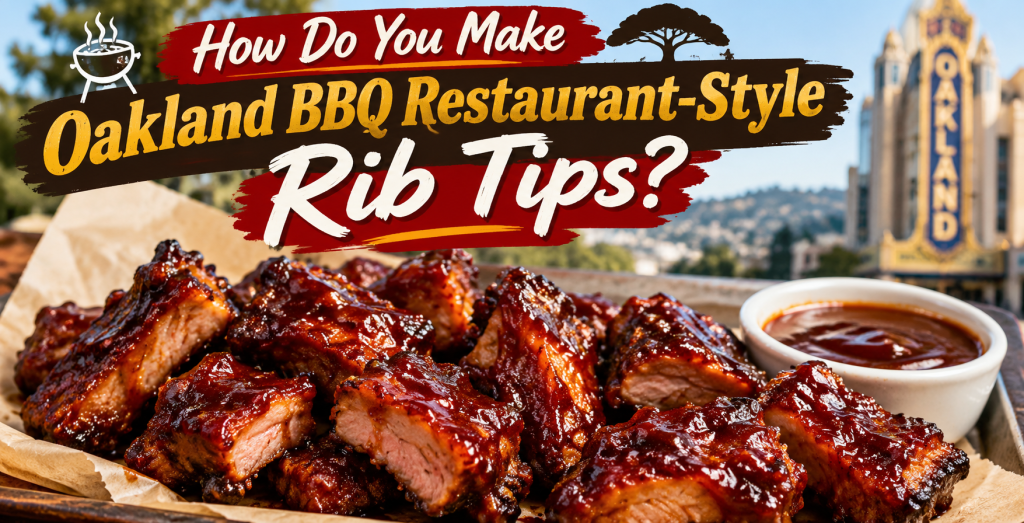
Oakland has a rich barbecue culture built around smoky meats, bold seasonings, tender ribs, and sauces that balance sweetness, tanginess, and heat. From neighborhood barbecue joints to family cookouts, good barbecue is about more than putting meat over a fire. It takes patience, proper seasoning, controlled heat, and knowing when the meat has reached that perfect balance between tenderness and texture.
One barbecue favorite that deserves more attention is BBQ rib tips. These flavorful pieces of pork are packed with rich meat, fat, connective tissue, and cartilage that become tender and delicious when cooked low and slow.
If you have ever enjoyed smoky, saucy rib tips from a barbecue restaurant and wondered whether you could recreate them at home, the answer is yes.
You do not need an expensive smoker or professional barbecue equipment. With the right preparation, a flavorful dry rub, homemade barbecue sauce, and proper cooking techniques, you can make Oakland-inspired restaurant-style rib tips in your backyard or kitchen.
This guide explains everything you need to know, including how to prepare rib tips, season them, smoke them, bake them, and finish them with a sticky barbecue glaze.
What Are BBQ Rib Tips?
Rib tips are small, meaty sections of pork trimmed from the lower portion of a full rack of spare ribs when preparing St. Louis-style ribs.
Unlike traditional baby back ribs, rib tips contain more cartilage, fat, and connective tissue. While that might sound less appealing, these characteristics contribute to their rich flavor and satisfying texture when cooked properly.
Rib tips are especially popular in barbecue traditions associated with Southern cooking and cities such as Chicago, where they have become a signature barbecue offering.
Oakland’s barbecue culture reflects a mixture of Southern influences, African American culinary traditions, and California cooking styles. Oakland-inspired rib tips can bring those influences together through smoky pork, assertive seasoning, and a tangy, slightly sweet barbecue sauce.
What Makes Restaurant-Style Rib Tips Different?
Restaurant-quality rib tips typically have several characteristics:
-
A deep smoky flavor developed through slow cooking.
-
A flavorful dry rub that seasons the meat before cooking.
-
Tender pork that still maintains some texture.
-
Rendered fat that contributes moisture and richness.
-
A thick barbecue sauce that clings to the meat.
-
Slightly caramelized edges that provide additional flavor.
The goal is not simply to cook the pork until it becomes soft. Great rib tips should be tender enough to bite comfortably while still having a satisfying barbecue texture.
Oakland BBQ Restaurant-Style Rib Tips Recipe
Preparation: 20 minutes | Cooking: 3½–4½ hours | Resting: 10–15 minutes
This recipe uses a smoky dry rub, a homemade sweet-and-tangy barbecue sauce, and a low-and-slow cooking method to produce tender, flavorful rib tips.
Ingredients for the Rib Tips
-
3 pounds pork rib tips
-
2 tablespoons yellow mustard
-
2 tablespoons brown sugar
-
1 tablespoon smoked paprika
-
1 tablespoon regular paprika
-
2 teaspoons kosher salt
-
2 teaspoons coarse black pepper
-
2 teaspoons garlic powder
-
2 teaspoons onion powder
-
1 teaspoon chili powder
-
1 teaspoon ground cumin
-
½ teaspoon cayenne pepper (optional)
-
1 tablespoon vegetable oil, if needed
The mustard helps the dry rub adhere to the pork. It does not create a strong mustard flavor once the rib tips are cooked.
Ingredients for the Homemade BBQ Sauce
-
1 cup ketchup
-
⅓ cup apple cider vinegar
-
⅓ cup packed brown sugar
-
¼ cup molasses
-
2 tablespoons Worcestershire sauce
-
1 tablespoon yellow mustard
-
1 tablespoon honey
-
1 teaspoon smoked paprika
-
1 teaspoon garlic powder
-
1 teaspoon onion powder
-
½ teaspoon black pepper
-
¼ teaspoon cayenne pepper
-
2 tablespoons water, as needed
This sauce combines sweetness, acidity, savory depth, and mild heat.
For a more tangy sauce, increase the apple cider vinegar slightly. For a sweeter sauce, add a little more honey or brown sugar.
How Do You Prepare Rib Tips Before Cooking?
Proper preparation helps rib tips cook evenly and develop better flavor.
Step 1: Trim Excess Fat
Place the rib tips on a clean cutting board.
Use a sharp knife to remove large pieces of loose fat and any unwanted hanging pieces of meat.
Do not remove all the fat. Some fat is necessary to keep the pork moist during the long cooking process.
If the rib tips contain a thick membrane that can be easily removed, carefully loosen it with a knife and pull it away using a paper towel.
Rib tips naturally contain cartilage, so do not attempt to remove every firm section.
Step 2: Cut Into Manageable Pieces
If your rib tips come in one long strip, cut them into sections approximately 3 to 4 inches long.
Larger pieces are easier to manage on a smoker and tend to retain moisture better than very small pieces.
You can cut them into smaller serving portions after cooking.
Step 3: Apply the Mustard
Pat the pork dry with paper towels.
Spread a thin layer of yellow mustard over all sides of the rib tips.
The mustard acts as a binder, helping the seasoning stick to the meat.
Step 4: Make the Dry Rub
In a small bowl, combine:
-
Brown sugar
-
Smoked paprika
-
Regular paprika
-
Salt
-
Black pepper
-
Garlic powder
-
Onion powder
-
Chili powder
-
Cumin
-
Cayenne pepper
Mix until the ingredients are evenly distributed.
Sprinkle the dry rub generously over every side of the pork.
Press the seasoning gently into the meat.
Step 5: Let the Seasoning Rest
Allow the seasoned rib tips to rest in the refrigerator for at least 30 minutes.
For deeper flavor, refrigerate them covered for 2 to 4 hours.
You can also season them the night before cooking.
Keep the pork refrigerated during longer seasoning periods rather than leaving it at room temperature.
How Do You Smoke Oakland-Style BBQ Rib Tips?
Smoking is one of the best ways to develop the deep barbecue flavor associated with traditional barbecue restaurants.
A smoker allows the pork to cook slowly while absorbing smoke from hardwood.
Step 1: Preheat the Smoker
Preheat your smoker to 250°F.
Good wood choices include:
Oak: Produces a balanced smoke flavor that works especially well with pork.
Hickory: Creates a stronger, traditional barbecue smoke flavor.
Applewood: Adds a mild, slightly sweet smoke flavor.
Cherrywood: Produces a gentle, fruity smoke that complements sweet barbecue sauces.
For an Oakland-inspired flavor, a combination of oak and applewood works particularly well.
Step 2: Arrange the Rib Tips
Place the seasoned rib tips directly on the smoker grates.
Leave some space between each piece so smoke and heat can circulate.
Close the smoker lid.
Step 3: Smoke for 2 to 3 Hours
Allow the rib tips to smoke undisturbed for the first 90 minutes.
After that, check their appearance.
The exterior should begin developing a dark reddish-brown bark.
Continue smoking until the seasoning has formed a firm surface and the meat has developed a noticeable smoky aroma.
Avoid opening the smoker repeatedly because heat loss can extend cooking time.
Step 4: Wrap for Tenderness
Once the bark has developed, transfer the rib tips to a large sheet of heavy-duty aluminum foil.
Add approximately ¼ cup apple juice or water.
Wrap tightly to retain moisture.
Return the wrapped pork to the smoker.
Continue cooking for approximately 1 to 1½ hours, checking for tenderness near the end.
The moisture inside the foil helps soften connective tissue and prevents the meat from drying out.
Step 5: Check for Doneness
Rib tips are safe to eat when whole cuts of pork reach 145°F and rest for at least three minutes, but barbecue rib tips generally need a much higher temperature to become tender.
For a tender barbecue texture, the meat will often reach approximately 195°F to 205°F.
However, temperature alone does not determine whether rib tips are finished.
Insert a thermometer probe or skewer into a thick, meaty section, avoiding cartilage.
It should slide in with little resistance.
The meat should feel tender but should not completely fall apart when lifted.
Step 6: Add Barbecue Sauce
Carefully unwrap the rib tips.
Brush them generously with homemade barbecue sauce.
Return them to the smoker uncovered.
Cook for another 15 to 30 minutes, allowing the sauce to thicken and become sticky.
Watch carefully because barbecue sauces containing sugar can burn if exposed to excessive heat.
Step 7: Rest and Serve
Remove the rib tips from the smoker.
Allow them to rest for 10 to 15 minutes.
Cut into serving portions if necessary.
Serve with additional warm barbecue sauce on the side.
How Do You Make BBQ Rib Tips in the Oven?
Not everyone owns a smoker, and that should not prevent you from making excellent barbecue rib tips at home.
The oven provides consistent heat and makes it easier to cook pork slowly.
Although oven-baked rib tips will not develop the same natural smoke flavor as wood-smoked barbecue, they can still become tender, juicy, and flavorful.
Step 1: Preheat the Oven
Preheat your oven to 275°F.
Line a large baking sheet or roasting pan with heavy-duty aluminum foil.
Step 2: Season the Pork
Prepare the rib tips using the same mustard and dry rub described earlier.
Arrange the seasoned pieces in a single layer.
Step 3: Cover Tightly
Add approximately ¼ cup apple juice or water to the pan.
Cover the pan tightly with aluminum foil.
The covered environment helps retain moisture and soften the connective tissue.
Step 4: Bake Slowly
Bake for approximately 2½ to 3½ hours.
Begin checking tenderness after 2½ hours.
Thicker pieces may require additional cooking time.
The pork should become tender enough for a skewer to slide easily into the meat.
Step 5: Apply Barbecue Sauce
Remove the foil.
Carefully drain excess liquid if necessary.
Brush the rib tips with a generous layer of barbecue sauce.
Increase the oven temperature to 400°F.
Return the uncovered rib tips to the oven for approximately 10 to 15 minutes.
The sauce should thicken and begin caramelizing.
Step 6: Finish Under the Broiler
For slightly charred restaurant-style edges, place the rib tips under the broiler for 1 to 3 minutes.
Watch continuously.
The sugar in barbecue sauce can burn quickly.
Remove the pork once the sauce becomes glossy and develops small caramelized spots.
Allow the rib tips to rest before serving.
How Do You Make Homemade Oakland-Inspired BBQ Sauce?
A flavorful sauce is one of the defining characteristics of restaurant-style barbecue.
For these rib tips, the sauce should have enough sweetness to complement the pork while maintaining acidity and savory depth.
Step 1: Combine the Ingredients
In a medium saucepan, combine:
-
Ketchup
-
Apple cider vinegar
-
Brown sugar
-
Molasses
-
Worcestershire sauce
-
Yellow mustard
-
Honey
-
Smoked paprika
-
Garlic powder
-
Onion powder
-
Black pepper
-
Cayenne pepper
Whisk until smooth.
Step 2: Simmer the Sauce
Place the saucepan over medium-low heat.
Bring the mixture to a gentle simmer.
Reduce the heat to low.
Cook for 15 to 20 minutes, stirring occasionally.
The sauce should become slightly thicker and develop a richer flavor.
Step 3: Adjust the Flavor
Taste the sauce using a clean spoon.
If it tastes too sweet, add a small splash of apple cider vinegar.
If it tastes too tangy, add a little honey.
For more heat, increase the cayenne pepper.
If the sauce becomes too thick, add water one tablespoon at a time.
Step 4: Let the Sauce Cool Slightly
Remove the saucepan from the heat.
Allow the sauce to cool for several minutes.
Reserve some sauce in a separate clean bowl for serving before using the rest to brush the pork.
This prevents sauce that has contacted the meat from contaminating the serving portion.
What Is the Secret to Tender Restaurant-Style Rib Tips?
The biggest secret to tender rib tips is patience.
Rib tips contain connective tissue that requires time and heat to soften.
Cooking them too quickly can leave the meat chewy, even when the pork has reached a safe internal temperature.
Several techniques help produce better results.
Cook Low and Slow
A cooking temperature between 225°F and 275°F works well for rib tips.
This allows the meat to cook gradually while the connective tissue softens.
Maintain Moisture
Wrapping rib tips after the bark develops helps retain moisture.
A small amount of apple juice or water can create a moist cooking environment.
However, too much liquid can soften the exterior excessively.
Do Not Rush the Tenderness Test
A thermometer is useful, but the feel of the meat is equally important.
Rib tips are ready when a probe enters the meat with minimal resistance.
Allow the Meat to Rest
Resting gives the meat time to cool slightly before cutting and serving.
This also makes the rib tips easier to handle.
Should You Boil Rib Tips Before Barbecuing Them?
Boiling rib tips before barbecuing is sometimes used to shorten cooking time.
However, boiling is not necessary and can reduce the flavor that develops during slow cooking.
When pork is boiled, some of its flavor moves into the cooking liquid.
Boiling also prevents the meat from developing a smoky bark during that initial cooking period.
For restaurant-style barbecue, smoking or slow baking is generally a better approach.
If time is limited, cooking the rib tips covered in the oven before finishing them on a grill can provide tender results without boiling.
How Long Does It Take to Cook Rib Tips?
Cooking time depends on the size of the rib tips, the cooking temperature, and the method used.
| Cooking method | Temperature | Approximate time |
|---|---|---|
| Smoker | 225°F | 4–5 hours |
| Smoker | 250°F | 3½–4½ hours |
| Oven, covered | 275°F | 2½–3½ hours, plus finishing |
| Grill, indirect heat | 250°F | 3½–5 hours |
These times are estimates.
Some rib tips will become tender sooner, while thicker pieces may require additional cooking.
Always judge the finished meat by tenderness rather than relying entirely on the clock.
What Is the Best Wood for Smoking Rib Tips?
Wood selection influences the final flavor of barbecue.
Different hardwoods produce different smoke characteristics.
Oak
Oak provides a balanced smoke flavor that does not overpower the pork.
It works well for longer cooking sessions.
Hickory
Hickory creates a bold, recognizable barbecue flavor.
It is a good option for people who enjoy stronger smoke.
Applewood
Applewood produces a mild, slightly sweet smoke.
It complements brown sugar rubs and sweet barbecue sauces.
Cherrywood
Cherrywood provides a mild fruity smoke and can contribute to an attractive reddish exterior.
Best Combination
For this recipe, try approximately two parts oak to one part applewood.
This combination produces a balanced smoke flavor that works well with the sweet-and-tangy barbecue sauce.
How Do You Get Sticky BBQ Sauce on Rib Tips?
One of the most appealing features of restaurant-style rib tips is their thick, glossy barbecue coating.
The key is applying sauce near the end of cooking.
If barbecue sauce is added too early, its sugar content may burn before the meat becomes tender.
For the best results, follow these techniques:
-
Cook the rib tips until they are nearly finished.
-
Brush on a thin layer of barbecue sauce.
-
Return the meat to moderate heat for 10 to 15 minutes.
-
Apply a second thin layer if desired.
-
Continue cooking until the sauce becomes glossy and sticky.
Avoid applying extremely thick layers all at once.
Multiple thin layers usually create a better glaze than one heavy coating.
What Are the Best Side Dishes for BBQ Rib Tips?
Oakland-inspired barbecue rib tips pair well with traditional Southern and American barbecue sides.
Southern-Style Macaroni and Cheese
Creamy baked macaroni and cheese balances the smoky, tangy flavor of barbecue pork.
A golden cheese crust adds additional texture.
Collard Greens
Slow-cooked collard greens seasoned with garlic, onions, and smoked meat provide a savory contrast to sweet barbecue sauce.
Baked Beans
Sweet and smoky baked beans complement the flavors of the rib tips.
For additional depth, add onions, brown sugar, and a little barbecue sauce.
Cornbread
Freshly baked cornbread is excellent for soaking up extra barbecue sauce.
Both sweet and savory cornbread work well.
Coleslaw
Cool, crunchy coleslaw provides freshness and acidity.
A vinegar-based slaw is particularly good with rich pork.
Potato Salad
Classic potato salad with mustard, mayonnaise, eggs, and seasonings is another popular barbecue pairing.
French Fries
Crispy seasoned fries make rib tips feel like a casual barbecue restaurant meal.
For a complete plate, serve rib tips with macaroni and cheese, baked beans, cornbread, and coleslaw.
Can You Make BBQ Rib Tips Ahead of Time?
Yes. Rib tips are a good option for meal preparation, family gatherings, and backyard cookouts.
You can cook them ahead of time and reheat them shortly before serving.
Preparing One Day Ahead
Cook the rib tips until tender.
Allow them to cool briefly, then refrigerate promptly in shallow, covered containers.
Do not leave cooked pork at room temperature for more than two hours, or one hour when temperatures exceed 90°F.
Store the barbecue sauce separately if possible.
The next day, reheat the rib tips and apply fresh sauce before serving.
Reheating in the Oven
Preheat the oven to 275°F.
Place the rib tips in a covered baking dish with a small splash of water or apple juice.
Heat until the pork reaches an internal temperature of 165°F.
Remove the cover, brush with sauce, and return to the oven briefly to set the glaze.
Reheating on the Grill
Place the cooked rib tips over indirect medium-low heat.
Keep the grill covered and turn the pieces occasionally.
Once the meat reaches 165°F, apply barbecue sauce and allow it to warm and thicken.
Avoid prolonged direct heat because it can dry out the pork.
How Do You Store Leftover BBQ Rib Tips?
Proper storage helps preserve the flavor and quality of leftover barbecue.
Refrigerator
Store cooked rib tips in airtight containers.
Refrigerate at 40°F or below and use within 3 to 4 days.
Freezer
For longer storage, place cooled rib tips in freezer-safe containers or tightly sealed freezer bags.
Remove excess air to reduce freezer burn.
For the best quality, use frozen rib tips within approximately 2 to 3 months.
Food kept continuously frozen at 0°F remains safe indefinitely, although its quality may decline over time.
Best Reheating Method
For the best texture, reheat rib tips slowly in a covered baking dish.
Add a small amount of moisture to prevent drying.
Finish uncovered with fresh barbecue sauce.
Common Mistakes When Making BBQ Rib Tips
Even experienced home cooks can run into problems when preparing rib tips.
Understanding these mistakes can help improve the finished dish.
Cooking at Too High a Temperature
High heat can cause the outside to dry out before the connective tissue becomes tender.
Use moderate, controlled heat and allow sufficient cooking time.
Adding Sauce Too Early
Barbecue sauce contains sugar that can burn during long cooking sessions.
Apply it during the final stage.
Using Too Much Smoke
Heavy smoke can create a bitter flavor.
Use clean-burning hardwood and avoid excessive amounts of smoking wood.
Skipping the Dry Rub
A good dry rub seasons the meat beneath the sauce.
Without it, rib tips may taste flavorful on the outside but bland underneath.
Cutting the Pieces Too Small
Very small pieces can dry out during long cooking.
Keep rib tips in larger sections until they are finished whenever possible.
Overcooking the Meat
Although rib tips benefit from slow cooking, excessive cooking can make the meat mushy or dry.
Check tenderness periodically near the end.
Frequently Asked Questions About Oakland BBQ Rib Tips
Are rib tips the same as spare ribs?
No. Rib tips are the lower trimmed section of a full rack of spare ribs, often removed when creating St. Louis-style ribs.
They contain more cartilage and irregular pieces of meat than the main rib rack.
Are rib tips better than baby back ribs?
It depends on personal preference.
Baby back ribs are generally leaner and have a more uniform shape.
Rib tips contain more fat and connective tissue, which can produce a rich barbecue flavor when properly cooked.
Can you cook rib tips on a gas grill?
Yes.
Set up the grill for indirect cooking by leaving one burner off and placing the rib tips over the unlit area.
Maintain a temperature near 250°F.
Use a smoker box with wood chips if you want additional smoke flavor.
Do rib tips need to be wrapped in foil?
Wrapping is optional.
Foil helps retain moisture and can speed up tenderizing.
Leaving rib tips unwrapped throughout cooking produces a firmer bark but may require closer attention to moisture and cooking time.
How do you make rib tips spicy?
Increase the cayenne pepper in the dry rub.
You can also add hot sauce, crushed red pepper, or chipotle powder to the barbecue sauce.
For balanced flavor, add heat gradually.
Can you use store-bought barbecue sauce?
Absolutely.
Choose a sauce with a balance of sweetness, acidity, and smokiness.
You can improve store-bought sauce by adding apple cider vinegar, smoked paprika, garlic powder, or a little honey.
Why are my rib tips tough?
Tough rib tips usually need more cooking time.
The connective tissue has not softened sufficiently.
Continue cooking at a low temperature and check tenderness every 20 to 30 minutes.
Why are my rib tips dry?
Dry rib tips may result from excessive cooking, high heat, or pieces that are too small.
Cooking at a controlled temperature and wrapping during part of the process can help preserve moisture.
Can you make rib tips without a smoker?
Yes.
The oven method produces excellent results.
Smoked paprika adds a smoky note, while finishing under the broiler creates caramelized edges.
What temperature should rib tips reach?
Whole pork cuts are considered safe at 145°F with a three-minute rest, but rib tips usually require approximately 195°F to 205°F to achieve a tender barbecue texture.
Always check tenderness in addition to temperature.
Final Thoughts: Bringing Oakland-Inspired BBQ Flavor Home
Making Oakland BBQ restaurant-style rib tips at home is about combining good ingredients with the right cooking techniques.
The best results begin with properly trimmed pork, a flavorful dry rub, and enough cooking time for the connective tissue to soften.
Smoking the meat over oak or hickory creates a deeper barbecue flavor, while slow oven cooking offers a convenient alternative for home kitchens.
The final touch is a homemade barbecue sauce that combines sweetness, tanginess, smoke, and a little heat.
When brushed onto tender rib tips and allowed to caramelize, the sauce creates the sticky, flavorful coating that makes restaurant-style barbecue so satisfying.
Serve your rib tips with creamy macaroni and cheese, baked beans, cornbread, or coleslaw for a complete barbecue meal.
Whether you are cooking for a family dinner, preparing food for a weekend gathering, or simply craving a plate of smoky pork, these Oakland-inspired BBQ rib tips offer a delicious way to enjoy barbecue at home.
The secret to great rib tips is simple: season generously, cook patiently, and finish with a sauce that makes every bite worth savoring.
Leave a Reply