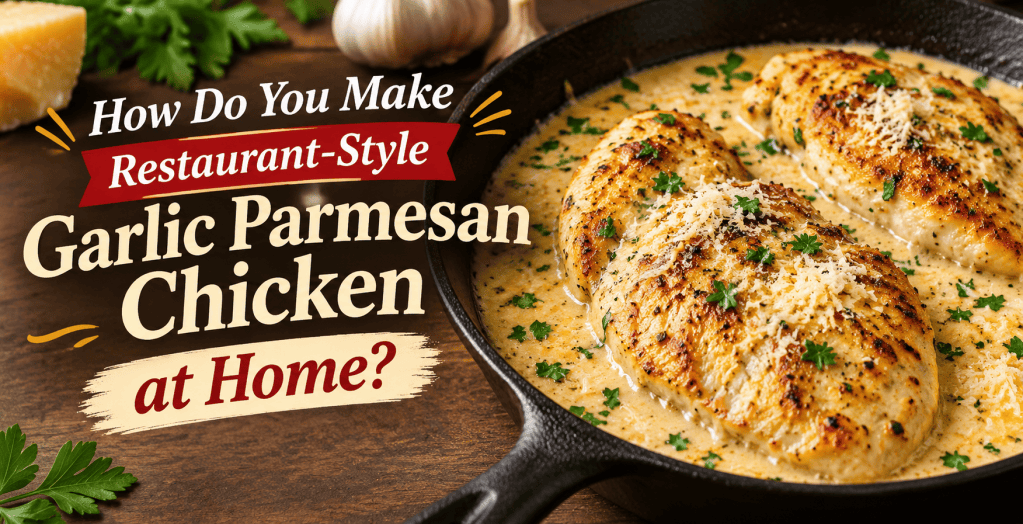
Restaurant-style garlic Parmesan chicken is one of those comforting dishes that tastes like something you would order at your favorite Italian-American restaurant. With tender, golden-brown chicken breasts covered in a rich, creamy garlic Parmesan sauce, this dish delivers restaurant-quality flavor without requiring professional cooking skills or expensive ingredients.
The secret to making restaurant-style garlic Parmesan chicken at home is combining properly seasoned chicken, freshly minced garlic, real Parmesan cheese, and a smooth cream sauce that coats every bite.
Whether you are preparing a weeknight family dinner, cooking for a special occasion, or simply craving a delicious homemade meal, this garlic Parmesan chicken recipe is easy to follow and delivers impressive results.
What Is Restaurant-Style Garlic Parmesan Chicken?
Restaurant-style garlic Parmesan chicken is a creamy chicken dish made with pan-seared chicken breasts and a flavorful sauce featuring garlic, Parmesan cheese, butter, and heavy cream.
Unlike basic baked chicken recipes, this dish uses several cooking techniques commonly found in restaurant kitchens.
The chicken is first seasoned and seared until golden brown, creating a flavorful crust. The garlic Parmesan sauce is then prepared in the same skillet, allowing the browned bits left behind by the chicken to add extra depth to the sauce.
The finished chicken is returned to the skillet and gently simmered until tender and fully cooked.
The result is juicy chicken coated in a silky, savory sauce with a balanced combination of garlic, cheese, butter, and cream.
Why Does Restaurant Garlic Parmesan Chicken Taste So Good?
Restaurants often achieve exceptional flavor by combining several simple techniques rather than relying on complicated ingredients.
The first is proper seasoning. Chicken breasts need enough salt, pepper, and complementary spices to develop flavor throughout the cooking process.
The second is browning the chicken. When chicken cooks in a hot skillet, the surface develops a golden crust through the Maillard reaction. This creates deeper savory flavors that cannot be achieved through steaming or boiling.
The third is building the sauce in the same skillet used to cook the chicken.
As the chicken browns, small flavorful particles collect on the bottom of the pan. Adding chicken broth helps release those browned bits, incorporating their flavor into the sauce.
Finally, restaurants often use freshly grated Parmesan cheese instead of pre-shredded varieties.
Fresh Parmesan melts more smoothly and provides a stronger, more authentic cheese flavor.
When these techniques are combined, homemade garlic Parmesan chicken can taste remarkably similar to a restaurant version.
Restaurant-Style Garlic Parmesan Chicken Recipe
Recipe details
Prep Time
15 minutes
Cook Time
25 minutes
Total Time
40 minutes
Servings
4
Difficulty: Easy to moderate
Cooking Method: Stovetop skillet
Cuisine: Italian-American inspired
Ingredients for Garlic Parmesan Chicken
One of the biggest advantages of this recipe is that it uses ingredients commonly found in home kitchens.
For the Chicken
-
2 large boneless, skinless chicken breasts, sliced horizontally into 4 cutlets
-
1 teaspoon salt
-
½ teaspoon black pepper
-
1 teaspoon garlic powder
-
1 teaspoon Italian seasoning
-
½ teaspoon paprika
-
¼ cup all-purpose flour
-
2 tablespoons olive oil
-
1 tablespoon unsalted butter
For the Creamy Garlic Parmesan Sauce
-
3 tablespoons unsalted butter
-
5 cloves fresh garlic, minced
-
1 cup chicken broth
-
1 cup heavy whipping cream
-
1 cup freshly grated Parmesan cheese
-
½ teaspoon Italian seasoning
-
¼ teaspoon black pepper
-
¼ teaspoon crushed red pepper flakes (optional)
-
1 teaspoon fresh lemon juice
-
2 tablespoons chopped fresh parsley
Additional salt can be added to taste after the sauce is finished.
How Do You Make Restaurant-Style Garlic Parmesan Chicken Step by Step?
The following cooking method helps create tender chicken, a golden exterior, and a smooth Parmesan sauce.
Step 1: Prepare the Chicken Breasts
Place the chicken breasts on a clean cutting board.
Using a sharp knife, carefully slice each breast horizontally to create two thinner cutlets.
This produces four pieces of chicken that cook more evenly than thick, whole breasts.
If necessary, gently pound the chicken with a meat mallet until each piece is approximately ½ inch thick.
Uniform thickness is important because it prevents the thinner sections from drying out while the thicker sections finish cooking.
Pat the chicken dry with paper towels.
Removing excess surface moisture helps the chicken develop a better golden crust.
Step 2: Season and Lightly Flour the Chicken
In a small bowl, combine the salt, black pepper, garlic powder, Italian seasoning, and paprika.
Sprinkle the seasoning mixture evenly over both sides of the chicken.
Place the flour in a shallow dish.
Lightly coat each chicken cutlet with flour, shaking off any excess.
The flour creates a delicate exterior that becomes golden when seared. It also helps the creamy garlic Parmesan sauce cling to the chicken.
Avoid applying a thick flour coating because this recipe is intended to have a lightly crisp exterior rather than a heavy breaded crust.
Step 3: Sear the Chicken Until Golden Brown
Heat a large skillet over medium-high heat.
Add the olive oil and 1 tablespoon of butter.
Once the butter melts and the skillet is hot, carefully place the chicken cutlets in the pan.
Cook for approximately 4–5 minutes on the first side, depending on thickness.
Flip the chicken and cook for another 3–4 minutes.
The exterior should develop a golden-brown crust.
The chicken will finish cooking when returned to the sauce, so use a meat thermometer to monitor its temperature and avoid overcooking.
Transfer the chicken to a clean plate.
Do not wipe out the skillet.
The browned bits remaining in the pan will provide additional flavor for the garlic Parmesan sauce.
Step 4: Sauté the Fresh Garlic
Reduce the heat to medium-low.
Add 3 tablespoons of butter to the same skillet.
Once melted, add the freshly minced garlic.
Cook for approximately 30–60 seconds, stirring frequently.
The garlic should become fragrant without turning dark brown.
Burned garlic develops a bitter flavor that can overpower the sauce.
Fresh garlic is especially important in this recipe because it provides a more pronounced aroma and flavor than garlic powder alone.
Step 5: Deglaze the Skillet With Chicken Broth
Slowly pour the chicken broth into the skillet.
Use a wooden spoon or silicone spatula to scrape the browned bits from the bottom of the pan.
This process is called deglazing.
Allow the broth to simmer for approximately 2–3 minutes.
The liquid will begin to reduce slightly while absorbing the flavors left behind by the chicken.
This is one of the techniques that gives restaurant-style sauces their rich, savory character.
Step 6: Add the Heavy Cream
Reduce the heat to low.
Slowly pour in the heavy whipping cream while stirring.
Add the Italian seasoning, black pepper, and optional crushed red pepper flakes.
Allow the sauce to warm and gently simmer for approximately 3–4 minutes.
Avoid boiling the cream aggressively.
High heat can cause cream-based sauces to separate or develop an undesirable texture.
The sauce should begin to thicken slightly as it warms.
Step 7: Stir in the Parmesan Cheese
Remove the skillet from direct heat or keep it over very low heat.
Gradually add the freshly grated Parmesan cheese, stirring continuously.
Adding the cheese in small amounts helps it incorporate more evenly into the cream sauce.
Continue stirring until the cheese has melted and the sauce becomes smooth.
If the sauce appears too thick, add a small splash of chicken broth.
If it is too thin, return it to low heat and allow it to reduce gently.
Avoid adding more flour unless absolutely necessary.
The combination of cream, Parmesan, and gentle reduction should create a rich sauce naturally.
Step 8: Return the Chicken to the Skillet
Place the seared chicken cutlets back into the skillet.
Spoon the creamy garlic Parmesan sauce over each piece.
Allow the chicken to simmer gently for approximately 3–5 minutes, or until the thickest part of every cutlet reaches an internal temperature of 165°F.
The exact cooking time will depend on the thickness of the chicken and how thoroughly it cooked during searing.
Avoid boiling the sauce while the chicken finishes cooking.
Gentle heat helps preserve the chicken’s tenderness and the sauce’s smooth consistency.
Step 9: Finish With Lemon Juice and Parsley
Turn off the heat.
Stir the fresh lemon juice into the sauce.
The small amount of acidity helps balance the richness of the cream and Parmesan cheese.
Sprinkle chopped fresh parsley over the finished dish.
Taste the sauce and adjust the salt if necessary.
Parmesan cheese and chicken broth already contain sodium, so additional salt may not be needed.
Serve immediately while the chicken is hot and the sauce is creamy.
What Is the Secret to Making Garlic Parmesan Chicken Taste Like a Restaurant?
The biggest secret is building flavor in layers.
Professional cooks rarely depend on one ingredient to create a memorable dish.
Instead, they use several complementary techniques.
Season the chicken before cooking. Proper seasoning ensures the chicken itself tastes delicious rather than depending entirely on the sauce.
Use a hot skillet for browning. A golden crust adds savory complexity and improves the finished texture.
Cook the garlic gently. Fresh garlic should release its aroma without becoming bitter.
Use real Parmesan cheese. Freshly grated Parmesan provides better flavor and generally melts more smoothly than packaged grated cheese.
Control the heat. Cream sauces require gentle cooking to prevent separation.
Finish with acidity. A small amount of lemon juice balances the richness and makes the other flavors more noticeable.
These small details can transform an ordinary chicken dinner into a restaurant-quality meal.
How Do You Keep Garlic Parmesan Chicken Tender and Juicy?
Chicken breasts are naturally lean, which makes them susceptible to drying out when overcooked.
The most reliable way to prevent this is to use evenly sized chicken cutlets and monitor their internal temperature.
Thin cutlets cook faster and more consistently than thick chicken breasts.
A meat thermometer is especially useful because appearance alone cannot reliably determine whether chicken is fully cooked.
Chicken should reach 165°F at its thickest point.
Another important technique is avoiding prolonged cooking after the chicken has reached its safe temperature.
Once the chicken is fully cooked, remove the skillet from the heat.
The creamy sauce helps keep the surface moist, but it cannot restore moisture to chicken that has been significantly overcooked.
Can You Make Garlic Parmesan Chicken Without Heavy Cream?
Yes. Garlic Parmesan chicken can be made without heavy cream, although the sauce will have a different richness and texture.
One option is to use half-and-half.
Half-and-half produces a lighter sauce, but it contains less fat than heavy cream and is more susceptible to curdling when exposed to high heat.
Another option is whole milk combined with a small amount of flour or cornstarch to provide thickness.
For example, you can use 1 cup of whole milk mixed with 1 tablespoon of cornstarch as a substitute for the heavy cream.
Whisk the cornstarch into cold milk before adding it to the skillet.
Heat gently until the sauce thickens, then reduce the heat before incorporating the Parmesan.
The result will be lighter than the traditional restaurant-style version but still flavorful.
What Is the Best Parmesan Cheese for Garlic Parmesan Chicken?
Freshly grated Parmesan is the best choice for this recipe.
Authentic Parmigiano Reggiano offers a nutty, savory flavor that works especially well with garlic and cream.
Domestic Parmesan can also produce excellent results.
The most important consideration is texture.
Pre-grated cheeses sometimes contain anti-caking ingredients that can affect how smoothly they incorporate into sauces.
Finely grating Parmesan from a block generally produces a more consistent sauce.
Avoid using shelf-stable powdered Parmesan as the primary cheese for this recipe.
Although it can provide flavor, it does not behave the same way as freshly grated Parmesan when melted into cream.
What Can You Serve With Restaurant-Style Garlic Parmesan Chicken?
Garlic Parmesan chicken pairs well with a variety of side dishes because its creamy sauce complements pasta, potatoes, rice, and vegetables.
1. Fettuccine Pasta
Fettuccine is one of the best options for serving with garlic Parmesan chicken.
The wide noodles hold the creamy sauce beautifully.
Serve the chicken over freshly cooked fettuccine and spoon additional sauce over the pasta.
2. Garlic Mashed Potatoes
Creamy mashed potatoes provide a comforting base for the chicken.
The garlic Parmesan sauce works almost like a rich gravy.
3. Steamed Broccoli
Broccoli adds freshness and color to the meal.
Its mild flavor balances the richness of the sauce.
4. Roasted Asparagus
Roasted asparagus offers a slightly crisp texture that contrasts with the creamy chicken.
A little lemon zest can complement the garlic Parmesan flavors.
5. White Rice
Steamed white rice is a simple, affordable side dish that absorbs the sauce.
It is especially convenient for busy weeknight dinners.
6. Garlic Bread
Warm garlic bread is excellent for soaking up extra Parmesan sauce.
For a restaurant-inspired dinner, serve garlic Parmesan chicken with fettuccine, roasted vegetables, and a slice of garlic bread.
Can You Make Garlic Parmesan Chicken With Chicken Thighs?
Yes. Boneless, skinless chicken thighs work extremely well in this recipe.
Chicken thighs contain more fat than chicken breasts, which helps them remain juicy during cooking.
They also provide a slightly richer flavor.
To substitute chicken thighs, use approximately 1½ pounds of boneless, skinless thighs.
Season and lightly flour them using the same method.
Sear until golden brown, then finish cooking in the garlic Parmesan sauce.
Chicken thighs must reach a minimum internal temperature of 165°F, although some cooks prefer a slightly higher temperature for a more tender texture.
Because thighs may be thicker or less uniform than cutlets, their cooking time can vary.
How Do You Make Garlic Parmesan Chicken Sauce Thicker?
A properly prepared garlic Parmesan sauce should be thick enough to coat the back of a spoon without becoming pasty.
If your sauce is too thin, allow it to simmer gently for a few additional minutes before returning the chicken.
This helps excess liquid evaporate.
You can also add a small amount of additional freshly grated Parmesan cheese.
However, adding too much cheese can make the sauce overly salty or grainy.
If a thicker consistency is necessary, mix 1 teaspoon of cornstarch with 2 teaspoons of cold water.
Slowly whisk the mixture into the gently simmering sauce.
Allow it to cook briefly until the desired thickness develops.
Use only as much as needed.
Restaurant-style garlic Parmesan sauce should remain smooth, pourable, and creamy.
Why Does Garlic Parmesan Sauce Sometimes Turn Grainy?
A grainy sauce usually develops when cheese is overheated or does not incorporate properly into the liquid.
Parmesan is an aged, relatively low-moisture cheese, so it requires careful handling when used in creamy sauces.
Adding Parmesan to boiling cream can cause the proteins to tighten and form small clumps.
Using coarsely grated cheese can also make melting more difficult.
To reduce the risk of a grainy sauce, lower the heat before adding the Parmesan.
Use finely grated cheese and incorporate it gradually.
Stir continuously until the sauce is smooth.
If the sauce begins separating, remove it from the heat and whisk in a small splash of warm cream.
This may help restore a smoother consistency, although severely overheated cheese sauces cannot always be fully repaired.
Can You Add Spinach or Mushrooms to Garlic Parmesan Chicken?
Absolutely.
Spinach and mushrooms are two excellent additions that make this dish feel even more like a restaurant entrée.
Garlic Parmesan Chicken With Spinach
Add approximately 2 cups of fresh baby spinach after the sauce has been prepared.
Stir until the spinach wilts.
This usually takes about 1–2 minutes.
Return the chicken to the skillet and finish cooking as directed.
Garlic Parmesan Chicken With Mushrooms
Slice approximately 8 ounces of cremini or white mushrooms.
After searing the chicken, cook the mushrooms in the skillet with a little butter until browned and their excess moisture has evaporated.
Then add the garlic and continue preparing the sauce.
Mushrooms provide an earthy flavor that pairs especially well with Parmesan cheese.
For an even heartier meal, combine both mushrooms and spinach.
Can You Make Garlic Parmesan Chicken Ahead of Time?
Yes, although the dish has its best texture when served freshly prepared.
If cooking ahead, prepare the chicken and sauce, then allow the finished dish to cool slightly before refrigerating.
Transfer it to a shallow, airtight container and refrigerate within two hours of cooking.
Store in the refrigerator at 40°F or below for up to 3–4 days.
When reheating, place the chicken and sauce in a skillet over low heat.
Add a splash of chicken broth or cream to loosen the sauce.
Cover and warm gently, stirring occasionally, until the chicken reaches 165°F.
Avoid high heat because it can cause the cream sauce to separate.
Can You Freeze Garlic Parmesan Chicken?
Garlic Parmesan chicken can be frozen, but cream-based sauces sometimes change texture after thawing.
The sauce may appear separated or slightly grainy when reheated.
For best results, freeze the cooked chicken separately from the sauce whenever possible.
Place the chicken in a freezer-safe container and use within approximately 2–3 months for the best quality.
If freezing the complete dish, allow it to cool properly and transfer it to an airtight freezer-safe container.
Thaw overnight in the refrigerator.
Reheat gently on the stovetop, adding a small amount of cream or broth if necessary.
The flavor should remain enjoyable, although the sauce may not be as smooth as when freshly prepared.
What Are the Most Common Mistakes When Making Garlic Parmesan Chicken?
Even a simple recipe can produce disappointing results when a few important details are overlooked.
Cooking Chicken Breasts That Are Too Thick
Thick chicken breasts can brown excessively on the outside before the center is fully cooked.
Slicing them into thinner cutlets promotes even cooking.
Overcrowding the Skillet
Placing too many pieces of chicken in the pan reduces the temperature and traps moisture.
Instead of browning, the chicken may begin steaming.
Cook in batches if necessary.
Burning the Garlic
Garlic cooks quickly and becomes bitter when burned.
Lower the heat before adding it to the skillet.
Adding Parmesan Over High Heat
Excessive heat can cause the cheese to clump or separate.
Add Parmesan gradually over low heat or with the pan removed from the burner.
Using Too Much Salt
Parmesan and chicken broth both contribute sodium.
Taste the finished sauce before adding extra salt.
Overcooking the Chicken
Chicken breasts can dry out quickly.
Use a meat thermometer and stop cooking once the chicken reaches 165°F.
Avoiding these mistakes makes a noticeable difference in both flavor and texture.
How Do You Make Garlic Parmesan Chicken Taste Even Better?
Once you have mastered the basic recipe, several small adjustments can elevate the flavor.
For a stronger garlic taste, increase the fresh garlic from five cloves to six or seven.
For additional savory depth, use a combination of Parmesan and a small amount of Pecorino Romano cheese.
For a brighter finish, add a little extra fresh lemon juice just before serving.
For subtle heat, increase the crushed red pepper flakes.
For a richer sauce, stir in an additional tablespoon of butter after removing the skillet from the heat.
Fresh herbs can also make a difference.
Parsley provides freshness, while a small amount of fresh thyme adds an earthy aroma.
The key is maintaining balance.
Garlic and Parmesan should remain the dominant flavors rather than being overwhelmed by additional ingredients.
Frequently Asked Questions About Garlic Parmesan Chicken
Can You Make Garlic Parmesan Chicken in the Oven?
Yes. You can sear the chicken in an oven-safe skillet, prepare the sauce, and finish cooking the dish in a 350°F oven.
Bake until the chicken reaches an internal temperature of 165°F.
The cooking time depends on the thickness of the chicken and its temperature when transferred to the oven.
Keep in mind that extended oven cooking may cause a cream-based sauce to separate, so monitor the dish carefully.
Can You Use Mozzarella Instead of Parmesan?
Mozzarella can be added to garlic Parmesan chicken, but it is not a direct replacement for Parmesan.
Mozzarella has a milder flavor and produces a stretchier texture.
Parmesan provides the sharp, savory flavor that defines the dish.
For a cheesy variation, sprinkle a little mozzarella over the finished chicken and allow it to melt.
Is Garlic Parmesan Chicken Spicy?
Traditional creamy garlic Parmesan chicken is generally mild.
The garlic provides strong savory flavor, but it does not create the heat associated with chili peppers.
Crushed red pepper flakes are optional and can be omitted entirely.
Can You Make Garlic Parmesan Chicken Without Flour?
Yes.
The flour helps create a lightly golden exterior and contributes a little thickness to the sauce, but it is not essential.
Simply season and sear the chicken without dredging it.
The sauce can still thicken through gentle reduction and the addition of Parmesan cheese.
This also makes the recipe easier to adapt for a lower-carbohydrate meal, provided the broth and other ingredients meet your dietary needs.
What Pasta Goes Best With Garlic Parmesan Chicken?
Fettuccine, linguine, penne, and rigatoni are all excellent choices.
Fettuccine is especially popular because its wide surface holds creamy sauces well.
Penne and rigatoni also work nicely because the sauce collects inside the pasta.
Is Garlic Parmesan Chicken the Same as Chicken Alfredo?
Not exactly.
Both dishes feature chicken and creamy Parmesan-based sauces.
However, chicken Alfredo is typically served with pasta and an Alfredo-style sauce, while garlic Parmesan chicken emphasizes pan-seared chicken coated in a garlic-forward cream sauce.
The ingredients and flavors overlap, but the presentation and preparation can differ.
Final Thoughts: Making Restaurant-Style Garlic Parmesan Chicken at Home
Making restaurant-style garlic Parmesan chicken at home is easier than many people expect.
With a few basic ingredients and the right cooking techniques, you can prepare tender, golden-brown chicken covered in a rich, creamy sauce that tastes like something served at a favorite restaurant.
The most important steps are seasoning the chicken properly, creating a flavorful sear, cooking fresh garlic gently, and incorporating Parmesan cheese over low heat.
These techniques help produce a smooth sauce and juicy chicken without requiring complicated equipment or professional culinary experience.
Whether served over fettuccine, alongside garlic mashed potatoes, or with roasted vegetables, this homemade garlic Parmesan chicken is a satisfying dinner that works for both busy weeknights and special occasions.
The best part is that you can enjoy the rich, comforting flavors of restaurant-style garlic Parmesan chicken in your own kitchen, using simple ingredients and a single skillet.
Leave a Reply