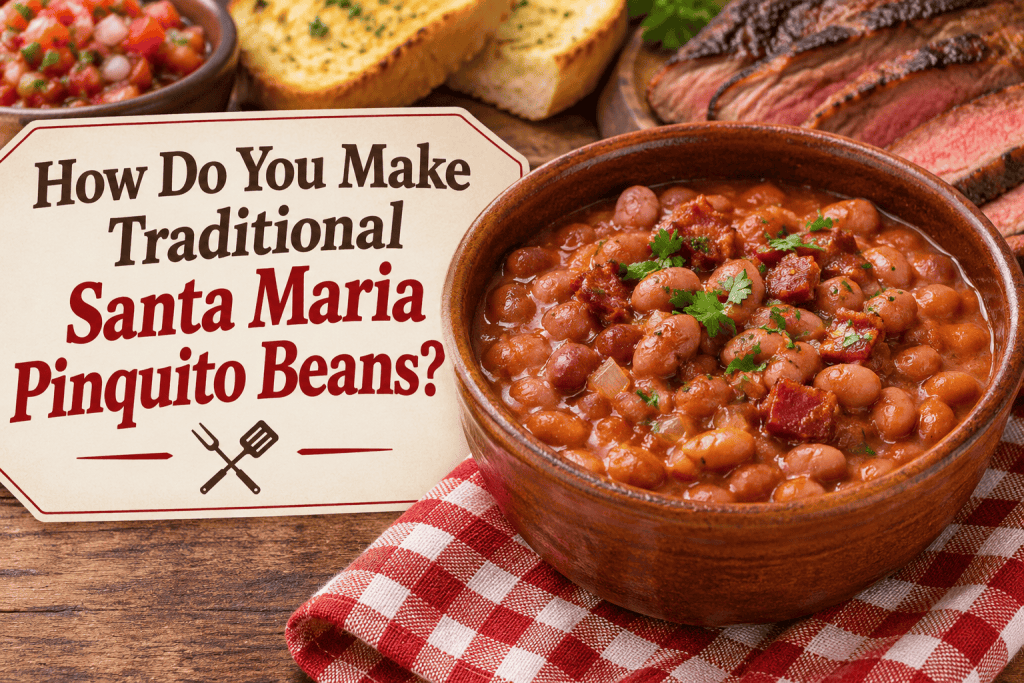
When it comes to authentic California barbecue, few side dishes are as important as traditional Santa Maria pinquito beans. These small, pinkish beans are a signature part of Santa Maria-style barbecue, a Central Coast tradition famous for smoky tri-tip, simple seasonings, and hearty sides.
Unlike ordinary baked beans, Santa Maria pinquito beans are typically prepared with a savory tomato-based sauce, garlic, onions, bacon, and a blend of seasonings that complement the rich flavor of grilled beef.
Their creamy texture, slightly firm bite, and ability to absorb smoky, savory flavors make them an ideal companion to Santa Maria-style tri-tip.
The best part? You don’t need a traditional California barbecue pit or expensive equipment to make authentic-tasting Santa Maria pinquito beans at home.
With dried pinquito beans, a few pantry staples, and some patience, you can recreate one of California’s most recognizable regional barbecue dishes.
What Are Santa Maria Pinquito Beans?
Pinquito beans are small, pink beans closely associated with California’s Santa Maria Valley in Santa Barbara County.
They are smaller than traditional pinto beans and have a distinctive texture that allows them to remain relatively firm while developing a creamy interior during cooking.
These beans became an essential part of Santa Maria-style barbecue, a regional cooking tradition that developed around ranch gatherings and community barbecues along California’s Central Coast.
Traditional Santa Maria barbecue commonly features beef cooked over red oak coals, accompanied by pinquito beans, salsa, garlic bread, and salad.
The beans provide a hearty, flavorful contrast to the smoky meat.
What Makes Pinquito Beans Different From Pinto Beans?
Although their names sound similar, pinquito beans and pinto beans are not identical.
Pinquito beans are generally smaller, with a pinkish color and a texture particularly suited to slow simmering.
Pinto beans are larger and tend to become softer and creamier when cooked for extended periods.
Both varieties work well in savory bean dishes, but pinquito beans are preferred when preparing traditional Santa Maria barbecue.
Their ability to hold their shape makes them especially good for serving alongside grilled tri-tip and other barbecue meats.
Traditional Santa Maria Pinquito Beans Recipe
This homemade recipe combines tender pinquito beans with bacon, tomato sauce, garlic, onions, and seasonings to create a rich, savory barbecue side dish.
It follows a traditional Santa Maria-style approach, although individual family and restaurant recipes vary.
Ingredients
For the beans:
-
1 pound dried Santa Maria pinquito beans
-
6 cups water, plus additional water as needed
-
1 medium yellow onion, diced
-
3 cloves garlic, minced
-
4 slices bacon, chopped
-
1 cup tomato sauce
-
2 tablespoons tomato paste
-
1 tablespoon Worcestershire sauce
-
1 teaspoon dry mustard
-
1 teaspoon chili powder
-
1 teaspoon smoked paprika
-
1 teaspoon salt, or to taste
-
½ teaspoon freshly ground black pepper
-
¼ teaspoon cayenne pepper (optional)
-
1 tablespoon brown sugar (optional)
-
1 tablespoon apple cider vinegar
For serving:
-
Freshly chopped parsley (optional)
-
Grilled Santa Maria-style tri-tip
-
Garlic bread
-
Fresh salsa
Step 1: Sort and Rinse the Pinquito Beans
Place the dried pinquito beans on a clean surface or in a large bowl.
Carefully inspect them for small stones, damaged beans, or debris.
Transfer the beans to a colander and rinse thoroughly under cold running water.
This removes dust and any remaining debris from packaging.
Step 2: Soak the Beans
Place the rinsed beans in a large bowl and cover them with several inches of cold water.
Allow them to soak for 8–12 hours or overnight.
Soaking helps the beans hydrate and can shorten their cooking time.
Once soaked, drain and rinse them again.
If you’re short on time, use the quick-soak method.
Place the beans in a large pot, cover with water, bring to a boil for two minutes, then remove from heat.
Cover the pot and let the beans sit for one hour before draining.
Step 3: Cook the Beans Until Tender
Transfer the soaked beans to a large Dutch oven or heavy-bottomed pot.
Add approximately 6 cups of fresh water, making sure the beans are covered by about 1–2 inches.
Bring the water to a boil, then reduce the heat to a gentle simmer.
Partially cover the pot and cook for approximately 60–90 minutes, checking periodically.
Add additional hot water whenever necessary to keep the beans submerged.
The beans should become tender while maintaining their shape.
Cooking times vary depending on the age of the dried beans and whether they were soaked.
Do not add the tomato sauce or vinegar yet. Acidic ingredients can slow the softening of beans that have not finished cooking.
Step 4: Cook the Bacon and Aromatics
While the beans are approaching tenderness, place a large skillet over medium heat.
Add the chopped bacon and cook until lightly crisp.
Remove excess grease if necessary, leaving approximately one tablespoon in the skillet.
Add the diced onion and cook for 4–5 minutes until softened.
Stir in the minced garlic and cook for another 30–60 seconds.
The garlic should become fragrant without burning.
This mixture creates the savory foundation of the sauce.
Step 5: Prepare the Santa Maria-Style Sauce
Add the tomato sauce and tomato paste to the skillet with the bacon, onions, and garlic.
Stir in the Worcestershire sauce, dry mustard, chili powder, smoked paprika, black pepper, and optional cayenne.
Add the brown sugar if you prefer a slightly sweeter sauce.
Stir everything together and simmer for approximately five minutes.
The sauce should become fragrant and slightly thickened.
Step 6: Combine the Beans and Sauce
Once the beans are fully tender, drain off some of the cooking liquid, reserving at least 2 cups.
Leave enough liquid in the pot to keep the beans moist.
Add the prepared sauce mixture and stir gently.
Pour in additional reserved cooking liquid until the beans reach your preferred consistency.
The finished dish should be saucy rather than dry, but it shouldn’t resemble a thin soup.
Step 7: Simmer Until the Flavors Develop
Return the pot to low heat.
Allow the beans to simmer gently for another 20–30 minutes.
Stir occasionally to prevent sticking.
During this time, the tomato sauce, bacon, garlic, and spices blend with the beans.
Taste and add the salt, adjusting it as needed.
Stir in the apple cider vinegar near the end of cooking.
The vinegar adds a subtle tang that balances the richness of the bacon and tomato sauce.
Step 8: Serve With Santa Maria Barbecue
Remove the beans from the heat and allow them to rest for approximately five minutes.
Spoon them into a serving bowl and garnish with parsley if desired.
Serve warm alongside grilled tri-tip, toasted garlic bread, fresh salsa, and a green salad.
This combination creates a classic Santa Maria-style barbecue meal.
What Makes Traditional Santa Maria Pinquito Beans Taste Authentic?
The secret to great Santa Maria pinquito beans isn’t an overwhelming amount of seasoning.
It’s the balance of simple ingredients, careful cooking, and savory flavor.
Several characteristics distinguish this regional specialty from ordinary barbecue beans.
1. Using Genuine Pinquito Beans
Authentic pinquito beans have a distinctive size, color, and texture.
They absorb the surrounding sauce without completely breaking apart.
Although pinto beans can substitute in a pinch, genuine pinquito beans provide the most recognizable Santa Maria experience.
2. Keeping the Sauce Savory Rather Than Overly Sweet
Many American barbecue bean recipes rely heavily on molasses, brown sugar, and sweet barbecue sauce.
Santa Maria-style pinquito beans are generally more savory.
Tomatoes, garlic, onions, and meat-based seasonings create a rich flavor that complements grilled beef.
A small amount of sugar can balance the tomato acidity, but excessive sweetness can overpower the beans.
3. Adding Bacon for Depth
Bacon contributes saltiness, richness, and a subtle smoky flavor.
Some traditional and family recipes use ham, salt pork, or other pork ingredients instead.
Others use different combinations of seasonings.
There isn’t one universally accepted recipe, but a savory sauce and properly cooked pinquito beans remain central to the dish.
4. Allowing Enough Simmering Time
Rushing the cooking process can produce beans that are unevenly cooked or lack flavor.
Slow simmering allows the beans to soften gradually.
Once the sauce is added, additional simmering helps the ingredients come together.
The result is a dish with deeper flavor and a satisfying texture.
Do You Have to Soak Pinquito Beans Before Cooking?
No. Soaking pinquito beans is helpful but not absolutely necessary.
Dried pinquito beans can be cooked without soaking, although they will generally require more time.
Unsoaked beans may take approximately 2–4 hours to become tender, depending on their age and cooking conditions.
Soaked beans typically cook faster and more evenly.
For home cooks who want predictable results, overnight soaking is a practical option.
Regardless of the method, the most important step is cooking the beans until they are completely tender before introducing acidic ingredients.
Can You Make Santa Maria Pinquito Beans Without Bacon?
Yes. Although bacon is common in many Santa Maria-style recipes, it isn’t required.
For a meatless version, replace the bacon with two tablespoons of olive oil.
Sauté the onions and garlic in the oil before preparing the tomato-based sauce.
To create a deeper flavor, consider adding a small amount of smoked paprika, sautéed mushrooms, or vegetable broth.
Worcestershire sauce often contains anchovies, so use a vegetarian version or substitute a little soy sauce when preparing a vegetarian dish.
The finished beans won’t have exactly the same flavor as the bacon version, but they can still be hearty and satisfying.
Can You Make Santa Maria Pinquito Beans in a Slow Cooker?
A slow cooker can be convenient for keeping prepared pinquito beans warm, but dried beans are best fully cooked on the stovetop before transferring them to a slow cooker.
This ensures the beans reach a proper boil and become completely tender.
Once cooked, combine the beans with the prepared sauce in the slow cooker.
Heat on low until the flavors are blended, then use the warm setting for serving, provided the beans remain at a food-safe temperature of at least 140°F.
This approach works particularly well for family gatherings, backyard barbecues, and holiday meals.
What Can You Serve With Santa Maria Pinquito Beans?
Pinquito beans are traditionally served as part of a complete Santa Maria-style barbecue meal.
However, they also pair well with many other California-inspired dishes.
Santa Maria-Style Tri-Tip
Grilled tri-tip is the most recognizable pairing.
The beef is typically seasoned simply and cooked over red oak coals.
Its smoky flavor and juicy texture complement the savory beans.
Garlic Bread
Warm garlic bread is ideal for soaking up the tomato-based bean sauce.
A crusty French loaf with butter and garlic makes an excellent addition.
Fresh Tomato Salsa
Fresh salsa adds acidity and brightness to the meal.
Tomatoes, onions, cilantro, jalapeños, and lime juice provide a refreshing contrast to the beans and grilled meat.
Grilled Chicken
Santa Maria pinquito beans also work well with grilled chicken.
Season the chicken with garlic, black pepper, salt, and paprika for a simple barbecue meal.
Green Salad
A crisp green salad helps balance the heavier components of the meal.
A straightforward vinaigrette is usually all that’s needed.
Common Mistakes When Making Santa Maria Pinquito Beans
Even a relatively simple bean recipe can go wrong when certain steps are overlooked.
Adding Tomatoes Too Early
Tomato sauce and vinegar are acidic.
Adding them before the beans become tender can slow the cooking process.
Always allow the beans to soften before incorporating the tomato-based sauce.
Cooking the Beans at a Hard Boil
A vigorous boil can cause the beans to split and lose their shape.
After the initial boil, reduce the heat to a gentle simmer.
Using Too Much Sugar
Traditional Santa Maria-style beans should not taste like overly sweet canned baked beans.
Use sugar sparingly, if at all.
Letting the Pot Run Dry
Dried beans absorb a significant amount of liquid during cooking.
Check the pot regularly and add hot water whenever necessary.
Overcooking the Beans
Pinquito beans should be tender but not completely mushy.
Check them periodically toward the end of cooking.
The goal is a creamy interior with beans that still hold their shape.
How Do You Make Santa Maria Pinquito Beans Thicker?
If the finished beans seem too watery, there are several easy ways to thicken them.
The simplest method is to simmer them uncovered for an additional 10–15 minutes.
As the excess liquid evaporates, the sauce becomes more concentrated.
Another method is to mash a small portion of the cooked beans against the side of the pot.
Stir the mashed beans back into the sauce.
Their natural starch helps thicken the liquid without adding flour or cornstarch.
You can also stir in a small amount of tomato paste for a richer tomato flavor.
Avoid making the sauce excessively thick.
Santa Maria pinquito beans should remain moist and spoonable.
Can You Make Santa Maria Pinquito Beans Ahead of Time?
Yes. In fact, preparing them ahead of time can improve their flavor.
As the beans rest in the refrigerator, the sauce continues to develop.
This makes them especially convenient for barbecues and family gatherings.
Prepare the beans one day before serving and allow them to cool promptly.
Transfer them to shallow airtight containers and refrigerate within two hours of cooking.
Reheat them gently on the stovetop, adding a splash of water or broth if the sauce becomes too thick.
Heat leftovers thoroughly to 165°F before serving.
How Long Do Santa Maria Pinquito Beans Last in the Refrigerator?
Cooked pinquito beans generally keep for 3–4 days when stored properly in the refrigerator at 40°F or below.
Use airtight containers to preserve their flavor and prevent them from drying out.
For longer storage, freeze the beans in freezer-safe containers.
They maintain their best quality for approximately 2–3 months in the freezer, although properly frozen food can remain safe longer.
Leave a little space at the top of each container because the liquid expands as it freezes.
Thaw frozen beans in the refrigerator before reheating.
Can You Substitute Pinto Beans for Pinquito Beans?
Yes. Pinto beans are the most practical substitute when genuine Santa Maria pinquito beans aren’t available.
They have a mild flavor and work well with the same tomato-based sauce.
However, their larger size and softer texture create a slightly different finished dish.
Small pink beans may also work as a substitute.
For the most traditional flavor and presentation, look for dried pinquito beans from growers or specialty food suppliers associated with California’s Central Coast.
Frequently Asked Questions About Santa Maria Pinquito Beans
Are Santa Maria Pinquito Beans Spicy?
Traditional Santa Maria-style pinquito beans are generally mild and savory rather than intensely spicy.
Some recipes include chili powder, hot sauce, or cayenne pepper, but these ingredients can be adjusted to taste.
Are Pinquito Beans the Same as Pink Beans?
Not exactly. Pinquito beans are a particular small pink bean associated with the Santa Maria region. Other pink beans may look similar but differ in size, texture, and cooking characteristics.
What Meat Goes Into Santa Maria Pinquito Beans?
Many recipes include bacon, ham, or salt pork for additional flavor. However, some versions are meatless.
The beans are commonly served alongside grilled tri-tip rather than containing beef themselves.
Can You Use Canned Beans Instead of Dried Pinquito Beans?
Yes. Canned pink or pinto beans can make a quicker version of this dish.
Drain and rinse the beans, prepare the sauce separately, then combine everything and simmer for approximately 20–30 minutes.
The flavor and texture won’t be identical to slow-cooked dried pinquito beans, but the result can still be delicious.
Why Are Pinquito Beans Served With Santa Maria BBQ?
Pinquito beans became a traditional accompaniment to Santa Maria barbecue because they are hearty, flavorful, and complement grilled beef.
They are part of the region’s longstanding ranching and community barbecue traditions.
What Is the Best Way to Reheat Pinquito Beans?
Reheat them in a saucepan over medium-low heat, stirring occasionally.
Add a small amount of water or broth to loosen the sauce if necessary.
Heat until the beans reach 165°F throughout.
Final Thoughts: Making Traditional Santa Maria Pinquito Beans at Home
Traditional Santa Maria pinquito beans represent an important part of California’s Central Coast barbecue heritage.
Their small size, creamy interior, savory tomato-based sauce, and ability to complement smoky grilled beef make them a distinctive regional specialty.
Although individual recipes vary, the foundation remains simple: properly cooked pinquito beans, flavorful aromatics, savory seasonings, and enough simmering time to bring everything together.
Whether you’re preparing a full Santa Maria-style tri-tip dinner, hosting a backyard barbecue, or exploring traditional California foods, homemade pinquito beans are a satisfying addition to the table.
The key to making great Santa Maria pinquito beans is to keep the flavors balanced, cook the beans until tender, and let their natural texture shine.
With a little patience and a few simple ingredients, you can bring an authentic taste of California’s Santa Maria barbecue tradition into your own kitchen.
Leave a Reply