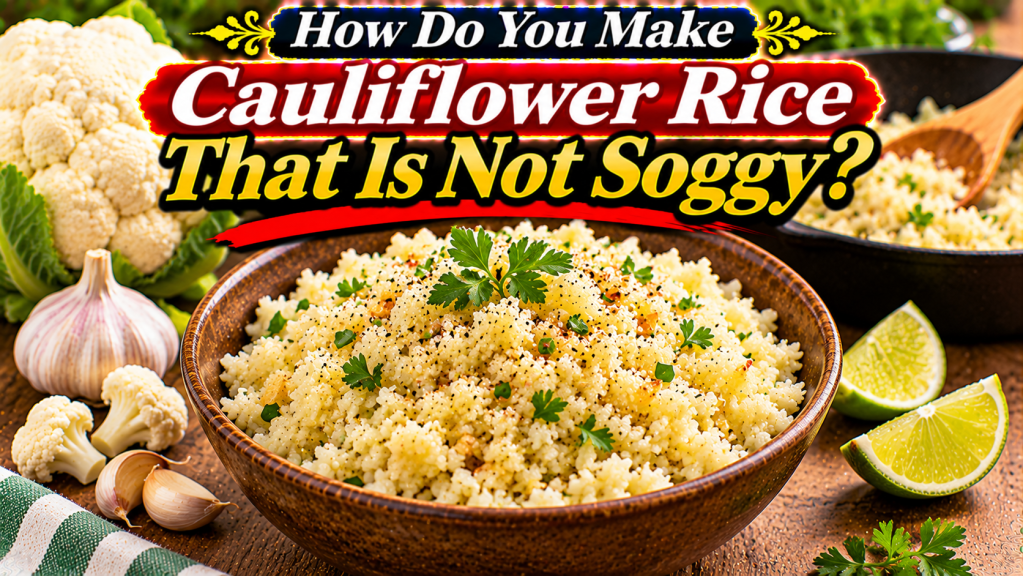
To make cauliflower rice that is not soggy, start with dry cauliflower, cut it into rice-sized pieces, and cook it in a wide, hot skillet without a lid. Use only a small amount of oil and stir occasionally so steam can escape. The biggest causes of watery cauliflower rice are overcrowding the pan, adding too much liquid, and cooking it for too long. With the right method, cauliflower rice becomes light, tender, and slightly firm instead of mushy.
Recipe Overview
This recipe makes four side-dish servings and takes approximately fifteen minutes from start to finish. You will need one medium-to-large head of cauliflower, a box grater or food processor, a large skillet, and a spatula. Preparation takes about ten minutes and cooking takes five to eight minutes. The goal is cauliflower that is cooked through but still has a pleasant bite. It is a versatile low-carb alternative to traditional rice for stir-fries, burrito bowls, and weeknight dinners.
Ingredients
Use one medium-to-large head of cauliflower, approximately one and one-half to two pounds before trimming; one tablespoon olive oil or avocado oil; one-quarter teaspoon fine salt, adjusted to taste; one-quarter teaspoon freshly ground black pepper; and one small garlic clove, minced, optional. For finishing, add one tablespoon chopped parsley, cilantro, or green onion and a squeeze of fresh lemon juice if desired. Avoid adding broth or water at the beginning because cauliflower releases moisture as it heats.
Why Cauliflower Rice Gets Soggy
Cauliflower contains a large amount of water. When its florets are chopped into tiny pieces, that moisture escapes quickly during cooking. If the skillet is crowded, the water cannot evaporate fast enough, so the cauliflower steams in its own liquid. Covering the pan traps even more steam. Cooking for too long breaks down the vegetable’s structure and turns the pieces soft. The solution is a large cooking surface, moderate-high heat, minimal liquid, and a short cooking time.
Choosing the Best Cauliflower
Look for a cauliflower head with firm, tightly packed florets and no soft or slimy areas. Fresh cauliflower usually gives you more control over moisture than frozen cauliflower rice. Choose a head that feels heavy for its size. Small brown spots can sometimes be trimmed away, but avoid heads with widespread discoloration or an unpleasant smell. If using pre-riced cauliflower from the produce section, check the package for excess condensation and use it promptly.
Step 1: Wash and Dry the Cauliflower
Remove the outer leaves and cut away the thick core. Rinse the florets under cool running water, then drain thoroughly. Pat them dry with a clean kitchen towel or paper towels. A salad spinner can help remove water after washing. This step matters because any water clinging to the florets will enter the skillet and increase steaming. Do not soak the cauliflower for a long time before processing it.
Step 2: Cut Into Even Florets
Break or cut the cauliflower into medium-sized florets. Keep the pieces similar in size so they process evenly. Trim off especially thick stem portions, although tender stems can be included. If the florets are extremely large, cut them in half before placing them in the food processor. Working with manageable pieces helps prevent some cauliflower from turning into a purée while other pieces remain too large.
Step 3: Rice the Cauliflower
For a food processor, pulse small batches of florets four to six times, checking frequently. Stop when the pieces resemble grains of rice. Do not run the processor continuously, because it can create wet cauliflower crumbs or a paste. Without a food processor, use the large holes of a box grater and grate the florets carefully. A sharp knife can also work, although chopping takes longer. Aim for small, distinct pieces rather than a finely mashed texture.
Step 4: Remove Any Excess Moisture
Spread the riced cauliflower on a clean towel and gently blot it dry if it feels damp. Freshly processed cauliflower usually needs only light drying. If the rice looks unusually wet, wrap it in a clean towel and squeeze gently to remove some moisture. Do not squeeze so hard that the grains become crushed. Removing water before cooking makes it easier to sauté the cauliflower rather than steam it.
Step 5: Heat a Wide Skillet
Place a large skillet over medium-high heat and allow it to warm for about a minute. Add one tablespoon of olive oil and swirl to coat the surface. A wide skillet provides more room for evaporation than a small saucepan. If you are preparing a large batch, cook it in two portions instead of piling all the cauliflower into one pan. The oil should shimmer lightly but should not smoke.
Step 6: Cook Uncovered
Add the cauliflower rice in an even layer. Cook uncovered for approximately five to eight minutes, stirring every minute or so. Allow the cauliflower to sit briefly between stirs so moisture evaporates and some pieces develop a little color. If liquid collects in the skillet, keep cooking uncovered until it disappears. The grains should become tender but remain separate. Stop before they become completely soft, because residual heat will continue cooking them.
Step 7: Season Near the End
Add salt and black pepper during the final minute of cooking. If using garlic, stir it in during the last thirty to sixty seconds so it becomes fragrant without burning. Salt draws moisture from vegetables, so seasoning toward the end can help preserve a drier texture. Add chopped herbs or lemon juice after removing the skillet from the heat. Use only a small squeeze of lemon if you want the rice to stay especially fluffy.
Step 8: Serve Immediately
Transfer the finished cauliflower rice to a shallow serving dish rather than leaving it in the hot skillet. Fluff gently with a fork or spatula. Serve with grilled chicken, salmon, beef, roasted vegetables, or a saucy curry. If you are using it in a bowl with a wet topping, spoon the topping on just before eating. This prevents the rice from absorbing extra sauce and becoming soggy while it sits.
How to Cook Frozen Cauliflower Rice Without Making It Watery
Frozen cauliflower rice can turn out well, but it usually releases more moisture than fresh cauliflower. Cook it directly from frozen rather than thawing it in a bowl of water. Heat a large skillet over medium-high heat, add a little oil, and spread the frozen rice into an even layer. Leave the skillet uncovered and cook until the ice melts and excess moisture evaporates, often eight to twelve minutes. Stir occasionally, then season at the end. If the pan becomes crowded, cook in batches.
Should You Boil Cauliflower Rice?
Boiling is not the best method when you want separate, fluffy grains. The tiny cauliflower pieces absorb and retain water, which makes draining difficult. Steaming can work if done briefly, but sautéing in a wide skillet offers better control over moisture. For recipes where cauliflower rice will be mixed into a casserole or soup, boiling may be less of a concern because the dish is already moist. For a rice substitute served on its own, dry skillet cooking is usually preferable.
Why You Should Not Cover the Skillet
A lid traps steam and causes moisture to condense and fall back onto the cauliflower. That makes the rice softer and wetter. Leaving the skillet uncovered allows water to escape while the cauliflower cooks. If you need to cook a particularly thick batch, reduce the quantity in the pan rather than adding a lid. The goal is to use enough heat to evaporate moisture without scorching the small vegetable pieces.
How to Fix Soggy Cauliflower Rice
If your cauliflower rice is already watery, spread it in a large, hot, lightly oiled skillet and cook uncovered for a few more minutes. Stir gently to expose damp pieces to the heat. If there is a large pool of liquid, drain it first. Avoid adding flour or cornstarch, which changes the texture and carbohydrate content. If the rice is already mushy from overcooking, you cannot fully restore its firmness, but you can use it in cauliflower fritters, soup, or a casserole.
How to Make Garlic Butter Cauliflower Rice
For a richer side dish, cook the cauliflower rice with one teaspoon olive oil and add one tablespoon butter during the final minute. Stir in one minced garlic clove and cook briefly until fragrant. Finish with parsley and black pepper. Adding butter near the end gives the rice a savory flavor without letting it sit in melted fat throughout cooking. Serve alongside steak, roasted chicken, or shrimp. For a dairy-free version, use olive oil instead of butter.
How to Make Cilantro Lime Cauliflower Rice
Prepare the basic cauliflower rice without garlic. After removing it from the heat, stir in two tablespoons chopped fresh cilantro, one teaspoon lime juice, and a little finely grated lime zest. Taste and adjust salt. Keep the lime juice modest because too much liquid can make the grains wet. This variation is excellent in taco bowls with grilled chicken, seasoned beef, avocado, or black soybeans. Add fresh toppings only when ready to serve.
Is Cauliflower Rice Keto-Friendly?
Cauliflower rice is commonly used in keto and low-carb meals because cauliflower contains fewer digestible carbohydrates than cooked white rice. The exact carbohydrate content depends on the serving size and any sauces or seasonings added. If tracking carbohydrates, calculate the portion using nutrition information for the amount of cauliflower you actually use. Restaurant-style sauces, sweet marinades, and certain packaged cauliflower rice products may add carbohydrates, so check ingredient labels.
How to Store Cooked Cauliflower Rice
Allow cooked cauliflower rice to cool promptly and refrigerate it in an airtight container within two hours. Use within three to four days. To reheat, spread it in a hot skillet and cook uncovered until steaming hot throughout, ideally reaching 165°F for leftovers. Avoid adding water unless the rice is unusually dry. Reheating in a skillet helps remove condensation that develops during refrigeration. Store sauces separately whenever possible.
Can You Freeze Cauliflower Rice?
Yes. Raw riced cauliflower freezes well. Spread it on a baking sheet to freeze briefly, then transfer it to a freezer-safe bag, pressing out excess air. Use within two to three months for best quality. Cook directly from frozen in a hot skillet rather than thawing it first. Cooked cauliflower rice can also be frozen, but its texture may soften when reheated. Freeze in small portions so you can cook only what you need.
Common Mistakes to Avoid
Processing cauliflower until it becomes a paste, cooking in a crowded pan, and adding water are the biggest mistakes. A covered skillet traps steam, while low heat can allow the cauliflower to sit in its own moisture. Overcooking breaks down the grains and makes them mushy. Too much sauce has the same effect after cooking. Use short pulses to rice the florets, a wide hot skillet, minimal oil, and a short uncovered cooking time.
Frequently Asked Questions
How do you make cauliflower rice fluffy? Dry the cauliflower and sauté it uncovered in a wide skillet. Why is my cauliflower rice soggy? Excess moisture, overcrowding, or overcooking are common causes. Should you cook frozen cauliflower rice from frozen? Yes, it can go directly into a hot skillet. Do you need to squeeze cauliflower rice? Only if it is unusually wet. Can you boil it? You can, but boiling is more likely to produce a watery result. How long does it take to cook? Fresh cauliflower rice usually takes five to eight minutes. Can you freeze it? Yes, raw or cooked. Can you use it for fried rice? Yes, with a small amount of sauce and high enough heat to evaporate moisture.
Final Thoughts
Cauliflower rice that is not soggy starts with proper preparation and quick cooking. Dry the florets, pulse them into rice-sized pieces, and sauté in a wide skillet without a lid. Keep the heat high enough for moisture to evaporate, avoid overcrowding, and add seasonings near the end. The same principles work with fresh or frozen cauliflower rice. With a little practice, you can make a fluffy, flavorful low-carb side dish for almost any meal.
Leave a Reply