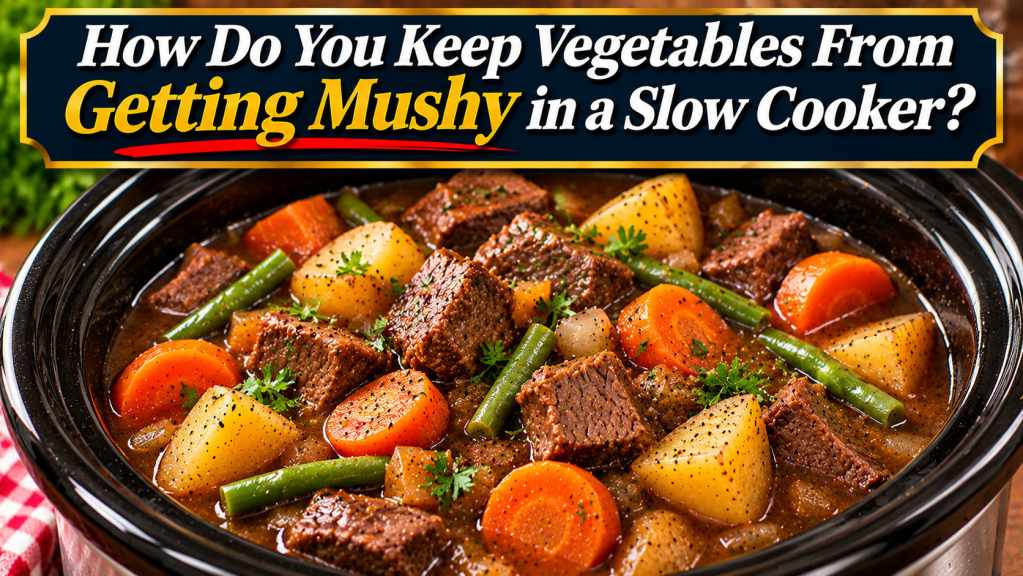
To keep vegetables from getting mushy in a slow cooker, choose sturdy varieties, cut them into larger, even pieces, and add delicate vegetables near the end of cooking. Potatoes, carrots, turnips, and parsnips can handle several hours of gentle heat, while zucchini, peas, spinach, and broccoli often need much less time. The goal is to match each vegetable to the cooking schedule of the meat or sauce, rather than putting every ingredient in the pot at the beginning.
Why Vegetables Become Mushy
Vegetables soften when heat breaks down their cell walls and changes the structure of their pectin and starch. A slow cooker keeps food warm and moist for hours, so vegetables can continue softening long after they are fully cooked. Small pieces break down more quickly because heat reaches their centers sooner. Acidic ingredients, vegetable variety, and cooker temperature also influence texture. Mushiness is usually a timing problem, not a sign that the recipe needs less liquid.
Choose the Right Vegetables
Firm root vegetables are the best candidates for long cooking. Carrots, potatoes, rutabagas, turnips, and parsnips hold their shape better than tender greens. Butternut squash can work if cut into large pieces, although it becomes soft during an extended cook. Mushrooms release liquid and shrink but may retain a pleasant bite. Broccoli, cauliflower, green beans, zucchini, spinach, and peas generally benefit from later addition when you want a distinct texture.
Cut Vegetables Into Larger Pieces
For an eight-hour pot roast, cut potatoes into chunks around one and one-half to two inches and carrots into thick pieces rather than thin coins. Large pieces take longer to soften and are less likely to fall apart when stirred. Try to make pieces of the same vegetable similar in size. Small diced vegetables are appropriate for soups where they are meant to melt into the broth, but not for a stew where you want each piece to remain visible.
Layer Ingredients Strategically
Place sturdy root vegetables near the bottom or sides of the slow cooker, where they receive steady heat from the cooking liquid. Put meat above them in many roast recipes. Delicate vegetables should not be buried underneath a large roast for an entire day. If you plan to add broccoli or zucchini later, leave enough space in the cooker for those ingredients. Follow the appliance’s recommended fill levels so heat can circulate effectively.
When to Add Different Vegetables
Large potatoes and carrots often go in at the beginning of a six- to eight-hour cook. Green beans may need the final one to two hours, depending on how tender you like them. Broccoli and cauliflower florets can be added during the last thirty to sixty minutes on high, while spinach and peas usually need only the final few minutes to warm and wilt. These are approximate windows; check the actual tenderness and adjust for your appliance.
Easy Slow Cooker Beef and Vegetable Stew
This recipe makes about six servings and uses staggered vegetable additions to keep the final stew hearty rather than mushy. Allow twenty minutes for preparation and approximately seven to nine hours on low, depending on the beef and cooker. A six-quart slow cooker works well. The beef should become fork-tender, the potatoes should be soft without disintegrating, and the green beans should still have a little structure.
Ingredients
Use two pounds beef chuck cut into one-and-one-half-inch cubes; one pound Yukon Gold potatoes cut into large chunks; three carrots cut into thick pieces; one onion cut into wedges; two celery stalks cut into thick pieces; three garlic cloves minced; three cups low-sodium beef broth; two tablespoons tomato paste; one teaspoon dried thyme; one teaspoon dried rosemary; one bay leaf; one-half teaspoon black pepper; salt to taste; and eight ounces green beans trimmed and halved. Add one tablespoon oil for optional browning and fresh parsley for serving.
Step 1: Prepare the Beef
Pat the beef cubes dry and season lightly with salt and pepper. If desired, brown them in a skillet with a tablespoon of oil, working in batches so the meat sears rather than steams. Browning adds flavor but is not essential. Transfer the beef promptly to the slow cooker. Do not partially cook meat and refrigerate it to finish later; complete the cooking process after browning.
Step 2: Cut the Root Vegetables
Scrub the potatoes and carrots. Cut potatoes into large chunks and carrots into thick, evenly sized pieces. Cut celery into pieces about one inch long, and slice the onion into wedges. These sizes help the vegetables withstand long cooking. If you prefer especially firm carrots, reserve half and add them later. Keep all prepared ingredients refrigerated until you are ready to assemble the stew.
Step 3: Assemble the Slow Cooker
Place potatoes, carrots, onions, and celery in the bottom of the cooker. Add the beef, garlic, thyme, rosemary, and bay leaf. Stir the tomato paste into the broth and pour it over the ingredients. The liquid should surround much of the mixture without exceeding the appliance’s fill line. Do not add the green beans yet. Cover the cooker and begin cooking promptly.
Step 4: Cook the Beef and Roots
Cook on low for approximately six to eight hours, checking near the end for fork-tender beef and nearly tender potatoes. Avoid opening the lid repeatedly because heat escapes each time. If the beef remains tough, it may need more time for connective tissue to soften. If the potatoes are already tender, handle them gently when stirring so they do not break apart.
Step 5: Add the Green Beans Later
When the beef is nearly tender, add the green beans and replace the lid. Switch to high if needed and cook for approximately thirty to sixty minutes, until the beans reach your preferred texture. Thick green beans may need longer than thin ones. If you like very soft beans, add them earlier. Remove the bay leaf before serving and taste the broth for seasoning.
Step 6: Serve Without Overstirring
Use a ladle to portion the stew into bowls, lifting the vegetables gently so they retain their shape. Garnish with parsley if desired. If you want thicker broth, remove a little liquid and reduce it in a saucepan, or mash a few potato pieces into the stew. Avoid vigorous stirring, which can break down softened vegetables. Serve with crusty bread or a side salad if desired.
Should You Cook Vegetables on Low or High?
Both settings can soften vegetables, but the timing differs. Low generally gives you a longer cooking window and may be more forgiving for tough meat. High can cook small vegetable pieces quickly and make it easier to overshoot their ideal texture. Neither setting guarantees crisp vegetables after eight hours. Choose the setting based on the meat and add delicate produce late enough that it finishes near serving time.
How to Keep Potatoes From Falling Apart
Use Yukon Gold or red potatoes instead of russets when you want distinct chunks. Cut them into larger pieces and avoid stirring them repeatedly. Russets are starchier and can break down, which is useful for thickening soup but less desirable in pot roast. If your meat needs a very long cook, add potatoes during the final few hours rather than at the beginning. Test tenderness with a fork instead of relying solely on a timer.
How to Keep Carrots Firm
Cut carrots into thick chunks rather than thin slices. Large pieces hold their shape longer. In an all-day roast, add carrots at the start for a very soft texture or during the final two to four hours for firmer results, depending on cooker setting and size. Avoid very small baby carrots if you want a substantial bite. Check a thick piece before serving and adjust future batches based on how your cooker performs.
When Should You Add Broccoli?
Broccoli can become olive-colored and very soft during prolonged slow cooking. For brighter color and better structure, add florets during the final thirty to sixty minutes on high, checking often. If the stew is already fully cooked, you can steam broccoli separately and fold it in just before serving. This gives you more control over tenderness and prevents the florets from disintegrating into the sauce.
When Should You Add Zucchini?
Zucchini contains a great deal of water and cooks quickly. Cut it into thick half-moons or large chunks and add it near the end, often for the final twenty to forty minutes on high. Smaller pieces may need less time. If you put zucchini in at the beginning of an eight-hour stew, it will likely collapse into the broth. That can be useful for a blended vegetable sauce, but not for a dish where you want recognizable zucchini pieces.
When Should You Add Spinach and Peas?
Tender spinach and frozen peas usually need only a few minutes at the end of cooking. Stir them into hot soup or stew, replace the lid, and allow them to heat through. Spinach wilts rapidly and peas can lose their bright color if cooked too long. If adding frozen peas, ensure the entire dish returns to a safe serving temperature. These ingredients are best treated as finishing additions rather than long-cooking vegetables.
Should You Use Fresh or Frozen Vegetables?
Fresh root vegetables are usually easier to control in a long-cooked roast. Frozen broccoli, peas, corn, and green beans can be convenient, but they may release additional moisture and soften faster after thawing. Add most frozen vegetables near the end and adjust timing for their size. Frozen mixed vegetables with very small pieces are especially prone to becoming soft. Follow package directions when relevant and avoid thawing foods at room temperature.
Does Too Much Liquid Cause Mushiness?
Extra liquid can make a stew watery, but long cooking time is usually the main cause of vegetables losing structure. Slow cookers retain moisture, so you often need less broth than you would for stovetop cooking. Too much liquid may also dilute flavor. Use the amount specified in a tested recipe and let the vegetables release their natural juices. Reducing the liquid at the end can improve flavor without forcing the vegetables to cook longer.
Can You Add Vegetables After the Meat Is Cooked?
Yes. If the beef or pork is tender before the vegetables are ready, keep the meat hot and cook the vegetables in the liquid until tender. Alternatively, prepare delicate vegetables separately and combine them just before serving. This method gives excellent control over texture, although it requires more attention than a completely hands-off meal. When adding ingredients to a hot slow cooker, replace the lid promptly to maintain cooking temperature.
How to Fix Vegetables That Are Already Mushy
You cannot restore a crisp bite once vegetables have broken down, but you can still make the meal enjoyable. Mash the softened potatoes or carrots into the broth to create a thicker stew. Blend part of the vegetables into a smooth soup base. Add freshly steamed green beans, broccoli, or peas just before serving for texture contrast. Avoid vigorous stirring, which can turn the remaining pieces into a purée.
Food Safety for Slow Cooker Vegetables and Meat
Thaw large frozen cuts of meat safely in the refrigerator before slow cooking. Follow the slow cooker manufacturer’s instructions and do not overfill the vessel. Check meat with a thermometer: poultry should reach 165°F, ground meat generally 160°F, and whole beef or pork roasts at least 145°F with a three-minute rest, though braising cuts often cook beyond that for tenderness. Refrigerate leftovers within two hours and reheat to 165°F throughout.
Storing and Reheating Leftovers
Transfer leftovers to shallow containers and refrigerate promptly. Use within three to four days. Reheat gently in a saucepan or microwave, stirring occasionally, until the food reaches 165°F. Vegetables will soften further during reheating, so avoid prolonged simmering. Freeze stew in portions for up to two to three months for best quality, understanding that potatoes and some vegetables may become softer after thawing.
Common Mistakes to Avoid
Do not cut every vegetable into tiny pieces, add zucchini and spinach at the beginning, or stir a finished stew aggressively. Avoid assuming that a full cooker heats at the same rate as a half-full one. Repeatedly lifting the lid can lengthen cooking time. Choose sturdy vegetables for the early stages, add tender varieties later, and test texture before serving. A little planning makes a noticeable difference in the finished meal.
Frequently Asked Questions
Why are my slow cooker vegetables mushy? They probably cooked too long or were cut too small. What vegetables hold up best? Potatoes, carrots, turnips, and parsnips. Should vegetables go under the meat? Firm root vegetables often do well near the bottom. When should I add broccoli? Usually near the end. Can I add frozen vegetables? Yes, often during the final portion of cooking. Is low better than high? Low provides a longer window but does not prevent overcooking. Can mushy vegetables be fixed? Not fully, but they can thicken a soup or stew. How do I keep potatoes intact? Use waxy varieties and larger chunks.
Final Thoughts
Keeping vegetables from getting mushy in a slow cooker comes down to choosing the right varieties, cutting them appropriately, and adding them at the right time. Root vegetables can withstand hours of cooking, while broccoli, zucchini, spinach, and peas need shorter windows. Layer sturdy ingredients first, check tenderness near the end, and handle softened vegetables gently. With these simple changes, slow cooker meals can have tender meat and vegetables that still look and taste distinct.
Leave a Reply