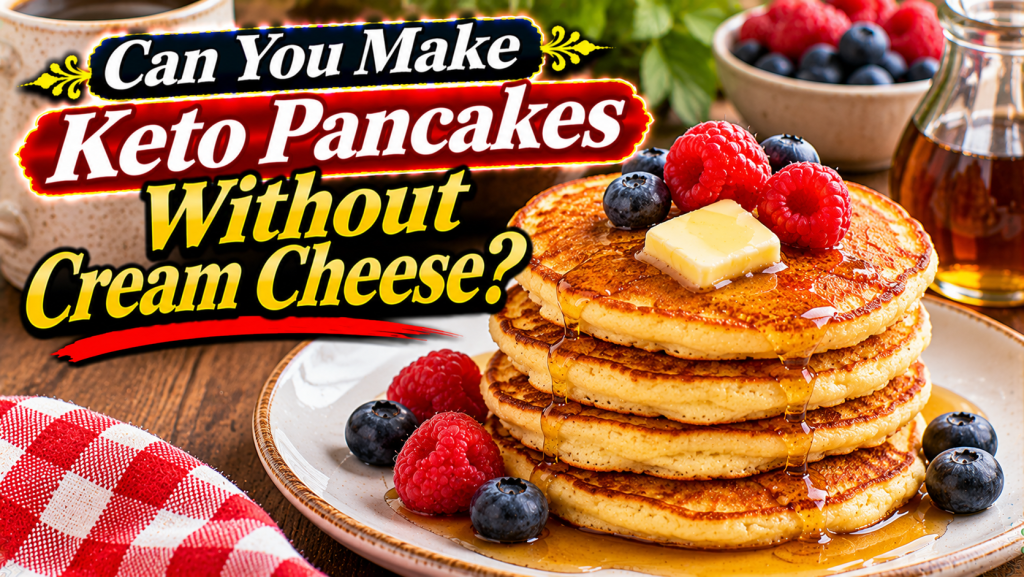
Yes, you can make keto pancakes without cream cheese. Almond flour, eggs, unsweetened almond milk, baking powder, and a little melted butter create tender, lightly fluffy pancakes without the tang or dense texture that cream cheese can add. The trick is to make a thick but spoonable batter, cook over medium-low heat, and flip only after the edges have set. These pancakes are smaller and more delicate than wheat-flour pancakes, but they make a satisfying low-carb breakfast with butter, berries, or a sugar-free syrup.
Recipe Overview
This recipe makes approximately eight small pancakes, enough for two to three servings. Preparation takes ten minutes, resting takes five minutes, and cooking takes about fifteen minutes. You will need two bowls, a whisk, a nonstick skillet or griddle, and a thin spatula. For consistent results, make pancakes about three inches wide. Smaller pancakes are easier to flip because almond flour does not contain the gluten that gives conventional pancakes their structure.
Ingredients
Use one cup finely ground blanched almond flour, two large eggs, one-quarter cup unsweetened almond milk, one tablespoon melted unsalted butter or coconut oil, one teaspoon baking powder, one-half teaspoon vanilla extract, one tablespoon granulated keto-friendly sweetener if desired, one-quarter teaspoon cinnamon if desired, and a pinch of salt. Keep extra almond milk available to adjust the batter. Use fresh baking powder for a better rise, and check sweetener labels because blends vary in sweetness and carbohydrate content.
Why Cream Cheese Is Not Necessary
Some popular keto pancake recipes rely on cream cheese and eggs, producing thin, crepe-like pancakes. Almond flour offers a different approach: it provides substance and a mild nutty flavor, while eggs bind the batter and baking powder helps it rise. A little fat adds tenderness. Without cream cheese, the finished pancakes taste less tangy and are easier to customize with vanilla, cinnamon, lemon zest, or savory seasonings. They also work for anyone avoiding cream cheese specifically, although this version still contains butter unless substituted.
Step 1: Mix the Dry Ingredients
Whisk the almond flour, baking powder, salt, and optional cinnamon in a medium bowl. Break up any clumps so the baking powder is distributed evenly. Finely ground blanched almond flour produces a smoother texture than coarse almond meal. Do not substitute coconut flour in equal amounts, because coconut flour absorbs much more liquid. If your almond flour has been stored in the refrigerator, let it warm slightly before mixing so the batter combines evenly.
Step 2: Combine the Wet Ingredients
In a separate bowl, whisk the eggs until the yolks and whites are blended. Add the almond milk, melted butter, vanilla, and optional sweetener. Make sure the butter is warm rather than hot so it does not cook the eggs. If using a granulated sweetener, whisk until it is well dispersed. The wet mixture should be smooth, with no large streaks of egg white. This step helps the batter cook evenly.
Step 3: Make the Batter
Pour the wet ingredients into the almond flour mixture and stir gently until no dry pockets remain. The batter should be thick enough to hold its shape briefly when spooned onto a skillet, but not so stiff that it cannot spread. Add another teaspoon of almond milk if necessary. Avoid adding large amounts of liquid at once, because thin almond flour batter can spread too far and become difficult to flip. Small lumps are acceptable.
Step 4: Let the Batter Rest
Allow the batter to stand for approximately five minutes. This gives the almond flour time to absorb some moisture and makes the pancakes easier to portion. Stir once after resting. If the mixture has become very thick, loosen it with a teaspoon or two of almond milk. Unlike wheat pancake batter, this mixture does not develop gluten, but excessive stirring can still knock out some of the air from the beaten eggs.
Step 5: Heat the Skillet
Place a nonstick skillet or griddle over medium-low heat. Lightly grease with butter or a neutral cooking oil and wipe away excess. The pan should be warm enough that a small drop of batter begins to set gently, not so hot that it browns immediately. Almond flour contains fat and can brown faster than ordinary flour. Cooking at a lower temperature gives the center time to set before the exterior becomes too dark.
Step 6: Cook Small Pancakes
Spoon about two tablespoons of batter per pancake onto the skillet, leaving space between portions. Gently spread each into a circle roughly three inches across. Cook for two to three minutes, until the edges appear set and the underside is golden. Small bubbles may appear, but almond flour pancakes do not always bubble like wheat pancakes. Use the firm edges and lightly browned underside as your main signals.
Step 7: Flip Carefully
Slide a thin spatula fully beneath one pancake and turn it in a single gentle motion. Cook the second side for approximately one to two minutes, until golden and set. If the pancake bends or breaks, it may need another thirty seconds on the first side before flipping. Avoid pressing down with the spatula, which can make the pancakes dense. Transfer finished pancakes to a plate and continue with the remaining batter.
Step 8: Serve Warm
Stack two or three pancakes per serving and add a small pat of butter, a few fresh raspberries or strawberries, or a modest drizzle of sugar-free syrup. For a more filling breakfast, pair them with scrambled eggs or another protein-rich food. Serve promptly for the best texture. If preparing several batches, keep cooked pancakes on a wire rack in a low oven rather than stacking them tightly while they are still steaming.
How to Make Keto Pancakes Fluffy
Fresh baking powder is important because it helps the batter expand during cooking. Whisk the eggs thoroughly and let the batter rest briefly before cooking. Make pancakes small and relatively thick rather than spreading the batter into thin crepes. Use medium-low heat so the interior can cook without burning. For extra lift, separate the eggs, beat the whites to soft peaks, and fold them into the finished batter immediately before cooking. This variation requires gentle handling but can produce a lighter texture.
Why Keto Pancakes Fall Apart
Almond flour contains no gluten, so pancakes made with it are more fragile than traditional pancakes. Excess almond milk, oversized pancakes, and flipping before the first side sets are common causes of breakage. Measure the ingredients carefully, make smaller pancakes, and use a wide spatula. If the batter remains too loose, stir in a teaspoon of almond flour and let it stand briefly. Adding more eggs may improve binding but can also make the pancakes taste eggier.
How to Prevent Burnt Outside and Raw Centers
A hot skillet can brown almond flour before the eggs in the center have set. Reduce the heat and allow the pan to stabilize between batches. Avoid making pancakes too thick or too wide. If the edges are browning quickly while the center still looks wet, lower the burner and cook for another minute. A heavy nonstick skillet distributes heat more evenly than a very thin pan. Wipe away darkened butter between batches if necessary.
Can You Use Coconut Flour Instead?
Coconut flour is another popular low-carb baking ingredient, but it absorbs far more moisture than almond flour. Replacing one cup of almond flour with one cup of coconut flour would produce a dry, unworkable batter. Use a pancake recipe specifically formulated for coconut flour, which generally needs more eggs and liquid. Coconut flour also gives pancakes a different flavor and texture. If you have an almond allergy, do not assume all other ingredients are safe without checking labels and cross-contact concerns.
Can You Make the Pancakes Dairy-Free?
Yes. Replace melted butter with coconut oil, avocado oil, or another suitable cooking fat. Unsweetened almond milk is already dairy-free, so the rest of the recipe does not require milk products. Serve with fruit or a dairy-free spread instead of butter. Check the labels on sweeteners and toppings if avoiding dairy strictly. The texture may change slightly depending on the oil, but the pancakes should still cook and hold together.
Best Low-Carb Pancake Toppings
Fresh berries, butter, unsweetened nut butter, cinnamon, and a small amount of sugar-free syrup are popular choices. A spoonful of plain Greek yogurt can add creaminess and protein if dairy is suitable for your diet. For a savory variation, omit the sweetener and vanilla, then top with eggs and sautéed mushrooms. Remember that toppings can contribute substantial carbohydrates even when the pancakes themselves are low-carb, so check portions and labels if tracking intake.
How Many Carbohydrates Are in Keto Pancakes?
The carbohydrate content depends on the almond flour, almond milk, sweetener, and serving size. Almond flour contains both carbohydrates and fiber, while unsweetened almond milk usually contributes relatively little per serving. If following a ketogenic eating plan, calculate the recipe using the nutrition labels on your specific ingredients. Divide the total by the number of pancakes or servings you actually make. Do not assume that every sugar-free syrup or packaged sweetener has the same nutritional profile.
Can You Make the Batter Ahead?
You can mix the dry ingredients the night before and store them in an airtight container. For the best rise, combine the wet and dry ingredients shortly before cooking. Fully mixed batter can be refrigerated for a short period, but the baking powder may lose some effectiveness and the almond flour may continue thickening. Stir gently and adjust with a little almond milk if needed. Cooking the pancakes in advance is often more convenient than storing the raw batter.
How to Store Leftover Pancakes
Let the pancakes cool, then refrigerate them in an airtight container with parchment between layers. Use within three to four days. Reheat in a dry skillet over low heat or in a toaster oven until hot. The microwave works but can make them softer. For longer storage, freeze the cooled pancakes in a single layer, then transfer to a freezer bag. They keep their best quality for approximately two months and can be reheated directly from frozen.
Common Mistakes to Avoid
Using coarse almond meal instead of fine almond flour can make the pancakes gritty. Too much almond milk creates a thin batter that tears when flipped. Cooking over high heat burns the outside before the center sets. Large pancakes are difficult to turn, and old baking powder limits their rise. Avoid substituting coconut flour in equal quantities. Measure carefully, rest the batter briefly, cook small portions, and use a moderate temperature for reliable results.
Frequently Asked Questions
Can you make keto pancakes without cream cheese? Yes, almond flour and eggs make a dependable base. Do they taste like regular pancakes? They are slightly nuttier and more tender than wheat pancakes. Why are mine falling apart? The batter may be too thin or the pancakes too large. Can I use coconut flour? Use a separately formulated coconut flour recipe. Are these dairy-free? Replace the butter with oil. Can I freeze them? Yes, cool and separate them before freezing. What temperature should I use? Medium-low heat is best. Can I skip the sweetener? Yes, especially for savory pancakes.
Final Thoughts
Keto pancakes without cream cheese are simple to prepare with almond flour, eggs, almond milk, and baking powder. The most important techniques are keeping the batter thick, making small pancakes, and cooking slowly enough for the centers to set. Serve with your favorite low-carb toppings and freeze extras for quick breakfasts. Whether you prefer sweet berries or savory toppings, this cream-cheese-free recipe offers an easy alternative to traditional pancakes.
Leave a Reply