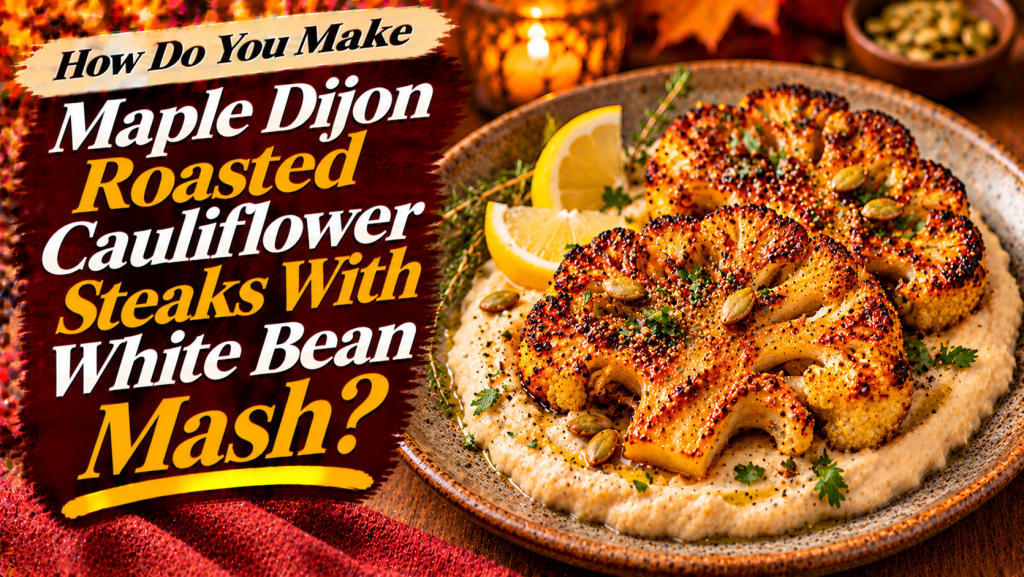
Maple Dijon roasted cauliflower steaks with white bean mash turn a simple head of cauliflower and a few pantry staples into a satisfying vegetarian dinner. Thick cauliflower slices roast until their edges become golden and crisp, then receive a glossy maple-mustard glaze. Underneath, creamy garlic white beans offer a mild, savory base that balances the tangy-sweet vegetables. A scatter of fresh parsley and toasted pumpkin seeds brings freshness and crunch.
The secret is giving the cauliflower room to brown and applying the maple glaze near the end of roasting. Cauliflower needs enough oven time to become tender, but maple syrup can darken before the center has cooked. The white bean mash can be made while the steaks roast, so both components reach the table warm.
Recipe at a Glance
Servings: four as a light main course or side. Preparation: about 20 minutes. Roasting time: 25–35 minutes. Mash preparation: 15 minutes. Oven: 425°F. Equipment: large rimmed baking sheet, sharp chef’s knife, pastry brush, saucepan, blender or potato masher, and measuring spoons.
Ingredients for Cauliflower Steaks
Use two medium heads of cauliflower, 2 tablespoons olive oil, 1½ tablespoons Dijon mustard, 1 tablespoon pure maple syrup, 1 tablespoon fresh lemon juice, ½ teaspoon smoked paprika, ¼ teaspoon garlic powder, ½ teaspoon kosher salt, and ¼ teaspoon black pepper. Optional finishing ingredients include chopped parsley, toasted pumpkin seeds, lemon wedges, and a pinch of chili flakes.
Ingredients for White Bean Mash
Use two 15-ounce cans cannellini beans, drained and rinsed, 1 tablespoon olive oil, 3 garlic cloves minced, ⅓–½ cup low-sodium vegetable broth, 1 tablespoon fresh lemon juice, ½ teaspoon dried thyme or 1 teaspoon fresh thyme leaves, and black pepper to taste. Add a little extra broth for a softer consistency. The recipe can be dairy-free and vegan when made with suitable packaged ingredients.
How to Choose Cauliflower for Steaks
Pick heads that feel heavy and compact with tightly packed florets and no soft, slimy, or moldy areas. Medium-to-large heads provide more room for broad center slices. The stem is useful because it holds the florets together; do not remove the entire core before cutting.
After removing leaves, carefully trim only the protruding base of the stem so the head stands securely on a cutting board. Use a large sharp knife to cut straight down through the middle into approximately ¾- to 1-inch-thick slabs. Two sturdy center steaks may come from each head. Outer florets often separate, which is normal; roast those pieces alongside the steaks rather than discarding them.
How to Make Maple Dijon Roasted Cauliflower Steaks
Prepare the cauliflower and get it into the oven first. Cook the beans while the steaks become tender.
Step 1: Preheat the oven
Heat the oven to 425°F with a rack near the center. Lightly grease a large rimmed metal baking sheet or line it with parchment rated for the oven temperature. If the steaks are crowded, use a second sheet so their edges can brown instead of steaming.
Step 2: Cut and dry the cauliflower
Remove the leaves, trim the stem base carefully, and cut the cauliflower into thick slabs through the core. Pat the cut surfaces dry. Arrange the intact steaks on the sheet and tuck loose florets around them. Dry surfaces and plenty of space promote caramelization.
Step 3: Season before roasting
Brush the cauliflower on both sides with olive oil and sprinkle with salt, black pepper, smoked paprika, and garlic powder. Avoid applying maple syrup now because its sugars may scorch during the long first stage of cooking.
Step 4: Roast the first side
Roast for approximately 15–20 minutes, until the bottom edges begin to turn golden. Use a broad spatula to turn each steak carefully, keeping the pieces as intact as possible. Return to the oven for another five to ten minutes so the second side starts to color.
Step 5: Mix the maple Dijon glaze
In a small bowl, whisk together Dijon mustard, maple syrup, and lemon juice. Taste the glaze. It should be tangy and gently sweet. If your mustard is especially sharp, add a teaspoon of water rather than more maple syrup to soften its concentration.
Step 6: Glaze and finish
When the cauliflower is nearly fork-tender, brush a thin layer of glaze across the exposed surfaces. Roast for another five to eight minutes, checking frequently, until glossy and caramelized. The center should be tender when pierced with a fork. If the edges darken too quickly, loosely cover with foil.
How to Make Creamy Garlic White Bean Mash
The white beans are already cooked, so the mash needs only enough time to warm through and develop flavor. For a rustic texture, use a potato masher; for a very smooth result, blend carefully.
Step 7: Soften the garlic
Warm olive oil in a saucepan over medium-low heat. Add the minced garlic and thyme, cooking for approximately 30–60 seconds until fragrant but not browned. Garlic can become bitter when scorched, so reduce the heat if it sizzles aggressively.
Step 8: Warm the beans
Add the drained cannellini beans and one-third cup vegetable broth. Stir and simmer gently for four to six minutes, until the beans are thoroughly hot. The broth should create a little liquid around the beans without completely covering them.
Step 9: Mash until creamy
Remove the saucepan from the heat. Mash with a potato masher or blend in a suitable container with care around hot liquid. Add lemon juice and black pepper. Stir in a splash of extra warm broth until the mash is soft and spoonable. Taste before adding salt, as canned beans and broth may already contain sodium.
Step 10: Assemble the plates
Spoon a generous layer of white bean mash onto each warm plate. Place a roasted cauliflower steak over the top and drizzle with any clean remaining glaze or a squeeze of lemon. Scatter toasted pumpkin seeds and parsley across the dish. Serve immediately while the edges are caramelized.
How to Keep Cauliflower Steaks From Falling Apart
Cut directly through the central core rather than removing it first. Use a steady cutting board and a sharp knife. Keeping steaks about an inch thick makes them easier to transfer, while very thin slices can break when turned. A wide spatula helps support the entire piece.
Some loose florets are unavoidable, especially from the outside of a large head. Roast them separately on the same tray and serve them alongside the intact steaks. Even if a steak breaks, the flavor and texture remain excellent.
Tips for Deeply Caramelized Edges
The oven should be fully heated before the vegetables go in. A metal pan and enough space around each slice encourage browning. Patting the cauliflower dry reduces surface moisture, and turning only once prevents the pieces from breaking unnecessarily.
Use a restrained amount of glaze. An overly thick coating can collect on the pan and burn while leaving the cauliflower wet. Save the maple Dijon mixture for the final minutes and keep an eye on the browning, especially if your oven runs hot.
Why Maple and Dijon Work Together
Dijon mustard provides acidity, gentle heat, and savory depth, while maple syrup contributes a rounded sweetness that complements cauliflower’s naturally nutty roasted flavor. Lemon keeps the glaze lively, and smoked paprika adds a subtle smoky note without requiring a grill.
The balance can be adjusted to taste. If the finished cauliflower is too sweet, add more lemon juice. If mustard dominates, a little extra maple syrup can soften it, but start with only a small amount. Seasoning with salt should come after tasting the final dish because mustard varies in sodium.
How to Make White Bean Mash Extra Smooth
Cannellini beans make a creamy base without a large amount of butter or cream. Warming them in broth helps their skins soften. A blender produces the smoothest result, while a masher gives a rustic, slightly chunky consistency. Add liquid a tablespoon at a time to avoid making the purée soupy.
If the mash seems bland, fresh lemon, thyme, or a little olive oil can brighten it. If it becomes too thin, return it to a saucepan and simmer gently, stirring often, until some liquid evaporates. It will thicken slightly as it stands.
Easy Flavor Variations
For a spicy version, add a small pinch of cayenne or chili flakes to the glaze. For an herb-forward variation, replace smoked paprika with rosemary or oregano. A touch of orange zest in the glaze complements maple and brings another seasonal citrus note.
You can also add roasted garlic to the white beans instead of raw garlic for a sweeter, mellower taste. Sautéed mushrooms or wilted spinach make delicious additions to the plated mash. For extra crunch, replace pumpkin seeds with toasted walnuts if nut allergies are not a concern.
If you prefer a stronger savory finish, sprinkle with finely grated Parmesan, keeping in mind that this changes the dairy-free and vegan status. A suitable plant-based cheese or nutritional yeast can contribute extra savoriness. Always check packaged ingredients for dietary restrictions.
What to Serve With the Cauliflower Steaks
This recipe is satisfying as a vegetarian main course, particularly when paired with a side salad, cooked quinoa, or warm whole-grain bread. The white beans provide a hearty base, while lemon and herbs keep the meal from feeling too heavy.
As a holiday side, serve smaller portions with roasted poultry or another centerpiece. Green beans, roasted carrots, or an arugula salad can add color to the table. The cauliflower makes an appealing presentation on a large platter with white bean mash spread underneath.
Make-Ahead Instructions
Prepare the white bean mash a day or two in advance and refrigerate promptly in a covered shallow container. Mix the maple Dijon glaze ahead and store separately. Cut cauliflower steaks up to a day ahead, wrap carefully, and refrigerate so they retain their structure.
For the best edges, roast the cauliflower near serving time. If you must prepare it early, roast without the final glaze and reheat on a baking sheet, adding the glaze in the last few minutes. Warm the bean mash gently with a splash of broth before plating.
Storage and Reheating
Refrigerate leftovers in airtight shallow containers within two hours, or within one hour when the surrounding temperature exceeds 90°F. Store cauliflower and mash separately when possible, and use within three to four days.
Reheat cauliflower on a baking sheet in a 375°F oven until hot throughout, with leftovers reaching 165°F. Warm the beans in a saucepan, stirring in extra broth as needed, until they reach the same temperature. A microwave works for convenience but softens the cauliflower edges. The white bean mash may be frozen for up to two months for best quality, although the texture may change slightly.
Frequently Asked Questions
Can I use frozen cauliflower?
Frozen florets can be roasted with the same glaze, but they generally cannot be cut into intact steaks. Dry them as well as possible and roast in one layer.
Can I substitute honey for maple syrup?
Yes, honey can be used in a similar amount, but it changes the flavor and makes the recipe unsuitable for vegans. Watch carefully because honey can also scorch.
Can I cook cauliflower steaks in an air fryer?
Yes, if the pieces fit flat in the basket. Cook at approximately 375–390°F until nearly tender, then apply the glaze and finish briefly. Cooking time depends on thickness and appliance airflow.
What if I don’t have cannellini beans?
Great Northern beans or butter beans make good substitutes. Adjust the broth quantity to reach the consistency you prefer.
Is this recipe gluten-free?
The basic ingredients can be gluten-free, but check the mustard, broth, and all packaged seasonings for gluten-containing ingredients or cross-contact.
Why is my cauliflower not crispy?
The pan may have been overcrowded, the vegetables may have been wet, or the glaze may have been added too early. Dry the pieces, roast with space between them, and glaze toward the end.
Final Thoughts
Maple Dijon roasted cauliflower steaks with white bean mash offer a satisfying combination of golden vegetables, creamy beans, and fresh citrus. Give the cauliflower time to brown before glazing, keep the white bean mash soft and savory, and finish with herbs and toasted seeds. The result is a flavorful vegetarian dinner that makes ordinary ingredients feel special.
Leave a Reply