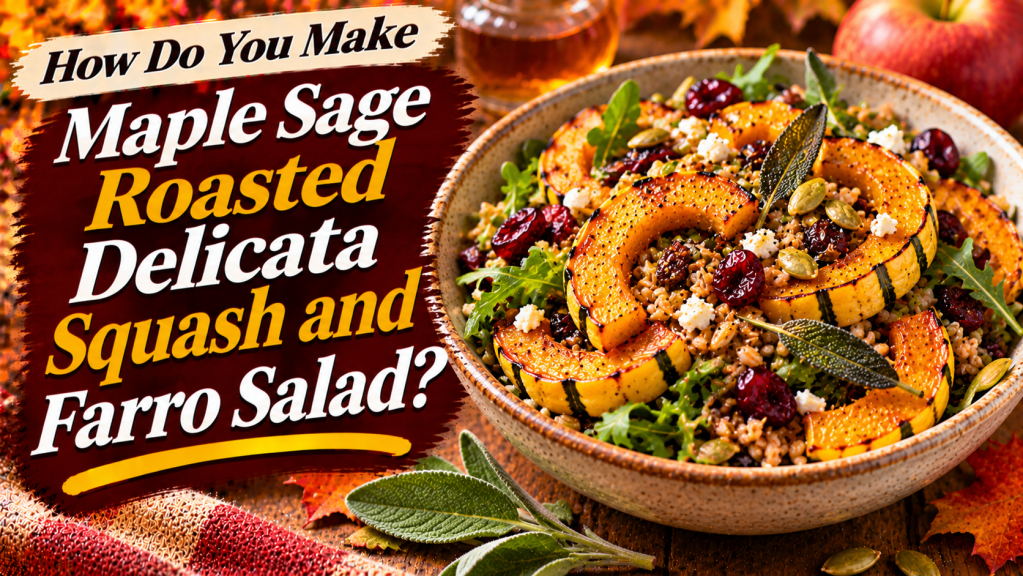
Maple sage roasted delicata squash and farro salad brings together golden roasted winter squash, chewy whole grains, tangy dried cranberries, peppery arugula, crunchy pumpkin seeds, and a bright apple cider vinaigrette. A little maple syrup deepens the squash’s sweetness while sage provides an earthy, savory aroma. The result works as a warm vegetarian lunch, an autumn side dish, or a colorful addition to a Thanksgiving table.
The key is cooking each ingredient for its own best texture. Delicata squash caramelizes in a hot oven; farro becomes pleasantly chewy when simmered separately; and arugula stays fresh when folded in near the end. The vinaigrette can be prepared ahead and stirred through the still-warm grains to distribute its flavor.
Recipe at a Glance
Serves four as a main course or six as a side. Preparation time: 20 minutes. Cooking time: 30–40 minutes, with rice-style grains and vegetables cooking simultaneously. Oven temperature: 425°F. Equipment: rimmed baking sheet, saucepan, colander, mixing bowls, whisk, sharp knife, and spatula.
Ingredients
Use two medium delicata squash, approximately 1½ pounds in total; 1 tablespoon olive oil; 1 tablespoon pure maple syrup; ½ teaspoon dried sage or 1 tablespoon finely chopped fresh sage; a pinch of salt; and ¼ teaspoon ground black pepper. For the grain base, use 1 cup dry pearled farro and 3 cups water or low-sodium vegetable broth.
To finish the salad, use 2 cups baby arugula, ⅓ cup dried cranberries, ¼ cup toasted pumpkin seeds, and ¼ cup crumbled feta if desired. For the dressing, use 2 tablespoons olive oil, 1½ tablespoons apple cider vinegar, 1 teaspoon Dijon mustard, 1 teaspoon maple syrup, and 1 teaspoon lemon juice. Farro is wheat and contains gluten; feta contains milk. Check packaged ingredients for allergens.
Choosing Delicata Squash
Look for squash with a firm rind, creamy yellow skin, and green or orange stripes. Avoid pieces with deep cuts, soft spots, or signs of mold. Delicata squash has a thin edible skin, so peeling is usually unnecessary. Wash the surface thoroughly because it will remain on the roasted slices.
Cut off the ends, halve each squash lengthwise, and scoop out the seeds with a spoon. Put the halves cut-side down and slice into half-moons about half an inch thick. Keeping the pieces approximately equal in thickness promotes even roasting and makes the finished salad easier to serve.
Which Farro Is Best?
Pearled farro is convenient because some of the outer bran has been removed, reducing cooking time. Semi-pearled and whole farro generally take longer. Follow package instructions, as the amount of water and cooking duration differ between brands. Cooking farro in ample water and draining it when tender is a forgiving method.
The finished grains should have a little chew without a hard center. If your farro needs additional time, continue simmering and add water when necessary. Do not substitute uncooked brown rice or quinoa without adjusting the cooking instructions, since each grain absorbs water and softens differently.
How to Make Maple Sage Roasted Delicata Squash and Farro Salad
Start roasting the squash and simmering the farro at approximately the same time. Prepare the dressing and toppings while they cook.
Step 1: Preheat the oven
Heat the oven to 425°F and prepare a large rimmed metal baking sheet. Lightly oil it or use parchment rated for the oven temperature. The squash should fit in a single layer; use another sheet if the pieces would overlap. Crowded vegetables steam rather than brown.
Step 2: Season the squash
Pat the sliced squash dry. Toss with the olive oil, sage, pepper, and a small pinch of salt. Spread the slices across the baking sheet, with their cut surfaces facing down when possible. Reserve the maple syrup until later in cooking so it does not burn during the initial roast.
Step 3: Roast until golden
Roast for about 20 minutes, then turn the slices carefully with a thin spatula. Drizzle lightly with maple syrup and toss gently. Return to the oven for another five to ten minutes, until fork-tender with browned edges. Check more frequently toward the end because the syrup can darken quickly.
Step 4: Simmer the farro
While the squash roasts, bring the water or broth to a boil in a medium saucepan. Add the farro, reduce to a steady simmer, and cook according to the package instructions. Pearled farro often takes about 20–30 minutes, but timing varies. Drain excess liquid and allow the grains to steam off briefly in the colander.
Step 5: Mix the vinaigrette
Whisk together olive oil, apple cider vinegar, Dijon mustard, maple syrup, and lemon juice. Add a little pepper and taste before adding salt, particularly if you used seasoned broth. If the dressing seems too tart, add another teaspoon of oil. If it seems flat, a few drops of lemon can brighten it.
Step 6: Dress the warm grains
Transfer the drained farro to a mixing bowl. Pour about two-thirds of the vinaigrette over the warm grains and toss gently. Allow them to stand for several minutes so they absorb the flavors. Keep the remaining dressing for the final assembly.
Step 7: Add the fresh ingredients
Allow the farro to cool slightly if you want the arugula to remain crisp. Fold in the arugula and dried cranberries, turning gently until evenly distributed. If you prefer a warmer salad, stir in the arugula while the grains are still warm so it wilts just a little.
Step 8: Assemble and serve
Arrange the roasted squash over the grains. Scatter the pumpkin seeds and optional feta on top, drizzle with the reserved vinaigrette, and finish with black pepper. Serve immediately while the squash is warm, or allow the salad to reach room temperature for a buffet-style side.
How to Roast Delicata Squash Without Sogginess
Dry the slices before oiling and give them room on a hot metal pan. Avoid stacking the pieces or using a deep casserole dish. Turn them only after the first side has developed some color. A modest amount of oil promotes browning, while adding too much can make the squash feel greasy.
Maple syrup is best added toward the end of roasting. The natural sugars in both the squash and syrup caramelize readily, but prolonged high heat may lead to burnt, bitter spots. If your oven cooks unevenly, rotate the pan when turning the squash. The flesh should be tender while the slices retain their shape.
Balancing the Salad’s Flavors
Sweet squash and cranberries contrast with earthy sage, peppery arugula, tart vinegar, and salty feta. If the dried cranberries contain a lot of added sugar, reduce maple syrup in the dressing. If the salad tastes too rich, add a little lemon juice rather than extra salt. Pumpkin seeds provide crunch and a subtle nutty flavor.
Fresh sage has a more delicate, fragrant aroma than some dried products, but either works. Use dried sage sparingly because it can become strong. A few fresh parsley leaves at the end give the dish more color and freshness without overwhelming the squash.
Easy Variations
For a vegan version, omit the feta or use a plant-based alternative. Add fully cooked chickpeas or lentils if you want a heartier main course. For a gluten-free version, replace the farro with quinoa or brown rice cooked according to package instructions, and check the other ingredients for gluten-containing additives.
Toasted pecans or walnuts may replace pumpkin seeds if nut allergies are not a concern. A small amount of orange zest adds a bright holiday note. Roasted Brussels sprouts, red onion wedges, or mushrooms can also be incorporated, but roast them according to their individual tenderness and moisture levels.
You can replace the dried cranberries with chopped dried apricots or pomegranate arils. The pomegranate provides a juicier, tarter finish and is especially appealing just before serving. For a sharper dressing, increase the Dijon slightly; for a softer finish, add another teaspoon of olive oil.
What to Serve With This Salad
This salad stands on its own as a light vegetarian meal, especially when served with chickpeas or lentils. It also complements roast chicken, turkey, pork, or grilled fish. For a holiday table, serve it beside green beans or another lighter vegetable side to balance the meal.
Warm bread, a bowl of soup, or a simple bean dish can make it more substantial. When serving a crowd, label the farro as containing wheat and the optional feta as containing dairy. Keep seeds or nuts in separate bowls when guests need different toppings.
Make-Ahead Instructions
Cook the farro up to two days ahead and refrigerate promptly in a shallow covered container. The vinaigrette can also be prepared in advance and refrigerated separately. Wash and slice the squash a day ahead, but roast it close to serving time for the best caramelized edges.
If preparing the entire salad ahead, store the greens, pumpkin seeds, and feta separately. Combine these ingredients just before serving to prevent wilting and loss of crunch. The farro can be warmed briefly with a splash of water if you want a warm presentation.
Storage and Reheating
Refrigerate leftovers within two hours of cooking, or within one hour if the surroundings are hotter than 90°F. Use within three to four days. Keep the dressing and crunchy toppings separate when possible. Freezing the fully assembled salad is not recommended because the squash and greens soften after thawing.
Reheat the farro and squash in a covered skillet or microwave-safe dish until leftovers reach 165°F throughout. Add fresh arugula, feta, seeds, and dressing after heating. Properly refrigerated leftovers may also be served chilled.
Frequently Asked Questions
Do you have to peel delicata squash?
No. Its thin rind is edible and usually becomes tender during roasting. Wash it carefully before cutting.
Can I replace farro with quinoa?
Yes. Quinoa is a good gluten-free substitute when prepared with suitable ingredients. Cook according to package instructions and drain excess water if needed.
Can I make this salad without cheese?
Yes. The vinaigrette, squash, sage, and cranberries give it plenty of flavor. Omit feta for a dairy-free variation.
Can I use fresh cranberries instead of dried?
Fresh cranberries are much tarter and do not make a direct replacement. Roast or sweeten them lightly before adding, or use pomegranate arils for a fresh tart fruit topping.
Can the salad be served cold?
Yes. Let the cooked components cool promptly, refrigerate safely, and add the greens and seeds just before serving.
Final Thoughts
Maple sage roasted delicata squash and farro salad is a colorful combination of caramelized vegetables, chewy grains, tart fruit, and a lively cider dressing. Roasting the squash separately and dressing warm farro creates satisfying texture and flavor. Serve it as a seasonal vegetarian meal or a welcoming side dish for a holiday gathering.
Leave a Reply