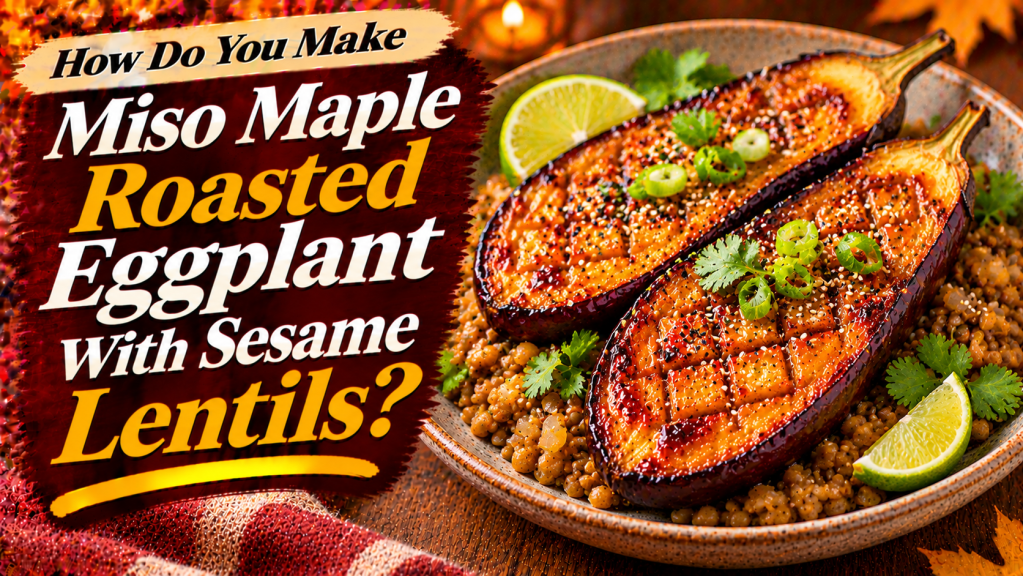
Miso maple roasted eggplant with sesame lentils combines tender, deeply browned eggplant with a savory-sweet glaze and warm lentils dressed in citrus, ginger, and toasted sesame. The eggplant becomes almost creamy inside, while its crosshatched surface catches the miso mixture and develops caramelized edges. With scallions and fresh herbs on top, it makes a satisfying plant-based main course or an attractive side dish.
The most important techniques are roasting the eggplant cut-side down first, using a thin layer of glaze near the end, and keeping the lentils gently cooked rather than mushy. Miso and soy sauce already contain salt, so taste the finished components before adding extra seasoning. The result should balance savory miso, maple sweetness, bright acidity, and the nutty flavor of sesame.
Recipe at a Glance
Serves four. Preparation: about 15 minutes. Eggplant roasting: 30–40 minutes. Lentil cooking: 20–30 minutes for dried brown or green lentils, or about 10 minutes for precooked lentils. Oven temperature: 425°F. Equipment: large rimmed baking sheet, saucepan, colander, mixing bowls, whisk, sharp knife, and pastry brush.
Ingredients for the Eggplant
Use two medium globe eggplants, approximately 1½ pounds total; 2 tablespoons neutral oil or olive oil; 1½ tablespoons white miso paste; 1 tablespoon pure maple syrup; 1 tablespoon rice vinegar; 1 teaspoon freshly grated ginger; 1 teaspoon reduced-sodium soy sauce; and 1–2 tablespoons water to thin the glaze. Garnish with sliced scallions, cilantro or parsley, and sesame seeds.
Ingredients for the Sesame Lentils
Use 1 cup dry brown or green lentils, rinsed and picked over; approximately 3 cups water or low-sodium vegetable broth; 1 tablespoon toasted sesame oil; 1 tablespoon rice vinegar; 1 tablespoon fresh lemon or lime juice; 1 teaspoon finely grated ginger; 1 teaspoon reduced-sodium soy sauce; 1 small grated carrot; and 2 tablespoons chopped scallions. Use cooked lentils from a can or pouch if you prefer, draining and rinsing before seasoning.
This recipe contains soy and sesame. Some miso pastes and conventional soy sauces contain wheat or barley, so check labels if gluten avoidance matters. Choose gluten-free miso and tamari when necessary. Read packaging carefully if preparing the dish for guests with allergies.
Choosing the Best Eggplant
Look for eggplants that feel heavy for their size, have glossy skin, and are firm without deep bruises or soft, leaking areas. Medium specimens are easier to roast evenly than very large ones. Globe eggplants are common and work well, while smaller Italian varieties also make attractive portions.
Wash the eggplants, trim the leafy tops carefully, and slice each one lengthwise. Keep the skin intact because it helps the softened flesh hold together. Using a sharp knife, score shallow diagonal lines across the cut surface in a crosshatch pattern, taking care not to slice through the skin.
What Kind of Miso Should You Use?
White miso, sometimes called shiro miso, has a relatively mild, mellow flavor that suits maple syrup and roasted vegetables. Red miso is often stronger and saltier, so use a smaller quantity if substituting. Different brands vary significantly in salt, sweetness, and fermentation flavor.
Stir the miso before measuring if its texture is uneven, and dissolve it into the other glaze ingredients until smooth. Avoid adding extra salt to the eggplant before tasting the finished glaze. A little miso can provide plenty of savory depth without requiring many seasonings.
How to Make Miso Maple Roasted Eggplant
The eggplant takes longer than the glaze, so begin roasting with oil alone. Add the maple-miso mixture during the final minutes to prevent its sugars from burning.
Step 1: Preheat the oven
Heat the oven to 425°F and place a rack near the middle. Line a large rimmed baking sheet with parchment rated for that temperature or lightly grease the pan. Leave enough room for all four eggplant halves without overlapping them.
Step 2: Score and oil the eggplant
Slice the washed eggplants in half lengthwise and score the flesh in shallow diamonds. Brush the cut surfaces with approximately two tablespoons oil, distributing some into the scored grooves. Place the halves cut-side down on the prepared baking sheet.
Step 3: Roast until tender
Roast for 20–25 minutes, then carefully turn the halves with a wide spatula. Their cut faces should be soft and beginning to brown. If the flesh still feels quite firm, continue roasting for another five minutes before applying glaze. Cooking times vary with eggplant size.
Step 4: Whisk the glaze
In a small bowl, combine white miso, maple syrup, rice vinegar, grated ginger, and soy sauce. Add one tablespoon water and whisk until smooth and brushable. Add the second tablespoon only if needed. Taste a small amount and adjust with a little vinegar if it seems overly sweet.
Step 5: Brush and finish roasting
Turn the eggplants cut-side up. Brush the scored flesh with a thin layer of the glaze, allowing it to settle in the cuts. Return to the oven for approximately 8–12 minutes until the glaze bubbles gently and the flesh is completely tender. Watch closely because maple syrup can scorch.
Step 6: Rest briefly
Remove the tray and let the eggplants stand for about five minutes. The flesh should yield easily to a spoon and have browned, glossy edges. A small amount of extra glaze can be brushed on during the final minutes only if it has not contacted raw ingredients or been otherwise contaminated.
How to Cook Sesame Lentils
Brown and green lentils hold their shape better than red lentils, which usually soften into a purée. Rinse thoroughly, remove any small stones, and use a generously sized pot so the lentils have room to simmer.
Step 7: Simmer the lentils
Combine one cup rinsed lentils with approximately three cups water or broth in a saucepan. Bring to a boil, then reduce to a gentle simmer. Cook uncovered or partly covered for about 20–30 minutes, tasting periodically, until tender but not falling apart. Add a little more water if necessary.
Step 8: Drain and season
Drain any excess liquid and let the cooked lentils steam for a minute. In a mixing bowl, whisk sesame oil, rice vinegar, lemon or lime juice, ginger, and soy sauce. Add the warm lentils and stir gently so they absorb the dressing without turning mushy.
Step 9: Add fresh vegetables
Fold in the grated carrot and chopped scallions. Taste before adding salt because the soy dressing provides seasoning. If the lentils seem dry, add a tablespoon of warm water or a little more citrus juice. The mixture should be glossy rather than swimming in dressing.
Step 10: Assemble and serve
Spoon sesame lentils onto four plates or a large platter. Set a roasted eggplant half over each serving, then add fresh herbs, sliced scallions, and toasted sesame seeds. Serve warm with lime wedges for guests who prefer a brighter finish.
How to Get Creamy Eggplant Without Excess Oil
Eggplant flesh is porous and absorbs oil readily. Brushing the surfaces with a measured amount is more reliable than pouring oil directly onto the pan. The cut-side-down first stage traps some steam against the baking sheet, helping the interior soften without a large quantity of fat.
When you turn the eggplant, it should be soft enough for glaze to spread across its scored surface. If it remains firm, continue roasting before adding the sugary mixture. A tender center matters more than achieving a uniformly dark surface.
How to Prevent the Miso Maple Glaze From Burning
Maple syrup contains sugars that brown quickly under high heat. A thin coating applied late is less likely to scorch than a heavy coating applied before the eggplant becomes tender. Keep the tray on a center rack and check it after several minutes.
If some edges are browning faster than the center cooks, lower the oven temperature slightly or loosely cover the tray with foil. Dark golden spots bring flavor, but blackened glaze can taste bitter. Use a little warm water to thin an excessively thick miso mixture before brushing.
Balancing Sweet, Savory, and Tangy Flavors
White miso supplies fermented savoriness, maple adds sweetness, rice vinegar provides acidity, and ginger brings fragrance. Soy sauce reinforces the savory flavor, so avoid adding extra salt automatically. The lentils have their own sesame-citrus dressing, which helps cut through the rich roasted eggplant.
If your finished eggplant seems too sweet, squeeze fresh lime over it. If it tastes too salty, pair it with more plain lentils or steamed rice. Increasing maple syrup may hide some saltiness but can make the dish cloying, so adjust in small steps.
Easy Variations
For a spicier version, add a small amount of chili crisp or crushed red pepper to the glaze. Check that any chili crisp is appropriate for the dietary requirements of your guests. For a citrus version, add orange zest to the miso mixture and finish with extra lime.
Black lentils, also called beluga lentils, can replace brown lentils and make an appealing dark contrast to the eggplant. Follow their package cooking instructions. Canned lentils are a convenient shortcut; drain, rinse, warm gently, and toss with the dressing.
For extra vegetables, stir sautéed spinach into the lentils or add roasted broccoli alongside. If you prefer a grain bowl, serve everything over brown rice or quinoa. A small spoonful of plain yogurt can soften the chili heat, although it makes the dish no longer dairy-free.
What to Serve With Miso Maple Eggplant
The lentils provide a substantial base, but the dish pairs beautifully with a cucumber salad, steamed edamame, sautéed greens, or a small portion of rice. A lightly dressed cabbage slaw adds crunch. For entertaining, arrange the halves across a platter of lentils and finish with scallions and fresh herbs.
The meal is naturally plant-based when all packaged ingredients are suitable. For a larger gathering, offer the eggplant as a flavorful side alongside tofu, roasted vegetables, or another protein. The glaze is bold enough that simple accompaniments work best.
Make-Ahead Instructions
Cook the lentils up to two days ahead and refrigerate promptly in a covered shallow container. Prepare the miso maple glaze up to a day ahead and keep chilled. Cut and score the eggplant closer to roasting time because exposed flesh can discolor and soften during storage.
For the best texture, roast the eggplant shortly before serving. If preparing in advance, reheat the halves in a moderate oven and brush with a little fresh glaze near the end. Keep sesame seeds and fresh herbs separate until plating so they retain their texture and aroma.
Storage and Reheating
Refrigerate leftovers in shallow covered containers within two hours of cooking, or within one hour when the ambient temperature exceeds 90°F. Use within three to four days. Store eggplant and lentils separately when practical to avoid excess moisture transfer.
Reheat the eggplant in a 350°F oven and warm the lentils in a saucepan with a splash of water until both are heated throughout to 165°F. A microwave also works but softens the browned edges. Freezing cooked lentils is possible for up to two months for best quality, though roasted eggplant may become softer after thawing.
Frequently Asked Questions
Can I use red miso instead of white miso?
Yes, but red miso is often stronger and saltier. Begin with a smaller amount, taste the glaze, and increase gradually if necessary.
Can I use canned lentils?
Yes. Drain and rinse them, warm gently, and toss with the sesame-citrus dressing. Skip the dried lentil simmering step.
Can I make the recipe gluten-free?
Yes, with ingredients that are certified or clearly labeled gluten-free, including the miso paste and tamari. Conventional soy sauce and some miso products contain wheat or barley.
Can I replace maple syrup with honey?
Honey can provide similar sweetness but changes the flavor and makes the dish unsuitable for vegans. Apply the glaze late because honey can also scorch.
Why is my eggplant bitter or tough?
The eggplant may be underripe, overly mature, or undercooked. Choose firm fresh eggplant and roast until the flesh is very tender. Burned glaze can also create bitterness.
Can I air-fry the eggplant?
Yes, in an appropriately sized basket. Cook the oiled halves at approximately 375°F until nearly tender, then brush with glaze and continue briefly. Adjust time to their size and watch for scorching.
Final Thoughts
Miso maple roasted eggplant with sesame lentils brings together creamy roasted vegetables, bright citrus, and savory fermented flavors. Roast the eggplant until tender before adding its sweet glaze, keep the lentils gently cooked, and finish with fresh herbs and sesame. It is a flavorful, flexible dinner that works equally well for an everyday meal or a vegetarian gathering.
Leave a Reply