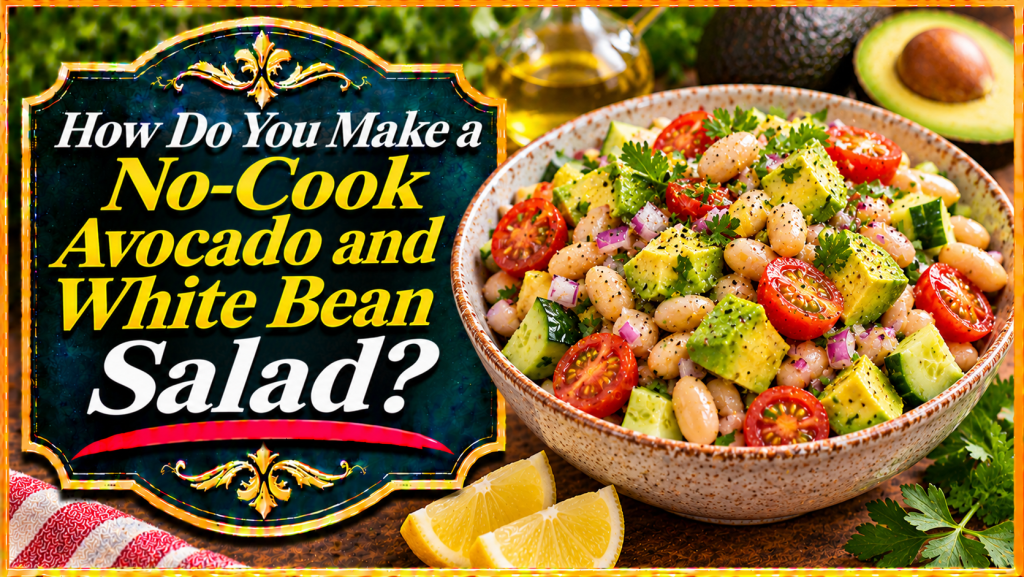
A no-cook avocado and white bean salad combines creamy avocado, tender canned white beans, crisp cucumber, juicy tomatoes and a bright lemon dressing. The beans make the salad substantial enough for a light lunch, while fresh herbs and a little red onion give it plenty of flavor. Since canned beans are already cooked, there is no need to turn on the stove. The entire dish comes together in about fifteen minutes and works equally well as a side dish, a sandwich filling or a simple meal served with crusty bread.
Recipe at a Glance
Servings: four as a side dish or two to three as a light main dish. Preparation time: approximately fifteen minutes. Cooking time: none. Equipment: large mixing bowl, small bowl, whisk, colander, sharp knife and cutting board. Serve immediately or refrigerate the bean and vegetable mixture separately from the avocado until you are ready to eat.
Ingredients for No-Cook Avocado and White Bean Salad
Gather two 15-ounce cans cannellini beans, drained and rinsed; two medium ripe avocados; one cup cherry tomatoes, halved; one cup diced English cucumber; one-quarter cup finely diced red onion; and one-quarter cup chopped fresh parsley. For the dressing, use three tablespoons extra-virgin olive oil, two tablespoons freshly squeezed lemon juice, one teaspoon Dijon mustard, one small garlic clove finely grated, one-quarter teaspoon fine salt and one-quarter teaspoon freshly ground black pepper. Optional additions include a pinch of crushed red pepper or a little freshly grated lemon zest. Adjust the salt to account for the sodium in the canned beans.
Which White Beans Work Best?
Cannellini beans have a mild flavor, relatively large size and creamy interior that pairs especially well with avocado. Great northern beans are a slightly smaller alternative, while navy beans can create a finer-textured salad. Use commercially canned beans labeled fully cooked or ready to eat. Dried beans are not suitable for this no-cook recipe unless they have already been soaked and thoroughly cooked according to proper instructions. Drain canned beans in a colander, rinse them under cool running water and allow them to drain thoroughly before adding them to the salad. This helps remove excess packing liquid and some sodium.
How to Choose a Ripe Avocado
Select avocados that yield slightly to gentle pressure without feeling excessively soft. Firm, unripe avocados can be difficult to cut and lack the creamy texture that makes this recipe enjoyable. Avoid fruit with extensive soft spots or visible signs of spoilage. Wash the outside under running water before cutting, even though the skin will not be eaten. Place the avocado on a stable cutting board and slice carefully around the pit. Twist the halves apart and remove the pit with a spoon rather than striking it with a knife. Dice the flesh and add it near the end of preparation to prevent unnecessary crushing.
Step 1: Drain and Rinse the White Beans
Open both cans and pour the beans into a fine mesh strainer or colander. Rinse gently with cool running water until the packing liquid has washed away. Let the beans drain for several minutes. Transfer them to a large clean mixing bowl. Avoid stirring them aggressively because their skins can split and their soft interiors may become mashed. If you prefer a more rustic salad, you can deliberately crush a few beans later to help the dressing cling to the remaining ingredients.
Step 2: Prepare the Fresh Vegetables
Wash the cucumber, tomatoes, parsley and lemon under running water. Pat the produce dry with a clean towel. Dice the cucumber into approximately half-inch pieces and cut the cherry tomatoes in half. Finely chop the red onion and parsley. If the onion tastes particularly sharp, soak the diced pieces in a small bowl of cold water for about five minutes, then drain thoroughly. Add the cucumber, tomatoes, onion and parsley to the beans. Keep the avocado separate for now because it is more delicate than the other ingredients.
Step 3: Make the Lemon Dijon Dressing
Whisk the olive oil, fresh lemon juice, Dijon mustard, grated garlic, salt and black pepper together in a small bowl. Continue whisking until the oil and lemon juice are temporarily combined. The mustard helps the dressing hold together and adds a gentle tang. Taste a small amount with a clean spoon and adjust the lemon or pepper if necessary. If raw garlic is too strong for your preference, use half a clove or omit it. Fresh lemon zest can provide extra citrus aroma without making the dressing more acidic.
Step 4: Toss the Beans and Vegetables
Pour most of the dressing over the beans, cucumber, tomatoes, onion and parsley. Toss gently using a large spoon until the ingredients are evenly coated. Reserve a little dressing for the avocado. Let the mixture stand for a few minutes in the refrigerator if time allows, giving the beans an opportunity to absorb some of the flavor. The salad should be lightly dressed rather than swimming in oil. If the tomatoes have released a large amount of juice, stir carefully and taste before adding more dressing.
Step 5: Add the Avocado and Serve
Dice the washed, peeled avocado flesh into bite-sized cubes and add it to the bowl. Drizzle the reserved dressing over the avocado. Fold the ingredients together gently, taking care not to mash the pieces. Taste and adjust the seasoning with a little additional lemon juice or black pepper. Serve immediately in individual bowls or on a large platter. The avocado contributes richness while the cucumber, tomatoes and onion provide contrasting textures. A final sprinkling of parsley makes an attractive and flavorful garnish.
How to Keep Avocado From Turning Brown
Avocado flesh naturally darkens when exposed to oxygen. Lemon juice can slow this process, but it will not prevent browning indefinitely. Add the avocado shortly before serving, coat it lightly with the lemon dressing and minimize unnecessary stirring. If preparing the recipe for later, store the dressed beans and vegetables separately in the refrigerator and cut the avocado just before eating. For a short period of storage, use a clean airtight container. Slight surface browning alone does not necessarily indicate spoilage, but discard ingredients that develop an unpleasant odor, sliminess or other signs of deterioration.
Easy Salad Variations
For a Mediterranean-inspired version, add chopped Kalamata olives and a little crumbled feta. For a Southwest-inspired salad, replace parsley with cilantro, substitute lime juice for lemon and add a small amount of diced jalapeño. Chopped fresh basil works well with tomatoes, while a few thinly sliced radishes provide extra crunch. For a heartier lunch, mix in safely refrigerated cooked quinoa or serve the salad over a bed of leafy greens. The basic recipe is plant-based as written. Check the dressing and any optional toppings for ingredients relevant to food allergies or dietary restrictions.
What to Serve With Avocado and White Bean Salad
Serve the salad alongside grilled chicken, baked fish or roasted vegetables. For a meatless meal, spoon it over whole-grain toast or into a pita pocket. It also works as a filling for lettuce wraps or as a topping for a grain bowl. If serving it at a picnic, transport it in a cooler with sufficient ice packs and keep it chilled until needed. The combination of beans and avocado provides fiber, plant protein and unsaturated fats, although the amounts depend on the serving size and ingredients used.
Storage and Make-Ahead Tips
Refrigerate the prepared salad in a clean covered container within two hours, or within one hour when temperatures exceed 90°F. Keep it at 40°F or below and use within two days for the best texture. The bean and vegetable base can be prepared a day ahead, with the avocado added just before serving. Freezing is not recommended because cucumber, tomatoes and avocado may become watery or soft after thawing.
Frequently Asked Questions
Can I use chickpeas instead of white beans?
Yes. Drained and rinsed canned chickpeas provide a firmer texture and work with the same dressing.
Can I make this salad without onions?
Yes. Omit the red onion or substitute a small amount of chopped green onion or chives.
Do canned white beans need to be cooked?
Commercially canned, ready-to-eat white beans are already cooked. Drain and rinse them before using.
Final Tips
Drain the beans well, use ripe avocado and add the fresh lemon dressing gradually. Fold the avocado in just before serving for a colorful, satisfying salad that requires no cooking.
Leave a Reply