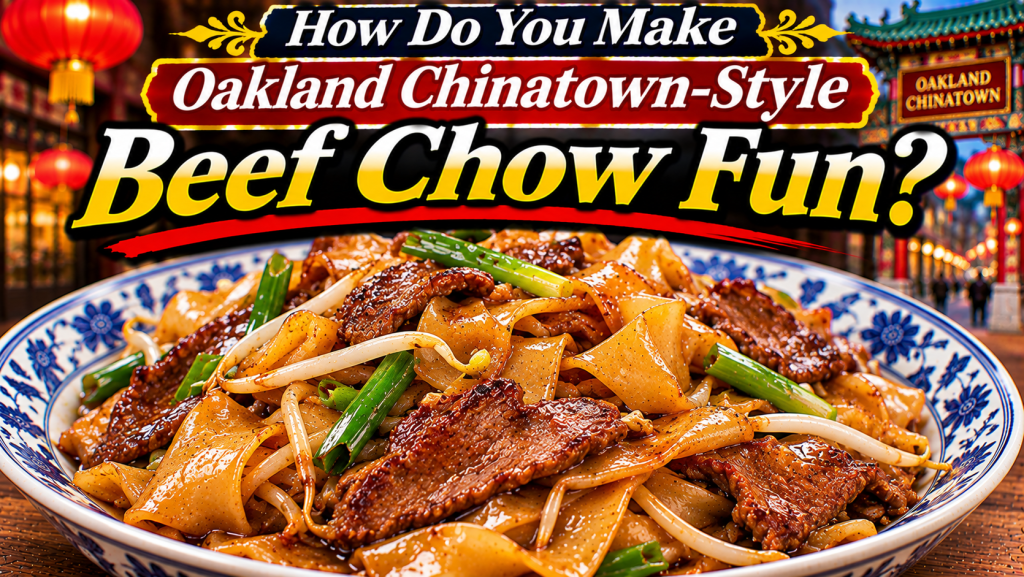
Oakland Chinatown-style beef chow fun combines tender slices of beef, wide rice noodles, crisp bean sprouts, and scallions in a savory sauce. Inspired by the Cantonese cooking found in Oakland Chinatown, this homemade version emphasizes the technique known as wok hei, the lightly smoky character that develops when ingredients are stir-fried quickly over high heat. You do not need a commercial restaurant burner to make satisfying chow fun at home. A hot skillet, careful preparation, and cooking in small batches can produce flavorful noodles that are glossy, tender, and not soggy.
Recipe Overview
This recipe makes four generous servings and takes approximately twenty minutes to prepare and fifteen minutes to cook, plus fifteen minutes for marinating the beef. Use a wok or wide heavy skillet, two mixing bowls, a sharp knife, and a broad spatula or tongs. The recipe works best with fresh wide rice noodles, sometimes labeled ho fun or chow fun noodles. The cooking process moves quickly, so slice the vegetables, mix the sauce, and separate the noodles before turning on the heat. Preparing everything in advance is essential.
Ingredients for the Beef
Gather one pound flank steak or sirloin, one tablespoon light soy sauce, one teaspoon Shaoxing wine or dry sherry if desired, one teaspoon cornstarch, one teaspoon neutral cooking oil, one-half teaspoon sugar, and one-quarter teaspoon white pepper. Slice the beef thinly across the grain to keep it tender. Flank steak has a satisfying beefy flavor, while sirloin is convenient and cooks quickly. Do not use thick chunks of beef because they will require more cooking time than the noodles and vegetables.
Ingredients for the Noodles and Vegetables
Use one and one-half pounds fresh wide rice noodles, two cups fresh bean sprouts, four scallions cut into two-inch pieces, one small yellow onion thinly sliced, two garlic cloves minced, and three tablespoons neutral high-smoke-point oil divided. If fresh noodles are unavailable, use dried wide rice noodles prepared according to the package instructions. Bean sprouts should be fresh, crisp, and refrigerated. Remove any wilted pieces before cooking. The scallions contribute both sweetness and freshness, so include their white and green sections.
Ingredients for the Sauce
Whisk together two tablespoons light soy sauce, one tablespoon dark soy sauce, one tablespoon oyster sauce, one teaspoon sugar, one teaspoon sesame oil, and two tablespoons water. Dark soy sauce adds color and a mild sweetness, while light soy sauce supplies the primary salty flavor. Oyster sauce provides savory depth. If you prefer a vegetarian-style sauce, mushroom stir-fry sauce can replace oyster sauce, although the beef would also need to be replaced for a vegetarian meal. Taste the finished noodles before adding extra salt.
What Is Beef Chow Fun?
Beef chow fun is a Cantonese noodle dish often associated with dry-style stir-fried wide rice noodles, sliced beef, bean sprouts, and scallions. The word fun refers to the flat rice noodles, which have a soft, slightly chewy texture. Restaurant versions vary in sauce and vegetables, but the hallmark is noodles that are coated in seasoning rather than swimming in liquid. The dish is sometimes called gon chow ngau ho in Cantonese. This recipe focuses on the familiar dry-fried style served in many Chinese restaurants.
Choosing the Best Rice Noodles
Fresh wide rice noodles are the best choice for the soft, slippery texture associated with restaurant-style chow fun. Look for them at Asian grocery stores, often in refrigerated or room-temperature fresh noodle sections, and follow the package’s storage instructions. Fresh noodles may arrive folded into sheets or packed as individual strands. If they are stiff, a brief gentle warming can help separate them. Dried wide rice noodles are a useful substitute, but their texture may be slightly firmer. Avoid thin rice vermicelli, which behaves differently in the wok.
Step 1: Slice the Beef Thinly
Place the beef in the freezer for approximately fifteen to twenty minutes if it is difficult to slice. Slightly firm meat is easier to cut into thin strips. Slice across the grain at an angle, aiming for pieces about one-eighth inch thick. Cutting across the grain shortens the muscle fibers and makes the finished beef easier to chew. Keep the strips similar in size so they cook evenly. Return the meat to the refrigerator if you are not ready to marinate it immediately.
Step 2: Marinate the Beef
Combine the sliced beef with light soy sauce, optional Shaoxing wine, cornstarch, oil, sugar, and white pepper. Toss until the marinade lightly coats each strip, then refrigerate for fifteen minutes. Cornstarch helps the beef retain moisture and creates a silky surface during cooking. The marinade should cling to the meat rather than pool in the bowl. Do not add a large amount of liquid, which can cause the beef to steam. Keep the raw beef and its utensils separate from vegetables and cooked ingredients.
Step 3: Prepare the Rice Noodles
Gently separate the fresh noodles with your fingers, taking care not to tear the wide strands. If they are stuck together, follow the package instructions for loosening them; a short steam or brief warming may help. Avoid soaking fresh noodles in water for an extended period because they can become soft and fragile. If using dried noodles, cook until just pliable, drain thoroughly, and allow excess moisture to evaporate. The noodles will continue heating in the wok, so they should not be overcooked beforehand.
Step 4: Mix the Sauce and Vegetables
Whisk the light soy sauce, dark soy sauce, oyster sauce, sugar, sesame oil, and water in a small bowl until the sugar dissolves. Set the bowl beside the stove. Rinse the bean sprouts, drain them thoroughly, slice the onion, mince the garlic, and cut the scallions into short lengths. Keep the scallion greens separate if you want to add them near the end. Excess water on vegetables can cool the pan and make the noodles soggy, so drain everything well.
Step 5: Heat the Wok
Place a large wok or heavy skillet over medium-high to high heat until hot. Add one tablespoon of neutral oil and swirl to coat the surface. If using a nonstick skillet, follow the manufacturer’s heat limits rather than heating it empty over extreme heat. A stainless steel or carbon steel pan can tolerate higher cooking temperatures when used properly. Work in batches if the pan is small. The goal is quick browning and evaporation, not a crowded skillet filled with steaming ingredients.
Step 6: Sear the Beef
Add half the marinated beef in a single layer and let it sear briefly before stirring. Cook for approximately two to three minutes, turning as needed, until browned and cooked to your preferred safe doneness. For whole cuts of beef, the USDA recommends 145°F with a three-minute rest. Transfer the beef to a clean plate and repeat with the remaining meat, adding a little oil if necessary. Cooking in batches helps prevent the beef from releasing too much liquid into the pan.
Step 7: Cook the Onion and Garlic
Add a little more oil to the hot wok and stir-fry the sliced onion for approximately one minute until the edges begin to soften. Add the minced garlic and cook for another fifteen to thirty seconds, stirring continuously. Garlic burns quickly in a very hot pan, so keep it moving. The onion should remain slightly crisp rather than becoming completely soft. Scrape up any flavorful browned bits from the beef, but do not allow burned residue to accumulate on the pan.
Step 8: Stir-Fry the Noodles
Add the separated rice noodles to the wok in a loose layer. Let them sit briefly against the hot surface, then lift and turn gently with a wide spatula. Avoid aggressive stirring, which can break the delicate strands. Cook for approximately one to two minutes until the noodles are hot and begin to develop a little color in spots. If your skillet cannot hold all the noodles comfortably, divide them into two batches. The noodles should move freely instead of sticking together in a heavy clump.
Step 9: Add the Sauce
Pour the mixed sauce around the edges of the wok rather than directly into one pile of noodles. The hot surface helps the sauce warm quickly and spread more evenly. Gently lift and fold the noodles until they are coated with a glossy brown sheen. Cook for another one to two minutes. Add only a tablespoon of water if the noodles are unusually dry or stiff. Too much liquid turns dry-style chow fun into a wet noodle dish and can cause the strands to break.
Step 10: Add the Beef and Bean Sprouts
Return the cooked beef and any collected juices to the wok. Add the bean sprouts and scallion whites, then toss gently for approximately one to two minutes. The sprouts should soften slightly but retain a crisp bite. Add the scallion greens near the end so their color remains bright. Check that the entire dish is hot and that the beef has reached a safe temperature. Taste a small portion and adjust with a few drops of soy sauce only if necessary.
Step 11: Serve Immediately
Transfer the beef chow fun to a wide platter or individual warm bowls. Scatter any reserved scallion greens over the top. Serve immediately while the noodles are tender, the beef is juicy, and the sprouts remain crisp. Some diners enjoy a little chili oil or white pepper at the table. Beef chow fun is satisfying as a complete meal, but it also pairs well with a light Chinese vegetable dish or clear soup. Avoid covering the hot noodles tightly, which traps steam and softens their texture.
How to Get Restaurant-Style Wok Flavor
Restaurants often use powerful burners that heat a wok much more intensely than a home stove. You can still develop good flavor by thoroughly preheating a suitable pan, using a high-smoke-point oil, and cooking ingredients in small batches. Let the noodles contact the hot surface briefly before turning them. Do not overcrowd the wok or add too much sauce. The goal is light browning and a savory aroma, not heavy charring. Never overheat nonstick cookware or allow oil to smoke excessively.
How to Prevent Broken Rice Noodles
Fresh rice noodles are delicate, especially after they warm. Separate them gently before cooking and use a wide spatula to lift and fold rather than stir vigorously. If the noodles are refrigerated and stiff, warm them according to package instructions before adding them to the wok. Avoid overcooking dried noodles during the initial soaking or boiling stage. A crowded skillet also increases breakage because the noodles become tangled. Work in batches and handle the strands as little as necessary.
Storage and Reheating
Refrigerate leftovers within two hours in shallow airtight containers and use within three to four days. Reheat in a lightly oiled skillet over medium heat, adding a teaspoon or two of water only if necessary to loosen the noodles. Heat until the food reaches 165°F throughout. A microwave works but may make the noodles softer. Freezing is possible, though thawed rice noodles often become brittle or mushy. For the best texture, make only as much chow fun as you expect to eat fresh.
Common Mistakes to Avoid
Using thin rice noodles instead of wide chow fun noodles changes the dish’s texture. Overmarinating the beef with too much liquid prevents proper browning. Adding all the ingredients to a small skillet at once creates steam, while aggressive stirring breaks the noodles. Too much sauce makes the dish wet and salty. Prepare the ingredients first, cook the beef in batches, drain the vegetables, and gently fold the noodles over high heat. These habits create a more balanced and satisfying result.
Frequently Asked Questions
What is beef chow fun? It is a Cantonese stir-fried dish made with wide rice noodles and beef. Are chow fun noodles gluten-free? Rice noodles may be, but the sauce often contains wheat-based soy sauce, so check labels. Can I use dried rice noodles? Yes, choose a wide variety and prepare them carefully. Why do my noodles break? They may be overcooked or stirred too aggressively. What is wok hei? It is the distinctive aroma and flavor associated with high-heat wok cooking. Can I use chicken? Yes, with appropriate cooking temperatures. Is chow fun spicy? Usually not, but chili oil can be added at the table.
Final Thoughts
Oakland Chinatown-style beef chow fun is a satisfying restaurant-inspired meal built around a few simple techniques. Slice and marinate the beef, prepare wide rice noodles gently, and cook everything in batches in a hot wok. Use just enough sauce to coat the noodles, then add crisp bean sprouts and scallions at the end. Serve immediately for tender beef, glossy noodles, and the savory flavors that make Cantonese-style chow fun a favorite.
Leave a Reply