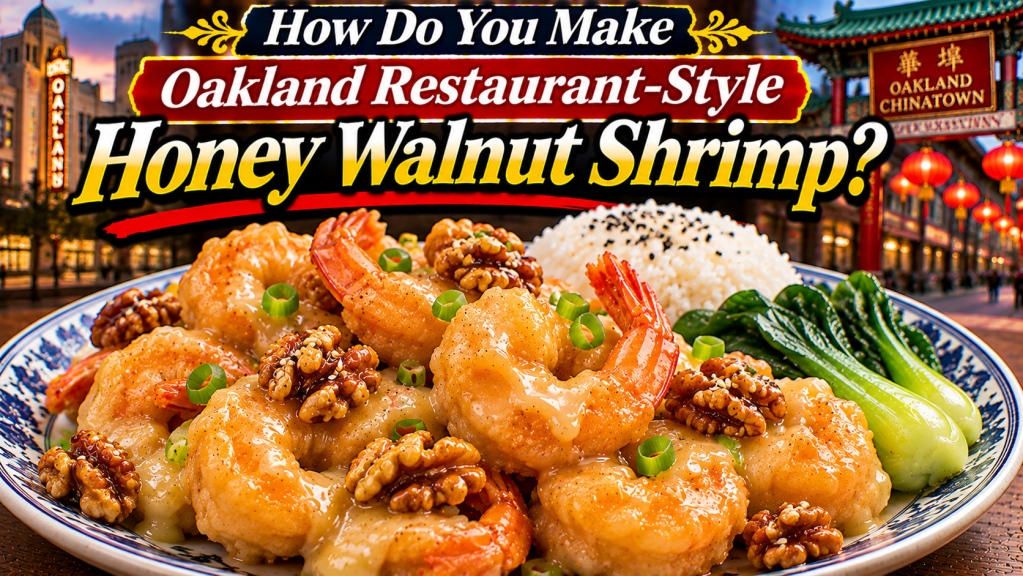
Oakland restaurant-style honey walnut shrimp combines lightly battered, golden shrimp with a silky sweet sauce and crunchy candied walnuts. Inspired by the Cantonese-American restaurant favorite served throughout Oakland, California, this homemade version balances crisp seafood, creamy dressing, and nutty sweetness. The secret is to prepare the walnuts and sauce before frying the shrimp, then toss everything together just before serving. With careful oil temperature and a light coating, the shrimp stay juicy beneath a delicate crust instead of becoming heavy or greasy.
Recipe Overview
This recipe serves four as a main dish or six as an appetizer. Allow about twenty minutes for preparation and twenty-five minutes for cooking. You will need a small saucepan, mixing bowls, a heavy pot or deep skillet, a frying thermometer, a wire rack, and a slotted spoon. The walnuts are simmered briefly in sugar syrup and cooled until crisp. The shrimp are coated in a light cornstarch batter, fried in small batches, and folded into a honey-mayonnaise sauce at the very end. Serve immediately for the best texture.
Ingredients for the Shrimp
Use one and one-half pounds large raw shrimp, peeled and deveined, with tails removed if preferred. For the coating, gather one-half cup cornstarch, one-quarter cup all-purpose flour, one teaspoon baking powder, one-quarter teaspoon salt, one-quarter teaspoon white pepper, one large egg white, and approximately one-third cup cold water. You will also need neutral frying oil, such as canola or vegetable oil. Add the water gradually because the batter should lightly coat the shrimp without forming thick clumps. Pat the shrimp dry before dipping.
Ingredients for the Candied Walnuts
Prepare three-quarter cup walnut halves, one-half cup granulated sugar, one-half cup water, and a small pinch of salt. The syrup coats the walnuts and forms a thin sweet shell as they cool. You can use walnut pieces if halves are unavailable, but whole halves look especially attractive on the finished platter. Do not substitute heavily salted roasted walnuts without adjusting the seasoning. Set out a parchment-lined tray before cooking the syrup so the hot walnuts can be separated and cooled safely.
Ingredients for the Creamy Honey Sauce
Whisk together one-third cup mayonnaise, two tablespoons honey, one tablespoon sweetened condensed milk, one teaspoon fresh lemon juice, and a tiny pinch of salt. The condensed milk creates a familiar restaurant-style sweetness, while lemon juice prevents the sauce from tasting flat. For a less sweet version, reduce the condensed milk slightly and add another few drops of lemon juice. The sauce should be smooth, creamy, and pourable enough to coat the shrimp in a thin layer rather than burying the crispy coating.
What Makes Honey Walnut Shrimp Special?
Honey walnut shrimp is a popular Chinese-American restaurant dish that combines textures and flavors in an unusual way. The shrimp are savory and crisp, the sauce is sweet and creamy, and the walnuts provide crunch. Although often associated with Cantonese-style restaurant menus, recipes vary widely in batter, sauce, and presentation. Some versions use a thicker mayonnaise dressing, while others emphasize honey or condensed milk. This version keeps the sauce relatively light so the shrimp remain the centerpiece.
Choosing the Best Shrimp
Large shrimp are ideal because they stay juicy during frying and offer a substantial bite. Look for shrimp labeled approximately twenty-one to twenty-five per pound, although slightly smaller shrimp work too. Fresh or properly thawed frozen shrimp are suitable. If using frozen shrimp, thaw them overnight in the refrigerator or under cold running water in a sealed bag, then drain and pat dry. Avoid shrimp with a strong ammonia odor. Remove the digestive vein and shell before coating, and keep the seafood refrigerated until cooking.
Step 1: Prepare the Walnuts
Line a baking sheet or plate with parchment paper. In a small saucepan, combine sugar and water and bring to a gentle boil over medium heat, stirring until the sugar dissolves. Add the walnut halves and simmer for approximately three to five minutes. The syrup should lightly thicken and coat the nuts. Use a slotted spoon to transfer the walnuts to the parchment, separating them before they cool. Hot sugar syrup can cause serious burns, so avoid touching the walnuts until completely cooled.
Step 2: Let the Walnuts Crisp
Allow the coated walnuts to cool undisturbed until their surface becomes firm. They may feel slightly sticky at first, but they should develop a pleasant sweet crunch as they cool. If the syrup coating remains wet, spread the nuts on a parchment-lined tray and place them in a 300°F oven for several minutes, watching closely. Let them cool again before using. Keep the walnuts separate from the shrimp and sauce until serving so they retain their texture. Avoid storing them in a damp environment.
Step 3: Mix the Sauce
In a medium bowl, whisk mayonnaise, honey, sweetened condensed milk, lemon juice, and salt until completely smooth. Taste and adjust the sweetness or acidity. Refrigerate the sauce while preparing the shrimp. A cold sauce can help cool the hot shrimp slightly, but do not add so much that the coating becomes soggy. If the sauce is unusually thick, stir in a teaspoon of water at a time until it coats the back of a spoon. Avoid adding a large amount of liquid.
Step 4: Dry and Season the Shrimp
Place the peeled shrimp on paper towels and pat thoroughly dry. Sprinkle lightly with salt and white pepper. Removing surface moisture helps the batter cling and reduces splattering when the shrimp enter hot oil. Keep the shrimp chilled while preparing the batter and frying station. If the shrimp vary significantly in size, separate them into groups so they cook evenly. Raw shrimp should not sit at room temperature for extended periods. Wash hands and utensils after handling the seafood.
Step 5: Make the Light Batter
In a bowl, whisk cornstarch, flour, baking powder, and a pinch of salt. Add the egg white and cold water gradually, stirring until a smooth, lightly thick batter forms. It should cling to the shrimp in a thin coating and drip slowly from a spoon. If the batter is too thick, add a little more water; if too thin, add a teaspoon of cornstarch. Avoid overmixing. The goal is a delicate crust that turns golden and crisp, not a dense breading that overwhelms the shrimp.
Step 6: Heat the Oil Safely
Pour neutral oil into a heavy deep pot, filling it no more than one-third full. Heat to approximately 350°F and monitor the temperature with a frying thermometer. Set a wire rack over a rimmed baking sheet for draining. Keep water away from the hot oil, use long utensils, and never leave the pot unattended. If oil catches fire, never pour water on it. Prepare a clean platter before frying so the cooked shrimp can be moved quickly without touching surfaces that held raw seafood.
Step 7: Fry the Shrimp in Batches
Dip a few shrimp into the batter, letting excess drip away, then lower them carefully into the oil. Fry in small batches for approximately two to four minutes, turning if necessary, until the coating is lightly golden and the shrimp are opaque and cooked through. Shrimp should reach 145°F. The exact time depends on size and oil temperature. Avoid crowding the pot, which lowers the temperature and makes the coating greasy. Transfer each batch to the wire rack and allow the oil to recover before adding more.
Step 8: Drain Without Trapping Steam
Arrange the cooked shrimp in a single layer on the rack. Do not pile them into a bowl or cover them tightly because trapped steam softens the batter. If you are preparing several batches, keep the first batches warm briefly in a low oven, but do not hold them for an extended period. Check that all shrimp are safely cooked. The finished coating should look pale golden and delicate rather than dark brown. Honey walnut shrimp is best when the crust is crisp and the interior remains tender.
Step 9: Toss With the Creamy Sauce
Place the fried shrimp in a large clean bowl and add about two-thirds of the prepared sauce. Toss gently with a silicone spatula until the shrimp are lightly coated. Add more sauce only if needed. Work quickly, since the moisture in the dressing begins softening the crust immediately. Do not heat the mayonnaise-based sauce in a hot skillet; it can separate. The finished shrimp should have a glossy creamy coating while still showing some of the golden batter underneath.
Step 10: Add Walnuts and Serve
Transfer the coated shrimp to a serving platter and scatter the cooled candied walnuts over the top. Garnish with thinly sliced scallions if desired. Serve immediately with steamed jasmine rice, lightly stir-fried broccoli, or crisp green vegetables. For an attractive restaurant-style presentation, arrange the shrimp in a shallow mound and place the walnuts where they remain visible. Avoid pouring extra sauce over the walnuts, which would soften their sweet coating. Offer additional sauce separately for diners who prefer a richer finish.
How to Keep the Shrimp Crispy
Dry the shrimp before battering, use cold water in the batter, and fry at a steady temperature. Work in small batches so the oil does not cool excessively. Drain on a wire rack, not in a covered bowl. Most importantly, toss the shrimp with the sauce only when everyone is ready to eat. If serving a crowd, keep the fried shrimp, sauce, and candied walnuts separate and assemble smaller platters as needed. This simple timing change makes a noticeable difference in the finished texture.
Can You Make Honey Walnut Shrimp Without Condensed Milk?
Yes. Sweetened condensed milk adds creaminess and a familiar sweet flavor, but it is not essential. Replace it with an additional teaspoon or two of honey and a small amount of milk or water to loosen the sauce. Taste before adding more sweetener because mayonnaise and candied walnuts already contribute richness and sweetness. For a brighter result, increase the lemon juice slightly. The finished sauce should complement the shrimp rather than taste like a dessert topping.
Storage and Reheating
Refrigerate leftovers within two hours in shallow airtight containers and use within three to four days. Shrimp coated in mayonnaise sauce will soften during storage. Reheat gently until the shrimp reach 165°F throughout, recognizing that the sauce may separate and the crust may lose its crunch. For the best make-ahead results, store fried shrimp, sauce, and walnuts separately. Reheat plain fried shrimp in a hot oven or air fryer, then add fresh sauce and walnuts. Avoid repeatedly reheating seafood.
Common Mistakes to Avoid
Overcooking shrimp makes them rubbery, while frying at a low temperature produces a greasy crust. Thick batter can overwhelm the seafood, and wet shrimp may cause the coating to slide off. Adding too much sauce makes the finished dish heavy and soggy. Walnuts that are placed in the sauce too early lose their crunch. Use a thermometer, fry small batches, prepare the sauce ahead, and combine everything only when ready to serve. These techniques produce a more balanced restaurant-style dish.
Frequently Asked Questions
What is honey walnut shrimp? It is a Chinese-American restaurant dish of crispy shrimp with creamy sweet sauce and candied walnuts. What shrimp size works best? Large shrimp are ideal. Can I use frozen shrimp? Yes, thaw and dry them thoroughly. Is condensed milk necessary? No, but it adds familiar sweetness. Why is my batter soggy? Low oil temperature or early saucing may be responsible. Can I make the walnuts ahead? Yes, store them dry and airtight. Can I bake the shrimp? Yes, with a different coating. What sides pair well? Jasmine rice and lightly cooked green vegetables are excellent.
Final Thoughts
Oakland restaurant-style honey walnut shrimp is a rewarding dish to make at home when the components are prepared separately. Candy the walnuts, whisk a balanced honey sauce, and fry lightly battered shrimp until golden and tender. Toss everything together just before serving so the crust and walnuts retain their crunch. With steamed rice and fresh vegetables, this recipe brings the sweet-savory flavors of a Chinese-American restaurant favorite to your own table.
Leave a Reply