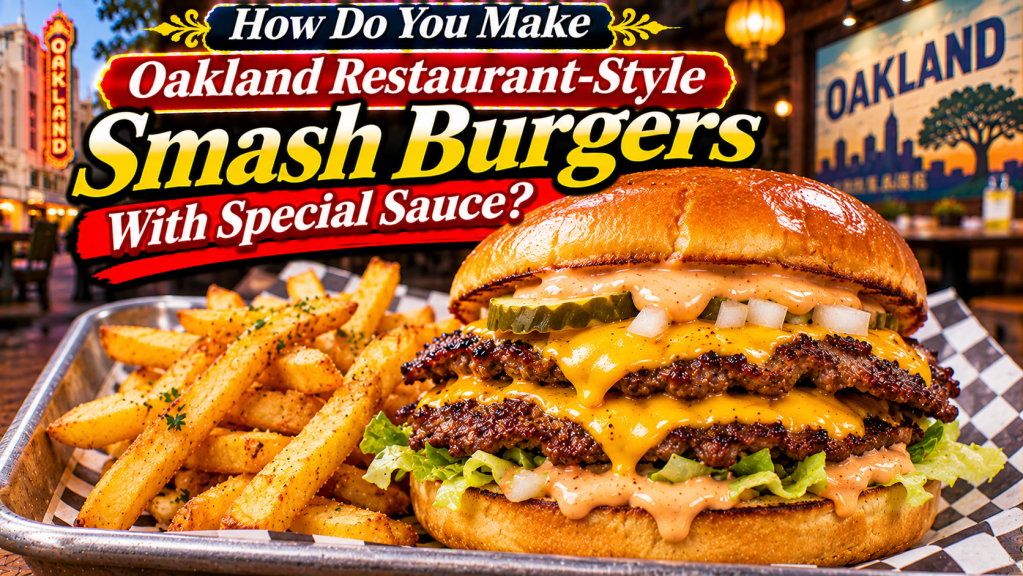
Oakland restaurant-style smash burgers are all about a deeply browned crust, juicy beef, melted cheese, and a tangy special sauce tucked inside a soft toasted bun. The technique is simple: press a loose ball of ground beef firmly onto a very hot cooking surface, let it develop a crisp edge, then scrape and flip it. Unlike a thick pub burger, a smash burger is thin and cooks quickly. This Oakland-inspired recipe uses double patties, American cheese, pickles, onions, and a creamy sauce for a satisfying homemade burger.
Recipe Overview
This recipe makes four double smash burgers. Allow approximately twenty minutes to prepare the ingredients and another fifteen to twenty minutes for cooking. You will need a heavy cast-iron skillet or flat griddle, a sturdy metal spatula with a sharp edge, parchment paper, and an instant-read thermometer. Work in batches so the skillet stays hot and each patty has room to brown. Have the buns, cheese, sauce, and vegetables ready before cooking because smash patties take only a few minutes.
Ingredients for the Burgers
Use one and one-half pounds ground beef with approximately 80 percent lean meat and 20 percent fat, four soft potato or brioche hamburger buns, eight slices American cheese, one small white onion finely diced or thinly sliced, eight to twelve dill pickle chips, one tablespoon unsalted butter for the buns, and kosher salt and freshly ground black pepper to taste. Optional toppings include shredded iceberg lettuce and thin tomato slices. Do not mix breadcrumbs or eggs into the beef; loose meat creates the irregular edges that brown so well.
Ingredients for the Special Sauce
Combine one-half cup mayonnaise, two tablespoons ketchup, one tablespoon yellow mustard, two tablespoons finely chopped dill pickles or sweet relish, one teaspoon pickle brine, one-half teaspoon smoked paprika, one-quarter teaspoon garlic powder, and a pinch of black pepper. Stir until smooth and refrigerate while preparing the burgers. Taste before adding extra salt because the pickles and mustard already contribute seasoning. The sauce should be creamy, tangy, slightly sweet, and easy to spread without running off the bun.
What Makes a Smash Burger Different?
A smash burger begins as a loose ball of ground beef rather than a thick, preformed patty. Pressing the meat onto a very hot griddle increases its contact with the surface, producing a deeply browned crust through the Maillard reaction. The patty stays thin, and the edges become crisp and lacy. Smashing should happen immediately after the beef hits the pan, not after it has cooked and begun releasing juices. This method is different from repeatedly pressing a conventional burger during cooking.
Choosing the Best Ground Beef
Ground beef with around 20 percent fat is a dependable choice because it provides flavor and helps the thin patties stay juicy. Leaner beef can work, but the result may be drier and less richly browned. Buy fresh beef and keep it refrigerated until cooking. Divide the meat gently without kneading or compressing it into tight balls. Overworking ground beef can make the cooked patties dense. Use a kitchen scale if available so all eight portions are similar in size.
Step 1: Make the Special Sauce
In a small bowl, stir together the mayonnaise, ketchup, mustard, chopped pickles, pickle brine, paprika, garlic powder, and black pepper. Mix until the color is uniform. Taste and adjust with a few drops of pickle brine for more tang or a small amount of ketchup for sweetness. Cover and refrigerate for at least fifteen minutes. The flavors blend as the sauce rests, and chilling gives it a thicker consistency that spreads easily onto warm buns.
Step 2: Prepare the Toppings
Dice or thinly slice the onion, drain the pickle chips, and wash and dry any lettuce. Separate the cheese slices so they are easy to grab quickly. Arrange the ingredients near the stove but away from raw meat. Thinly sliced onions can be placed directly on the patties during cooking for an onion smash burger variation, but the standard version uses them as a fresh topping. Dry pickles and lettuce help keep the finished buns from becoming soggy.
Step 3: Divide the Beef
Divide the ground beef into eight loose portions of approximately three ounces each. Roll them very lightly into balls without squeezing tightly. Place the portions on a chilled plate and return them to the refrigerator until the cooking surface is ready. Do not season the meat far in advance, since salt mixed into ground beef can change its texture. Instead, sprinkle salt and pepper onto the patties immediately after smashing. This keeps the interior tender and the exterior flavorful.
Step 4: Toast the Buns
Split the buns and spread a thin layer of butter over the cut sides. Place them cut-side down on a skillet or griddle over medium heat until lightly golden, approximately one to two minutes. Transfer them to a clean plate. Toasting creates a little structure so the bread can support the sauce and juicy beef. Avoid burning the buns or drying them out. Keep them loosely covered while the patties cook, and do not add the sauce until assembly.
Step 5: Heat the Cooking Surface
Place a heavy cast-iron skillet or flat griddle over medium-high to high heat until thoroughly hot. Use adequate ventilation because browning beef produces smoke. Follow your cookware manufacturer’s temperature guidance, especially if using a coated surface. Cast iron or stainless steel is preferable to delicate nonstick cookware for aggressive smashing and scraping. A small drop of water should evaporate rapidly on the hot surface. Avoid adding excessive oil because the beef will release its own fat.
Step 6: Smash the Beef Immediately
Place two loose beef balls on the hot skillet with plenty of space between them. Lay a small square of parchment over one ball and press down firmly with a sturdy spatula or burger press for approximately ten seconds. Aim for a thin patty around one-quarter inch thick with irregular edges. Repeat with the second ball. Remove the parchment carefully. Do not continue pressing once the patties have started cooking, because that can force out juices without improving the crust.
Step 7: Season and Sear
Sprinkle the exposed surfaces with salt and black pepper. Let the patties cook undisturbed for approximately two to three minutes until the edges look deeply browned and crisp. The underside should develop a dark golden crust, not a pale gray surface. Avoid moving the patties during this stage. If the skillet becomes crowded or fills with liquid, cook fewer portions at a time. The crust is the signature feature of a good smash burger, so give it time to develop.
Step 8: Scrape and Flip
Slide a sharp-edged metal spatula firmly beneath each patty, scraping against the cooking surface to preserve the browned crust. Flip the patty in one confident motion. The cooked side should have an irregular, deeply browned pattern. Place a slice of American cheese on top immediately. Cook the second side until the ground beef reaches a safe internal temperature of 160°F. Because the patties are thin, the second side generally cooks quickly, but temperature is more reliable than timing alone.
Step 9: Stack the Patties
Once two patties are fully cooked, stack one on top of the other with the cheese between and on top. The residual heat helps the cheese soften into the craggy surface. Transfer the double stack to a clean plate and repeat with the remaining beef. If your skillet is large enough, cook four patties at a time, but avoid crowding. Work efficiently so the burgers stay warm. Never return cooked patties to a plate that held raw ground beef.
Step 10: Assemble the Burgers
Spread a generous tablespoon of special sauce onto the toasted bottom bun. Add a few pickle chips, followed by the double stack of cheesy patties. Scatter the onions over the meat and add lettuce or tomato if desired. Spread a little more sauce onto the top bun and close the burger gently. Serve immediately while the edges are crisp and the cheese is melted. A wide spatula makes it easier to transfer the thin patties without breaking them.
Step 11: Serve Restaurant-Style
Serve each double smash burger with hot fries, a crisp salad, or roasted potatoes. Offer extra special sauce for dipping and additional pickles for diners who enjoy more tang. A lightly toasted bun, well-seasoned beef, and balanced sauce should provide enough flavor without a long list of toppings. If cooking for guests, set out the condiments first and prepare burgers in quick batches so everyone can eat them as fresh as possible.
How to Get Crispy, Lacy Edges
Start with loosely formed meat, a very hot heavy cooking surface, and firm pressure during the first few seconds. Press the beef thin enough that the edges spread into irregular shapes. Leave it alone while the crust forms, then scrape carefully to preserve the browned bits. A patty that is too thick will not develop the same delicate edge. A pan that is too cool will steam the meat rather than sear it. Good ventilation is important because high-heat cooking can be smoky.
How to Keep the Buns From Getting Soggy
Toast the cut sides until lightly golden and allow wet toppings to drain before assembly. Spread the special sauce in a controlled layer rather than flooding the bread. Place lettuce between the bun and beef if you prefer an extra moisture barrier. Assemble just before serving, since hot patties release steam that softens bread over time. Avoid wrapping the finished burger tightly for an extended period. A fresh smash burger is best enjoyed immediately.
Storage and Reheating
Refrigerate cooked patties within two hours and use within three to four days. Reheat in a skillet over medium heat or in an oven until the centers reach 165°F. Store buns, vegetables, and sauce separately to preserve their texture. Leftover cooked patties can be frozen for approximately two months for best quality, although the crisp edges may soften after reheating. Refrigerate the special sauce and discard it if it develops an off odor or has been left out too long.
Common Mistakes to Avoid
Using tightly packed beef balls makes the patties dense. Smashing after the meat has begun cooking squeezes out juices. A lukewarm skillet prevents a proper crust, while overcrowding creates steam. Flipping before browning develops leaves the meat pale. Failing to scrape the pan carefully can leave the flavorful crust behind. Adding too many wet toppings makes the bun soggy. Use a hot heavy skillet, a single firm smash, and quick assembly for consistent results.
Frequently Asked Questions
What is a smash burger? It is a thin burger made by pressing a loose beef ball onto a hot griddle. What beef is best? Ground beef around 80 percent lean and 20 percent fat works well. Can I use a nonstick skillet? A heavy uncoated skillet is better suited to high heat and scraping. When should I smash the beef? Immediately after it hits the pan. What temperature should ground beef reach? 160°F internally. Why use American cheese? It melts smoothly over thin patties. Can I make the sauce ahead? Yes, refrigerate it. Why are my patties not crispy? The pan may be too cool or overcrowded.
Final Thoughts
Oakland restaurant-style smash burgers with special sauce depend on a few well-executed details: loosely formed beef, a very hot cooking surface, one firm smash, and a deeply browned crust. Stack the thin patties with melted cheese and serve them on toasted buns with pickles, onions, and tangy homemade sauce. Once you learn the timing, these burgers come together quickly and deliver the crispy edges and juicy flavor that make smash burgers a favorite.
Leave a Reply