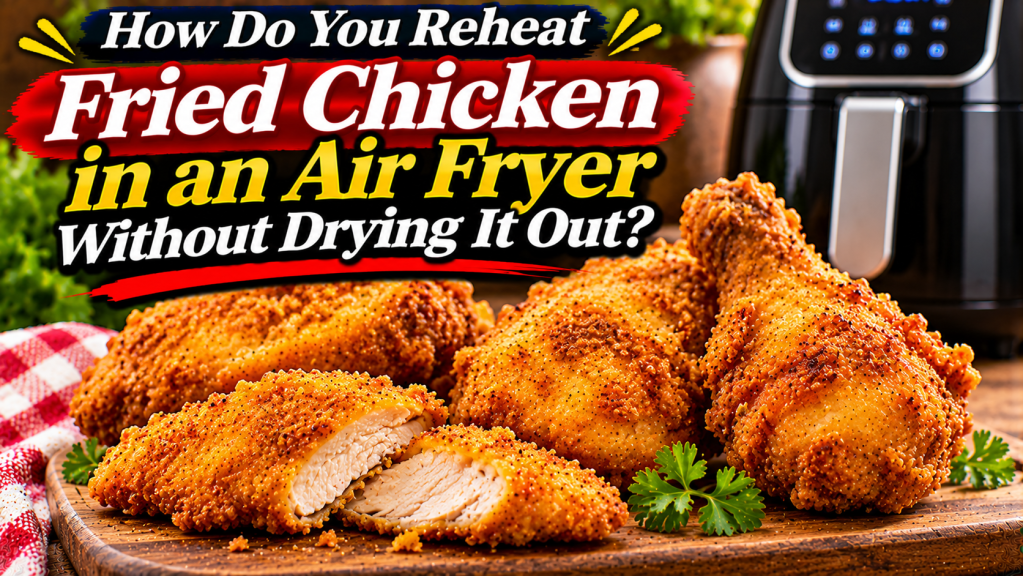
To reheat fried chicken in an air fryer without drying it out, let refrigerated chicken lose some of its chill briefly while the air fryer preheats, then warm it in a single layer at about 350°F. Turn the pieces once, check them early, and stop when the center reaches 165°F. This approach helps the crust crisp again while limiting the time the meat spends in hot circulating air. Large bone-in pieces need longer than small tenders, so temperature matters more than a fixed number of minutes.
Why the Air Fryer Works for Leftover Fried Chicken
The air fryer circulates hot air around the breading, evaporating surface moisture and restoring some crunch. A microwave heats quickly but often leaves the coating soft, while a conventional oven takes longer to preheat. An air fryer offers a practical middle ground for one or two servings. However, the fan can dry out thin chicken pieces if the temperature is too high or the food cooks too long. Moderate heat and careful monitoring are essential.
Quick Reheating Guide
Use 350°F as a starting temperature for most refrigerated fried chicken. Small tenders may need approximately three to six minutes, wings about five to eight minutes, and larger bone-in thighs or drumsticks around eight to twelve minutes or longer. These are estimates, not guaranteed times. The starting temperature, thickness, breading, and appliance all change the result. Regardless of the clock, reheat leftovers to 165°F throughout using a food thermometer.
What You Need
Gather refrigerated fried chicken, an air fryer, tongs, an instant-read thermometer, and a clean plate. A light mist of cooking oil is optional for dry-looking breading, but most fried chicken already contains enough oil. Do not add water to the basket. Avoid loose parchment during preheating, and never block the air vents. If your air fryer has a removable rack or basket, make sure it is clean before adding cooked food.
Step 1: Check the Leftovers
Only reheat chicken that was stored safely. Cooked chicken should have been refrigerated within two hours of cooking, or within one hour when the surrounding temperature was above 90°F. Use refrigerated leftovers within three to four days. Discard chicken that was left out too long, smells spoiled, or shows signs of deterioration. Reheating cannot reliably make improperly stored food safe. Keep the chicken refrigerated until you are ready to begin.
Step 2: Preheat to 350°F
Preheat the air fryer to 350°F for approximately three minutes if your model recommends preheating. This temperature is hot enough to help crisp the breading without immediately scorching it. Some appliances run hotter than their displays suggest, so check the food early during your first attempt. If the coating is very dark already, begin at 325°F and increase the temperature only if needed toward the end.
Step 3: Arrange the Chicken in One Layer
Place the pieces in the basket with a little space between them. Avoid stacking wings, tenders, or thighs, because trapped steam makes the breading soggy and causes uneven heating. Reheat similar-sized pieces together when possible. A thin tender and a large bone-in breast will not finish at the same time. If you have several servings, cook in batches rather than filling the basket to capacity.
Step 4: Reheat and Turn
Air fry for approximately half the expected time, then turn the chicken gently with tongs. For tenders, start checking after about three minutes; for bone-in pieces, check after six to eight minutes. Turning exposes more of the coating to circulating air and helps the underside regain crispness. Avoid squeezing the chicken with tongs or repeatedly moving the pieces, which can break the breading and release juices.
Step 5: Check the Center Temperature
Insert a food thermometer into the thickest portion of the meat, avoiding the bone. Reheated leftovers should reach 165°F throughout. If the coating looks crisp but the center is not hot enough, reduce the air fryer temperature slightly and continue in short intervals. For pieces with uneven thickness, check more than one location. Do not judge doneness by steam, color, or how hot the breading feels.
Step 6: Rest Briefly and Serve
Transfer the reheated chicken to a clean plate or wire rack and let it stand for one or two minutes. This brief rest prevents trapped steam from collecting under the crust. Serve immediately with coleslaw, green beans, mashed potatoes, biscuits, or a salad. Keep sauces on the side until eating, since pouring sauce over the chicken can soften the coating you just crisped.
How Long to Reheat Chicken Tenders
Chicken tenders are relatively thin and can dry out quickly. Start at 350°F for approximately three to six minutes, turning once and checking early. Thick breaded strips may take longer. A tender that was cooked very crisp originally may need only a short period to restore its exterior, but the center still needs to reach 165°F. If the crust begins darkening too much, lower the temperature while finishing the reheating.
How to Reheat Fried Chicken Wings
Arrange wings in a single layer at 350°F and begin checking around five minutes. Many wings take approximately five to eight minutes, depending on their size and starting temperature. Shake or turn gently halfway through. Sauced wings can become sticky and may brown faster than plain fried wings, so use a lower temperature if the glaze contains sugar. Verify that the thickest part of each wing reaches 165°F.
How to Reheat Drumsticks and Thighs
Bone-in drumsticks and thighs are thicker than tenders and may need eight to twelve minutes or more at 350°F. Turn halfway through and use a thermometer near the bone without touching it. Dark meat often stays moist better than breast meat, but it can still dry out with excessive heating. If the coating is becoming too brown before the center is hot, reduce the heat to 325°F and continue until the safe temperature is reached.
How to Reheat Fried Chicken Breasts
Breaded chicken breasts can be challenging because the exterior may become hot before the thick center does. Start at 325°F to 350°F, turn once, and check the center regularly. Thick bone-in breasts may require longer than the other cuts. If possible, reheat breasts separately from smaller pieces. Avoid cutting them into thin slices before reheating unless you plan to use them in a sandwich, because extra exposed surfaces can lose moisture.
Should You Add Oil?
Usually, no additional oil is necessary. Fried chicken already contains oil in its coating, and the air fryer can revive crispness through circulating heat. If the breading looks unusually dry or powdery, a very light mist of neutral oil may help. Do not soak the crust or pour oil into the basket. Too much oil can make the chicken greasy and may increase smoking in some appliances.
Should You Cover the Chicken?
Leave the chicken uncovered while reheating. Foil or a tight cover traps steam and softens the coating, defeating the main advantage of an air fryer. Avoid placing foil where it blocks airflow or touches the heating element. If you need to protect a very dark crust while warming a thick piece, lower the cooking temperature rather than wrapping the chicken. Follow the manufacturer’s guidance on approved accessories.
Why Reheated Fried Chicken Gets Dry
Dryness usually comes from excessive temperature, too much time, or repeatedly reheating the same leftovers. Thin breast strips are especially vulnerable. Start at moderate heat, separate pieces by size, and check the temperature early. Remove each piece as soon as it is safely heated. Adding water to the air fryer does not reliably keep the meat juicy and can make the coating soggy. For the best texture, reheat only the portion you intend to eat.
Why the Breading Turns Soggy
Soggy breading often results from condensation, overcrowding, or sauce added before reheating. Refrigerated chicken may have moisture on its surface, and stacking pieces prevents that moisture from evaporating. Use a clean, dry basket and arrange pieces loosely. Avoid microwaving before air frying unless necessary, because the microwave can soften the crust. Let the chicken rest briefly on a rack after reheating instead of placing it in a closed container.
What If the Outside Burns Before the Center Is Hot?
Lower the temperature to 300°F to 325°F and continue heating in short intervals. This gives the center more time to warm without aggressively browning the coating. Thick bone-in chicken may benefit from starting at the lower temperature and finishing briefly at 375°F only if the crust needs extra crispness. Check the center with a thermometer rather than assuming a deeply browned crust means the chicken is fully reheated.
Can You Reheat Frozen Fried Chicken?
Frozen cooked fried chicken can sometimes be reheated directly in an air fryer, but the process takes longer and the coating may brown before the middle is hot. For more even results, thaw safely in the refrigerator first. If reheating from frozen, use a moderate temperature, turn the pieces, and check the center carefully until it reaches 165°F. Never thaw cooked chicken on the countertop. Follow any specific package instructions for commercially frozen products.
Air Fryer Versus Oven Versus Microwave
An air fryer is convenient for small batches and can restore crispness efficiently. A conventional oven is useful for larger quantities because pieces can be spread across a rack on a baking sheet. A microwave is fastest but usually softens breading and may heat unevenly. For a family-sized batch, an oven may be more practical; for two pieces of leftover fried chicken, the air fryer is often the easiest option. Every method still requires safe reheating.
Best Ways to Serve Reheated Fried Chicken
Reheated fried chicken works well as a main dish, chopped over a salad, or tucked into a sandwich with lettuce and pickles. For a chicken biscuit, reheat the meat separately and warm the biscuit just before assembling. To make a quick bowl, serve the chicken with rice, vegetables, and sauce on the side. Avoid holding the chicken in a covered container after reheating, because steam will soften the crust.
How to Store Fried Chicken for Better Reheating
Cool leftover fried chicken promptly and refrigerate in a shallow container. If possible, place parchment between layers to prevent the coating from sticking, and avoid tightly stacking warm pieces. Store in a covered container at 40°F or below. Use within three to four days. For longer storage, wrap and freeze portions promptly; quality is best when eaten within a few months. Label containers with the date so you can keep track of leftovers.
Common Mistakes to Avoid
The most common mistakes are reheating at maximum heat, overcrowding the basket, skipping the thermometer, and leaving pieces in too long. Adding water or covering the chicken can make the crust soft. Reheating wings and large breasts together often produces uneven results. Instead, group similar cuts, cook at around 350°F, turn once, and remove each piece as soon as the center reaches 165°F. Discard leftovers that were stored improperly rather than attempting to rescue them through reheating.
Frequently Asked Questions
What temperature should you use to reheat fried chicken? About 350°F is a good starting point. How long does it take? Small tenders may need three to six minutes, while large bone-in pieces need longer. Do you need to flip the chicken? Turning once helps heat and crisp both sides. Should you add oil? Usually not. Can you reheat fried chicken from frozen? Yes, but thawing in the refrigerator first often produces more even results. How hot should the center be? Reheated leftovers should reach 165°F. Why is my breading soft? Moisture or overcrowding may be responsible. Can you reheat chicken twice? It is better to reheat only the portion you will eat to preserve quality and reduce repeated handling.
Final Thoughts
The best way to reheat fried chicken in an air fryer without drying it out is to use moderate heat, a single layer, and short cooking intervals. Begin near 350°F, turn the chicken gently, and check the center with a thermometer until it reaches 165°F. Smaller pieces need less time than thick bone-in cuts. With proper storage and careful reheating, leftover fried chicken can regain much of its original crunch while staying tender inside.
Leave a Reply