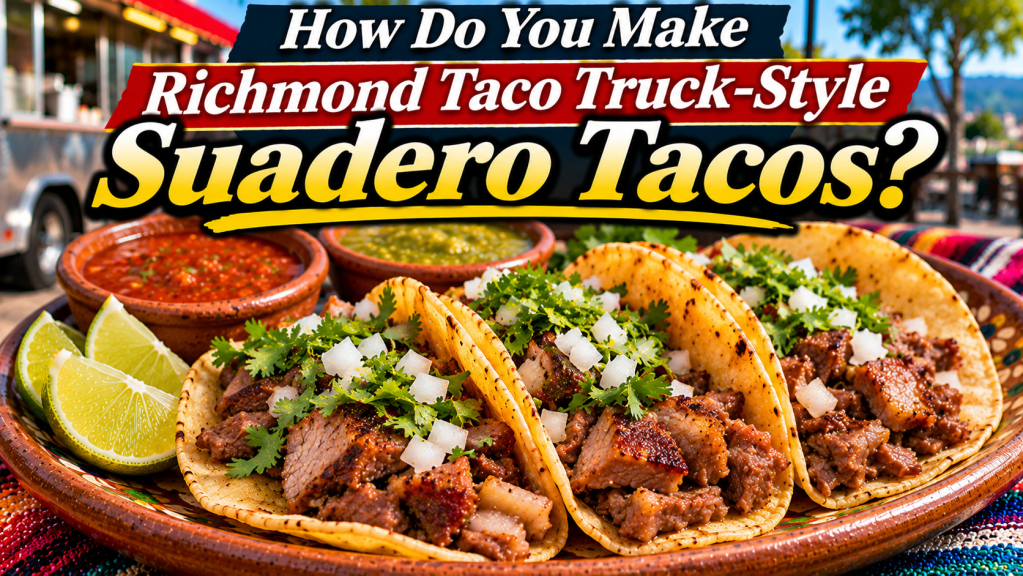
Richmond taco truck-style suadero tacos are built around tender beef with crisp, browned edges, tucked into warm corn tortillas and finished with onion, cilantro, lime and salsa. Suadero is a cut associated with Mexican street tacos, traditionally cooked slowly in fat until tender and then chopped and browned to order. At home, a covered braise followed by a quick skillet sear offers a practical way to achieve a similar combination of softness and crispness. This original recipe is inspired by the East Bay taco truck experience rather than the proprietary recipe of any particular business. The ingredients are straightforward, but taking time with the beef makes the difference between an ordinary taco and a memorable one.
Recipe Overview
This recipe makes about sixteen small tacos, enough for four to six servings. Allow twenty minutes to prepare the beef and aromatics, two and a half to three and a half hours for gentle cooking, and another twenty minutes to chop, crisp and assemble the tacos. The long cooking stage is mostly hands-off. You will need a Dutch oven or heavy covered pot, sharp knife, cutting board, skillet, tongs and a thermometer if desired. The beef can be cooked a day ahead and crisped immediately before serving, which makes these tacos convenient for gatherings.
Ingredients for the Beef
Gather two and a half pounds beef suadero, or well-marbled beef brisket point as a substitute; one and a half teaspoons kosher salt; one teaspoon black pepper; one medium white onion, quartered; four garlic cloves, lightly crushed; two bay leaves; one teaspoon dried Mexican oregano; one-half teaspoon ground cumin, optional; two cups beef broth or water; and two tablespoons neutral oil or rendered beef fat for finishing. Traditional suadero preparations vary, and some use considerably more fat. This version uses a modest amount while preserving the signature tender meat and browned edges.
Ingredients for Serving
Prepare sixteen small corn tortillas, one-half cup finely diced white onion, one-half cup chopped cilantro, three limes cut into wedges, and one cup salsa roja or salsa verde. Optional accompaniments include sliced radishes, grilled scallions, pickled jalapeños and a little finely chopped cabbage. Keep the toppings simple. Suadero has a rich beef flavor that is best balanced by fresh onion, cilantro and lime rather than heavy cheese or creamy sauces. If the tortillas are especially thin, use two per taco to help hold the filling.
What Is Suadero?
Suadero refers to a particular beef cut used in Mexican cooking, generally from the area around the belly or lower chest. Its texture and fat distribution make it well suited to slow cooking and crisping. It is not identical to flank steak or skirt steak, which are usually grilled quickly. Depending on the butcher and region, labels can vary, so ask for beef specifically suitable for suadero tacos. If authentic suadero is unavailable, brisket point is a reasonable home substitute, though the texture will not be exactly the same. Avoid lean steak for this slow-cooking method.
Choosing the Right Beef
Look for a cut with visible marbling and enough connective tissue to soften during cooking. A completely lean piece may become dry before it turns tender. If purchasing suadero from a butcher, explain that you plan to cook it slowly and finish it on a griddle. If using brisket point, trim only very thick exterior fat and leave some marbling intact. Cut unusually large pieces into manageable sections so they fit comfortably in the pot. Keep the pieces fairly large during braising; small cubes can lose moisture and fall apart before the final sear.
Step 1: Season the Beef
Pat the beef dry with paper towels and season evenly with salt and black pepper. Let it sit briefly while you prepare the onion, garlic and broth. There is no need for a long acidic marinade. Suadero’s character comes from the cut itself and the cooking method, so a restrained seasoning approach works well. If you prefer more aromatic beef, include the optional cumin, but avoid adding a heavy spice blend that obscures the meat. Keep raw beef and its utensils separate from ready-to-eat garnishes.
Step 2: Build the Braising Pot
Place the beef in a heavy Dutch oven with the quartered onion, crushed garlic, bay leaves and oregano. Pour in enough broth or water to reach partway up the meat. The beef does not need to be completely submerged. Bring the liquid just to a gentle simmer over medium heat, then reduce the heat and cover. Alternatively, place the covered pot in a 300°F oven. The goal is steady, moist heat that slowly softens connective tissue. Avoid vigorous boiling, which can make the outside of the meat tighten and dry.
Step 3: Cook Until Very Tender
Braise for approximately two and a half to three and a half hours, checking occasionally. Add a splash of hot water if the liquid becomes too low. The beef is ready when a fork slides into the thickest portion with little resistance. Some cuts need additional time, so judge tenderness rather than following the clock rigidly. Remove the bay leaves when cooking is complete. The braising liquid will contain beef juices and rendered fat; reserve both. Allow the meat to rest in the liquid for ten minutes before transferring it to a cutting board.
Step 4: Reserve the Cooking Juices
Carefully skim a little rendered fat from the top of the braising liquid and set it aside for the skillet. If there is not enough fat, use a tablespoon or two of neutral oil. Strain the remaining broth and reserve a small amount to keep the chopped beef moist. The broth should taste savory but not excessively salty. You can refrigerate extra broth for another dish or freeze it in a suitable container. Do not pour all the broth over the finished tacos; too much liquid will soften the tortillas.
Step 5: Chop the Tender Beef
Transfer the rested beef to a cutting board and chop into small, roughly quarter-inch pieces. The pieces do not need to be perfectly uniform, but they should be easy to distribute across a small tortilla. If the beef shreds instead of chopping neatly, that is fine. Avoid mincing it into a paste. Some small pieces and slightly larger chunks create appealing texture after crisping. If the meat appears dry, toss it with a spoonful of warm reserved cooking liquid. Keep it warm while the skillet heats.
Step 6: Crisp the Beef on a Griddle
Heat a large cast-iron skillet or griddle over medium-high heat. Add a thin layer of reserved beef fat or neutral oil. Spread the chopped beef in a single layer and let it cook undisturbed for two to three minutes, until browned spots form. Turn with a spatula and cook briefly on the other side. Work in batches to avoid steaming. The goal is crisp edges and a juicy interior, not uniformly dry meat. If the skillet becomes too hot, lower the heat before the browned bits burn.
Step 7: Warm the Tortillas
Heat a dry comal or skillet over medium heat. Warm the corn tortillas for twenty to thirty seconds per side, until flexible and lightly toasted in spots. Stack them in a clean towel or tortilla warmer to retain heat. Warm tortillas are easier to fold and less likely to crack when filled. If you prefer a slightly richer finish, brush the griddle with a trace of reserved beef fat before warming the tortillas. Avoid soaking them in fat, which can make the tacos greasy and difficult to handle.
Step 8: Assemble the Tacos
Divide the hot, crisped beef among the warm tortillas, using a modest portion in each. Sprinkle with finely diced white onion and cilantro, then add a squeeze of lime. Serve salsa separately or spoon on a small amount immediately before eating. The best balance allows the beef to remain the dominant flavor while the onion and lime cut through its richness. Serve the tacos immediately. If preparing several batches, keep the meat warm and crisp fresh portions as guests are ready.
Why Slow Cooking and Crisping Both Matter
Slow cooking converts tough connective tissue into tenderness, while a hot griddle creates the browned edges associated with many taco truck preparations. Skipping the braise can leave this cut chewy, and skipping the final sear produces soft but less textured tacos. The two stages complement one another. The beef should already be fully tender before it reaches the skillet. Crisping is a finishing technique, not a second long cooking process. A short, hot sear delivers flavor without drying out the meat.
How to Keep Suadero Juicy
Choose a well-marbled cut and maintain a gentle simmer during the braise. Keep enough liquid in the pot to prevent scorching, but do not boil the beef aggressively. Let it rest briefly before chopping, and reserve some of the flavorful broth. When crisping, work quickly in small batches. If the meat looks dry, add a teaspoon or two of warm broth at the end, allowing excess moisture to evaporate. Avoid holding chopped beef on a hot griddle for a long time. Serve as soon as the edges brown.
Make-Ahead Instructions
Braise the beef up to two days ahead, cool it promptly and refrigerate it with a little of its cooking liquid in shallow covered containers. The rendered fat will firm up on top, making it easy to reserve a small amount for crisping. Reheat the beef thoroughly before chopping and searing, or chop it cold and warm it carefully in the skillet until hot throughout. Prepare the onion and cilantro shortly before serving for the freshest texture. Warm the tortillas only when everyone is ready to eat.
Storage and Reheating
Refrigerate cooked beef within two hours and use within three to four days. Store the meat, tortillas and garnishes separately. Reheat leftovers until steaming hot throughout and reaching 165°F. A hot skillet is the best way to restore browned edges, though a splash of broth may be needed to prevent dryness. Freeze cooled cooked beef with a small amount of broth for up to two to three months for best quality. Thaw overnight in the refrigerator before reheating. Do not freeze assembled tacos with fresh onion and cilantro.
Common Mistakes to Avoid
Using a very lean cut can make the tacos dry. Boiling the beef too hard may leave the outside tough before the center softens. Stopping the braise early produces chewy pieces, while chopping the meat too finely makes it difficult to achieve distinct crisp edges. Another common mistake is crowding the griddle, which steams the beef instead of browning it. Too much fat makes the filling greasy, and too much broth makes the tortillas soggy. Finally, do not overload the tacos with toppings that hide the beef flavor.
Frequently Asked Questions
Is suadero the same as brisket? No, although brisket point can be a practical substitute when suadero is unavailable. Can I use flank steak? It is better suited to quick grilling and will not give the same texture. Do I need a special taco griddle? No, a heavy skillet works well. Can I cook the beef a day ahead? Yes, braise and refrigerate it, then crisp just before serving. Why is my suadero chewy? It may need more gentle braising time or may be sliced too thickly. Can I freeze leftovers? Yes, freeze the cooked beef separately from tortillas and garnishes. Are suadero tacos usually served with cheese? They are often served simply with onion, cilantro, lime and salsa.
Final Thoughts
Richmond taco truck-style suadero tacos are worth making when you want tender beef with rich flavor and crisp, browned edges. Choose a suitable cut, braise gently until fork-tender, reserve a little cooking fat and finish the chopped meat on a hot griddle. Serve it in warm corn tortillas with onion, cilantro, lime and your favorite salsa. This two-stage method makes a satisfying home version of a beloved Mexican street taco, with enough flexibility for a family dinner or a larger taco night.
Leave a Reply