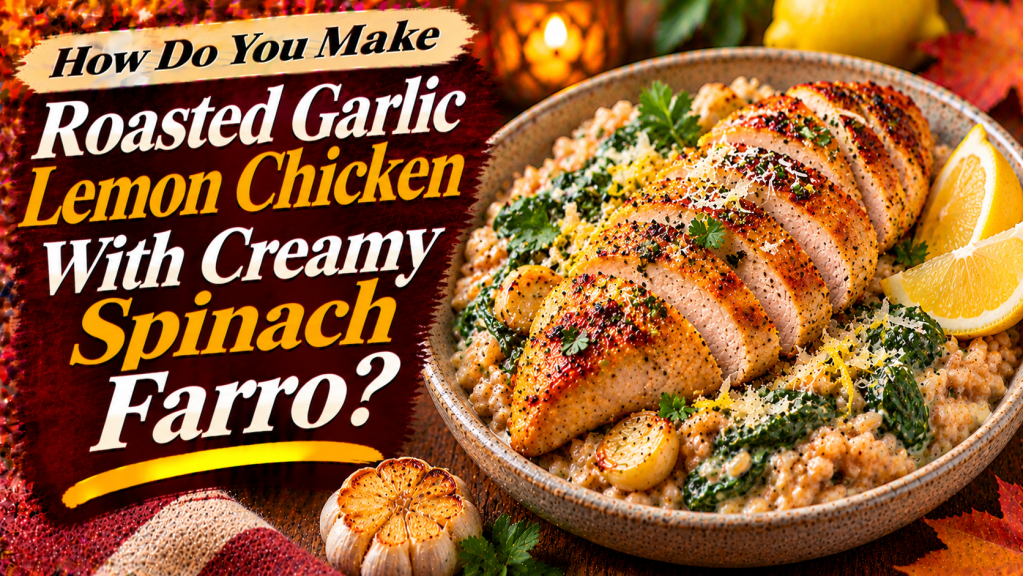
Roasted garlic lemon chicken with creamy spinach farro is a hearty dinner that pairs tender, golden chicken with chewy whole-grain farro, wilted spinach, and a savory sauce. Roasted garlic brings a mellow sweetness, lemon keeps the flavors bright, and a little Parmesan ties the components together without making them excessively heavy. The result feels like a restaurant-style meal but uses familiar pantry staples.
The best approach is to roast the garlic first, cook the farro while the chicken browns, and combine the warm grain with spinach and a creamy finish just before serving. Chicken breasts are lean and cook faster than the grains, so an instant-read thermometer is essential for keeping them juicy and safely cooked.
Recipe at a Glance
Servings: four. Preparation: 20 minutes. Garlic roasting: 35–45 minutes. Farro cooking: approximately 20–40 minutes depending on type. Chicken cooking: about 15–25 minutes depending on thickness. Equipment: small oven-safe garlic dish, heavy skillet, saucepan, cutting board, and instant-read thermometer.
Ingredients for the Chicken
Use four boneless skinless chicken breasts, approximately 5–6 ounces each; one head of garlic; 2 tablespoons olive oil divided; 1 teaspoon dried oregano; ½ teaspoon kosher salt; ¼ teaspoon freshly ground black pepper; 1 teaspoon lemon zest; and 1 tablespoon lemon juice. Keep another lemon available for serving. Fresh parsley or thyme makes a good garnish.
Ingredients for Creamy Spinach Farro
Use 1 cup dry pearled or semi-pearled farro, cooked according to its package; 4 cups low-sodium broth or water for boiling, adjusting to the package instructions; one small shallot, finely diced; 2 minced garlic cloves; 1 tablespoon olive oil; 4 packed cups baby spinach; ⅓ cup finely grated Parmesan; ⅓ cup half-and-half or milk; 1 tablespoon lemon juice; and ¼ teaspoon black pepper. Keep extra warm broth for loosening the sauce.
Farro is a form of wheat and contains gluten. Parmesan and the creamy sauce contain dairy. Check labels and choose appropriate substitutions for allergies. The chicken must reach an internal temperature of 165°F before serving.
Why Roast Garlic Instead of Using It Raw?
Garlic becomes softer, sweeter, and less sharp when roasted. Its cloves can be squeezed into a paste and stirred evenly through farro, creating rich flavor without relying on a large amount of cream. The mellow garlic also pairs beautifully with lemon and earthy spinach.
Raw garlic is still useful for briefly seasoning the shallot mixture, but too much can overpower the dish. Roasted garlic offers a more rounded flavor that allows the grain and herbs to remain noticeable. Make one whole head so there is enough for both chicken and farro.
How to Roast the Garlic
Preheat the oven to 400°F. Slice approximately ¼ inch off the top of a garlic head to expose the clove ends. Drizzle with one teaspoon olive oil and place in a small covered oven-safe dish, or wrap loosely in foil. Roast for about 35–45 minutes until tender, fragrant, and lightly golden.
Allow the garlic to cool until safe to handle. Gently squeeze the soft cloves into a bowl and mash with a fork. Discard the skin. If the cloves remain firm, roast a few minutes longer. Store leftover roasted garlic promptly in the refrigerator; do not keep garlic submerged in oil at room temperature.
Choosing and Preparing Farro
Farro is sold as whole, semi-pearled, and pearled grain. Whole farro has more of its outer bran and generally requires a longer cooking time, sometimes with soaking. Pearled farro cooks faster and is convenient for a weeknight meal. Read the package before beginning.
Rinse the farro if the package directs. Cooking it in ample lightly salted water or broth and draining afterward gives you control over its tenderness. The finished grains should be pleasantly chewy but not hard or gritty. Do not substitute raw rice using the same timing, since its liquid ratio and cooking method differ.
How to Make Roasted Garlic Lemon Chicken With Creamy Spinach Farro
Start the farro when the garlic is almost done roasting. This allows the chicken and grains to finish at approximately the same time.
Step 1: Season the chicken
Pat the chicken breasts dry and, if needed, pound very thick portions to an even thickness between sheets of parchment. Season with oregano, salt, pepper, and lemon zest. Keep raw poultry separate from vegetables and cooked food, and wash hands and tools after handling it.
Step 2: Heat the skillet
Warm approximately one tablespoon olive oil in a heavy skillet over medium-high heat. Add the chicken in a single layer without overcrowding. If your pan is small, work in batches. Allow the first side to sear for approximately four to five minutes without moving it.
Step 3: Turn and finish cooking
Turn the breasts with clean tongs and reduce the heat to medium. Continue cooking, turning only as necessary, until the thickest portion of each breast reaches 165°F. Depending on thickness, this may take another five to ten minutes or longer. If the outside browns too quickly, lower the heat and cover loosely.
Step 4: Rest the chicken
Transfer fully cooked chicken to a clean plate and rest for five minutes. Squeeze a tablespoon of fresh lemon juice over it and, if desired, spoon a small amount of mashed roasted garlic onto the hot surface. Do not return cooked chicken to an unwashed plate that held raw poultry.
Step 5: Cook the farro
Meanwhile, bring the broth or water to a boil in a saucepan. Add rinsed farro and simmer following its package directions until tender, usually around 20–40 minutes for pearled or semi-pearled grains. Add more liquid if necessary. Drain off excess broth when cooked, reserving a small cup for the sauce.
Step 6: Soften the shallot
In a deep skillet, warm a tablespoon olive oil over medium-low heat. Add the diced shallot and cook for three minutes until translucent. Stir in two minced garlic cloves and cook for another 30 seconds. Avoid scorching garlic, which creates bitterness.
Step 7: Add the spinach
Add baby spinach in two batches, stirring until each handful wilts, approximately two or three minutes total. If the skillet is dry, add a splash of warm broth. The spinach should become tender but remain green, rather than being cooked into a dull, watery mass.
Step 8: Stir in farro and roasted garlic
Add the drained cooked farro to the spinach. Fold in two to three tablespoons roasted garlic paste, depending on garlic size and your preferred strength. Stir gently so the garlic distributes through the grain. Add a few tablespoons warm broth if needed.
Step 9: Make the creamy finish
Reduce heat to low and stir in the half-and-half or milk. Remove the skillet from direct heat before folding in the grated Parmesan. Add one tablespoon fresh lemon juice and black pepper. Taste before adding salt, as broth and Parmesan contribute seasoning. The mixture should be moist and creamy, not soupy.
Step 10: Plate and serve
Spoon creamy spinach farro onto four warm plates. Slice the rested chicken across the grain and arrange over the farro. Add chopped parsley, a few drops of lemon, and optional extra Parmesan. Serve while the chicken is warm and the grain sauce is silky.
Tips for Juicy, Flavorful Chicken
The biggest improvement comes from even thickness and accurate cooking temperature. Very thick chicken breasts can become dry on the outside before the center reaches a safe temperature. Flattening the thicker portion produces more predictable cooking.
Do not keep cooking chicken after it reaches 165°F simply to deepen the color. The skillet sear has already developed a golden crust. A short rest allows juices to settle, and lemon added after cooking preserves a brighter flavor than lemon boiled in the pan for a long time.
How to Keep Farro Creamy
Farro does not release as much starch as arborio rice, so its creaminess comes primarily from roasted garlic, a little dairy, Parmesan, and broth. Reserve some cooking liquid and stir it in gradually. A sauce that seems slightly loose in the skillet often thickens after it sits.
If the farro looks dry, add warm broth one tablespoon at a time. If it tastes overly rich, add more lemon juice or fresh parsley. Avoid boiling vigorously after adding cheese because the sauce can become grainy or separate.
What to Do If the Farro Is Still Hard
Check the variety and package instructions. Whole farro can take substantially longer than pearled grain, and some products need soaking. Continue simmering with additional water until the center is tender. Do not assume the grain is ready simply because the suggested cooking time has elapsed.
When using a pressure cooker, follow instructions specific to the farro type. Always drain excess cooking water before adding farro to the creamy spinach mixture so the finished dish does not become watery.
Easy Recipe Variations
For a mushroom variation, sauté eight ounces sliced cremini mushrooms until browned and fold them into the spinach. Roasted red peppers add color and sweetness. A pinch of crushed red pepper brings mild heat, while a little fresh dill or basil changes the herb profile.
Boneless chicken thighs work as an alternative and should also reach at least 165°F. For a vegetarian version, omit chicken and top the farro with roasted chickpeas or sautéed mushrooms, using vegetable broth and suitable vegetarian Parmesan-style cheese.
For a dairy-free variation, use unsweetened plant-based cooking cream and a dairy-free savory topping or a little nutritional yeast. Farro contains wheat, so for a gluten-free variation, cook quinoa or rice according to its separate instructions and use that in place of farro.
What to Serve With Lemon Chicken and Farro
A simple arugula salad, roasted asparagus, green beans, or steamed broccoli complements the meal. Because the farro is hearty and creamy, a fresh citrus vinaigrette offers useful contrast. Warm bread is optional but can catch the remaining roasted garlic sauce.
For guests, place the farro on a large platter and arrange sliced chicken on top. Scatter herbs just before serving. Serve extra lemon wedges so everyone can adjust the brightness without changing the entire batch.
Make-Ahead Preparation
Roast the garlic up to one day ahead and refrigerate promptly in a covered container. Farro can also be cooked ahead, cooled quickly, and refrigerated. Wash and dry spinach shortly before cooking, or use prewashed baby spinach.
Cook the chicken close to serving for the juiciest texture. If making the whole meal ahead, keep chicken and farro in separate containers until reheating. The grain absorbs liquid during storage, so reserve extra broth to refresh the creamy texture.
Storage and Reheating
Refrigerate leftovers in shallow covered containers within two hours, or within one hour when the temperature is above 90°F. Use within three to four days. Cool grains promptly rather than leaving them in a covered pot at room temperature for an extended period.
Reheat chicken and farro to 165°F throughout. Warm the farro in a skillet with broth until creamy and heat chicken gently in a covered dish so it does not dry out. Frozen portions may be kept for approximately two to three months for best quality, although dairy sauce can change texture when thawed.
Frequently Asked Questions
Can I use quick-cooking farro?
Yes. Follow the package directions, which may take substantially less time than traditional farro. Drain excess liquid before mixing with the sauce.
Can I use frozen spinach?
Yes. Thaw it and squeeze out excess moisture before adding it to the skillet. Otherwise the farro can become watery.
Can I use chicken thighs instead of breasts?
Yes. Boneless thighs work well and may remain juicier, but cooking time differs. Check for an internal temperature of at least 165°F.
Is farro gluten-free?
No. Farro is a wheat grain and contains gluten. Substitute quinoa or rice if you need a gluten-free meal.
Can I make this without cream?
Yes. Use warm broth and a little extra olive oil, plus Parmesan if desired. The result will be lighter and less creamy.
Why is my farro sauce thick?
The grains continue absorbing liquid as they rest. Stir in warm broth gradually until the mixture becomes soft and spoonable again.
Final Thoughts
Roasted garlic lemon chicken with creamy spinach farro is a satisfying combination of bright citrus, mellow garlic, golden chicken, and hearty grains. Prepare the garlic ahead, cook farro until pleasantly tender, and use a thermometer to avoid dry chicken. Finish with spinach, Parmesan, and fresh lemon for a meal that is comforting without feeling heavy.
Leave a Reply