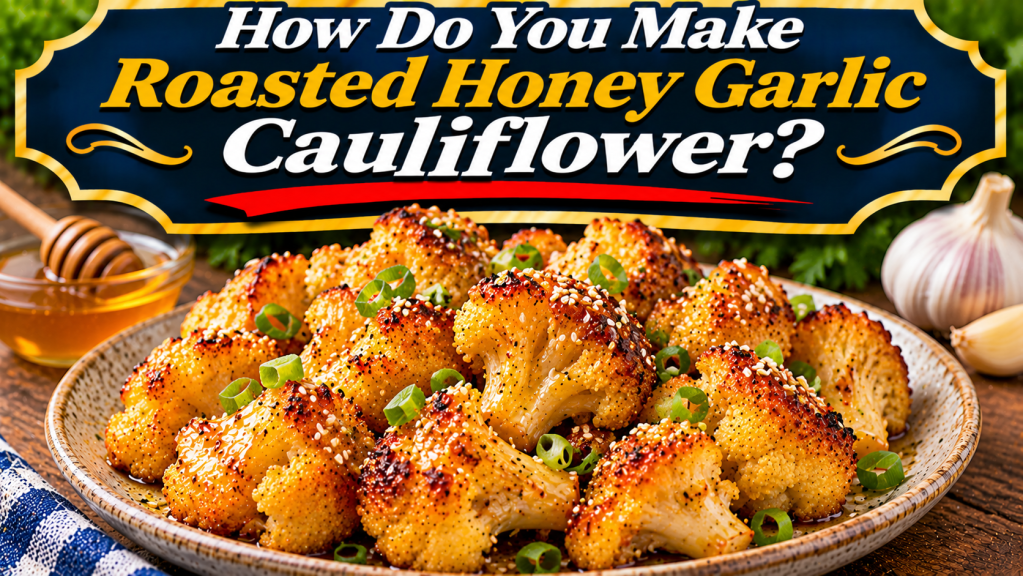
Roasted honey garlic cauliflower is a sweet and savory vegetable side dish with browned edges, tender florets and a glossy garlic glaze. The trick is to roast the cauliflower at high heat before adding the honey sauce. This gives the vegetable time to caramelize without burning the sugars in the glaze. With a handful of pantry ingredients, you can prepare a satisfying accompaniment to chicken, rice bowls or a vegetarian dinner.
Recipe at a Glance
Serves four as a side dish. Preparation time: 15 minutes. Cooking time: approximately 25–35 minutes. Oven temperature: 425°F. Use a large rimmed baking sheet and a small saucepan. The cauliflower should be tender enough to pierce with a fork while retaining enough structure to hold its coating.
Ingredients
For the cauliflower, use one large head of cauliflower (approximately 2 pounds before trimming), 2 tablespoons olive oil, ½ teaspoon fine salt, ¼ teaspoon black pepper and ½ teaspoon garlic powder. For the glaze, gather 3 tablespoons honey, 1 tablespoon reduced-sodium soy sauce, 3 finely minced garlic cloves, 1 tablespoon rice vinegar, 2 tablespoons water and 1 teaspoon cornstarch. Optional garnishes include sliced green onions, toasted sesame seeds and crushed red pepper.
Choosing and Preparing Cauliflower
Look for a firm head with tightly packed florets and no signs of spoilage. Fresh cauliflower is especially useful for roasting because its surface can be dried easily. Remove the leaves and trim the tough base of the stem. The tender inner stem is edible and can be cut into pieces of similar thickness to the florets. Avoid discarding usable portions simply because their shape differs. Rinse the vegetable under running water and dry it thoroughly before adding the oil.
Step 1: Preheat the Oven
Set your oven to 425°F with a rack near the middle. Prepare a large rimmed baking sheet by lightly oiling it or lining it with parchment rated for the oven temperature. A bare metal pan generally promotes stronger browning where the cauliflower contacts the surface, while parchment makes cleanup easier. If your baking sheet is small, prepare two pans rather than crowding the vegetables onto one.
Step 2: Cut and Season the Florets
Separate the cauliflower into florets about one to two inches across. Slice larger florets through the stem so they have a flat side that can rest against the baking sheet. Place the pieces in a large bowl and toss with the olive oil, salt, pepper and garlic powder. Use just enough oil to coat the surfaces lightly. Garlic powder is useful at this stage because fresh minced garlic can burn during prolonged high-temperature roasting.
Step 3: Roast Until Golden
Spread the seasoned cauliflower on the prepared baking sheet in a single layer, leaving space between the pieces. Position flat sides against the pan when possible. Roast for 15 minutes, then turn the florets with a spatula. Continue roasting for another 10–15 minutes, until the edges are golden brown and the thickest stems are tender when pierced. Smaller florets may finish sooner, so remove them individually if necessary. The exact timing depends on your oven and the size of the pieces.
Step 4: Make the Honey Garlic Sauce
While the cauliflower roasts, combine the honey, soy sauce, garlic and rice vinegar in a small saucepan. Whisk the cornstarch with the cold water in a separate bowl until smooth. Add the slurry to the saucepan and heat the mixture over medium-low heat, stirring frequently. Bring it to a gentle boil and cook briefly until glossy and lightly thickened. Remove it from the heat before the sugars darken excessively. If the sauce becomes too thick, stir in a teaspoon of water at a time.
Step 5: Glaze the Roasted Cauliflower
Transfer the hot roasted cauliflower to a clean mixing bowl. Pour over approximately two-thirds of the warm glaze and toss gently until the florets are coated. Add the remaining sauce only if needed. For a stickier finish, return the coated cauliflower to the baking sheet and bake for two to three minutes, watching carefully to prevent burning. Alternatively, serve immediately after tossing for a softer, saucier finish. Sprinkle with green onions or sesame seeds if desired.
Why Roasting Before Glazing Works
Cauliflower contains water that must evaporate before the surface can brown effectively. A crowded baking sheet or a wet coating can trap steam, resulting in pale, soft florets. High-temperature roasting encourages browning and develops a slightly nutty flavor. Honey contains sugars that can darken quickly at roasting temperatures, so adding the glaze toward the end gives you better control over both the vegetable texture and the sweetness of the finished dish.
How to Make the Cauliflower Extra Crispy
Dry the florets thoroughly and cut them to a consistent size. For a slightly crisper surface, toss the oiled cauliflower with a tablespoon of cornstarch before roasting. Spread the pieces apart and avoid turning them too frequently. Allow at least one side to develop a browned crust against the baking sheet. Once the cauliflower is glazed, some crispness will naturally be lost as the sauce moistens the surface. Serve the glaze on the side if maximum crunch is your priority.
Can You Use Frozen Cauliflower?
Frozen cauliflower can be used, but it generally releases more water than fresh cauliflower. Spread it directly from frozen onto a lightly oiled baking sheet and roast until surface moisture evaporates. Turn the pieces and continue roasting until browned and tender, allowing additional time as necessary. Follow the package cooking instructions where applicable. If water collects in the pan, carefully drain it before continuing. Add the glaze only after the florets have developed a suitable texture.
Flavor Variations
For spicy honey garlic cauliflower, stir crushed red pepper or a little chili garlic sauce into the glaze. For a tangier version, increase the rice vinegar slightly or finish with fresh lime juice. Toasted sesame oil added after cooking provides a nutty aroma. For a vegan variation, replace honey with maple syrup or agave syrup and verify the remaining ingredients. For a gluten-free version, choose appropriately labeled gluten-free tamari in place of ordinary soy sauce. The glaze can also be made without cornstarch by simmering gently until it coats a spoon, although reduction concentrates the sweetness and saltiness.
What to Serve With Honey Garlic Cauliflower
Serve the cauliflower beside grilled chicken, baked salmon, pork chops or roasted tofu. It works especially well over steamed rice with edamame, shredded carrots and cucumber. Add it to a grain bowl with quinoa and chickpeas for a more substantial plant-based meal. For an appetizer, serve the florets with toothpicks and extra glaze on the side. Because the sauce is sweet and savory, pairing it with plain grains or lightly seasoned protein helps balance the overall meal.
Make-Ahead Tips
Cut and dry the cauliflower ahead of time and refrigerate it in a covered container until ready to cook. Prepare the glaze separately, cool it promptly and refrigerate it. Rewarm the glaze gently before tossing it with freshly roasted cauliflower. If transporting the dish to a gathering, keep the sauce separate until serving when practical. Roasting immediately before eating produces the best texture, while advance preparation of the ingredients reduces the amount of work required at dinnertime.
Storage and Reheating
Refrigerate leftovers in a shallow covered container within two hours, or one hour if the surrounding temperature exceeds 90°F. Keep at 40°F or below and use within three to four days. Reheat at 350°F in the oven or air fryer until the leftovers reach 165°F, monitoring the glaze to prevent scorching. The sauce may soften the roasted exterior during storage. Freezing is possible but may result in a softer texture after thawing. Refrigerate leftover garlic glaze promptly rather than leaving it at room temperature.
Frequently Asked Questions
Can I make honey garlic cauliflower without soy sauce?
Yes. Use a suitable soy-free savory seasoning or a little salt and broth to balance the honey, adjusting to taste.
Why is my roasted cauliflower soggy?
Excess moisture, overcrowding or adding the glaze too early can prevent effective browning. Dry the florets and roast them before glazing.
Can I make the sauce less sweet?
Yes. Begin with two tablespoons of honey and adjust with rice vinegar or water after tasting.
Final Thoughts
Roasted honey garlic cauliflower combines the naturally nutty flavor of browned cauliflower with a simple sweet and savory glaze. Give the florets room to roast, prepare the sauce separately and combine them just before serving. This recipe is a home-cooking starting point rather than an independently kitchen-tested formula, so adjust timing and seasoning to your oven and preferences.
Leave a Reply