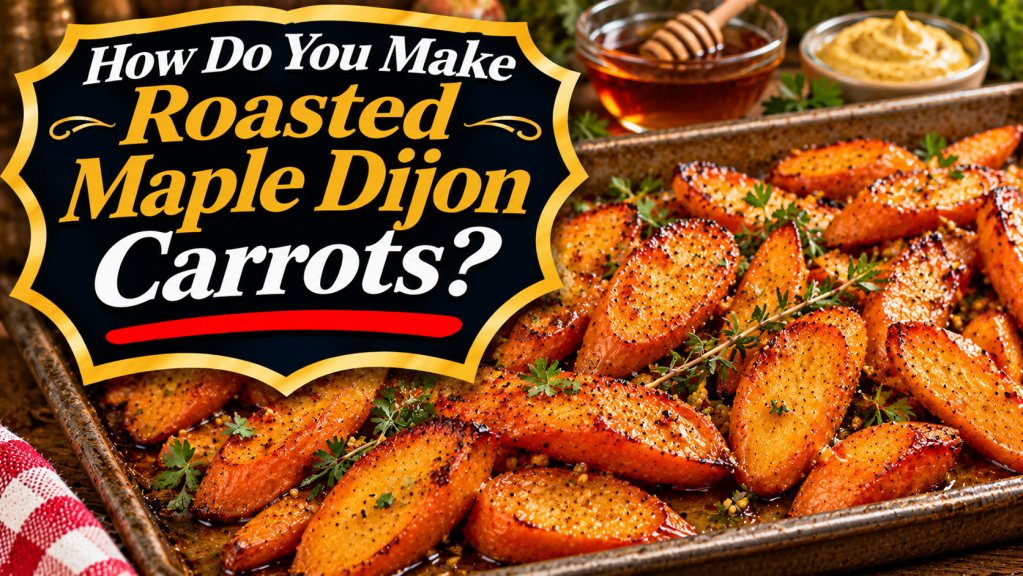
Roasted maple Dijon carrots are an easy vegetable side dish with caramelized edges, tender centers and a sweet, tangy mustard glaze. Pure maple syrup complements the natural sweetness of carrots, while Dijon mustard and a little vinegar keep the flavor balanced. The recipe uses everyday ingredients and a single baking sheet, making it suitable for both weeknight dinners and holiday meals.
Recipe at a Glance
Serves four to six. Preparation time: 15 minutes. Roasting time: 25–35 minutes. Oven temperature: 425°F. You will need a large rimmed baking sheet, mixing bowl, whisk, vegetable peeler and spatula. Cooking time will depend on the size and thickness of the carrots.
Ingredients
Gather 2 pounds carrots, 2 tablespoons olive oil, 2 tablespoons pure maple syrup, 1 tablespoon Dijon mustard, 1 teaspoon apple cider vinegar, ½ teaspoon fine salt, ¼ teaspoon ground black pepper and ½ teaspoon dried thyme. For an optional garnish, prepare 2 tablespoons chopped fresh parsley. If you prefer a stronger mustard flavor, keep an extra teaspoon of Dijon available to stir into the finished glaze.
Choosing the Best Carrots
Ordinary orange carrots are an excellent choice because they are affordable and widely available. Rainbow carrots offer a colorful presentation and can be prepared using the same method. Select firm carrots without soft spots or extensive cracks. Thicker carrots should be cut lengthwise so they cook at the same rate as the smaller ones. Baby-cut carrots can also be used, although their uniform shape and higher surface moisture may produce a slightly different texture. Pat them thoroughly dry after rinsing.
Step 1: Preheat the Oven
Set the oven to 425°F and position a rack near the center. Line a large rimmed baking sheet with parchment paper rated for that temperature, or lightly oil the bare pan. A properly preheated oven helps moisture evaporate quickly and encourages the edges to brown. A crowded or insufficiently heated sheet can leave the vegetables soft and pale rather than caramelized. If your baking sheet is small, prepare two pans instead of trying to fit all the carrots onto one.
Step 2: Wash and Cut the Carrots
Rinse the carrots under running water and scrub away any dirt. Peel them if desired, although clean, thin carrot skins are perfectly edible. Trim the ends and slice the carrots diagonally into pieces about two inches long and half an inch thick. Split particularly thick pieces lengthwise. Dry the carrots with a clean kitchen towel before adding the oil. Consistent thickness matters more than making every piece look identical because similarly sized pieces finish cooking at approximately the same time.
Step 3: Mix the Maple Dijon Glaze
Whisk the maple syrup, Dijon mustard and apple cider vinegar together in a small bowl. Add the thyme and a small pinch of the measured salt. The mixture should look smooth and pourable. Pure maple syrup gives the glaze its characteristic flavor, while Dijon mustard provides a mild sharpness. The vinegar brightens the sauce without making the vegetables noticeably sour. Set the glaze aside until the carrots have partially roasted so its sugars are less likely to burn.
Step 4: Begin Roasting
Toss the prepared carrots with olive oil, the remaining salt and black pepper. Spread them in a single layer on the baking sheet, leaving a little space between pieces. Roast for about 15 minutes, then remove the pan carefully and turn the carrots with a spatula. At this stage they should be beginning to soften and develop a few browned spots, but they may not yet be tender in the center.
Step 5: Add the Glaze and Finish
Drizzle the maple Dijon mixture over the partially roasted carrots and toss carefully to distribute it. Return the baking sheet to the oven for another 10–20 minutes. Check the vegetables after 10 minutes and continue roasting until a fork slides easily into the thickest pieces. The glaze should cling to the carrots and the edges should have a lightly caramelized appearance. If the syrup begins to darken excessively before the carrots soften, reduce the oven temperature slightly and check frequently.
Step 6: Garnish and Serve
Transfer the carrots to a serving dish and spoon any unburned glaze remaining on the pan over the top. Sprinkle with chopped parsley if desired. Taste a carrot and adjust the seasoning with a little salt or a few drops of vinegar. Serve warm. The glaze will become slightly thicker as it cools, so the carrots are especially appealing when served shortly after roasting.
How to Get Better Caramelization
Dry carrots, enough space on the pan and a hot oven are the most important factors. Water must evaporate before the surfaces can develop substantial browning. Avoid covering the sheet with foil during cooking, since trapped steam will soften the vegetables. Adding maple syrup partway through roasting helps prevent the sugar from burning before the carrots are tender. If using two baking sheets, switch their rack positions halfway through cooking and check each pan independently.
Easy Flavor Variations
For a spicy version, add a pinch of cayenne or crushed red pepper to the glaze. For a more savory side dish, add half a teaspoon of garlic powder or finely chopped rosemary. A teaspoon of orange zest gives the carrots a brighter citrus aroma, while toasted pumpkin seeds provide a crunchy garnish. For a richer finish, toss the hot carrots with a tablespoon of butter after roasting. The basic olive oil recipe is dairy-free; check mustard labels if you have specific dietary restrictions.
What to Serve With Maple Dijon Carrots
These carrots pair naturally with roast chicken, pork tenderloin, baked salmon and turkey. Their sweet and tangy flavor also complements lentil loaf, roasted chickpeas and mushroom dishes. For a complete holiday meal, serve them alongside mashed potatoes, green beans and a savory main course. On a busy weeknight, combine the carrots with cooked grains and a protein for a simple bowl. Avoid crowding uncooked meat and vegetables onto the same baking sheet unless the cooking method accounts for their different cooking times and food safety requirements.
Make-Ahead, Storage and Reheating
Wash and cut the carrots up to a day ahead and refrigerate them in a covered container. Mix the glaze separately and refrigerate it until needed. Cooked leftovers should be refrigerated within two hours, or one hour in temperatures above 90°F, and used within three to four days. Reheat in a 350°F oven until the leftovers reach 165°F, checking periodically to prevent the glaze from burning. A microwave also works, although the carrots may become softer. Freezing is possible but generally produces a less firm texture after thawing.
Frequently Asked Questions
Can I use honey instead of maple syrup?
Yes. Use the same amount of honey for a similar sweet glaze. The flavor will differ, and the honey version is not vegan.
Can I use yellow mustard instead of Dijon?
Yes, though yellow mustard produces a milder and somewhat different flavor. Start with a slightly smaller quantity and adjust to taste.
Why are my roasted carrots soggy?
Excess moisture, overcrowding or an oven that has not fully preheated can cause carrots to steam instead of brown. Dry the vegetables and spread them out.
Can I double the recipe?
Yes. Double the ingredients and divide the carrots between two baking sheets. Check both pans for doneness because roasting times may vary.
Final Tips
Cut the carrots evenly, roast them in a single layer and add the maple Dijon glaze near the end of cooking. These simple steps help produce a balanced side dish with tender centers, browned edges and a pleasant sweet mustard finish.
Leave a Reply