Introduction
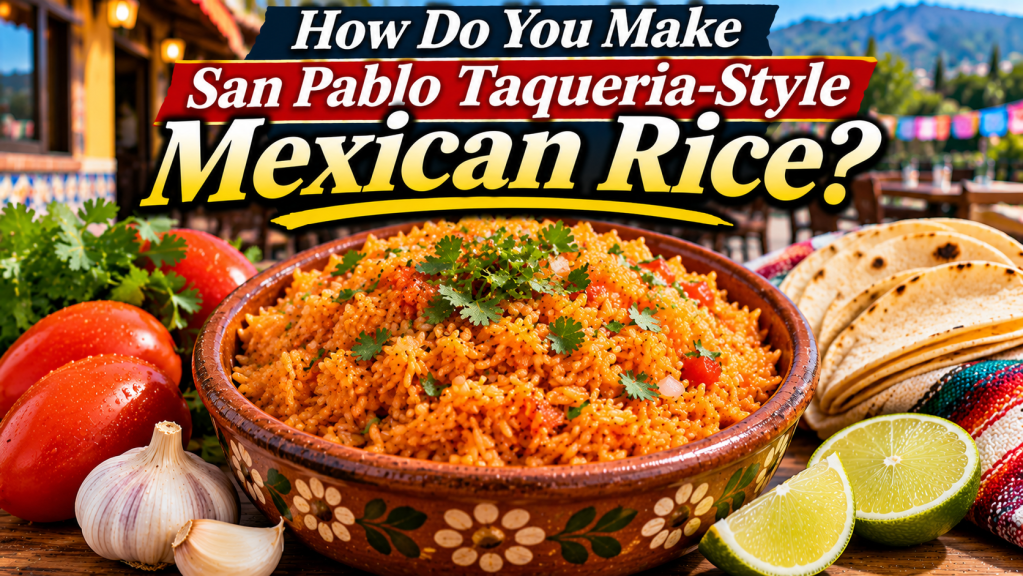
Fluffy, tomato-colored Mexican rice is one of the most recognizable sides served with tacos, enchiladas and grilled meats. The best versions have distinct tender grains, a savory tomato aroma and enough seasoning to taste delicious on their own without overwhelming the main dish. This San Pablo taqueria-inspired recipe is an original home interpretation, not a copy of any particular restaurant’s preparation. The method relies on toasting long-grain white rice in oil before simmering it in a seasoned tomato broth. That extra step creates a nutty flavor and helps the grains remain separate instead of turning into a sticky mass.
Recipe at a Glance
This recipe makes approximately six to eight side-dish servings. Preparation takes ten to fifteen minutes, toasting takes six to eight minutes, simmering takes eighteen to twenty minutes and resting takes ten minutes. Total time is about forty-five to fifty minutes. You will need a heavy saucepan with a tight-fitting lid, blender or food processor, measuring cups, wooden spoon and fork. The rice works well for a weeknight dinner or a larger taco night. It can be cooked ahead and reheated gently, but the freshest batch has the lightest texture.
Ingredients
Gather two cups uncooked long-grain white rice, three tablespoons neutral oil, three medium ripe Roma tomatoes, one-quarter medium white onion, two garlic cloves, two and three-quarter cups low-sodium chicken broth, one-half teaspoon kosher salt to start, one-half teaspoon ground cumin, and one tablespoon tomato paste if the tomatoes are pale. Optional additions include one small jalapeño, one-half cup frozen peas, one small carrot finely diced, and chopped cilantro for garnish. The combined tomato purée and broth should total approximately three and three-quarter cups of liquid for two cups of rice, though exact needs vary by brand and pan.
Why Long-Grain White Rice Works Best
Long-grain white rice is the easiest choice for a light taqueria-style result because its grains tend to remain distinct when cooked correctly. Jasmine rice can work but brings a different fragrance and may need a slightly different liquid ratio. Medium-grain rice is more likely to cling together, while brown rice requires significantly more time and liquid. Check the package for the manufacturer’s suggested proportions and adjust the tomato broth accordingly. Avoid instant rice for this particular technique because it is already partially cooked and does not respond to toasting in the same way.
The Role of Tomato, Onion and Garlic
Tomatoes give Mexican rice its familiar color and a gentle acidity, while onion and garlic create a savory foundation. Fresh Roma tomatoes blend into a relatively thick purée, but canned tomatoes can be substituted when fresh ones are out of season. Tomato paste is optional and should be used sparingly to deepen color rather than dominate the dish. The sauce should taste seasoned but not intensely tomato-heavy. Remember that the rice absorbs the flavors as it cooks, so an aromatic broth makes a noticeable difference to the finished result.
Step 1: Measure and Prepare the Rice
Measure the rice accurately and inspect it for any stray debris. Some cooks rinse rice to remove excess surface starch, while others toast it directly for a slightly nuttier flavor. If you rinse, drain it extremely well and let it dry for several minutes before adding it to hot oil; wet grains can splatter and will take longer to toast. For the most straightforward method, use dry rice unless its packaging specifically instructs rinsing. Keep the broth and blended vegetables ready before heating the saucepan so the rice does not overbrown while you prepare other ingredients.
Step 2: Blend the Tomato Base
Place the tomatoes, onion, garlic and optional jalapeño in a blender. Process until mostly smooth, adding only a small splash of broth if necessary. Measure the resulting purée in a liquid measuring cup. Add enough chicken broth to reach approximately three and three-quarter cups total liquid, adjusting slightly if your rice package recommends a different amount. This step is important because the tomatoes contribute moisture. Simply adding a full measure of broth on top of tomato purée can make the rice mushy. Stir cumin and the initial salt into the liquid.
Step 3: Toast the Rice in Oil
Heat a heavy saucepan over medium heat and add the neutral oil. Stir in the rice, coating the grains evenly. Cook for about six to eight minutes, stirring frequently, until the rice turns lightly golden and smells nutty. Some grains may become more deeply golden than others, but avoid dark brown spots or a burnt aroma. Toasting helps develop flavor and reduces the tendency for grains to stick together. If the rice browns too quickly, lower the heat. Keep stirring so the bottom layer does not scorch.
Step 4: Add the Tomato Broth Carefully
Reduce the heat slightly and pour the tomato-broth mixture into the toasted rice. The pan may hiss and steam, so add the liquid slowly and keep your face and hands away from the rising steam. Stir once to distribute the grains and scrape any flavorful bits from the bottom. Bring the mixture to a gentle boil. Taste a small spoonful of the liquid before it is absorbed, taking care because it is hot. Add a little more salt if needed, remembering that some broths are already quite salty.
Step 5: Cover and Simmer
As soon as the liquid begins to bubble steadily, reduce the heat to low and cover the saucepan with a tight-fitting lid. Simmer for approximately eighteen to twenty minutes, or according to the rice package, until the liquid has been absorbed and the grains are tender. Resist lifting the lid repeatedly. Escaping steam disrupts the cooking process and can leave the top layer underdone. Do not stir while the rice simmers because stirring releases starch and can make the finished dish gummy. Keep the heat low enough to avoid scorching the bottom.
Step 6: Rest Off the Heat
When the cooking time is complete, turn off the heat and leave the pot covered for ten minutes. This resting period allows moisture to distribute evenly and helps the grains finish steaming without direct heat. Do not skip it, even if the rice looks done when you first lift the lid. If the rice is still firm and the pot is dry, add a few tablespoons of hot water, cover and cook gently for another three to five minutes before resting. If the rice is tender, leave it undisturbed until the rest is complete.
Step 7: Fluff and Finish
Remove the lid and use a fork to gently lift and separate the grains, working from the edges toward the center. Avoid mashing or stirring aggressively. If using peas or diced carrots, they should be added at the correct stage so they cook through; small frozen peas can be stirred into the hot rice near the end, while raw carrots are best sautéed briefly before the broth is added. Taste the finished rice and adjust with a pinch of salt if necessary. Garnish with chopped cilantro only if you enjoy its flavor.
The Secret to Fluffy Mexican Rice
Fluffy rice depends on accurate liquid measurement, proper toasting, low heat and a covered rest. The most frequent mistake is treating tomato purée as an extra ingredient rather than part of the total cooking liquid. Too much moisture makes grains swell and stick together. Toasting also matters because it creates a light coating around the grains and adds flavor. Once the liquid is added, leave the rice alone. A heavy pot with a snug lid maintains steady heat, while the final ten-minute rest allows the grains to settle.
How to Avoid Mushy Rice
If Mexican rice becomes mushy, too much liquid or excessive stirring is often responsible. Measure both the tomato purée and broth, and follow the ratio appropriate for your rice variety. Do not wash the rice and then add it soaking wet without adjusting the cooking process. Keep the pot covered at a low simmer instead of boiling aggressively. Once the rice is tender, remove it from the heat rather than continuing to cook it. If a batch is already mushy, spreading it briefly on a tray may release steam, but it cannot fully restore distinct grains.
How to Fix Rice That Is Too Firm
Rice that is crunchy in the center usually needs a little more moisture or cooking time. Sprinkle two to four tablespoons of hot water over the surface, cover tightly and cook on very low heat for several additional minutes. Let it rest before checking again. Avoid pouring in a large amount of cold water, which can make the bottom soggy while the top remains firm. If the rice is unevenly cooked, check whether your saucepan heats consistently and whether the lid seals well. A heavy-bottomed pan helps prevent hot spots.
What to Serve With Mexican Rice
This rice is a natural side for carne asada, grilled chicken tacos, carnitas, chile verde pork, enchiladas and burrito bowls. Pair it with pinto or black beans for a filling plate. A crisp cabbage salad or fresh pico de gallo adds acidity and crunch. For a casual family dinner, serve rice alongside roasted vegetables and a protein of your choice. Leftovers can also become the base of a rice bowl with beans, avocado, salsa and shredded chicken. Keep saucy toppings separate until serving so the rice retains its texture.
Make-Ahead Instructions
You can blend the tomato base a day ahead and refrigerate it in a covered container. Measure the dry rice and spices in advance to streamline cooking. For entertaining, the rice can be cooked earlier in the day and refrigerated promptly, then reheated just before serving. Do not leave a large pot of cooked rice at room temperature while waiting for guests. Divide it into shallow containers to cool quickly. Reheat with a tablespoon or two of water and cover to create steam, then fluff with a fork.
Storage and Reheating Safety
Cooked rice needs careful handling because Bacillus cereus spores can survive cooking and grow if rice is left warm for too long. Refrigerate promptly, ideally within one hour and no later than two hours, in shallow covered containers. Use within three to four days, and reheat until steaming hot throughout, reaching 165°F. Avoid repeatedly cooling and reheating the same batch. Freeze rice in flat, meal-size portions for up to two months for best quality. Thaw in the refrigerator or reheat directly from frozen using a suitable method.
Common Mistakes to Avoid
Skipping the toasting stage can leave the rice tasting flat. Using a full amount of broth without accounting for tomato purée often creates mushy grains. Adding too much oil makes the dish greasy, while toasting at excessive heat can burn the rice. Stirring during simmering releases starch and encourages clumping. Lifting the lid too often lets steam escape. Another common mistake is serving immediately without resting. Finally, underseasoned broth produces bland rice even when the texture is perfect, so taste and adjust the liquid before covering the pot.
Frequently Asked Questions
Can I use canned tomato sauce? Yes, but include it in the total liquid measurement and choose a plain, unsweetened variety. Do I need to rinse the rice? Not necessarily; if you do, drain it very thoroughly before toasting. Can I use brown rice? Yes, but the cooking time and liquid ratio must be changed substantially. Why does my rice stick to the bottom? The heat may be too high or the pot too thin. Can I make it vegetarian? Yes, substitute vegetable broth for chicken broth. Can I freeze cooked Mexican rice? Yes, cool promptly and freeze in airtight portions.
Final Thoughts
San Pablo taqueria-style Mexican rice is easy to master when you treat the rice and liquid measurements with care. Toast the grains until lightly golden, blend a flavorful tomato base, count that purée as part of the cooking liquid and simmer gently without stirring. Give the pot a covered rest before fluffing. The result is tender, separate grains with a savory tomato flavor that pairs beautifully with tacos, beans, grilled meats and many other East Bay-inspired meals.
Leave a Reply