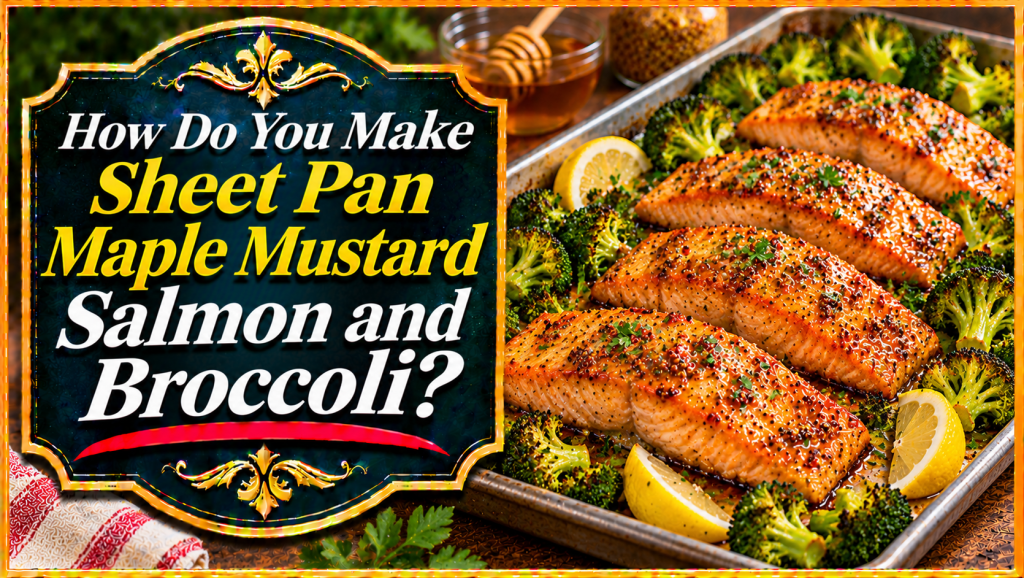
Sheet pan maple mustard salmon and broccoli is an easy oven-baked dinner featuring tender salmon fillets coated in a sweet and tangy glaze alongside lightly browned broccoli florets. Pure maple syrup balances the sharpness of Dijon mustard, while garlic and fresh lemon bring brightness to the meal. Giving the broccoli a short head start in the oven helps both ingredients finish at approximately the same time. With one baking sheet and a few everyday ingredients, you can prepare a satisfying dinner without making a separate sauce on the stove.
Recipe at a Glance
Servings: four. Preparation time: approximately 15 minutes. Roasting time: approximately 20 to 25 minutes, including the broccoli’s head start. Oven temperature: 425°F. Equipment: large rimmed baking sheet, mixing bowls, small whisk, spatula and instant-read food thermometer. Cooking times are estimates and depend on the thickness of the salmon and the size of the broccoli florets.
Ingredients for Maple Mustard Salmon and Broccoli
Gather four thawed salmon fillets, approximately 5 to 6 ounces each; 1 pound broccoli florets; 2 tablespoons olive oil, divided; 3 tablespoons pure maple syrup; 2 tablespoons Dijon mustard; 1 tablespoon fresh lemon juice; 2 cloves garlic, finely minced; ½ teaspoon fine salt; and ¼ teaspoon freshly ground black pepper. For serving, prepare optional lemon wedges and 1 tablespoon chopped fresh parsley. If your mustard is particularly salty, reduce the added salt. Choose unseasoned salmon so the sweetness and acidity of the glaze remain easy to control.
Choosing the Best Salmon
Both wild-caught and farm-raised salmon can work in this recipe. Salmon varieties differ in fat content, flavor and thickness, so choose four fillets that are reasonably similar in size. Thicker center-cut pieces are especially convenient because they tend to finish cooking at about the same time. Skin-on fillets can be roasted with the skin facing downward, while skinless fillets are equally suitable. If purchasing frozen salmon, follow the package thawing instructions and thaw it safely in the refrigerator. If the fish is vacuum-packed, follow any instructions requiring removal from the packaging before thawing.
Choosing and Preparing the Broccoli
Fresh broccoli is preferable when you want browned edges and a tender-crisp texture. Look for firm stalks and tightly clustered green florets. Wash the broccoli under running water and dry thoroughly with a clean towel. Cut the florets into pieces approximately one and a half inches across, splitting thick stems so they cook evenly. The tender inner part of the stalk can also be used after peeling away the tough exterior and slicing it into thin pieces. Frozen broccoli may release more moisture and require a longer head start, so fresh florets are recommended for the timing in this recipe.
Why Maple Syrup and Dijon Mustard Work Together
Pure maple syrup supplies a gentle sweetness and a distinctive maple aroma, while Dijon mustard contributes acidity and a sharp, savory flavor. A little olive oil helps spread the glaze across the surface of the fish, and lemon juice prevents the mixture from tasting excessively sweet. Because maple syrup contains sugar, applying the glaze to the salmon shortly before roasting is preferable to placing it in the oven for the entire broccoli cooking time. Ordinary pancake syrup has a different flavor and may contain other ingredients, so pure maple syrup is the better choice for this particular recipe.
Step 1: Preheat the Oven and Prepare the Pan
Preheat the oven to 425°F and position a rack near the center. Choose a large rimmed baking sheet, ideally around thirteen by eighteen inches, with enough room to hold the broccoli and salmon without overlapping. Lightly oil the pan or use oven-safe parchment paper rated for the selected temperature. Avoid overcrowding the vegetables because trapped steam prevents their surfaces from browning effectively. If your baking sheet is too small, use two pans rather than squeezing everything into a single layer.
Step 2: Season and Start Roasting the Broccoli
Place the dried broccoli florets in a mixing bowl and toss with one tablespoon of olive oil, half the salt and about half the black pepper. Spread the broccoli across the baking sheet in a single layer, leaving room for the salmon later. Roast for approximately ten minutes. This head start allows the thicker broccoli stems to begin softening before the fish goes into the oven. While the broccoli cooks, prepare the glaze and salmon. Avoid adding maple syrup to the broccoli at this stage, as it may scorch before the vegetables become tender.
Step 3: Make the Maple Mustard Glaze
Whisk the maple syrup, Dijon mustard, lemon juice, minced garlic and remaining tablespoon of olive oil in a small bowl. Stir until the ingredients are evenly combined. The glaze should be thick enough to coat the top of the salmon but still easy to brush or spoon over the fillets. If you want extra glaze for serving, reserve a small portion in a separate clean bowl before any utensils touch the raw fish. Never serve glaze that has been contaminated by raw seafood unless it has been thoroughly cooked.
Step 4: Add the Salmon to the Sheet Pan
Pat the salmon fillets dry with disposable paper towels and season them lightly with the remaining salt and pepper. Carefully remove the hot baking sheet from the oven and move the broccoli to the sides using a spatula. Arrange the salmon in the open spaces, skin-side down if applicable. Spoon the maple mustard mixture evenly over the tops of the fillets. Avoid allowing excessive glaze to pool on the baking sheet, where it may burn. Wash your hands and clean utensils and surfaces that contacted the raw fish before handling cooked ingredients.
Step 5: Roast Until the Salmon Is Cooked Through
Return the pan to the oven and roast for another 10 to 15 minutes, checking the salmon early if the pieces are thin. The broccoli should become tender with lightly browned edges. Insert an instant-read thermometer into the thickest part of each salmon fillet without touching the pan. Fish should reach a minimum internal temperature of 145°F. If the fish finishes before the broccoli, transfer it to a clean plate and continue roasting the vegetables briefly. If the broccoli finishes first, remove it with clean utensils and allow the fish to finish cooking. Do not rely exclusively on color or a fixed cooking time to determine doneness.
Step 6: Garnish and Serve
Remove the pan from the oven when the salmon has reached the recommended temperature and the broccoli is tender. Sprinkle fresh parsley over the meal and serve with lemon wedges. If you reserved uncontaminated glaze, spoon a little over each portion just before serving. The salmon and broccoli can be served on their own or paired with brown rice, quinoa, couscous or roasted potatoes. The extra lemon allows each person to adjust the brightness of the dish at the table.
How to Prevent Dry Salmon and Soggy Broccoli
Choose evenly sized fillets, dry the fish and vegetables thoroughly, and give the broccoli a head start. Avoid covering the baking sheet with foil during roasting because this traps steam. Begin checking the fish before the estimated cooking time ends and remove individual fillets when they reach 145°F. If the maple glaze browns too quickly, move the pan to a slightly lower rack and reduce the oven temperature as needed. Salmon is naturally delicate, so use a wide spatula when transferring it from the baking sheet.
Easy Recipe Variations
Replace part of the Dijon with whole-grain mustard for a more textured glaze. Add a pinch of crushed red pepper for a mild spicy finish, or sprinkle toasted sesame seeds over the cooked salmon for extra texture. Asparagus or green beans can replace broccoli, although their thinner shapes may require less of a head start. Honey can replace maple syrup if preferred, resulting in a different flavor. For a gluten-free meal, check the mustard and any additional seasoning labels and serve with a suitable grain or vegetable.
Storage and Reheating
Refrigerate leftover salmon and broccoli in shallow covered containers within two hours of cooking, or within one hour above 90°F. Use refrigerated leftovers within three to four days and reheat to 165°F. A covered oven-safe dish with a small splash of water can help retain moisture while reheating. Alternatively, safely refrigerated cooked salmon can be served cold in a salad. Freeze promptly cooled portions for up to two to three months for best quality, recognizing that the broccoli may soften after thawing.
Frequently Asked Questions
Can I use frozen salmon?
Yes. Thaw it safely according to the package instructions before using the cooking times in this recipe.
Can I make the glaze ahead of time?
Yes. Mix the glaze, cover and refrigerate it until cooking later the same day.
Can I use yellow mustard instead of Dijon?
Yes, although its flavor differs. Start with a smaller amount and adjust to taste.
Final Tips
Roast the broccoli first, use a thin coating of maple mustard glaze and check the temperature of each salmon fillet. Finish with fresh lemon for a simple, flavorful sheet pan dinner.
Leave a Reply