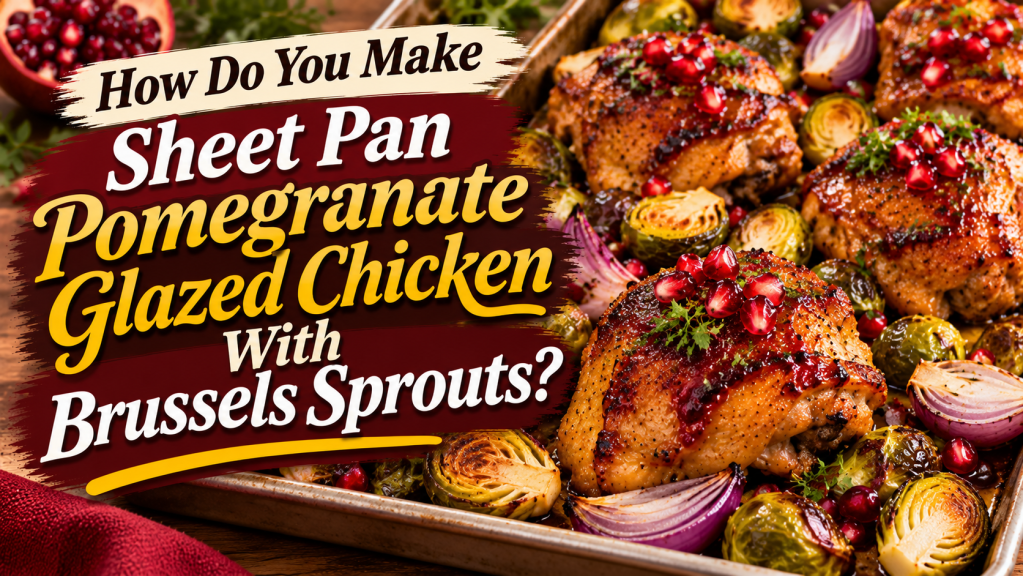
Sheet pan pomegranate glazed chicken with Brussels sprouts is an easy oven dinner that brings together juicy roasted chicken, caramelized vegetables, and a glossy sweet-tart sauce. Pomegranate juice adds a fruity acidity that balances the earthy sprouts, while Dijon mustard, garlic, and a little honey give the glaze savory depth. Everything roasts on one pan, making this a practical meal for busy evenings or a colorful addition to an autumn dinner table.
The secret is to roast the chicken and vegetables until almost cooked before brushing on the glaze. Pomegranate juice and honey contain natural sugars that can scorch if exposed to high oven heat for too long. By adding a concentrated glaze near the end, you get a sticky finish without burning the pan or drying out the meat.
Recipe at a Glance
Yield: 4 servings. Prep time: 20 minutes. Cooking time: approximately 35–45 minutes, depending on chicken size. Oven temperature: 425°F. Equipment: large rimmed sheet pan, parchment paper if desired, small saucepan, whisk, tongs, and instant-read thermometer. This recipe uses bone-in, skin-on chicken thighs for reliable roasting alongside Brussels sprouts.
Ingredients
For the chicken and vegetables
Use 4 bone-in, skin-on chicken thighs (approximately 2–2½ pounds total), 1½ pounds fresh Brussels sprouts trimmed and halved, 1 small red onion cut into thick wedges, 2 tablespoons olive oil, 1 teaspoon kosher salt divided, ¾ teaspoon freshly ground black pepper divided, ½ teaspoon smoked paprika, and ½ teaspoon dried thyme.
For the pomegranate glaze
Use ¾ cup unsweetened pomegranate juice, 1½ tablespoons honey, 1 tablespoon Dijon mustard, 1 tablespoon apple cider vinegar, 2 finely minced garlic cloves, and a small pinch of salt. Optional garnishes include ¼ cup fresh pomegranate arils, chopped parsley, and a few sprigs of fresh thyme.
How to Choose the Best Ingredients
Choose chicken thighs of roughly similar size so they cook evenly. Skin-on thighs develop a crisp roasted surface and protect the meat from drying. If you prefer boneless thighs, shorten the cooking time and consider adding the vegetables to the oven first. Chicken breasts also work, but their cooking times vary considerably with thickness and they should be removed as soon as they reach a safe temperature.
Look for firm Brussels sprouts with tightly packed leaves and no slimy patches. Small sprouts can be halved, while very large ones should be quartered so the pieces roast at a similar rate. Unsweetened pomegranate juice provides better control over the finished glaze than sweetened juice blends. If using a blend, reduce the honey to keep the sauce from becoming overly sweet.
How to Make Sheet Pan Pomegranate Glazed Chicken With Brussels Sprouts
Step 1: Preheat the oven and prepare the pan
Position an oven rack near the center and preheat to 425°F. Line a large rimmed metal sheet pan with parchment paper if desired, checking that the paper is rated for your oven temperature and will not extend past the pan edges. Avoid overcrowding: a full-size half-sheet pan works best, and two smaller pans are preferable to one tightly packed pan.
Step 2: Season the chicken
Pat the chicken thighs dry with paper towels. Rub with about 1 tablespoon olive oil, then season with ½ teaspoon salt, ½ teaspoon pepper, smoked paprika, and dried thyme. Arrange the thighs skin-side up on the sheet pan, leaving room around each one. Wash your hands and sanitize any surfaces that touched the raw chicken.
Step 3: Prepare the Brussels sprouts
Trim the tough ends from the sprouts and remove any discolored outer leaves. Halve or quarter them according to size. Toss with the red onion, remaining tablespoon olive oil, ½ teaspoon salt, and ¼ teaspoon pepper. Spread the vegetables around the thighs in a single layer, with most of the sprout cut sides facing down to encourage browning.
Step 4: Roast the chicken and vegetables
Place the pan in the oven and roast for about 25 minutes without stirring the chicken. At this stage, the Brussels sprouts should begin developing browned edges, and the skin should look golden. Rotate the pan if your oven browns unevenly. If the vegetables are cooking faster than the chicken, move them away from the hottest area or transfer them briefly to a separate pan.
Step 5: Reduce the pomegranate glaze
While the pan roasts, combine the pomegranate juice, honey, Dijon mustard, vinegar, and minced garlic in a small saucepan. Bring to a gentle simmer over medium heat and cook for approximately 10–15 minutes, stirring occasionally, until the mixture becomes slightly syrupy and coats the back of a spoon. Keep an eye on the saucepan as the liquid reduces: a glaze can move quickly from thickened to scorched. Taste before it comes into contact with raw chicken and adjust with a small splash of vinegar or honey if needed.
Step 6: Glaze and finish roasting
After the first 25 minutes, brush some glaze over the chicken thighs and drizzle a small amount over the vegetables. Return the pan to the oven for 10–15 minutes, or until a thermometer inserted into the thickest part of each thigh, without touching bone, reads at least 165°F. The skin should be deeply colored and the vegetables tender. If the glaze begins darkening too fast, loosely cover the chicken with foil or lower the oven temperature. Reserve only glaze that has not touched raw chicken for serving.
Step 7: Rest and serve
Remove the pan from the oven and let the chicken rest for about five minutes. Transfer the chicken and Brussels sprouts to a platter, spooning any safe, reserved glaze over the finished meal. Sprinkle with fresh pomegranate arils and chopped parsley for color and a pleasant burst of freshness. Serve while warm.
Why This Glaze Works
Pomegranate juice has a naturally tart, slightly tannic flavor that cuts through the richness of roasted chicken skin. Honey provides a glossy finish and softens the sharper edges, while Dijon mustard contributes body and a savory note. Apple cider vinegar reinforces the acidity so the final sauce tastes bright rather than sugary. Garlic adds a familiar savory foundation.
Reducing the glaze separately also gives you control over its thickness. If the sauce is too thin, simmer it longer. If it becomes overly thick, stir in a tablespoon of water or pomegranate juice and warm gently. A light coat works better than repeatedly flooding the pan, which can soften the sprouts and stop them from browning.
How to Keep the Brussels Sprouts Crispy
Roasted Brussels sprouts need space. When vegetables are piled on top of one another, trapped steam makes them soft instead of caramelized. Dry the sprouts after washing, cut them into similar sizes, and arrange them cut-side down with a little room between pieces. If you have a crowded pan, roast the vegetables separately rather than forcing everything onto a single tray.
Save most of the glaze for the final minutes of cooking and for serving. A small amount makes the vegetables flavorful; too much liquid at the beginning would prevent the cut sides from browning. The red onion wedges will soften and sweeten during roasting, complementing the more bitter notes in the sprouts.
Variations and Substitutions
For a brighter citrus variation, add finely grated orange zest to the finished glaze. For a warming autumn version, include a very small pinch of cinnamon or ground allspice. Fresh rosemary can replace the dried thyme, but use it sparingly because rosemary can dominate the fruit flavor. A pinch of crushed red pepper flakes provides mild heat.
You can replace the Brussels sprouts with broccoli florets, carrots, or cubed sweet potatoes, although the size and timing of each vegetable should be adjusted. Dense vegetables such as sweet potatoes may need a head start in the oven. Maple syrup can substitute for honey in the glaze for a different sweetness. If using boneless chicken thighs, check them earlier and ensure all pieces reach 165°F before serving.
What to Serve With Pomegranate Chicken
This recipe already contains a generous vegetable side, but it pairs beautifully with fluffy rice, herbed couscous, roasted fingerling potatoes, or creamy mashed potatoes. A simple spinach salad with citrus vinaigrette provides a refreshing contrast to the rich glaze. For a holiday meal, pair the chicken with wild rice pilaf and roasted squash.
The colorful pan also makes a striking family-style presentation. Place the chicken down the center of a platter, pile the Brussels sprouts and onions around it, and finish with a scattering of red pomegranate arils. Add a small dish of reserved glaze on the side for anyone who wants extra sauce.
Storage and Reheating
Refrigerate leftover chicken and vegetables in shallow airtight containers within two hours of cooking, or within one hour if the room temperature is above 90°F. Use refrigerated leftovers within three to four days. For longer storage, freeze the cooked chicken for up to three months for best quality. Brussels sprouts may soften after freezing, so they are usually best eaten sooner.
To reheat, arrange the leftovers in a covered baking dish with a splash of water or broth and warm in a 325°F oven until the chicken reaches 165°F internally. Remove the cover near the end if you want to restore some color to the skin. A microwave works for individual portions, but the skin and vegetables will lose some crispness.
Frequently Asked Questions
Can I use bottled pomegranate juice?
Yes. Unsweetened bottled pomegranate juice works well and is convenient. Check the label because sweetened juice drinks may require less honey.
Can I make the glaze in advance?
Yes. Prepare the glaze up to three days ahead, cool it promptly, and refrigerate it in a covered container. Warm gently with a splash of water before brushing it over the chicken.
Can I use chicken breasts instead of thighs?
Yes, but chicken breasts cook differently. Start checking their temperature earlier and remove them as soon as they reach 165°F; roast the vegetables longer if needed.
Do I need fresh pomegranate seeds?
No. Pomegranate arils are an optional garnish. The reduced juice provides the main pomegranate flavor, so the recipe works without fresh seeds.
Why is my glaze burning?
The syrup contains sugar, which darkens quickly at high heat. Brush it on near the end of roasting and avoid letting it pool in exposed areas of the hot pan.
Final Thoughts
Sheet pan pomegranate glazed chicken with Brussels sprouts is an approachable way to create a colorful, flavorful dinner without juggling several pans. Season and roast the chicken and vegetables first, prepare the glaze separately, and brush it on at the end for a glossy finish. The balance of tart pomegranate, savory Dijon, garlic, and roasted vegetables makes the recipe particularly inviting for fall dinners and holiday gatherings.
Leave a Reply