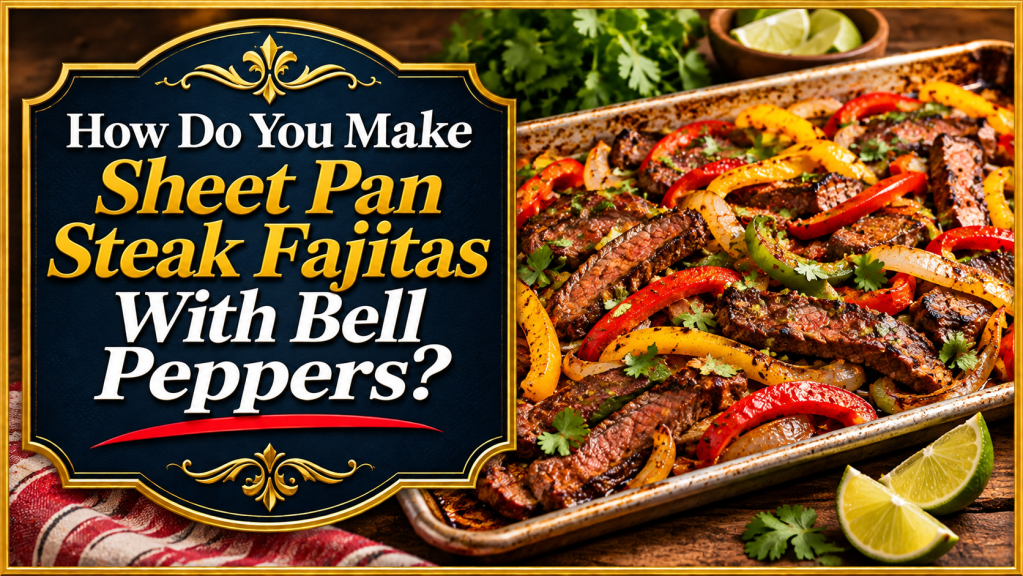
Sheet pan steak fajitas with bell peppers are an easy oven-baked dinner made with tender strips of beef, colorful peppers, sliced onions and a smoky lime seasoning. Cooking the vegetables and steak on one rimmed baking sheet reduces cleanup and makes it possible to serve warm fajitas without standing over a skillet. The key is to give the vegetables a head start, add the steak near the end and slice the beef across the grain so every bite is easy to chew.
Recipe at a Glance
Servings: four. Preparation time: 20 minutes, plus optional marinating time. Cooking time: 20 to 25 minutes. Oven temperature: 425°F. Equipment: a large rimmed metal baking sheet, two mixing bowls, a sharp knife, tongs and an instant-read thermometer. Actual cooking time depends on the thickness of the beef and vegetables.
Ingredients for Sheet Pan Steak Fajitas
You will need 1¼ pounds flank steak or skirt steak, three bell peppers (preferably different colors), one large yellow or red onion, three tablespoons olive oil divided, two tablespoons fresh lime juice, two cloves garlic minced, two teaspoons chili powder, one teaspoon ground cumin, one teaspoon smoked paprika, half a teaspoon dried oregano, three-quarters teaspoon kosher salt and half a teaspoon black pepper. For serving, prepare eight small flour or corn tortillas, lime wedges and optional fresh cilantro, avocado, sour cream or salsa. A little cayenne pepper is optional if you enjoy additional heat.
What Is the Best Steak for Fajitas?
Flank steak and skirt steak are both flavorful cuts with a noticeable grain. Flank steak is relatively lean and easy to portion, while skirt steak has a more pronounced beef flavor and can vary considerably in thickness. Sirloin steak is another convenient alternative. Look for a piece with even thickness when possible, and trim any tough exterior membrane or excessive fat. Cutting across the grain shortens the long muscle fibers and makes the meat easier to chew. Avoid using thick cubes of stew meat because these cuts often need slower cooking methods to become tender.
Choosing the Bell Peppers and Onion
Red, yellow and orange bell peppers contribute natural sweetness, while green peppers offer a slightly more earthy flavor. Use whichever combination is available. Cut the peppers into strips about half an inch wide so they soften without becoming excessively limp. Slice the onion into similarly sized wedges and separate the layers. If the vegetables are sliced very thinly, they can burn before the steak finishes cooking. A mixture of colors also makes the finished fajitas visually appealing without requiring additional ingredients.
Step 1: Prepare the Oven and Baking Sheet
Preheat the oven to 425°F and position a rack near the center. Use a sturdy rimmed metal baking sheet large enough to spread the ingredients into a single layer. Lightly oil the pan if necessary. A crowded pan traps steam, making the vegetables softer and reducing browning. When doubling the recipe, use two pans instead of stacking everything together. Be careful when handling the heated sheet, since the metal and any accumulated juices will be very hot.
Step 2: Season the Steak
Mix the lime juice, two tablespoons olive oil, minced garlic, chili powder, cumin, paprika, oregano, salt and pepper in a bowl. Reserve about one-third of the mixture in a separate clean bowl before it touches raw beef. Coat the steak with the remaining seasoning. If time allows, cover and refrigerate for 15 to 30 minutes while preparing the vegetables. Avoid leaving the beef at room temperature for extended periods. A short marinade adds surface flavor; a very long acidic marinade can affect the texture. Discard any marinade that contacted raw meat.
Step 3: Roast the Bell Peppers and Onion
Toss the peppers and onion with the remaining tablespoon of oil and the reserved clean seasoning mixture. Spread them evenly over the sheet pan. Roast for approximately 10 to 12 minutes, stirring once, until the edges of the onions begin to brown and the peppers start to soften. They do not need to be fully cooked at this stage because they will continue roasting with the beef. Giving the vegetables this head start helps prevent the steak from overcooking while you wait for the onions to become tender.
Step 4: Add the Steak
Carefully remove the hot sheet pan and move the vegetables toward the sides, leaving enough space in the center for the steak. Place the seasoned whole steak on the pan and return it to the oven. Roast for approximately eight to twelve minutes, depending on thickness, turning once if desired. Start checking thin skirt steak earlier. For food safety, cook whole cuts of beef to at least 145°F internally and allow a three-minute rest. Insert the thermometer into the thickest portion of the meat. If the peppers finish before the beef, transfer them to a clean serving plate and continue cooking the steak as needed.
Step 5: Rest and Slice the Beef
Transfer the cooked steak to a clean cutting board and let it rest for at least three minutes. Locate the direction of the muscle fibers, then slice the steak thinly across them. If the grain runs along the length of the steak, cut perpendicular to that direction. Return the slices to the roasted peppers and onions, along with any juices from the rested meat. Finish with a squeeze of lime and chopped cilantro if desired. Serve immediately for the best texture.
How to Warm and Serve the Tortillas
Warm flour tortillas in a dry skillet for a few seconds per side or wrap a stack in a slightly damp paper towel and microwave briefly until pliable. Corn tortillas benefit from warming because they can crack when folded cold. Fill each tortilla with steak, roasted peppers and onion. Add your preferred toppings, such as diced avocado, salsa or a spoonful of sour cream. Avoid overfilling the tortillas so they are easier to fold and eat.
Easy Recipe Variations
For a spicier version, include sliced jalapeño with the bell peppers or add a pinch of cayenne to the seasoning mixture. For fajita bowls, serve the steak and peppers over rice with black beans, salsa and shredded lettuce. Portobello mushrooms can be roasted alongside the vegetables for additional flavor, although they may release extra moisture. For a lower-carb presentation, skip the tortillas and serve the fajita mixture over lettuce or cauliflower rice. Use a separate clean portion of seasoning for any ingredients that will not be cooked with the raw meat.
Storage and Reheating
Refrigerate leftover steak and vegetables in shallow airtight containers within two hours of cooking, or one hour when temperatures exceed 90°F. Use refrigerated leftovers within three to four days. Reheat in a skillet with a small amount of water or microwave until the food reaches 165°F. Store tortillas and cold toppings separately. The cooked filling can be frozen for two to three months for best quality, although thawed bell peppers may have a softer texture. Thaw in the refrigerator before reheating.
Frequently Asked Questions
Can I slice the steak before cooking?
Yes, but thin strips cook more quickly. Add them after the vegetables have softened and check their temperature early.
Can I use frozen bell peppers?
Yes. Expect more moisture and less browning; spread them out and give excess liquid time to evaporate.
Why are my fajitas watery?
Overcrowding, wet vegetables and insufficient oven heat can lead to steaming rather than roasting.
Final Tips
Use a hot oven, keep the ingredients in a single layer and check the steak with a thermometer. Fresh lime and thin slices across the grain make a flavorful fajita filling.
Leave a Reply