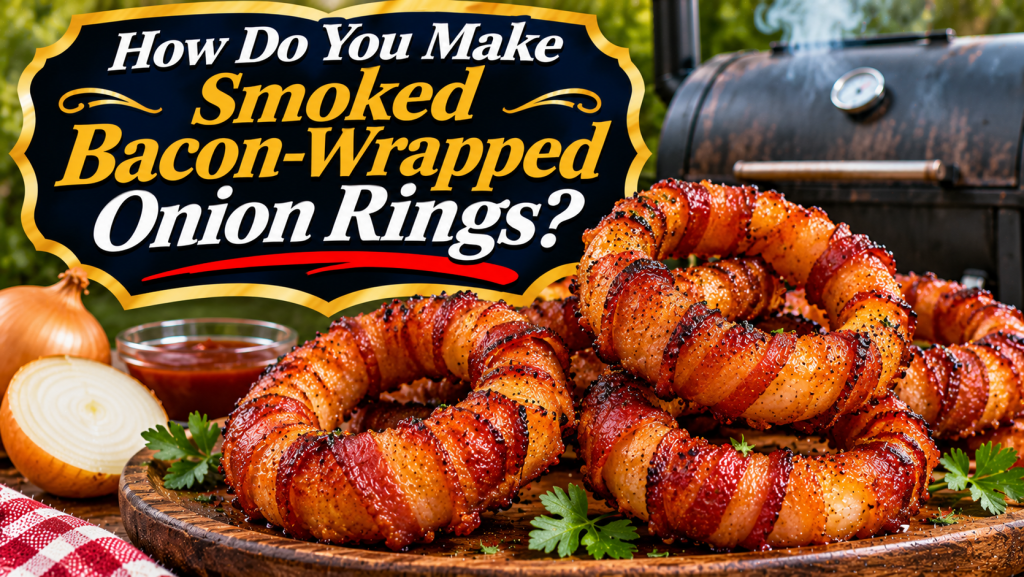
Smoked bacon-wrapped onion rings are a savory barbecue appetizer made by wrapping thick slices of sweet onion in bacon and cooking them slowly until the onion becomes tender and the bacon develops a browned exterior. Unlike traditional breaded onion rings, these need no deep fryer or batter. A simple barbecue rub and an optional glaze add flavor without hiding the natural sweetness of the onion. They work well alongside burgers, smoked meats or grilled vegetables and can be prepared on a pellet smoker, charcoal smoker or grill configured for indirect heat.
Recipe at a Glance
Yield: approximately 12 rings, depending on onion size, serving four to six as an appetizer. Preparation time: about 25 minutes. Smoking time: approximately 75–105 minutes, with an optional higher-temperature finish. Smoker temperature: 275°F. Equipment: sharp knife, cutting board, smoker, tongs, toothpicks if needed and a wire rack or suitable grill grate. Cooking times are estimates; bacon thickness, onion size and the actual temperature at grate level can make a noticeable difference.
Ingredients
Use 2 large sweet onions, approximately 1 pound of regular-cut raw bacon (roughly 16–20 slices), 1 tablespoon yellow mustard, 2 teaspoons smoked paprika, 1 teaspoon garlic powder, 1 teaspoon onion powder, ½ teaspoon black pepper and ½ teaspoon brown sugar. For an optional glaze, combine ¼ cup barbecue sauce with 1 tablespoon apple cider vinegar. Have extra bacon available if the onions are especially large. The bacon and barbecue sauce already contribute salt, so taste the finished rings before adding any additional seasoning.
Which Onions Work Best?
Large sweet onions such as Vidalia or Walla Walla are ideal when available. Their mild flavor and natural sweetness become more pronounced as they cook. Ordinary yellow onions are also a good choice, especially if you prefer a stronger savory flavor. Look for firm bulbs that are fairly round rather than elongated. The more uniform the onion, the easier it is to produce similarly sized rings. Avoid onions with soft spots, visible mold or extensive damage. Red onions can be used, but their color and sharper flavor create a somewhat different result.
Choosing the Right Bacon
Regular-cut bacon is generally easier to stretch around curved onion rings than very thick-cut bacon. Thicker slices take longer to render and may remain chewy by the time the onion is soft. Thin bacon also allows overlapping edges to cook together more easily. Plain smoked bacon provides plenty of flavor, while peppered bacon gives the rings an extra kick. Sweetened bacon can scorch more readily during the finishing stage, so keep the heat moderate if you choose a maple-flavored variety.
Step 1: Slice the Onions
Peel the onions and trim their ends. Cut each onion crosswise into slices approximately ½ inch thick. Carefully separate the slices into rings, leaving two adjacent layers together where possible to make the rings sturdy enough to wrap. Select about 12 medium or large rings and save the small centers for another meal. A sharp knife makes cleaner cuts and helps prevent the layers from cracking. Try to keep the thickness consistent so the rings soften at a similar rate in the smoker.
Step 2: Add Mustard and Seasoning
Mix the paprika, garlic powder, onion powder, black pepper and brown sugar in a small bowl. Brush the onion rings with a thin coating of mustard. Sprinkle a little seasoning over each ring, keeping some rub in reserve for the bacon. The mustard helps the spices adhere and its flavor becomes less pronounced during cooking. Do not apply a heavy layer of wet ingredients, since excess moisture can interfere with browning. If you dislike mustard, omit it and use the seasoning alone.
Step 3: Wrap the Rings in Bacon
Take one slice of bacon and thread it through the center of an onion ring, winding it around the onion with a slight overlap at each turn. Use a second slice for larger rings if necessary. Continue until most of the onion is covered, but avoid wrapping so tightly that the bacon tears. Tuck loose ends beneath a previous wrap or secure them with a toothpick. Remember to remove all toothpicks before serving. Dust the outside lightly with the remaining rub. Wash your hands and clean surfaces and utensils after handling raw bacon.
Step 4: Preheat the Smoker
Set your smoker to 275°F according to its operating instructions. Apple or cherry wood provides a mild fruity smoke that complements the sweet onion, while hickory gives a more assertive barbecue flavor. Use a moderate amount of smoke; the bacon already has a pronounced cured and often smoked character. Place a drip pan where the smoker design permits to catch rendered fat without blocking airflow or creating a fire hazard. Keep the smoker outdoors and follow its safety instructions.
Step 5: Smoke the Onion Rings
Arrange the wrapped rings in a single layer on the grate or a suitable wire rack, leaving space for air to circulate. Close the lid and smoke for roughly 75–105 minutes, checking the rings after about an hour. Rotate positions if your smoker has noticeable hot spots. The bacon should be fully cooked, with rendered fat and a browned appearance, and the onion should be tender when pierced with a small knife. Follow bacon package cooking instructions; do not judge doneness solely by the pink color, which can persist in cured meat. Avoid eating rings with raw-looking, unrendered bacon.
Step 6: Glaze and Finish
If you want a sticky barbecue coating, stir the barbecue sauce and vinegar together. Brush a light layer over the rings during the final 10–15 minutes of cooking. For firmer bacon, increase the smoker temperature to about 350°F toward the end and check frequently for several minutes until the exterior reaches your preferred texture. Keep the rings over indirect heat because dripping bacon fat may flare over direct flames. If using a sugary glaze, watch closely during this hotter finish. Transfer the cooked rings to a clean platter, rest briefly and remove any toothpicks.
How to Keep the Bacon From Becoming Chewy
A few preparation choices make a considerable difference. Use regular-cut bacon, avoid excessive overlapping and leave space around the rings on the grate. Cooking entirely at a very low smoking temperature can leave the fat soft even after the onion has become tender. The moderate temperature in this recipe encourages rendering, while a short hotter finish helps the exterior brown. Apply sauce late rather than at the beginning, since a thick wet coating can slow browning. Expect a different texture from deep-fried breaded onion rings.
Flavor Variations
For a spicy version, add a pinch of cayenne or crushed chipotle to the rub. For a tangier ring, skip the glaze and serve with a mustard-based dipping sauce. A maple variation works well with a small amount of maple syrup brushed on during the last few minutes, but watch for scorching. You can also use a favorite salt-free barbecue seasoning instead of the homemade mixture. Avoid increasing both the sugar in the rub and the glaze at once, because the bacon and onion already provide a rich sweet-and-savory foundation.
Can You Make Them Without a Smoker?
Yes. Preheat an oven to 375°F and arrange the prepared rings on an oven-safe wire rack over a rimmed baking sheet. Bake for approximately 40–55 minutes, checking frequently toward the end, until the bacon is fully cooked and the onion tender. Apply the optional glaze during the last five to ten minutes. This method will not produce the same wood-smoke flavor, but smoked paprika and smoked bacon provide a similar savory character. A covered gas grill with an indirect heat zone is another practical option.
Serving Suggestions
Serve smoked bacon-wrapped onion rings as a barbecue appetizer with ranch, spicy mustard or a tangy yogurt dip. They also make a flavorful topping for burgers and pulled pork sandwiches. Pair them with fresh coleslaw, grilled corn or a crisp green salad to balance their richness. Because bacon is salty and rich, smaller portions work particularly well when the rings are served alongside other appetizers. For a gathering, arrange the rings on a platter shortly before serving rather than stacking them while they are still steaming.
Storage and Reheating
Refrigerate leftovers in a shallow covered container within two hours, or within one hour when the ambient temperature is above 90°F. Use within three to four days. Reheat in a 350°F oven or air fryer until the leftovers reach 165°F. A microwave is convenient but tends to soften the bacon. Freezing is possible, though the onion may release extra moisture after thawing. For the best texture, prepare the rings fresh or refrigerate the uncooked wrapped rings for up to a day before smoking, provided the bacon remains within its safe storage period.
Frequently Asked Questions
Do I need toothpicks?
Not always. If the bacon ends can be tucked firmly beneath an overlapping wrap, they may stay in place. Toothpicks are useful for loose ends; remove them before eating.
Can I use turkey bacon?
Yes, but turkey bacon has a different fat content and may dry out sooner. Follow its package cooking directions and monitor the rings closely.
Why did my onion rings fall apart?
Very thin slices or single fragile onion layers may split during wrapping. Cut thicker slices and keep two adjacent layers together for greater stability.
Can I prepare them the night before?
Yes. Cover and refrigerate the raw wrapped rings, keeping them separate from ready-to-eat foods. Cook the following day and apply the glaze near the end.
Final Tips
Choose firm sweet onions, wrap them with regular-cut bacon and smoke at moderate indirect heat until the bacon is fully cooked. Keep the seasoning simple and use a late application of glaze for a sticky finish without unnecessary burning. With careful preparation, these rings make a versatile addition to a backyard barbecue or a casual appetizer platter.
Leave a Reply