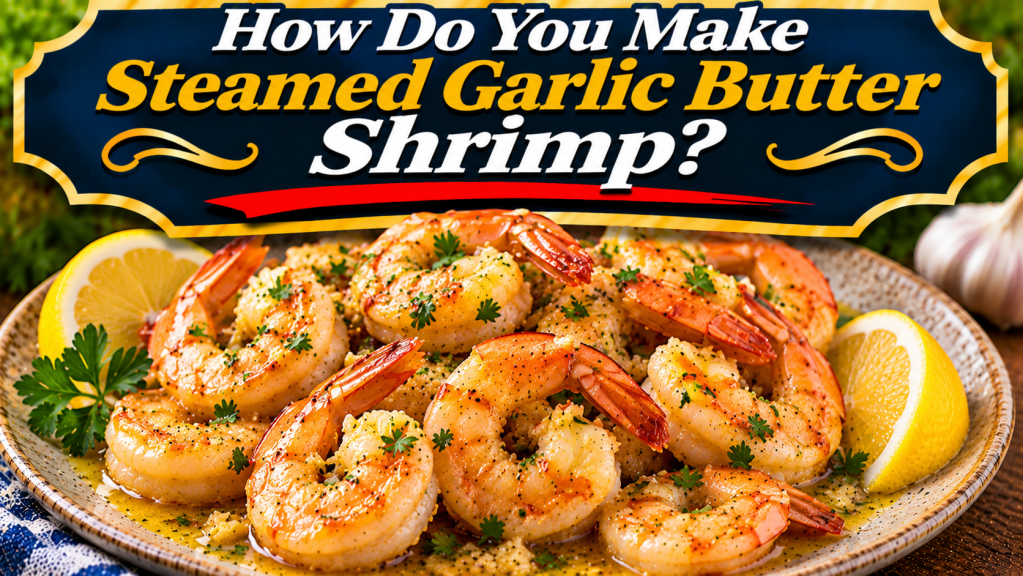
Steamed garlic butter shrimp is a quick seafood dish that combines tender, juicy shrimp with melted butter, fresh garlic and a squeeze of lemon. Instead of boiling the shrimp directly in water, suspend them above gently boiling water in a steamer basket. Toss the cooked shrimp in warm garlic butter just before serving. This method keeps the preparation simple and allows you to control the richness of the finished dish, whether you serve it as an appetizer or a main course.
Recipe at a Glance
Servings: 4. Preparation time: 15 minutes. Cooking time: approximately 5–8 minutes for large shrimp, plus time to heat the steamer. Total time: approximately 25 minutes. The shrimp should reach an internal temperature of 145°F. You will need a saucepan or stockpot with a fitted steamer basket and lid, a small skillet and clean tongs.
Ingredients
Gather 1½ pounds large raw shrimp (approximately 21–25 per pound), 4 tablespoons unsalted butter, 4 finely minced garlic cloves, 1 tablespoon fresh lemon juice, 1 teaspoon finely grated lemon zest, ½ teaspoon fine salt, ¼ teaspoon black pepper and 2 tablespoons chopped fresh parsley. For the steamer, use enough water to produce steam without touching the shrimp, typically one to two inches depending on the pot. Optional ingredients include crushed red pepper, lemon wedges and chopped chives.
Choosing the Best Shrimp for Steaming
Large shrimp are convenient because they offer a substantial bite and are easier to monitor during cooking. The numbers on shrimp packages refer to the approximate count per pound, so a lower count generally indicates larger shrimp. Choose raw shrimp rather than precooked shrimp for this recipe. Both fresh and frozen raw shrimp work well. Look for a mild, fresh smell and firm flesh, and avoid shrimp with signs of spoilage. Frozen peeled and deveined shrimp can save considerable preparation time.
Should You Leave the Shells On?
Shell-on shrimp can be steamed and peeled at the table, which suits an informal seafood appetizer. Peeled shrimp are easier to coat evenly in garlic butter and are particularly convenient when serving the dish over rice or pasta. Leaving the tails attached creates an attractive presentation and makes individual shrimp easier to pick up. Remove the tails before cooking if you prefer a meal that can be eaten entirely with a fork. The cooking time may differ slightly depending on whether the shells are intact.
Step 1: Thaw and Prepare the Shrimp
If using frozen shrimp, thaw them in the refrigerator overnight or in a sealed bag submerged in cold water, changing the water every thirty minutes and cooking immediately after thawing. Peel and devein the shrimp if necessary. To remove the dark digestive tract, make a shallow cut along the back and lift it out with the tip of a small knife. Pat the shrimp dry with paper towels, season lightly with salt and pepper, and wash your hands and any surfaces that touched raw seafood.
Step 2: Prepare the Steamer
Pour water into a pot fitted with a steamer basket, ensuring the water sits below the bottom of the basket. Bring the water to a boil before adding the shrimp. You can place a few lemon slices in the water for a subtle citrus aroma, although the strongest lemon flavor will come from the sauce. Make sure the pot contains enough water for the entire cooking process without boiling dry. Use a lid that fits securely to retain steam.
Step 3: Steam the Shrimp
Arrange the shrimp loosely in the steamer basket. Avoid packing them tightly together, because steam needs to circulate around the pieces. Place the basket over the boiling water and cover immediately. Steam large thawed shrimp for approximately five to eight minutes, checking earlier for smaller shrimp. Properly cooked shrimp generally become opaque and firm, with pink or reddish accents depending on the variety. Check several of the thickest shrimp with an instant-read thermometer for a minimum temperature of 145°F. Carefully lift the lid away from your face to avoid steam burns.
Step 4: Make the Garlic Butter Sauce
While the shrimp cook, melt the butter in a small skillet over medium-low heat. Add the minced garlic and stir for approximately thirty to sixty seconds, until fragrant. Avoid letting the garlic turn dark brown, because it can develop a bitter flavor. Remove the skillet from the heat and stir in the lemon juice, zest and parsley. Add crushed red pepper if desired. If the sauce seems too rich, stir in a teaspoon or two of warm water or extra lemon juice to balance it.
Step 5: Toss and Serve
Transfer the cooked shrimp directly to a clean serving bowl. Pour the warm garlic butter over the shrimp and toss gently to coat all sides. Taste and adjust the seasoning if necessary. Serve immediately with lemon wedges and extra parsley. Do not continue simmering the shrimp in the sauce, since unnecessary cooking can cause the meat to become rubbery. If you are serving the shrimp as finger food, offer a small bowl of the remaining sauce alongside the platter.
Why Steaming Works Well for Shrimp
Steaming surrounds the shrimp with moist heat without immersing them in water. It requires little or no added fat during cooking, allowing the butter sauce to be added separately in the desired amount. Shrimp contain proteins that firm rapidly when heated, so the difference between tender and rubbery shrimp can be only a few minutes. The most reliable approach is to prepare the sauce before the shrimp finish, monitor their temperature and remove them promptly when cooked.
How to Avoid Overcooking Shrimp
Use shrimp of similar size and begin checking before the estimated cooking time ends. Keep the lid closed during the first part of cooking to maintain a steady supply of steam. If some shrimp finish sooner, remove them with clean tongs while the larger pieces continue cooking. A tightly curled shrimp may indicate excessive cooking, but shape is not a dependable safety test. Use temperature and texture together rather than relying only on color or appearance.
Flavor Variations
For Cajun garlic butter shrimp, add a small amount of Cajun seasoning to the melted butter and reduce the added salt if the seasoning already contains it. For a Mediterranean variation, add chopped dill and drained capers. A spicy version can include crushed red pepper and a dash of hot sauce. For an Asian-inspired finish, replace some of the lemon juice with lime juice and add a little grated ginger. To make a dairy-free version, substitute olive oil or a suitable plant-based butter alternative, keeping in mind that the sauce texture may differ.
What to Serve With Steamed Garlic Butter Shrimp
Serve the shrimp over steamed jasmine rice, garlic noodles, linguine or creamy polenta to enjoy the remaining sauce. Roasted asparagus, green beans and broccoli complement the lemon and garlic flavors. A crisp cucumber salad or mixed greens can provide a refreshing contrast. For an appetizer, arrange the shrimp on a platter with lemon wedges and toasted bread. You can also use the shrimp to fill tacos with shredded cabbage and a light citrus dressing.
Storage and Reheating
Refrigerate cooked shrimp in a shallow covered container within two hours, or within one hour if the surrounding temperature exceeds 90°F. Keep refrigerated at 40°F or below and use within three to four days. Reheat gently until the leftovers reach 165°F throughout, recognizing that reheated shrimp may become firmer. Properly refrigerated cooked shrimp can also be served cold in a salad. Freeze extra portions for longer storage and thaw in the refrigerator. Refrigerate leftover garlic butter promptly rather than leaving it at room temperature.
Frequently Asked Questions
Can I steam shrimp without a steamer basket?
Yes. Use a heat-safe metal colander that fits securely inside a suitable pot, with its base above the water and a lid that retains steam.
Can I use precooked shrimp?
Yes, but avoid steaming them for the full recipe time. Follow package instructions and toss them in the sauce after warming as appropriate.
Can I use garlic powder instead of fresh garlic?
Yes. Start with half a teaspoon and adjust to taste. Fresh garlic generally provides a more pronounced aroma.
Final Thoughts
Steamed garlic butter shrimp is a versatile seafood meal built around gentle cooking and a simple lemon garlic sauce. Prepare the butter separately, monitor the shrimp closely and combine them immediately before serving. This recipe is a practical home-cooking starting point rather than a kitchen-tested formula, so adjust the steaming time to the size of your shrimp and your equipment.
Leave a Reply