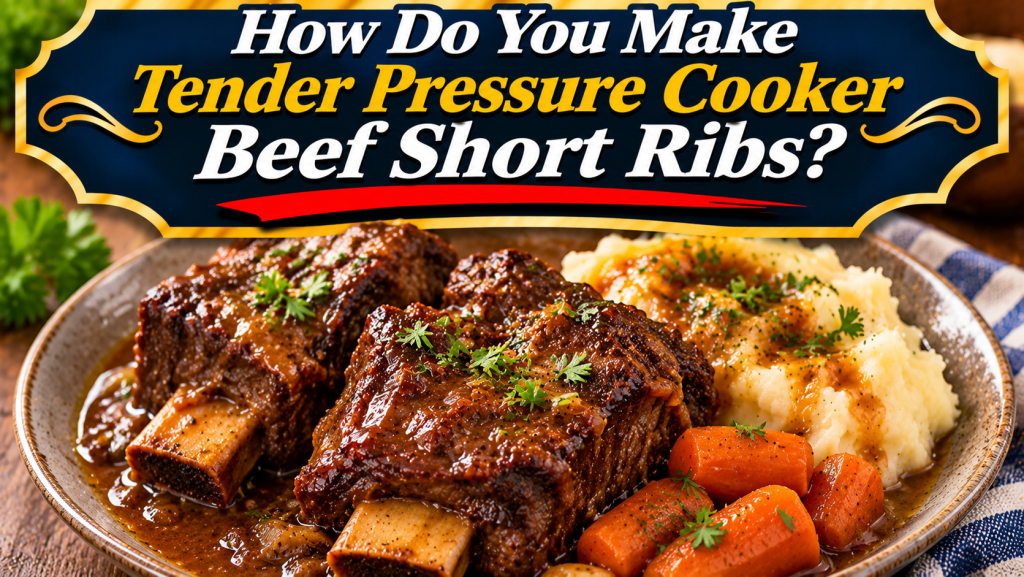
Tender pressure cooker beef short ribs are made by browning meaty ribs, cooking them under high pressure with aromatic vegetables and beef broth, and allowing a natural pressure release. The moist cooking environment helps break down the connective tissue that makes short ribs tough, producing rich, fork-tender beef in less time than traditional oven braising. Finish the cooking liquid as a savory gravy and serve the ribs over mashed potatoes, polenta, or buttered noodles.
Recipe at a Glance
Serves four. Preparation time: 20 minutes. High-pressure cooking time: 45–50 minutes, plus approximately 15–20 minutes of natural pressure release and the time required to build pressure. Allow about 90 minutes overall. This recipe is designed for a typical six-quart electric pressure cooker. Follow your model’s instructions, including its minimum liquid and maximum fill requirements.
Ingredients
Gather 3 pounds thick, bone-in English-cut beef short ribs, 1 tablespoon neutral cooking oil, 1 teaspoon fine salt, ½ teaspoon black pepper, 1 large diced yellow onion, 2 chopped carrots, 2 chopped celery stalks, 4 minced garlic cloves, 2 tablespoons tomato paste, 1½ cups low-sodium beef broth, 1 tablespoon Worcestershire sauce, 1 teaspoon dried thyme, and 1 bay leaf. For optional gravy, use 1 tablespoon cornstarch mixed with 2 tablespoons cold water. Chopped parsley is optional for serving.
Choose the Right Cut of Short Ribs
English-cut short ribs are cut between the bones, leaving a substantial piece of meat attached to each bone. Their thickness makes them particularly suitable for pressure braising. Thin flanken-cut ribs, which are sliced across several bones, cook differently and are often better suited to grilling or quick searing. Choose ribs with generous portions of meat and moderate marbling. Avoid packages consisting mostly of bone and exterior fat. Trim very thick surface fat if necessary, but leave some marbling intact for flavor.
Step 1: Prepare and Season the Ribs
Thaw the beef in the refrigerator if frozen. Pat the short ribs dry with disposable paper towels and sprinkle with the salt and black pepper. Drying the surface encourages browning rather than steaming. Prepare the vegetables before turning on the pressure cooker so they are ready to add after searing. Keep utensils and cutting boards used for raw beef separate from ready-to-eat ingredients, and wash your hands thoroughly after handling the meat.
Step 2: Brown the Beef
Select the sauté setting on the electric pressure cooker and add the oil when the inner pot is hot. Sear the ribs in batches for about two to three minutes on each broad side, allowing the meat to develop a dark golden crust. Do not crowd the pot. Browning adds complex savory flavors to the finished dish, although it does not seal in juices. Transfer the browned ribs to a plate and proceed immediately with cooking. If a large amount of fat has rendered, carefully remove the excess, leaving about a tablespoon in the pot.
Step 3: Cook the Aromatic Vegetables
Add the onion, carrots and celery to the inner pot. Sauté for approximately four minutes, stirring until the onion begins to soften. Stir in the garlic and tomato paste and cook briefly until fragrant. Avoid allowing the tomato paste or garlic to scorch. These vegetables provide sweetness and depth to the braising liquid. If the pot becomes too hot, turn off the sauté function temporarily before adding the broth.
Step 4: Deglaze the Pressure Cooker
Pour in the beef broth and use a wooden or silicone utensil to loosen the browned residue from the bottom of the inner pot. This step adds flavor and helps prevent burn warnings. Stir in the Worcestershire sauce, thyme and bay leaf. Return the short ribs and any collected juices to the pot. The ribs do not need to be completely submerged, but the cooker must contain enough thin liquid to operate safely. Do not exceed the maximum fill line.
Step 5: Pressure Cook the Short Ribs
Secure the lid and set the steam release control as directed by the manufacturer. Select high pressure for 45 minutes for typical thick English-cut ribs, or approximately 50 minutes for particularly large pieces. The countdown begins only after pressure builds. When the cooking cycle finishes, allow pressure to release naturally for at least 15–20 minutes. Release any residual pressure according to the manufacturer’s directions, taking care to keep hands and face away from steam. Never force the lid open.
Step 6: Check for Tenderness
The USDA minimum internal temperature for whole cuts of beef is 145°F with a three-minute rest, but braised short ribs generally require substantially more cooking to become tender. Test the thickest part with a fork; it should offer little resistance and the meat should pull apart easily. Short ribs often reach approximately 195–205°F when tender, although texture is the better guide. If the ribs are still tough, verify that sufficient liquid remains and pressure cook for another five to ten minutes, followed by a natural release.
Step 7: Finish the Gravy
Transfer the tender ribs to a clean platter and remove the bay leaf. Skim excess fat from the cooking liquid. For a rustic sauce, leave the vegetables in place; for a smoother gravy, strain them out. Select sauté and simmer the liquid uncovered briefly. If additional thickening is needed, whisk the cornstarch and cold water together, then gradually stir the slurry into the simmering liquid. Bring to a gentle boil until the gravy coats a spoon. Taste before adding salt, since reduction concentrates seasoning.
Why Pressure Cooking Makes Short Ribs Tender
Short ribs come from a part of the animal containing substantial connective tissue. During prolonged moist cooking, collagen gradually converts to gelatin, contributing tenderness and a rich mouthfeel. Pressure cooking raises the boiling temperature of water inside the sealed vessel, accelerating this process compared with ordinary simmering. However, the meat still needs sufficient time for the connective tissue to soften. A natural pressure release allows cooking to continue gently while the pressure and temperature decrease.
Flavor Variations
For a mushroom version, sauté eight ounces of sliced mushrooms with the onions. For a deeper traditional braising flavor, replace half a cup of broth with dry red wine, briefly simmering it before sealing the cooker; pressure cooking does not guarantee that all alcohol evaporates. For a sweeter variation, add a small splash of balsamic vinegar to the finished sauce. Fresh rosemary can replace dried thyme. When cooking for someone avoiding gluten, check the Worcestershire sauce, broth and all other seasonings.
What to Serve With Beef Short Ribs
Creamy mashed potatoes are a classic pairing because they absorb the rich gravy. Soft polenta, egg noodles, or steamed rice are equally useful. Roasted carrots, green beans, or a lightly dressed salad provide a fresh contrast to the richness of the meat. Serve each portion with a spoonful of vegetables and sauce, and add chopped parsley for color if desired.
Storage and Reheating
Refrigerate leftovers in shallow covered containers within two hours, or one hour above 90°F. Store at 40°F or below and use within three to four days. Keep the ribs with some cooking liquid to protect them from drying out. Reheat gently in a covered saucepan or oven until they reach 165°F throughout. Freeze portions for longer storage and thaw in the refrigerator. If the gravy separates after freezing, whisk it gently as it reheats.
Frequently Asked Questions
Can I use boneless short ribs?
Yes. Thick boneless short ribs work well, but smaller pieces may become tender sooner. Begin with about 35–40 minutes at high pressure and adjust based on tenderness.
Why are my short ribs still tough?
They may need additional cooking time for their connective tissue to soften. Add a short pressure cooking cycle if sufficient liquid remains.
Can I skip browning the ribs?
Yes. Browning is optional, but it contributes substantial flavor to the gravy.
Final Thoughts
Pressure cooker short ribs are a comforting meal that rewards careful browning, adequate liquid, and enough cooking time. Finish the sauce separately for the best control over consistency. This recipe is a home-cooking starting point rather than a kitchen-tested formula, so adjust cooking time to your appliance and the size of the ribs.
Leave a Reply