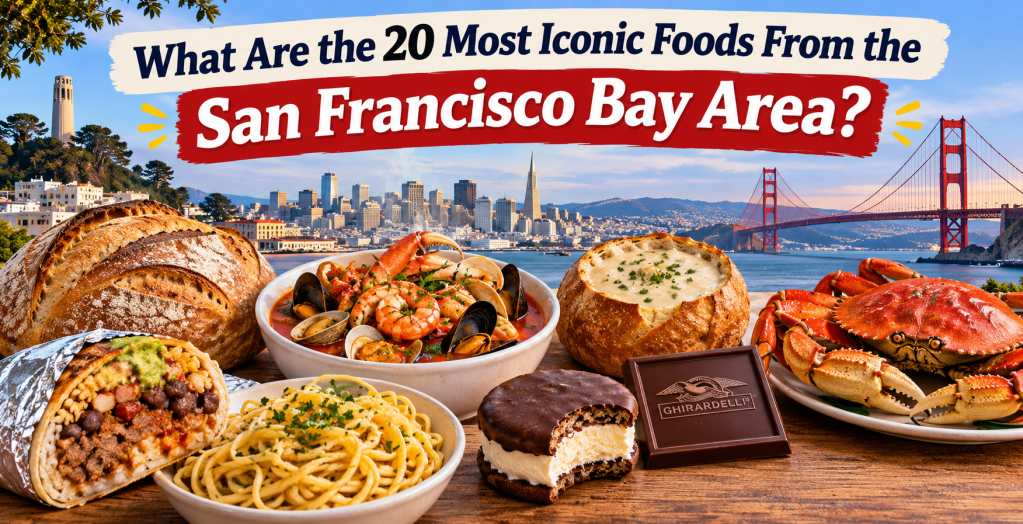
The San Francisco Bay Area is one of America’s most exciting food destinations, known for its fresh seafood, legendary sourdough bread, diverse cultural influences, and innovative culinary traditions. From the historic restaurants of San Francisco to the vibrant food communities of Oakland, Berkeley, San Jose, and the surrounding cities, the region has developed a food culture unlike anywhere else in the country.
But what foods truly define the San Francisco Bay Area?
Some dishes have been enjoyed for more than a century, while others emerged from immigrant communities, neighborhood restaurants, and California’s farm-to-table movement. Together, these foods tell the story of the Bay Area’s history, geography, and cultural diversity.
Whether you’re a longtime Northern California resident, planning your first visit, or simply curious about the region’s culinary traditions, these 20 iconic Bay Area foods deserve a place on your must-try list.
1. San Francisco Sourdough Bread
Few foods represent San Francisco better than its famous sourdough bread.
San Francisco sourdough became popular during the California Gold Rush, when bakers relied on naturally fermented starters to produce bread with a distinctive tangy flavor.
Unlike ordinary white bread, traditional sourdough develops its flavor through wild yeast and lactic acid bacteria.
What makes San Francisco sourdough special?
-
A tangy, slightly sour flavor
-
A thick, crunchy crust
-
A chewy, airy interior
-
Traditional fermentation methods
-
A long history connected to the Gold Rush
Boudin Bakery, established in 1849, remains one of the city’s best-known sourdough institutions.
Sourdough is commonly served with butter, used for sandwiches, or hollowed into bread bowls filled with clam chowder.
For many people, sourdough bread is the single most recognizable food associated with San Francisco.
2. Dungeness Crab
Dungeness crab is one of the most celebrated seafood specialties in the Bay Area.
Named after Dungeness, Washington, this Pacific Coast crab is prized for its sweet, delicate meat and tender texture.
Crab season has historically been an important part of San Francisco’s fishing culture, particularly around Fisherman’s Wharf.
Popular ways to enjoy Dungeness crab include:
-
Steamed crab with melted butter
-
Garlic-roasted crab
-
Chilled cracked crab
-
Dungeness crab cakes
-
Crab sandwiches
-
Crab Louie salad
Fresh Dungeness crab is especially popular during the cooler months, although commercial seasons and availability vary.
For seafood lovers, a freshly cracked Dungeness crab is one of Northern California’s essential dining experiences.
3. Cioppino
Cioppino is a rich seafood stew that originated in San Francisco’s Italian-American fishing community during the late 19th century.
Italian immigrant fishermen developed the dish using available seafood and a flavorful tomato-based broth.
Traditional cioppino often includes:
-
Dungeness crab
-
Clams
-
Mussels
-
Shrimp
-
White fish
-
Tomatoes
-
Garlic
-
Onions
-
White wine
-
Fresh herbs
The seafood simmers in a savory broth that combines the natural sweetness of shellfish with tomatoes and aromatic seasonings.
Cioppino is usually served with crusty sourdough bread, which is perfect for soaking up the broth.
Although seafood stews exist throughout the world, cioppino is distinctly associated with San Francisco.
4. Mission-Style Burritos
The Mission-style burrito is one of San Francisco’s most influential contributions to American food culture.
Developed and popularized in the Mission District during the 1960s, this oversized burrito became famous for its generous fillings and tightly wrapped construction.
A traditional Mission-style burrito commonly contains:
-
A large flour tortilla
-
Rice
-
Beans
-
Carne asada, chicken, carnitas, or another protein
-
Salsa
-
Optional cheese, sour cream, and guacamole
The ingredients are wrapped into a substantial handheld meal, often using aluminum foil to hold everything together.
Restaurants such as El Faro and La Taqueria helped establish the Mission District’s reputation for outstanding burritos.
Today, Mission-style burritos are found throughout California and across the United States.
5. Clam Chowder in a Sourdough Bread Bowl
Clam chowder served inside a hollowed-out sourdough loaf is one of San Francisco’s most recognizable tourist dining traditions.
Although clam chowder originated elsewhere, the combination of creamy soup and San Francisco sourdough became closely associated with Fisherman’s Wharf.
The soup generally contains clams, potatoes, onions, celery, cream or milk, and seasonings.
The bread bowl adds another layer of flavor because the sourdough absorbs the rich chowder while maintaining its chewy texture.
Why is this combination so popular?
It brings together two beloved foods: seafood and sourdough.
The result is a comforting meal that has become a signature experience for visitors exploring San Francisco’s waterfront.
6. Ghirardelli Chocolate
Chocolate has a long history in San Francisco, and Ghirardelli is one of the city’s most recognizable culinary names.
Founded by Italian immigrant Domenico Ghirardelli in 1852, the company became an important part of San Francisco’s food history.
Today, Ghirardelli is especially known for its chocolate squares, hot fudge, and elaborate ice cream sundaes.
Popular chocolate treats include:
-
Hot fudge sundaes
-
Chocolate squares
-
Chocolate-covered strawberries
-
Rich hot chocolate
-
Chocolate ice cream desserts
Ghirardelli Square, located near Fisherman’s Wharf, remains a popular destination for chocolate lovers.
While the company’s manufacturing operations have changed over time, its historical connection to San Francisco remains strong.
7. It’s-It Ice Cream Sandwiches
The It’s-It ice cream sandwich is a classic Bay Area frozen dessert.
Created in San Francisco in 1928 by George Whitney, the original treat combined vanilla ice cream between two oatmeal cookies before dipping the sandwich in chocolate.
The dessert quickly became popular among visitors to Playland-at-the-Beach, the former amusement park near Ocean Beach.
Today, It’s-It sandwiches are available in several flavors, including vanilla, chocolate, mint, and other varieties.
What makes the original It’s-It special is its combination of chewy oatmeal cookies, creamy ice cream, and a crisp chocolate coating.
For generations of Bay Area residents, It’s-It has represented childhood memories, summer afternoons, and local nostalgia.
8. Hangtown Fry
Hangtown Fry is one of Northern California’s most unusual historic dishes.
The dish originated during the California Gold Rush in Hangtown, now known as Placerville, rather than in San Francisco itself.
It traditionally combines eggs, oysters, and bacon into a rich scramble or omelet.
According to popular Gold Rush lore, the dish represented an extravagant meal because oysters and eggs were expensive ingredients in mining communities.
Although its exact origin story remains debated, Hangtown Fry became associated with Northern California dining and appeared on menus in San Francisco.
The combination of salty bacon, tender oysters, and fluffy eggs creates a distinctive breakfast dish.
Hangtown Fry is an important reminder of the region’s Gold Rush culinary heritage.
9. Irish Coffee at the Buena Vista
Irish coffee was not invented in San Francisco, but the city helped make the drink famous in the United States.
In 1952, the Buena Vista Café introduced its version of Irish coffee after owner Jack Koeppler and travel writer Stanton Delaplane worked to recreate the drink they had encountered in Ireland.
The classic preparation includes hot coffee, Irish whiskey, sugar, and lightly whipped cream.
The cream floats on top of the hot coffee, creating a distinctive layered presentation.
The Buena Vista became internationally known for serving the drink, and Irish coffee remains one of San Francisco’s most famous culinary traditions.
Although technically a beverage rather than a food, it deserves recognition for its lasting influence on Bay Area dining culture.
10. Garlic Noodles
Garlic noodles are a beloved San Francisco dish associated with Vietnamese-American culinary innovation.
The dish is widely credited to Helene An and the An family’s restaurants, particularly Thanh Long, which opened in San Francisco in 1971.
Garlic noodles typically combine wheat noodles with butter, garlic, savory seasonings, and cheese.
The result is a rich, fragrant noodle dish with a buttery texture and intense garlic flavor.
Garlic noodles are especially popular alongside roasted Dungeness crab.
This combination has become a defining example of San Francisco’s Asian-American culinary creativity.
Today, variations of garlic noodles appear in restaurants throughout the Bay Area and beyond.
11. San Francisco-Style Garlic Fries
Garlic fries are a popular Bay Area stadium and restaurant snack, especially associated with San Francisco Giants baseball games.
The fries are typically tossed with freshly minced garlic, parsley, and seasonings after frying.
Some versions include olive oil, butter, or Parmesan cheese.
Their popularity grew significantly through their association with Gordon Biersch and local sporting venues.
What makes garlic fries memorable is their strong aroma and bold flavor.
For many Bay Area sports fans, eating garlic fries while watching a Giants game is a familiar tradition.
12. Oakland-Style BBQ and Smoked Meats
Oakland has a rich barbecue history influenced by African American communities and Southern cooking traditions.
As families migrated from the South to California during the 20th century, they brought barbecue techniques, recipes, and regional preferences with them.
Oakland barbecue commonly features:
-
Smoked pork ribs
-
Beef brisket
-
Barbecued chicken
-
Hot links
-
Baked beans
-
Potato salad
-
Cornbread
Everett & Jones Barbeque, founded in Oakland in 1973, became one of the area’s best-known barbecue institutions.
Unlike dishes with a single established recipe, Oakland barbecue represents a broader culinary tradition shaped by generations of cooks.
Its significance extends beyond food, reflecting the city’s African American cultural history.
13. Berkeley’s California-Style Pizza
Berkeley played an important role in the development of California-style pizza.
Unlike traditional pizza styles that emphasize a limited number of classic toppings, California-style pizza often incorporates fresh produce, seasonal ingredients, and creative combinations.
The Cheese Board Collective, established in Berkeley in 1967, became famous for its vegetarian pizzas featuring inventive daily toppings.
California-style pizzas may include:
-
Fresh seasonal vegetables
-
Goat cheese
-
Artichokes
-
Roasted garlic
-
Fresh herbs
-
Pesto
-
Specialty cheeses
The Bay Area’s emphasis on locally sourced ingredients helped make this approach popular.
Berkeley’s pizza culture reflects the region’s broader commitment to fresh food and culinary experimentation.
14. Dutch Crunch Bread Sandwiches
Dutch crunch bread is one of the Bay Area’s most beloved sandwich traditions.
The bread is known for its distinctive crackled topping, which develops during baking from a rice-flour-based paste.
The result is a crunchy exterior with a soft, fluffy interior.
Although the bread style has European origins, Dutch crunch became especially popular in Northern California sandwich shops.
Common sandwich fillings include turkey, roast beef, pastrami, tuna salad, and fresh vegetables.
The contrast between the crunchy topping and soft bread makes Dutch crunch sandwiches particularly satisfying.
For many Bay Area residents, Dutch crunch is the preferred bread for a deli sandwich.
15. Chinese Dim Sum
San Francisco has one of the oldest and most influential Chinese American communities in the United States.
Chinese immigrants helped establish the city’s food culture during the 19th century, and dim sum became an important part of its dining traditions.
Dim sum refers to a variety of small dishes commonly enjoyed with tea.
Popular dim sum foods include:
-
Har gow, or shrimp dumplings
-
Siu mai, or pork dumplings
-
Char siu bao, or barbecue pork buns
-
Turnip cakes
-
Egg tarts
-
Rice noodle rolls
San Francisco’s Chinatown and Richmond District are particularly well known for Chinese bakeries, dim sum restaurants, and regional Chinese cuisine.
Although dim sum originated in China, it has become an essential part of Bay Area food culture.
16. Vietnamese Bánh Mì Sandwiches
Vietnamese bánh mì sandwiches are a major part of the Bay Area’s diverse culinary landscape.
San Jose, home to one of the largest Vietnamese communities in the United States, is especially known for its Vietnamese restaurants and sandwich shops.
A traditional bánh mì combines a light, crisp baguette with savory fillings and fresh vegetables.
Common ingredients include:
-
Grilled pork or other proteins
-
Vietnamese cold cuts
-
Pickled carrots and daikon
-
Fresh cilantro
-
Cucumber
-
Jalapeños
-
Mayonnaise or pâté
The combination of crunchy bread, savory meat, tangy vegetables, and fresh herbs creates a balanced and flavorful sandwich.
Bánh mì reflects the Vietnamese community’s lasting influence on South Bay cuisine.
17. San Jose Orange Sauce
Orange sauce is one of San Jose’s most distinctive local food specialties.
The creamy, spicy condiment became closely associated with Mexican restaurants and taquerias in the South Bay.
Despite its name, orange sauce generally does not contain oranges.
Its bright color often comes from chiles, tomatoes, and other ingredients blended into a smooth sauce.
Recipes vary considerably, but many versions include roasted peppers, garlic, oil, and seasonings.
Orange sauce is commonly served with:
-
Tacos
-
Burritos
-
Quesadillas
-
Tortas
-
Breakfast burritos
La Victoria Taqueria is particularly well known for popularizing its version of the sauce.
For many San Jose residents, orange sauce is an essential part of the local taqueria experience.
18. California Cuisine and Farm-to-Table Salads
The Bay Area played a major role in popularizing modern California cuisine and the farm-to-table movement.
Berkeley’s Chez Panisse, founded by Alice Waters in 1971, helped establish a philosophy centered on fresh, seasonal, locally sourced ingredients.
Rather than relying on elaborate preparations, this approach emphasizes the natural flavor of high-quality produce.
Iconic California-style salads may feature:
-
Locally grown lettuce
-
Heirloom tomatoes
-
Fresh avocados
-
Seasonal fruit
-
Goat cheese
-
Toasted nuts
-
Simple vinaigrettes
While farm-to-table salads are not exclusive to the Bay Area, the region’s influence helped transform how Americans think about restaurant dining.
The movement also encouraged stronger relationships between restaurants, farmers, and local food producers.
19. San Francisco Crab Louie Salad
Crab Louie is a classic American seafood salad with strong historical ties to San Francisco and the West Coast.
Although its exact birthplace is disputed, the dish appeared on early 20th-century menus and became associated with upscale West Coast dining.
A traditional Crab Louie salad often includes:
-
Fresh Dungeness crab meat
-
Crisp lettuce
-
Hard-boiled eggs
-
Tomatoes
-
Asparagus
-
Olives
-
Louie dressing
The dressing typically combines mayonnaise with chili sauce or ketchup, lemon juice, and seasonings.
Crab Louie highlights the Bay Area’s access to fresh seafood while offering a lighter alternative to rich seafood stews.
It remains an enduring example of classic San Francisco restaurant cuisine.
20. Rocky Road Ice Cream
Rocky road ice cream has an important connection to Oakland’s dessert history.
In 1929, William Dreyer of Dreyer’s Grand Ice Cream helped popularize rocky road, a combination of chocolate ice cream, marshmallows, and nuts.
The flavor’s creation and naming have competing historical claims, including accounts involving Oakland ice cream maker Fentons Creamery.
Regardless of the disputed details, Oakland became closely associated with rocky road’s early history.
The flavor traditionally includes:
-
Chocolate ice cream
-
Marshmallows
-
Almonds or other nuts
Rocky road became one of America’s most recognizable ice cream flavors.
Its enduring popularity makes it an important part of Bay Area dessert history.
What Makes San Francisco Bay Area Food Different?
The Bay Area’s food culture stands apart because it combines several important influences.
Cultural Diversity
The region has long welcomed immigrants from around the world.
Chinese, Italian, Mexican, Vietnamese, Filipino, Japanese, and many other communities have helped shape local dining traditions.
This diversity explains why the Bay Area is equally famous for seafood stew, burritos, dim sum, and garlic noodles.
Access to Fresh Ingredients
Northern California’s agricultural regions provide restaurants with a wide variety of fresh ingredients.
Nearby farms produce vegetables, fruits, nuts, dairy products, and specialty ingredients throughout the year.
The Pacific Ocean also supplies seafood that has historically influenced coastal cooking.
Culinary Innovation
The Bay Area has repeatedly helped introduce new dining trends.
Examples include California cuisine, creative vegetarian cooking, modern pizza styles, and Asian-American fusion dishes.
Restaurants throughout San Francisco, Oakland, Berkeley, and San Jose continue to experiment with ingredients and cooking techniques.
Strong Neighborhood Food Traditions
Many iconic foods are closely connected to specific neighborhoods.
San Francisco’s Mission District is famous for burritos, Chinatown for Chinese cuisine, North Beach for Italian-American traditions, and Fisherman’s Wharf for seafood.
Oakland, Berkeley, and San Jose have equally important culinary identities.
Together, these communities create a food landscape that extends far beyond San Francisco itself.
Which Bay Area Foods Are the Most Famous?
Although all 20 foods have cultural significance, several stand out for their national recognition.
| Iconic food | Bay Area connection |
|---|---|
| Sourdough bread | San Francisco’s Gold Rush baking heritage |
| Dungeness crab | San Francisco’s seafood and fishing traditions |
| Cioppino | San Francisco’s Italian-American fishing community |
| Mission-style burrito | San Francisco’s Mission District |
| Clam chowder bread bowl | Fisherman’s Wharf dining tradition |
| Ghirardelli chocolate | Historic San Francisco chocolate company |
| It’s-It ice cream sandwich | Created in San Francisco |
| Garlic noodles | San Francisco’s Vietnamese-American restaurant innovation |
| Orange sauce | San Jose taqueria culture |
| Rocky road ice cream | Oakland ice cream history |
These foods represent a combination of historic inventions, regional specialties, and cultural traditions.
What Foods Should First-Time Visitors Try in the Bay Area?
Visitors who have limited time should focus on dishes that are particularly connected to Northern California.
For a classic San Francisco experience, begin with sourdough bread, Dungeness crab, and cioppino.
A Mission-style burrito provides a completely different experience while highlighting the city’s Mexican-American culinary traditions.
Visitors interested in desserts should try an It’s-It ice cream sandwich or a Ghirardelli hot fudge sundae.
Those exploring the East Bay should consider Berkeley-style vegetarian pizza and Oakland barbecue.
In San Jose, Vietnamese bánh mì and taqueria orange sauce offer a taste of the South Bay’s distinctive food culture.
The best Bay Area food experience often involves exploring several cities rather than staying in one neighborhood.
Frequently Asked Questions
What is the number one food San Francisco is known for?
San Francisco sourdough bread is arguably the city’s most recognizable food. Its history dates back to the California Gold Rush, and its distinctive flavor has become internationally associated with San Francisco.
What seafood is the San Francisco Bay Area famous for?
Dungeness crab is one of the region’s most famous seafood specialties. Cioppino, clam chowder, and Crab Louie are also closely associated with San Francisco dining.
What food was invented in San Francisco?
Several well-known foods originated or were developed in San Francisco, including cioppino, Mission-style burritos, It’s-It ice cream sandwiches, and the garlic noodles popularized by the An family.
What food is Oakland famous for?
Oakland is known for its barbecue traditions, diverse international cuisines, and connection to rocky road ice cream. The city also has influential African American, Chinese, Vietnamese, and other food communities.
What food is San Jose famous for?
San Jose is particularly known for Vietnamese bánh mì, Mexican-American taquerias, and its distinctive orange sauce. The city’s large Vietnamese community has helped make Vietnamese cuisine a defining part of the South Bay’s food culture.
Is Bay Area food different from Southern California food?
Yes. Although both regions share California’s emphasis on fresh ingredients and cultural diversity, the Bay Area is especially associated with sourdough, Dungeness crab, cioppino, Mission-style burritos, and farm-to-table cuisine.
Southern California is more strongly associated with certain regional taco styles, coastal Mexican-American cuisine, and other food traditions shaped by Los Angeles and San Diego.
What is the oldest iconic food tradition in San Francisco?
San Francisco’s sourdough baking tradition dates to the Gold Rush era of the mid-1800s. Chinese American cooking and Italian-American seafood traditions also have deep roots in the city’s 19th-century history.
Final Thoughts: The Foods That Define the San Francisco Bay Area
The San Francisco Bay Area’s food culture is about much more than famous restaurants or popular dishes. It represents generations of immigration, innovation, local traditions, and communities sharing their culinary heritage.
From the tangy crust of San Francisco sourdough to the rich seafood flavors of cioppino, the oversized Mission-style burrito, Oakland’s barbecue traditions, and San Jose’s beloved orange sauce, every iconic food tells a different story.
Some dishes were created in the Bay Area, while others arrived through immigrant communities and became essential parts of local life.
What makes the region special is how these different traditions exist alongside one another, creating one of the most diverse and influential food cultures in the United States.
Whether you prefer fresh seafood, comforting sandwiches, spicy Mexican food, Asian cuisine, or classic desserts, the Bay Area offers something memorable.
The 20 most iconic foods from the San Francisco Bay Area aren’t just things to eat. They’re a delicious reflection of Northern California’s history, culture, and identity.
Leave a Reply