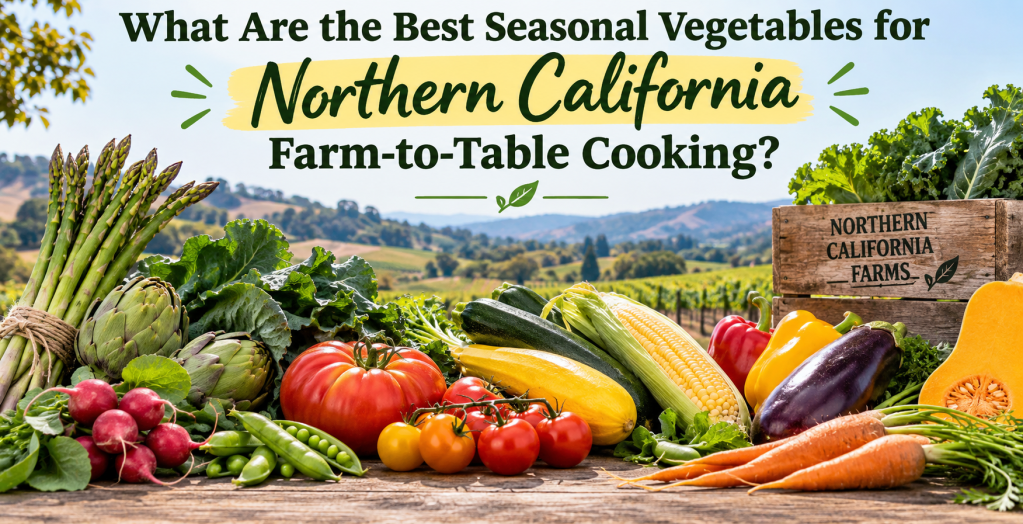
Northern California is one of the best places in the United States for fresh, seasonal cooking. With its Mediterranean climate, fertile agricultural valleys, coastal growing regions, and long farming traditions, the region produces an incredible variety of vegetables throughout the year.
From tender spring asparagus and sweet summer tomatoes to hearty winter squash and cool-weather leafy greens, Northern California offers home cooks an opportunity to create delicious meals using ingredients at their seasonal peak.
Farm-to-table cooking is about more than buying fresh vegetables. It is about understanding what grows naturally during different seasons, supporting regional agriculture, and preparing food in ways that highlight its natural flavors.
Whether you live in the San Francisco Bay Area, Napa Valley, Sonoma County, Sacramento Valley, or another part of Northern California, learning which vegetables are in season can help you prepare fresher, more flavorful meals.
What Does Farm-to-Table Cooking Mean in Northern California?
Farm-to-table cooking focuses on using ingredients sourced directly from farms or through short, transparent supply chains, often within the surrounding region.
In Northern California, this approach has become an important part of the local food culture.
Restaurants, farmers markets, and home cooks frequently build meals around vegetables harvested from nearby agricultural communities.
Some of Northern California’s most productive farming regions include:
-
Sonoma County: Known for diversified farms, heirloom vegetables, tomatoes, squash, and leafy greens.
-
Napa Valley: Offers seasonal produce from small farms, gardens, and agricultural producers.
-
Sacramento Valley: Produces tomatoes, asparagus, peppers, and many other crops.
-
Marin County: Features small-scale organic farms and seasonal vegetable growers.
-
Contra Costa County: Includes agricultural communities growing sweet corn, tomatoes, peppers, and other vegetables.
-
Solano County: Supports a wide variety of seasonal crops through its agricultural valleys.
-
Monterey County: A major producer of lettuce, broccoli, cauliflower, and other cool-season vegetables.
The main principle is simple: choose vegetables when they are naturally abundant and prepare them without overwhelming their flavor.
What Vegetables Are in Season During Spring in Northern California?
Spring is one of the most exciting seasons for farm-to-table cooking.
As temperatures begin warming and winter rains give way to longer days, farmers markets start filling with tender greens, asparagus, peas, and fresh herbs.
Best spring vegetables (March through May)
-
Asparagus
-
Artichokes
-
English peas
-
Snap peas
-
Fava beans
-
Spring onions
-
Radishes
-
Baby carrots
-
Spinach
-
Arugula
-
Spring lettuce
-
Swiss chard
-
Green garlic
Availability varies by location and weather, with some vegetables appearing earlier in coastal areas or continuing into early summer.
1. Asparagus
Fresh asparagus is one of Northern California’s classic spring vegetables.
The Sacramento–San Joaquin Delta has a long history of asparagus production, making it an important part of the region’s agricultural heritage.
Locally harvested asparagus is tender, flavorful, and easy to prepare.
Best cooking methods: Roasting, grilling, steaming, and sautéing.
For a simple farm-to-table side dish, toss asparagus with olive oil, sea salt, and black pepper. Roast until tender and finish with fresh lemon juice.
2. Artichokes
Artichokes are especially associated with California’s Central Coast, including the Castroville area.
Although artichokes can be available during multiple seasons, spring is traditionally one of their strongest harvest periods.
Fresh artichokes have a mild, slightly nutty flavor that pairs beautifully with garlic, lemon, and olive oil.
Best cooking methods: Steaming, roasting, grilling, and braising.
Serve steamed artichokes with homemade garlic butter or a lemon-herb dipping sauce.
3. English Peas and Snap Peas
Fresh peas are among the sweetest vegetables available during spring.
English peas are excellent in risotto, pasta, soups, and vegetable medleys.
Snap peas are delicious raw or lightly sautéed.
Their natural sweetness makes them especially useful in dishes that celebrate fresh seasonal ingredients.
4. Fava Beans
Fava beans are a traditional spring ingredient in Mediterranean-inspired cooking.
Their creamy texture and earthy flavor make them excellent in salads, pasta dishes, and vegetable spreads.
Fresh fava beans require a little preparation because the beans are removed from their pods and often peeled after blanching.
However, their rich flavor makes the extra effort worthwhile.
5. Spring Greens
Spinach, arugula, baby lettuce, and Swiss chard thrive during Northern California’s cooler growing seasons.
These greens are ideal for fresh salads, vegetable sautés, and light spring meals.
A simple salad made with arugula, shaved Parmesan, lemon juice, and olive oil is an excellent example of seasonal farm-to-table cooking.
What Vegetables Are Best During Summer in Northern California?
Summer brings some of Northern California’s most colorful and flavorful vegetables.
Warm inland temperatures create excellent growing conditions for tomatoes, peppers, eggplant, zucchini, and sweet corn.
Best summer vegetables (June through August)
-
Heirloom tomatoes
-
Cherry tomatoes
-
Zucchini
-
Yellow summer squash
-
Sweet corn
-
Bell peppers
-
Hot peppers
-
Eggplant
-
Cucumbers
-
Green beans
-
Okra
-
Tomatillos
-
Basil and other summer herbs
Summer harvests can continue well into September and October, particularly in warmer inland valleys.
6. Heirloom Tomatoes
Few vegetables represent Northern California summer cooking better than fresh heirloom tomatoes.
Technically fruits, tomatoes are commonly treated as vegetables in savory cooking.
Heirloom varieties come in different colors, shapes, and sizes, offering flavors ranging from sweet and mild to rich and tangy.
The warm growing conditions of Napa, Sonoma, Sacramento, and inland Bay Area communities can produce exceptional tomatoes.
Best cooking methods: Fresh salads, roasting, grilling, sauces, and sandwiches.
For a simple seasonal dish, slice ripe heirloom tomatoes and serve them with fresh basil, mozzarella, olive oil, and a sprinkle of sea salt.
7. Zucchini and Summer Squash
Zucchini is one of the most versatile summer vegetables.
It grows abundantly during warm weather and can be used in everything from grilled vegetable platters to pasta dishes.
Yellow squash offers a similarly mild flavor and tender texture.
Best cooking methods: Grilling, roasting, sautéing, and baking.
Try grilling thick zucchini slices with olive oil, garlic, and fresh herbs.
8. Sweet Corn
Sweet corn is a summer favorite in Northern California, particularly in agricultural communities around Brentwood in Contra Costa County.
Brentwood is especially well known for its locally grown sweet corn.
Fresh corn harvested near peak ripeness has a naturally sweet flavor that requires very little seasoning.
Best cooking methods: Grilling, boiling, steaming, and roasting.
For a farm-to-table side dish, grill corn and finish it with butter, lime juice, and fresh herbs.
9. Bell Peppers
Bell peppers thrive during warm summer weather.
Red, yellow, orange, and green peppers add color and natural sweetness to seasonal meals.
They are especially delicious when roasted or grilled.
Use them in vegetable skewers, salads, stuffed peppers, and roasted vegetable dishes.
10. Eggplant
Eggplant is an excellent choice for summer farm-to-table cooking.
Its rich texture makes it particularly useful in Mediterranean-inspired dishes.
Northern California’s agricultural climate supports several varieties, including traditional globe eggplant and smaller Asian varieties.
Try roasting eggplant with tomatoes, garlic, and olive oil for a simple seasonal vegetable dish.
11. Cucumbers
Cucumbers provide a refreshing contrast to heavier summer meals.
They are excellent in salads, chilled soups, and homemade pickles.
For a quick side dish, combine sliced cucumbers with red onion, fresh dill, vinegar, and a small amount of olive oil.
What Vegetables Are in Season During Fall in Northern California?
Fall is a transitional season when summer crops gradually give way to cooler-weather vegetables.
Northern California’s relatively mild autumn temperatures often allow tomatoes, peppers, and squash to remain available while winter vegetables begin appearing.
Best fall vegetables (September through November)
-
Butternut squash
-
Delicata squash
-
Acorn squash
-
Pumpkins
-
Sweet potatoes
-
Broccoli
-
Cauliflower
-
Brussels sprouts
-
Kale
-
Beets
-
Carrots
-
Cabbage
-
Leeks
-
Turnips
12. Butternut Squash
Butternut squash is one of the most popular vegetables for fall cooking.
Its naturally sweet flavor and creamy texture make it perfect for soups, roasted side dishes, and casseroles.
Roasting brings out its sweetness and creates caramelized edges.
Try combining roasted butternut squash with fresh sage, garlic, and olive oil.
13. Delicata Squash
Delicata squash is particularly convenient because its thin skin becomes tender when cooked and does not usually need peeling.
It has a slightly sweet flavor and works beautifully in roasted vegetable dishes.
Slice it into half-moons, remove the seeds, and roast with olive oil, salt, and pepper.
14. Brussels Sprouts
Brussels sprouts are a popular cool-weather vegetable.
They develop a delicious roasted flavor when cooked at high temperatures.
The outer leaves become crispy while the centers turn tender.
For a Northern California-inspired preparation, roast Brussels sprouts with garlic and finish them with lemon juice.
15. Broccoli and Cauliflower
Broccoli and cauliflower grow especially well in California’s cooler coastal farming regions.
Both vegetables are excellent for roasting, steaming, soups, and vegetable casseroles.
Roasted cauliflower with olive oil, smoked paprika, and garlic makes a flavorful seasonal side dish.
16. Beets
Beets are available during much of the year in Northern California, but they are particularly useful in fall and winter cooking.
Their earthy sweetness pairs well with goat cheese, walnuts, citrus, and leafy greens.
Roasted beets can be served warm or chilled.
What Vegetables Grow During Winter in Northern California?
Unlike many colder parts of the United States, Northern California can produce fresh vegetables throughout winter.
Mild coastal temperatures and cool inland growing conditions support many leafy greens, brassicas, and root vegetables.
Best winter vegetables (December through February)
-
Kale
-
Collard greens
-
Swiss chard
-
Spinach
-
Cabbage
-
Broccoli
-
Cauliflower
-
Brussels sprouts
-
Carrots
-
Turnips
-
Parsnips
-
Leeks
-
Radishes
-
Winter lettuce
-
Mustard greens
17. Kale
Kale is one of the most dependable cool-season vegetables.
It grows well in mild winter climates and can tolerate light frost.
Kale is excellent in soups, salads, sautés, and roasted vegetable dishes.
For a simple preparation, sauté chopped kale with olive oil, garlic, and a splash of lemon juice.
18. Collard Greens
Collard greens are another excellent winter vegetable.
Their sturdy leaves hold up well during slow cooking, making them ideal for hearty meals.
Although collards are commonly associated with Southern cooking, they also fit naturally into Northern California’s seasonal vegetable traditions.
Try braising collard greens with onions, garlic, vegetable broth, and a little apple cider vinegar.
19. Carrots
Carrots can be grown during much of the year in Northern California.
Cool-season carrots often develop excellent sweetness.
They are delicious roasted, glazed, steamed, or added to soups.
Roast carrots with olive oil, thyme, and a small amount of honey for a flavorful winter side dish.
20. Leeks
Leeks have a mild onion flavor that works especially well in cool-weather cooking.
They are excellent in potato soups, vegetable stocks, creamy sauces, and roasted vegetable dishes.
Because dirt can collect between their layers, leeks should be washed thoroughly before cooking.
Northern California Seasonal Vegetable Calendar
The following calendar provides a general guide to when popular vegetables are commonly harvested or locally available.
| Vegetable | Typical peak season |
|---|---|
| Asparagus | March–May |
| Artichokes | March–May, with additional fall harvests |
| English peas | March–May |
| Fava beans | March–May |
| Radishes | Fall–spring |
| Heirloom tomatoes | July–October |
| Zucchini | June–September |
| Sweet corn | June–September |
| Bell peppers | July–October |
| Eggplant | July–October |
| Cucumbers | June–September |
| Butternut squash | September–November |
| Delicata squash | September–November |
| Brussels sprouts | Fall–spring |
| Broccoli | Fall–spring |
| Cauliflower | Fall–spring |
| Kale | Fall–spring |
| Carrots | Much of the year |
| Beets | Much of the year |
| Leeks | Fall–spring |
These are approximate seasonal windows, not guaranteed harvest dates. Weather, elevation, coastal influence, farm practices, and storage can affect availability.
What Are the Best Vegetables for Farm-to-Table Cooking in the San Francisco Bay Area?
The San Francisco Bay Area has access to a remarkable variety of agricultural regions.
Its location between coastal farms, inland valleys, and nearby wine country makes seasonal vegetable cooking especially convenient.
Some of the best choices include heirloom tomatoes, asparagus, artichokes, sweet corn, kale, zucchini, winter squash, and fresh salad greens.
Farmers markets throughout Oakland, Berkeley, San Francisco, Richmond, Walnut Creek, and surrounding communities offer opportunities to purchase locally grown produce.
One advantage of shopping at a farmers market is the ability to ask growers which vegetables were harvested recently.
This can help you discover varieties that may not be available in conventional grocery stores.
What Seasonal Vegetables Are Popular in Napa Valley and Sonoma County?
Napa Valley and Sonoma County are often associated with vineyards and wine production, but both regions also have strong agricultural traditions involving vegetables, fruit, herbs, and livestock.
Seasonal vegetables frequently used in wine country-inspired cooking include:
-
Spring asparagus and peas
-
Summer heirloom tomatoes and zucchini
-
Roasted peppers and eggplant
-
Fall butternut squash and pumpkins
-
Winter kale and Swiss chard
-
Fresh carrots, beets, and other root vegetables
Wine country cooking often emphasizes simple preparation techniques that allow high-quality ingredients to stand out.
A plate of roasted seasonal vegetables with olive oil, garlic, and fresh herbs is a perfect example.
How Do You Cook Seasonal Vegetables Without Losing Their Natural Flavor?
One of the most important principles of farm-to-table cooking is avoiding unnecessary complexity.
Fresh vegetables harvested at their seasonal peak often need very little seasoning.
Roasting
Roasting concentrates natural sweetness and creates caramelized edges.
It works especially well for carrots, squash, cauliflower, Brussels sprouts, and beets.
Most sturdy vegetables roast well at approximately 400°F to 425°F, although cooking times vary.
Grilling
Grilling adds smoky flavor and is particularly useful during summer.
Zucchini, eggplant, peppers, asparagus, and corn are excellent choices.
Lightly coat vegetables with olive oil before placing them on the grill.
Sautéing
Sautéing is ideal for tender vegetables and leafy greens.
Spinach, Swiss chard, peas, zucchini, and mushrooms cook quickly in a skillet.
Garlic, olive oil, and fresh herbs are often all that is needed.
Steaming
Steaming preserves the natural texture and flavor of many vegetables.
It is especially useful for asparagus, broccoli, artichokes, and green beans.
Avoid overcooking to maintain a pleasant texture.
Braising
Braising works particularly well for sturdy greens and certain root vegetables.
Collard greens, kale, cabbage, and leeks can become tender and flavorful when slowly cooked in a small amount of liquid.
What Are Some Easy Northern California Farm-to-Table Vegetable Dishes?
You do not need restaurant experience to create seasonal meals at home.
Here are several dishes inspired by Northern California’s agricultural ingredients.
Spring: Roasted Asparagus With Lemon and Parmesan
Combine fresh asparagus, olive oil, garlic, salt, and pepper.
Roast until tender and finish with lemon juice and freshly grated Parmesan.
This simple dish highlights the fresh flavor of spring asparagus.
Summer: Heirloom Tomato and Cucumber Salad
Combine sliced heirloom tomatoes, cucumbers, red onion, and fresh basil.
Dress with olive oil, red wine vinegar, salt, and black pepper.
Serve chilled or at room temperature.
Summer: Grilled Brentwood-Style Sweet Corn
Grill fresh sweet corn until tender and lightly charred.
Brush with butter and sprinkle with sea salt, lime juice, and chopped cilantro.
This is a simple way to celebrate one of Contra Costa County’s most recognizable seasonal crops.
Fall: Roasted Butternut Squash With Sage
Cube butternut squash and toss it with olive oil, chopped sage, garlic, salt, and pepper.
Roast at 425°F until tender and lightly caramelized, usually about 25–35 minutes depending on the size of the pieces.
Winter: Garlic-Sautéed Kale and White Beans
Sauté chopped garlic in olive oil.
Add chopped kale and cook until it begins to soften.
Stir in cooked white beans, vegetable broth, and lemon juice.
Season with salt and pepper for a simple, hearty winter dish.
Is Buying Seasonal Vegetables Cheaper Than Buying Out-of-Season Produce?
Seasonal vegetables can often be more affordable because they are harvested when supplies are plentiful.
However, seasonal produce is not always cheaper.
Prices depend on growing conditions, transportation, labor, farm size, and market demand.
For example, locally grown summer tomatoes may offer excellent value during peak harvest, while specialty heirloom varieties can still be expensive.
To save money while shopping seasonally, compare prices among different vendors, purchase abundant crops, and consider preserving extra vegetables for later use.
Freezing, pickling, and making homemade sauces are practical ways to extend the usefulness of seasonal harvests.
Are Locally Grown Vegetables Always Better Than Grocery Store Vegetables?
Locally grown vegetables can offer several advantages, particularly when they are harvested shortly before being sold.
They may have excellent flavor, and purchasing them can support nearby farms and agricultural businesses.
However, local produce is not automatically more nutritious, sustainable, or affordable than vegetables from other regions.
Freshness, storage conditions, growing practices, and transportation methods all matter.
A vegetable grown farther away and handled properly may still be an excellent choice.
The goal of farm-to-table cooking should be to choose quality ingredients while understanding where food comes from.
How Can You Start Cooking Seasonally in Northern California?
Switching to seasonal cooking does not require changing your entire diet.
Begin by choosing two or three vegetables that are currently abundant.
Build meals around those ingredients instead of deciding on a recipe first and purchasing everything afterward.
For example, during summer, you might purchase tomatoes, zucchini, and sweet corn.
Those vegetables could become a grilled vegetable platter, fresh tomato salad, or simple pasta dinner.
During winter, kale, carrots, and leeks could become a comforting vegetable soup.
As you become more familiar with seasonal harvests, planning meals around fresh produce becomes easier.
What Are the Health Benefits of Eating Seasonal Vegetables?
Seasonal vegetables can contribute to a healthy, balanced diet by providing vitamins, minerals, fiber, and beneficial plant compounds.
Different vegetables offer different nutritional advantages.
Leafy greens provide vitamin K and other nutrients.
Carrots and winter squash contain carotenoids, including beta-carotene, which the body can convert into vitamin A.
Tomatoes provide vitamin C and lycopene.
Broccoli and cauliflower supply fiber, vitamin C, and other beneficial compounds.
Eating a variety of vegetables throughout the year helps provide a broader range of nutrients.
However, vegetables do not need to be locally grown or seasonal to be nutritious. Frozen and canned vegetables can also be healthy, convenient choices.
Why Is Seasonal Farm-to-Table Cooking Important to Northern California?
Northern California’s food culture has been shaped by its geography, agricultural history, and diverse communities.
The region’s coastal climate, fertile valleys, and Mediterranean growing conditions make it possible to produce vegetables across much of the year.
Seasonal cooking helps preserve a connection between local farms and the people who enjoy their harvests.
It also encourages home cooks to appreciate ingredients when they are naturally abundant.
For many families, visiting a farmers market, choosing fresh vegetables, and preparing a homemade meal can become a meaningful tradition.
Farm-to-table cooking does not need to be expensive or complicated.
Sometimes, the best meal is simply a plate of freshly roasted vegetables seasoned with olive oil, garlic, and herbs.
Frequently Asked Questions About Northern California Seasonal Vegetables
What vegetables grow year-round in Northern California?
Carrots, kale, Swiss chard, radishes, and some salad greens can be grown during much of the year in suitable Northern California microclimates. Their availability depends on weather and local growing conditions.
What is the best season for vegetables in Northern California?
Every season offers excellent vegetables. Spring is especially good for asparagus and peas, summer for tomatoes and corn, fall for squash, and winter for leafy greens and root vegetables.
What vegetables are Northern California known for?
Northern California and its nearby agricultural regions are known for vegetables such as asparagus, artichokes, tomatoes, sweet corn, lettuce, broccoli, and cauliflower.
What vegetables are in season in Northern California in November?
November commonly brings winter squash, broccoli, cauliflower, kale, Brussels sprouts, carrots, beets, cabbage, and leeks. Some summer crops may still be available early in the month, depending on weather.
Can you grow vegetables during winter in the Bay Area?
Yes. Many Bay Area locations have relatively mild winters that support cool-season vegetables such as kale, spinach, broccoli, lettuce, carrots, and peas. Drainage, frost exposure, and rainfall affect growing success.
What is the easiest seasonal vegetable to cook?
Zucchini, carrots, asparagus, and broccoli are among the easiest choices because they require minimal preparation and work well with simple cooking methods.
Where can you buy seasonal vegetables in Northern California?
Farmers markets, farm stands, community-supported agriculture programs, local produce stores, and grocery stores carrying regional produce are all useful options.
Final Thoughts: Enjoying the Best Seasonal Vegetables Northern California Has to Offer
Northern California offers an exceptional variety of fresh vegetables throughout the year.
Spring brings tender asparagus, peas, and artichokes. Summer delivers juicy heirloom tomatoes, zucchini, peppers, and sweet corn. Fall introduces flavorful winter squash and root vegetables, while winter provides hearty greens, broccoli, cauliflower, and other cool-weather crops.
The beauty of farm-to-table cooking is its simplicity.
You do not need elaborate recipes, expensive ingredients, or professional cooking techniques to enjoy the benefits of seasonal produce.
By paying attention to what is growing locally, shopping thoughtfully, and using simple preparation methods, you can create delicious meals that celebrate Northern California’s agricultural traditions.
The best seasonal vegetables are often the ones harvested at their peak, prepared simply, and enjoyed while their natural flavors are at their finest.
Leave a Reply