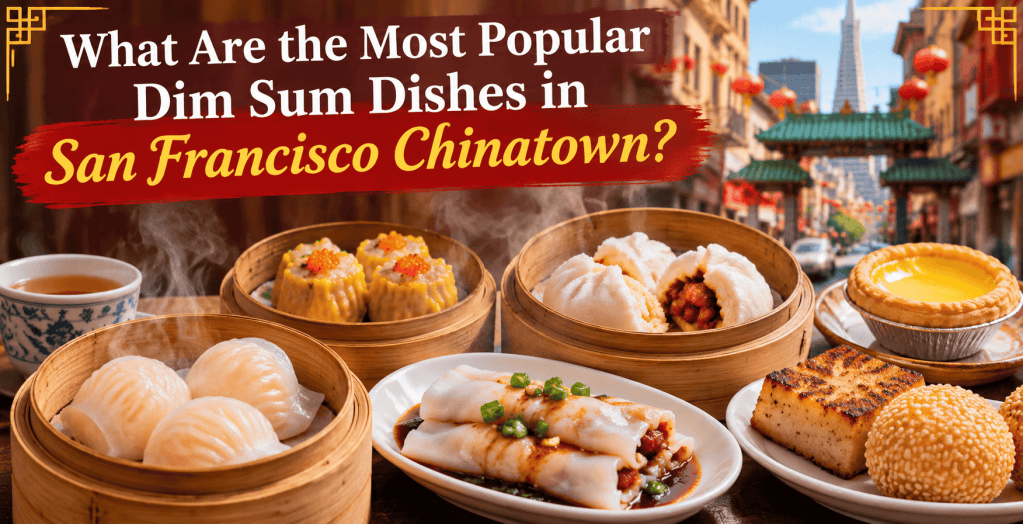
San Francisco Chinatown is one of the most famous destinations in California for authentic Chinese food, and few dining traditions are as closely connected to the neighborhood as dim sum. From delicate shrimp dumplings and fluffy barbecue pork buns to crispy spring rolls and sweet egg custard tarts, dim sum offers an incredible variety of flavors, textures, and traditional dishes.
For generations, Chinatown restaurants and bakeries have served these small, flavorful dishes to families, visitors, and longtime residents. Whether you are exploring Chinatown for the first time or hoping to recreate a traditional dim sum experience at home, knowing which dishes to try can make the experience even more enjoyable.
The most popular dim sum dishes in San Francisco Chinatown include har gow (shrimp dumplings), siu mai (pork dumplings), char siu bao (barbecue pork buns), cheung fun (rice noodle rolls), turnip cakes, chicken feet, sesame balls, and egg custard tarts.
These dishes represent some of the best-known Cantonese dim sum traditions, which have played an important role in San Francisco’s Chinese American food culture.
What Is Dim Sum?
Dim sum is a traditional Chinese dining style featuring small portions of savory and sweet foods, often enjoyed with hot tea.
The tradition is especially associated with Cantonese cuisine from southern China, including Guangdong Province and Hong Kong.
The phrase “dim sum” is commonly interpreted as “touch the heart,” reflecting the idea of enjoying small, satisfying dishes rather than one large meal.
Dim sum is closely connected to yum cha, a Cantonese expression meaning “drink tea.”
Traditionally, families and friends gather around a table, order several dishes, pour tea, and share food while enjoying conversation.
In San Francisco Chinatown, dim sum has become both a cultural tradition and a popular culinary attraction.
Why Is Dim Sum So Popular in San Francisco Chinatown?
San Francisco Chinatown has a long history of Chinese immigration, cultural preservation, and culinary innovation.
Chinese immigrants brought regional cooking traditions to San Francisco during the nineteenth century, and Cantonese cuisine became particularly influential in the neighborhood.
Over time, Chinese restaurants, tea houses, and bakeries helped establish dim sum as an important part of Chinatown’s food culture.
Several factors contribute to its continuing popularity.
A Strong Cantonese Culinary Heritage
Many classic dim sum dishes originated in Cantonese cooking traditions.
Steamed dumplings, rice noodle rolls, barbecue pork buns, and tea service reflect culinary practices that have been passed down through generations.
A Social Dining Experience
Dim sum is designed for sharing.
Instead of ordering individual main courses, diners select several small dishes for everyone at the table.
This makes dim sum particularly popular for family gatherings, weekend meals, and celebrations.
A Wide Variety of Foods
Dim sum offers something for nearly every preference.
Visitors can enjoy steamed dumplings, baked pastries, fried snacks, rice dishes, vegetables, and desserts during the same meal.
Chinatown’s Historic Atmosphere
Eating dim sum in San Francisco Chinatown also provides an opportunity to experience one of the country’s most historically significant Chinese American neighborhoods.
Traditional bakeries, restaurants, markets, and tea shops contribute to the neighborhood’s distinctive character.
15 Most Popular Dim Sum Dishes in San Francisco Chinatown
1. Har Gow — Steamed Shrimp Dumplings
Har gow is one of the most recognizable dishes in Cantonese dim sum.
These delicate dumplings feature a translucent wrapper surrounding a filling of seasoned shrimp.
The wrapper is traditionally made with wheat starch and tapioca starch or another starch that creates a slightly chewy, translucent texture.
The filling commonly includes shrimp, seasonings, and sometimes bamboo shoots.
Har gow is usually served in bamboo steamers and eaten while hot.
Why people love it: The combination of tender shrimp and a delicate, slightly chewy wrapper makes har gow a classic dim sum favorite.
A well-made har gow should have a thin wrapper that holds together when lifted with chopsticks.
2. Siu Mai — Pork and Shrimp Dumplings
Siu mai, sometimes spelled shumai, is another essential dim sum dish.
Unlike har gow, siu mai features an open-topped wrapper that exposes the filling.
Traditional Cantonese versions commonly contain ground pork, chopped shrimp, mushrooms, and seasonings.
Some versions are garnished with orange fish roe or small pieces of carrot.
The dumplings are steamed until tender and juicy.
Why people love it: Siu mai delivers a rich, savory flavor with a satisfying combination of pork and shrimp.
It is especially popular among diners who enjoy hearty, meat-filled dumplings.
3. Char Siu Bao — Barbecue Pork Buns
Char siu bao is one of the most recognizable Chinese buns.
These soft buns are filled with Cantonese-style barbecue pork coated in a sweet and savory sauce.
There are two common versions.
Steamed char siu bao features a fluffy white bun with a soft, pillowy texture.
Baked char siu bao has a golden exterior and a slightly sweeter bread-like texture.
Both versions contain chopped barbecue pork mixed with a flavorful sauce.
Why people love it: The combination of sweet barbecue pork and soft bread makes char siu bao appealing even to people trying dim sum for the first time.
4. Cheung Fun — Steamed Rice Noodle Rolls
Cheung fun is a traditional Cantonese dish made with thin sheets of steamed rice noodle.
The soft noodle sheets are rolled around fillings such as shrimp, barbecue pork, or beef.
They are typically served with a light, savory soy-based sauce.
Popular varieties include shrimp rice noodle rolls, beef rice noodle rolls, and barbecue pork rice noodle rolls.
The texture is silky, smooth, and slightly chewy.
Why people love it: Cheung fun offers a delicate texture and mild flavor that pairs beautifully with its savory sauce.
It is an excellent choice for anyone who enjoys rice noodles.
5. Lo Bak Go — Pan-Fried Turnip Cake
Despite its English name, turnip cake is generally made with daikon radish rather than the round turnips commonly found in American grocery stores.
The dish combines shredded daikon with rice flour and ingredients such as Chinese sausage, dried shrimp, and mushrooms.
The mixture is steamed until firm, sliced, and often pan-fried before serving.
The outside develops a lightly crispy crust while the inside remains soft and tender.
Why people love it: Turnip cake combines savory flavors with contrasting crispy and creamy textures.
It is especially delicious when served hot with chili sauce.
6. Ham Sui Gok — Fried Glutinous Rice Dumplings
Ham sui gok is a traditional Cantonese fried dumpling made with glutinous rice flour.
The exterior becomes crispy and slightly chewy after frying.
Inside, the dumpling typically contains seasoned pork, mushrooms, and other savory ingredients.
The result is a distinctive combination of sweet, savory, crispy, and chewy textures.
Why people love it: These dumplings offer something different from the steamed varieties commonly associated with dim sum.
Their golden exterior and flavorful filling make them a satisfying snack.
7. Chun Juan — Crispy Spring Rolls
Spring rolls are a familiar favorite in Chinese restaurants, and they are also commonly served during dim sum.
The rolls are made with thin wrappers filled with ingredients such as vegetables, pork, or shrimp.
They are deep-fried until golden and crispy.
Popular fillings may include cabbage, carrots, mushrooms, and seasoned meat.
Spring rolls are often served with dipping sauces.
Why people love it: Their crunchy texture and savory filling make spring rolls an approachable choice for first-time dim sum diners.
8. Fung Zao — Steamed Chicken Feet
Chicken feet are a traditional Cantonese dim sum specialty.
The dish is commonly called fung zao, meaning “phoenix claws.”
The chicken feet are typically fried, braised, and steamed with a savory sauce containing ingredients such as fermented black beans, garlic, and chili.
This preparation produces a tender, gelatinous texture.
Unlike chicken wings or drumsticks, chicken feet contain relatively little meat.
Instead, the dish is enjoyed for its skin, cartilage, sauce, and distinctive texture.
Why people love it: Chicken feet are appreciated for their rich seasoning and traditional Cantonese preparation.
They are particularly popular among diners who enjoy classic dim sum specialties.
9. Wu Gok — Crispy Taro Dumplings
Wu gok is a deep-fried dim sum dumpling made with mashed taro.
The filling often contains seasoned pork, mushrooms, and other savory ingredients.
When fried, the taro exterior develops a delicate, lacy crust.
Inside, the taro remains soft and creamy.
The contrast between the crispy outside and rich filling makes this dish especially memorable.
Why people love it: Taro dumplings offer a unique combination of earthy flavor, creamy texture, and crispy pastry.
10. Lo Mai Gai — Sticky Rice Wrapped in Lotus Leaves
Lo mai gai is a comforting Cantonese dish made with glutinous rice wrapped in lotus leaves.
The rice is commonly filled with ingredients such as chicken, Chinese sausage, mushrooms, and seasonings.
The wrapped parcels are steamed, allowing the lotus leaves to impart a subtle fragrance.
When opened, the rice is warm, sticky, and deeply flavorful.
Why people love it: Lo mai gai is heartier than many other dim sum dishes and offers a satisfying combination of rice, meat, and aromatic seasonings.
11. Dan Tat — Chinese Egg Custard Tarts
Egg custard tarts are among the most beloved sweet items found in Cantonese bakeries and dim sum restaurants.
These small pastries feature a flaky or shortcrust pastry shell filled with smooth egg custard.
The filling is mildly sweet and creamy.
The pastry shell provides a delicate contrast to the soft custard.
Chinese egg tarts are influenced by European custard tart traditions and have become an important part of Hong Kong-style baking.
Why people love it: Egg tarts offer a simple but delicious combination of buttery pastry and creamy custard.
They are especially enjoyable when freshly baked.
12. Jin Deui — Sesame Balls
Sesame balls are a traditional Chinese sweet made with glutinous rice flour.
The dough is formed into balls, coated with sesame seeds, and deep-fried.
Common fillings include sweet red bean paste or lotus seed paste.
During frying, the exterior becomes golden and lightly crispy while the inside remains chewy.
Why people love it: Sesame balls combine nutty sesame flavor, a chewy texture, and a sweet filling.
They are a popular dessert choice after savory dim sum dishes.
13. Pai Gwat — Steamed Pork Spare Ribs
Steamed pork spare ribs are another classic Cantonese dim sum dish.
Small pieces of pork ribs are marinated with seasonings that may include fermented black beans, garlic, soy sauce, and other aromatics.
The ribs are steamed until tender.
The finished dish has a savory, aromatic sauce that complements the pork.
Why people love it: Steamed spare ribs deliver bold flavor in small portions and pair well with rice or other dim sum dishes.
14. Bolo Bao — Pineapple Bun
Despite the name, a traditional pineapple bun generally does not contain pineapple.
Instead, the name refers to the cracked golden topping that resembles the surface of a pineapple.
The bun itself is soft and fluffy, while the topping is sweet and slightly crisp.
Pineapple buns are commonly found in Hong Kong-style bakeries and some dim sum establishments.
They may be served plain or with butter.
Why people love it: Pineapple buns combine soft bread with a sweet, crumbly topping.
They are particularly enjoyable alongside hot tea.
15. Jian Dui and Other Traditional Sweet Pastries
Beyond sesame balls and egg tarts, Chinatown bakeries and dim sum restaurants offer additional sweet specialties.
Popular examples include steamed custard buns, coconut buns, sweet rice cakes, and almond-flavored desserts.
Custard buns are especially appealing because they feature soft dough surrounding a rich, sweet filling.
Some restaurants also offer flowing salted egg yolk custard buns, known as liu sha bao.
Why people love them: These desserts provide a satisfying finish to a dim sum meal and highlight the variety of Cantonese baking traditions.
Which Dim Sum Dishes Should First-Time Visitors Try?
If you are visiting San Francisco Chinatown for the first time, begin with a combination of steamed, fried, and sweet dishes.
A good introductory dim sum order includes:
-
Har gow for a classic shrimp dumpling.
-
Siu mai for a savory pork and shrimp filling.
-
Char siu bao for a soft barbecue pork bun.
-
Cheung fun for silky rice noodles.
-
Pan-fried turnip cake for something crispy and savory.
-
Egg custard tarts for dessert.
These six dishes offer an excellent introduction to traditional Cantonese dim sum without requiring an especially adventurous palate.
For a larger group, add sticky rice in lotus leaves, taro dumplings, and steamed spare ribs.
What Is the Difference Between Steamed and Fried Dim Sum?
One of the reasons dim sum is so enjoyable is the variety of cooking methods.
Steamed dim sum generally has a softer, more delicate texture. Popular examples include har gow, siu mai, steamed barbecue pork buns, and rice noodle rolls.
Fried dim sum offers a crispier texture. Common examples include spring rolls, taro dumplings, fried glutinous rice dumplings, and pan-fried turnip cakes.
Baked dim sum and bakery specialties include barbecue pork buns, egg custard tarts, and pineapple buns.
Ordering a combination of these styles creates a more balanced dining experience.
What Tea Is Traditionally Served With Dim Sum?
Tea is an essential part of traditional Cantonese dim sum.
Popular choices include jasmine tea, pu-erh tea, oolong tea, and chrysanthemum tea.
Jasmine tea has a light floral aroma that complements delicate dumplings.
Pu-erh tea offers a deeper, earthier flavor that pairs well with rich pork dishes and fried foods.
Oolong tea provides a balance between lighter and stronger tea flavors.
Chrysanthemum tea is a fragrant herbal option that is often enjoyed without caffeine.
Many dim sum restaurants serve tea in a shared teapot, allowing diners to refill their cups throughout the meal.
How Do You Order Dim Sum in San Francisco Chinatown?
Ordering dim sum can vary depending on the restaurant.
Traditional Cart Service
Some restaurants use carts that circulate through the dining room carrying bamboo steamers and plates of food.
Diners select dishes as the carts arrive at their tables.
This creates a lively, interactive dining experience.
Menu or Order Sheet
Other restaurants provide printed menus or order sheets.
Customers choose their dishes, and the kitchen prepares them for the table.
This method allows diners to select exactly what they want.
Chinatown Bakery Takeout
Many Chinatown bakeries sell dim sum directly from display cases or steamers.
Customers order at the counter and take their food to go.
This is especially convenient for visitors exploring Chinatown on foot.
Is Dim Sum Expensive in San Francisco Chinatown?
Dim sum can be relatively affordable, especially when purchased from neighborhood bakeries.
Traditional takeout shops often provide a less expensive option than full-service restaurants.
The total cost depends on the number of dishes ordered, the ingredients, and the restaurant’s style.
Shrimp-based specialties and elaborate seafood dishes may cost more than simple buns or vegetable dishes.
Because dim sum is designed for sharing, groups can often enjoy several different dishes without ordering a separate full-sized entrée for each person.
Is Dim Sum Served All Day in Chinatown?
Dim sum is traditionally associated with breakfast, brunch, and lunch.
Many restaurants begin serving dim sum in the morning and continue into the early afternoon.
Some establishments offer selected dishes later in the day, while bakeries may sell buns and pastries throughout their operating hours.
For visitors seeking the widest selection of freshly prepared dim sum, late morning is often a good time to visit.
Weekend dining can be particularly busy because dim sum is a popular family gathering tradition.
Are There Vegetarian Dim Sum Options?
Yes. Although many traditional dim sum dishes contain pork, shrimp, or other seafood, vegetarian options are available.
Common possibilities include vegetable dumplings, mushroom buns, steamed vegetable rolls, vegetarian rice noodle rolls, and certain sweet pastries.
However, it is important to ask about ingredients.
Some dishes that appear vegetarian may contain dried shrimp, oyster sauce, meat broth, or animal-based seasonings.
Turnip cake, for example, frequently contains Chinese sausage and dried shrimp.
Vegetarian diners should confirm how individual dishes are prepared before ordering.
What Makes San Francisco Chinatown Dim Sum Special?
Dim sum in San Francisco Chinatown is more than a collection of small dishes.
It represents generations of Chinese American history, family traditions, and culinary craftsmanship.
The neighborhood’s restaurants and bakeries preserve classic Cantonese preparations while also reflecting the changing tastes of San Francisco.
Traditional dishes such as har gow, siu mai, and barbecue pork buns remain central to the experience, while creative dumplings, specialty pastries, and regional variations add variety.
The ability to enjoy dim sum in a historic neighborhood surrounded by Chinese markets, bakeries, and cultural landmarks makes the experience particularly memorable.
Frequently Asked Questions About Dim Sum in San Francisco Chinatown
What Is the Most Famous Dim Sum Dish?
Har gow, siu mai, and char siu bao are among the most famous Cantonese dim sum dishes. Har gow is especially admired for its delicate wrapper and shrimp filling.
What Is the Best Dim Sum for Beginners?
Steamed barbecue pork buns, shrimp dumplings, pork siu mai, spring rolls, and egg custard tarts are excellent choices for beginners.
What Are the Most Popular Dim Sum Dumplings?
Har gow, siu mai, shrimp and chive dumplings, and various vegetable dumplings are among the most recognizable choices.
Is Dim Sum the Same as Dumplings?
No. Dumplings are only one category of dim sum. Dim sum also includes buns, rice noodle rolls, sticky rice, savory cakes, fried snacks, and desserts.
What Is the Sweetest Dim Sum Dish?
Egg custard tarts, sesame balls, custard buns, and sweet pastries are popular dessert choices.
Can You Get Dim Sum to Go in San Francisco Chinatown?
Yes. Chinatown has numerous bakeries and takeaway shops where customers can purchase freshly prepared dumplings, buns, and pastries without sitting down for a full meal.
Is Dim Sum Traditionally Eaten With Chopsticks?
Chopsticks are commonly used for dim sum, although spoons may be helpful for certain dishes. It is also common to use serving utensils when sharing food.
Final Thoughts: The Best Dim Sum Dishes to Try in San Francisco Chinatown
San Francisco Chinatown offers an extraordinary introduction to the flavors and traditions of Cantonese dim sum.
From the delicate shrimp filling of har gow to the savory richness of siu mai and the sweetness of freshly baked egg custard tarts, every dish contributes something different to the experience.
For first-time visitors, the best approach is to order several dishes and share them. This allows everyone at the table to explore different textures, ingredients, and cooking styles.
Experienced dim sum enthusiasts can venture beyond the familiar favorites and discover specialties such as chicken feet, crispy taro dumplings, lotus leaf sticky rice, and traditional rice noodle rolls.
Whether enjoyed during a leisurely weekend brunch or purchased from a small Chinatown bakery, dim sum remains one of San Francisco’s most distinctive and enduring food traditions.
The best dim sum experience is not about choosing just one dish. It is about sharing a table, enjoying good food, and discovering the rich culinary heritage that makes San Francisco Chinatown so special.
Leave a Reply