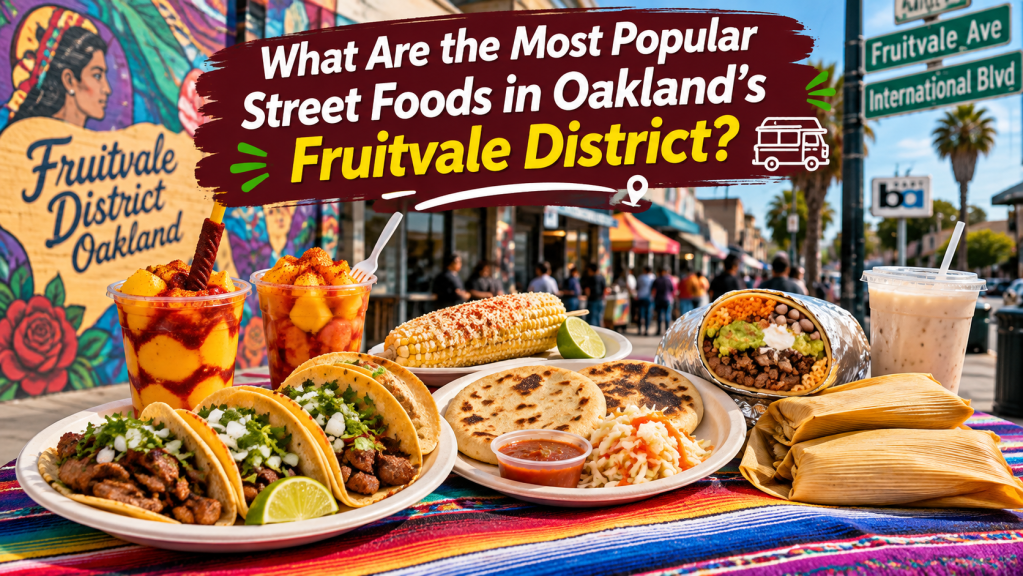
Oakland’s Fruitvale District is one of the most exciting places in the San Francisco Bay Area to experience authentic street food. Known for its colorful neighborhoods, Mexican heritage, family-owned food trucks, and diverse Latin American communities, Fruitvale offers an incredible variety of affordable, flavorful dishes.
From sizzling carne asada tacos and oversized burritos to handmade Salvadoran pupusas, Honduran baleadas, and refreshing Mexican fruit drinks, the neighborhood has become a destination for anyone who appreciates traditional street cooking.
What makes Fruitvale special is that its street food represents more than a convenient meal. It reflects generations of family recipes, immigrant entrepreneurship, cultural traditions, and the strong sense of community that defines East Oakland.
Whether you’re a longtime Oakland resident or visiting the East Bay for the first time, exploring Fruitvale’s street food scene is one of the best ways to experience the neighborhood’s culinary identity.
Why Is Oakland’s Fruitvale District Famous for Street Food?
Fruitvale has been a center of Oakland’s Mexican and Latin American communities for decades.
The neighborhood’s commercial streets, particularly International Boulevard, Fruitvale Avenue, and Foothill Boulevard, are known for their restaurants, markets, sidewalk vendors, and food trucks.
Unlike neighborhoods where food trucks are primarily associated with trendy dining concepts, Fruitvale’s street food culture developed around traditional cooking and neighborhood businesses.
Many vendors specialize in recipes associated with particular regions of Mexico or Central America.
For example, one truck might serve Jalisco-style tacos, while another specializes in Guerrero-style tamales. Nearby vendors may prepare Salvadoran pupusas or Guatemalan sandwiches.
This regional diversity is one reason Fruitvale has earned recognition as an important Bay Area street food destination.
The neighborhood also played a significant role in Oakland’s history of mobile food vending, helping establish the taco truck as a recognizable part of the city’s culinary culture.
1. Authentic Mexican Street Tacos
Street tacos are arguably the most recognizable food associated with Oakland’s Fruitvale District.
These tacos are generally served on small corn tortillas and filled with freshly cooked meat, chopped onions, cilantro, and salsa.
Unlike Americanized tacos loaded with shredded cheese, lettuce, and sour cream, traditional Mexican street tacos emphasize the flavor of the meat and the freshness of their toppings.
Popular taco varieties in Fruitvale
Carne Asada Tacos
Carne asada tacos feature grilled beef seasoned with salt, spices, and sometimes citrus. The meat is chopped into small pieces and served with fresh cilantro, onions, and salsa.
Al Pastor Tacos
Al pastor features marinated pork traditionally cooked on a vertical spit. The pork develops flavorful, lightly crisp edges and is sometimes served with pineapple.
Carnitas Tacos
Carnitas are made with pork slowly cooked until tender. Some portions develop crispy edges that contrast with the juicy interior.
Lengua Tacos
Lengua tacos contain beef tongue that has been slowly cooked until tender. This traditional filling is appreciated for its rich flavor and delicate texture.
Tripas Tacos
Tripas tacos are made from carefully cleaned and cooked beef intestines, sometimes crisped on a hot griddle.
Cabeza Tacos
Cabeza tacos traditionally use meat from the beef head, including cheek meat, which becomes tender during slow cooking.
Why are Fruitvale tacos so popular?
The appeal comes from the combination of traditional preparation, fresh ingredients, bold salsa, and the neighborhood’s long-established taco truck culture.
For many Oakland residents, stopping at a neighborhood taco truck is a familiar part of everyday life.
2. Oakland-Style Super Burritos
Although tacos receive much of the attention, burritos are another major part of Fruitvale’s street food scene.
Oakland’s taco trucks frequently serve generous burritos wrapped in large flour tortillas.
A typical super burrito may include:
-
Carne asada, carnitas, chicken, or another protein
-
Mexican rice
-
Beans
-
Salsa
-
Cheese
-
Sour cream
-
Guacamole
Some vendors also offer grilled onions, spicy peppers, or additional meat.
What makes Fruitvale burritos different?
Fruitvale burritos share many characteristics with San Francisco’s Mission-style burritos, including generous portions and tightly wrapped flour tortillas.
However, individual Fruitvale vendors often emphasize regional meat preparations, distinctive salsas, and recipes developed within their own families.
The result is a neighborhood where two nearby burrito trucks can offer noticeably different flavors.
For visitors looking for a substantial meal, a carne asada super burrito is an excellent introduction to Fruitvale’s food truck culture.
3. Traditional Mexican Tamales
Tamales are among the most important traditional foods available in Fruitvale.
They are made from seasoned corn masa filled with meat, cheese, vegetables, or other ingredients, then wrapped and steamed.
Depending on the regional tradition, tamales may be wrapped in corn husks or banana leaves.
Popular tamale fillings
Pork in Red Chile Sauce
Tender pork is combined with a flavorful red chile sauce and enclosed in soft masa.
Chicken in Green Salsa
Shredded chicken is mixed with tangy salsa verde for a balanced combination of savory and slightly acidic flavors.
Rajas con Queso
Roasted chile peppers and cheese create a popular meatless filling.
Mole Tamales
These tamales feature meat and rich mole sauce, which may include dried chiles, spices, seeds, and other regional ingredients.
Why are tamales popular in Fruitvale?
Tamales are convenient, portable, filling, and closely connected to Mexican family traditions.
They are especially appealing as a breakfast or lunch, often accompanied by warm atole or champurrado.
Fruitvale’s tamale vendors help preserve regional preparations that might otherwise be difficult to find outside family kitchens.
4. Salvadoran Pupusas
One of the most distinctive additions to Fruitvale’s street food culture is the Salvadoran pupusa.
Pupusas are thick, handmade flatbreads typically prepared with corn masa, although rice-flour versions are also traditional.
The dough is filled before cooking on a hot griddle.
Common pupusa fillings
Pupusas de Queso
Filled with melted cheese.
Pupusas Revueltas
A combination of cheese, beans, and seasoned pork.
Pupusas de Frijol con Queso
Refried beans and cheese enclosed in soft masa.
Pupusas de Loroco
Cheese combined with loroco, an edible Central American flower bud.
Pupusas are traditionally served with curtido, a lightly fermented or pickled cabbage slaw, and a tomato-based salsa.
What makes pupusas special?
The contrast between the slightly crisp exterior, tender masa, and warm filling makes pupusas especially satisfying.
They also highlight Fruitvale’s cultural diversity.
While Mexican food remains central to the neighborhood’s identity, Salvadoran vendors contribute their own traditions to Oakland’s growing street food landscape.
5. Honduran Baleadas
Baleadas have become another recognizable part of Fruitvale’s Central American street food offerings.
This Honduran specialty consists of a large, soft flour tortilla folded around a filling.
The simplest version traditionally contains refried beans, crema, and crumbled cheese.
More elaborate baleadas may include scrambled eggs, avocado, or meat.
Why are baleadas becoming popular?
Baleadas offer a combination of simplicity, affordability, and satisfying flavors.
The handmade flour tortilla is particularly important. It should be soft, flexible, and substantial enough to hold the fillings.
For someone familiar with Mexican burritos or quesadillas, a baleada offers a different Central American interpretation of a filled tortilla.
6. Mexican Elote and Esquites
Corn is an essential ingredient in Mexican street food, and Fruitvale offers several ways to enjoy it.
Two popular preparations are elote and esquites.
Elote
Elote is grilled or boiled corn on the cob commonly dressed with mayonnaise or crema, cheese, chile powder, and lime juice.
The combination creates a balance of sweetness, creaminess, saltiness, and acidity.
Esquites
Esquites feature corn kernels served in a cup with seasonings and toppings.
Depending on the vendor, the corn may be simmered or sautéed before being combined with lime, chile, cheese, and creamy condiments.
Why are these popular street snacks?
Both dishes are easy to eat while exploring the neighborhood.
They also provide a lighter alternative to tacos, burritos, and other substantial meals.
7. Mexican Tortas and Guatemalan Shucos
Sandwiches are another important part of Fruitvale’s street food scene.
Mexican tortas are typically made with crusty rolls filled with meat, vegetables, and condiments.
Common fillings include carne asada, milanesa, carnitas, and ham.
Some tortas include avocado, beans, cheese, lettuce, tomato, and jalapeños.
What is a Guatemalan shuco?
A shuco is a Guatemalan street sandwich typically prepared with toasted bread, grilled meat or sausage, cabbage, guacamole, and sauces.
Shucos offer a distinctive alternative to Mexican tortas.
Their combination of smoky meat, crunchy vegetables, and creamy toppings has helped introduce more Bay Area diners to Guatemalan street cooking.
8. Quesabirria Tacos
Quesabirria tacos have become a recognizable specialty throughout the Bay Area, including Oakland.
They combine slow-cooked birria meat, melted cheese, and tortillas that are often dipped in seasoned cooking fat before being crisped on a griddle.
The tacos are commonly served with consommé, a flavorful broth used for dipping.
What makes quesabirria so flavorful?
The meat is cooked with dried chiles, aromatics, herbs, and spices until tender.
The seasoned broth adds depth, while the griddled tortilla develops a crisp exterior.
Melted cheese brings richness and helps bind the filling together.
The combination of tender meat, crunchy tortilla, cheese, and broth makes quesabirria a particularly satisfying street food.
9. Mexican Huaraches
Huaraches are another traditional Mexican specialty found in Fruitvale’s street food scene.
They begin with an elongated oval of corn masa, shaped somewhat like the sole of a sandal.
The masa is cooked on a griddle and topped with ingredients such as:
-
Refried beans
-
Grilled meat
-
Salsa verde or salsa roja
-
Shredded lettuce or cabbage
-
Crumbled cheese
-
Mexican crema
Some versions include chicken tinga, chorizo, or carne asada.
How are huaraches different from tacos?
A taco uses a relatively thin tortilla folded around a filling.
A huarache has a thicker masa base that supports toppings.
This gives huaraches a heartier texture and makes them closer to an open-faced masa dish.
For visitors interested in exploring Mexican foods beyond tacos and burritos, huaraches are worth trying.
10. Fresh Mexican Fruit Cups
Fruit vendors are an important part of traditional Mexican street food culture.
Fruit cups offer a refreshing contrast to the neighborhood’s grilled meats and rich dishes.
Common ingredients include mango, watermelon, pineapple, cucumber, jicama, and cantaloupe.
The fruit may be served plain or topped with lime juice, chile powder, and chamoy.
Why is chile added to fruit?
Mexican fruit preparations frequently combine sweetness, acidity, salt, and heat.
Chile seasoning enhances the natural sweetness of ripe fruit, while lime adds brightness.
Chamoy contributes a tangy, sweet, salty, and spicy flavor.
The result is a snack that is refreshing without being bland.
11. Mangonadas and Mexican Frozen Treats
Fruitvale is also known for Mexican-style frozen desserts.
One of the most recognizable is the mangonada.
A mangonada typically combines mango sorbet or frozen mango with chamoy, chile seasoning, and sometimes fresh mango.
A tamarind candy straw is often added.
Other popular frozen treats
Raspados
Mexican shaved ice flavored with fruit syrups or other sweet toppings.
Paletas
Mexican ice pops made with fruit, milk, cream, or other ingredients.
Nieves
Traditional Mexican frozen desserts, often available in fruit flavors.
Fruit Sorbets
Refreshing frozen preparations featuring mango, guava, lime, or other fruits.
These desserts are particularly appealing during warm Oakland afternoons.
They also demonstrate how Fruitvale’s street food culture extends beyond savory meals.
12. Mexican Aguas Frescas
No exploration of Fruitvale street food would be complete without traditional Mexican beverages.
Aguas frescas are refreshing drinks commonly prepared with fruit, water, and sweetener.
Some varieties are made from flowers, seeds, or grains instead.
Popular aguas frescas
Horchata
A creamy, cinnamon-flavored drink commonly made from rice.
Agua de Jamaica
A tart, ruby-red drink prepared from dried hibiscus flowers.
Agua de Tamarindo
A sweet-and-sour beverage made from tamarind.
Agua de Sandía
A refreshing watermelon drink.
Agua de Piña
A tropical pineapple beverage.
Agua de Melón
A lightly sweet melon drink.
These beverages pair especially well with spicy tacos, grilled meats, and rich burritos.
13. Tacos de Canasta
Tacos de canasta, sometimes called basket tacos, are a traditional Mexican street food that deserves more attention.
Unlike tacos cooked individually immediately before serving, tacos de canasta are filled, folded, and arranged together in an insulated basket or container.
Warm seasoned oil and steam help soften the tortillas while allowing the flavors to develop.
Common fillings include potatoes, beans, chicharrón, and adobo-seasoned meats.
Why are basket tacos different?
Their texture is soft rather than crispy.
The tortillas absorb some of the flavorful oil and moisture, creating a distinctive eating experience.
Tacos de canasta are especially associated with quick breakfasts and lunches in Mexico.
Their presence in Fruitvale reflects the neighborhood’s variety of regional Mexican cooking traditions.
14. Grilled Chicken and Carne Asada Plates
Not every popular street food in Fruitvale is served inside a tortilla.
Some vendors specialize in grilled meats prepared over charcoal or open flames.
Popular choices include pollo al carbón, carne asada plates, grilled sausages, and mixed-meat platters.
These dishes may be accompanied by rice, beans, tortillas, grilled onions, and salsa.
What makes street-grilled meats special?
Charcoal grilling creates smoky flavors and caramelized surfaces that are difficult to reproduce with ordinary indoor cooking.
The aroma of meat cooking over an open grill is also part of the street food experience.
For families or groups, grilled meat plates can be a practical option because they provide enough food to share.
15. Mexican Seafood Street Food
Fruitvale’s street food offerings also include Mexican seafood specialties.
Coastal Mexican cooking traditions have influenced several Oakland food trucks and casual eateries.
Popular seafood dishes
Ceviche
Fish or shrimp prepared with citrus juice, onions, cilantro, and other ingredients. Fish ceviche is often made with raw fish cured in citrus; proper refrigeration and safe handling remain essential.
Aguachile
A spicy seafood preparation commonly featuring shrimp, lime juice, fresh chiles, and cucumber.
Fish Tacos
Fish served in tortillas with cabbage, salsa, and creamy sauce.
Shrimp Tacos
Seasoned shrimp paired with tortillas, vegetables, and sauces.
Tostadas de Ceviche
Crispy tortillas topped with ceviche and fresh garnishes.
Seafood specialties add another layer of diversity to Fruitvale’s street food landscape.
Where Can You Find Popular Street Food in Fruitvale?
Several streets and commercial corridors are especially important to the neighborhood’s food culture.
International Boulevard
International Boulevard is one of Fruitvale’s best-known food corridors.
Visitors can find traditional taco trucks, taquerias, tamale vendors, and restaurants specializing in regional Mexican cuisine.
Fruitvale Avenue
Fruitvale Avenue connects several important neighborhood shopping and dining areas.
The surrounding streets offer Mexican restaurants, food trucks, markets, and dessert shops.
Foothill Boulevard
Foothill Boulevard has developed a particularly notable Central American street food scene.
Vendors along portions of the corridor have offered Guatemalan sandwiches, Salvadoran pupusas, Honduran baleadas, and Mexican specialties.
Fruitvale Village
Located near the Fruitvale BART station, Fruitvale Village provides access to restaurants, markets, and traditional Mexican frozen treats.
It is a convenient starting point for visitors arriving by public transportation.
Street vendor locations and operating schedules can change, so visitors should confirm availability before making a special trip.
What Is the Best Street Food to Try First in Fruitvale?
For someone visiting Fruitvale for the first time, the best approach is to sample several different foods rather than ordering one large meal.
Start with traditional carne asada or al pastor tacos to experience the neighborhood’s established taco truck culture.
Next, try a Salvadoran pupusa or Honduran baleada to explore the Central American influences that have become increasingly visible in Fruitvale.
A tamale or huarache provides another example of traditional masa-based cooking.
Finish with a mangonada, fruit cup, or refreshing agua fresca.
This combination offers a broad introduction to the flavors that define Fruitvale’s food scene.
Is Street Food in Oakland’s Fruitvale District Affordable?
Fruitvale has long been associated with accessible, everyday food.
Many vendors focus on satisfying portions, traditional ingredients, and casual service rather than elaborate restaurant presentations.
Tacos, tamales, pupusas, and fruit snacks can be convenient choices for smaller meals.
Burritos, tortas, baleadas, and grilled meat plates tend to provide more substantial portions.
However, prices vary by vendor, ingredients, portion size, and operating costs.
Visitors should not assume every food truck is inexpensive simply because it serves street food.
Comparing menus before ordering is the easiest way to find an option that fits your budget.
What Makes Fruitvale Street Food Different From Other Bay Area Neighborhoods?
Fruitvale’s food culture stands out because of its history, regional diversity, and connection to the surrounding community.
Strong Mexican culinary traditions
Fruitvale has an established taco truck culture shaped by generations of Mexican and Mexican American residents and business owners.
Growing Central American influences
Salvadoran, Honduran, and Guatemalan food vendors have added dishes that expand the neighborhood’s culinary identity.
Family-owned businesses
Many street food operations are small businesses built around family recipes and hands-on cooking.
Regional specialties
Instead of offering only familiar Americanized Mexican dishes, vendors frequently prepare foods associated with specific regions and communities.
Neighborhood atmosphere
Street food in Fruitvale is closely connected to daily neighborhood life.
Food trucks and sidewalk stands serve workers, families, commuters, and visitors, creating gathering places where people can share food and conversation.
This combination gives Fruitvale a culinary character that differs from more tourism-focused dining districts.
Frequently Asked Questions About Fruitvale Street Food
What food is Oakland’s Fruitvale District most famous for?
Fruitvale is especially famous for Mexican street tacos, burritos, and tamales. The neighborhood is also recognized for Salvadoran pupusas, Honduran baleadas, and other Central American street foods.
Are there authentic Mexican taco trucks in Fruitvale?
Yes. Fruitvale has a long history of Mexican taco trucks serving traditional fillings such as carne asada, al pastor, carnitas, lengua, cabeza, and tripas.
Can you find Salvadoran food in Fruitvale?
Yes. Salvadoran food is part of Fruitvale’s diverse culinary scene. Pupusas are among the most recognizable Salvadoran specialties available in the area.
What is the best dessert to try in Fruitvale?
Mangonadas, Mexican ice cream, paletas, and raspados are excellent choices for anyone interested in traditional Mexican sweets.
Is Fruitvale a good neighborhood for food lovers?
Yes. Fruitvale offers a wide range of Mexican and Central American dishes, including regional specialties that are less common in other parts of the Bay Area.
Can you explore Fruitvale’s street food without a car?
Yes. The Fruitvale BART station provides public transportation access to the neighborhood. Several dining and shopping areas are within walking distance, although some food corridors require a longer walk or a connecting bus ride.
What is the difference between Fruitvale street food and San Francisco Mission District food?
Both neighborhoods are known for Mexican cuisine and substantial burritos. Fruitvale is particularly associated with its longstanding taco truck culture and its growing variety of Central American sidewalk vendors, while San Francisco’s Mission District is especially famous for Mission-style burritos.
Final Thoughts: Why Fruitvale Is One of Oakland’s Best Street Food Destinations
Oakland’s Fruitvale District represents one of the East Bay’s most distinctive food cultures.
Its streets bring together traditional Mexican tacos, hearty burritos, handmade tamales, Salvadoran pupusas, Honduran baleadas, Guatemalan sandwiches, grilled meats, seafood specialties, and colorful frozen desserts.
What makes the neighborhood memorable is not simply the number of foods available.
It is the connection between food, family, tradition, and community.
Every taco truck, sidewalk stand, and family-operated kitchen contributes something to the neighborhood’s identity.
For longtime Oakland residents, these foods are part of everyday life. For visitors, they offer an opportunity to discover the cultural traditions that have shaped East Oakland for generations.
If you want to experience some of the most flavorful and culturally diverse street food in the San Francisco Bay Area, Oakland’s Fruitvale District deserves a place on your list.
Leave a Reply