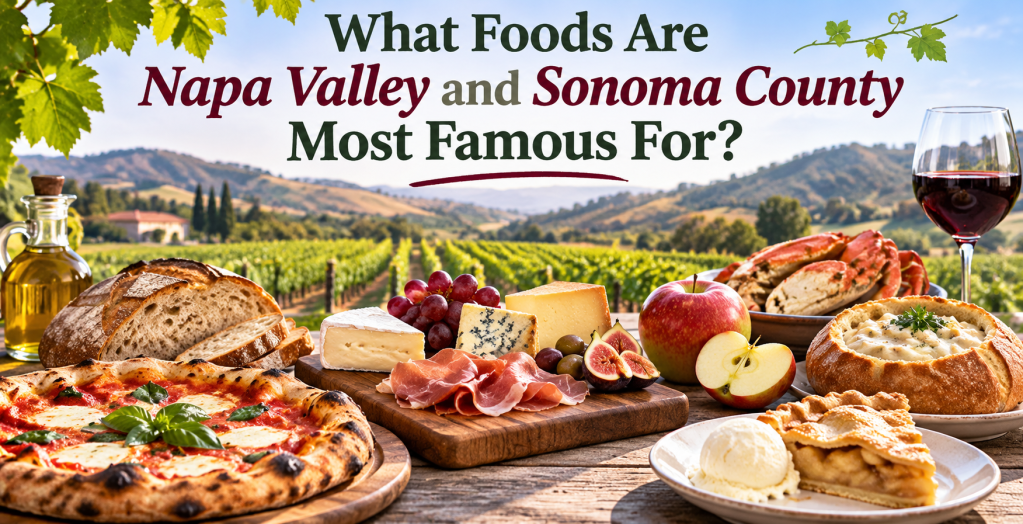
California’s wine country is famous for much more than its vineyards. Napa Valley and Sonoma County are two of Northern California’s most celebrated food destinations, offering everything from artisan cheeses and farm-fresh produce to wood-fired pizzas, gourmet burgers, fresh seafood, and traditional California comfort food.
Although both regions are internationally recognized for their wines, their food cultures are equally impressive. Napa Valley is especially known for upscale farm-to-table dining, fine cheeses, and sophisticated California cuisine, while Sonoma County combines agricultural traditions, coastal seafood, artisan bread, and rustic country cooking.
Whether you are planning a weekend getaway, exploring Northern California’s culinary history, or simply wondering what foods make these regions special, there are plenty of delicious discoveries waiting throughout wine country.
What Makes Napa Valley and Sonoma County Food So Special?
The secret behind Napa and Sonoma’s famous food culture begins with their geography.
Both regions benefit from Northern California’s Mediterranean climate, fertile agricultural land, and proximity to the Pacific Ocean. Warm days, cool evenings, and varied growing conditions support an impressive range of fruits, vegetables, herbs, and other agricultural products.
Local farms produce everything from tomatoes and squash to apples, berries, olives, and specialty greens.
Sonoma County also has a long history of dairy farming, poultry production, orchards, and coastal fishing. Napa Valley’s agricultural identity centers heavily on grapes, but its restaurants have developed a reputation for combining exceptional ingredients with innovative cooking techniques.
Together, these traditions have helped create one of America’s most distinctive regional food cultures.
1. Artisan Cheese
One of the most famous foods associated with Sonoma County is artisan cheese.
The region’s dairy farming history stretches back generations, and its cheesemakers have helped establish Northern California as a major destination for handcrafted dairy products.
Popular cheeses produced in Sonoma County and the surrounding North Bay include:
-
Fresh goat cheese
-
Aged cheddar
-
Brie-style cheeses
-
Triple-cream cheeses
-
Artisan blue cheese
-
Monterey Jack varieties
-
Soft-ripened cow’s milk cheeses
Sonoma County’s cheesemaking reputation is closely associated with producers such as Laura Chenel and Sonoma Valley’s Vella Cheese Company.
Napa Valley also has a strong artisan cheese culture, with specialty markets and restaurants featuring locally produced and imported cheeses.
Why is artisan cheese so popular in wine country?
Cheese pairs naturally with the region’s wines, making it a staple of tasting rooms, restaurants, picnic baskets, and gourmet food shops.
A simple platter of artisan cheese, sourdough bread, fresh fruit, and nuts captures the relaxed elegance of Northern California wine country.
2. Farm-to-Table California Cuisine
Farm-to-table dining is one of Napa Valley’s defining culinary traditions.
The concept focuses on using fresh, seasonal ingredients sourced from nearby farms and producers whenever possible.
Instead of relying on complicated preparations, many Napa Valley restaurants emphasize natural flavors and carefully selected ingredients.
Common farm-to-table dishes include roasted seasonal vegetables, grilled local meats, fresh salads, handmade pasta, and dishes featuring herbs harvested directly from restaurant gardens.
A typical wine country dinner might include:
-
Roasted chicken with rosemary and garlic
-
Grilled vegetables with olive oil
-
Fresh tomato and burrata salad
-
Handmade pasta with seasonal mushrooms
-
Slow-braised beef with local root vegetables
-
Fresh berry desserts
Restaurants such as The French Laundry in Yountville helped bring international attention to Napa Valley’s sophisticated culinary scene.
However, farm-to-table dining is not limited to expensive restaurants. Small cafés, neighborhood restaurants, and family-owned establishments throughout Napa and Sonoma also embrace seasonal cooking.
3. Sonoma County Gravenstein Apples
Sonoma County is particularly famous for its Gravenstein apples.
These apples have been grown in the region for generations, especially around Sebastopol in western Sonoma County.
Gravenstein apples are prized for their balanced sweet-tart flavor, aromatic flesh, and versatility in cooking.
They are especially popular for:
-
Homemade apple pies
-
Apple crisps
-
Fresh applesauce
-
Apple butter
-
Apple cider
-
Apple turnovers
-
Baked apples
Unlike some apple varieties that are primarily grown for storage and long-distance shipping, Gravensteins have a relatively short harvest season and can be delicate.
Their seasonal availability makes them particularly special to local residents.
The annual Gravenstein Apple Fair in Sonoma County celebrates the area’s agricultural heritage and the importance of this historic fruit.
For anyone interested in authentic Sonoma County food traditions, a homemade Gravenstein apple pie is an excellent place to start.
4. Fresh Pacific Coast Seafood
Sonoma County’s coastline gives the region access to some of Northern California’s most recognizable seafood traditions.
Bodega Bay is especially associated with fishing, seafood restaurants, and coastal food culture.
Popular seafood dishes include Dungeness crab, clam chowder, grilled fish, oysters, and seafood sandwiches.
Dungeness Crab
Dungeness crab is one of Northern California’s most celebrated seafood specialties.
The crab has tender, sweet meat that works beautifully in simple preparations.
Popular dishes include cracked crab with melted butter, crab cakes, crab sandwiches, and seafood salads.
Availability depends on fishing seasons and regulations.
Clam Chowder
Creamy clam chowder is another favorite along the Sonoma Coast.
Many coastal restaurants serve thick chowder with potatoes, clams, onions, and cream.
Some establishments serve it in sourdough bread bowls, combining two beloved Northern California food traditions.
Fresh Oysters
Oysters are an important part of the broader North Bay coastal food culture, particularly around Tomales Bay in neighboring Marin County.
They are often enjoyed raw with lemon or mignonette sauce, grilled with garlic butter, or baked with herbs.
Together, these seafood traditions make the Sonoma Coast an important part of the region’s culinary identity.
5. Wood-Fired Pizza
Wood-fired pizza has become a favorite throughout Napa Valley and Sonoma County.
The region’s Italian influences, artisan food culture, and access to seasonal produce make pizza a natural fit.
Unlike heavily topped American-style pizzas, many wine country pizzas emphasize thin crusts, fresh ingredients, and balanced flavors.
Popular toppings include:
-
Fresh mozzarella
-
Heirloom tomatoes
-
Basil
-
Roasted garlic
-
Wild mushrooms
-
Prosciutto
-
Arugula
-
Goat cheese
-
Caramelized onions
The pizzas are often cooked at high temperatures in wood-fired ovens, creating crisp edges, lightly charred crusts, and tender centers.
A particularly popular combination is fresh mozzarella, roasted tomatoes, basil, and extra-virgin olive oil.
Sonoma County’s historic Italian communities have also contributed to the region’s appreciation for traditional pizza, pasta, and rustic Italian cooking.
6. Wine Country Charcuterie Boards
Charcuterie boards have become closely associated with Napa Valley and Sonoma County dining.
These beautifully arranged platters combine cured meats, cheeses, fruits, nuts, and bread into a meal designed for sharing.
A traditional wine country charcuterie board might include:
-
Prosciutto
-
Salami
-
Artisan goat cheese
-
Aged cheddar
-
Fresh grapes
-
Dried figs
-
Toasted almonds
-
Olives
-
Sourdough crackers
-
Fig jam
The appeal comes from combining contrasting flavors and textures.
Salty cured meats complement creamy cheeses, while fresh fruit and preserves provide sweetness.
Although charcuterie is not unique to Napa or Sonoma, the regions have embraced it as an essential part of their tasting-room and picnic culture.
7. Sonoma County Sourdough Bread
Northern California has a long and celebrated sourdough bread tradition.
Although San Francisco is the region most famously associated with sourdough, Sonoma County also has a strong artisan baking culture.
Local bakeries produce rustic loaves with crisp crusts, chewy interiors, and naturally fermented flavors.
Popular varieties include traditional country sourdough, whole-grain sourdough, seeded bread, and olive sourdough.
Sourdough is frequently served alongside cheese, soups, salads, and grilled meats.
One of the simplest wine country meals is a thick slice of toasted sourdough topped with fresh goat cheese, roasted tomatoes, and herbs.
The combination highlights the region’s appreciation for straightforward food made with quality ingredients.
8. Fresh Olive Oil and Olive-Based Dishes
Olive cultivation has become an important part of Napa and Sonoma’s agricultural identity.
The Mediterranean-style climate supports olive trees, and several regional producers make extra-virgin olive oil.
Fresh olive oil appears throughout wine country cooking.
It is commonly used for salad dressings, roasted vegetables, grilled fish, pasta, and bread dipping.
Popular olive-inspired dishes include marinated olives, olive tapenade, olive oil-roasted potatoes, and grilled vegetables finished with extra-virgin olive oil.
Some restaurants even incorporate olive oil into desserts.
Olive oil cake, for example, is a popular Mediterranean-inspired dessert that fits naturally into Northern California’s culinary style.
It typically has a tender texture and subtle richness, sometimes complemented by citrus, berries, or whipped cream.
9. Gourmet Burgers
Although Napa Valley is associated with fine dining, gourmet burgers have also become a recognizable part of its casual restaurant culture.
The area’s burgers often feature high-quality beef, artisan buns, specialty cheeses, and carefully prepared toppings.
Popular combinations include:
-
Grass-fed beef with aged cheddar
-
Bacon and caramelized onions
-
Mushroom and Swiss cheese
-
Blue cheese and arugula
-
Avocado and roasted garlic aioli
Gott’s Roadside, with its well-known Napa Valley presence, helped establish gourmet roadside burgers as a popular wine country dining experience.
The appeal is simple: familiar American comfort food prepared with the same attention to ingredients found in more upscale restaurants.
Gourmet burgers demonstrate that Napa Valley cuisine does not always have to be formal or expensive.
10. Sonoma County Poultry and Farm-Raised Meats
Sonoma County has a significant agricultural history involving poultry, livestock, and dairy farming.
Petaluma became especially famous for its egg and poultry industries during the late nineteenth and early twentieth centuries.
The city’s agricultural history helped establish the surrounding area as an important food-producing region.
Today, poultry and farm-raised meats remain part of Sonoma County’s culinary identity.
Popular preparations include herb-roasted chicken, grilled chicken with lemon, slow-roasted pork, and braised beef.
One classic Sonoma-inspired dinner is roasted chicken seasoned with garlic, rosemary, thyme, and olive oil.
Served with seasonal vegetables and rustic bread, it represents the simple, satisfying cooking associated with Northern California farms.
11. Wild Mushroom Dishes
Mushrooms are another important ingredient in Napa and Sonoma cooking.
The surrounding forests and seasonal conditions support a variety of wild mushrooms, although availability varies by species and season.
Restaurants also use cultivated specialty mushrooms throughout the year.
Common varieties include chanterelles, porcini, oyster mushrooms, shiitake mushrooms, and cremini mushrooms.
Popular mushroom dishes include creamy mushroom risotto, wild mushroom pasta, mushroom flatbread, and sautéed mushrooms served over grilled steak.
Mushroom risotto is particularly well suited to wine country dining.
Its creamy texture and earthy flavor pair naturally with the region’s rustic Italian and contemporary California cooking traditions.
For home cooks, cultivated mushrooms can provide similar flavors without the risks associated with collecting unidentified wild varieties.
12. Heirloom Tomatoes and Seasonal Vegetable Dishes
Fresh vegetables are central to Napa Valley and Sonoma County food culture.
During the warmer months, farmers markets and restaurant menus frequently feature heirloom tomatoes, squash, peppers, eggplant, and leafy greens.
Heirloom tomatoes are especially popular because of their distinctive colors, textures, and flavors.
A classic wine country tomato salad often includes sliced heirloom tomatoes, fresh basil, mozzarella or burrata, olive oil, and sea salt.
Other popular vegetable dishes include roasted summer squash, grilled asparagus, stuffed peppers, and roasted eggplant.
The emphasis is usually on allowing the vegetables’ natural flavors to remain the centerpiece.
This approach reflects one of the fundamental principles of California cuisine: excellent ingredients often require only simple preparation.
13. Artisan Chocolate and Wine Country Desserts
Napa Valley and Sonoma County have developed a strong reputation for specialty desserts and handcrafted chocolates.
Chocolate shops, bakeries, and restaurants throughout the region offer sweets that complement the area’s gourmet food culture.
Popular treats include dark chocolate truffles, chocolate-covered fruit, salted caramel, chocolate ganache desserts, and handmade confections.
Wine country desserts frequently incorporate seasonal fruit.
Examples include:
-
Gravenstein apple crisp
-
Fresh berry shortcake
-
Peach cobbler
-
Fig tart
-
Lemon olive oil cake
-
Chocolate truffle cake
-
Seasonal fruit galettes
Many desserts emphasize locally grown ingredients and traditional baking techniques.
A warm fruit galette made with seasonal Sonoma County apples or berries is a particularly fitting finish to a wine country meal.
14. California-Style Sandwiches
Sandwiches are another popular part of Napa and Sonoma’s casual dining scene.
The region’s bakeries, cafés, and delicatessens often combine artisan bread with fresh vegetables, specialty cheeses, and high-quality meats.
Popular combinations include roasted turkey with avocado, grilled chicken with pesto, roast beef with horseradish, and fresh mozzarella with tomato and basil.
One especially appealing wine country sandwich features grilled chicken, avocado, arugula, roasted tomatoes, and garlic aioli on toasted sourdough.
The combination reflects Northern California’s appreciation for fresh ingredients and satisfying, uncomplicated meals.
Sandwiches are also convenient for picnics, vineyard visits, and exploring small towns throughout the region.
15. Italian-Inspired Wine Country Cooking
Italian immigrants and their descendants played an important role in shaping the agricultural and culinary traditions of Napa Valley and Sonoma County.
Their influence remains visible in local restaurants, family recipes, and food production.
Popular Italian-inspired dishes include handmade pasta, gnocchi, risotto, polenta, roasted meats, and tomato-based sauces.
Rustic Italian cooking works especially well with the region’s agricultural abundance.
A plate of handmade pasta with fresh tomatoes, basil, garlic, and olive oil is a perfect example.
Other favorites include braised short ribs over polenta, mushroom ravioli, and slow-cooked meat sauces.
These dishes represent the connection between Northern California’s food culture and the Mediterranean traditions that helped influence it.
What Is Napa Valley Most Famous for Eating?
Napa Valley is especially recognized for sophisticated California cuisine, seasonal farm-to-table dishes, gourmet burgers, artisan cheeses, and Italian-inspired food.
Its restaurant culture ranges from internationally recognized fine dining establishments to casual roadside eateries and neighborhood cafés.
Some of the most representative Napa Valley foods include artisan cheese platters, roasted seasonal vegetables, wood-fired pizza, mushroom risotto, gourmet burgers, and handmade pasta.
Rather than being defined by a single signature dish, Napa Valley is best known for its overall approach to food: seasonal ingredients, careful preparation, and a strong connection to local agriculture.
What Is Sonoma County Most Famous for Eating?
Sonoma County has a broader agricultural and coastal food identity.
Its most recognizable specialties include Gravenstein apples, artisan cheese, sourdough bread, fresh seafood, poultry, and farm-grown produce.
The Sonoma Coast is particularly associated with Dungeness crab, clam chowder, and fresh fish.
Sebastopol is closely connected with Gravenstein apples, while Petaluma has a historic reputation for poultry and eggs.
Sonoma’s food culture often feels rustic and deeply connected to its farming communities.
Napa Valley vs. Sonoma County: Which Has Better Food?
Both regions offer exceptional food, but their culinary personalities are somewhat different.
| Napa Valley | Sonoma County |
|---|---|
| Internationally recognized fine dining | Strong farm and coastal traditions |
| Upscale farm-to-table cuisine | Rustic California cooking |
| Gourmet burgers and artisan sandwiches | Fresh seafood and traditional comfort food |
| Wine-pairing menus | Artisan cheeses and agricultural specialties |
| Elegant restaurants and tasting experiences | Coastal eateries, bakeries, and farm markets |
Napa Valley may appeal more to visitors looking for destination restaurants and elaborate tasting menus.
Sonoma County may appeal more to travelers interested in coastal seafood, small-town bakeries, historic farms, and regional agricultural traditions.
However, both regions offer everything from casual meals to upscale dining, so the distinction is not absolute.
What Foods Should You Try on Your First Napa or Sonoma Visit?
If you are visiting Northern California wine country for the first time, focus on foods that reflect the region’s agricultural history and culinary traditions.
Start with a selection of locally produced cheeses served with fresh sourdough bread.
Next, try a seasonal farm-to-table dish featuring locally grown vegetables.
If you are visiting Sonoma County, look for Gravenstein apple desserts during apple season or fresh seafood along the coast.
In Napa Valley, consider a gourmet burger, handmade pasta, or a carefully prepared seasonal entrée.
For dessert, choose something featuring local fruit, artisan chocolate, or olive oil cake.
These foods provide a well-rounded introduction to what makes Napa Valley and Sonoma County special.
Can You Make Napa Valley and Sonoma County Foods at Home?
Absolutely.
One of the best things about wine country cooking is that many of its most recognizable dishes are surprisingly simple to recreate.
You do not need professional cooking equipment or expensive ingredients to capture the flavors of Northern California.
A few easy meal ideas include:
Wine Country Roasted Chicken: Season chicken with rosemary, garlic, thyme, olive oil, salt, and pepper. Roast until fully cooked and serve with seasonal vegetables.
Sonoma Apple Crisp: Combine sliced tart apples with cinnamon and a crumbly oat topping, then bake until golden.
Napa-Style Mushroom Risotto: Cook Arborio rice gradually with warm broth, sautéed mushrooms, Parmesan cheese, and butter.
California Tomato Salad: Arrange ripe tomatoes with fresh mozzarella, basil, olive oil, and a pinch of sea salt.
Sonoma Coast-Inspired Crab Sandwich: Combine cooked Dungeness crab with a light dressing and serve on toasted sourdough with lettuce.
The key is choosing fresh ingredients and allowing their natural flavors to stand out.
Frequently Asked Questions
What is the most famous food in Napa Valley?
Napa Valley does not have one universally recognized signature dish. It is best known for farm-to-table California cuisine, artisan cheeses, gourmet burgers, seasonal produce, and fine dining.
What food is Sonoma County best known for?
Sonoma County is especially famous for Gravenstein apples, artisan cheeses, coastal seafood, sourdough bread, and its agricultural heritage.
Is Napa Valley known for anything besides wine?
Yes. Napa Valley is internationally recognized for its restaurants, culinary tourism, olive oil, specialty foods, artisan products, and farm-to-table dining.
What seafood is famous in Sonoma County?
Dungeness crab, clam chowder, fresh fish, and other Pacific Coast seafood are particularly popular. Bodega Bay is one of the best-known coastal communities associated with the region’s seafood traditions.
What fruit is Sonoma County famous for?
Gravenstein apples are among Sonoma County’s most historically significant fruits. The Sebastopol area is especially associated with their cultivation.
Is Sonoma County cheaper for food than Napa Valley?
Sonoma County offers many casual dining options, but prices vary widely in both regions. Napa Valley has a particularly prominent luxury dining scene, while Sonoma County includes everything from inexpensive cafés to high-end restaurants.
What is a traditional Napa Valley dinner?
A representative Napa Valley dinner might include a seasonal vegetable salad, roasted chicken or grilled meat, fresh local produce, artisan bread, and a fruit-based dessert.
Are Napa Valley and Sonoma County good destinations for people who do not drink wine?
Yes. Both regions offer excellent restaurants, farmers markets, bakeries, cheese shops, coastal attractions, and agricultural experiences that do not require drinking alcohol.
Final Thoughts: The Famous Foods of Napa Valley and Sonoma County
Napa Valley and Sonoma County are two of Northern California’s most important culinary destinations, and their food traditions extend far beyond wine.
Napa Valley has built an international reputation around farm-to-table dining, gourmet restaurants, artisan ingredients, and innovative California cuisine.
Sonoma County offers an equally compelling food culture shaped by dairy farms, apple orchards, poultry farming, artisan bakeries, and the Pacific Coast.
From Gravenstein apple pie and fresh Dungeness crab to handmade pasta, wood-fired pizza, artisan cheese, and rustic sourdough bread, these regions offer a remarkable variety of flavors.
What makes their food especially memorable is not simply the quality of individual dishes. It is the connection between the land, the people who produce the ingredients, and the traditions that have developed over generations.
Ultimately, the foods Napa Valley and Sonoma County are most famous for tell the story of Northern California itself: fresh ingredients, agricultural heritage, coastal influences, and a love of good food prepared with care.
Leave a Reply