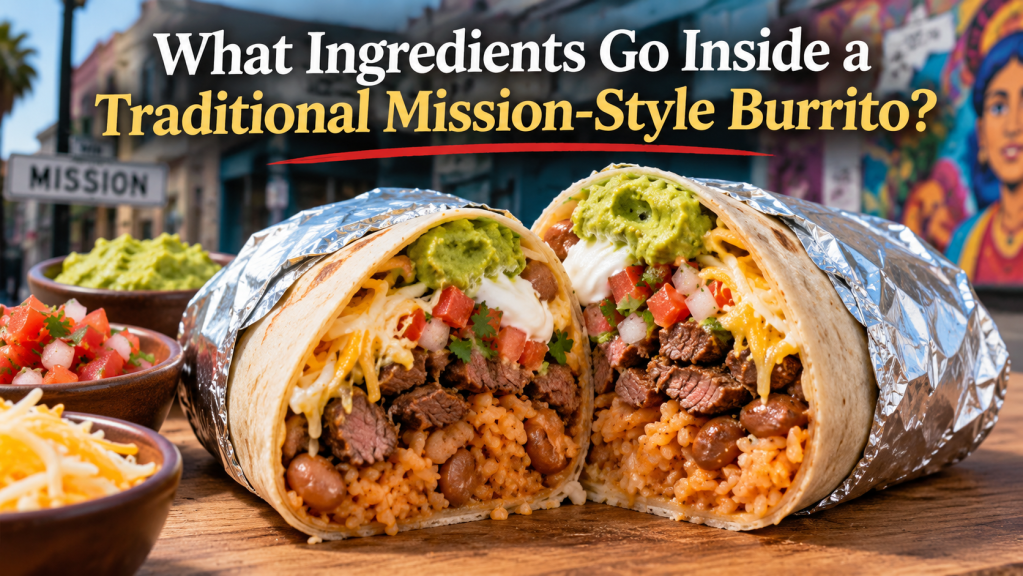
San Francisco is famous for its sourdough bread, fresh seafood, and diverse food culture, but one of its most recognizable culinary creations is the Mission-style burrito. Born in the city’s Mission District, this oversized, foil-wrapped burrito has become a California favorite and an influential part of Mexican-American cuisine.
Unlike smaller, simpler burritos, a traditional Mission-style burrito is known for its generous portions, carefully layered ingredients, and combination of flavors and textures. From seasoned meat and fluffy rice to creamy beans and fresh salsa, every ingredient contributes to the experience.
But what exactly goes inside a traditional Mission-style burrito? And which ingredients make it different from the burritos served elsewhere?
Understanding the classic ingredients is the first step toward recreating this San Francisco favorite at home.
What Is a Traditional Mission-Style Burrito?
A Mission-style burrito is a large flour tortilla filled with Mexican-inspired ingredients, rolled tightly, and typically wrapped in aluminum foil.
The style became popular in San Francisco’s Mission District during the 1960s, when neighborhood taquerias began serving substantial burritos designed to be filling, affordable, and convenient to eat.
Two establishments frequently associated with the early development of the Mission burrito are El Faro and La Cumbre Taqueria. Both helped establish the Mission District’s reputation for oversized burritos.
Although individual restaurants have their own recipes, the defining characteristics of a Mission-style burrito generally include:
-
An extra-large flour tortilla
-
Mexican-style rice
-
Seasoned beans
-
A choice of grilled or slow-cooked meat
-
Fresh salsa
-
Optional cheese, sour cream, guacamole, and other additions
-
A tightly rolled, foil-wrapped presentation
The combination creates a complete meal inside a single tortilla.
One important distinction is that not every traditional Mission burrito contains every available topping. Many taquerias distinguish between a regular burrito and a super burrito, with the super version including additional ingredients such as cheese, sour cream, and guacamole.
1. Extra-Large Flour Tortilla
The foundation of every Mission-style burrito is a large, soft flour tortilla.
Unlike smaller Mexican burritos, which may contain only a few ingredients, Mission-style burritos require enough tortilla space to hold substantial portions of rice, beans, meat, and toppings.
Most homemade versions work best with a flour tortilla approximately 12 to 14 inches in diameter.
A good tortilla should be:
-
Soft and flexible
-
Strong enough to hold heavy fillings
-
Large enough to fold securely
-
Slightly chewy without being tough
-
Warm before assembling the burrito
Many San Francisco taquerias warm their tortillas on a flat-top grill or steam them before filling.
Steaming is especially useful because it makes the tortilla flexible enough to stretch around the ingredients without tearing.
Why it matters: The tortilla is not simply a wrapper. Its size, texture, and flexibility are essential to creating the distinctive Mission-style burrito.
2. Mexican-Style Rice
Rice is one of the ingredients that distinguishes Mission-style burritos from many smaller burrito traditions.
Traditional Mission-style burritos commonly contain seasoned Mexican-style rice, although the exact preparation varies by taqueria.
The rice is usually cooked with ingredients such as:
-
Long-grain white rice
-
Tomato sauce or tomato puree
-
Chicken broth or vegetable broth
-
Garlic
-
Onion
-
Salt
-
A small amount of oil
Some restaurants serve lightly seasoned white rice instead.
The important characteristic is that the rice remains fluffy rather than sticky.
Individual grains should separate easily, allowing the rice to mix with the beans, meat, and salsa without creating a heavy, mushy filling.
Rice also absorbs juices from the meat and salsa, helping distribute flavor throughout the burrito.
How Much Rice Goes Inside?
For a large homemade Mission-style burrito, approximately ½ to ¾ cup of cooked rice is a practical starting point.
The amount can be adjusted depending on the tortilla size and the other fillings.
Too much rice can overpower the meat and make the burrito difficult to roll.
3. Pinto Beans or Black Beans
Beans are another essential ingredient in a traditional Mission-style burrito.
San Francisco taquerias commonly offer pinto beans, black beans, or refried beans.
Each option creates a slightly different flavor and texture.
Pinto Beans
Pinto beans are a classic choice because of their mild, earthy flavor and creamy texture.
They complement grilled beef, chicken, and pork without overpowering the other ingredients.
Black Beans
Black beans have a firmer texture and a slightly deeper, earthier flavor.
They work especially well with grilled chicken, vegetables, and spicy salsa.
Refried Beans
Refried beans create a smoother, creamier filling.
They also help bind the rice and meat together, although some people prefer whole beans for their distinct texture.
For a homemade Mission burrito, approximately ½ cup of cooked beans is usually enough.
The beans should be seasoned and moist but not excessively watery.
4. Carne Asada, Carnitas, or Other Seasoned Meat
Meat is often the centerpiece of a traditional Mission-style burrito.
Most San Francisco taquerias allow customers to choose their preferred protein.
Some of the most popular options include carne asada, carnitas, pollo asado, and al pastor.
Carne Asada
Carne asada is one of the most recognizable Mission burrito fillings.
It typically consists of grilled beef, often skirt steak or flank steak, seasoned with ingredients such as garlic, salt, pepper, citrus juice, and other spices.
The beef is grilled and chopped into bite-sized pieces before being added to the burrito.
Its smoky, savory flavor pairs particularly well with rice, pinto beans, and fresh salsa.
Carnitas
Carnitas are made from pork cooked slowly until tender.
The pork is traditionally prepared in its own fat, creating juicy meat with rich flavor.
Some preparations finish the pork at high heat to produce crispy edges.
Carnitas add a tender, savory texture that contrasts nicely with fluffy rice and fresh salsa.
Pollo Asado
Pollo asado is seasoned grilled chicken.
It commonly features garlic, citrus, chili powder, cumin, and other seasonings.
The chicken is grilled, chopped, and placed inside the burrito.
It is a popular alternative for people who prefer poultry over beef or pork.
Al Pastor
Al pastor is marinated pork influenced by Mexican spit-roasting traditions.
It often features dried chilies, achiote, garlic, vinegar, and spices.
Some preparations include pineapple for sweetness.
Its bold flavor works well with onions, cilantro, and salsa.
Other Protein Options
Depending on the taqueria, additional choices may include shredded beef, chorizo, lengua, grilled shrimp, or vegetarian fillings.
For a homemade burrito, approximately 4 to 6 ounces of cooked meat provides a generous portion.
5. Fresh Salsa
Salsa adds acidity, freshness, moisture, and heat to a Mission-style burrito.
Without salsa, the combination of tortilla, rice, beans, and meat can taste overly heavy.
San Francisco taquerias often provide several salsa options.
Pico de Gallo
Pico de gallo is a fresh salsa commonly made with:
-
Diced tomatoes
-
White onion
-
Fresh cilantro
-
Jalapeño or serrano pepper
-
Lime juice
-
Salt
It adds a crisp, refreshing contrast to warm ingredients.
Salsa Roja
Salsa roja is a red salsa typically prepared with tomatoes, dried or fresh chilies, garlic, and seasonings.
Depending on the recipe, it can be mild, smoky, or very spicy.
Salsa Verde
Salsa verde is commonly made with tomatillos, green chilies, onion, garlic, and cilantro.
Its tangy flavor complements grilled chicken, carnitas, and carne asada.
Many Mission District taquerias allow customers to choose the salsa that goes inside their burrito.
A few tablespoons are generally sufficient, although the ideal amount depends on the salsa’s consistency.
6. Cheese
Cheese is a popular addition, especially in a Mission-style super burrito.
Common choices include Monterey Jack, cheddar, or a shredded blend of cheeses.
Monterey Jack is particularly useful because it melts smoothly and has a mild flavor.
When placed against hot rice, beans, and meat, shredded cheese begins melting into the other ingredients.
This creates a creamy texture without overwhelming the burrito.
For a homemade super burrito, approximately ¼ cup of shredded cheese is a good starting point.
However, cheese is not required in every regular Mission-style burrito.
7. Sour Cream
Sour cream is another common super burrito ingredient.
Its cool, tangy flavor balances spicy salsa and richly seasoned meat.
It also adds moisture and a creamy texture.
A traditional taqueria-style super burrito may contain a generous spoonful of sour cream, although the exact amount varies.
For homemade preparation, 2 tablespoons usually provide enough creaminess without making the burrito excessively wet.
One important tip is to spread the sour cream across the filling rather than leaving it in one large spoonful.
This helps distribute the flavor throughout the burrito.
8. Guacamole or Fresh Avocado
Guacamole is one of the most popular additions to a Mission-style super burrito.
It adds richness, creaminess, and fresh avocado flavor.
Traditional guacamole often contains:
-
Ripe avocados
-
Lime juice
-
Salt
-
Chopped onion
-
Fresh cilantro
-
Jalapeño or serrano pepper
Some taquerias use a thinner avocado-based sauce instead of chunky guacamole.
Both styles complement grilled meat and spicy salsa.
For a homemade burrito, approximately 2 to 3 tablespoons of guacamole are usually enough.
Fresh avocado slices can also be used, although guacamole distributes more evenly throughout the filling.
9. Fresh Cilantro and Onion
Cilantro and onion are common ingredients in Mexican-American taqueria cooking.
They may appear inside the salsa or be added separately to the burrito.
Fresh cilantro provides a bright, herbal flavor.
Finely diced white onion contributes a crisp texture and slightly sharp taste.
These ingredients are particularly effective with carne asada, carnitas, and al pastor.
However, they are not mandatory additions to every Mission-style burrito.
Some taquerias include them automatically, while others allow customers to customize their orders.
10. Hot Sauce and Additional Toppings
Mission-style burritos are highly customizable.
Depending on the restaurant, customers may add hot sauce, jalapeños, extra salsa, or other toppings.
Popular options include:
-
Pickled jalapeños
-
Spicy red salsa
-
Roasted green salsa
-
Extra guacamole
-
Additional cheese
-
Grilled vegetables
-
Extra meat
Although customization is part of the Mission burrito experience, adding too many ingredients can make the burrito difficult to roll.
The best Mission-style burritos balance generous portions with a manageable structure.
What Is the Difference Between a Regular Mission Burrito and a Super Burrito?
One of the most common questions about San Francisco burritos concerns the difference between regular and super versions.
The distinction varies by restaurant, but a regular burrito generally contains the basic fillings, while a super burrito adds creamy toppings.
| Ingredient | Regular burrito | Super burrito |
|---|---|---|
| Large flour tortilla | Yes | Yes |
| Rice | Yes | Yes |
| Beans | Yes | Yes |
| Choice of meat | Yes | Yes |
| Salsa | Usually | Usually |
| Cheese | Varies | Usually |
| Sour cream | Optional | Usually |
| Guacamole | Optional | Usually |
Some restaurants also include lettuce or other vegetables in their super burritos.
However, lettuce is not a defining ingredient of the traditional Mission-style burrito.
The main difference is that the super burrito contains additional toppings that make it richer, creamier, and often larger.
How to Make a Traditional Mission-Style Burrito at Home
Recreating a Mission-style burrito at home is relatively straightforward once the ingredients are prepared.
The following recipe makes two generously filled burritos.
RECIPE
Ingredients
For the burritos:
-
2 extra-large flour tortillas (12 to 14 inches)
-
1½ cups cooked Mexican-style rice
-
1 cup cooked pinto beans or black beans
-
10 ounces cooked carne asada, chopped
-
½ cup pico de gallo or preferred salsa
-
½ cup shredded Monterey Jack cheese
-
¼ cup sour cream
-
¼ cup guacamole
-
2 tablespoons chopped fresh cilantro, optional
-
Hot sauce, to taste
-
Aluminum foil for wrapping
For a regular Mission burrito, omit the cheese, sour cream, and guacamole if desired.
Instructions
Step 1: Prepare the rice
Cook the rice with tomato, garlic, onion, broth, and seasonings until tender.
Fluff with a fork and keep warm.
Step 2: Prepare the beans
Heat the beans in a saucepan with a little water or broth.
Season with salt and any preferred spices.
Drain excess liquid if necessary.
Step 3: Cook the carne asada
Season steak with salt, pepper, garlic, and lime juice.
Grill or sear until it reaches your preferred doneness and a safe internal temperature.
Allow the meat to rest before chopping it into small pieces.
Step 4: Warm the tortillas
Heat each tortilla briefly on a skillet or steam it until soft and flexible.
Avoid overheating because a dry tortilla is more likely to tear.
Step 5: Add the rice and beans
Place the tortilla on a clean work surface.
Spoon the rice into the center, leaving enough room around the edges for folding.
Add the warm beans over the rice.
Step 6: Add the meat
Place the chopped carne asada over the beans.
Spread the meat evenly so each bite contains a balanced amount of filling.
Step 7: Add salsa and toppings
Spoon the salsa over the meat.
For a super burrito, add shredded cheese, sour cream, and guacamole.
Finish with cilantro or hot sauce if desired.
Step 8: Roll the burrito
Fold the left and right sides of the tortilla inward.
Bring the bottom edge over the filling and tuck it tightly underneath.
Continue rolling forward while keeping the sides folded.
The finished burrito should be compact and secure.
Step 9: Wrap in aluminum foil
Place the burrito on a sheet of aluminum foil and wrap it tightly.
The foil helps maintain the burrito’s shape, holds in warmth, and makes it easier to eat.
Serve immediately.
Why Are Mission-Style Burritos Wrapped in Foil?
The aluminum foil wrapping is one of the most recognizable characteristics of a San Francisco Mission burrito.
It serves several practical purposes.
First, foil helps hold the large burrito together after it has been rolled.
Second, it retains heat, keeping the rice, beans, and meat warm.
Third, it makes the burrito easier to transport and eat without spilling the ingredients.
Many people peel back the foil gradually while eating rather than removing it completely.
This keeps the remaining burrito securely wrapped.
The foil presentation has become closely associated with Mission District taquerias and the broader San Francisco burrito tradition.
What Ingredients Should You Avoid Putting in a Traditional Mission Burrito?
There are no universal rules preventing customization, but certain ingredients are less characteristic of the classic Mission-style burrito.
These include large amounts of shredded lettuce, French fries, nacho cheese sauce, and heavy queso-style toppings.
French fries, for example, are more closely associated with California burritos popularized in San Diego.
Similarly, burritos covered in melted cheese sauce are generally considered a different preparation from the handheld, foil-wrapped Mission style.
A traditional Mission burrito emphasizes rice, beans, meat, salsa, and optional creamy toppings.
Keeping the ingredients relatively simple allows the flavors to work together without overwhelming the tortilla.
What Makes Mission-Style Burrito Ingredients Different From Other Burritos?
The Mission-style burrito stands apart because of its size, combination of fillings, and preparation method.
In many parts of northern Mexico, burritos are traditionally smaller and may contain only one or two fillings, such as meat and beans.
A Mission-style burrito combines several ingredients into one substantial meal.
The rice and beans provide a hearty foundation, while the meat adds protein and savory flavor.
Salsa introduces acidity and freshness.
Optional cheese, sour cream, and guacamole create additional richness.
The oversized tortilla and foil wrapping make the entire combination portable.
This particular approach became closely associated with San Francisco and eventually spread to restaurants throughout California and beyond.
Tips for Making the Best Mission-Style Burrito
Even when using the correct ingredients, technique can determine whether the finished burrito tastes like something from a San Francisco taqueria.
Use Fresh, Warm Tortillas
A cold tortilla is more likely to crack when folded.
Warming or steaming makes it easier to create a tight, secure burrito.
Season Every Ingredient
Do not rely entirely on the meat or salsa for flavor.
Rice, beans, and protein should each taste good on their own.
Avoid Excess Liquid
Drain beans properly and use salsa in moderation.
Too much moisture can cause the tortilla to become soggy or tear.
Chop the Meat Into Small Pieces
Large pieces of steak can make a burrito difficult to eat.
Smaller pieces distribute more evenly throughout the filling.
Do Not Overfill the Tortilla
Mission-style burritos are large, but they still require enough tortilla space for folding.
Start with moderate portions and adjust based on the tortilla size.
Wrap the Burrito Tightly
A firm roll and secure foil wrapping help prevent the ingredients from falling out.
Serve While Warm
Mission burritos are especially satisfying when the rice, beans, and meat are hot and the optional cheese begins to melt.
Frequently Asked Questions About Mission-Style Burrito Ingredients
Do traditional Mission burritos contain rice?
Yes. Rice is a defining ingredient in the modern Mission-style burrito. Mexican-style seasoned rice is common, although individual taquerias may use different preparations.
What beans are traditionally used in Mission burritos?
Pinto beans, black beans, and refried beans are all common choices. The preferred type depends on the restaurant and customer.
Does a traditional Mission burrito contain cheese?
Not necessarily. Cheese is often included in a super burrito, while regular versions may contain only rice, beans, meat, and salsa.
What meat is most popular in a Mission-style burrito?
Carne asada and carnitas are especially popular choices. Grilled chicken, al pastor, and other proteins are also widely available.
Does a Mission-style burrito contain lettuce?
Some restaurants offer lettuce as an optional ingredient, but it is not essential to the traditional Mission-style burrito.
Is guacamole required in a Mission burrito?
No. Guacamole is a common addition to a super burrito but is not required in every Mission-style burrito.
What type of tortilla is used for Mission burritos?
An extra-large flour tortilla is standard. Homemade versions generally work best with tortillas measuring approximately 12 to 14 inches.
Are Mission-style burritos spicy?
They can be, but they do not have to be. The level of heat depends primarily on the salsa, meat seasoning, and additional hot sauce.
Can you make a vegetarian Mission-style burrito?
Absolutely. A vegetarian version can include rice, beans, grilled vegetables, salsa, guacamole, cheese, and sour cream. Plant-based alternatives can be used for dairy toppings.
What is the most important ingredient in a Mission burrito?
There is no single ingredient responsible for the entire experience. The combination of a large flour tortilla, rice, beans, seasoned filling, and salsa creates the recognizable Mission-style burrito.
Final Thoughts
A traditional Mission-style burrito is more than an oversized tortilla filled with random ingredients. It represents a distinctive part of San Francisco’s food culture, combining Mexican culinary influences with the generous portions and customizable approach that became popular in the Mission District.
The classic foundation consists of an extra-large flour tortilla, seasoned rice, beans, meat, and salsa. Cheese, sour cream, and guacamole are common additions, particularly in a super burrito.
Carne asada, carnitas, and grilled chicken are among the most popular proteins, while fresh salsa provides the brightness needed to balance the hearty ingredients.
What makes the Mission-style burrito special is not simply how much food it contains, but how those ingredients work together.
When prepared with well-seasoned fillings, a warm tortilla, and the proper rolling technique, a homemade Mission-style burrito can capture much of the flavor and character that has made this San Francisco creation famous.
Whether you prefer a straightforward carne asada burrito or a fully loaded super burrito with guacamole and sour cream, the traditional Mission-style combination remains one of the Bay Area’s most beloved contributions to American food culture.
Leave a Reply