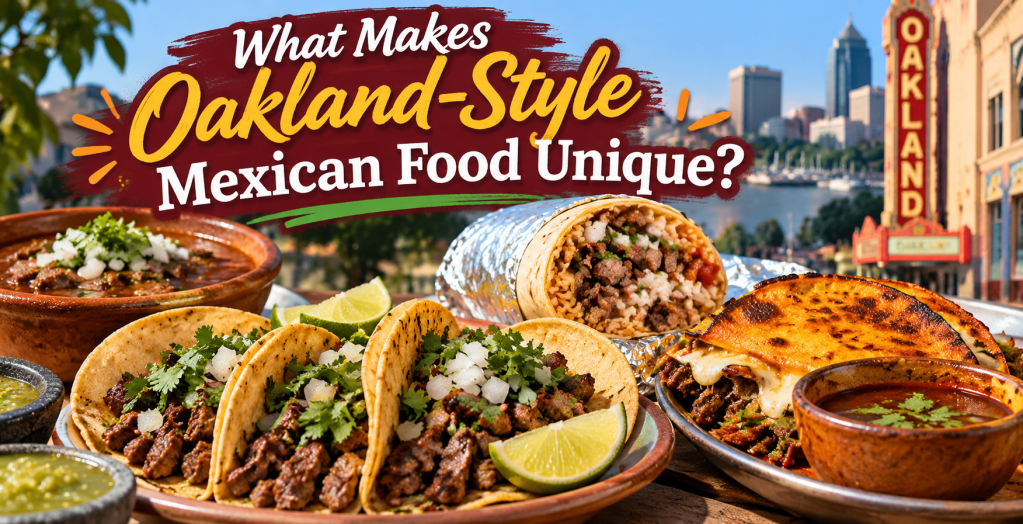
Oakland, California, has one of the most exciting and culturally diverse Mexican food scenes in the San Francisco Bay Area. From sizzling carne asada tacos and oversized burritos to traditional birria, handmade tortillas, and flavorful homemade salsas, Oakland’s Mexican food reflects generations of culinary traditions, immigration, neighborhood history, and local creativity.
While San Francisco is famous for its Mission-style burritos, Oakland has developed a Mexican food identity that emphasizes authentic regional flavors, street-food traditions, family-owned taquerias, and a strong connection to its Mexican American communities.
What makes Oakland-style Mexican food unique is not one particular recipe or cooking technique. Instead, it is the combination of traditional Mexican cooking, East Bay influences, neighborhood food culture, and the creativity of local cooks.
Whether you are visiting Oakland for the first time or exploring the food traditions of Northern California, understanding what makes Oakland’s Mexican cuisine special offers a delicious look into the city’s history and culture.
What Is Oakland-Style Mexican Food?
Oakland-style Mexican food refers to the diverse Mexican dishes, cooking traditions, and restaurant styles found throughout Oakland and the surrounding East Bay.
Unlike certain regional American food styles that follow a specific recipe, Oakland Mexican food does not have one universally recognized preparation method.
Instead, it represents a collection of culinary influences that include:
-
Traditional Mexican street tacos
-
Northern Mexican grilled meats
-
Jalisco-style birria
-
Mexican American taqueria burritos
-
Handmade corn tortillas
-
Freshly prepared salsas
-
Slow-cooked meats
-
Regional Mexican soups and stews
-
California-inspired Mexican dishes
-
Family recipes passed down through generations
Oakland’s Mexican food culture is especially visible in neighborhoods such as Fruitvale, where Mexican restaurants, bakeries, markets, and street-food businesses have become important parts of the community.
The result is a food scene that combines traditional Mexican cooking with the distinctive character of the East Bay.
1. Oakland Mexican Food Has Strong Roots in Fruitvale
One of the most important influences on Oakland’s Mexican food culture is the Fruitvale neighborhood.
Fruitvale has long been a center of Latino culture in Oakland, with Mexican restaurants, grocery stores, bakeries, and small businesses contributing to its identity.
The neighborhood is particularly known for its concentration of taquerias and traditional Mexican food establishments.
Why Is Fruitvale Famous for Mexican Food?
Fruitvale offers a variety of Mexican dishes representing different regional cooking traditions.
Visitors can find foods such as:
-
Carne asada tacos
-
Al pastor tacos
-
Carnitas burritos
-
Birria and consommé
-
Tamales
-
Pozole
-
Menudo
-
Tortas
-
Fresh aguas frescas
-
Mexican sweet breads
Many restaurants emphasize recipes influenced by the owners’ family histories and regional backgrounds.
This creates a dining experience where customers can explore different styles of Mexican cooking within a relatively small area.
Fruitvale’s food culture also extends beyond restaurants. Neighborhood markets, bakeries, and community celebrations help preserve the culinary traditions that make Oakland special.
2. Oakland Is Known for Its Street Taco Culture
One of the defining characteristics of Oakland’s Mexican food scene is its strong street taco tradition.
While burritos are extremely popular throughout the Bay Area, tacos remain central to Oakland’s Mexican dining culture.
Traditional street tacos generally feature smaller corn tortillas, flavorful meats, and simple toppings.
What Makes Oakland Street Tacos Special?
A typical Oakland street taco might include:
-
Two small corn tortillas
-
Freshly grilled or slow-cooked meat
-
Chopped white onions
-
Fresh cilantro
-
Homemade salsa
-
Lime wedges
The emphasis is on allowing the meat and salsa to provide most of the flavor.
Rather than loading tacos with numerous toppings, many Oakland taquerias follow a traditional approach that keeps the ingredients simple.
Popular Taco Fillings in Oakland
Carne asada: Grilled beef seasoned and cooked over high heat for a smoky, savory flavor.
Al pastor: Marinated pork traditionally cooked on a vertical spit and often served with pineapple.
Carnitas: Pork slowly cooked until tender, sometimes finished with crispy edges.
Birria: Richly seasoned meat cooked until tender and served in tacos or with flavorful broth.
Lengua: Beef tongue simmered until tender and commonly served with onions, cilantro, and salsa.
Tripas: Beef intestines prepared until tender or crispy, depending on the cooking style.
The availability of these traditional fillings helps distinguish Oakland’s taco culture from more Americanized interpretations of Mexican food.
3. Oakland Burritos Have Their Own East Bay Personality
San Francisco may receive much of the attention for Mission-style burritos, but Oakland has a thriving burrito culture of its own.
Oakland taquerias frequently serve large flour tortilla burritos filled with rice, beans, meat, salsa, and other ingredients.
However, there is no single standardized Oakland burrito recipe.
Different restaurants develop their own combinations, portion sizes, sauces, and cooking methods.
What Goes Inside an Oakland-Style Burrito?
A typical East Bay taqueria burrito may contain:
-
Large flour tortilla
-
Carne asada, carnitas, chicken, or another protein
-
Mexican-style rice
-
Pinto or black beans
-
Fresh salsa
-
Chopped onions
-
Cilantro
-
Cheese
-
Sour cream
-
Guacamole
Some restaurants serve simpler burritos containing meat, beans, and salsa, while others specialize in fully loaded super burritos.
How Are Oakland Burritos Different From San Francisco Burritos?
The differences are often more about individual restaurants than strict regional rules.
San Francisco’s Mission burrito is widely associated with oversized tortillas, generous fillings, and tightly wrapped construction.
Oakland restaurants serve many similar burritos, reflecting the shared culinary traditions of the Bay Area.
However, Oakland’s taqueria culture also places considerable emphasis on tacos, regional meat preparations, and traditional Mexican dishes beyond burritos.
The result is a food scene where burritos are important but do not define the entire culinary identity.
4. Grilled Meats Are an Important Part of Oakland Mexican Food
One reason Oakland Mexican food is so flavorful is the emphasis many restaurants place on carefully prepared meats.
Grilling, marinating, roasting, braising, and slow cooking are essential techniques in numerous Mexican culinary traditions.
Carne Asada
Carne asada is one of the most recognizable meats served at Oakland taquerias.
The beef is commonly marinated or seasoned with ingredients such as:
-
Lime juice
-
Garlic
-
Salt
-
Black pepper
-
Cilantro
-
Chili peppers
-
Oil
-
Citrus seasonings
The meat is grilled over high heat, developing browned edges and a smoky flavor.
It is then chopped or sliced for tacos, burritos, quesadillas, and plates.
Carnitas
Carnitas are traditionally prepared by slowly cooking pork in fat until the meat becomes tender.
Some preparations finish the pork at higher heat to create crispy edges.
The contrast between juicy meat and browned exterior pieces makes carnitas especially popular in tacos.
Al Pastor
Al pastor is another favorite.
The pork is marinated with dried chilies, spices, and other seasonings.
Traditional preparations cook the meat on a vertical spit called a trompo.
Thin slices are shaved from the cooked exterior and served in tortillas.
These different cooking methods contribute to the variety found throughout Oakland’s Mexican food scene.
5. Homemade Salsas Make a Major Difference
One of the most important elements of excellent Mexican food is salsa.
In Oakland, many taquerias prepare their own salsas using combinations of fresh or roasted ingredients.
A well-made salsa can completely change the flavor of a taco or burrito.
Popular Salsa Styles
Salsa roja: A red salsa commonly prepared with tomatoes, dried or fresh chilies, garlic, and spices.
Salsa verde: A tangy green salsa often made with tomatillos, green chilies, onions, and cilantro.
Roasted salsa: A smoky salsa created by roasting or charring vegetables before blending them.
Creamy green salsa: A smooth salsa that may use blended peppers, oil, avocado, or other ingredients, depending on the recipe.
Chile de árbol salsa: A spicy red salsa featuring dried árbol chilies.
Different Oakland restaurants may offer several salsa varieties with distinct heat levels.
The quality of these sauces often becomes one of the reasons customers return to their favorite taquerias.
6. Oakland Mexican Food Reflects Different Regions of Mexico
One of the most interesting aspects of Oakland’s Mexican food culture is its regional diversity.
Mexican cuisine varies significantly across the country, and those differences are reflected in Oakland’s restaurants.
Jalisco Influences
Jalisco is associated with dishes such as birria, tortas ahogadas, and other traditional preparations.
Birria has become especially popular throughout California.
Traditional birria is often made with goat or beef, depending on the region and restaurant.
The meat is slowly cooked with dried chilies, spices, and aromatics until tender.
Michoacán Influences
Michoacán is particularly famous for carnitas.
Its culinary traditions also include tamales, soups, and other regional specialties.
Restaurants influenced by Michoacán cooking may emphasize slow-cooked pork and traditional preparations.
Northern Mexican Influences
Northern Mexican cooking has strong traditions involving beef, grilling, and flour tortillas.
These influences are especially noticeable in carne asada dishes and certain burrito preparations.
Central and Southern Mexican Influences
Other regional traditions contribute dishes featuring corn tortillas, moles, soups, stews, and a wide variety of chili-based sauces.
Together, these culinary backgrounds create a diverse food culture rather than one uniform Oakland recipe.
7. Oakland Has a Strong Birria Tradition
Birria is one of the most flavorful dishes available at many Mexican restaurants throughout the East Bay.
It is traditionally prepared by slowly cooking meat with dried chilies, spices, garlic, and other seasonings.
The cooking process produces tender meat and a rich, aromatic broth.
What Are Birria Tacos?
Birria tacos are filled with shredded birria meat and may be served with onions, cilantro, and salsa.
A popular variation is the quesabirria taco.
Quesabirria commonly includes:
-
Corn tortillas
-
Shredded birria meat
-
Melted cheese
-
Chili-infused cooking fat
-
Onions
-
Cilantro
-
Consommé for dipping
The tortillas are often dipped in the flavorful fat from the birria before being cooked on a griddle.
This creates a lightly crispy exterior with rich, savory flavor.
Although quesabirria is popular in Oakland, it is part of a much broader Mexican and Mexican American food tradition rather than an Oakland invention.
8. Oakland Mexican Food Emphasizes Fresh Ingredients
Fresh ingredients play an important role in many traditional Mexican dishes.
Oakland’s taquerias often use simple ingredients that create bold flavors when combined correctly.
Common ingredients include:
-
Fresh cilantro
-
White onions
-
Lime
-
Tomatoes
-
Tomatillos
-
Jalapeños
-
Serrano peppers
-
Avocados
-
Corn tortillas
-
Pinto beans
-
Freshly prepared meats
One of the advantages of traditional street tacos is that they do not require complicated ingredient combinations.
A freshly cooked tortilla, well-seasoned meat, onions, cilantro, and salsa can produce an excellent taco.
The quality and preparation of each ingredient matter more than the number of toppings.
9. Family-Owned Taquerias Help Define Oakland’s Food Culture
Another defining characteristic of Oakland’s Mexican food scene is the importance of independent and family-owned restaurants.
Many neighborhood establishments are closely connected to the communities they serve.
Family recipes, cooking techniques, and regional traditions often influence their menus.
These restaurants may specialize in particular dishes, such as carnitas, birria, tacos, or traditional Mexican breakfasts.
Why Are Family-Owned Taquerias Important?
Independent taquerias help preserve culinary traditions while adapting to local customer preferences.
They also contribute to neighborhood identity.
For many Oakland residents, a favorite taqueria is more than somewhere to buy lunch.
It is a familiar gathering place associated with family meals, celebrations, and everyday life.
This community connection is an important part of what makes Oakland’s Mexican food culture distinctive.
10. Oakland Mexican Food Includes More Than Tacos and Burritos
Although tacos and burritos receive much of the attention, Oakland’s Mexican food scene includes many other traditional dishes.
Tortas
Mexican tortas are sandwiches typically prepared with crusty rolls and fillings such as grilled meats, beans, avocado, cheese, and salsa.
Tamales
Tamales are made from seasoned masa wrapped around fillings and steamed in corn husks or other traditional wrappers.
Common fillings include pork, chicken, cheese, and chili sauces.
Pozole
Pozole is a traditional Mexican soup or stew made with hominy, meat, and a flavorful broth.
It is often served with cabbage or lettuce, radishes, onions, lime, and other garnishes.
Menudo
Menudo is a traditional soup commonly prepared with beef tripe and a chili-seasoned broth.
It is frequently associated with weekend meals and family gatherings.
Chilaquiles
Chilaquiles are made with tortilla pieces simmered or tossed in red or green salsa.
They may be served with eggs, cheese, crema, onions, and beans.
Mexican Seafood
Some restaurants also offer ceviche, seafood cocktails, shrimp dishes, and other coastal Mexican specialties.
This variety demonstrates why Oakland Mexican food cannot be reduced to a single signature dish.
11. Oakland Mexican Food Reflects California’s Culinary Diversity
Oakland is one of the Bay Area’s most culturally diverse cities.
Its food scene reflects the interaction of different communities, traditions, and culinary preferences.
Mexican restaurants operate alongside businesses serving cuisines from many parts of the world.
This environment creates opportunities for culinary experimentation and cross-cultural influences.
Some restaurants incorporate California ingredients or contemporary preparation methods while maintaining traditional Mexican foundations.
Others focus on preserving recipes as closely as possible to the versions prepared in particular Mexican regions.
Both approaches contribute to Oakland’s broader food identity.
The city’s Mexican food culture is therefore a combination of tradition, adaptation, and community history.
12. What Is the Difference Between Oakland and Los Angeles Mexican Food?
Oakland and Los Angeles both have extensive Mexican food cultures, but their food scenes developed within different regional environments.
Los Angeles is especially famous for its enormous variety of taco stands, regional Mexican restaurants, and influential Mexican American food traditions.
Oakland also offers diverse regional Mexican cooking, but on a smaller geographic scale.
Oakland Mexican Food
Oakland’s food culture is often associated with:
-
Fruitvale taquerias
-
Traditional street tacos
-
East Bay burritos
-
Family-owned neighborhood restaurants
-
Birria and carnitas
-
Regional Mexican specialties
Los Angeles Mexican Food
Los Angeles is especially associated with:
-
Extensive street taco culture
-
Al pastor taco stands
-
Regional Mexican restaurants
-
Birria and seafood specialties
-
Longstanding Mexican American food traditions
-
Large concentrations of specialized food vendors
Neither city’s Mexican food can be defined by a single preparation style.
Both reflect the culinary histories and communities that shaped them.
13. How Does Oakland Mexican Food Compare With San Francisco?
Oakland and San Francisco share many Mexican food traditions.
Both cities offer excellent tacos, burritos, grilled meats, and regional specialties.
However, their most recognizable culinary identities differ.
| Feature | Oakland | San Francisco |
|---|---|---|
| Famous food identity | Fruitvale taquerias and regional Mexican food | Mission-style burritos |
| Popular dishes | Street tacos, burritos, birria, carnitas | Mission burritos, tacos, quesadillas |
| Major food neighborhood | Fruitvale | Mission District |
| Restaurant traditions | Neighborhood taquerias and regional specialties | Taquerias strongly associated with the Mission burrito |
| Culinary influences | Mexican regional traditions and East Bay culture | Mexican regional traditions and San Francisco food culture |
These are broad associations rather than strict distinctions.
A great carne asada taco can be found in either city, just as an excellent super burrito can be found in Oakland or San Francisco.
The differences are best understood through neighborhood histories and individual restaurants.
14. What Should You Order at an Oakland Mexican Restaurant?
If you want to experience the variety of Oakland Mexican food, begin with dishes that showcase different cooking methods and regional influences.
Five dishes worth trying:
-
Carne asada street tacos: A simple way to evaluate the quality of the grilled beef, tortillas, and salsa.
-
Carnitas tacos: Excellent for experiencing slow-cooked pork with tender meat and crispy edges.
-
Birria tacos with consommé: Rich, flavorful tacos featuring slow-cooked meat.
-
Super burrito: A filling East Bay taqueria favorite with meat, beans, rice, and optional extras.
-
Al pastor tacos: Marinated pork with savory, slightly sweet, and spicy flavors.
If the restaurant specializes in a particular regional dish, consider ordering that specialty instead.
One of the best ways to appreciate Oakland’s Mexican food is to explore different restaurants rather than expecting every taqueria to prepare the same dishes.
15. Can You Make Oakland-Inspired Mexican Food at Home?
Absolutely.
You can recreate many of the flavors associated with Oakland’s taquerias using traditional Mexican cooking techniques and fresh ingredients.
Easy Oakland-Inspired Carne Asada Tacos
Preparation time: 20 minutes, plus marinating
Cooking time: 10 minutes
Servings: 4
Ingredients
-
1½ pounds flank steak or skirt steak
-
3 tablespoons fresh lime juice
-
2 tablespoons olive oil
-
3 garlic cloves, minced
-
1 teaspoon ground cumin
-
1 teaspoon chili powder
-
1 teaspoon kosher salt
-
½ teaspoon black pepper
-
12 small corn tortillas
-
½ cup chopped white onion
-
½ cup chopped fresh cilantro
-
Salsa roja or salsa verde
-
Lime wedges
Instructions
1. Combine lime juice, olive oil, garlic, cumin, chili powder, salt, and black pepper in a bowl.
2. Place the steak in a shallow dish or resealable bag and coat it with the marinade.
3. Refrigerate for 30 minutes to 4 hours.
4. Preheat a grill or heavy skillet over medium-high to high heat.
5. Remove the steak from the marinade and discard the used marinade.
6. Grill the steak for approximately 3–5 minutes per side, depending on thickness, until it reaches your preferred safe doneness. USDA guidance recommends 145°F for whole beef steaks, followed by a 3-minute rest.
7. Allow the steak to rest before slicing it thinly against the grain.
8. Warm the corn tortillas on a dry skillet.
9. Fill each tortilla with carne asada.
10. Top with chopped onion, cilantro, and salsa.
11. Serve immediately with fresh lime wedges.
Tips for Better Taqueria-Style Tacos
Use skirt steak when possible for its rich beef flavor.
Cook the meat over high heat to develop a browned exterior.
Avoid overcrowding the skillet, which can cause the meat to steam rather than sear.
Warm the tortillas immediately before serving.
Keep the toppings simple so the flavor of the beef remains the focus.
This recipe is inspired by the kinds of carne asada tacos enjoyed throughout Oakland and the Bay Area, rather than a single standardized Oakland recipe.
Frequently Asked Questions About Oakland-Style Mexican Food
What Mexican food is Oakland famous for?
Oakland is particularly known for its Fruitvale taquerias, street tacos, carne asada, carnitas, burritos, birria, and diverse regional Mexican dishes.
Is Oakland Mexican food different from San Francisco Mexican food?
Yes, in terms of neighborhood food culture and culinary identity. San Francisco is especially associated with Mission-style burritos, while Oakland’s Fruitvale neighborhood is recognized for its broad taqueria culture and regional Mexican specialties. However, both cities share many dishes and traditions.
What is the best neighborhood in Oakland for Mexican food?
Fruitvale is one of Oakland’s most recognized neighborhoods for Mexican food. Its restaurants, markets, and bakeries offer a wide range of traditional dishes.
Are Oakland burritos the same as Mission burritos?
Many Oakland burritos are similar to San Francisco Mission-style burritos, featuring large flour tortillas filled with meat, rice, beans, and other ingredients. However, recipes and preparation methods vary by restaurant.
What makes Oakland street tacos authentic?
Traditional cooking methods, well-prepared meats, fresh tortillas, onions, cilantro, lime, and homemade salsa contribute to the quality of many Oakland street tacos. Authenticity also depends on the particular Mexican regional tradition represented.
Is Oakland known for birria tacos?
Birria is popular at many Oakland and East Bay Mexican restaurants. Both traditional birria and cheese-filled quesabirria tacos can be found in the broader local food scene.
What is the most popular Mexican meat in Oakland?
Carne asada, carnitas, al pastor, and birria are all popular choices. There is no reliable single ranking that establishes one as the most popular across Oakland.
Why does Oakland have so many Mexican restaurants?
Oakland has longstanding Mexican and Latino communities whose businesses, family traditions, and cultural contributions have helped shape the city’s restaurant scene. Neighborhoods such as Fruitvale are particularly important to that history.
Final Thoughts: What Makes Oakland-Style Mexican Food Special?
Oakland-style Mexican food is unique because it represents more than a single dish or recipe.
It is a reflection of the city’s Mexican American communities, regional culinary influences, neighborhood traditions, and commitment to flavorful food.
From the taquerias of Fruitvale to restaurants throughout the East Bay, Oakland offers an impressive variety of Mexican dishes prepared using traditional and contemporary techniques.
Fresh street tacos, smoky carne asada, tender carnitas, rich birria, homemade salsas, and satisfying burritos all contribute to the city’s food identity.
What truly makes Oakland Mexican food special is the combination of culinary diversity and community history.
Oakland’s Mexican food is not defined by one signature recipe. It is defined by the people, traditions, and flavors that make the East Bay one of Northern California’s most interesting places to explore Mexican cuisine.
Leave a Reply