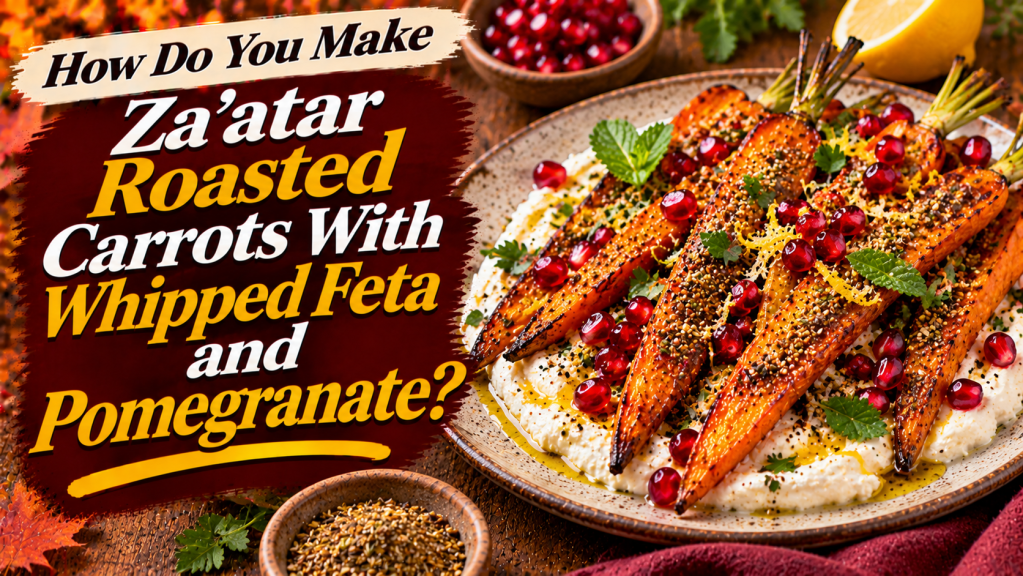
Za’atar roasted carrots with whipped feta and pomegranate combine caramelized vegetables, a tangy creamy cheese spread, and bright bursts of fruit. Warmly seasoned carrots are roasted until their edges brown, then arranged over a fluffy feta mixture and finished with pomegranate seeds, fresh herbs, and lemon. The contrast of textures makes this dish a colorful side for a holiday meal or a satisfying part of a vegetarian dinner.
The recipe works because each element is prepared separately. The carrots need dry heat to caramelize, whipped feta needs enough liquid to become smooth, and pomegranate seeds are best added after cooking so they stay juicy. A final drizzle of olive oil and lemon ties everything together.
Recipe at a Glance
Servings: 4–6 as a side. Prep time: 20 minutes. Roasting time: 25–35 minutes. Oven: 425°F. Equipment: rimmed baking sheet, food processor or blender, spatula, cutting board, and serving platter.
Ingredients
For the carrots, use 1½ pounds medium carrots, 2 tablespoons olive oil, 1½ tablespoons za’atar seasoning, ¼ teaspoon black pepper, and a small pinch of salt if your za’atar blend does not already contain it. Use 1 teaspoon pure maple syrup or honey only if desired for additional caramelization.
For whipped feta, use 6 ounces feta cheese, ½ cup plain Greek yogurt, 1 tablespoon olive oil, 1 teaspoon freshly squeezed lemon juice, and 1 small garlic clove, finely grated. For serving, use ⅓ cup pomegranate arils, 2 tablespoons chopped parsley or mint, and optional finely grated lemon zest. Feta and yogurt contain milk; za’atar blends often contain sesame, so check ingredients when cooking for people with allergies.
What Is Za’atar?
Za’atar is the name used for several Middle Eastern herb-and-spice mixtures. Many blends include dried thyme or related herbs, sumac, and sesame seeds, sometimes with salt. The flavor is earthy, tangy, nutty, and aromatic. Because the proportions differ by producer, check whether your seasoning contains salt before adding more to the carrots.
Sumac contributes the slightly sour note that helps balance sweet roasted carrots. If your blend is particularly herb-heavy, you may want to finish the dish with an extra squeeze of lemon. Use fresh seasoning that smells fragrant rather than an old jar that has lost much of its aroma.
Choosing and Preparing the Carrots
Select firm, smooth carrots without mushy spots. Medium carrots are convenient because they can be cut into similar-sized pieces. Large carrots are perfectly usable but should be quartered lengthwise so the centers become tender without overbrowning the thin tips. Young slender carrots may need only halving.
Wash and scrub the carrots thoroughly. Peeling is optional if the skins are tender; trim any damaged areas and remove the tops. Cut into long halves or quarters approximately ½–¾ inch thick at the widest point. Similar thickness matters more than identical length for even cooking.
How to Make Za’atar Roasted Carrots With Whipped Feta and Pomegranate
Prepare the carrots first, then whip the feta while they roast. Assemble the platter just before serving for the best temperature and texture.
Step 1: Preheat the oven
Preheat the oven to 425°F and position a rack near the center. Use a large rimmed metal baking sheet. Lightly oil it or line it with parchment rated for that temperature. A metal pan with space around the carrots allows their surface moisture to evaporate and helps create caramelized edges.
Step 2: Season the carrots
Pat the washed carrots dry, then place them in a mixing bowl. Toss with olive oil, za’atar, and black pepper. If desired, add the small amount of maple syrup or honey. Keep extra salt to a minimum until you know how salty your seasoning blend is. Spread the pieces in a single layer with their cut sides against the pan.
Step 3: Roast until tender and browned
Roast for approximately 25–35 minutes, flipping the carrots halfway through. Thin pieces may finish earlier than large pieces, so check after 20 minutes. The carrots should be tender when pierced with a fork and lightly browned around the edges. If using honey or maple syrup, watch for overly dark spots in the final minutes because the sugars can scorch.
Step 4: Prepare the whipped feta
While the carrots roast, crumble the feta into a food processor with the Greek yogurt, olive oil, lemon juice, and grated garlic. Blend until smooth, scraping the sides as needed. If the mixture is too thick to spread, add a teaspoon of cold water or yogurt at a time. The consistency should resemble a thick, creamy dip rather than a runny dressing.
Step 5: Taste and adjust the feta
Taste a small spoonful before seasoning. Feta is naturally salty, so additional salt is rarely necessary. A few drops of lemon juice can brighten a very rich mixture. If you prefer a milder dip, add another spoonful of yogurt rather than extra oil. Keep the whipped feta refrigerated until the carrots are ready.
Step 6: Assemble the platter
Spread the whipped feta in a broad layer across a serving platter using the back of a spoon. Arrange the warm roasted carrots on top, leaving some of the creamy base visible. Scatter pomegranate arils evenly over everything. Finish with chopped parsley or mint, optional lemon zest, and a small drizzle of olive oil.
Step 7: Serve immediately
Serve while the carrots are warm and the feta is cool or at room temperature briefly for serving. Offer a spoon so guests can collect a little cheese and pomegranate with each portion. The vegetables are flavorful on their own, but the contrasting toppings make this version especially appealing.
How Do You Get Carrots Caramelized Instead of Steamed?
Crowding is the most common reason carrots turn out pale or soft without browning. Spread them across a wide sheet pan so there is room between pieces. If making a double batch, use two pans rather than stacking everything. Thoroughly drying the carrots before adding oil also helps.
Do not turn them repeatedly. Leaving a cut side against hot metal for the first half of cooking encourages better browning. If the carrots are tender but lack color, roast a few additional minutes while watching closely. Avoid excessive syrup, which can cause burning without improving the vegetable’s texture.
How to Keep Whipped Feta Smooth
Use feta that is not overly dry, and include enough Greek yogurt for the blades to create a uniform mixture. A food processor generally makes a smoother spread than mixing by hand, though vigorous mashing with a fork is possible if you prefer a rustic texture. Scrape down the sides several times.
If the spread looks grainy, blend a little longer and add a spoonful of yogurt. Too much liquid, however, can make the cheese slide off the platter. It should hold gentle swirls when spread with the back of a spoon. Make the feta ahead and keep it covered in the refrigerator; stir before serving if liquid separates.
Preparing Fresh Pomegranate
For convenience, use ready-to-eat pomegranate arils that are fresh, properly refrigerated, and within their use-by date. If using a whole pomegranate, cut through the rind carefully and separate the sections over a bowl. Remove the arils from the white membrane, which has a bitter flavor.
Rinse if necessary and drain well before scattering over the carrots. Pomegranate seeds are best added just before serving because their juicy pop and bright color contrast with the roasted vegetables. Frozen arils can be used after thawing in the refrigerator, though they may be softer.
Delicious Variations
For a vegan version, replace the feta and Greek yogurt with a suitable plant-based feta-style product and thick unsweetened plant-based yogurt. Choose a blend that becomes creamy when blended, and confirm that the za’atar seasoning is appropriate for your dietary needs.
For extra crunch, add toasted pistachios or walnuts as a garnish if there are no nut allergies. Toasted pumpkin seeds offer a nut-free alternative when the product is suitable and cross-contact has been considered. A little finely chopped fresh dill can replace mint for a different herbal character.
You can replace the carrots with roasted golden beets or wedges of delicata squash, adjusting the roasting time for the vegetable. For a hotter finish, add a pinch of Aleppo-style pepper or crushed red pepper flakes over the completed platter. A thin drizzle of date syrup offers a different sweetness from maple.
What to Serve With Za’atar Roasted Carrots
This dish pairs well with roasted chicken, grilled fish, lentil pilaf, chickpea salad, or warm flatbread. It can also be served as part of a vegetarian mezze-style meal with hummus, olives, cucumber salad, and rice. The tangy feta and pomegranate are especially useful alongside richer mains.
For a holiday spread, arrange the platter on a central table and provide a large serving spoon. The colorful carrots and pomegranate make an attractive contrast with green vegetables, grains, and roasted meats. Serve the feta separately if guests prefer to control how much cheese they eat.
Make-Ahead Tips
Wash and cut the carrots up to one day ahead and refrigerate them in a covered container. The whipped feta can also be prepared a day ahead and refrigerated. Store the pomegranate arils in a separate sealed container so their juice does not color the cheese before serving.
Roast the carrots close to serving time for the best edges. If you need to cook them earlier, reheat on a wide baking sheet at 375°F until hot. Assemble the platter just before serving so the cheese stays creamy and the pomegranate remains fresh.
Storage and Reheating
Refrigerate leftovers promptly in shallow covered containers within two hours of cooking, or within one hour when the surrounding temperature exceeds 90°F. Use within three to four days. For best quality, store the vegetables, cheese, and arils separately. The whipped feta is not ideal for freezing because its texture may change after thawing.
Reheat leftover carrots in the oven at 375°F until hot, with leftovers reaching 165°F throughout. Serve with cold whipped feta and newly added herbs. If the assembled dish has already been mixed together, it can still be refrigerated, but the carrots will soften and the cheese may pick up some of the pomegranate color.
Frequently Asked Questions
Can I use baby carrots?
Yes. Dry them well and roast in a single layer. Check early because their size and moisture content can vary; some packaged baby carrots may need a little longer to brown.
Can I make whipped feta without a food processor?
Yes. Mash the feta thoroughly with a fork, then whisk in Greek yogurt, olive oil, lemon, and garlic. The spread will be less silky but still flavorful.
Can I substitute honey for maple syrup?
Yes. Either works in a small quantity on the carrots. The sweetener is optional because roasting brings out their natural sweetness.
What if I cannot find pomegranate?
Use a small amount of dried cranberries, chopped fresh orange segments, or toasted seeds for a different topping. The dish will have a different texture but remains delicious.
Is this dish gluten-free?
The vegetables, feta, and yogurt are naturally gluten-free, but za’atar blends and other packaged ingredients should be checked for gluten or cross-contact when necessary.
Final Thoughts
Za’atar roasted carrots with whipped feta and pomegranate create a distinctive side dish using familiar cooking techniques. Roast the carrots until tender and browned, whip the cheese until smooth, and finish with pomegranate and herbs. The earthy spice, creamy feta, and juicy fruit offer a flavorful combination for family dinners and holiday tables.
Leave a Reply