Author: Brett Murphy

  • Love Tip of the Day: The Foundation of a Healthy Relationship

    Love Tip of the Day: The Foundation of a Healthy Relationship

    Advertisements

    A healthy relationship is not built on love alone.

    Love may bring two people together, but what keeps them together is something deeper: trust, respect, communication, honesty, consistency, friendship, forgiveness, emotional safety, and the willingness to keep choosing each other.

    Relationships rarely become strong because everything is perfect. They become strong because two people learn how to handle the imperfect moments together.

    Anyone can feel close when life is easy. The true foundation of a relationship is revealed when there is stress, disappointment, disagreement, financial pressure, family problems, personal struggles, grief, uncertainty, or change.

    A healthy relationship says:

    We may not always agree, but we will respect each other.

    We may become frustrated, but we will communicate instead of trying to hurt each other.

    We may make mistakes, but we will take responsibility for them.

    Life may become difficult, but we will face it as partners instead of opponents.

    That is where lasting love begins.

    Love Is the Beginning, Not the Entire Foundation

    Falling in love can happen quickly. Building a healthy relationship takes time.

    There is an important difference between loving someone and knowing how to love someone well.

    You can genuinely love another person and still struggle with communication. You can love someone and have difficulty trusting because of past experiences. You can love someone and unintentionally hurt them because you have never learned how to express your emotions in a healthy way.

    That is why strong relationships require growth.

    Love provides the motivation.

    Healthy habits provide the structure.

    Both people must be willing to learn what makes the other person feel valued, respected, safe, and appreciated.

    You are not simply building a romance. You are building a partnership.

    And partnerships require participation from both people.

    Trust Holds Everything Together

    Trust is one of the strongest pillars of a healthy relationship.

    Without trust, even small situations can become sources of anxiety, suspicion, jealousy, and conflict.

    Trust means knowing that your partner’s words and actions generally match. It means believing they will protect the relationship even when you are not around.

    Trust also creates freedom.

    You should not have to constantly investigate the person you love. You should not need to analyze every message, question every absence, or wonder whether you are being told the truth.

    Healthy love creates reassurance through consistent behavior.

    Trust is built through hundreds of seemingly small choices:

    Keeping promises.

    Being honest.

    Showing up when you say you will.

    Admitting mistakes.

    Maintaining appropriate boundaries.

    Being dependable.

    Protecting private conversations.

    Remaining faithful to commitments.

    Telling the truth even when the truth is uncomfortable.

    Trust can take years to build and moments to damage, which is why it should never be treated casually.

    When someone gives you their trust, protect it.

    Respect Must Remain Even During Disagreements

    You will disagree.

    Every couple does.

    A healthy relationship is not one where arguments never happen. It is one where disagreements do not destroy respect.

    There is a major difference between saying:

    “I disagree with you.”

    and communicating:

    “I don’t respect you.”

    Healthy couples learn to separate the problem from the person.

    You can be angry without insulting your partner.

    You can disagree without humiliating them.

    You can express disappointment without attacking their character.

    You can ask for space without using silence as punishment.

    You can defend your position without trying to emotionally destroy the person standing across from you.

    When respect disappears during conflict, emotional wounds can remain long after the argument ends.

    Words spoken in anger do not magically disappear once everyone calms down.

    Protect the dignity of the person you love, especially when you are upset with them.

    Communication Is More Than Talking

    Communication is often described as one of the keys to a successful relationship, but communication involves much more than simply talking.

    Healthy communication requires listening.

    Sometimes your partner is not asking you to solve the problem.

    They are asking you to understand how the problem made them feel.

    Instead of immediately becoming defensive, try listening for what is underneath their words.

    Maybe they are saying:

    “I need reassurance.”

    “I feel forgotten.”

    “I don’t feel heard.”

    “I miss spending time with you.”

    “I need more affection.”

    “I am overwhelmed.”

    “I need to know that we’re okay.”

    When couples learn to hear the emotion underneath the words, conversations can become opportunities for connection rather than battles over who is right.

    Being right should never become more important than understanding each other.

    Emotional Safety Changes Everything

    One of the most beautiful things you can give someone is a place where they feel safe being themselves.

    Your partner should be able to talk about their fears, insecurities, dreams, mistakes, frustrations, and emotions without constantly worrying that those vulnerabilities will someday be used against them.

    If someone tells you something deeply personal during a vulnerable moment, protect it.

    Do not bring it back during an argument as ammunition.

    Do not mock it.

    Do not share it with other people without permission.

    Do not make them regret trusting you.

    Emotional safety allows intimacy to deepen because both people know they can lower their defenses.

    A healthy relationship should feel like somewhere you can breathe.

    Friendship Matters More Than People Realize

    Romance is wonderful, but friendship often carries a relationship through the ordinary seasons of life.

    Ask yourself:

    Do you genuinely enjoy spending time together?

    Can you laugh together?

    Can you have conversations about nothing important?

    Can you be silly?

    Can you sit quietly without feeling uncomfortable?

    Can you support each other’s interests?

    Can you enjoy ordinary errands, road trips, meals, evenings at home, or lazy weekends?

    Long-term relationships contain far more ordinary days than extraordinary ones.

    You cannot build an entire relationship around vacations, anniversaries, expensive dinners, or romantic gestures.

    Sometimes love looks like sitting together after a long day.

    Sometimes it is bringing your partner something to drink without being asked.

    Sometimes it is sending a message saying, “Thinking about you.”

    Sometimes it is laughing about something ridiculous that only the two of you understand.

    Never underestimate the importance of actually liking the person you love.

    Consistency Is More Powerful Than Occasional Grand Gestures

    Big romantic gestures are memorable.

    Consistency is what makes someone feel secure.

    Flowers are wonderful.

    So is asking how their day went.

    Vacations are exciting.

    So is making time for each other on an ordinary Tuesday.

    Anniversary gifts are meaningful.

    So is showing appreciation throughout the year.

    Healthy relationships are usually built through small acts repeated consistently.

    A kiss goodbye.

    A hug when someone gets home.

    A thoughtful text.

    Holding hands.

    Saying thank you.

    Checking in.

    Remembering something important.

    Offering encouragement.

    Helping without being asked.

    These small actions quietly communicate:

    You matter to me.

    Honesty Creates Real Intimacy

    You cannot build genuine intimacy while hiding who you are.

    Healthy relationships need honesty about feelings, expectations, boundaries, finances, mistakes, fears, future plans, and needs.

    That does not mean every thought must immediately become a conversation.

    It means you should not create a false version of yourself simply to keep someone interested.

    Eventually, the masks have to come off.

    Healthy love says:

    “This is who I am.”

    “This is what I struggle with.”

    “This is what I need.”

    “This is what scares me.”

    “This is where I need to grow.”

    And then both people decide whether they can continue building something together.

    Honesty may create uncomfortable conversations, but dishonesty creates unstable relationships.

    Never Stop Appreciating Each Other

    One of the quiet dangers in long-term relationships is becoming accustomed to someone’s presence.

    What once felt special can slowly become expected.

    The calls.

    The meals.

    The affection.

    The help.

    The companionship.

    The sacrifices.

    The little things.

    Eventually, people can stop saying thank you because they assume their partner already knows they are appreciated.

    Say it anyway.

    Tell them what you appreciate.

    Notice their effort.

    Thank them for the small things.

    Compliment them.

    Remind them why you chose them.

    Never assume someone knows how much they mean to you simply because they have been beside you for years.

    People need to hear that they matter.

    Give Each Other Room to Grow

    Healthy relationships involve togetherness without completely losing individuality.

    Your partner should still be allowed to have dreams, hobbies, friendships, interests, and goals.

    Supporting someone’s growth does not mean they are growing away from you.

    Sometimes the strongest couples are two people who continue becoming better individuals while building a life together.

    Encourage each other.

    Celebrate accomplishments.

    Support new goals.

    Believe in your partner when they doubt themselves.

    Be the person who reminds them what they are capable of becoming.

    Love should not make someone’s world smaller.

    Healthy love helps both people’s worlds become richer.

    Learn How to Apologize

    Two imperfect people cannot build a relationship without eventually hurting each other’s feelings.

    The question is not whether mistakes will happen.

    They will.

    The question is what happens afterward.

    A sincere apology requires more than saying, “I’m sorry you feel that way.”

    It means recognizing your part in what happened.

    “I was wrong.”

    “I understand why that hurt you.”

    “I shouldn’t have spoken to you that way.”

    “I should have handled that differently.”

    “I’m sorry.”

    And most importantly:

    “I will work on changing that behavior.”

    An apology without changed behavior eventually becomes meaningless.

    Taking responsibility is not weakness.

    It demonstrates maturity and respect for the relationship.

    Forgiveness Matters, but So Do Boundaries

    Forgiveness is important in relationships because everyone makes mistakes.

    But forgiveness does not mean accepting repeated disrespect.

    Healthy relationships need boundaries.

    There should be clear lines regarding how you speak to one another, how you handle outside relationships, privacy, finances, family involvement, personal space, and unacceptable behavior.

    Boundaries are not walls designed to keep someone away.

    They help define what is necessary for the relationship to remain healthy.

    Love should never require someone to continuously abandon their dignity just to keep another person around.

    Do Not Keep Score

    Relationships become exhausting when everything becomes a competition.

    “I did this, so you owe me that.”

    “I apologized last time.”

    “I always do more.”

    “I was right about the last argument.”

    Healthy relationships require balance, but constantly keeping score can turn love into a transaction.

    There will be seasons when one person carries more.

    Someone may become sick.

    Someone may lose a job.

    Someone may experience grief.

    Someone may struggle emotionally.

    Someone may simply have a terrible week.

    Partnership means recognizing that sometimes the balance will temporarily shift.

    You help carry each other when life becomes heavy.

    Protect Your Relationship From Outside Interference

    Not everyone needs access to every detail of your relationship.

    Friends and family can provide valuable support and perspective, especially when something serious is happening, but constantly sharing every disagreement can create additional problems.

    Some issues should first be discussed between the two people involved.

    Protect your partner’s privacy.

    Protect your shared vulnerabilities.

    Protect the trust you have created.

    A relationship needs enough privacy to develop its own identity.

    Make Time for Each Other

    Relationships rarely fall apart because someone intentionally decided to stop caring.

    Sometimes they slowly become neglected.

    Work becomes demanding.

    Bills need to be paid.

    Children need attention.

    Phones consume free time.

    Schedules become complicated.

    Everyone becomes tired.

    Suddenly two people who once talked for hours barely have meaningful conversations.

    Connection requires intention.

    You do not always need elaborate dates.

    Put the phones down for a while.

    Take a walk.

    Cook together.

    Watch a movie.

    Sit outside.

    Have coffee together.

    Go for a drive.

    Ask each other questions.

    Reconnect.

    Time is one of the most valuable gifts you can give another person because time is something you can never get back.

    Choose Each Other in the Ordinary Moments

    One of the biggest misconceptions about lasting love is that you will always feel intensely romantic.

    Relationships have seasons.

    Some seasons are exciting.

    Some are peaceful.

    Some are difficult.

    Some are exhausting.

    Some require rebuilding.

    Some are filled with laughter.

    Others may involve tears.

    Long-term love is not simply about maintaining a feeling.

    It is about repeatedly making choices that protect the relationship.

    Choosing patience.

    Choosing honesty.

    Choosing kindness.

    Choosing communication.

    Choosing affection.

    Choosing forgiveness.

    Choosing loyalty.

    Choosing effort.

    Choosing each other.

    Be Each Other’s Safe Place

    The world can be difficult enough.

    Your relationship should not become another place where you constantly feel judged, rejected, manipulated, or attacked.

    Be the person your partner can come home to emotionally.

    Celebrate their victories.

    Sit beside them during their failures.

    Listen when they are overwhelmed.

    Hold them when words are not enough.

    Remind them that they do not have to face everything alone.

    There is something incredibly powerful about knowing that when life becomes difficult, someone is standing beside you saying:

    “We’ll figure this out together.”

    Healthy Love Requires Two People

    One person cannot build a healthy relationship alone.

    One person cannot do all the communicating.

    One person cannot do all the forgiving.

    One person cannot provide all the affection.

    One person cannot constantly make sacrifices while receiving nothing in return.

    One person cannot be the only person trying to repair every disagreement.

    Both people must participate.

    The effort may not always be exactly 50/50 every single day, but there should be a shared commitment to the relationship.

    Healthy love is mutual.

    Both people should feel valued.

    Both should feel heard.

    Both should feel respected.

    Both should feel loved.

    Both should know that their feelings matter.

    The Foundation of a Healthy Relationship

    There is no perfect relationship.

    There are simply two imperfect people learning how to love each other better.

    The strongest relationships are not necessarily the ones without problems. They are often the ones where both people remain committed to addressing those problems without destroying each other in the process.

    Build your relationship on:

    Trust.

    Respect.

    Honesty.

    Communication.

    Friendship.

    Consistency.

    Affection.

    Forgiveness.

    Boundaries.

    Emotional safety.

    Appreciation.

    Shared effort.

    And most importantly, continue choosing each other.

    Do not wait until the relationship is struggling to start appreciating what you have.

    Say “I love you.”

    Say “thank you.”

    Give the hug.

    Hold their hand.

    Listen to their story.

    Put down the phone.

    Make the time.

    Keep dating each other.

    Keep laughing together.

    Keep learning about each other.

    Keep creating memories.

    Keep showing up.

    Because a healthy relationship is not built during one unforgettable romantic moment.

    It is built in thousands of ordinary moments when two people repeatedly show each other: I love you, I respect you, I value you, and I am still choosing us.

    What is one thing you and your partner can do today to make the foundation of your relationship a little stronger?


  • Grief of the Day: When It Is Years After Child Loss

    Advertisements

    Years have passed.

    People may assume that means the grief is different now.

    And in some ways, it is.

    You have learned how to wake up in a world where your child is no longer physically here. You have survived birthdays, holidays, anniversaries, family gatherings, quiet nights, unexpected reminders, and countless ordinary days that somehow became difficult simply because your child was missing from them.

    You have learned how to smile again.

    You may laugh.

    You may work, make plans, meet people, travel, celebrate milestones, and even experience genuine happiness.

    From the outside, it might appear that you have “moved on.”

    But parents who have lost a child understand something that others sometimes struggle to comprehend:

    Years passing does not mean you stop missing your child.

    It means you learn how to carry the missing.

    There Is No Expiration Date on Loving Your Child

    One of the strangest things about grief is watching the calendar continue moving.

    Days become weeks.

    Weeks become months.

    Months become years.

    Eventually, you find yourself saying something you once couldn’t imagine saying:

    “It has been years since my child died.”

    Those words can feel impossible.

    How could it have been years?

    Sometimes the memories seem so close that you could almost reach out and touch them.

    You remember their voice.

    Their laugh.

    Their habits.

    The things that irritated you.

    The things that made you proud.

    The conversations you had.

    The plans you made.

    The ordinary moments you didn’t realize would someday become priceless memories.

    The calendar may say years have passed, but love doesn’t measure time the same way.

    A parent doesn’t stop loving a child because five, ten, twenty, or fifty years have passed.

    And because the love remains, some part of the grief remains too.

    You Become Better at Carrying What Once Crushed You

    In the beginning, grief can feel unbearable.

    Sometimes getting through a single hour feels impossible.

    You wake up and remember.

    You reach for the phone and remember.

    You walk past their room and remember.

    You hear their favorite song and remember.

    You see something you would have sent them and remember.

    Everything seems connected to the person who is suddenly missing.

    Years later, those moments may not destroy you the way they once did.

    But they still happen.

    The difference is that you have become stronger at carrying them.

    That doesn’t mean the loss became smaller.

    You learned how to live around something enormous.

    There is a difference.

    You learned how to carry grief into grocery stores, restaurants, workplaces, family gatherings, holidays, vacations, and quiet evenings at home.

    You became skilled at carrying sadness while continuing to function.

    Most people never see how much strength that requires.

    Some Days It Still Feels Like Yesterday

    Years after losing a child, there can still be moments when grief suddenly becomes incredibly fresh.

    A song comes on.

    Someone says their name.

    You find an old photograph.

    A memory appears on your phone.

    You smell something that reminds you of them.

    You drive past somewhere you used to go together.

    Suddenly, the years disappear.

    For a few moments, you aren’t standing years after the loss.

    You are right back there.

    Your heart remembers.

    That is one of the difficult realities of grief.

    Time is not always linear.

    You can have a good week and suddenly find yourself crying because you remembered something seemingly insignificant.

    You can laugh with friends and later sit alone wondering what your child would be doing today.

    You can believe you’re doing better and still have a night when everything hurts again.

    That doesn’t erase your progress.

    It simply means you still love someone who mattered enormously.

    You Don’t Only Grieve the Past

    Years after child loss, something else becomes painfully clear.

    You aren’t only grieving the memories you had.

    You are grieving the memories you never got to make.

    You wonder what your child would look like today.

    What would they be doing?

    Where would they live?

    Who would they have become?

    Would they be married?

    Would they have children?

    What would their career look like?

    What would your conversations sound like now?

    Every passing year can create another version of the future that never happened.

    This is one reason grief can change rather than disappear.

    When your child dies, you don’t only lose the person they were.

    You lose the future you imagined with them.

    And sometimes years later, that future is what hurts the most.

    The World Keeps Moving

    One of the loneliest parts of long-term grief is realizing that the rest of the world continues.

    People who initially checked on you may stop asking.

    Friends return to their routines.

    Family members may mention your child less frequently.

    Eventually, people may become uncomfortable when you talk about them.

    They may wonder why you’re still grieving.

    But you aren’t “still grieving” because you failed to heal.

    You are carrying a relationship that death changed but could not erase.

    Your child existed.

    They mattered.

    They influenced who you became.

    Their life deserves to be remembered.

    You should not have to pretend otherwise simply because other people are uncomfortable with grief.

    You May Feel Guilty for Living Again

    Years after loss, another complicated emotion sometimes appears.

    Guilt.

    You may feel guilty when you laugh.

    Guilty when you enjoy yourself.

    Guilty when you take a vacation.

    Guilty when you meet someone new.

    Guilty when you realize you went several hours without thinking about the loss.

    Part of you may wonder:

    How can I be happy when my child isn’t here?

    But happiness doesn’t mean forgetting.

    Living doesn’t mean abandoning your child.

    Finding moments of peace does not mean your love has become smaller.

    You can carry your child with you while continuing to build a life.

    Those two things can exist together.

    There Will Always Be an Empty Seat

    Certain moments will always feel different.

    Birthdays.

    Christmas.

    Thanksgiving.

    Mother’s Day.

    Father’s Day.

    Family photographs.

    Weddings.

    Vacations.

    Graduations.

    Celebrations.

    There may always be an awareness that someone should be there.

    Even during beautiful moments, your heart may quietly whisper:

    Someone is missing.

    That feeling doesn’t necessarily disappear with time.

    You simply become more familiar with it.

    You learn how to celebrate while remembering.

    You learn how to smile while carrying sadness.

    You learn that happiness and grief can exist in the same heart.

    People May Stop Saying Their Name

    This can hurt more than people realize.

    In the beginning, everyone talks about your child.

    They share stories.

    They send photographs.

    They offer condolences.

    They mention memories.

    Then gradually, their name is spoken less often.

    Sometimes people avoid saying it because they don’t want to upset you.

    But many grieving parents would rather hear their child’s name than experience the silence.

    Talking about your child does not remind you that they died.

    You already know.

    Talking about them reminds you that they lived.

    It reminds you that their life touched other people.

    It reminds you that they are remembered.

    Years later, hearing someone unexpectedly share a memory of your child can become one of the greatest gifts.

    Grief Becomes Part of Your Story

    Eventually, you may stop trying to become the person you were before your child died.

    Because that person no longer exists.

    Loss changed you.

    Perhaps it made you more compassionate.

    Maybe it made you quieter.

    Maybe certain things that once seemed important no longer matter.

    Perhaps you became more aware of how fragile life is.

    Maybe you learned to say “I love you” more often.

    Maybe you stopped postponing things.

    Maybe you began helping other grieving parents.

    Maybe your child’s life inspired you to become someone stronger, kinder, more patient, or more purposeful.

    That doesn’t mean you are grateful for the loss.

    It means you refused to allow tragedy to have the final word over your life.

    Healing Doesn’t Mean Forgetting

    Healing after child loss is often misunderstood.

    Healing doesn’t mean waking up one morning and realizing you aren’t sad anymore.

    It doesn’t mean putting away every photograph.

    It doesn’t mean never crying.

    It doesn’t mean never talking about your child.

    And it certainly doesn’t mean forgetting.

    Healing can simply mean learning how to live while carrying the love and the loss.

    You may always have scars.

    But scars are evidence that a wound once existed and that somehow, despite everything, you survived it.

    Your Relationship With Your Child Changes

    Death changes the relationship, but it doesn’t erase it.

    You may continue talking to your child.

    You may visit their resting place.

    You may celebrate their birthday.

    You may cook their favorite meal.

    You may play their favorite music.

    You may keep photographs around your home.

    You may tell stories about them.

    You may support causes in their memory.

    You may help someone else because of what your child taught you.

    There are countless ways to continue loving someone who is no longer physically present.

    Love doesn’t require physical proximity to exist.

    Some Years Will Be Harder Than Others

    Grief doesn’t necessarily become easier every year.

    Sometimes an anniversary that you expected to be manageable becomes unexpectedly difficult.

    A milestone year can hurt.

    The year your child would have turned thirty.

    The year they would have graduated.

    The year you realize they have now been gone longer than a particular period of their life.

    There can always be new layers of grief.

    Don’t judge yourself for them.

    You aren’t moving backward.

    Grief simply has seasons.

    You Have Survived Every Impossible Day So Far

    There were probably days when you didn’t know how you would continue.

    Nights when you wished you could escape your own thoughts.

    Mornings when getting out of bed required more strength than anyone knew.

    Holidays you wanted to avoid.

    Anniversaries you dreaded for weeks.

    Yet somehow, you made it through them.

    Not perfectly.

    Not without tears.

    Not without scars.

    But you survived.

    That matters.

    Every sunrise you have faced since losing your child represents something incredibly difficult:

    You continued.

    Sometimes survival itself is an act of courage.

    Moving Forward Is Not Leaving Them Behind

    This may be one of the most important things a grieving parent can understand.

    You don’t have to choose between remembering your child and living your life.

    You can do both.

    You can miss them and laugh.

    You can cry and still have hope.

    You can remember yesterday while building tomorrow.

    You can honor your child’s memory while discovering new reasons to live.

    Moving forward does not mean moving away from them.

    Your child helped shape the person you are.

    Their fingerprints remain on your life.

    The lessons they taught you remain.

    The memories remain.

    The love remains.

    And wherever your life takes you next, that love travels with you.

    When It Has Been Years

    When it has been years since child loss, people may see your strength without understanding its cost.

    They see you functioning.

    They see you smiling.

    They see you living.

    What they don’t always see are the moments when you still whisper your child’s name.

    The photographs you still look at.

    The conversations you replay.

    The milestones you imagine.

    The nights when you still wonder what life would have looked like if everything had been different.

    Years do not erase a child from a parent’s heart.

    They simply teach the parent how to carry the love differently.

    So if it has been years and you still miss your child, there is nothing strange about that.

    If you still cry sometimes, let the tears come.

    If you still talk about them, keep talking.

    If you celebrate their birthday, celebrate it.

    If you say their name, say it proudly.

    If you are beginning to experience happiness again, allow yourself to feel it.

    Your life continuing does not diminish your child’s life.

    The Love Remains

    Perhaps that is what grief becomes years later.

    Love with nowhere physical to go.

    So we carry it.

    We put it into memories.

    We put it into photographs.

    We put it into stories.

    We put it into helping others.

    We put it into the way we live.

    And sometimes, we put it into simply saying their name so the world remembers that they were here.

    Years may pass.

    Life may change.

    You may become someone you never imagined you would have to become.

    But there will always be a part of your heart that belongs to your child.

    Not because you failed to move on.

    Not because you are trapped in the past.

    But because a parent’s love does not end when a child’s life ends.

    And perhaps surviving years after child loss isn’t about finally letting go.

    Perhaps it is about learning how to hold on differently.

    To carry the memories without allowing them to destroy you.

    To carry the grief without letting it become your entire identity.

    To carry your child’s love into whatever years you have left.

    And to keep living—not because you stopped missing them, but because their life gave yours something worth carrying forward.

    When it has been years since your child passed away, what is one memory of them that still feels as vivid today as the day it happened?

  • Inspiration of the Day: Changing Your Process

    Advertisements

    Sometimes the reason you are not making progress is not because you are incapable of reaching your goal. It is not because you lack determination, talent, or strength. And it does not necessarily mean you should give up.

    Sometimes, you simply need to change your process.

    We often become so committed to the way we planned to accomplish something that we forget there may be another path. We tell ourselves that if we just work harder, push longer, or keep repeating the same routine, eventually everything will work.

    Persistence matters. But persistence without reflection can leave you walking in circles.

    There comes a point when you have to ask yourself an important question:

    Is what I am doing actually moving me toward where I want to go?

    If the answer is no, changing your approach is not failure.

    It is growth.

    Your Goal and Your Process Are Not the Same Thing

    There is an important difference between giving up on a goal and changing how you pursue it.

    Imagine you are driving somewhere and discover that the road ahead is closed. You would not sit there staring at the barricade because that was the road you originally planned to take.

    You would find another route.

    The destination has not changed.

    Only the way you are getting there has changed.

    Life works the same way.

    You may have a dream for your career, relationships, health, finances, personal growth, creative work, or future. You may know exactly where you would like to be.

    But the original path may not work.

    That does not automatically mean the dream is impossible.

    It might mean you need another route.

    Stop Confusing Change With Failure

    Many people remain stuck because changing direction feels like admitting they were wrong.

    We become emotionally attached to our plans.

    We think:

    I already invested so much time into this.

    I should have figured this out by now.

    If I change direction, people might think I failed.

    But staying committed to something that clearly is not working simply because you have already invested time in it can cost you even more time.

    There is wisdom in being able to say:

    This isn’t working. I’m going to try something different.

    That sentence does not make you weak.

    It means you are paying attention.

    Some of the greatest breakthroughs in life happen after someone finally stops forcing an approach that isn’t producing results.

    Pay Attention to What Life Is Teaching You

    Every attempt teaches you something.

    Even unsuccessful attempts contain information.

    You learn what works.

    You learn what doesn’t.

    You discover your strengths.

    You uncover weaknesses.

    You recognize habits that are holding you back.

    You begin understanding what deserves more of your attention and what deserves less.

    Instead of viewing a setback as proof that you cannot succeed, ask:

    What is this teaching me about my process?

    Maybe you need more preparation.

    Maybe you need additional knowledge.

    Maybe you need help.

    Maybe your schedule needs to change.

    Maybe you are trying to accomplish too much at once.

    Maybe you need better boundaries.

    Maybe you need to stop comparing your progress with everyone else’s.

    Maybe the goal needs to be broken into smaller pieces.

    Or perhaps you have simply discovered one method that doesn’t work.

    That knowledge has value.

    Work Smarter, Not Just Harder

    Hard work is important, but effort alone does not guarantee progress.

    You can spend hours pushing against a locked door when an unlocked door is only a few feet away.

    Sometimes we become proud of how hard we are working without asking whether our effort is being directed toward the right things.

    Being exhausted is not the same as being productive.

    Being busy is not the same as moving forward.

    You don’t always need to do more.

    Sometimes you need to do things differently.

    Look at your daily routine.

    Which actions actually produce results?

    Which habits move you closer to your goals?

    Which activities consume your time without giving much back?

    Changing your process may mean eliminating unnecessary work rather than adding more.

    Small Changes Can Create Big Results

    Changing your process doesn’t always require completely rebuilding your life.

    Sometimes one small adjustment changes everything.

    Wake up thirty minutes earlier.

    Write down tomorrow’s priorities before going to bed.

    Turn your phone off while working.

    Exercise for ten minutes instead of waiting until you have an hour.

    Save a small amount consistently instead of waiting until you can save a large amount.

    Ask someone for advice instead of struggling alone.

    Spend twenty minutes learning something every day.

    Break one overwhelming project into five manageable tasks.

    Small changes may not look impressive at first.

    But repeated consistently, they compound.

    A tiny improvement today can become a completely different life over time.

    Don’t Be Afraid to Start Again

    Starting over can feel discouraging.

    You might look at everything you have already done and wonder whether changing direction means all that work was wasted.

    It wasn’t.

    You are not starting again as the same person who began the first time.

    You are starting with experience.

    You know more now.

    You have made mistakes and survived them.

    You have learned lessons you could not have understood before trying.

    You know what you don’t want.

    You know what doesn’t work.

    And hopefully, you understand yourself a little better.

    Starting again with experience is very different from starting from nothing.

    Your Process Should Grow With You

    The process that worked for you five years ago may not work today.

    Your life changes.

    Your responsibilities change.

    Your priorities change.

    You change.

    What once motivated you may no longer motivate you.

    What once fit your schedule may now be unrealistic.

    What once felt important may no longer matter.

    That is normal.

    Growth requires adjustment.

    You are allowed to create a new routine for the person you are becoming rather than continuing to live according to a system created for the person you used to be.

    Learn to Experiment

    Instead of believing every decision has to be permanent, treat some changes like experiments.

    Try a new routine for two weeks.

    Test a different approach.

    Change the order in which you complete your tasks.

    Try working at a different time.

    Ask for feedback.

    Measure what happens.

    Then adjust again.

    This removes some of the pressure.

    You don’t have to know the perfect process before beginning.

    You simply need to find something slightly better than what isn’t working now.

    Progress often comes through a cycle:

    Try. Learn. Adjust. Repeat.

    Eventually, those adjustments begin producing results.

    Stop Comparing Your Process to Someone Else’s

    One of the easiest ways to become discouraged is to compare your journey with someone else’s.

    You see their results but rarely see everything behind them.

    You don’t know how long they struggled.

    You don’t know how many mistakes they made.

    You don’t know what resources, opportunities, support, or circumstances they had.

    Most importantly, their process was designed for their life—not yours.

    You can learn from other people without copying everything they do.

    Take what helps.

    Leave what doesn’t.

    Build a process that fits your circumstances, responsibilities, strengths, weaknesses, and goals.

    Your path does not need to look like anyone else’s to be successful.

    Give Yourself Permission to Change Your Mind

    There is nothing wrong with realizing that something you once wanted is no longer right for you.

    Sometimes changing your process eventually reveals that the destination itself needs reconsideration.

    That is not always quitting.

    Sometimes it is maturity.

    We make decisions based on the person we are and the information we have at a particular moment.

    Years later, we may see things differently.

    You are allowed to grow beyond an old plan.

    You are allowed to develop new dreams.

    You are allowed to discover a different version of happiness.

    You are allowed to say, “I thought this was what I wanted, but I’ve learned something different.”

    Life is not a contract requiring you to remain exactly who you once were.

    When Life Changes the Plan for You

    Sometimes we choose to change our process.

    Other times, life makes the choice for us.

    Something happens that changes everything.

    A relationship ends.

    A job disappears.

    A business struggles.

    A dream falls apart.

    Someone we love is no longer beside us.

    The future we imagined suddenly becomes impossible.

    Those moments can leave us standing in a life we never expected to live.

    There may be no returning to the old plan.

    That can be incredibly painful.

    But eventually, survival asks us to begin creating another way forward.

    Not because what happened didn’t matter.

    Not because we forget the life we wanted.

    But because we are still here.

    Changing your process during those seasons may mean redefining progress entirely.

    Some days, progress might mean accomplishing something big.

    Other days, progress might simply mean getting out of bed, taking care of yourself, answering one message, going outside, praying, talking to someone, or making it through another difficult day.

    Both count.

    You Don’t Have to Have Everything Figured Out

    We often delay change because we want guarantees.

    We want to know:

    What if the new approach doesn’t work either?

    It might not.

    But then you will learn something else.

    Very few people discover the right path on their first attempt.

    Life involves adjustments.

    You move forward.

    You discover something.

    You change direction.

    You learn.

    You try again.

    You become wiser.

    And eventually you look behind you and realize that what once seemed like a series of wrong turns actually taught you how to find your way.

    Keep the Vision, Change the Strategy

    There are moments when you need to remind yourself why you started.

    Maybe the dream still matters.

    Maybe the destination is still worth reaching.

    Maybe you simply need a better strategy.

    Don’t abandon something meaningful only because your first plan didn’t work.

    Change the schedule.

    Change the routine.

    Change the strategy.

    Change your environment.

    Ask for help.

    Learn something new.

    Slow down.

    Simplify.

    Start smaller.

    Try again.

    There are countless ways to move toward the same destination.

    Today’s Inspiration

    If you feel stuck today, don’t immediately assume you are failing.

    Take an honest look at your process.

    Ask yourself:

    What is working?

    What isn’t working?

    What could I do differently?

    Then change one thing.

    You don’t have to transform your entire life today.

    Just make one adjustment.

    One better decision.

    One different approach.

    One small step in another direction.

    Then see where it takes you.

    You may discover that the breakthrough you have been waiting for doesn’t require you to work harder.

    It requires you to work differently.

    Remember:

    Changing your process doesn’t mean abandoning your dream. Sometimes changing the process is exactly how you finally reach it.

    What is one thing in your life that isn’t working right now—and what could you change about your process today?

  • Motivation of the Day: Start With Small Steps

    Advertisements

    Big changes rarely happen all at once.

    Most of the time, the life you want is built through small decisions, small efforts, and small steps repeated over and over again.

    We often convince ourselves that progress has to be dramatic to matter. We think we need to completely change our lives, accomplish something huge, or make a massive leap forward before we can feel proud of ourselves.

    But real progress usually looks much quieter.

    It can be getting out of bed when you do not feel like moving.

    It can be making one phone call you have been avoiding.

    It can be walking for ten minutes instead of promising yourself that tomorrow you will exercise for an hour.

    It can be reading one page, cleaning one corner of the room, saving a few dollars, writing one paragraph, drinking another glass of water, or simply deciding that today you are going to try again.

    Small steps may not look impressive in the moment, but they can completely change the direction of your life.

    You Do Not Have to See the Entire Road

    One of the biggest reasons people never begin is because they become overwhelmed by how far they have to go.

    You look at the goal and immediately see the distance between where you are and where you want to be.

    Maybe you want to lose weight.

    Maybe you want to rebuild your finances.

    Maybe you want to start a business.

    Maybe you want to repair a relationship.

    Maybe you want to recover emotionally after a difficult season.

    Maybe you simply want to become a stronger, healthier, more confident version of yourself.

    When you look at the entire journey at once, it can feel impossible.

    That is why you should stop trying to conquer the whole road today.

    Just focus on the next step.

    You do not need to know exactly how everything will work out.

    You do not need to have every answer.

    You do not need the perfect plan.

    You only need enough courage to move a little farther than you were yesterday.

    The next step may seem small, but it matters.

    Small Steps Create Momentum

    Starting is often the hardest part.

    Once you begin moving, however, something changes.

    Momentum starts to build.

    One healthy meal can make the next healthy choice easier.

    One completed task can motivate you to finish another.

    One workout can remind you that your body is capable of more than you thought.

    One difficult conversation can finally begin repairing a relationship.

    One application can lead to an opportunity you never expected.

    One page can eventually become a book.

    One dollar saved can become hundreds or thousands over time.

    The first step does not need to be extraordinary.

    It simply needs to happen.

    Momentum does not require perfection. It requires movement.

    Even slow movement is still movement.

    Stop Waiting Until You Feel Ready

    Many people spend years waiting for the perfect moment.

    They wait until they have more confidence.

    They wait until they have more money.

    They wait until life becomes less stressful.

    They wait until they have more time.

    They wait until they feel motivated.

    Unfortunately, the perfect moment rarely arrives.

    There will always be responsibilities, fears, doubts, distractions, and uncertainties.

    Sometimes you have to begin while you are still afraid.

    Sometimes you have to take the step while you are still unsure.

    Sometimes confidence does not come before action.

    Confidence comes because of action.

    Every small step you complete becomes proof that you can continue.

    You begin trusting yourself again.

    You start realizing that you are capable of doing difficult things.

    You discover that you do not need to feel completely ready before you move forward.

    You simply need to be willing.

    Progress Is Better Than Perfection

    Perfection can become one of the greatest enemies of progress.

    When you believe everything has to be done perfectly, you may avoid doing anything at all.

    You miss one workout and decide the entire fitness plan has failed.

    You spend money you were trying to save and decide budgeting is pointless.

    You have a difficult day and believe you have lost all your progress.

    But one mistake does not erase everything you have accomplished.

    You are allowed to have difficult days.

    You are allowed to stumble.

    You are allowed to take a break.

    You are allowed to adjust your plan.

    What matters is that you keep returning to the direction you want your life to go.

    Progress is rarely a straight line.

    There will be good days and bad days.

    There will be days when you feel unstoppable and days when getting through the day itself feels like an achievement.

    Both kinds of days are part of the journey.

    Small Wins Matter

    One of the best ways to stay motivated is to recognize your small victories.

    Too often, people dismiss them.

    They say:

    “It was only ten minutes.”

    “I only lost one pound.”

    “I only saved twenty dollars.”

    “I only wrote one page.”

    “I only cleaned one room.”

    But those small victories are exactly how larger accomplishments are created.

    Instead of saying, “I only walked ten minutes,” say, “I walked today.”

    Instead of saying, “I only wrote one page,” say, “I started.”

    Instead of saying, “I only saved a little money,” say, “I made a better financial decision.”

    Give yourself credit for the direction you are moving.

    You do not have to wait until the finish line to be proud of yourself.

    Consistency Beats Intensity

    People often become extremely motivated for a short period of time.

    They completely change their diet.

    They work out every day.

    They stay up late working on a project.

    They attempt to completely transform their lives overnight.

    Then they become exhausted.

    Motivation fades.

    Old habits return.

    A better strategy is to choose actions you can realistically continue.

    Small efforts performed consistently can produce enormous results.

    Twenty minutes of exercise several times a week can become hundreds of workouts over the years.

    Reading ten pages each day can become dozens of books.

    Saving a small amount from every paycheck can gradually create financial stability.

    Writing a few hundred words each day can eventually become an entire book.

    The goal is not to impress people with how hard you work for three days.

    The goal is to build habits that can change your life for years.

    Focus on What You Can Control Today

    The future can become overwhelming when you constantly think about everything that might happen.

    Instead, bring your attention back to today.

    Ask yourself:

    What can I do today that moves me closer to the person I want to become?

    Maybe the answer is simple.

    Drink more water.

    Go for a short walk.

    Send the email.

    Make the appointment.

    Clean your desk.

    Read for fifteen minutes.

    Apply for the job.

    Call someone you love.

    Put your phone down and get some rest.

    Write down your goals.

    Pray.

    Forgive yourself.

    Try again.

    You may not be able to control everything happening in your life, but you can usually control your next decision.

    Sometimes changing your entire life begins with changing what you do in the next ten minutes.

    Do Not Compare Your Steps to Someone Else’s Journey

    Comparison can quickly destroy motivation.

    You may see someone who appears much farther ahead than you and wonder why you are not there yet.

    But you do not know their entire story.

    You do not know how long they have been working.

    You do not know the advantages they may have had.

    You do not know the struggles they experienced privately.

    Your journey does not need to look like anyone else’s.

    Your pace is allowed to be different.

    Some seasons of life allow you to move quickly.

    Other seasons require slower steps.

    There may even be times when your greatest accomplishment is simply surviving a difficult day.

    That still counts.

    You are not competing with everyone else.

    You are trying to become stronger than the person you were yesterday.

    Starting Over Is Still Progress

    Sometimes life knocks you backward.

    Plans fail.

    Relationships end.

    Jobs disappear.

    Health changes.

    Loss changes you.

    Dreams do not work out the way you expected.

    You may find yourself starting again when you thought you would already be farther ahead.

    Starting over can feel discouraging, but it is not the same as starting from nothing.

    You carry experience with you.

    You carry lessons.

    You carry strength you developed through previous struggles.

    You know more now than you did before.

    Starting again does not make you weak.

    Sometimes it is one of the strongest things you can do.

    Give Yourself Permission to Move Slowly

    There are times when your best will look different than it did before.

    You may be tired.

    You may be grieving.

    You may be rebuilding.

    You may be recovering from disappointment, heartbreak, financial problems, health struggles, or years of carrying responsibilities.

    You do not have to rush your healing or your growth.

    Moving slowly is not the same as giving up.

    Sometimes the strongest step you can take is a gentle one.

    Rest when you need to rest.

    Recover when you need to recover.

    But when you are able, take another step.

    Then another.

    And another.

    Eventually you may look back and realize how far those tiny steps carried you.

    Your Future Is Built One Decision at a Time

    Most meaningful accomplishments begin in ordinary moments.

    Someone decides to wake up early.

    Someone decides to try again after failing.

    Someone decides to forgive.

    Someone decides to ask for help.

    Someone decides to begin exercising.

    Someone decides to leave an unhealthy situation.

    Someone decides to start writing.

    Someone decides to finally believe that life can become better.

    Those decisions may seem small when they happen.

    But repeated decisions become habits.

    Habits become character.

    Character shapes the direction of your life.

    You do not have to transform everything today.

    You only have to make the next good decision.

    Motivation of the Day

    Start small.

    Start tired.

    Start nervous.

    Start uncertain.

    Start with what you have.

    Start wherever you are.

    You do not need a giant leap forward.

    You simply need one step.

    Then take another tomorrow.

    The mountain may look enormous when you stand at the bottom, but nobody reaches the top in one step.

    Every journey is completed the same way.

    One step at a time.

    Keep going.

    Your small steps are taking you somewhere.

    What is one small step you can take today that your future self will be grateful you started?

  • Dessert of the Day: Chocolate Truffle Tart

    Advertisements

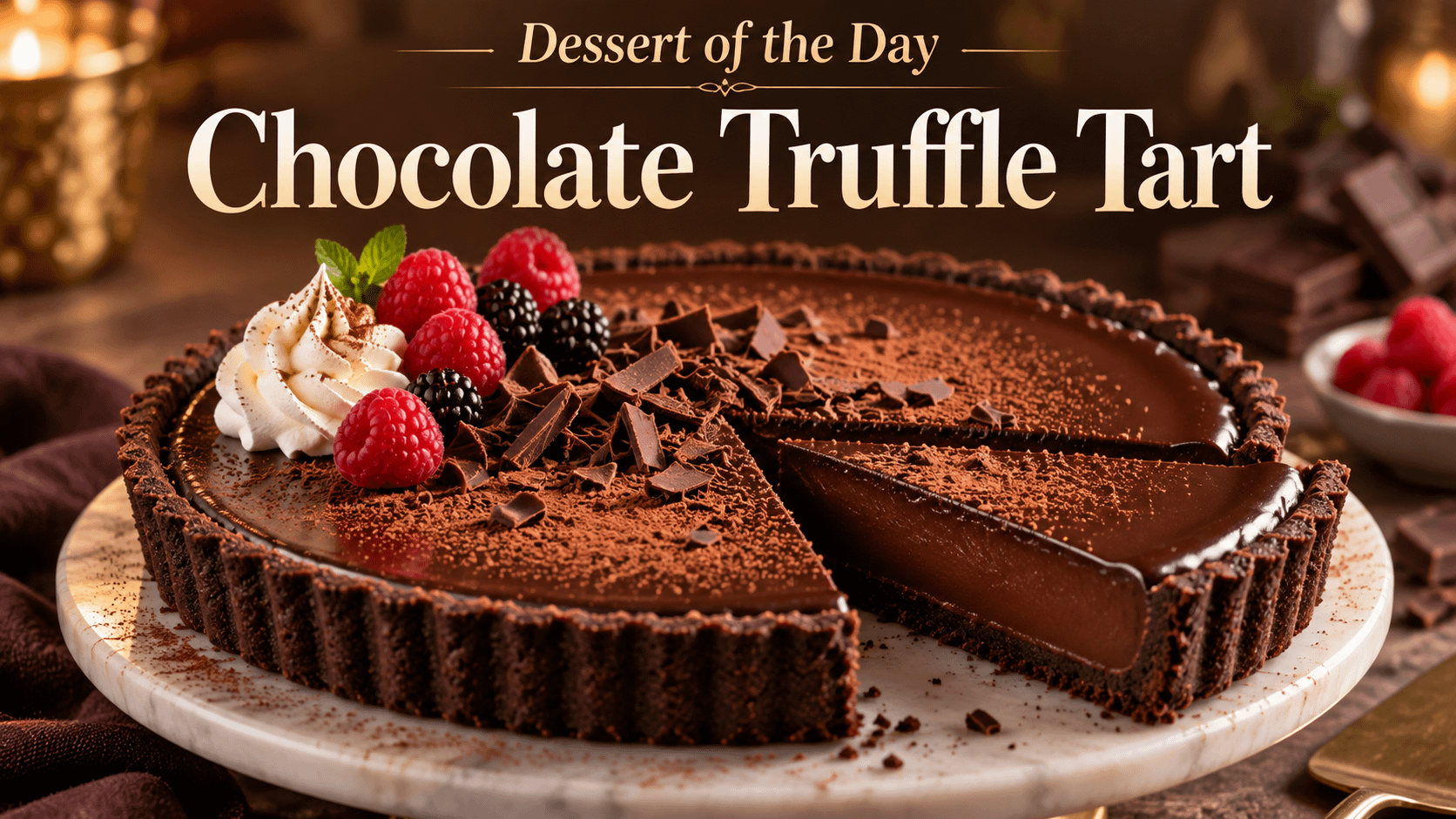
    Few desserts capture the meaning of pure chocolate indulgence quite like a Chocolate Truffle Tart. Rich, silky, deeply chocolatey, and beautifully elegant, this dessert feels like something you would order from a fine bakery or upscale restaurant—but it can be made right in your own kitchen.

    A crisp chocolate cookie crust surrounds a smooth, luxurious chocolate truffle filling that practically melts the moment it touches your tongue. Every bite delivers intense chocolate flavor balanced by a touch of creaminess and just enough sweetness to make the tart decadent without becoming overwhelming.

    Whether you are preparing dessert for a holiday dinner, birthday celebration, romantic evening, dinner party, or simply because you want something extraordinary after a long day, this Chocolate Truffle Tart is worthy of the occasion.

    And while it looks impressive, the preparation is surprisingly straightforward.

    Why Chocolate Truffle Tart Is So Special

    Traditional chocolate truffles are famous for their silky ganache centers made from chocolate and heavy cream. This tart takes that same luxurious concept and transforms it into a sliceable dessert.

    Instead of rolling ganache into individual candies, the chocolate mixture is poured into a crisp crust and chilled until perfectly set.

    The combination of textures is what makes the tart unforgettable.

    You get the slightly crunchy chocolate crust first, followed immediately by the creamy, almost fudge-like chocolate filling. Add whipped cream, berries, chocolate curls, or a dusting of cocoa powder, and you have a dessert that looks every bit as impressive as it tastes.

    It is also incredibly versatile.

    The tart can be served simply with no garnish at all, or transformed into a showstopping centerpiece with fresh raspberries, strawberries, caramel drizzle, sea salt, or shaved chocolate.

    Ingredients

    For the Chocolate Crust

    • 24 chocolate sandwich cookies
    • 5 tablespoons unsalted butter, melted
    • 1 tablespoon granulated sugar, optional

    For the Chocolate Truffle Filling

    • 12 ounces high-quality semisweet or bittersweet chocolate, finely chopped
    • 1 1/4 cups heavy whipping cream
    • 3 tablespoons unsalted butter
    • 1 teaspoon vanilla extract
    • 1/4 teaspoon salt

    Optional Garnishes

    • Fresh raspberries
    • Fresh strawberries
    • Whipped cream
    • Chocolate curls or shavings
    • Cocoa powder
    • Powdered sugar
    • Flaky sea salt
    • Caramel sauce
    • Chocolate sauce

    Choosing the Right Chocolate

    Because chocolate is the main flavor of this tart, the type you use makes a noticeable difference.

    Choose a good-quality chocolate that you enjoy eating on its own.

    Semisweet chocolate produces a balanced tart with enough sweetness for most people. Bittersweet chocolate creates a deeper, slightly more sophisticated chocolate flavor.

    You can also combine the two.

    For example, use six ounces of semisweet chocolate and six ounces of bittersweet chocolate. This creates a rich filling with excellent balance.

    Chocolate chips can work if necessary, but chopped chocolate bars generally melt more smoothly because some chocolate chips contain stabilizers designed to help them hold their shape during baking.

    Step 1: Prepare the Chocolate Crust

    Preheat your oven to 350°F.

    Place the chocolate sandwich cookies into a food processor and process until they become fine crumbs.

    If you do not have a food processor, place the cookies inside a sturdy resealable plastic bag and crush them with a rolling pin until very fine.

    Transfer the cookie crumbs to a mixing bowl.

    Pour in the melted butter and stir until every crumb is evenly coated.

    The mixture should resemble damp sand and hold together when pressed.

    Press the crumb mixture firmly into the bottom and sides of a 9-inch tart pan.

    Using the flat bottom of a measuring cup or drinking glass can help create a smooth, compact crust.

    Bake the crust for approximately 8 to 10 minutes.

    Remove it from the oven and allow it to cool completely before adding the filling.

    Baking the crust briefly helps it become firmer and gives the finished tart better structure when sliced.

    Step 2: Chop the Chocolate

    Place the finely chopped chocolate into a heat-safe mixing bowl.

    Smaller pieces melt much more evenly than large chunks, so take a little extra time to chop the chocolate finely.

    Set the bowl aside while preparing the cream.

    Step 3: Heat the Cream

    Pour the heavy whipping cream into a small saucepan.

    Heat it over medium-low heat until it is steaming and small bubbles begin forming around the edges.

    Do not allow the cream to reach a rolling boil.

    Once the cream is hot, remove the saucepan from the heat.

    Pour the hot cream directly over the chopped chocolate.

    Allow the mixture to sit untouched for approximately 2 to 3 minutes.

    This gives the hot cream time to soften and begin melting the chocolate.

    Step 4: Create the Truffle Filling

    After the chocolate has rested in the hot cream, begin stirring gently from the center of the bowl outward.

    Continue stirring until the chocolate and cream become completely smooth and glossy.

    Add the butter, vanilla extract, and salt.

    Stir again until everything is fully incorporated.

    The mixture should look shiny, thick, and beautifully smooth.

    Try not to whisk aggressively because excessive stirring can introduce air bubbles into the ganache.

    Slow, gentle stirring creates the smoothest final texture.

    Step 5: Fill the Tart

    Once the chocolate crust is completely cool, carefully pour the chocolate truffle filling into the crust.

    Use a spatula to gently spread the filling toward the edges if necessary.

    Lightly tap the tart pan against the counter a few times to help release any trapped air bubbles.

    Place the tart in the refrigerator.

    Chill for at least 3 to 4 hours, although overnight chilling works wonderfully.

    The filling will gradually firm into a smooth, sliceable truffle texture.

    Step 6: Decorate the Tart

    Once the tart is completely chilled, remove it from the refrigerator approximately 15 to 20 minutes before serving.

    This short resting period allows the chocolate filling to soften slightly and creates the best texture.

    Decorate however you like.

    For a classic presentation, dust the top lightly with cocoa powder and add a few chocolate curls.

    For something colorful and elegant, arrange fresh raspberries around the top.

    Whipped cream also pairs beautifully with the dense chocolate filling.

    If you enjoy sweet-and-salty desserts, sprinkle a small amount of flaky sea salt across the surface just before serving.

    How to Make Chocolate Curls

    Chocolate curls make this tart look especially impressive.

    Take a room-temperature chocolate bar and gently run a vegetable peeler along the edge.

    Thin ribbons of chocolate should begin curling away from the bar.

    Scatter them lightly across the tart.

    Do not worry if the curls are different sizes. Their imperfect appearance often makes the dessert look even more appealing.

    Serving Suggestions

    Because Chocolate Truffle Tart is extremely rich, smaller slices usually work best.

    Serve each slice with something that provides contrast.

    Fresh berries are an excellent choice because their slight tartness balances the richness of the chocolate.

    A spoonful of lightly sweetened whipped cream works for the same reason.

    Vanilla ice cream can transform the tart into an even more decadent dessert.

    Coffee is another perfect companion.

    The slightly bitter flavor of coffee naturally complements dark chocolate.

    For special occasions, you could create a dessert plate with a slice of tart, fresh berries, whipped cream, chocolate sauce, and a few chocolate shavings.

    Try a Salted Caramel Version

    Chocolate and caramel are a classic combination.

    Before pouring the chocolate filling into the crust, spread a thin layer of caramel sauce across the bottom.

    Sprinkle the caramel lightly with sea salt.

    Then pour the chocolate truffle mixture over it.

    When sliced, the tart reveals a hidden layer of caramel beneath the chocolate.

    Raspberry Chocolate Truffle Tart

    Raspberries and chocolate pair beautifully.

    Spread a thin layer of raspberry preserves over the bottom of the cooled crust before adding the chocolate filling.

    The raspberry flavor cuts through the richness of the chocolate and adds a subtle fruity sweetness.

    Decorate the finished tart with fresh raspberries.

    Espresso Chocolate Truffle Tart

    Coffee intensifies chocolate flavor without necessarily making the dessert taste strongly like coffee.

    Add approximately 1 teaspoon instant espresso powder to the hot cream before pouring it over the chocolate.

    The espresso deepens the chocolate flavor and gives the tart a sophisticated richness.

    Coffee lovers can increase the amount slightly for a stronger mocha flavor.

    Mint Chocolate Truffle Tart

    Chocolate and mint are another timeless combination.

    Add approximately 1/4 teaspoon peppermint extract to the finished ganache.

    Peppermint extract is powerful, so use it carefully.

    Garnish the tart with chocolate curls or crushed mint chocolates.

    This variation is especially enjoyable during the holiday season.

    Peanut Butter Chocolate Truffle Tart

    Chocolate and peanut butter lovers can add another layer of indulgence.

    Spread a thin layer of creamy peanut butter over the cooled crust before pouring in the chocolate filling.

    Alternatively, gently swirl slightly warmed peanut butter through the top of the ganache before chilling.

    The result is almost like an elegant version of a peanut butter cup.

    Orange Chocolate Truffle Tart

    Chocolate pairs beautifully with citrus.

    Add approximately 1 teaspoon finely grated orange zest to the warm chocolate mixture.

    The orange flavor adds brightness while allowing the chocolate to remain the star.

    Garnish the tart with additional orange zest or candied orange peel.

    White Chocolate Decoration

    For dramatic contrast, melt a small amount of white chocolate and drizzle it across the finished dark chocolate tart.

    You can create thin lines, swirls, or a decorative pattern.

    The white chocolate adds visual appeal while also introducing a slightly sweeter flavor.

    How to Get Clean Tart Slices

    Rich chocolate desserts sometimes become messy when sliced.

    There is an easy trick.

    Fill a tall container with hot water.

    Dip your knife into the hot water for several seconds.

    Remove it and wipe it completely dry.

    Slice the tart.

    Repeat the process before every cut.

    The warm knife passes through the chocolate filling much more smoothly and creates clean, professional-looking slices.

    Make It Ahead

    Chocolate Truffle Tart is an excellent dessert for entertaining because it can be prepared ahead of time.

    In fact, making it the day before serving is often ideal.

    The tart has plenty of time to chill completely, and you do not have to worry about preparing dessert while your guests are arriving.

    Simply cover the tart loosely and refrigerate.

    Add fresh berries, whipped cream, powdered sugar, or other garnishes shortly before serving.

    Storage

    Store leftover Chocolate Truffle Tart covered in the refrigerator.

    It should remain delicious for approximately 4 to 5 days.

    Because the filling contains heavy cream, the tart should not be left at room temperature for long periods.

    You can also freeze the tart.

    Wrap individual slices tightly and place them in a freezer-safe container.

    Allow frozen slices to thaw overnight in the refrigerator before serving.

    Tips for the Best Chocolate Truffle Tart

    A few simple techniques can make a major difference.

    Use good chocolate. Since chocolate is the dominant flavor, higher-quality chocolate creates a better-tasting tart.

    Chop the chocolate finely. Small pieces melt evenly and help prevent lumps.

    Do not boil the cream. Heating it until steaming is enough.

    Allow the cream and chocolate to rest before stirring. This gives the chocolate time to soften.

    Stir gently. Aggressive whisking can create air bubbles.

    Cool the crust completely. Pouring warm filling into a hot crust can affect the finished texture.

    Chill thoroughly. The tart needs several hours to become properly set.

    Let it sit briefly before serving. About 15 minutes at room temperature helps create the luxurious truffle texture.

    Why This Dessert Works for Special Occasions

    Chocolate has always been associated with celebration and indulgence.

    That makes this tart perfect for birthdays, anniversaries, Valentine’s Day, Mother’s Day, Father’s Day, holiday gatherings, date nights, and dinner parties.

    Unlike many cakes or complicated pastries, the Chocolate Truffle Tart has a sophisticated appearance without requiring advanced decorating skills.

    The glossy chocolate surface already looks impressive.

    A few berries or chocolate curls are often all it needs.

    A Dessert for Serious Chocolate Lovers

    Some desserts include chocolate.

    This dessert celebrates it.

    The Chocolate Truffle Tart does not hide behind layers of frosting, complicated decorations, or dozens of competing flavors.

    Chocolate is front and center.

    The ganache filling delivers the deep richness of a classic chocolate truffle while the cookie crust adds just enough crunch to keep each bite interesting.

    That simplicity is part of its charm.

    Final Thoughts

    The Chocolate Truffle Tart is proof that an elegant dessert does not have to be complicated.

    With a crisp chocolate crust, silky truffle filling, and endless decorating possibilities, it offers everything a chocolate lover could want.

    Serve it simply with whipped cream.

    Dress it up with raspberries and chocolate curls.

    Add caramel and sea salt.

    Introduce espresso, orange, mint, peanut butter, or raspberry.

    However you choose to prepare it, one thing remains the same: this is a dessert designed for moments when ordinary chocolate just isn’t enough.

    When the fork cuts through that smooth chocolate center and reaches the crisp cookie crust underneath, you understand immediately why this dessert deserves its place as Dessert of the Day.

    Rich.

    Smooth.

    Elegant.

    And unmistakably chocolate.

    What would you put on top of your Chocolate Truffle Tart—fresh berries, whipped cream, caramel, sea salt, or even more chocolate?

  • Healthy Recipe of the Day: Chicken Pizzaiola

    Advertisements

    If you love the flavors of pizza but want a meal that is higher in protein, lower in refined carbohydrates, and easy enough to make on a busy night, Chicken Pizzaiola deserves a place on your dinner table.

    Chicken Pizzaiola combines tender chicken breast with a rich tomato sauce, Italian herbs, garlic, and just enough melted mozzarella to give you that familiar pizza-inspired flavor. Instead of piling those ingredients onto a traditional pizza crust, the chicken becomes the foundation of the meal.

    The result is comforting without feeling excessively heavy.

    This recipe is also incredibly adaptable. Serve it with vegetables for a lighter dinner, add a whole grain when you need something more substantial, or prepare extra chicken for lunches throughout the week.

    What Is Chicken Pizzaiola?

    The word pizzaiola refers to food prepared in a pizza-maker style, typically involving some combination of tomatoes, garlic, oregano, olive oil, and other classic Italian flavors.

    There are many variations of pizzaiola. Some use beef or veal, while chicken provides an especially convenient option for a healthy everyday meal.

    Think of this version as a cross between Italian-style chicken and your favorite simple cheese pizza.

    You get juicy chicken covered with garlicky tomato sauce and bubbling mozzarella, finished with herbs for extra flavor.

    And you don’t need pizza dough to enjoy it.

    Why Chicken Pizzaiola Makes a Great Healthy Dinner

    One of the easiest ways to make healthier eating sustainable is to prepare food that actually tastes satisfying.

    A plate of plain chicken and steamed vegetables might technically fit into someone’s eating plan, but eating that way every night can become boring quickly. Chicken Pizzaiola takes a lean protein and transforms it into something much more exciting.

    Chicken breast supplies protein, while tomatoes contribute nutrients and allow you to build a flavorful sauce without relying on a heavy cream base.

    Using a moderate amount of cheese gives the dish the gooey pizza quality you’re looking for without allowing cheese to overwhelm the rest of the meal.

    Olive oil, garlic, oregano, basil, tomatoes, chicken, and mozzarella are simple ingredients that work extremely well together.

    Ingredients

    For the chicken:

    • 4 boneless, skinless chicken breasts
    • 1 tablespoon olive oil
    • 1 teaspoon Italian seasoning
    • 1/2 teaspoon garlic powder
    • 1/2 teaspoon onion powder
    • 1/4 teaspoon black pepper
    • Small pinch of salt

    For the pizzaiola sauce:

    • 1 can (14–15 ounces) crushed tomatoes
    • 2 cloves garlic, minced
    • 1 teaspoon dried oregano
    • 1 teaspoon dried basil
    • 1/2 teaspoon Italian seasoning
    • 1/4 teaspoon crushed red pepper flakes, optional
    • Freshly ground black pepper to taste

    For the topping:

    • 3/4 cup shredded part-skim mozzarella cheese
    • 2 tablespoons grated Parmesan cheese
    • Fresh basil or parsley for garnish

    How to Make Chicken Pizzaiola

    Step 1: Prepare the Chicken

    If your chicken breasts are especially thick, slice them horizontally or gently pound them until they are relatively even in thickness.

    This helps them cook more evenly and reduces the chance of having chicken that is dry around the edges but undercooked in the center.

    Pat the chicken dry with a paper towel.

    Season both sides with Italian seasoning, garlic powder, onion powder, pepper, and a small amount of salt.

    Step 2: Sear the Chicken

    Heat the olive oil in a large oven-safe skillet over medium-high heat.

    Add the chicken.

    Cook for approximately 3–4 minutes on the first side, then turn and cook another 2–3 minutes.

    The goal isn’t necessarily to cook the chicken completely at this point. You’re creating a lightly browned exterior before finishing it in the sauce.

    Remove the chicken temporarily and place it on a clean plate.

    Step 3: Build the Tomato Sauce

    Reduce the heat to medium.

    Add the minced garlic to the skillet and cook briefly until fragrant, being careful not to burn it.

    Pour in the crushed tomatoes.

    Add oregano, basil, Italian seasoning, crushed red pepper flakes if using, and black pepper.

    Stir everything together and allow the sauce to simmer for about 5 minutes.

    Taste the sauce and adjust the seasonings if necessary.

    Step 4: Return the Chicken

    Place the chicken back into the skillet, nestling each piece into the tomato sauce.

    Spoon a little sauce over the top of each chicken breast.

    Reduce the heat slightly, cover, and allow the chicken to simmer until it is nearly cooked through.

    Step 5: Add the Cheese

    Sprinkle mozzarella evenly over the chicken.

    Add a light sprinkle of Parmesan.

    You can cover the skillet and allow the cheese to melt on the stovetop, or place an oven-safe skillet under the broiler briefly for a lightly browned, bubbling cheese topping.

    Keep a close eye on it because cheese can brown quickly under a broiler.

    Chicken should reach a safe internal temperature of 165°F (74°C) in its thickest portion.

    Step 6: Finish and Serve

    Remove the skillet from the heat and allow the chicken to rest for several minutes.

    Finish with fresh basil or parsley.

    Spoon additional tomato sauce around the chicken before serving.

    Give It More Pizza Flavor

    The basic version is delicious, but you can customize Chicken Pizzaiola just like you would customize a pizza.

    Try adding sliced mushrooms, bell peppers, onions, spinach, olives, or fresh basil.

    For vegetables such as mushrooms, peppers, and onions, sauté them before adding the tomatoes so they have time to soften.

    You can also use fresh mozzarella instead of shredded mozzarella, although fresh mozzarella contains more moisture and will create a slightly different texture.

    Keep the Cheese Under Control

    Cheese isn’t something you necessarily have to eliminate from a healthier recipe.

    Portion size matters.

    A relatively small amount of flavorful cheese can dramatically change the taste and texture of a dish. Instead of completely covering the skillet in a thick layer, concentrate the mozzarella directly over the chicken.

    Parmesan is another useful ingredient because its strong flavor means you don’t need much.

    You’re looking for enough cheese to make the meal feel like Chicken Pizzaiola—not enough to bury the chicken underneath it.

    Choosing Your Tomato Sauce

    Tomatoes are responsible for much of the flavor in this recipe, so choosing a good-quality canned tomato product makes a difference.

    Crushed tomatoes provide a nice balance between a smooth sauce and noticeable tomato texture.

    You can also use tomato puree or a simple marinara sauce.

    If you’re purchasing prepared marinara, check the nutrition label. Different brands can vary considerably in added sugar and sodium.

    A basic tomato sauce with tomatoes, herbs, garlic, and olive oil is usually all you need.

    Make It Even Healthier With Vegetables

    One of my favorite things about Chicken Pizzaiola is how easily vegetables can disappear into the sauce.

    Try adding:

    • Mushrooms
    • Zucchini
    • Spinach
    • Bell peppers
    • Broccoli
    • Eggplant
    • Kale
    • Onions

    You could sauté sliced mushrooms and bell peppers before preparing the tomato sauce, then add spinach during the final few minutes.

    Suddenly, your chicken dinner contains several vegetables without requiring you to prepare multiple separate dishes.

    What to Serve With Chicken Pizzaiola

    The side dish you choose can completely change the meal.

    For a lighter dinner, serve Chicken Pizzaiola with roasted broccoli and a large green salad.

    Other healthy choices include roasted asparagus, green beans, zucchini, cauliflower, Brussels sprouts, or sautéed spinach.

    If you’d like some carbohydrates, consider a moderate serving of brown rice, quinoa, farro, whole-grain pasta, or roasted potatoes.

    Another delicious option is zucchini noodles.

    Spoon some of the tomato sauce from the Chicken Pizzaiola over the zucchini noodles and you’ve created a pizza-inspired chicken-and-pasta-style dinner without traditional pasta.

    Try It With Spaghetti Squash

    Spaghetti squash is another excellent pairing.

    Roast a spaghetti squash until tender, scrape the inside into strands, and place a serving underneath the Chicken Pizzaiola.

    Spoon tomato sauce over everything.

    The squash absorbs some of the tomato, garlic, and herb flavors and makes the dinner feel more substantial.

    Meal Prep Chicken Pizzaiola

    Chicken Pizzaiola is also useful for meal prep.

    Prepare a batch at the beginning of the week and divide it among meal-prep containers.

    You could create several different meals from one batch:

    Pair one serving with broccoli.

    Serve another with quinoa and spinach.

    Add another serving to a bowl containing roasted vegetables.

    Slice leftover chicken and add it to a salad.

    You don’t necessarily have to eat exactly the same dinner several days in a row just because you meal-prepped the chicken.

    A High-Protein Pizza Alternative

    Sometimes healthier eating becomes difficult because we try to completely remove the foods and flavors we enjoy.

    A different strategy is to keep those flavors and change the foundation of the meal.

    That’s exactly what Chicken Pizzaiola accomplishes.

    You still have tomato sauce.

    You still have mozzarella.

    You still have oregano, garlic, basil, and those comforting Italian flavors.

    But instead of the meal being centered around a large amount of pizza dough and cheese, it is centered around chicken and tomato sauce.

    That makes it a particularly useful recipe when you’re trying to increase protein while still eating meals that feel satisfying.

    Don’t Overcook Your Chicken

    Chicken breast has a reputation for being dry, but the problem is often simply overcooking.

    Because the chicken continues cooking after being seared, don’t leave it in the skillet for too long during the first stage.

    Use a food thermometer rather than relying only on cooking time. The exact cooking time varies depending on the thickness of your chicken.

    Once the thickest part reaches 165°F, it’s ready.

    The tomato sauce also helps keep the finished dish moist.

    Easy Chicken Pizzaiola Bowl

    Want another way to serve this recipe?

    Turn it into a healthy dinner bowl.

    Start with a base of quinoa, brown rice, cauliflower rice, or mixed greens.

    Slice the Chicken Pizzaiola and place it on top.

    Add roasted peppers, mushrooms, spinach, cherry tomatoes, and a spoonful of the pizzaiola sauce.

    Finish with fresh basil and a small sprinkle of Parmesan.

    It’s an easy way to transform leftovers into something that feels like an entirely different meal.

    Lower-Carb Serving Idea

    For a lower-carbohydrate meal, skip the pasta, bread, rice, and potatoes and serve your Chicken Pizzaiola with two vegetables.

    A simple plate could include:

    Chicken Pizzaiola + roasted broccoli + zucchini.

    Another option is:

    Chicken Pizzaiola + cauliflower rice + spinach salad.

    The tomato sauce gives vegetables plenty of flavor, so don’t hesitate to spoon some over your sides.

    Make It Spicy

    If you like spicy food, Chicken Pizzaiola can easily handle some heat.

    Add extra crushed red pepper flakes to the tomato sauce or sprinkle them over the finished chicken.

    Fresh sliced chili peppers can also be sautéed with the garlic.

    You want enough heat to complement the tomatoes and mozzarella without overpowering the Italian herbs.

    Don’t Be Afraid of Garlic and Herbs

    Healthy cooking doesn’t have to mean flavorless cooking.

    Garlic, basil, oregano, parsley, onion powder, black pepper, and red pepper flakes can provide tremendous flavor without requiring heavy sauces.

    Fresh herbs are particularly useful at the end of cooking.

    Fresh basil over melted mozzarella and tomato sauce gives this simple chicken dinner a bright finish and makes the entire skillet smell incredible.

    A Simple Dinner Worth Repeating

    Healthy eating is much easier when your recipe collection includes meals that are simple enough for an ordinary weeknight but flavorful enough that you actually look forward to eating them.

    Chicken Pizzaiola checks both boxes.

    It’s familiar.

    It’s comforting.

    It’s customizable.

    And it doesn’t require complicated ingredients or advanced cooking skills.

    You take a basic chicken breast and transform it with tomatoes, garlic, Italian herbs, mozzarella, and Parmesan.

    Add vegetables to the skillet, choose a healthy side, and you’ve got a complete dinner.

    Healthy Recipe of the Day: Chicken Pizzaiola

    There will always be room for traditional pizza, but sometimes you want those same comforting flavors in a meal built around lean protein and vegetables.

    That’s where Chicken Pizzaiola shines.

    The combination of juicy chicken, rich tomato sauce, melted mozzarella, garlic, oregano, basil, and Parmesan delivers plenty of flavor while giving you the flexibility to make the meal as light or substantial as you need.

    Serve it over zucchini noodles.

    Pair it with roasted vegetables.

    Put it over quinoa.

    Add mushrooms and peppers.

    Or simply place the skillet in the middle of the table and let everyone choose their favorite sides.

    Healthy food doesn’t have to feel like you’re giving something up.

    Sometimes it’s simply about taking flavors you already love and finding a different way to enjoy them.

    What healthy pizza-inspired meal would you like to try next?

  • Recipe of the Day: Skillet Lasagna

    Advertisements

    There is something special about lasagna. Layers of pasta, rich meat sauce, creamy cheese, and melted mozzarella make it one of those meals that instantly feels comforting. The only problem is that traditional lasagna can take quite a bit of time to prepare.

    That is where Skillet Lasagna comes in.

    This recipe takes many of the flavors we love about classic baked lasagna and turns them into an easy one-pan dinner. Instead of carefully layering noodles and waiting for a casserole to bake, everything comes together right in a large skillet.

    You still get tender pasta, seasoned ground beef, tomato sauce, ricotta, mozzarella, Parmesan, and plenty of Italian flavor—but with less work and fewer dishes.

    Whether you need a quick weeknight dinner or simply have a craving for homemade Italian comfort food, today’s Recipe of the Day deserves a place at the table.

    Why You’ll Love Skillet Lasagna

    Traditional lasagna is wonderful, but sometimes you don’t have the time or energy to assemble multiple layers and wait for everything to bake.

    Skillet lasagna simplifies the process without giving up the flavors that make lasagna so satisfying.

    It’s hearty enough to feed a hungry family, simple enough for a weeknight, and flexible enough to customize with ingredients you already have.

    Best of all, most of the cooking happens in one skillet.

    That means fewer pots, fewer pans, and a much easier cleanup when dinner is finished.

    Ingredients

    For approximately 6 servings, you’ll need:

    • 1 pound ground beef
    • 1 small yellow onion, diced
    • 3 cloves garlic, minced
    • 1 teaspoon Italian seasoning
    • 1/2 teaspoon dried basil
    • 1/2 teaspoon dried oregano
    • 1/4 teaspoon crushed red pepper flakes, optional
    • Salt and black pepper, to taste
    • 1 can (28 ounces) crushed tomatoes
    • 1 can (15 ounces) tomato sauce
    • 2 tablespoons tomato paste
    • 2 cups water or beef broth
    • 10 lasagna noodles, broken into roughly 2-inch pieces
    • 1 cup ricotta cheese
    • 1 1/2 cups shredded mozzarella cheese
    • 1/2 cup freshly grated Parmesan cheese
    • 2 tablespoons chopped fresh parsley or basil, optional

    Step 1: Brown the Ground Beef

    Heat a large, deep skillet over medium-high heat.

    Add the ground beef and diced onion.

    Cook for approximately 6 to 8 minutes, breaking the beef apart with a wooden spoon or spatula as it cooks.

    Continue cooking until the beef is browned and the onion has softened.

    If there is a large amount of excess grease in the skillet, carefully drain it before continuing.

    Step 2: Add the Garlic and Seasonings

    Reduce the heat slightly and add the minced garlic.

    Stir in the Italian seasoning, basil, oregano, crushed red pepper flakes, salt, and black pepper.

    Cook for about 30 to 60 seconds.

    Cooking the garlic and dried seasonings briefly before adding the sauce helps bring out their flavor.

    Be careful not to burn the garlic.

    Step 3: Build the Tomato Sauce

    Add the crushed tomatoes, tomato sauce, and tomato paste.

    Stir everything together until the tomato paste has completely blended into the sauce.

    Pour in the water or beef broth.

    Using broth instead of water can add another layer of savory flavor, but either works well.

    Bring the mixture to a gentle simmer.

    Step 4: Add the Lasagna Noodles

    Break the uncooked lasagna noodles into smaller pieces and carefully stir them into the sauce.

    Try to make sure most of the pasta is submerged.

    Cover the skillet and reduce the heat to medium-low.

    Cook for approximately 18 to 25 minutes, stirring every few minutes so the noodles don’t stick together or burn on the bottom.

    Cooking time will vary depending on the type and thickness of the noodles.

    If the sauce becomes too thick before the pasta is tender, add a small amount of water or broth.

    You want the finished skillet lasagna to be thick and saucy rather than dry.

    Step 5: Add the Ricotta

    Once the noodles are tender, spoon small dollops of ricotta cheese over the top of the skillet.

    You don’t need to completely mix the ricotta into the sauce.

    Leaving little pockets of ricotta throughout the skillet gives you those creamy bites that remind you of traditional layered lasagna.

    Step 6: Add Plenty of Cheese

    Sprinkle the shredded mozzarella evenly over everything.

    Follow with freshly grated Parmesan.

    Cover the skillet again and cook over low heat for another 3 to 5 minutes, or until the mozzarella is completely melted.

    If your skillet is oven-safe, you can also place it under the broiler briefly to brown the cheese.

    Keep a close eye on it because mozzarella can go from beautifully browned to burned very quickly.

    Step 7: Let It Rest

    This might be the hardest step.

    Turn off the heat and allow the skillet lasagna to rest for approximately 5 to 10 minutes before serving.

    The sauce will thicken slightly as it rests, making the lasagna easier to scoop onto plates.

    Finish with fresh parsley or basil and an extra sprinkle of Parmesan if desired.

    What to Serve With Skillet Lasagna

    Skillet lasagna is already a filling meal, so the side dishes can remain simple.

    Garlic bread is an obvious favorite. A warm piece of buttery garlic bread is perfect for soaking up any tomato sauce left on the plate.

    You could also serve the lasagna with a Caesar salad, garden salad, roasted broccoli, sautéed zucchini, green beans, or roasted asparagus.

    For an especially comforting dinner, serve it with warm breadsticks and a simple Italian salad.

    Make It Spicy

    If you enjoy a little heat, skillet lasagna is easy to spice up.

    Increase the crushed red pepper flakes or use hot Italian sausage instead of ground beef.

    You can also combine half ground beef and half hot Italian sausage.

    The sausage adds additional herbs, spices, and richness to the tomato sauce.

    Try Italian Sausage

    Ground Italian sausage is one of the easiest substitutions you can make.

    Use mild Italian sausage if you’re cooking for people who don’t enjoy spicy foods, or hot Italian sausage if you want a stronger kick.

    You can even use approximately 1/2 pound ground beef and 1/2 pound Italian sausage.

    That combination creates a hearty meat sauce with tremendous flavor.

    Add Some Vegetables

    Skillet lasagna can also be a convenient way to work more vegetables into dinner.

    Try adding:

    • Mushrooms
    • Spinach
    • Bell peppers
    • Zucchini
    • Diced carrots
    • Chopped kale

    Vegetables with a lot of moisture, such as mushrooms and zucchini, are best sautéed before the tomato sauce is added. This allows some of their excess moisture to cook away.

    Fresh spinach can simply be stirred into the skillet near the end.

    Make It Extra Cheesy

    Sometimes more cheese is the correct answer.

    For an extra-cheesy skillet lasagna, increase the mozzarella to 2 cups and add additional ricotta.

    You can also mix a little Parmesan into the ricotta before spooning it over the pasta.

    Provolone is another delicious addition. Layer a few slices over the finished skillet before covering it and allowing the cheese to melt.

    Can You Make Skillet Lasagna Without Ricotta?

    Absolutely.

    Ricotta is traditional in many American-style lasagna recipes, but it isn’t mandatory.

    If you don’t like ricotta or don’t have any available, cottage cheese is an easy substitute.

    You could also leave it out entirely and simply increase the mozzarella and Parmesan.

    Another option is to add a few tablespoons of softened cream cheese to the sauce for additional creaminess.

    It won’t taste exactly like traditional lasagna, but it will still be delicious.

    Can You Use Different Pasta?

    Yes.

    Once you move away from traditional layered lasagna, there is no reason to be overly strict about the pasta.

    If you don’t have lasagna noodles, try:

    • Mafaldine
    • Rigatoni
    • Penne
    • Ziti
    • Rotini
    • Bow-tie pasta

    The cooking time and amount of liquid may need to be adjusted depending on the pasta shape.

    The important thing is to cook the pasta until tender while maintaining enough liquid in the skillet to create a rich sauce.

    Storage

    Leftover skillet lasagna stores very well.

    Allow the leftovers to cool and place them in an airtight container in the refrigerator.

    For best quality, enjoy within about 3 to 4 days.

    The pasta will continue absorbing some of the sauce while refrigerated, so the leftovers may be thicker than the freshly prepared dish.

    Reheating

    Individual portions can be reheated in the microwave.

    If the pasta seems dry, add a spoonful of tomato sauce or a splash of water before reheating.

    You can also reheat larger portions in a covered skillet over low heat.

    Add a small amount of water or sauce and stir occasionally until everything is heated through.

    Then sprinkle a little fresh mozzarella over the top and let it melt.

    Suddenly, yesterday’s leftovers feel like a brand-new dinner.

    Tips for the Best Skillet Lasagna

    The biggest secret is keeping an eye on the liquid.

    Pasta absorbs a surprising amount of sauce as it cooks. If your skillet begins looking dry while the noodles are still firm, don’t be afraid to add more water or broth.

    Add it about 1/4 cup at a time.

    You can always cook away excess liquid, but burned pasta stuck to the bottom of the skillet is much harder to fix.

    Also, stir the pasta periodically while it cooks. Broken lasagna noodles have a tendency to overlap and stick together.

    Finally, don’t rush the resting period.

    A few minutes off the heat allows the sauce and cheese to settle into the pasta.

    A Comforting Dinner Without All the Work

    There is a reason lasagna has remained such a beloved comfort food.

    It’s warm, cheesy, hearty, and satisfying.

    Traditional lasagna certainly has its place, especially for holidays, Sunday dinners, and special occasions. But when it’s a busy Tuesday night and you’re craving those same flavors, spending an hour assembling layers isn’t always realistic.

    Skillet Lasagna gives you another option.

    Brown the meat. Build the sauce. Add the noodles. Finish everything with creamy ricotta and melted cheese.

    One skillet and dinner is ready.

    Serve it hot with garlic bread and a salad, gather everyone around the table, and enjoy a simple homemade meal that tastes like you spent much longer making it.

    Sometimes the best recipes aren’t the complicated ones.

    They’re the recipes that make it easier to put something warm, comforting, and delicious on the table.

    What’s your favorite way to make lasagna—classic layered lasagna, skillet lasagna, or your own special version?

  • Breakfast of the Day: Stuffed French Toast

    Advertisements

    There are ordinary breakfasts, and then there are breakfasts that feel like something you would order at your favorite brunch restaurant. Stuffed French Toast definitely belongs in the second category.

    Golden and slightly crisp on the outside, soft and tender on the inside, and filled with a sweet, creamy center, stuffed French toast takes everything people love about traditional French toast and makes it even better.

    The best part is that it looks impressive without being especially difficult to prepare.

    Whether you’re making a special Sunday breakfast, celebrating a birthday, preparing brunch for family and friends, or simply craving something sweet in the morning, this Stuffed French Toast is worth putting on the menu.

    Why Stuffed French Toast Is So Good

    Traditional French toast already has plenty going for it. Thick slices of bread are soaked in a mixture of eggs, milk, vanilla, and warm spices before being cooked until golden brown.

    Stuffed French toast adds another layer.

    Instead of serving the bread by itself, two slices surround a creamy filling before the entire sandwich is dipped into the custard mixture and cooked.

    The result gives you several textures and flavors in every bite: buttery toasted bread, warm cinnamon and vanilla, creamy filling, and whatever toppings you decide to pile on top.

    It feels decadent while still being simple enough to make in your own kitchen.

    Stuffed French Toast Recipe

    Prep Time: 15 minutes
    Cook Time: 15 minutes
    Total Time: 30 minutes
    Servings: 4

    Ingredients

    For the French toast:

    • 8 thick slices brioche, challah, or Texas toast
    • 4 large eggs
    • 3/4 cup whole milk
    • 1 teaspoon vanilla extract
    • 1 teaspoon ground cinnamon
    • 1 tablespoon brown sugar
    • Pinch of salt
    • 2 tablespoons butter, plus more as needed

    For the cream cheese filling:

    • 8 ounces cream cheese, softened
    • 1/4 cup powdered sugar
    • 1 teaspoon vanilla extract
    • 1/2 teaspoon cinnamon

    Optional toppings:

    • Fresh strawberries
    • Fresh blueberries
    • Raspberries
    • Sliced bananas
    • Powdered sugar
    • Maple syrup
    • Whipped cream
    • Chopped pecans or walnuts
    • Chocolate chips
    • Caramel sauce

    Step 1: Prepare the Filling

    Start by placing the softened cream cheese in a medium bowl.

    Add the powdered sugar, vanilla extract, and cinnamon. Mix until everything is smooth and creamy.

    Taste the filling before assembling your French toast. If you prefer a sweeter center, add another tablespoon or two of powdered sugar.

    You can also customize the filling at this stage.

    Fold in finely chopped strawberries for strawberry cheesecake stuffed French toast, mini chocolate chips for a chocolate version, or a spoonful of fruit preserves for an extra burst of flavor.

    Step 2: Make the Custard

    In a shallow bowl or baking dish, whisk together the eggs, milk, vanilla, cinnamon, brown sugar, and salt.

    Whisk until the eggs are completely incorporated.

    This custard mixture is what transforms regular bread into French toast. The bread absorbs some of the liquid, and when it hits the hot skillet, the outside becomes beautifully golden while the inside remains tender.

    Step 3: Assemble the Stuffed French Toast

    Lay four slices of bread on your work surface.

    Spread a generous amount of cream cheese filling over each slice, leaving a small border around the edges.

    Place another slice of bread over the filling and gently press the two pieces together.

    You now have four stuffed French toast sandwiches ready for the custard.

    Avoid overfilling them. Too much cream cheese may squeeze out while the toast cooks.

    Step 4: Dip the Sandwiches

    Place each stuffed sandwich into the egg mixture.

    Allow the first side to soak briefly before carefully flipping it over.

    You want enough custard to coat and slightly penetrate the bread without allowing the sandwich to become completely saturated.

    This is especially important when using very soft brioche.

    Step 5: Cook Until Golden

    Heat a large skillet or griddle over medium to medium-low heat.

    Melt some butter across the cooking surface.

    Place the stuffed French toast sandwiches onto the skillet and cook for approximately 3 to 4 minutes on the first side.

    Flip carefully and cook another 3 to 4 minutes.

    The exact cooking time depends on the thickness of your bread and the temperature of your pan.

    You are looking for a deep golden-brown exterior and a warm, creamy center.

    Keeping the heat moderate is important. If your skillet is too hot, the bread can burn before the center becomes warm.

    Step 6: Add the Toppings

    Transfer your French toast to serving plates and add your favorite toppings.

    For a classic presentation, dust the top with powdered sugar, add fresh strawberries and blueberries, and drizzle everything with warm maple syrup.

    For something more indulgent, add whipped cream, chocolate sauce, caramel, or chopped nuts.

    Then serve immediately while everything is warm.

    The Best Bread for Stuffed French Toast

    The bread can make a big difference.

    Brioche is one of the best choices because it is rich, buttery, slightly sweet, and sturdy enough to hold the filling.

    Challah is another excellent option. Its soft texture absorbs the custard beautifully without immediately falling apart.

    Texas toast is an affordable and convenient alternative because its thick slices are ideal for creating stuffed sandwiches.

    Slightly stale bread can actually work better than extremely fresh bread. It absorbs the custard while maintaining its structure.

    Strawberry Cheesecake Stuffed French Toast

    One of the easiest ways to change this recipe is to turn it into strawberry cheesecake French toast.

    Dice fresh strawberries into small pieces and fold them into the cream cheese filling.

    After cooking, top the French toast with additional strawberries, powdered sugar, whipped cream, and maple syrup.

    You can also warm some strawberry preserves and drizzle them across the top.

    The combination of strawberries and sweetened cream cheese gives the breakfast an unmistakable cheesecake-inspired flavor.

    Blueberry Stuffed French Toast

    Blueberries work equally well.

    Fold fresh blueberries into the cream cheese mixture or spread blueberry preserves over the bread before adding the cream cheese.

    Top the finished toast with more blueberries and powdered sugar.

    For even more blueberry flavor, simmer blueberries with a little sugar and water until they begin breaking down into a simple homemade blueberry sauce.

    Spoon the warm sauce over the French toast just before serving.

    Banana Nut Stuffed French Toast

    Bananas pair wonderfully with cinnamon French toast.

    Place thin banana slices over the cream cheese before closing the sandwich.

    Cook according to the original recipe and finish with sliced bananas, chopped pecans, cinnamon, and maple syrup.

    For an extra treat, drizzle a small amount of caramel sauce over the top.

    Chocolate Stuffed French Toast

    Breakfast occasionally deserves chocolate.

    Add mini chocolate chips to the cream cheese filling or spread a thin layer of chocolate-hazelnut spread onto one side of the bread.

    Once cooked, finish with strawberries, powdered sugar, and a little chocolate drizzle.

    This version is especially good for birthday breakfasts, Valentine’s Day brunches, or any morning when you want breakfast to double as dessert.

    Peanut Butter and Banana Version

    For another twist, replace some or all of the cream cheese filling with peanut butter.

    Add sliced bananas and close the sandwich.

    Dip and cook normally.

    Top it with additional bananas, chopped peanuts, cinnamon, and a light drizzle of maple syrup or honey.

    It is rich, filling, and packed with familiar flavors.

    How to Keep Stuffed French Toast Warm

    If you’re preparing breakfast for several people, cooking everything at once can be difficult.

    Preheat your oven to about 200°F.

    As each batch of French toast finishes cooking, transfer it to a baking sheet and place it in the warm oven.

    Continue cooking the remaining pieces.

    This keeps the first batch warm without significantly cooking it further.

    What to Serve With Stuffed French Toast

    Because stuffed French toast is rich and sweet, savory breakfast foods make excellent companions.

    Try serving it alongside scrambled eggs, crispy bacon, breakfast sausage, or breakfast potatoes.

    Fresh fruit is another great option because its acidity and freshness help balance the richness of the cream cheese filling.

    For brunch, set out several toppings and allow everyone to customize their own plate.

    You could offer strawberries, blueberries, bananas, nuts, chocolate chips, whipped cream, powdered sugar, maple syrup, fruit preserves, and caramel sauce.

    It turns a simple breakfast into a fun brunch spread.

    Tips for Perfect Stuffed French Toast

    Use thick bread. Thin sandwich bread can become soggy and may not hold the filling properly.

    Don’t over-soak it. You want the custard inside the bread, but you don’t want the sandwich falling apart before reaching the skillet.

    Cook over moderate heat. Lower and slower is usually better with stuffed French toast because the filling needs time to warm.

    Use softened cream cheese. Cold cream cheese is difficult to spread and can tear soft bread.

    Don’t overfill the sandwiches. A thick layer is delicious, but excessive filling will escape when the bread is pressed or flipped.

    Butter the skillet between batches. Fresh butter helps each batch develop that beautiful golden exterior.

    Can You Prepare It Ahead of Time?

    You can prepare several components in advance.

    The cream cheese filling can be mixed the night before and refrigerated in an airtight container.

    The custard mixture can also be prepared ahead of time and refrigerated.

    In the morning, assemble the sandwiches, dip them, and cook them fresh.

    This makes stuffed French toast much easier when you’re serving a crowd.

    A Breakfast Worth Slowing Down For

    Some mornings are about grabbing something quickly before heading out the door.

    Other mornings deserve a little more attention.

    Stuffed French Toast is made for those mornings.

    There’s something satisfying about cutting through the golden bread and discovering that warm cream cheese filling hidden inside. Add fresh berries, powdered sugar, and maple syrup, and suddenly breakfast feels like something you’d expect from a weekend brunch restaurant.

    Yet it can be sitting on your own kitchen table in about half an hour.

    That’s what makes this recipe worth keeping.

    You can make the classic cream cheese version today and completely reinvent it the next time with strawberries, blueberries, bananas, chocolate, peanut butter, preserves, or whatever else sounds good.

    Make a pot of coffee, heat up the skillet, and give yourself a breakfast worth enjoying.

    How would you stuff your perfect French toast—strawberry cheesecake, blueberry, banana, chocolate, or something completely different?

  • Wish I Could Tell You That I Love You

    Advertisements

    I wish I could tell you that I love you,
    Just one more time, somehow.
    Not in a memory or whispered prayer,
    But standing beside you now.

    I wish I could hear your voice again,
    And see that familiar smile.
    I’d give anything for one more day,
    Or even a little while.

    There are so many words left unspoken,
    So many things I’d say.
    Things I thought I had forever
    To tell you another day.

    I’d tell you how much you mattered,
    How you changed my life for good.
    How even when I struggled to show it,
    I loved you more than words ever could.

    I’d tell you that I remember
    The ordinary moments the most—
    The laughter, the conversations,
    The memories I hold so close.

    I wish I could tell you that I love you
    When the morning sun begins to rise.
    I wish I could say it face-to-face
    Instead of looking toward the skies.

    Some nights I still talk to you
    When the world becomes quiet and still.
    I wonder if somehow you hear me.
    I desperately hope that you will.

    Because love doesn’t disappear
    When someone we love is gone.
    It finds a home inside our hearts
    And somehow keeps living on.

    There are days when missing you
    Feels heavier than I can explain.
    When one small memory brings a smile
    And another brings back the pain.

    I’ve learned that grief is really love
    With nowhere left to go—
    A thousand words inside my heart
    I desperately want you to know.

    I wish I could hold you one more time
    And never let you go.
    I’d tell you everything I should have said,
    Everything I need you to know.

    I’d say, “I love you.”
    Then I’d say it once again.
    I’d keep repeating those three words
    Until I didn’t know when to end.

    Because if I had known our last goodbye
    Would truly be our last,
    I would have held on a little longer
    Instead of letting the moment pass.

    But life never gives us warnings
    For every goodbye we face.
    Sometimes all we’re left holding
    Are memories time cannot erase.

    So until the day I see you again,
    I’ll carry you wherever I go.
    I’ll speak your name.
    I’ll tell your stories.
    I’ll make sure the world still knows.

    You were here.
    You were loved.
    You mattered more than you knew.

    And though I cannot tell you face-to-face,
    My heart will always speak to you.

    Through every sunrise,
    Through every tear,
    Through every lonely night,
    Through every memory that suddenly
    Makes everything feel right.

    And whenever I look toward heaven,
    There will always be something
    I wish I could do—

    Just get close enough
    For you to hear me say:

    I miss you.
    I remember you.
    And more than anything,
    I wish I could tell you
    that I love you.

  • National Chai Day: Celebrate the Warm, Spiced Comfort of Chai

    Advertisements

    There is something special about a warm cup of chai.

    The aroma of cinnamon and cardamom rises from the cup. Ginger adds a little warmth, cloves provide their unmistakable fragrance, and rich tea blends everything together. Add creamy milk and a touch of sweetness, and you have a drink that feels comforting from the very first sip.

    National Chai Day, celebrated on September 21, is an opportunity to appreciate chai, learn more about its cultural roots, experiment with different recipes, and simply slow down long enough to enjoy a delicious cup.

    For many people, chai is more than another flavored tea. It is connected with hospitality, conversation, family traditions, morning routines, afternoon breaks, and quiet moments of reflection.

    So pour yourself a cup and celebrate one of the world’s most comforting tea traditions.

    What Is Chai?

    One of the interesting things about the word “chai” is that it essentially means tea in Hindi and several other languages.

    In the United States, however, when someone orders “chai,” they are usually referring to masala chai—tea prepared with milk, spices, and often sugar.

    Traditional masala chai can vary considerably from one household, café, or region to another. There isn’t necessarily one universal recipe.

    Common ingredients include:

    • Black tea
    • Milk
    • Water
    • Cardamom
    • Cinnamon
    • Ginger
    • Cloves
    • Black pepper
    • Sugar or another sweetener

    Some recipes contain only a few spices, while others create elaborate blends.

    That’s part of what makes chai so interesting.

    You can adjust it until you find the combination that tastes perfect to you.

    Chai Has Deep Cultural Roots

    Although chai has become enormously popular at coffee shops and cafés around the world, its story is deeply connected to India and South Asia.

    Tea drinking expanded dramatically in India during the period of British colonial rule and the growth of commercial tea cultivation. Over time, Indian tea culture developed in distinctive ways, including preparations combining strong black tea with milk, sugar, and aromatic spices.

    Masala chai eventually became an everyday beverage enjoyed in homes, workplaces, markets, railway stations, roadside stalls, and countless other settings.

    The exact preparation can vary by family and location.

    One person may love cardamom-heavy chai.

    Someone else might prefer plenty of ginger.

    Another recipe may feature cinnamon, cloves, fennel, peppercorns, star anise, or other spices.

    The result isn’t simply a beverage.

    Chai can become part of daily life.

    Why Chai Is So Comforting

    There are drinks we consume because we’re thirsty, and then there are drinks we enjoy because of the entire experience surrounding them.

    Chai often belongs to the second category.

    First comes the aroma.

    Before you even taste it, the spices announce themselves.

    Then comes the warmth of the cup in your hands.

    Finally, you get the combination of tea, milk, sweetness, and spices.

    It can feel especially comforting on a cool morning, rainy afternoon, or quiet evening.

    There’s also something about preparing chai that encourages you to slow down.

    When you’re making traditional-style chai on the stove, you aren’t simply pushing a button on a machine. You’re heating water, adding spices, steeping tea, incorporating milk, adjusting the sweetness, and waiting for everything to come together.

    That little ritual can become a welcome break from an otherwise busy day.

    Homemade Masala Chai Recipe

    National Chai Day is the perfect excuse to make a batch yourself.

    Ingredients

    Serves 2

    • 2 cups water
    • 2 black tea bags or about 2 teaspoons loose-leaf black tea
    • 1 cup milk
    • 4 green cardamom pods, lightly crushed
    • 1 small cinnamon stick
    • 3 whole cloves
    • 4 black peppercorns
    • 3–4 thin slices fresh ginger
    • 1–2 tablespoons sugar, honey, or preferred sweetener

    Directions

    Add the water, cardamom, cinnamon, cloves, peppercorns, and ginger to a small saucepan.

    Bring the mixture to a gentle boil.

    Reduce the heat and allow the spices to simmer for about 5 minutes. Simmering gives the spices time to release their flavors.

    Add the black tea and simmer briefly according to the strength you prefer.

    Pour in the milk and add your sweetener.

    Heat everything gently until hot, watching carefully so the milk doesn’t boil over.

    Strain the chai into mugs.

    Serve immediately.

    Take that first sip slowly.

    Make Your Chai Your Own

    One of the best parts about homemade chai is customization.

    Want more heat?

    Add additional ginger or black pepper.

    Want something sweeter and softer?

    Increase the cinnamon and sweetener.

    Love cardamom?

    Crush another pod or two.

    Prefer dairy-free chai?

    Try oat, almond, soy, or coconut milk.

    You can even experiment with spices such as nutmeg, fennel, or star anise.

    Keep adjusting the recipe until you’ve created your personal chai blend.

    Try an Iced Chai

    National Chai Day doesn’t require cool weather.

    If September is still warm where you live, make an iced version.

    Prepare your chai slightly stronger than normal because the ice will dilute it.

    Allow it to cool before pouring it over a glass filled with ice.

    Add cold milk and your preferred sweetener.

    For something extra indulgent, top it with cold foam and a sprinkle of cinnamon.

    You get the familiar flavors of chai in a refreshing drink perfect for a warm afternoon.

    Make a Dirty Chai

    Coffee and tea don’t always have to compete.

    Sometimes they’re better together.

    A dirty chai combines chai with espresso.

    Prepare a chai latte and add a shot of espresso.

    The bold coffee flavor works surprisingly well with the warm spices and sweetness of chai.

    For someone who loves coffee but wants to participate in National Chai Day, this may be the perfect compromise.

    Turn Chai Into Dessert

    Chai spices don’t have to stay inside your mug.

    The combination of cinnamon, cardamom, ginger, cloves, and other warm spices can work beautifully in desserts.

    Try incorporating chai-inspired flavors into:

    Chai cookies — Soft sugar cookies flavored with warm spices.

    Chai cupcakes — Spiced cupcakes topped with vanilla or cream cheese frosting.

    Chai cheesecake — Rich cheesecake with cinnamon, cardamom, ginger, and cloves.

    Chai cinnamon rolls — Traditional cinnamon rolls with additional chai spices added to the filling.

    Chai ice cream — Creamy, cold, and packed with warm spice flavors.

    Chai bread pudding — A comforting dessert especially suited for fall.

    Chai pancakes or waffles — A fun way to turn National Chai Day into a breakfast celebration.

    You could even make an entire chai-themed dessert table.

    Chai and Fall Are a Perfect Match

    September 21 arrives right around the transition from summer into fall in the Northern Hemisphere.

    That makes National Chai Day particularly well timed.

    Cooler mornings begin arriving.

    Sweaters come out of closets.

    Leaves start changing.

    Pumpkin, apple, cinnamon, maple, caramel, and other seasonal flavors begin appearing everywhere.

    And suddenly a steaming mug filled with tea and aromatic spices sounds especially inviting.

    Pumpkin spice may get much of the attention during fall, but chai deserves a place alongside it.

    In fact, you can combine them.

    Try adding a spoonful of pumpkin puree and a little pumpkin pie spice to homemade chai for a pumpkin chai latte.

    Celebrate With Someone Else

    Drinks have a wonderful ability to bring people together.

    Invite a friend over for chai.

    Make a pot for your family.

    Take someone you care about to a local café.

    Bring chai to a coworker.

    Or sit down with someone you haven’t talked with in a while.

    Then put the phones away for a few minutes.

    Talk.

    Listen.

    Laugh.

    Reconnect.

    Sometimes the most meaningful celebrations aren’t complicated.

    They’re simply two people sitting across from each other with something warm to drink.

    Create a Chai Tasting

    If you really want to celebrate National Chai Day, organize a small chai tasting.

    Prepare several variations and compare them.

    You might make:

    Classic Masala Chai

    Traditional black tea with milk and warming spices.

    Ginger Chai

    A stronger version featuring plenty of fresh ginger.

    Cardamom Chai

    A fragrant variation highlighting green cardamom.

    Vanilla Chai

    A sweeter, smoother interpretation with vanilla.

    Chocolate Chai

    Chai spices combined with cocoa or chocolate.

    Pumpkin Chai

    A seasonal variation perfect for September.

    Serve small portions and have everyone choose their favorite.

    You might discover a new recipe you’ll continue making throughout the year.

    Have a Quiet Cup by Yourself

    Celebrating doesn’t always require a crowd.

    Sometimes a quiet cup of tea is exactly what you need.

    Life moves quickly.

    We’re constantly checking messages, answering emails, scrolling through feeds, completing tasks, thinking about tomorrow, and worrying about things we can’t always control.

    Making a cup of chai gives you an opportunity to stop for a moment.

    Sit somewhere comfortable.

    Hold the warm mug.

    Notice the aroma.

    Take a slow sip.

    Look out the window.

    Let yourself enjoy five or ten minutes without needing to accomplish anything.

    Small moments of peace matter.

    National Chai Day Is About More Than a Drink

    At first glance, National Chai Day may sound like another fun food-and-drink holiday.

    And it certainly can be.

    Drink chai.

    Make a chai latte.

    Try a new recipe.

    Bake chai cookies.

    Visit your favorite café.

    But there’s also something meaningful about the traditions surrounding tea.

    For generations, people around the world have gathered over tea.

    They’ve welcomed guests with it.

    They’ve discussed important decisions over it.

    They’ve celebrated with it.

    They’ve comforted each other with it.

    They’ve started mornings with it and ended long days with it.

    A simple cup can become part of a much bigger moment.

    Ways to Celebrate National Chai Day

    You don’t need an elaborate plan. Choose whatever sounds enjoyable.

    • Make homemade masala chai.
    • Order a chai latte from a local café.
    • Try iced chai.
    • Make a dirty chai with espresso.
    • Experiment with your own spice blend.
    • Bake a chai-inspired dessert.
    • Invite someone over for tea.
    • Learn more about Indian and South Asian chai traditions.
    • Create a chai tasting with friends or family.
    • Give someone a chai spice kit.
    • Enjoy a quiet cup while reading.
    • Pair chai with breakfast or dessert.
    • Try chai with oat, coconut, almond, or another milk.
    • Make pumpkin chai for an early taste of fall.
    • Share your favorite chai recipe with someone else.

    The best celebration may simply be making enough for two and sharing it.

    A Cup Worth Slowing Down For

    National Chai Day reminds us that some of life’s enjoyable moments are remarkably simple.

    Water.

    Tea.

    Milk.

    Spices.

    A little sweetness.

    A warm mug.

    And a few peaceful minutes.

    Yet those simple ingredients can create something wonderfully comforting.

    Whether you prefer traditional masala chai simmered on the stove, a creamy chai latte from your favorite café, an iced chai on a warm afternoon, or a dirty chai with an extra shot of espresso, September 21 is a great day to celebrate this beloved tea tradition.

    Make yourself a cup.

    Share one with somebody you care about.

    And don’t rush through it.

    Sometimes happiness can be as simple as sitting down, slowing down, and enjoying the warmth of chai.

    How do you like your chai—hot, iced, extra spicy, sweet and creamy, or with a shot of espresso?

Exit mobile version