
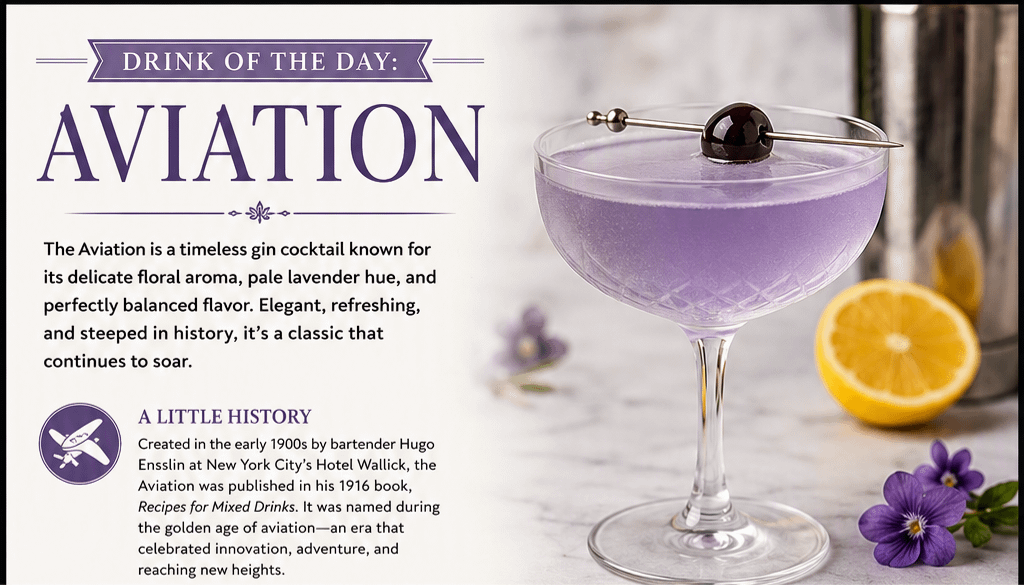
Few cocktails capture the elegance of the early twentieth century quite like the Aviation. Delicate, floral, and beautifully balanced, this classic gin cocktail has earned its place among the world’s most celebrated drinks. Its distinctive pale lavender hue and refreshing citrus finish make it a favorite for both experienced cocktail enthusiasts and those looking to discover something beyond the usual Gin & Tonic or Martini.
The Aviation is more than just a beautiful drink—it’s a piece of cocktail history. Every sip reflects an era of innovation, sophistication, and creativity, making it a perfect choice for anyone who appreciates timeless recipes with a fascinating story.
Whether you’re enjoying a relaxing evening at home, celebrating a special occasion, or simply looking to try a new classic cocktail, the Aviation is one drink that continues to soar more than a century after it was first created.
The History of the Aviation Cocktail
The Aviation was first created by Hugo Ensslin, head bartender at the Hotel Wallick in New York City, during the early 1900s. The recipe first appeared in his influential 1916 cocktail book, Recipes for Mixed Drinks.
Its name reflects the excitement surrounding aviation during that period. Air travel was still in its infancy, and airplanes symbolized progress, exploration, and the limitless possibilities of the future. Just as aviation represented humanity reaching new heights, this cocktail was considered a sophisticated leap forward in mixology.
Over time, one of its signature ingredients—crème de violette—became difficult to obtain. As a result, many bartenders omitted it from the recipe, leaving only gin, maraschino liqueur, and lemon juice. For decades, many people knew only this simplified version.
Fortunately, the resurgence of craft cocktails in the early 2000s brought crème de violette back to the market, allowing bartenders to recreate the original recipe and introduce a new generation of cocktail lovers to the Aviation’s signature floral elegance.
Why It’s Called the Aviation
The cocktail’s soft lavender-blue tint is often said to resemble the open sky, perfectly matching its aviation-inspired name. During an era when flight represented courage, innovation, and adventure, the drink became a fitting tribute to mankind’s newest frontier.
Today, the Aviation continues to represent classic sophistication while reminding us that some recipes truly never go out of style.
What Makes the Aviation Unique?
Unlike many gin cocktails that focus primarily on juniper flavors, the Aviation creates a delicate balance between several ingredients that each contribute something special.
Gin
Gin serves as the foundation of the drink, providing herbal botanicals, citrus notes, and crisp freshness.
Maraschino Liqueur
Made from Marasca cherries, this clear liqueur adds subtle sweetness with hints of cherry, almond, and spice without tasting like artificial cherry syrup.
Crème de Violette
This floral liqueur provides the Aviation’s famous lavender tint and elegant aroma. When used properly, it adds gentle floral complexity rather than overwhelming sweetness.
Fresh Lemon Juice
Fresh lemon juice brightens the cocktail with natural acidity, balancing the sweetness of the liqueurs and making every sip refreshing.
Flavor Profile
The Aviation is wonderfully balanced and layered.
Expect flavors that include:
- Bright citrus
- Crisp botanical gin
- Floral lavender notes
- Light cherry sweetness
- Subtle almond undertones
- Smooth, clean finish
Unlike sugary mixed drinks, the Aviation remains refreshing while offering remarkable depth of flavor.
Aviation Cocktail Recipe
Ingredients
- 2 ounces London Dry Gin
- ½ ounce Maraschino Liqueur
- ¼ ounce Crème de Violette
- ¾ ounce freshly squeezed lemon juice
- Ice
- Brandied cherry or lemon twist for garnish
Directions
- Chill a coupe or martini glass.
- Fill a cocktail shaker halfway with fresh ice.
- Add the gin, maraschino liqueur, crème de violette, and lemon juice.
- Shake vigorously for 15–20 seconds until thoroughly chilled.
- Double strain into the chilled glass.
- Garnish with a brandied cherry or a thin lemon twist.
Serve immediately.
Choosing the Right Gin
The gin you select has a noticeable impact on the finished cocktail.
London Dry Gin
Offers crisp juniper and citrus flavors that create the traditional Aviation.
Botanical Gin
Adds herbal complexity with floral notes that complement the crème de violette.
Contemporary Gin
Produces a softer, fruitier variation that many modern cocktail enthusiasts enjoy.
Regardless of your choice, quality ingredients make a noticeable difference.
Garnish Ideas
While a cherry remains the classic garnish, there are several beautiful options:
- Brandied cherry
- Luxardo cherry
- Lemon twist
- Edible violet flower
- Dried lemon wheel
Each garnish slightly changes the aroma before the first sip.
Food Pairings
Because of its bright citrus profile and floral notes, the Aviation pairs well with lighter foods.
Excellent pairings include:
Seafood
- Smoked salmon
- Shrimp cocktail
- Seared scallops
- Crab cakes
Cheese
- Brie
- Goat cheese
- Camembert
- Mild Havarti
Appetizers
- Charcuterie boards
- Crostini
- Stuffed mushrooms
- Bruschetta
Main Courses
- Herb-roasted chicken
- Lemon chicken
- Grilled fish
- Pasta with light cream sauces
Desserts
- Lemon tart
- Vanilla cheesecake
- Macarons
- Lavender shortbread cookies
- Fresh berries
- White chocolate mousse
Tips for Making the Perfect Aviation
Use Fresh Lemon Juice
Freshly squeezed juice provides brightness that bottled lemon juice simply cannot match.
Measure Carefully
The crème de violette is powerful. Too much can overwhelm the drink with floral flavors.
Shake Well
A vigorous shake chills the cocktail while slightly diluting it, helping all of the flavors blend together.
Chill the Glass
Serving in a chilled glass keeps the cocktail colder longer and enhances the drinking experience.
Use Large Ice Cubes
Larger cubes melt more slowly, preventing excessive dilution while shaking.
Variations to Try
Once you’ve mastered the original recipe, consider experimenting with these variations.
Aviation Royale
Top the finished cocktail with sparkling wine for an elegant celebratory version.
Elderflower Aviation
Replace part of the maraschino liqueur with elderflower liqueur for additional floral sweetness.
Lavender Aviation
Add a tiny splash of lavender bitters for an even more aromatic finish.
Modern Aviation
Use a contemporary citrus-forward gin to create a lighter, fruitier version.
Why the Aviation Has Endured
Many classic cocktails disappear over time, but the Aviation has enjoyed a remarkable revival thanks to the modern craft cocktail movement.
Its enduring popularity comes from:
- Beautiful presentation
- Balanced flavor
- Rich history
- Elegant simplicity
- Versatility
- Timeless appeal
It’s sophisticated without being intimidating, making it an excellent introduction to classic cocktails.
Interesting Aviation Facts
- The original recipe dates back more than 100 years.
- Hugo Ensslin’s 1916 recipe remains the foundation for modern versions.
- The cocktail nearly disappeared because crème de violette became unavailable for decades.
- The pale lavender color is entirely natural, coming from the violet liqueur.
- The Aviation is considered one of the essential classic gin cocktails by bartenders worldwide.
Final Thoughts
The Aviation is proof that classic cocktails never lose their charm. Its harmonious combination of botanical gin, fresh lemon, cherry liqueur, and delicate floral notes creates a drink that is both refreshing and refined. Every ingredient has a purpose, resulting in a cocktail that is greater than the sum of its parts.
Whether you’re discovering it for the first time or revisiting an old favorite, the Aviation offers an unforgettable drinking experience filled with history, craftsmanship, and elegance. Pour yourself a glass, raise it to the sky that inspired its name, and enjoy one of the finest classic cocktails ever created.
Cheers to today’s Drink of the Day: Aviation!
Read More Of Drinks And Cocktails
Leave a ReplyCancel reply