
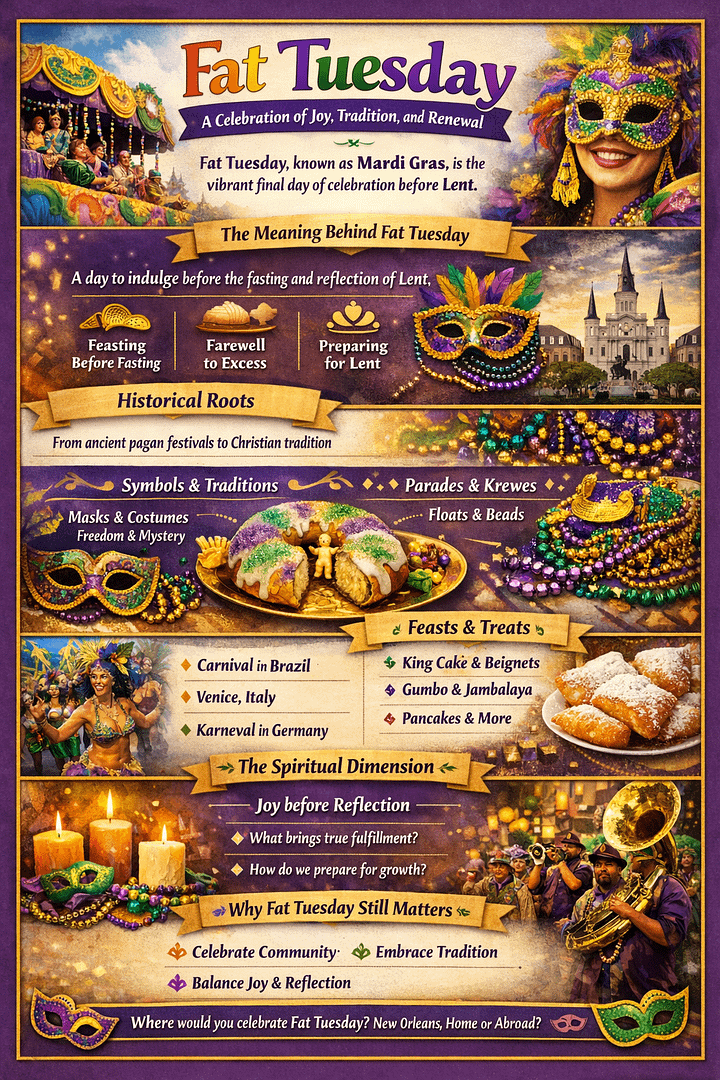
Fat Tuesday, widely known as Mardi Gras, stands as one of the world’s most energetic and culturally rich celebrations. Bursting with color, music, food, and community spirit, the day represents both an ending and a beginning — the grand finale of Carnival season and the gateway into the reflective period of Lent.
While many recognize Fat Tuesday for its lively parades and festive atmosphere, its meaning runs far deeper, connecting centuries of history, faith traditions, cultural identity, and shared human celebration.
The Meaning Behind Fat Tuesday
Fat Tuesday occurs the day before Ash Wednesday, marking the final opportunity for indulgence before Lent begins in many Christian denominations. Lent traditionally emphasizes fasting, self-discipline, repentance, and spiritual renewal leading up to Easter.
Historically, families used up rich ingredients that would be restricted during Lent — butter, eggs, sugar, and meats — resulting in feasts filled with hearty and sweet dishes. The day became a symbolic farewell to excess and a preparation for spiritual reflection.
The tradition reflects an enduring human pattern: moments of celebration balanced by seasons of introspection.
Historical Roots: From Ancient Festivals to Christian Tradition
Long before it became associated with Christianity, pre-spring festivals across Europe celebrated renewal, fertility, and the changing seasons. These gatherings included costumes, feasting, and public merriment — themes that still define Fat Tuesday today.
As Christianity spread, church leaders incorporated existing cultural celebrations into the liturgical calendar, transforming them into the Carnival season. The word Carnival itself comes from the Latin carne vale, meaning “farewell to meat.”
French and Spanish settlers brought these traditions to the Americas in the 17th and 18th centuries. Nowhere did they flourish more than in New Orleans, where diverse cultural influences — French, African, Spanish, and Caribbean — blended into a uniquely American expression of Mardi Gras.
Over time, organized social groups known as krewes began hosting elaborate parades and masked balls, shaping the celebration into the spectacle recognized worldwide today.
Symbols and Traditions of Fat Tuesday
🎭 Masks: Freedom Through Disguise
Masks allow participants to step outside everyday identities. Historically, masking blurred class distinctions, enabling people from all walks of life to celebrate equally. Today, masks remain symbols of creativity, mystery, and liberation.
🎉 Parades and Krewes
Krewes organize themed parades featuring extravagant floats, costumes, and performances. Beads, coins, and small treasures are tossed to crowds as symbols of goodwill and shared celebration.
Each parade tells a story — blending satire, art, and tradition — turning city streets into moving theaters of culture.
👑 The King Cake Tradition
The King Cake is central to Fat Tuesday celebrations. Decorated in purple, green, and gold icing, the cake honors the biblical Three Kings.
Hidden inside is a small figurine representing the Christ child. The person who finds it is said to receive good luck — along with the responsibility of hosting the next gathering, ensuring the celebration continues.
🎶 Music as the Heartbeat
Music defines Fat Tuesday, especially in New Orleans, where jazz, brass bands, and street performances fill the air. The rhythms symbolize resilience and cultural heritage, reflecting generations of artistic expression born from community experience.
Global Celebrations of Fat Tuesday
Though New Orleans may be the most famous American destination, Fat Tuesday is celebrated worldwide in unique ways:
Brazil: Massive Carnival parades featuring samba dancers and elaborate costumes.
Italy: Elegant masquerade balls in Venice.
Germany: “Karneval” celebrations filled with satire and humor.
Caribbean Nations: Street festivals blending African, European, and indigenous traditions.
United Kingdom & Ireland: Pancake races and community meals on Shrove Tuesday.
Each culture interprets the celebration differently, yet all share themes of joy, renewal, and communal unity.
Food: The Language of Celebration
Food plays a central role because it represents abundance and togetherness. Traditional Fat Tuesday dishes include:
King Cake
Pancakes and crepes
Gumbo and jambalaya
Fried pastries like beignets
Rich stews and savory feasts
These foods are not merely indulgent; they symbolize gratitude for provision and the shared experience of gathering around a table.
The Spiritual Dimension
Despite its festive reputation, Fat Tuesday holds profound spiritual symbolism. It invites participants to fully embrace joy while acknowledging life’s deeper rhythms.
The celebration encourages reflection on questions such as:
What brings true fulfillment?
What habits should we release?
How can celebration prepare us for growth?
In this way, Fat Tuesday becomes not just a party, but a transition — a joyful exhale before a season of inward focus.
Fat Tuesday in Modern Culture
Today, Fat Tuesday has expanded beyond religious observance. Schools, workplaces, and communities host themed events, cultural festivals, and charity fundraisers. Social media has also helped spread traditions globally, allowing people everywhere to participate in the spirit of Mardi Gras.
Importantly, modern celebrations increasingly emphasize inclusivity, cultural appreciation, and community engagement rather than excess alone.
Why Fat Tuesday Still Matters Today
In a world often dominated by stress and routine, Fat Tuesday reminds people of the importance of celebration. It encourages individuals to:
Pause and enjoy the present moment
Connect with community
Express creativity
Celebrate cultural heritage
It teaches that joy is not frivolous — it is essential. Celebration strengthens relationships, renews emotional energy, and prepares people for the challenges ahead.
Fat Tuesday ultimately reflects a timeless truth: life is richest when moments of celebration and moments of reflection exist in balance.
Read More Holidays & National Days
Leave a ReplyCancel reply