
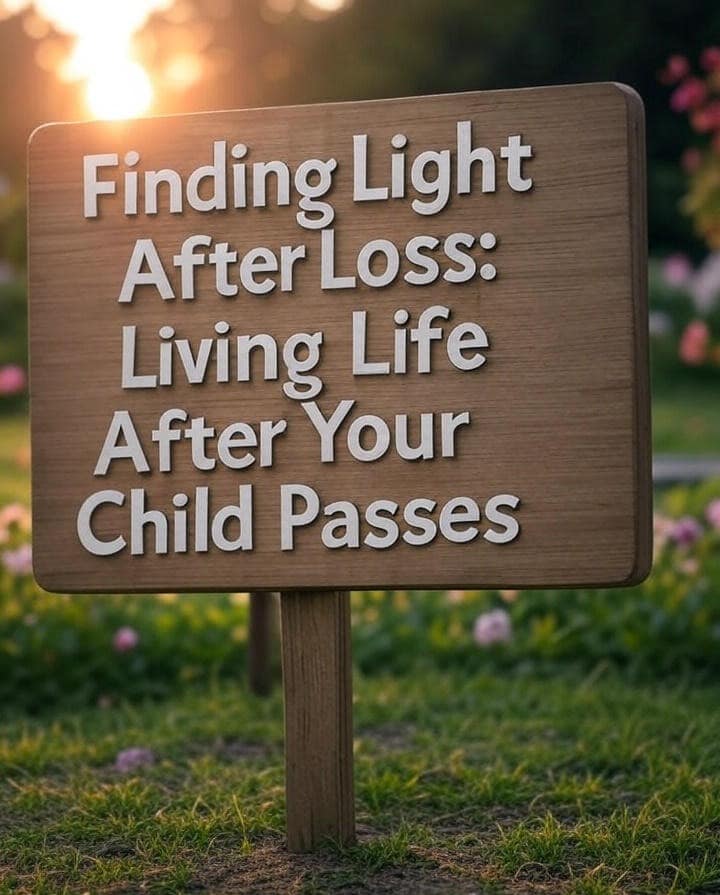
The loss of a child is an unimaginable tragedy, a wound that cuts deeper than words can express. It shatters the natural order of life, leaving parents grappling with grief that feels insurmountable. Yet, within the darkness of such profound loss, there exists the possibility of finding light—not to replace what was lost, but to illuminate a path forward. This essay explores the journey of living life after the death of a child, drawing on the stages of grief, the role of support systems, the importance of finding meaning, the power of legacy, and the resilience of the human spirit. Through this exploration, we seek to understand how parents can navigate this harrowing experience and rediscover moments of hope, purpose, and even joy.
The Weight of Grief: Understanding the Emotional Landscape
Grief after losing a child is a complex and deeply personal experience, often described as a lifelong journey rather than a destination. Elisabeth Kübler-Ross’s five stages of grief—denial, anger, bargaining, depression, and acceptance—provide a framework for understanding the emotional turbulence that follows such a loss. However, these stages are not linear; parents may cycle through them repeatedly, experiencing moments of raw anger one day and fleeting acceptance the next.
Denial often manifests as a refusal to believe the child is gone, a protective mechanism that cushions the initial blow. Anger may surface toward oneself, others, or even the universe, as parents grapple with the injustice of their child’s death. Bargaining might involve endless “what if” scenarios, replaying moments where different choices could have altered the outcome. Depression brings a heavy fog of sadness, where even mundane tasks feel overwhelming. Acceptance, when it comes, is not about moving on but about integrating the loss into one’s life, learning to carry the pain while still engaging with the world.
This emotional landscape is unique to each parent, shaped by factors such as the child’s age, the circumstances of their death, and the parent’s cultural or spiritual beliefs. For some, the grief is a quiet ache; for others, it is a storm that rages without warning. Understanding this complexity is crucial, as it validates the individual nature of mourning and dispels the notion that grief follows a prescribed timeline.
The Role of Support Systems: Finding Solace in Connection
Navigating the loss of a child is not a journey meant to be walked alone. Support systems—family, friends, communities, and professional resources—play a vital role in helping parents cope. These connections offer a lifeline, providing space for parents to express their pain without judgment and to feel seen in their grief.
Close family and friends can offer practical support, such as preparing meals or helping with daily responsibilities, as well as emotional support through listening and shared memories. However, not all relationships withstand the strain of such profound loss; some friends may distance themselves, unsure of how to respond. This underscores the importance of seeking out those who can truly empathize, whether through shared experiences or genuine compassion.
Support groups, both in-person and online, provide a unique space for parents to connect with others who have endured similar losses. Organizations like The Compassionate Friends or local bereavement groups offer a sense of community, where stories are shared, and the unspoken understanding of loss fosters healing. Professional counseling, including grief therapists or psychologists, can also guide parents through the emotional complexities, offering strategies to manage overwhelming feelings or address guilt and trauma.
Cultural and spiritual communities can further anchor parents, providing rituals and beliefs that frame the loss within a larger context. Whether through religious ceremonies, memorial traditions, or spiritual practices, these connections can offer comfort and a sense of continuity. Ultimately, support systems remind parents that they are not alone, creating a foundation from which they can begin to rebuild.
Finding Meaning: Rediscovering Purpose After Loss
One of the most profound challenges after losing a child is the question of purpose: how does one find meaning in a world that feels irrevocably altered? While the pain of loss never fully disappears, many parents discover that meaning can emerge through acts of love, service, and creativity that honor their child’s memory.
For some, meaning comes through advocacy or activism. Parents may channel their grief into raising awareness about the cause of their child’s death, such as campaigning for safer roads after a car accident or funding research for a rare illness. These efforts transform personal pain into collective good, creating a ripple effect that extends beyond the individual.
Others find purpose in creative expression, such as writing, art, or music, which allows them to process their grief and share their child’s story. Journaling, for example, can be a private way to reflect on memories, while public mediums like blogs or books can inspire others. Similarly, volunteering or helping others in need—whether through mentoring, charity work, or community service—can foster a sense of connection and purpose, reminding parents of their capacity to make a difference.
Meaning is not a one-size-fits-all solution; it is deeply personal and evolves over time. What begins as a small act, like planting a garden in memory of a child, can grow into a lifelong mission. The key is allowing space for this discovery, trusting that purpose can coexist with pain.
The Power of Legacy: Keeping a Child’s Memory Alive
A child’s death does not erase their impact on the world, and many parents find solace in preserving their child’s legacy. This act of remembrance ensures that the child’s life continues to matter, offering a way to channel love and grief into something enduring.
Legacy can take many forms. Some parents create scholarships or foundations in their child’s name, supporting causes that reflect their child’s passions or values. Others establish traditions, such as annual memorial events, charity runs, or community gatherings, that celebrate the child’s life. Even small gestures—like displaying photos, sharing stories, or wearing a piece of jewelry with the child’s initials—keep the connection alive.
Technology has also expanded the ways parents can honor their child. Social media platforms allow for digital memorials, where friends and family can share memories and tributes. Online archives, such as dedicated websites or video montages, preserve a child’s essence for future generations. These acts of legacy are not about clinging to the past but about weaving the child’s presence into the fabric of the present.
Importantly, legacy is not about perfection; it is about authenticity. A child’s life, however brief, was filled with moments of joy, struggle, and individuality. Honoring those truths—whether through a quirky tradition that captures their spirit or a quiet moment of reflection—helps parents feel their child’s enduring presence.
Resilience and Hope: Embracing Life Amidst Loss
The idea of resilience after losing a child may seem impossible, yet the human spirit has a remarkable capacity to adapt and find light even in the darkest moments. Resilience does not mean erasing grief or returning to a pre-loss state; rather, it involves learning to live alongside the pain, embracing moments of joy without guilt, and rediscovering hope.
This journey often begins with self-compassion. Parents must allow themselves to grieve at their own pace, resisting societal pressures to “move on.” Small steps, such as engaging in hobbies, reconnecting with loved ones, or practicing mindfulness, can gradually restore a sense of agency. Over time, these moments accumulate, creating a new normal where joy and sorrow coexist.
Hope, too, plays a critical role. It may manifest as hope for healing, for meaningful relationships, or for a future where the child’s memory inspires growth. For some, hope is tied to spiritual beliefs about an afterlife or reunion; for others, it is grounded in the tangible impact of their child’s legacy. Whatever its form, hope is a quiet force that propels parents forward.
The concept of post-traumatic growth, a psychological term describing positive transformation after trauma, is relevant here. Many parents report newfound strengths after loss, such as deeper empathy, greater appreciation for life’s fleeting moments, or a clarified sense of priorities. These changes do not negate the pain but reflect the capacity to find light within it.
Conclusion
Living life after the loss of a child is a journey marked by profound pain and remarkable resilience. It is a path through the stages of grief, supported by communities that offer solace, guided by the search for meaning, enriched by the preservation of legacy, and illuminated by the possibility of hope. While the loss itself is an indelible part of a parent’s story, it is not the entirety of it. By honoring their child’s life, connecting with others, and embracing their own capacity for growth, parents can find light after loss—not to replace their child, but to carry their love into a future that still holds possibility. This journey is not about forgetting but about living fully, with the child’s memory as a source of strength and inspiration.
A Father’s Guide to Surviving the Loss of a Child
Leave a ReplyCancel reply