Category: Grief & Child Loss

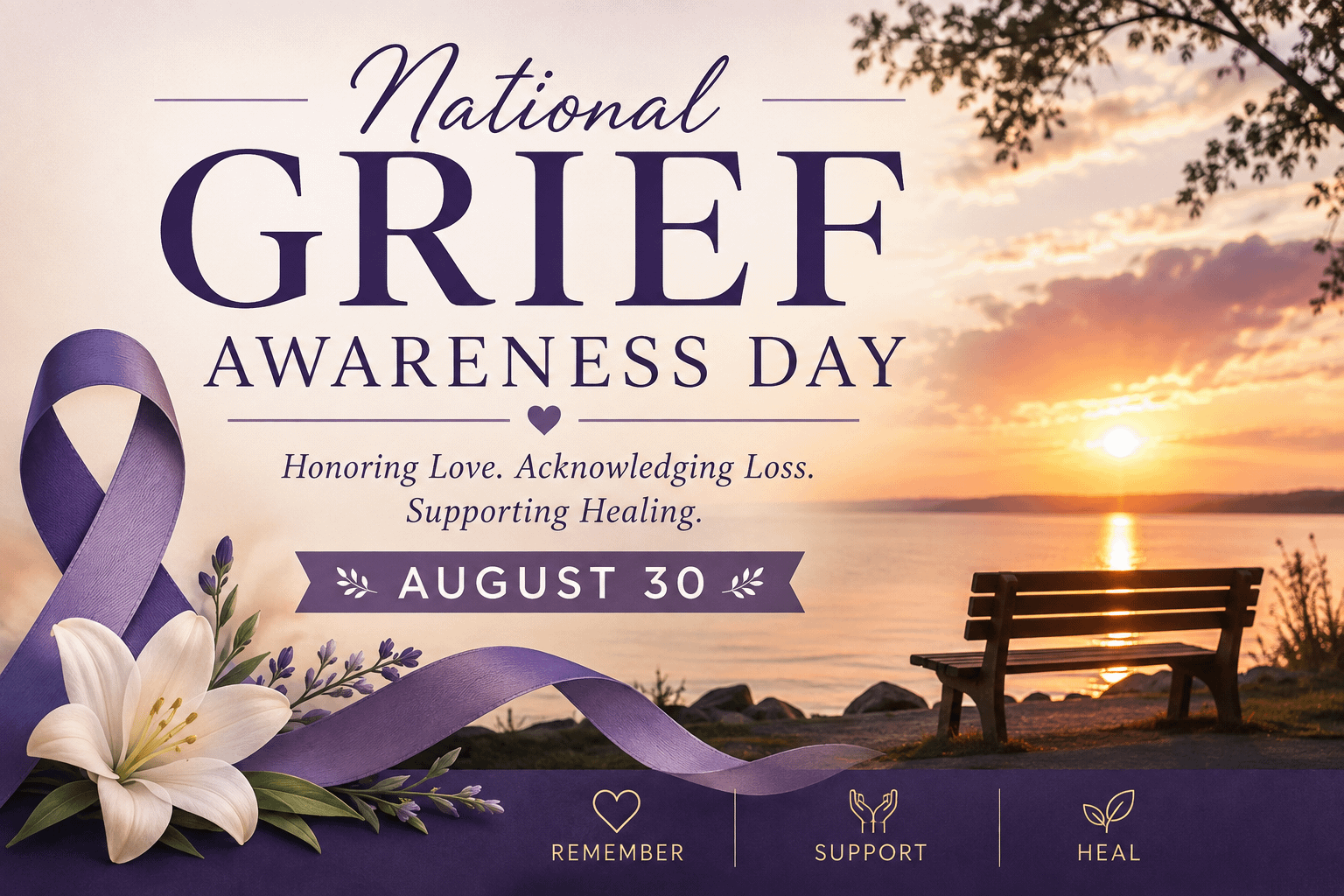
  • National Grief Awareness Day: Honoring Love, Loss, and the Journey Through Grief

    National Grief Awareness Day: Honoring Love, Loss, and the Journey Through Grief

    Advertisements

    Every year on August 30, National Grief Awareness Day encourages us to recognize one of the most universal—and deeply personal—human experiences: grief.

    Nearly everyone will encounter grief at some point in life, yet it remains something many people find difficult to discuss openly. We often know what to say when someone celebrates a birthday, gets married, welcomes a child, receives a promotion, or reaches an important milestone. When someone experiences a devastating loss, however, words can suddenly become much harder to find.

    Sometimes people become uncomfortable around grief because they don’t know what to say.

    Sometimes they avoid mentioning the person who died because they worry they will make the grieving person sad.

    Sometimes they assume enough time has passed and the grieving person should be doing better.

    National Grief Awareness Day challenges those assumptions.

    It reminds us that grief does not have an expiration date.

    It reminds us that people experience loss differently.

    And perhaps most importantly, it reminds grieving people that they should never feel ashamed for continuing to miss someone they deeply loved.

    Grief isn’t something that can simply be switched off.

    When someone becomes part of your heart, their absence can remain meaningful for the rest of your life.

    National Grief Awareness Day gives us permission to talk about that reality.

    What Is National Grief Awareness Day?

    National Grief Awareness Day is observed annually on August 30.

    The observance was founded in 2014 by grief-awareness advocate Angie Cartwright to increase understanding surrounding grief and encourage greater support for people experiencing loss.

    The purpose extends beyond simply recognizing that grief exists.

    National Grief Awareness Day encourages society to become more comfortable talking about death, loss, remembrance, mourning, and emotional healing.

    It also helps challenge one of the most persistent myths surrounding grief:

    There is a correct way to grieve.

    There isn’t.

    Some people cry openly.

    Others rarely cry around anyone.

    Some want to talk about the person they lost every day.

    Others find those conversations overwhelming, especially early in their grief.

    Some immediately surround themselves with friends and relatives.

    Others need periods of solitude.

    Some return to work quickly because routine helps them cope.

    Others struggle to concentrate on even basic responsibilities.

    One response isn’t necessarily healthier or more loving than another.

    Grief is deeply individual because relationships are deeply individual.

    Understanding What Grief Really Is

    Grief is often described simply as sadness following someone’s death.

    But grief is much more complicated than sadness.

    It can involve sadness, anger, confusion, guilt, loneliness, fear, exhaustion, numbness, anxiety, relief, gratitude, regret, love, disbelief, and countless other emotions.

    Sometimes several of those emotions appear during the same day.

    There can even be moments of laughter.

    That doesn’t mean someone has stopped grieving.

    Human emotions are complicated enough to allow joy and sorrow to exist simultaneously.

    A grieving person can laugh at dinner and cry on the drive home.

    They can enjoy someone’s wedding while wishing another person were standing beside them.

    They can have an incredible vacation and still experience a sudden moment when they desperately miss the person they lost.

    Grief isn’t always visible.

    And that is one reason awareness matters.

    There Is No Timeline for Grief

    One of the most important messages of National Grief Awareness Day is that grief does not operate according to a schedule.

    There is no universal point when someone should be “over it.”

    A few weeks isn’t enough.

    A few months isn’t necessarily enough.

    A year doesn’t automatically change everything.

    Even decades later, certain memories may carry powerful emotions.

    The intensity and frequency of grief often change over time, but love and remembrance can remain.

    Someone might go weeks or months feeling relatively stable and suddenly hear a song that brings everything rushing back.

    A photograph can do it.

    A familiar scent can do it.

    Driving past a restaurant can do it.

    Watching an old television show can do it.

    Finding an old voicemail can do it.

    Seeing someone’s favorite food in the grocery store can do it.

    Sometimes the smallest things create the biggest waves.

    That doesn’t mean healing has failed.

    It means memory is powerful.

    Grief Doesn’t Always Move in a Straight Line

    People sometimes imagine grief as a road.

    You begin devastated, gradually improve, and eventually reach the end.

    Real grief rarely works that neatly.

    There can be good days followed by terrible ones.

    There can be months of progress followed by an anniversary that feels almost unbearable.

    There can be moments when you believe you’re finally adjusting, followed by an unexpected reminder that makes the loss feel painfully fresh.

    Healing can look like:

    two steps forward, one step backward, three steps forward, another difficult day, and then continuing again.

    The difficult days don’t erase the progress.

    They are part of the journey.

    The Difference Between Moving Forward and Moving On

    The phrase “move on” can be incredibly painful for someone who has experienced a significant loss.

    Moving on can sound like leaving someone behind.

    For many grieving people, that isn’t what they want.

    They want to continue living while carrying their loved one’s memory with them.

    A better idea may be moving forward.

    Moving forward doesn’t mean forgetting.

    It doesn’t mean the relationship suddenly becomes unimportant.

    It doesn’t mean photographs have to disappear.

    It doesn’t mean traditions must end.

    It doesn’t mean someone’s name should stop being spoken.

    Moving forward means gradually learning how to participate in life again while acknowledging that someone important will always be missing.

    You can move forward with their memory, not away from it.

    Grief Is Love With Nowhere Familiar to Go

    Part of what makes grief so powerful is that love doesn’t automatically disappear when someone dies.

    You may still instinctively want to call them.

    You may still think about something you want to tell them.

    You may still see something funny and immediately imagine their reaction.

    For a brief second, your mind may follow the old routine.

    Then reality returns.

    That is one of grief’s cruelest moments.

    The relationship has changed, but the love remains.

    That love may eventually find new expressions through remembrance, storytelling, traditions, charitable acts, family gatherings, creative projects, or helping other people.

    Grief changes.

    Love continues.

    Grieving the Future That Never Happened

    Grief isn’t limited to memories from the past.

    Sometimes people grieve the future just as deeply.

    When someone dies, countless imagined moments disappear with them.

    A parent may imagine graduations, careers, weddings, grandchildren, vacations, birthdays, holidays, and ordinary Sunday dinners that will never happen.

    A spouse may mourn retirement plans.

    A child may mourn conversations they expected to have with a parent later in life.

    A sibling may mourn growing old together.

    This is sometimes called secondary loss—the many additional losses that follow the primary loss.

    You’re not only grieving the person.

    You may also be grieving everything you expected to experience together.

    When Everyone Else Returns to Normal

    One of the loneliest periods of grief can begin after the initial wave of support disappears.

    Immediately after someone dies, there may be phone calls, messages, flowers, meals, visits, cards, and offers of help.

    Then the funeral ends.

    Days pass.

    Weeks pass.

    People return to work.

    Families resume their routines.

    Life moves forward.

    For the grieving person, however, the reality of the loss may only be beginning to settle in.

    The house may feel different.

    The phone may be quieter.

    There may be fewer people checking in.

    That’s why grief support shouldn’t disappear after the funeral.

    Sometimes the person needs support even more several months later.

    The Empty Chair

    Grief often becomes particularly noticeable during celebrations.

    There can be an invisible presence at the dinner table:

    the empty chair.

    Thanksgiving arrives.

    Christmas arrives.

    Birthdays arrive.

    Weddings happen.

    Graduations happen.

    Family reunions happen.

    People laugh, eat, exchange gifts, take photographs, and create new memories.

    And somewhere inside the celebration is the awareness that someone is missing.

    That doesn’t mean the grieving person isn’t grateful for everyone who is there.

    It means they can appreciate the people present while simultaneously missing the person who isn’t.

    Both emotions can exist together.

    Remembering Grieving Parents

    Few losses challenge the expected order of life as profoundly as the death of a child.

    Parents naturally imagine watching their children grow older.

    They imagine birthdays, graduations, careers, relationships, weddings, families, holidays, and countless ordinary moments.

    When a child dies, parents may grieve both the life their child lived and the future their child should have experienced.

    There may forever be questions beginning with:

    “What would they be doing today?”

    What would their career have become?

    Where would they live?

    Would they be married?

    Would they have children?

    What would they look like now?

    These questions can continue years after the death.

    A parent’s grief doesn’t disappear simply because time passes.

    The relationship continues through memory, love, storytelling, traditions, photographs, and the impact the child had on their parent’s life.

    Say Their Name

    One of the greatest gifts you can give someone who is grieving is surprisingly simple:

    Say the name of the person they lost.

    People sometimes avoid doing this because they’re afraid it will make the grieving person sad.

    But mentioning someone’s name doesn’t create the grief.

    The grief is already there.

    For many people, hearing someone else remember their loved one can be comforting.

    It says:

    They mattered.

    They are remembered.

    Their life hasn’t been forgotten.

    Ask about them.

    Share memories.

    Tell stories.

    Remember birthdays.

    Remember anniversaries.

    A person’s life should not become a forbidden subject simply because they died.

    The Power of Stories

    Stories keep people present in powerful ways.

    Tell the funny stories.

    Tell the embarrassing stories.

    Tell the stories about their kindness.

    Talk about the things they loved.

    Talk about their favorite foods.

    Their favorite songs.

    Their personality.

    Their habits.

    Their jokes.

    Their dreams.

    Their accomplishments.

    Their imperfections.

    Their life was more than the moment it ended.

    Remembering the complete person can be an important part of grief.

    When a Photograph Becomes Priceless

    Before loss, photographs can feel ordinary.

    After loss, they can become treasures.

    A random picture taken during dinner may suddenly mean everything.

    A blurry photograph might become someone’s favorite because it captures a smile they desperately miss.

    Old videos become opportunities to hear someone’s voice again.

    Voicemails become priceless.

    Text-message conversations become pieces of history.

    Objects that once seemed ordinary—a shirt, handwritten note, coffee mug, birthday card, recipe, hat, book, or piece of jewelry—can carry enormous emotional meaning.

    Grief changes the value of things.

    Their monetary value may be insignificant.

    Their emotional value can become immeasurable.

    Grief Can Change Friendships

    Loss can reveal unexpected truths about relationships.

    Some people you expected to remain close may disappear because they don’t know how to handle grief.

    Others may surprise you by staying beside you through incredibly difficult moments.

    Some friendships grow stronger.

    Others fade.

    New friendships sometimes develop with people who understand loss in ways others cannot.

    This can be another painful secondary loss.

    The grieving person may already be coping with someone’s death while simultaneously experiencing changes in friendships, routines, identity, and community.

    Understanding this can help us become more patient and compassionate.

    Grief Can Change Who You Are

    Significant loss can change a person’s priorities.

    Things that once seemed incredibly important may suddenly feel meaningless.

    Small moments may become more valuable.

    Relationships may become more important.

    Time may feel more precious.

    Some people become quieter.

    Some become more compassionate.

    Some develop a stronger desire to help others.

    Some begin pursuing dreams they previously postponed.

    Others simply learn to appreciate ordinary days differently.

    Loss can divide life into two distinct periods:

    before and after.

    The goal isn’t necessarily to become the exact person you were before the loss.

    Sometimes healing means discovering who you are now.

    Supporting Someone Who Is Grieving

    You don’t need special training to show compassion to someone experiencing grief.

    You need willingness.

    Listen.

    Be patient.

    Show up.

    Don’t rush their emotions.

    Don’t compare their grief to someone else’s.

    Don’t pressure them to stop talking about the person they lost.

    Remember important dates.

    Send a message months later.

    Invite them somewhere while giving them permission to decline.

    Offer specific assistance rather than simply saying, “Let me know if you need anything.”

    Sometimes practical kindness can mean a great deal:

    bringing dinner, helping with errands, sitting quietly together, making a phone call, walking the dog, helping around the house, or simply having coffee.

    You don’t need to fix their grief.

    You couldn’t even if you tried.

    You can simply make sure they aren’t completely alone in it.

    What Not to Say

    People usually mean well when they offer comforting words, but certain phrases can unintentionally minimize someone’s pain.

    Avoid telling someone:

    “Everything happens for a reason.”

    “They’re in a better place.”

    “You have to stay strong.”

    “At least you still have…”

    “You need to move on.”

    “It’s been a long time.”

    “I know exactly how you feel.”

    Even if some of these statements reflect personal beliefs, they may not provide comfort at that particular moment.

    Often simpler words are more meaningful:

    “I’m thinking about you.”

    “I miss them too.”

    “I remember when…”

    “I’m here if you want to talk.”

    “You don’t have to pretend you’re okay with me.”

    Compassion doesn’t require perfect words.

    Presence is often enough.

    The Courage to Experience Happiness Again

    Grief can create guilt when happiness begins returning.

    A grieving person may laugh and suddenly think:

    How can I laugh when they’re gone?

    They may take a vacation and feel guilty for enjoying themselves.

    They may fall in love again and wonder whether they’re betraying someone.

    They may celebrate a milestone and feel uncomfortable experiencing happiness.

    But joy doesn’t erase love.

    Laughing doesn’t mean forgetting.

    Living doesn’t mean abandoning the person who died.

    Continuing your life can be one way of honoring the love and lessons they gave you.

    You Can Carry Joy and Grief Together

    Eventually many grieving people discover that life doesn’t have to be exclusively sad or exclusively happy.

    It can be both.

    You can miss someone terribly and have a wonderful day.

    You can cry in the morning and laugh that afternoon.

    You can honor the past while building a future.

    You can feel grateful for your life while wishing desperately that someone were still part of it.

    Human hearts are capable of carrying seemingly contradictory emotions.

    That isn’t confusion.

    That is grief.

    Finding Meaning After Loss

    Not every loss needs to produce a lesson.

    No one should feel pressured to turn tragedy into something positive.

    But some people eventually find meaning through the ways they choose to live afterward.

    They may volunteer.

    Start a scholarship.

    Donate to charity.

    Create a memorial.

    Plant a tree.

    Write.

    Speak publicly.

    Join a support group.

    Help another grieving parent.

    Share their experiences.

    Advocate for awareness.

    Or simply become kinder because they understand how much invisible pain people can carry.

    Meaning doesn’t erase grief.

    It can simply give love somewhere new to go.

    How to Observe National Grief Awareness Day

    There is no single correct way to recognize August 30.

    You might:

    • Reach out to someone who has experienced a loss.
    • Share a favorite memory of someone who died.
    • Say their name.
    • Light a candle in remembrance.
    • Visit a meaningful location.
    • Look through photographs.
    • Listen to their favorite music.
    • Cook their favorite meal.
    • Write them a letter.
    • Donate to an organization in their memory.
    • Support a grief-related charity or community.
    • Learn more about how grief affects people differently.
    • Give someone permission to talk without trying to solve their pain.
    • Share grief-awareness information so others feel less alone.

    And if you are grieving yourself, you don’t have to do anything publicly.

    You can simply remember.

    Sometimes that is enough.

    Give Yourself Permission to Have Difficult Days

    Grieving people often put enormous pressure on themselves.

    They believe they should be stronger.

    They should cry less.

    They should be more productive.

    They should have adjusted by now.

    National Grief Awareness Day offers another message:

    Give yourself grace.

    Some days will be easier than others.

    Some days getting through the day is enough.

    You don’t have to prove your strength by pretending you aren’t hurting.

    Strength and sadness can exist together.

    Give Yourself Permission to Have Good Days Too

    Just as you are allowed to have difficult days, you are also allowed to have good ones.

    Enjoy them.

    Laugh.

    Travel.

    Celebrate.

    Fall in love.

    Make friends.

    Try something new.

    Build new traditions.

    Create new memories.

    Dream again.

    None of those things erase the person you lost.

    Your future does not have to compete with your past.

    There is room for both.

    Grief Has No Expiration Date

    Perhaps one of the most important lessons of National Grief Awareness Day is this:

    There is no deadline for missing someone.

    A year may pass.

    Five years may pass.

    Ten years may pass.

    Twenty years may pass.

    Love doesn’t consult a calendar.

    Someone may become better at carrying grief, but that doesn’t mean they stop loving or remembering.

    Certain dates may always matter.

    Certain songs may always hurt.

    Certain photographs may always bring tears.

    Certain memories may always make you smile.

    And that’s okay.

    Their Life Was Bigger Than Their Death

    When someone dies, it can sometimes feel as though the tragedy becomes the defining part of their story.

    But their life was bigger than the day they died.

    Remember how they lived.

    Remember what made them laugh.

    Remember the things they loved.

    Remember their kindness.

    Remember their stubbornness.

    Remember their humor.

    Remember the ordinary moments.

    Remember the adventures.

    Remember the conversations.

    Remember the person.

    A life should be remembered for everything that happened between the beginning and the end.

    Turning Awareness Into Compassion

    National Grief Awareness Day shouldn’t only be about sharing a message on August 30.

    Its lessons can influence how we treat grieving people throughout the year.

    Remember the widow six months later.

    Remember the grieving father years later.

    Remember the mother on her child’s birthday.

    Remember the person approaching the anniversary of a sibling’s death.

    Remember the friend spending their first Christmas without someone they loved.

    Check in.

    Send the message.

    Make the phone call.

    Speak the name.

    Sometimes a few minutes of compassion can make an incredibly lonely day feel a little less lonely.

    For Anyone Grieving Today

    If National Grief Awareness Day brings someone to your mind, allow yourself to remember them.

    Remember their voice.

    Their smile.

    Their personality.

    Their laugh.

    Their kindness.

    Their quirks.

    Their favorite things.

    The ordinary moments you never realized would someday become extraordinary memories.

    You don’t have to stop loving someone because they died.

    You don’t have to erase their memory to continue living.

    And you don’t have to choose between remembering them and building a future.

    You can do both.

    You can carry their memory into whatever comes next.

    Final Thoughts: Love Continues

    National Grief Awareness Day on August 30 is ultimately about more than grief.

    It is about love.

    Because behind profound grief is usually a relationship that mattered.

    Someone existed.

    Someone was loved.

    Someone changed another person’s life.

    And their absence matters because their presence mattered first.

    Grief may change over time.

    The tears may come less frequently.

    The sharpest edges may soften.

    New experiences may enter your life.

    You may discover reasons to smile again.

    You may build new relationships, create new memories, and begin dreaming about the future.

    None of that requires forgetting the past.

    The people we lose become woven into our stories.

    We carry their lessons.

    We carry their memories.

    We carry the ways they changed us.

    We carry their love.

    So this National Grief Awareness Day, remember those who are grieving.

    Reach out to someone who may be hurting quietly.

    Speak the names of those who are deeply missed.

    Listen without judgment.

    Offer compassion without deadlines.

    And remember:

    Grief is not a sign that someone has failed to move forward.

    Sometimes grief is simply love continuing after loss.

    And although life may never return to exactly what it was before, it can slowly become meaningful again—not because the person who died has been forgotten, but because their love becomes part of the strength we carry into tomorrow.

  • Grief of the Day: The Strength Found in Small Victories

    Advertisements

    Grief has a way of changing the definition of accomplishment.

    Before loss, getting out of bed might have been automatic. Taking a shower was simply part of the morning routine. Going to the grocery store was another errand. Answering a phone call required little thought. Making dinner, going to work, cleaning the house, meeting a friend, or planning something for the weekend were ordinary pieces of everyday life.

    Then someone you love dies.

    Suddenly, ordinary things aren’t always ordinary anymore.

    Getting out of bed can require courage.

    Taking a shower can feel like an accomplishment.

    Walking through the grocery store while memories follow you down every aisle can take tremendous emotional strength.

    Answering someone who asks, “How are you doing?” can feel exhausting because you aren’t sure whether to tell the truth or simply say, “I’m okay.”

    Grief can make the smallest responsibilities feel enormous.

    That’s why one of the most important lessons we can learn while grieving is this:

    Small victories still count.

    In fact, during some seasons of grief, they may be the victories that matter most.

    You don’t have to accomplish something extraordinary to prove you’re healing.

    Sometimes healing looks like getting through today.

    Sometimes strength looks like trying again tomorrow.

    Sometimes courage is simply deciding that despite everything you’ve lost, you’re going to keep living.


    Grief Changes What Strength Looks Like

    We often misunderstand strength.

    We picture strength as confidence, determination, independence, courage, and the ability to keep going without falling apart.

    But grief teaches us that strength can look completely different.

    Strength can be crying.

    Strength can be resting.

    Strength can be asking for help.

    Strength can be admitting that you’re struggling.

    Strength can be walking away from situations that overwhelm you.

    Strength can be allowing yourself to feel happiness again.

    Strength can be saying your loved one’s name even when your voice shakes.

    Strength can be telling someone:

    “Today is a difficult day. I don’t need advice. I just need someone to listen.”

    Grief teaches us that strength doesn’t always roar.

    Sometimes strength whispers:

    “Try again tomorrow.”

    And sometimes that’s enough.


    When Everything Feels Like an Effort

    One of the most difficult parts of grief is the exhaustion.

    Grief isn’t only emotional.

    It can affect concentration, motivation, sleep, appetite, memory, energy, and the ability to complete everyday tasks.

    Things you once did without thinking can suddenly require enormous effort.

    You might walk into a room and forget why you’re there.

    You may read the same paragraph several times without remembering what you read.

    You might begin a task and lose motivation halfway through.

    You might spend an entire morning trying to convince yourself to get dressed.

    Someone looking from the outside might think you’re doing very little.

    But they cannot see what you’re carrying.

    They don’t feel the memories running through your mind.

    They don’t experience the moments when reality hits again.

    They don’t know how much energy it takes to function while part of your heart is somewhere else.

    That’s why comparing your productivity to your life before loss can be unfair.

    You aren’t carrying the same emotional weight anymore.

    Give yourself permission to recognize the effort behind the accomplishment.


    Some Days, Getting Out of Bed Is the Victory

    There will be mornings when you wake up and, for a few seconds, everything feels normal.

    Then you remember.

    The reality of your loss returns.

    Your heart sinks.

    And suddenly you don’t want to face the day.

    On mornings like that, getting out of bed isn’t insignificant.

    It is a decision.

    You are deciding to participate in another day even though someone incredibly important is missing from it.

    Maybe you don’t accomplish much afterward.

    Maybe you simply make coffee.

    Maybe you sit quietly.

    Maybe you cry.

    Maybe you go through the motions.

    That’s okay.

    You got up.

    You faced another morning.

    That counts.


    Taking Care of Yourself Is a Victory

    Self-care after loss isn’t always bubble baths, vacations, massages, or relaxing afternoons.

    Sometimes self-care is much more basic.

    Eating something.

    Drinking water.

    Taking your medication as prescribed.

    Changing your clothes.

    Opening the curtains.

    Taking a shower.

    Going outside for ten minutes.

    Getting some sleep.

    Calling your doctor when something doesn’t feel right.

    Keeping an appointment.

    Cleaning one small area of your home.

    These actions can seem insignificant, but they send an important message:

    My life still deserves care.

    You may not completely believe that statement yet.

    That’s okay.

    Sometimes actions come before feelings.

    Keep taking care of yourself even when motivation isn’t there.

    Small acts of self-care can slowly create stability when grief makes everything else feel uncertain.


    Leaving the House Can Be a Victory

    After losing someone, the outside world can feel strange.

    People continue going to work.

    Restaurants remain busy.

    Children laugh.

    Traffic moves.

    People complain about small inconveniences.

    Someone talks about weekend plans.

    And you might wonder:

    “How can everything keep going when my entire world changed?”

    Returning to everyday life can be uncomfortable because the world looks familiar while you feel completely different.

    That’s why leaving the house can become a victory.

    Going for a walk.

    Getting groceries.

    Meeting someone for coffee.

    Going back to work.

    Attending church.

    Visiting family.

    Sitting in a restaurant.

    These seemingly ordinary activities can be meaningful steps toward reconnecting with life.


    Answering a Message Is a Victory

    Grief can make communication exhausting.

    Sometimes you don’t know what to say.

    People send messages such as:

    “How are you?”

    “Thinking about you.”

    “Let me know if you need anything.”

    You appreciate their kindness, but answering can feel overwhelming.

    Sometimes days pass.

    Then weeks.

    You might even feel guilty for not responding.

    But grief doesn’t always leave room for conversation.

    So when you finally answer someone—even with a simple “Thank you”—recognize that as progress.

    You are reconnecting.

    One conversation at a time.


    Asking for Help Is a Victory

    Many grieving people become experts at saying:

    “I’m fine.”

    Sometimes it’s easier than explaining what is really happening inside.

    You don’t want to burden anyone.

    You don’t want people worrying about you.

    You don’t want pity.

    And sometimes you simply don’t have the energy to explain your grief.

    But eventually there may come a moment when you realize you can’t carry everything alone.

    Asking for help isn’t weakness.

    It is courage.

    Calling a friend and saying, “Can you stay with me tonight?”

    Asking someone to help with errands.

    Talking with a grief counselor.

    Joining a grief support group.

    Reaching out to someone who understands loss.

    Even saying:

    “I don’t know what I need, but I don’t want to be alone right now.”

    Those are victories.

    There is no prize for grieving alone.

    Sometimes strength means allowing another person to stand beside you.


    Crying Can Be a Victory

    We often think progress means crying less.

    But sometimes allowing yourself to cry is progress.

    Especially if you’ve spent months trying to stay strong for everyone else.

    Maybe you’ve been holding everything inside.

    Maybe people depend on you.

    Maybe you feel responsible for keeping your family together.

    Maybe you’re uncomfortable showing emotion.

    Eventually, though, grief needs somewhere to go.

    Tears aren’t failure.

    They’re one of the ways our bodies express emotions that words cannot always explain.

    Crying doesn’t mean you’ve gone backward.

    It means you loved.

    And sometimes allowing those tears to come freely is its own form of healing.


    Saying Their Name Is a Victory

    One of the strangest experiences after someone dies is watching the world slowly stop mentioning them.

    People may avoid their name because they think they’re protecting you.

    They don’t want to make you sad.

    But they don’t realize something important:

    You haven’t forgotten.

    You don’t suddenly remember your loved one because someone says their name.

    You were already thinking about them.

    Hearing their name can actually be comforting because it reminds you that someone else remembers too.

    So say their name.

    Tell their stories.

    Talk about their personality.

    Share the funny moments.

    Talk about what they loved.

    Remember the things they taught you.

    Tell someone what made them special.

    Each story keeps part of their presence woven into your life.


    Looking at a Photograph Can Be a Victory

    There may be a time when photographs are too painful.

    You see their face and immediately remember everything you’ve lost.

    You might avoid photo albums.

    You might scroll quickly past memories online.

    You might keep certain pictures hidden because seeing them hurts too much.

    Then one day, something changes.

    You look at a photograph.

    The tears may still come.

    But alongside the tears is something else.

    Gratitude.

    You think:

    “I was lucky to have this moment.”

    That doesn’t remove the sadness.

    It simply means another emotion has found room beside it.

    That is progress.


    Laughing Again Is a Victory

    The first genuine laugh after a devastating loss can feel strange.

    For a few seconds, you forget your grief.

    Then guilt appears.

    You might think:

    “How can I laugh when they’re gone?”

    But laughter doesn’t mean you have forgotten.

    Happiness isn’t disrespectful.

    Enjoying a moment doesn’t reduce your love.

    You can miss someone desperately and still laugh.

    You can grieve and still experience joy.

    You can carry sadness and gratitude at the same time.

    Your heart is capable of holding more than one emotion.

    Allow yourself to laugh.

    It is not betrayal.

    It is evidence that life can still reach you.


    Enjoying Something Again Is a Victory

    Grief can drain the enjoyment from things you once loved.

    Music doesn’t sound the same.

    Food doesn’t taste the same.

    Favorite places feel different.

    Hobbies seem pointless.

    Celebrations can feel uncomfortable.

    Then one day you find yourself enjoying something again.

    Maybe you cook.

    Maybe you garden.

    Maybe you watch a funny movie.

    Maybe you listen to music.

    Maybe you attend a sporting event.

    Maybe you spend time with friends.

    For an hour, you feel something besides grief.

    Don’t apologize for that moment.

    Welcome it.

    Joy isn’t replacing your loved one.

    It is becoming part of your life again.


    Surviving a Difficult Date Is a Victory

    Certain dates carry enormous emotional weight.

    Birthdays.

    Anniversaries.

    Holidays.

    The anniversary of their death.

    Family celebrations.

    Mother’s Day.

    Father’s Day.

    Christmas.

    Thanksgiving.

    Dates that once brought excitement can become painful reminders of absence.

    Sometimes the days leading up to these dates are harder than the dates themselves.

    You imagine how difficult they’ll be.

    You replay memories.

    You wonder how you’ll get through them.

    Then somehow, you do.

    Maybe you cried all day.

    Maybe you visited a meaningful place.

    Maybe you stayed home.

    Maybe you lit a candle.

    Maybe you shared memories.

    Maybe you did absolutely nothing.

    There is no correct way to survive a difficult anniversary.

    If you made it through, that was enough.


    Going Somewhere Filled With Memories Is a Victory

    Certain places can hold powerful emotional memories.

    A restaurant.

    A park.

    A hospital.

    A vacation destination.

    A favorite store.

    A stadium.

    A neighborhood.

    Sometimes we avoid these places because the memories feel overwhelming.

    And that’s understandable.

    You don’t need to force yourself.

    But someday you may return.

    Your heart may race.

    Your eyes may fill with tears.

    You may remember conversations you haven’t thought about in years.

    And yet you stay.

    Eventually you realize something:

    The place still contains memories, but the memories didn’t destroy you.

    You carried them.

    That can be another small victory.


    Making New Memories Can Feel Complicated

    One of the hardest parts of continuing life after loss is realizing new memories will happen without your loved one physically present.

    New birthdays.

    New holidays.

    New friendships.

    New relationships.

    New homes.

    New jobs.

    New experiences.

    You may wish desperately that they were there.

    Sometimes happiness itself can remind you of their absence.

    You think:

    “They should be here for this.”

    And you’re right.

    You wish they were.

    But their absence doesn’t mean you aren’t allowed to experience the moment.

    Creating new memories doesn’t erase old ones.

    Your life can continue growing while still honoring everything that came before.


    Making Plans for Tomorrow Is a Victory

    Grief can make the future difficult to imagine.

    Immediately after a major loss, you may live hour by hour.

    Then day by day.

    Eventually week by week.

    At some point, you begin planning again.

    You schedule something for next weekend.

    You make plans for next month.

    You book a vacation.

    You start working toward a goal.

    You imagine something you want to accomplish next year.

    This is significant.

    Planning means you’re allowing yourself to believe there is still a future worth experiencing.

    You don’t have to know exactly what that future looks like.

    You only have to leave the door open.


    Helping Someone Else Can Become a Victory

    Something powerful sometimes happens after we survive deep grief.

    We begin recognizing pain in other people.

    You notice the person sitting quietly while everyone else is celebrating.

    You understand why someone doesn’t want advice.

    You know why “moving on” can be painful language.

    You understand how meaningful it is when someone simply remembers.

    Your pain can create compassion.

    Eventually, you may become the person who sits beside someone else and says:

    “You don’t have to explain. I understand.”

    Your loss should never have happened simply so you could help others.

    But if something meaningful grows from the love and pain you’ve experienced, that can become part of your loved one’s legacy.


    Grief Is Not a Competition

    Never compare your healing to someone else’s.

    One person returns to work quickly.

    Another needs months.

    One person wants to talk constantly.

    Another becomes quiet.

    One person finds comfort in photographs.

    Another can’t look at them yet.

    One person keeps belongings exactly where they were.

    Another finds comfort in giving things away.

    There isn’t one correct timeline.

    Your victories belong to you.

    What seems small to someone else may have required everything you had.

    You don’t need anyone else’s approval to call it progress.


    Healing Isn’t Forgetting

    Many people secretly fear healing.

    They worry that if the pain becomes less intense, their connection with their loved one will somehow become weaker.

    But healing doesn’t require forgetting.

    Your memories remain.

    Your love remains.

    Their influence remains.

    Their story remains.

    Healing simply means learning how to carry the love differently.

    At first, grief may feel like the entire story.

    Eventually, you may begin remembering more than the death.

    You remember the life.

    The laughter.

    The conversations.

    The ordinary days.

    The inside jokes.

    The celebrations.

    The lessons.

    The love.

    That shift itself can be a victory.


    Some Victories Will Be Invisible

    Nobody may congratulate you.

    Nobody may even know what happened.

    You walked into a store that reminded you of them.

    You heard their favorite song without leaving the room.

    You made it through their birthday.

    You deleted an old voicemail you were finally ready to release.

    You kept another because you weren’t ready.

    You went to a family gathering.

    You looked at photographs.

    You said no when you needed rest.

    You said yes when you were ready to participate again.

    You made dinner.

    You cleaned your room.

    You slept through the night.

    You woke up and didn’t cry immediately.

    These victories don’t require applause.

    They matter because you know what they cost.


    There Will Still Be Difficult Days

    Small victories don’t mean grief disappears.

    You can make tremendous progress and still have terrible days.

    You can laugh Saturday and cry Sunday.

    You can feel hopeful in the morning and devastated by evening.

    You can go months feeling relatively stable and suddenly hear a song that takes you right back to the beginning.

    This doesn’t erase your progress.

    Grief isn’t a staircase where every step permanently takes you higher.

    It moves.

    It changes.

    It surprises you.

    Some days you carry it.

    Other days it carries you somewhere you didn’t expect to go.

    But every time you find your footing again, that’s another victory.


    Stop Measuring Yourself Against Who You Used to Be

    One of the most painful comparisons in grief can be comparing yourself to the person you were before your loss.

    You may remember having more energy.

    More patience.

    More motivation.

    More excitement about the future.

    You might wonder:

    “Why can’t I be that person again?”

    Because you’ve experienced something that changed you.

    That doesn’t mean you’ll never experience happiness again.

    It doesn’t mean your best days are behind you.

    It means your life has been altered.

    Instead of trying desperately to become the old version of yourself, allow yourself to discover who you’re becoming.

    You may find strength you didn’t know existed.

    You may develop deeper compassion.

    You may appreciate ordinary moments differently.

    You may become less concerned with things that once seemed important.

    You may understand the value of time more deeply.

    Grief changes us.

    But change doesn’t mean your story is finished.


    Look Back at How Far You’ve Come

    When you feel like you’re making no progress, look backward.

    Think about the earliest days of your grief.

    Think about the moments you believed were impossible to survive.

    Think about the nights you wondered how you would face another morning.

    Yet you’re here.

    You survived those days.

    You survived those nights.

    You survived birthdays, holidays, anniversaries, memories, unexpected triggers, lonely evenings, and countless moments when you desperately wished life could return to what it once was.

    Maybe you’re still struggling.

    Maybe you’re still hurting deeply.

    But don’t overlook this truth:

    You’ve already survived every difficult day that brought you here.

    That is not nothing.


    Keep a Record of Your Small Victories

    Sometimes it can help to intentionally notice your progress.

    You could keep a simple journal and write down one small victory each day.

    It doesn’t need to be profound.

    Today I got out of bed before noon.

    Today I went for a walk.

    Today I called someone.

    Today I laughed.

    Today I cooked dinner.

    Today I talked about my loved one.

    Today I cried and allowed myself to feel everything.

    Today I rested without feeling guilty.

    Today I made plans for next week.

    Today I had a difficult day, but I made it through.

    Weeks or months later, reading those entries can remind you that progress was happening even when you couldn’t see it.


    One Small Victory Leads to Another

    Healing often begins quietly.

    You get out of bed.

    Then you open the curtains.

    Then you make breakfast.

    Then you step outside.

    Then you walk around the block.

    Then you call a friend.

    Then you accept an invitation.

    Then one day you laugh.

    Then you make plans.

    Then you begin imagining a future.

    None of these moments erase your grief.

    But together, they slowly rebuild a life around it.

    That’s why small victories deserve recognition.

    They are often the building blocks of something much larger.


    You Are Allowed to Be Proud of Yourself

    Grief can make us focus constantly on what we haven’t accomplished.

    The phone calls we haven’t returned.

    The projects we haven’t finished.

    The places we haven’t visited.

    The relationships we haven’t repaired.

    The goals we’ve postponed.

    But occasionally, stop looking at everything you haven’t done.

    Look at what you have done.

    You survived.

    You continued loving.

    You continued remembering.

    You kept showing up in whatever ways you could.

    And despite everything grief has asked you to carry, you’re still trying.

    Be proud of that.


    Grief of the Day

    Never underestimate the strength required to accomplish small things while carrying enormous grief.

    You don’t need a breakthrough every day.

    You don’t need to wake up tomorrow completely healed.

    You don’t need to prove anything to anyone.

    Find one small victory.

    Get out of bed.

    Open the curtains.

    Take the shower.

    Drink the water.

    Eat something.

    Walk outside.

    Answer the message.

    Call the friend.

    Tell the story.

    Say their name.

    Look at the photograph.

    Allow yourself to cry.

    Allow yourself to laugh.

    Make tomorrow’s plan.

    And when you’ve done that one thing, don’t immediately dismiss it because it seems small.

    Recognize what it required.

    Because grief changes the weight of ordinary things.

    What once required almost no effort may now require courage.

    And every time you choose to participate in life despite the emptiness you carry, you’re demonstrating a quiet kind of strength that many people will never fully understand.

    Some days your victory will be enormous.

    Other days your victory will simply be:

    “I made it through today.”

    Both count.

    Healing isn’t always measured in dramatic transformations.

    Sometimes healing is measured in showers taken, meals eaten, phone calls answered, memories shared, tears released, laughter rediscovered, invitations accepted, boundaries respected, mornings survived, and tomorrows imagined.

    Small victories matter because eventually they become something bigger.

    They become proof that even after devastating loss, pieces of life can slowly return.

    Not the life you had before.

    Not a life without grief.

    But a life where love, memories, sadness, purpose, laughter, hope, and grief can somehow exist together.

    So today, don’t worry about conquering the mountain.

    Take one step.

    And if that step is all you can manage, let it be enough.

    Sometimes the greatest strength isn’t found in making a giant leap forward.

    Sometimes it is found in the quiet decision to keep going—one small victory at a time.

    Today’s Reflection

    Take a moment and think about something you’ve accomplished since your loss that other people might consider ordinary.

    Perhaps you returned to work.

    Maybe you attended a family gathering.

    Maybe you visited a meaningful place.

    Perhaps you laughed again.

    Maybe you finally asked for help.

    Perhaps you simply got out of bed during one of the hardest days you’ve experienced.

    Whatever it was, don’t minimize it.

    You know how much strength it required.

    And that makes it worth celebrating.

    What is one small victory you’ve experienced during grief that might seem ordinary to someone else but meant everything to you?

  • Grief of the Day: Trusting That Love Never Dies

    Advertisements

    Grief has a way of making us question everything we once believed about love, life, time, and even ourselves.

    When someone we deeply love dies, there can be a terrible sense of finality. Their chair may be empty. Their phone no longer rings. Their voice is no longer part of everyday conversations. The routines you once shared suddenly become reminders of what is missing.

    There are no more ordinary mornings together.

    No more unexpected phone calls.

    No more conversations about tomorrow.

    No more opportunities to say, “Remember when?”

    And perhaps one of the most painful realities of grief is knowing that life around you continues even though someone incredibly important to you is no longer physically here.

    But death cannot erase everything.

    There is something that remains.

    Love.

    The relationship changes because physical presence is gone, but love does not simply disappear. The love you shared becomes part of your memories, your character, your decisions, your traditions, your values, and the person you continue becoming.

    Today’s Grief of the Day is about learning to trust something that grief sometimes makes difficult to believe:

    Love never dies.

    When Someone Dies, Love Has Nowhere to Go

    One of the reasons grief can feel so overwhelming is because the love remains even though the person is gone.

    Before loss, you had somewhere to direct that love.

    You could call them.

    You could hug them.

    You could tell them about your day.

    You could buy them a birthday present.

    You could make plans together.

    You could argue, forgive, laugh, celebrate, and simply exist beside one another.

    Then suddenly, all that love is still inside you, but the person you want to give it to is no longer physically there.

    That can create an enormous ache.

    Your heart continues doing what it has always done.

    It continues loving.

    That is why grief is not simply sadness.

    Grief is love searching for the person who is missing.

    It is your heart remembering a relationship that mattered deeply.

    Grief Exists Because Love Still Exists

    People sometimes talk about grief as though it is something we should eventually finish.

    We hear phrases like:

    “You need to move on.”

    “You have to let go.”

    “You should be doing better by now.”

    But grief rarely works according to a timetable.

    You may have good weeks followed by a difficult day.

    You may feel strong for months and suddenly break down because you hear a song.

    You may think you have adjusted to a particular holiday only to discover that this year it hurts differently.

    None of this means you are going backward.

    Grief changes because love continues.

    When someone mattered deeply, their absence can continue touching different parts of your life as the years pass.

    You are not grieving because you failed to move forward.

    You are grieving because you loved someone who mattered.

    Love Does Not Follow a Calendar

    There is no expiration date on love.

    If someone was important to you during their life, they do not suddenly become unimportant because a certain number of years have passed.

    The calendar may say it has been five years.

    Ten years.

    Twenty years.

    But the heart does not measure relationships only in time.

    There may be moments decades later when a memory feels incredibly close.

    You might remember exactly how they laughed.

    You might hear their voice in your mind.

    You might remember something they told you during an important moment in your life.

    You might still wonder what they would think about the person you have become.

    Time changes grief, but time does not erase love.

    The Relationship Changes, But It Does Not Become Meaningless

    Death changes relationships in the most painful way imaginable.

    You can no longer interact with your loved one physically.

    But that does not mean the relationship becomes meaningless.

    The relationship becomes something different.

    You may continue it through remembrance.

    Through stories.

    Through photographs.

    Through traditions.

    Through values.

    Through the lessons they taught you.

    Through the decisions you make because of the influence they had on your life.

    This is sometimes called a continuing bond—the idea that healing does not require completely severing your emotional connection with the person who died.

    Instead, you learn how to carry that relationship differently.

    You are not trying to pretend they are still physically here.

    You are acknowledging that their life permanently influenced yours.

    You Carry Pieces of Them Everywhere You Go

    Think about the people you have loved deeply.

    They changed you.

    Maybe they taught you patience.

    Maybe they taught you how to laugh at yourself.

    Maybe they encouraged you when nobody else believed in you.

    Maybe they taught you how to cook something.

    Maybe they introduced you to music you still listen to.

    Maybe they had sayings you still repeat.

    Maybe they taught you what loyalty looks like.

    Maybe they showed you compassion during one of the hardest periods of your life.

    Those things do not disappear.

    A person can be physically absent and still influence your life every day.

    Sometimes you may not even realize how much of them you carry.

    Then something happens and you suddenly think:

    “That is exactly what they would have said.”

    For a moment, the distance between yesterday and today feels smaller.

    Memories Become Sacred

    Before loss, many memories seemed ordinary.

    You probably did not realize how important they would eventually become.

    A random dinner.

    A drive somewhere.

    A conversation in the kitchen.

    Watching television together.

    A silly argument.

    A vacation.

    A birthday.

    A joke that nobody else understood.

    A photograph you almost did not take.

    At the time, these moments may have felt like normal life.

    After loss, they can become treasures.

    You begin understanding that some of life’s greatest moments were never dramatic.

    They were simply moments when someone you loved was beside you.

    That realization can be painful.

    But it can also create gratitude.

    Because even though you wish you had more time, you can still be thankful for the time you had.

    When Memories Hurt

    Not every memory feels comforting.

    Sometimes memories hurt terribly.

    You may look at a photograph and immediately cry.

    You may hear a recording of their voice and feel your heart break all over again.

    You may remember the last conversation you had.

    You may replay things you wish you had said differently.

    You may wonder whether they knew how much you loved them.

    This is part of grief too.

    Memories do not always arrive gently.

    Sometimes they arrive like waves.

    But even painful memories are often connected to love.

    You would not hurt so deeply if the relationship had not mattered.

    Over time, some memories that once caused only tears may eventually bring smiles too.

    The sadness may never completely disappear.

    But joy can begin standing beside it.

    Love and Pain Can Exist Together

    Grief teaches us something complicated:

    Two opposite emotions can exist at the same time.

    You can be thankful and heartbroken.

    You can laugh and miss someone.

    You can enjoy a holiday and still wish they were sitting beside you.

    You can feel hopeful about your future and devastated that they are not physically part of it.

    You can love your current life while grieving the life you once had.

    Human emotions are not always either/or.

    Sometimes healing looks like learning to hold both.

    I miss you, and I am grateful for you.

    I wish you were here, and I am going to keep living.

    I am hurting, and I can still experience joy.

    I carry grief, and I also carry love.

    Both can be true.

    Moving Forward Does Not Mean Leaving Them Behind

    One of the greatest fears in grief is that moving forward somehow means abandoning the person who died.

    You may feel guilty the first time you genuinely laugh again.

    You may feel strange making new friends.

    You may feel conflicted when something wonderful happens.

    You may wonder whether creating a new life means forgetting the old one.

    But moving forward does not require forgetting.

    You can carry someone with you while continuing your journey.

    You can honor yesterday while building tomorrow.

    You can love the person who died while allowing yourself to love the people who are still here.

    Your loved one’s importance is not measured by how miserable you remain.

    Their memory does not require you to stop living.

    You Are Allowed to Experience Joy Again

    Joy after loss can feel complicated.

    Sometimes happiness itself becomes a grief trigger.

    You experience something wonderful and immediately think:

    “I wish they were here to see this.”

    That thought can transform a beautiful moment into something bittersweet.

    But bittersweet moments are still meaningful.

    You are allowed to smile.

    You are allowed to laugh.

    You are allowed to travel.

    You are allowed to celebrate.

    You are allowed to fall in love.

    You are allowed to create new traditions.

    You are allowed to dream about tomorrow.

    You are allowed to enjoy being alive.

    None of these things diminish your love for the person who died.

    Your happiness does not erase them.

    Speak Their Name

    One of the most meaningful things we can do for someone who died is continue saying their name.

    Sometimes people become uncomfortable mentioning someone who has died because they worry they will make the grieving person sad.

    But many grieving people are already thinking about the person.

    Hearing their name can be comforting.

    Their name says:

    They existed.

    They mattered.

    They were loved.

    Tell their stories.

    Share their photographs.

    Remember their jokes.

    Talk about their personality.

    Remember what made them difficult.

    Remember what made them wonderful.

    Remember the entire person—not only the fact that they died.

    Their death is part of their story.

    It is not their entire story.

    Remember the Life, Not Only the Loss

    Grief can sometimes cause the final chapter to overshadow everything that came before it.

    The circumstances surrounding someone’s death may replay in your mind.

    You may remember hospital rooms.

    Phone calls.

    Accidents.

    Funerals.

    Goodbyes.

    Those memories can become incredibly powerful.

    But your loved one’s life was bigger than the day they died.

    There were birthdays before that day.

    There was laughter.

    There were ordinary mornings.

    There were celebrations.

    There were conversations.

    There were mistakes.

    There were accomplishments.

    There were dreams.

    There was love.

    When grief becomes focused entirely on how someone died, gently remind yourself to remember how they lived.

    Love Can Become Legacy

    One of the most beautiful ways love survives death is through legacy.

    Legacy does not have to mean something enormous.

    It does not require a foundation, a building, or a public memorial.

    Legacy can be quiet.

    Maybe you treat people more kindly because your loved one taught you kindness.

    Maybe you become more patient because they taught you patience.

    Maybe you help grieving people because you understand their pain.

    Maybe you support a cause that mattered to them.

    Maybe you tell younger family members stories so they understand who this person was.

    Maybe you make their favorite meal every year.

    Maybe you continue a tradition.

    Maybe you simply try to become the kind of person they believed you could be.

    Every time their influence inspires something good in your life, part of their legacy continues.

    Turn Love Into Something Living

    Grief can make us feel powerless because there is one thing we desperately want that we cannot change.

    We cannot undo death.

    But we can decide what we do with the love that remains.

    You can turn love into kindness.

    You can turn love into service.

    You can turn love into compassion.

    You can turn love into creativity.

    You can turn love into storytelling.

    You can turn love into generosity.

    You can turn love into helping someone else survive a difficult day.

    When you do that, love continues moving through the world.

    Someone who never met your loved one may benefit from something your loved one inspired in you.

    That is a powerful form of legacy.

    There Is No Wrong Way to Remember

    Different people honor their loved ones differently.

    Some visit cemeteries.

    Some keep ashes nearby.

    Some create memorial gardens.

    Some get tattoos.

    Some write letters.

    Some listen to favorite songs.

    Some cook favorite meals.

    Some donate to charity.

    Some participate in memorial events.

    Some quietly look through photographs.

    Some talk openly about the person.

    Others keep their memories private.

    There is no single correct way to remember someone.

    What matters is finding something meaningful to you.

    Special Dates May Always Matter

    Birthdays, anniversaries, holidays, and the date someone died can remain emotionally significant for many years.

    You may feel anxious as the date approaches.

    You may feel exhausted.

    You may want company.

    You may want to be alone.

    You may want to celebrate their life.

    You may simply want to survive the day.

    All of those responses are understandable.

    You do not have to celebrate the same way every year.

    One year you may want a gathering.

    Another year you may want quiet.

    Grief changes, and your needs can change with it.

    Unexpected Grief Can Still Find You

    Some of the strongest grief moments are not connected to anniversaries.

    They arrive unexpectedly.

    You see someone who looks like them.

    You smell their cologne or perfume.

    A song begins playing.

    You hear someone laugh like they did.

    You discover an old voicemail.

    You find something they wrote.

    You reach for your phone before remembering you cannot call them.

    Suddenly, years can disappear.

    For a few moments, the loss feels new again.

    These moments do not mean you have failed to heal.

    They simply show how deeply memory and love are connected.

    Love Is Bigger Than the Final Goodbye

    Goodbyes are painful because they feel final.

    But a goodbye cannot erase everything that happened before it.

    The last conversation does not erase thousands of earlier conversations.

    The final day does not erase an entire lifetime.

    The funeral does not erase the birthdays.

    The tears do not erase the laughter.

    The absence does not erase the love.

    When grief becomes overwhelming, try to remember the whole story.

    Not only the ending.

    You Do Not Have to Stop Loving Them to Heal

    Sometimes people think healing means emotionally releasing the person who died.

    But healing can mean something very different.

    It can mean learning how to live with love and loss together.

    You do not have to stop caring.

    You do not have to stop remembering.

    You do not have to stop wishing they were here.

    You do not have to stop saying their name.

    You simply begin discovering ways to carry the relationship that allow you to keep living.

    Healing does not mean:

    “They no longer matter.”

    Healing can mean:

    “They will always matter, and I am learning how to live with their absence.”

    Some Days Love Will Feel Like Tears

    There will be days when love feels painful.

    You may cry unexpectedly.

    You may feel lonely.

    You may become angry that life continued without them.

    You may feel jealous when you see other people experiencing something you lost.

    You may feel exhausted from carrying memories that nobody else seems to understand.

    Those feelings do not make your love less beautiful.

    Love after loss is complicated.

    Sometimes love feels warm.

    Sometimes love feels heartbreaking.

    Sometimes it feels like gratitude.

    Sometimes it feels like longing.

    Sometimes it feels like silence.

    Sometimes it feels like tears.

    It is still love.

    Some Days Love Will Feel Like Gratitude

    There may also come moments when you can think:

    “I am grateful they were part of my life.”

    This does not mean you are grateful they died.

    It means you recognize the gift of having known them.

    You may wish desperately that the story had been longer while still appreciating the chapters you received.

    Gratitude and grief can live beside each other.

    You can wish for more while being thankful for what was.

    Trust That Your Love Still Matters

    Grief can sometimes make love feel powerless.

    You may think:

    What good is all this love if I cannot give it to them anymore?

    But love continues shaping you.

    It influences your choices.

    It influences the stories you tell.

    It influences how you treat people.

    It influences what you value.

    It influences what you refuse to take for granted.

    It influences how deeply you understand another grieving person’s pain.

    Love is still doing something.

    Even now.

    If You Have Faith, Love Can Carry Hope

    For many people, faith adds another dimension to grief.

    Faith does not remove the pain of missing someone.

    It does not make every question disappear.

    It does not mean you never struggle.

    But faith can offer hope that death is not the final word.

    It can create space for the belief that love reaches beyond what we currently understand and that separation may not be forever.

    Sometimes faith in grief is not a powerful feeling.

    Sometimes faith is simply whispering:

    “I still believe.”

    Even while crying.

    Even while questioning.

    Even while missing someone more than words can explain.

    Hope and grief can occupy the same heart.

    Carry Them Into Tomorrow

    Tomorrow will come whether you feel ready or not.

    That can be one of grief’s cruelest realities.

    But tomorrow does not require you to leave your loved one in yesterday.

    Carry them with you.

    Carry their lessons.

    Carry their humor.

    Carry their kindness.

    Carry their stories.

    Carry their encouragement.

    Carry the ways they changed your life.

    Carry the love.

    And as you continue forward, allow that love to become part of the life you are still building.

    A Gentle Reminder for the Hardest Days

    There may be days when grief convinces you that everything beautiful was taken away.

    On those days, remember:

    The relationship happened.

    The memories happened.

    The laughter happened.

    The conversations happened.

    The love happened.

    Nothing can change those truths.

    Death changes what comes next.

    It does not rewrite what came before.

    Your loved one was here.

    They mattered.

    They changed your life.

    And they are still loved.

    Grief of the Day Reflection

    Today, instead of asking yourself how you are supposed to “get over” losing someone you love, consider asking a different question:

    How can I carry this love forward?

    Maybe today that means looking at a photograph.

    Maybe it means telling one of their stories.

    Maybe it means playing their favorite song.

    Maybe it means doing something kind in their memory.

    Maybe it means allowing yourself to cry.

    Maybe it means laughing at something they would have found funny.

    Maybe it simply means quietly saying:

    “I still love you.”

    There does not have to be anything more complicated than that.

    Final Thoughts: Love Never Dies

    Grief teaches us many painful lessons, but perhaps one of its most meaningful lessons is this:

    Physical presence can end, but love can remain.

    Love survives through memory.

    Love survives through stories.

    Love survives through traditions.

    Love survives through lessons.

    Love survives through kindness.

    Love survives through the people we become because someone once loved us.

    There will always be moments when you wish love could bring them physically back.

    There will always be things you wish you could say.

    There may always be milestones when their absence feels especially heavy.

    But their absence does not erase their importance.

    And continuing your life does not erase your love.

    You can keep going while remembering.

    You can heal while missing them.

    You can laugh while carrying grief.

    You can create new memories while treasuring old ones.

    You can build a future without abandoning the past.

    Most importantly, you can trust that the love you shared was real, meaningful, and permanent in the ways that matter most.

    When someone becomes part of your heart, their influence does not simply disappear.

    So when grief tells you that death took everything, remember what remains.

    The memories remain.

    The lessons remain.

    The stories remain.

    The impact remains.

    And the love remains.

    Trust that love never dies.

    It simply learns a different way to live within us.

    Question of the Day

    Who is someone you will always carry in your heart, and what is one memory that reminds you your love for them will never disappear?

  • Grief of the Day: When Your Heart Feels Divided Between Then and Now

    Advertisements

    Grief has a way of changing your relationship with time.

    Before loss, yesterday was simply the past, today was the present, and tomorrow was something you could imagine with a certain amount of confidence. You made plans. You assumed certain people would be there. You pictured birthdays, holidays, ordinary weekends, conversations, celebrations, and milestones without thinking much about how fragile those expectations really were.

    Then someone you love dies, and suddenly time doesn’t feel so simple anymore.

    Part of your heart remains deeply connected to then—the life you had, the memories you shared, the person you were, and the future you thought was waiting for you.

    Another part of your heart is being pulled toward now—the life that continues despite everything that happened.

    And sometimes those two worlds seem impossible to reconcile.

    You may feel as though moving toward today means abandoning yesterday.

    You may worry that enjoying your life means forgetting the person you lost.

    You may wonder whether creating new memories somehow replaces the old ones.

    You may even feel guilty when you realize you’ve gone several hours—or perhaps an entire day—without thinking about your grief.

    But grief doesn’t require you to choose between your past and your present.

    You are allowed to remember then while living now.

    The challenge is learning how to carry both.


    Your Heart Remembers the Life Before Everything Changed

    There was a time when your world looked different.

    Maybe you didn’t realize how precious those days were while you were living them.

    Most of us don’t.

    Ordinary life rarely announces itself as something we’ll desperately miss someday.

    You don’t usually wake up thinking:

    “I need to remember every detail of today because one day I would give anything to have it back.”

    Instead, you simply live.

    You answer the phone.

    You make dinner.

    You complain about traffic.

    You sit together watching television.

    You exchange text messages.

    You make plans for the weekend.

    You laugh about something ridiculous.

    You argue about something that doesn’t matter anymore.

    You say goodnight assuming there will be another morning.

    Then loss changes the meaning of those ordinary moments.

    Suddenly, the everyday memories become treasures.

    The voice you once heard regularly becomes something you desperately wish you could hear again.

    The photographs you barely looked at become priceless.

    Old text messages become pieces of history.

    A voicemail can become something you protect because hearing their voice for a few seconds makes them feel close again.

    A simple photograph can transport you back years.

    That is the strange power of grief.

    It teaches us the value of ordinary moments after those moments are gone.


    Sometimes You Don’t Want a Special Day Back

    When people imagine missing someone, they often think about major events.

    Birthdays.

    Christmas.

    Vacations.

    Weddings.

    Graduations.

    Anniversaries.

    Those memories certainly matter.

    But sometimes the moments you miss most aren’t extraordinary at all.

    You might wish you could return to a random Tuesday afternoon.

    Nothing remarkable happened.

    Nobody was dressed up.

    There wasn’t a celebration.

    There weren’t decorations or presents.

    It was simply another day.

    But they were there.

    And now you understand how extraordinary that really was.

    You may wish you could sit beside them one more time.

    Hear them laugh.

    Ask them a question.

    Tell them something about your day.

    Share a meal.

    Drive somewhere together.

    Or simply sit quietly in the same room.

    Grief teaches you that presence itself was the gift.

    You didn’t need a perfect moment.

    You just needed them.


    Then Was the Life You Understood

    Before loss, there was a version of your life that made sense.

    You understood your role.

    You understood your relationships.

    You had routines.

    You had expectations.

    You had assumptions about what tomorrow would look like.

    Perhaps you imagined growing older alongside someone.

    Maybe you imagined watching your child build a life of their own.

    Maybe you expected years of conversations, celebrations, vacations, phone calls, disagreements, reconciliations, holidays, and ordinary days.

    Then death interrupted the story.

    And suddenly you’re living inside a chapter you never expected to read.

    That’s why grief is about more than missing someone.

    You’re grieving the person.

    But you’re also grieving the future.

    You’re grieving everything that was supposed to happen.

    The birthdays they should have celebrated.

    The holidays they should have attended.

    The accomplishments they should have witnessed.

    The conversations you thought you’d have.

    The questions you never got to ask.

    The advice you still wish you could receive.

    The photographs that will never be taken.

    The memories that will never be created.

    Sometimes grief is mourning something that happened.

    Other times, grief is mourning everything that never got the chance to happen.


    You May Also Grieve the Person You Used to Be

    There is another loss that isn’t discussed nearly enough.

    Sometimes you miss yourself.

    You miss the person you were before grief entered your life.

    Maybe you were more carefree.

    Maybe you trusted the future.

    Maybe you assumed bad things happened somewhere else.

    Maybe you laughed more easily.

    Maybe you didn’t think about mortality very often.

    Maybe planning several years ahead felt natural.

    Then someone you loved died, and something inside you changed.

    You learned something about life you can never completely unlearn:

    Everything can change.

    A phone call can change everything.

    A knock at the door can change everything.

    One moment can divide your entire life into before and after.

    After experiencing profound loss, you may look at old photographs and barely recognize yourself.

    You see your old smile.

    Your old confidence.

    Your old innocence.

    And you may think:

    “That person had no idea what was coming.”

    There can be grief in that realization too.

    You’re not only mourning someone else.

    You’re mourning the version of yourself who existed when they were still here.


    Life Doesn’t Stop Because Your Heart Broke

    One of the cruelest things about grief is discovering that the world keeps moving.

    You may experience the worst moment of your life, walk outside, and discover that everything looks exactly the same.

    Cars continue driving.

    People continue shopping.

    Someone is laughing.

    Someone is complaining about something insignificant.

    Someone is planning a vacation.

    Someone is celebrating a birthday.

    The sun rises.

    The sun sets.

    Another morning arrives.

    And you may want to scream:

    “Don’t you understand what happened?”

    But the world doesn’t stop.

    Eventually, you have to participate in it again.

    There are responsibilities.

    Bills.

    Appointments.

    Work.

    Family.

    Housework.

    Groceries.

    Phone calls.

    Decisions.

    Life keeps asking things from you even when you feel as though you have nothing left to give.

    At first, simply surviving another day may feel like an accomplishment.

    And it is.


    Then Slowly, Something Begins to Change

    You may not notice it happening.

    Healing rarely arrives dramatically.

    There isn’t usually a morning when you wake up and announce:

    “My grief is over.”

    Instead, change happens quietly.

    Maybe one day you laugh without forcing it.

    Maybe you hear a song and smile before you cry.

    Maybe you go somewhere you once avoided.

    Maybe you begin looking forward to something.

    Maybe you make plans for next month.

    Then next year.

    Maybe you discover something new that gives you purpose.

    Maybe you meet someone who becomes important to you.

    Maybe you realize that you’re not merely surviving every day anymore.

    You’re beginning to participate in life again.

    And surprisingly, that can sometimes hurt.


    Happiness Can Trigger Guilt

    Grief can create a strange relationship with happiness.

    You desperately want relief from the pain.

    But when relief finally arrives, you may feel guilty for experiencing it.

    You laugh.

    Then suddenly think of them.

    You have a wonderful afternoon.

    Then you remember they weren’t there.

    You celebrate an accomplishment.

    Then your heart whispers:

    “They should be here for this.”

    You may even wonder:

    “How can I be happy when they’re dead?”

    That question can quietly steal beautiful moments from your present.

    But your happiness doesn’t erase their importance.

    Your laughter doesn’t cancel your grief.

    Your future doesn’t replace your past.

    And your willingness to continue living doesn’t mean you have stopped loving the person who died.

    Love and happiness are not limited resources.

    Your heart can hold love for someone who is gone while still experiencing joy with the people who are here.


    Moving Forward Doesn’t Mean Moving On

    The phrase moving on can be painful for grieving people.

    It can sound as though grief has an expiration date.

    As though you’re eventually expected to pack away the memories, close the door, and continue as if the person were simply part of an earlier chapter that no longer matters.

    But meaningful love doesn’t work that way.

    You don’t have to move on from someone you love.

    You can move forward with their memory.

    That’s different.

    Moving forward doesn’t mean forgetting.

    It doesn’t mean replacing.

    It doesn’t mean loving them less.

    It means learning how to carry their absence while continuing to live.

    Your relationship with them changes, but the love doesn’t necessarily disappear.

    Instead of being expressed through physical presence, love may begin expressing itself through memory.

    Stories.

    Traditions.

    Photographs.

    Lessons.

    Values.

    Acts of kindness.

    The way you treat other people.

    The choices you make.

    The person you become.


    The Past Can Still Be Part of Your Present

    There is no rule saying memories must remain locked in yesterday.

    You can bring pieces of the person you love into your life today.

    Cook their favorite meal.

    Play their favorite music.

    Visit somewhere meaningful.

    Continue a tradition they loved.

    Tell stories about them.

    Use something they taught you.

    Support something they cared about.

    Help someone because they once helped you.

    Say their name.

    Laugh about something funny they did.

    Share photographs.

    Keep their memory part of family conversations.

    Their physical life may have ended.

    But their influence doesn’t necessarily end with it.

    People leave fingerprints on our lives.

    The way they loved us changes us.

    The things they taught us remain.

    The memories they gave us become part of who we are.

    In that way, pieces of them continue traveling through life with us.


    Some Days Then Will Feel Closer Than Now

    Grief doesn’t follow a predictable schedule.

    You can have several relatively peaceful days and suddenly find yourself overwhelmed by a memory.

    Sometimes there is an obvious trigger.

    A birthday.

    An anniversary.

    A holiday.

    A familiar place.

    A song.

    A photograph.

    Other times there is no obvious reason at all.

    You simply wake up missing them.

    On those days, yesterday may feel incredibly close.

    Let it.

    You don’t have to fight every memory.

    You don’t have to prove you’re healing by refusing to cry.

    You don’t have to hide photographs because someone thinks enough time has passed.

    You don’t have to stop telling stories.

    You don’t have to pretend certain dates don’t matter.

    There are days when your heart needs to remember.

    Remembering isn’t moving backward.

    Love remembers.


    Other Days Now Will Take the Lead

    There will also be days when your present life becomes louder than your grief.

    You may become absorbed in a project.

    Spend time with friends.

    Go somewhere new.

    Laugh for hours.

    Work toward a goal.

    Watch a great movie.

    Enjoy a meal.

    Celebrate something.

    You may reach the end of the day and realize:

    “I didn’t think about my grief very much today.”

    That realization can feel unsettling.

    But it doesn’t mean you’re forgetting.

    It means your life is expanding.

    Imagine grief as something that once occupied almost every room inside you.

    Over time, grief may not necessarily become smaller.

    Instead, your life begins building more rooms around it.

    There is room for grief.

    But there is also room for laughter.

    Purpose.

    Friendship.

    Faith.

    Adventure.

    Creativity.

    Love.

    Service.

    Hope.

    Rest.

    Dreams.

    Your grief remains part of your story.

    It simply doesn’t have to be the entire story.


    The Fear of Forgetting

    One of the deepest fears after losing someone is forgetting.

    What if I forget their voice?

    What if I forget exactly how they laughed?

    What if I forget certain conversations?

    What if the memories fade?

    What if years pass and everything becomes blurry?

    These fears can make moving forward feel dangerous.

    You may subconsciously believe that staying close to your pain keeps you close to them.

    But pain and love aren’t the same thing.

    You don’t have to remain miserable to prove that someone mattered.

    Your suffering isn’t the measurement of your love.

    The relationship existed before grief.

    The laughter existed.

    The memories existed.

    The connection existed.

    None of that becomes less meaningful because you’re beginning to heal.

    You are allowed to carry love without carrying the same intensity of pain every moment.


    There Is No Betrayal in Healing

    Sometimes healing feels strangely disloyal.

    You may wonder whether the person you lost would recognize the life you’re building now.

    Perhaps things have changed dramatically.

    New people may have entered your life.

    Old relationships may have disappeared.

    Your priorities may be different.

    You may have moved.

    Changed careers.

    Started new traditions.

    Found new interests.

    Changed spiritually.

    Changed emotionally.

    You may barely recognize the person you’ve become.

    But rebuilding after loss isn’t betrayal.

    It is survival becoming life again.

    You can honor the person you lost while continuing to grow.

    You can treasure the life you shared while accepting that your life today looks different.

    Healing doesn’t erase love. It changes the way you carry it.


    Your Heart Can Hold Contradictions

    Grief teaches us that opposite emotions can exist simultaneously.

    You can be grateful and heartbroken.

    You can laugh and miss someone.

    You can enjoy Christmas and wish desperately that they were sitting beside you.

    You can celebrate your birthday and feel their absence.

    You can fall in love with your present while mourning your past.

    You can want to live while wishing part of your old life could return.

    You can feel strong in the morning and completely overwhelmed that evening.

    Human emotions aren’t always tidy.

    Grief certainly isn’t.

    You don’t have to choose one feeling and reject the other.

    Both can be true.


    You Don’t Have to Choose Between Then and Now

    Perhaps the greatest misunderstanding is believing your heart must eventually make a choice.

    Either you remain loyal to yesterday or embrace today.

    Either you remember or move forward.

    Either you grieve or live.

    But those aren’t your only choices.

    You can do both.

    You can visit yesterday without living there permanently.

    You can participate fully in today without destroying your connection to the past.

    You can dream about tomorrow without pretending yesterday didn’t matter.

    Your story isn’t divided into two unrelated lives.

    It’s one continuing story.

    The chapters before loss matter.

    The chapter of loss matters.

    And the chapters you’re writing now matter too.


    Carry Their Love Into the Person You’re Becoming

    Instead of asking:

    “How do I leave the past behind?”

    Try asking:

    “What from my past deserves to come with me?”

    Carry the love.

    Carry the lessons.

    Carry the laughter.

    Carry the values.

    Carry the memories.

    Carry the ways they changed you.

    Perhaps they taught you compassion.

    Perhaps they taught you courage.

    Maybe they taught you patience.

    Humor.

    Loyalty.

    Kindness.

    Faith.

    Strength.

    Maybe they simply showed you what it felt like to love someone with your whole heart.

    Those things don’t have to remain in the past.

    You can carry them forward.


    There May Still Be Meaning Ahead

    When grief is fresh, the idea of a meaningful future can sound impossible.

    The future you wanted included them.

    How could another future possibly feel worthwhile?

    But meaning doesn’t always arrive in the form we expected.

    Sometimes meaning grows from places we never would have chosen.

    Helping someone else.

    Sharing your story.

    Creating something.

    Serving others.

    Strengthening relationships.

    Living differently because you understand how precious time is.

    Becoming more compassionate because you know what invisible pain feels like.

    You don’t have to pretend the loss was good in order for something meaningful to grow afterward.

    Some things are simply devastating.

    But even in devastation, people sometimes discover reasons to keep going.

    And sometimes those reasons slowly become purpose.


    Tomorrow Is Not a Betrayal of Yesterday

    You may never stop wishing certain things had turned out differently.

    You may always wonder what life would look like if the person you lost were still here.

    That’s okay.

    But tomorrow is still allowed to exist.

    You are allowed to plan.

    Dream.

    Travel.

    Love.

    Laugh.

    Build.

    Create.

    Celebrate.

    Try again.

    Make mistakes.

    Learn.

    Rest.

    Start over.

    Your future doesn’t disrespect your past.

    The people we love become part of who we are.

    So when you continue walking, something of them walks with you.


    When Your Heart Feels Divided

    There will be moments when you feel caught between two lives.

    The life you remember.

    And the life you’re living.

    On those days, remind yourself:

    You aren’t required to abandon either one.

    The past deserves remembrance.

    The present deserves your presence.

    And the future deserves the opportunity to surprise you.

    There may always be a part of your heart that whispers:

    “I wish things were different.”

    That doesn’t prevent another part from saying:

    “I’m grateful I’m still here.”

    Both truths can exist.


    Grief of the Day Reflection

    Maybe your heart isn’t truly divided between then and now.

    Maybe it has simply become large enough to hold both.

    It holds the people you loved.

    The memories you treasure.

    The dreams that didn’t happen.

    The questions that remain unanswered.

    The pain you’ve survived.

    But it also holds today.

    The people who are still beside you.

    The possibilities you haven’t discovered.

    The conversations you haven’t had yet.

    The places you haven’t visited.

    The people you haven’t met.

    The laughter you haven’t experienced.

    The memories you haven’t created.

    And perhaps even dreams you haven’t dared to dream yet.

    Your heart doesn’t have to forget yesterday to make room for tomorrow.

    There is room for both.

    You can miss the life you had and still build a life worth living.

    You can love someone who is gone and still love the people who are here.

    You can carry sorrow and still welcome joy.

    You can remember then while embracing now.

    And when tomorrow arrives, you can step into it carrying everything that mattered from yesterday.

    Because moving forward isn’t about leaving love behind.

    It’s about discovering that love can travel with you.

    Final Thought

    When your heart feels divided between then and now, don’t force yourself to choose.

    Honor the memories.

    Feel the grief.

    Say their name.

    Tell their stories.

    Remember the beautiful moments.

    But also give yourself permission to live.

    Make new memories.

    Find new reasons to laugh.

    Allow yourself to hope.

    Let people love you.

    Discover new purpose.

    And when happiness finds you again, don’t push it away because someone you love isn’t here to experience it.

    Carry them with you.

    Yesterday will always be part of your story, but today is still yours to live—and tomorrow is still yours to discover.

  • Grief of the Day: The Courage to Keep Making Plans

    Advertisements

    Grief changes many things about life, but one of the changes we don’t always talk about is what it does to our relationship with the future.

    Before loss, making plans can feel completely ordinary. We make appointments, schedule vacations, plan birthdays, talk about next Christmas, imagine where we’ll be several years from now, and assume the people we love will somehow be part of those moments.

    We don’t necessarily think about how much hope exists inside a plan.

    Then someone we love dies.

    Suddenly, the future doesn’t feel quite as dependable.

    You have experienced firsthand how quickly life can change. You know that a normal morning can become the beginning of a completely different life. You understand that some plans never happen and some promises about tomorrow cannot be kept.

    That knowledge can make looking forward difficult.

    Sometimes it can even make planning anything feel frightening.

    But there can come a point in grief when making plans becomes something more than filling spaces on a calendar.

    Making plans becomes an act of courage.

    It is a quiet way of saying:

    I have been deeply hurt by life, but I am still willing to participate in it.

    When the Future No Longer Feels Safe

    Profound loss can destroy the illusion that tomorrow is guaranteed.

    Before experiencing tragedy, you may intellectually understand that life is unpredictable. But understanding something intellectually and experiencing it personally are completely different things.

    After someone important dies, uncertainty becomes real.

    You may begin questioning things you once took for granted.

    What if something else happens?

    Why should I get excited when plans can disappear?

    How can I think about next year when I barely know how I’m going to get through today?

    What is there to look forward to without the person I wanted beside me?

    Sometimes avoiding plans becomes a form of emotional protection.

    If you don’t expect anything, perhaps you won’t be disappointed.

    If you don’t look forward to anything, perhaps nothing can be taken away.

    If you don’t imagine the future, perhaps you won’t have to confront the painful reality that your loved one won’t physically be there.

    For a while, living this way may be all you can manage.

    And that’s okay.

    Early grief often isn’t about rebuilding an entire life. Sometimes it is simply about surviving the next hour, the next meal, the next night, or the next morning.

    But eventually, there may come a moment when you realize something important:

    You are still here.

    And because you are still here, there is still a future waiting for you.

    Grief Can Make Tomorrow Feel Like a Betrayal

    There is another reason planning can become complicated after loss.

    The future itself can feel disloyal.

    You may wonder how you are supposed to continue building a life when someone you love cannot continue building theirs.

    You may feel uncomfortable imagining happiness without them.

    You may feel guilty about vacations, relationships, celebrations, accomplishments, or even simple moments of excitement.

    Part of you might think:

    How can I look forward to something when they’re gone?

    But continuing your life does not erase theirs.

    Your future is not a betrayal of your past.

    The person you lost remains part of your story.

    The memories remain.

    The lessons remain.

    The love remains.

    The influence they had on you remains.

    Making new memories does not delete old ones.

    Loving the life that remains doesn’t mean loving the person you lost any less.

    Moving Forward Is Not the Same as Moving On

    People often use the phrase “moving on” after loss.

    For many grieving people, those words don’t feel right.

    You don’t simply move on from someone who mattered deeply.

    You don’t reach a magical point where they become irrelevant.

    Instead, you learn how to move forward while carrying them with you.

    There is an important difference.

    Moving forward means acknowledging that life continues while refusing to pretend the person never existed.

    It means allowing their memory to remain part of your identity while also allowing yourself to grow.

    You can miss someone terribly and still make plans.

    You can cry about yesterday and still look forward to tomorrow.

    You can carry grief and hope simultaneously.

    Those things do not cancel each other out.

    The Courage Hidden Inside Ordinary Plans

    When people think about courage, they often imagine dramatic acts.

    But grief teaches us that courage can be incredibly ordinary.

    Sometimes courage is answering the phone.

    Sometimes it is leaving the house.

    Sometimes it is accepting an invitation.

    Sometimes it is putting a date on the calendar.

    Sometimes it is saying:

    “Yes, I’ll be there.”

    Maybe someone asks you to dinner next week.

    Your first instinct might be to say no.

    Maybe someone invites you to a birthday party.

    Part of you wants to stay home.

    Maybe friends suggest a weekend trip.

    You wonder whether you are ready.

    These decisions may seem insignificant to other people.

    But when grief has made you uncertain about the future, committing to tomorrow can require tremendous courage.

    Every plan is a small vote for life.

    Start With Tomorrow

    You don’t have to plan five years ahead.

    You don’t even have to plan five months ahead.

    Sometimes the future needs to be rebuilt one day at a time.

    Ask yourself:

    What is one thing I can give myself to look forward to tomorrow?

    It doesn’t need to be exciting.

    Maybe you’ll make your favorite breakfast.

    Maybe you’ll go somewhere peaceful.

    Maybe you’ll watch a movie you’ve been wanting to see.

    Maybe you’ll meet someone for coffee.

    Maybe you’ll take a drive.

    Maybe you’ll work on something meaningful.

    Maybe you’ll sit outside and watch the sunset.

    The activity itself isn’t always the important part.

    The important part is giving tomorrow a purpose.

    Then perhaps you can plan something for the weekend.

    Later, maybe something for next month.

    Eventually, you may discover that you are thinking about next year again.

    Healing often happens quietly like that.

    Not through one giant decision to start living again, but through hundreds of small decisions to keep participating in life.

    Give Yourself Reasons to Get Up

    Grief can make days blend together.

    Morning becomes afternoon.

    Afternoon becomes evening.

    One day becomes another.

    When there is nothing on the calendar, isolation can become easier.

    That doesn’t mean you need to stay constantly busy. Rest is important, and grief can be exhausting.

    But having something planned can create structure.

    A lunch with someone.

    A doctor’s appointment.

    A walk.

    A movie.

    A project around the house.

    A community event.

    A family gathering.

    A trip.

    Something as simple as knowing, “On Saturday, I’m going somewhere,” can give the week a small point of direction.

    Sometimes we need those markers.

    They remind us that time is still moving and that we are moving with it.

    Let Yourself Anticipate Something Good

    One of the hardest emotions to recover after loss can be anticipation.

    Remember what it felt like to be excited about something coming?

    Maybe you counted down to vacations.

    Maybe you couldn’t wait for holidays.

    Maybe you looked forward to birthdays, concerts, sporting events, family gatherings, or weekends.

    Grief can silence that excitement.

    The calendar becomes filled with painful dates instead.

    Birthdays become reminders.

    Anniversaries become reminders.

    Holidays become reminders.

    Certain seasons become reminders.

    Even ordinary dates can carry memories.

    But over time, you are allowed to put something else on the calendar too.

    Something that isn’t only connected to loss.

    Something that makes you curious.

    Something that makes you smile.

    Something that gives you a reason to say:

    “I’m looking forward to that.”

    The first time you genuinely feel excited again might surprise you.

    And then guilt may immediately follow.

    If it does, remind yourself:

    Feeling joy does not mean I have stopped grieving.

    Happiness Doesn’t Cancel Grief

    Grief and happiness are not opposites.

    They can occupy the same day.

    Sometimes even the same moment.

    You can laugh at dinner and cry in the car afterward.

    You can enjoy a vacation and wish desperately that your loved one were there.

    You can celebrate an accomplishment and feel the ache of not being able to tell them.

    You can have a wonderful day and still miss them when your head hits the pillow.

    This emotional contradiction is part of grief.

    You don’t have to wait until grief disappears before you begin experiencing life again.

    Because grief may never completely disappear.

    Instead, you gradually learn how to make room for other emotions alongside it.

    Joy.

    Gratitude.

    Hope.

    Curiosity.

    Peace.

    Excitement.

    Love.

    None of them disrespect your grief.

    They simply remind you that grief is not the only emotion your heart is capable of carrying.

    The First Big Plan May Feel Strange

    Eventually, you may make a bigger plan.

    A vacation.

    A concert.

    A major celebration.

    A new relationship.

    A career change.

    A move.

    A personal goal.

    Something you once might have discussed with the person you lost.

    That can create complicated emotions.

    You may feel excited and devastated at the same time.

    You may imagine what they would say.

    You may wish you could call them.

    You may think about how different the experience would be if they were there.

    Don’t interpret those feelings as evidence that you shouldn’t go.

    Sometimes they are simply evidence of how much that person still matters.

    Take them with you in whatever way feels meaningful.

    Carry Their Memory Into New Experiences

    You don’t have to choose between remembering your loved one and making new memories.

    You can do both.

    Their memory can travel with you.

    Perhaps you visit a place they would have loved.

    Maybe you order something they always enjoyed.

    Maybe you play their favorite song during the drive.

    Maybe you wear something that reminds you of them.

    Maybe you take a photograph somewhere beautiful and quietly think:

    “I wish you could see this.”

    Maybe you simply speak their name.

    There is no rule saying your future must be separated from your past.

    The people we love become part of us.

    Their influence appears in our decisions, humor, traditions, values, habits, stories, and memories.

    You carry pieces of them into places they never had the opportunity to go.

    Make Plans That Honor Their Life

    Sometimes making plans can become a way of honoring the person you lost.

    You might plan an annual tradition in their memory.

    You might volunteer.

    You might help someone experiencing similar grief.

    You might support a cause.

    You might visit a meaningful location.

    You might cook their favorite meal on their birthday.

    You might gather family and friends to share stories.

    You might create something inspired by them.

    You might simply spend the day doing something they loved.

    These plans can transform difficult dates.

    The sadness may still be there.

    But alongside the sadness, there can be purpose.

    You Are Allowed to Change Your Mind

    There is another important part of planning while grieving:

    You are allowed to cancel.

    Grief is unpredictable.

    You may accept an invitation when you’re having a stronger day and discover that when the day arrives, you don’t have the emotional energy.

    That’s okay.

    You can adjust.

    You can leave early.

    You can reschedule.

    You can say, “I’m having a difficult day.”

    You can decide something is too much right now.

    Making plans shouldn’t become another source of pressure.

    The goal isn’t to force yourself to constantly socialize or stay busy.

    The goal is simply to keep the door to life open.

    Some days you’ll walk through it.

    Other days you’ll need to rest beside it.

    Both are part of healing.

    Don’t Let Other People Set Your Timeline

    People may encourage you to “get out more.”

    They may tell you that you need to start doing things again.

    They may believe staying busy will solve your grief.

    But nobody else gets to decide your timeline.

    There is no deadline for becoming social again.

    There is no schedule for traveling again.

    There is no required date for dating again.

    There is no point when you are supposed to suddenly become your old self.

    In fact, you may never become your old self.

    Loss changes us.

    The goal isn’t necessarily to return to who you were.

    It may be about discovering who you are now.

    And making plans can become part of that discovery.

    The Plans You Once Had Deserve to Be Grieved Too

    Sometimes we don’t only grieve the person.

    We grieve the future we expected to share with them.

    This can be especially painful.

    There may have been birthdays you imagined celebrating together.

    Trips you wanted to take.

    Conversations you expected to have.

    Milestones you thought they would witness.

    Traditions you expected to continue.

    Ordinary moments you assumed would happen.

    Those lost possibilities are real losses.

    You are allowed to grieve them.

    Sometimes a new plan hurts because it reminds you of an old plan that will never happen.

    That doesn’t mean you shouldn’t make the new plan.

    It simply means your heart remembers what it once expected.

    Build a Future That Includes Meaning

    After profound loss, the idea of “being happy again” can sometimes feel unrealistic or even uncomfortable.

    Maybe happiness isn’t the first goal.

    Maybe meaning is.

    Ask yourself:

    What would make tomorrow meaningful?

    Who could you help?

    What could you create?

    Where could you go?

    Who could you spend time with?

    What could you learn?

    What part of yourself could you rediscover?

    Meaning can become a bridge between grief and life.

    You don’t need to wake up every morning feeling excited.

    Sometimes simply knowing there is something meaningful to do is enough.

    There Will Still Be Difficult Days

    Making plans doesn’t mean grief is finished.

    There will still be days when memories hit unexpectedly.

    There will still be anniversaries.

    There will still be birthdays.

    There will still be songs that stop you in your tracks.

    There will still be photographs that bring tears.

    There will still be moments when you desperately wish you could hear their voice again.

    There may always be moments like that.

    But eventually those moments can exist alongside something else:

    A life you are continuing to build.

    The goal isn’t to eliminate grief.

    It is to keep grief from becoming the only thing your future contains.

    Every Plan Says, “I Am Still Here”

    There is something powerful about opening a calendar after loss and writing something down for next week.

    Or next month.

    Or next year.

    It is such a simple act.

    But underneath it is a declaration:

    I am still here.

    My story isn’t finished.

    There are still people to love.

    There are still places to see.

    There are still things to learn.

    There are still memories to make.

    There is still something ahead of me.

    You may not believe all of those things every day.

    That’s okay.

    Sometimes you make the plan before you feel the hope.

    And sometimes the hope arrives because you made the plan.

    You Don’t Need the Entire Roadmap

    Grief can make us want answers.

    What will my life look like now?

    Will I ever feel normal again?

    Will I always hurt this much?

    Will I ever genuinely enjoy life again?

    Nobody can completely answer those questions.

    You don’t need to know the entire road ahead.

    You only need enough courage for the next step.

    Think of life after loss as walking through darkness with a flashlight.

    You can’t see miles ahead.

    You can only see a little distance in front of you.

    But that is enough to take another step.

    Then another.

    Then another.

    Planning works the same way.

    You don’t have to know where you’ll be five years from now.

    You simply need something worth moving toward today.

    Make Room for Unexpected Joy

    Not every meaningful moment can be planned.

    Some of the best ones arrive unexpectedly.

    A conversation.

    A beautiful sunset.

    Someone making you laugh.

    A song that brings back a good memory instead of only pain.

    A stranger showing kindness.

    A quiet moment when you suddenly realize you feel peaceful.

    A day when you notice you haven’t cried.

    A moment when you laugh without immediately feeling guilty.

    These moments matter.

    They are not signs that grief is disappearing.

    They are signs that life is expanding around it.

    At first, grief may feel like it occupies every inch of your existence.

    Eventually, other experiences begin finding space again.

    That is not forgetting.

    That is living.

    Your Loved One’s Story Continues Through You

    When someone dies, their physical life ends.

    But their influence does not necessarily end.

    The kindness they showed can influence how you treat others.

    Their humor can live in the stories you tell.

    Their values can shape your decisions.

    Their memory can inspire something you create.

    Their love can affect how you love others.

    In that sense, when you continue living, you carry something of them forward.

    Every place you visit.

    Every person you help.

    Every lesson you share.

    Every memory you tell.

    Every good thing you do because of what they taught you.

    Those things become part of their continuing legacy.

    You Can Miss Them and Still Want Tomorrow

    Perhaps one of the most important truths about grief is this:

    Wanting a future does not mean wanting the past any less.

    You can desperately wish someone were still here while still wanting to see what tomorrow brings.

    You can miss the life you had while building the life that remains.

    You can wish things were different while accepting that they aren’t.

    You can carry heartbreak and hope inside the same heart.

    There is no betrayal in that.

    There is courage.

    One Plan at a Time

    If the future feels overwhelming today, make it smaller.

    Don’t ask yourself where you’ll be in ten years.

    Ask:

    What can I plan for tomorrow?

    Then:

    What can I look forward to this week?

    Eventually:

    What would I like to do next month?

    You don’t have to fill your calendar.

    One thing is enough.

    One lunch.

    One walk.

    One visit.

    One project.

    One trip.

    One goal.

    One reason to wake up and say:

    “There is something waiting for me today.”

    Small plans can slowly rebuild your relationship with tomorrow.

    Grief of the Day Reminder

    The courage to keep making plans isn’t about pretending everything is okay.

    It isn’t about forgetting.

    It isn’t about “getting over” someone.

    And it isn’t about forcing yourself to be happy.

    It is about recognizing that even after devastating loss, your life is still happening.

    There are still sunsets you haven’t seen.

    There are still conversations you haven’t had.

    There are still people you haven’t met.

    There are still places you haven’t visited.

    There are still ways you can make a difference.

    There are still moments of laughter waiting somewhere ahead.

    There are still opportunities to honor the person you lost.

    There are still chapters of your story that haven’t been written.

    You don’t have to know what those chapters will contain.

    You simply have to remain willing to turn the page.

    Some days, courage means surviving.

    Some days, courage means remembering.

    Some days, courage means crying.

    And sometimes courage means opening your calendar and making a plan for tomorrow.

    So make the reservation.

    Take the drive.

    Accept the invitation.

    Plan the trip when you’re ready.

    Start the project.

    Visit the place you’ve been thinking about.

    Give yourself something to anticipate.

    And when happiness unexpectedly finds you along the way, allow yourself to experience it.

    You haven’t forgotten anyone.

    You haven’t abandoned your grief.

    You are simply continuing to live while carrying love with you.

    Keep making plans.

    Because every plan you make is a quiet declaration:

    “I still miss you. I still love you. I still carry you with me. And somehow, one day at a time, I am going to keep living.”

  • Grief of the Day: Holding On Without Holding Back Your Life

    Advertisements

    Grief asks us to live with one of life’s most painful contradictions.

    Someone we deeply love is gone, yet we are still here.

    The world continues. Morning comes. Bills need to be paid. People go to work. Birthdays arrive. Holidays return. Seasons change. New opportunities appear. Other people laugh, celebrate, fall in love, make plans, and talk about the future.

    But when you are grieving, part of you may still be standing in the moment everything changed.

    That creates a difficult question:

    How do you hold on to someone you love without holding back the life you still have?

    There is no simple answer.

    Grief isn’t something you complete and put behind you. When someone becomes part of your heart and your story, their absence can remain with you for the rest of your life.

    But continuing to love them doesn’t require you to stop living.

    You can remember them.

    You can miss them.

    You can honor them.

    You can speak their name.

    You can carry their influence with you.

    And you can still build a meaningful life.

    Moving forward does not require leaving love behind.

    Sometimes healing means learning how to carry love and loss together.

    When Life Changes in an Instant

    Before loss, most of us assume tomorrow will look somewhat like today.

    We make plans because we expect there will be time.

    We imagine birthdays, holidays, vacations, weddings, graduations, retirement, family gatherings, ordinary Sunday afternoons, and thousands of small moments we rarely think about.

    Then someone dies.

    Suddenly, the future you imagined is no longer possible in the same way.

    This is one reason grief can be so overwhelming.

    You aren’t only grieving the person who died.

    You may also be grieving everything that was supposed to happen.

    The conversations you thought you would have.

    The places you thought you would visit together.

    The milestones you expected them to see.

    The holidays you assumed they would attend.

    The photographs you thought you would take.

    The future memories you expected to create.

    Loss doesn’t only change your present.

    It changes the future you thought you were walking toward.

    And rebuilding that future can take tremendous courage.

    Part of You May Want Time to Stop

    After someone important dies, it can feel strange watching the rest of the world continue.

    How can people laugh?

    How can people complain about small problems?

    How can someone be planning a vacation?

    How can another holiday already be approaching?

    Your world has changed permanently, yet everything around you seems determined to continue as though nothing happened.

    That can make grief incredibly isolating.

    Sometimes you want time to stop because moving forward feels wrong.

    Another week means another week without them.

    Another birthday means another birthday they missed.

    Another year means you are getting farther away from the last time you saw them.

    That realization can hurt.

    You may even find yourself wanting to stay emotionally close to the past because the past is where they still existed physically.

    But time moving forward does not erase what happened.

    And neither does your decision to keep living.

    The Fear of Leaving Them Behind

    One of the hidden fears of grief is the fear that healing will create distance between you and the person who died.

    If the pain becomes less intense, will the memories fade?

    If you laugh more often, does that mean you’re forgetting?

    If you start enjoying life again, does that mean they aren’t as important?

    If you create new memories, will the old ones somehow become less meaningful?

    These fears can keep grieving people emotionally tied to suffering.

    Pain can begin to feel like proof of love.

    But love does not need pain to prove that it existed.

    You can love someone forever without hurting at the same intensity forever.

    You can become stronger without loving them less.

    You can experience happiness without forgetting them.

    Healing doesn’t erase love.

    It changes the way you carry the loss.

    You Don’t Have to “Let Go”

    People sometimes use the phrase “letting go” when talking about grief.

    For some people, those words bring comfort.

    For others, they feel almost unbearable.

    How do you let go of someone who changed your life?

    Maybe you don’t have to.

    Perhaps grief is less about letting go and more about learning to hold on differently.

    You can hold on to their memory without holding on to constant suffering.

    You can hold on to their love without refusing yourself happiness.

    You can hold on to their influence without remaining trapped in the past.

    You can hold on to everything beautiful they gave you while slowly releasing the belief that your life can never contain joy again.

    That isn’t forgetting.

    That is learning how to carry love in a different form.

    The Guilt of Feeling Happy Again

    The first moments of genuine happiness after a major loss can be surprisingly complicated.

    Maybe someone tells a joke and you laugh.

    For a moment, you forget about grief.

    Then you remember.

    And suddenly guilt appears.

    You might think:

    How can I be laughing when they’re dead?

    Or maybe you have an enjoyable day.

    You spend time with friends.

    You travel somewhere.

    You attend a celebration.

    You meet someone new.

    You accomplish something important.

    Then the thought arrives:

    They should be here.

    Happiness and sadness can collide within seconds.

    That is one of grief’s strangest experiences.

    But happiness doesn’t cancel grief.

    You don’t have to choose between missing someone and enjoying your life.

    Both can exist in the same heart.

    You Are Allowed to Laugh Again

    Laughter after loss can feel strange because grief convinces us that sadness is somehow more loyal.

    But imagine the person you love standing beside you.

    Would they truly want every future day of your life filled only with sorrow?

    Would they want you to refuse every opportunity for happiness because they couldn’t be there?

    Would they want you to feel guilty every time you smiled?

    For many grieving people, imagining that conversation can be powerful.

    The person you love mattered.

    Their life mattered.

    Your grief matters.

    But your life matters too.

    You are allowed to laugh again.

    Not because you’ve forgotten.

    But because you’re still alive.

    Moving Forward Is Different From Moving On

    The phrase “moving on” can be painful.

    It can sound like replacement.

    It can sound like forgetting.

    It can sound like closing the door on someone who will always matter.

    Moving forward is different.

    Moving forward says:

    This happened.

    It changed me.

    I will always carry it.

    But I am still going to live.

    You don’t have to erase yesterday to step into tomorrow.

    Your past becomes part of the person who walks forward.

    The love remains.

    The memories remain.

    The lessons remain.

    The relationship remains part of your story.

    You simply learn to carry it differently.

    Your Loved One Is More Than Their Death

    Grief has a way of making the ending incredibly loud.

    You may repeatedly remember the final days.

    The phone call.

    The hospital.

    The accident.

    The diagnosis.

    The last conversation.

    The funeral.

    The silence afterward.

    Those memories can become so powerful that they begin overshadowing years of life.

    But the person you love is more than the way they died.

    Remember how they lived.

    Remember their laugh.

    Remember their favorite foods.

    Remember the silly conversations.

    Remember the inside jokes.

    Remember the things they loved.

    Remember the ordinary moments that didn’t seem important at the time.

    Remember the way they walked into a room.

    Remember the things that annoyed you and now somehow make you smile.

    Remember their personality.

    Remember their kindness.

    Remember their imperfections.

    Remember the person.

    One of grief’s gradual transformations happens when the memories of someone’s life begin becoming stronger than the memories surrounding their death.

    Tell Their Stories

    One of the most meaningful ways to hold on without holding yourself back is to continue telling stories about the person who died.

    Say their name.

    Talk about them.

    Share photographs.

    Tell people what made them funny.

    Talk about what they taught you.

    Tell stories younger family members may not remember.

    Laugh about something ridiculous they once did.

    Remember the holidays.

    Remember the trips.

    Remember the ordinary days.

    A person’s physical life may end, but their story can continue through the people who loved them.

    Stories keep memories moving from one heart to another.

    The Little Memories Often Become the Biggest Ones

    After loss, something unexpected happens.

    The memories you once considered ordinary can become priceless.

    You may miss hearing their footsteps.

    Their text messages.

    Their voice from another room.

    The way they said your name.

    Their favorite chair.

    The food they always ordered.

    The television shows they watched.

    The way they laughed.

    The conversations that seemed completely ordinary at the time.

    You may wish you could have one more boring afternoon together.

    One more phone call about nothing important.

    One more meal.

    One more drive.

    One more hug.

    Grief teaches us that ordinary moments were never truly ordinary.

    They were life.

    Photographs Become Different After Loss

    A photograph can become incredibly powerful after someone dies.

    Before loss, it may have simply been a picture.

    After loss, it becomes evidence of a moment you can never physically return to.

    You notice details you previously overlooked.

    The expression on their face.

    What they were wearing.

    Who was standing nearby.

    Where the picture was taken.

    What happened that day.

    Sometimes photographs bring comfort.

    Sometimes they bring tears.

    Often they bring both.

    Keep the photographs that matter.

    Display them if that comforts you.

    Look through them when you’re ready.

    Allow them to remind you that although the moment ended, the love inside that moment did not.

    Keep the Traditions That Bring Comfort

    Traditions can become complicated after loss.

    Holidays may never feel exactly the same.

    Birthdays may become bittersweet.

    Family gatherings may always contain an empty space.

    But traditions can also become a beautiful way of remembering.

    Cook their favorite meal.

    Play their favorite music.

    Visit somewhere meaningful.

    Light a candle.

    Tell stories.

    Donate to something they cared about.

    Do something kind in their honor.

    Continue a tradition they loved.

    Or create a completely new tradition that represents the person they were.

    There is no correct way to remember someone.

    Do what brings meaning to you.

    Grief Does Not Follow a Calendar

    People sometimes expect grief to improve according to time.

    A few weeks.

    A few months.

    A year.

    Several years.

    But grief doesn’t check the calendar.

    An anniversary twenty years later can still hurt.

    A song can suddenly bring tears.

    A smell can transport you back decades.

    A dream can feel so real that waking up creates another moment of loss.

    There may be long stretches when you feel strong, followed by a day when grief hits unexpectedly.

    That doesn’t mean you’re failing.

    It doesn’t mean you’re going backward.

    It means someone mattered.

    Healing is rarely a straight line.

    The Anniversary Nobody Else Remembers

    There may be dates permanently engraved into your memory that the rest of the world doesn’t recognize.

    The day everything changed.

    The last time you spoke.

    The final holiday together.

    The last photograph.

    The day you received the phone call.

    Other people may forget those dates.

    You probably won’t.

    And that can feel lonely.

    But you are allowed to acknowledge those days.

    You don’t need everyone else to understand why a particular date carries weight.

    Your grief has its own calendar.

    When Other People Stop Talking About Them

    One of the painful changes after loss is noticing that people gradually stop mentioning the person who died.

    In the beginning, everyone asks about you.

    People share memories.

    They send messages.

    They offer support.

    Then life becomes busy.

    The calls become less frequent.

    Their name may be spoken less often.

    But your grief hasn’t disappeared.

    Sometimes you may even avoid mentioning them because you’re afraid of making others uncomfortable.

    You don’t have to erase someone from conversation because they died.

    Say their name.

    Their existence doesn’t need to become a secret.

    Making New Memories Can Hurt

    New experiences after loss often contain an invisible absence.

    You may visit somewhere beautiful and think:

    “I wish they could see this.”

    You may celebrate an accomplishment and think:

    “I wish I could tell them.”

    You may experience something funny and instinctively reach for your phone before remembering.

    Those moments hurt because love naturally wants to share life.

    But new memories are not replacements for old ones.

    Your life can expand without erasing what came before.

    You Are Allowed to Love Again

    For people grieving a spouse, partner, parent, sibling, child, close friend, or another deeply meaningful relationship, opening the heart again can feel complicated.

    Love after loss does not replace love before loss.

    Human hearts aren’t rooms with limited occupancy.

    New relationships do not erase previous ones.

    You can deeply love the people who are here while forever loving someone who is gone.

    One love does not have to compete with another.

    You Are Still Allowed to Have Dreams

    Grief can make the future feel frightening.

    Dreaming again can seem almost disrespectful.

    But you are still allowed to have goals.

    You are allowed to change careers.

    You are allowed to travel.

    You are allowed to improve your health.

    You are allowed to build friendships.

    You are allowed to start projects.

    You are allowed to find purpose.

    You are allowed to fall in love.

    You are allowed to create a life that contains things worth looking forward to.

    The future may not be the future you originally imagined.

    That doesn’t mean it cannot contain meaning.

    Your Life Is Not Over Because Life Changed

    After devastating loss, there can be a period when survival itself feels like the only goal.

    Get through today.

    Then tomorrow.

    Then another day.

    That is enough for a while.

    But eventually, survival may slowly become something more.

    Maybe you begin noticing the sunrise again.

    Maybe you start enjoying music.

    Maybe you look forward to seeing someone.

    Maybe you become interested in something new.

    Maybe you discover a purpose you didn’t expect.

    These moments don’t mean grief has ended.

    They mean life is beginning to grow around it.

    Purpose Can Grow From Pain

    Some people eventually discover purpose through what they’ve survived.

    They help others.

    They volunteer.

    They create something.

    They write.

    They speak.

    They support people walking through similar losses.

    They become more compassionate.

    They notice pain that other people overlook.

    None of this makes the loss “worth it.”

    You never needed tragedy in order to become a better person.

    But when tragedy becomes part of your story, you can decide what you will do with what remains.

    Pain can become compassion.

    Memory can become service.

    Love can become purpose.

    You Don’t Have to Make Something Positive From Every Loss

    At the same time, there should never be pressure to turn grief into an inspirational story.

    Some losses simply hurt.

    You don’t owe anyone a lesson.

    You don’t have to create a foundation, write a book, volunteer, or become an advocate.

    Sometimes honoring someone means simply remembering them.

    Sometimes surviving is enough.

    Your grief does not have to become productive to be meaningful.

    Your Pain Is Not the Price of Remembering

    There is a dangerous idea grief sometimes creates:

    If I stop hurting this much, maybe I’m forgetting them.

    But suffering is not a memorial.

    You do not have to remain miserable to demonstrate the depth of your love.

    The love existed before the grief.

    The love is why grief exists.

    If your pain becomes softer someday, that doesn’t mean your love became smaller.

    It may simply mean you learned how to carry something that once felt impossible to carry.

    Healing Doesn’t Mean Returning to Who You Were

    Loss changes people.

    You may never become exactly the person you were before.

    And perhaps healing shouldn’t be measured by whether you return to your old self.

    You have experienced something that changed the way you understand love, time, relationships, and life.

    Healing may mean becoming someone new.

    Someone who carries scars.

    Someone who understands how quickly life can change.

    Someone who loves differently.

    Someone who notices things others overlook.

    Someone who still hurts sometimes but continues anyway.

    Give Yourself Permission to Have Good Days

    A good day doesn’t disrespect your grief.

    A peaceful afternoon isn’t betrayal.

    A vacation isn’t forgetting.

    A celebration isn’t abandonment.

    A new friendship isn’t replacement.

    A new dream isn’t disloyalty.

    Let yourself experience good things when they come.

    Grief has already taken enough.

    You don’t need to voluntarily surrender every remaining opportunity for happiness.

    Let Happiness Sit Beside Sadness

    You don’t have to wait until grief disappears before you allow happiness into your life.

    Because for many people, grief never completely disappears.

    Instead, life becomes larger.

    There is room for sadness.

    And laughter.

    Missing.

    And gratitude.

    Tears.

    And hope.

    Old memories.

    And new experiences.

    A heart can contain all of these things simultaneously.

    That is one of the strange truths of grief.

    You can cry in the morning and laugh that afternoon.

    Neither emotion invalidates the other.

    Carry Them Into the Life Ahead

    Instead of thinking about moving away from the person you lost, think about carrying what they gave you forward.

    Carry their advice.

    Carry their humor.

    Carry the things they taught you.

    Carry their kindness.

    Carry the memories.

    Carry the love.

    Let their influence become part of the decisions you make.

    Ask yourself:

    What did knowing this person add to my life?

    Whatever the answer is, that part of them continues through you.

    Live in a Way That Honors Love

    Loss reminds us that life is uncertain.

    None of us knows how much time we have.

    That truth can be frightening.

    But it can also change how we live.

    Say “I love you.”

    Make the call.

    Take the picture.

    Forgive when forgiveness is healthy.

    Spend time with people who matter.

    Stop postponing everything important.

    Watch the sunset.

    Take the trip when you can.

    Help someone.

    Create memories.

    Tell people what they mean to you while they’re still here to hear it.

    Grief teaches painful lessons about time.

    Use those lessons to love people more intentionally.

    Some Days, Moving Forward Will Be Very Small

    Moving forward doesn’t always mean making enormous changes.

    Sometimes moving forward means getting out of bed.

    Taking a shower.

    Eating something.

    Going outside.

    Answering a message.

    Returning to work.

    Cleaning one room.

    Taking a short walk.

    Calling someone.

    Making it through another difficult evening.

    Small steps count.

    You don’t have to rebuild your entire life today.

    Just keep taking the next step you can manage.

    There Will Be Days When You Need to Stop

    Moving forward also doesn’t mean constantly pushing yourself.

    Rest is part of grief.

    Some days you may need to cancel plans.

    Some days you may need solitude.

    Some days you may need to cry.

    Some days you may need to look at photographs and remember.

    Some days you may accomplish almost nothing.

    That’s okay.

    Resting is not the same as giving up.

    You can pause without surrendering your future.

    When Grief Suddenly Returns

    Even after years, grief can appear unexpectedly.

    You may be driving when a song comes on.

    You may walk through a store and see their favorite candy.

    You may hear someone with a similar laugh.

    You may smell a familiar perfume or cologne.

    You may find an old voicemail.

    Suddenly, the years disappear.

    For a moment, the loss feels immediate again.

    Allow the moment to happen.

    Take the memory as it comes.

    You don’t have to fight every wave.

    Sometimes you simply let it pass through you.

    The Goal Isn’t to Stop Missing Them

    Perhaps one of the biggest misunderstandings about healing is believing that eventually you shouldn’t miss the person anymore.

    Missing someone isn’t failure.

    It is love recognizing absence.

    You may miss them for the rest of your life.

    But the way you miss them can change.

    At first, missing them may feel unbearable.

    Later, it may become bittersweet.

    Eventually, some memories may bring smiles before tears.

    That doesn’t mean grief ended.

    It means your relationship with grief changed.

    Let Their Memory Bring More Than Pain

    There may come a day when thinking about them doesn’t immediately destroy the rest of your day.

    You might smile at a photograph.

    Laugh at a memory.

    Tell a story without crying.

    Hear their favorite song and feel warmth instead of only sadness.

    When that happens, don’t feel guilty.

    That is not forgetting.

    That is love becoming easier to carry.

    Happiness Does Not Betray Them

    Remember this whenever guilt appears:

    Your happiness does not betray the person you lost.

    Laughing doesn’t erase them.

    Smiling doesn’t diminish them.

    Traveling doesn’t abandon them.

    Celebrating doesn’t disrespect them.

    Creating new memories doesn’t destroy old ones.

    Finding peace doesn’t mean the loss stopped mattering.

    And living your life doesn’t mean you stopped loving them.

    Holding On Without Holding Back Your Life

    Maybe this is what grief eventually teaches us.

    We don’t have to choose between remembering the dead and loving the living.

    We don’t have to choose between honoring yesterday and embracing tomorrow.

    We don’t have to choose between grief and happiness.

    We don’t have to choose between missing someone and continuing our lives.

    We can carry both.

    Hold on to the photographs.

    Hold on to the stories.

    Hold on to the traditions.

    Hold on to the memories.

    Hold on to the lessons.

    Hold on to the love.

    But slowly loosen your grip on the belief that your life must remain frozen because theirs ended.

    There is still something ahead of you.

    There are still people who need your love.

    There are still people you haven’t met.

    There are still places you haven’t seen.

    There are still conversations you haven’t had.

    There are still sunsets you haven’t watched.

    There are still meals you haven’t shared.

    There are still moments that will unexpectedly make you laugh.

    There are still opportunities to make someone’s life better.

    There are still reasons to wake up tomorrow.

    And none of those things require you to forget yesterday.

    Grief of the Day Reflection

    Today, give yourself permission to believe:

    I can hold on to the person I love without holding back the life I still have.

    I can remember without remaining trapped in the past.

    I can grieve without believing sadness must become my permanent identity.

    I can laugh without guilt.

    I can create new memories without replacing old ones.

    I can love the people who are here while continuing to love the person who is gone.

    I can dream about tomorrow while still wishing yesterday had turned out differently.

    I can carry sorrow and hope in the same heart.

    I can miss someone terribly and still be grateful to be alive.

    And when happiness finds me again, I don’t have to apologize for accepting it.

    Because moving forward isn’t forgetting.

    Healing isn’t betrayal.

    Living isn’t leaving someone behind.

    Sometimes the greatest way to honor a love that changed your life is to carry that love forward and allow it to influence the life you still have.

    Hold on to the love.

    Hold on to the memories.

    Hold on to everything beautiful they gave you.

    But don’t hold back your life.

    There is still a story ahead of you.

    And you are allowed to keep writing it.

  • Grief of the Day: The Anniversary No One Else Remembers

    Advertisements

    There are dates that belong to everyone, and then there are dates that seem to belong only to you.

    To everyone else, the day may look completely ordinary. People wake up, check their phones, go to work, make plans, complain about traffic, cook dinner, watch television, and eventually go to bed. The world continues moving without hesitation.

    But for someone carrying grief, one particular date can feel completely different.

    You wake up knowing exactly what day it is.

    Maybe it is the anniversary of the day someone you loved died.

    Maybe it is their birthday.

    Maybe it is the anniversary of the last conversation you had together.

    Maybe it is the day you received the phone call that changed everything.

    Maybe it is the anniversary of their funeral.

    Or perhaps it is a date nobody else would understand—the last dinner you shared, the last photograph you took together, the last time they walked through your front door, or the final time you heard their voice.

    The date might not appear on anyone else’s calendar.

    But it is permanently written on your heart.

    And sometimes one of the hardest parts of grieving these anniversaries is realizing that no one else seems to remember.


    Grief Changes the Meaning of Time

    Before experiencing a significant loss, it can be difficult to understand how grief changes your relationship with time.

    There was once a version of your life when the date was simply another number on the calendar.

    Then something happened.

    Suddenly, that date became a dividing line.

    There was life before that day.

    And there was life after it.

    Everything that happened afterward became connected to the absence of the person you loved.

    The first birthday without them.

    The first Thanksgiving.

    The first Christmas.

    The first New Year’s celebration.

    The first family gathering.

    The first vacation.

    The first time something wonderful happened and your immediate instinct was to call them.

    Eventually, those “firsts” become seconds, thirds, fifths, and tenths.

    But counting anniversaries doesn’t necessarily make them meaningless.

    Some dates remain powerful because they represent moments when your entire world changed.


    Your Heart May Remember Before Your Mind Does

    Sometimes you don’t consciously realize an anniversary is approaching.

    Yet something feels different.

    You might feel more emotional than usual.

    Your patience might be shorter.

    You might have difficulty concentrating.

    Memories may suddenly appear without warning.

    You might dream about the person you lost.

    You might feel unusually tired.

    You might become nostalgic.

    Songs may affect you differently.

    Photographs may suddenly feel harder to look at.

    You might feel restless without understanding why.

    Then you notice the date.

    And suddenly everything makes sense.

    The anniversary is approaching.

    Grief can live deeply within us, and sometimes our emotional response arrives before our conscious awareness catches up.

    This doesn’t mean you are going backward.

    It doesn’t mean you haven’t healed.

    It means something meaningful happened during this period of your life, and your mind and heart still recognize it.


    The World Keeps Moving Even When Part of Yours Stopped

    One of the strangest experiences after losing someone you love is discovering that the world does not stop.

    When your world changes forever, everything around you somehow continues.

    Cars still drive down the street.

    People still go grocery shopping.

    Children still play outside.

    Businesses open.

    Bills arrive.

    Television shows continue.

    People make weekend plans.

    Life continues everywhere around you.

    During the earliest days of grief, this can almost feel insulting.

    You may wonder:

    How can everyone continue normally when my entire world has changed?

    Eventually, you learn to move alongside the world again.

    You return to responsibilities.

    You laugh again.

    You make plans.

    You begin building new routines.

    You discover that happiness and grief can somehow occupy the same heart.

    But anniversaries can temporarily bring back that feeling that your world stopped while everyone else’s continued.


    When the Messages Stop Coming

    Immediately after a loss, there may be an overwhelming amount of attention.

    People call.

    Friends send messages.

    Family members check in.

    Flowers arrive.

    Cards come in the mail.

    People bring food.

    Social media fills with condolences.

    Everyone asks how you’re doing.

    Then time passes.

    Days become weeks.

    Weeks become months.

    Months become years.

    Slowly, people return to their lives.

    The messages become less frequent.

    The phone rings less often.

    Eventually, an important anniversary arrives.

    You wake up and look at your phone.

    Nothing.

    You go through the morning.

    Nothing.

    Afternoon comes.

    Still nothing.

    And suddenly another layer of grief appears.

    You begin wondering:

    Does anyone else remember?


    Sometimes You Just Want Someone to Remember

    Grieving people aren’t necessarily asking the world to stop.

    You may not expect people to organize a memorial.

    You may not expect dozens of phone calls.

    You may not want attention at all.

    Sometimes you simply want one person to acknowledge what the day means.

    A message saying:

    “Thinking about you today.”

    Or:

    “I remember.”

    Or simply:

    “I’m thinking about them today.”

    Those few words can mean more than someone realizes.

    Because underneath grief is often a fear that becomes stronger as the years pass:

    What if everyone forgets?


    The Fear That Someone You Love Will Be Forgotten

    When someone dies, we lose their physical presence.

    But many grieving people develop another fear afterward—the fear of losing their memory too.

    You notice fewer people mentioning their name.

    Their stories are told less frequently.

    Their photographs may disappear from everyday conversations.

    People who once knew them move away or begin new chapters of their lives.

    New people enter your life who never knew them.

    Years continue passing.

    And sometimes you wonder whether eventually you will become one of the only people still actively remembering.

    That thought can be incredibly painful.

    Because when you loved someone deeply, you don’t want their existence reduced to a photograph or a name engraved somewhere.

    You remember the person.

    Their voice.

    Their laugh.

    Their personality.

    Their habits.

    Their jokes.

    Their kindness.

    Their flaws.

    Their dreams.

    Their favorite foods.

    The way they entered a room.

    The things that irritated them.

    The things that made them laugh uncontrollably.

    You remember an entire human being.

    And you want the world to remember that they were here.


    Silence Doesn’t Necessarily Mean People Have Forgotten

    There is another side to anniversary grief that can be difficult to recognize when you’re hurting.

    Sometimes people remember but don’t say anything.

    They may genuinely care about you but feel uncertain about what to say.

    They might think:

    “I don’t want to bring it up and make them sad.”

    They may worry they will say something wrong.

    They may believe mentioning the person will reopen an old wound.

    But grief doesn’t work that way.

    A grieving person generally doesn’t suddenly remember their loved one because someone mentioned their name.

    They were already remembered.

    The loss was already part of the day.

    You cannot remind someone of a person they never truly forgot.

    What you can do is remind them that they aren’t the only person remembering.

    That can be incredibly comforting.


    Say Their Name

    There is something powerful about hearing the name of someone you miss.

    Their name represents an entire life.

    It carries memories.

    Stories.

    Love.

    Laughter.

    Inside jokes.

    Arguments.

    Vacations.

    Ordinary afternoons.

    Family traditions.

    Milestones.

    Challenges.

    Triumphs.

    When someone says their name, even casually, it can feel like a small confirmation:

    They were here.

    They mattered.

    Someone remembers.

    That is why many grieving people appreciate hearing stories about their loved one, even years later.

    You may already know the story.

    You may have heard it dozens of times.

    It still matters.

    Because every story is another piece of their life being carried forward.


    The Loneliness of Being the One Who Remembers

    There is a unique loneliness in remembering a date that everyone else seems to have forgotten.

    You may sit quietly thinking about everything that happened while people around you talk about completely ordinary things.

    Someone might ask:

    “What are you doing this weekend?”

    And inside your mind you’re thinking:

    Do you know what tomorrow is?

    Someone might complain about something insignificant while you’re remembering one of the most painful moments of your life.

    You might smile.

    You might participate in the conversation.

    You might go through your normal routine.

    But inside, part of you is somewhere else.

    You’re remembering.

    That private grief can feel incredibly isolating.


    You Don’t Have to Pretend It Is an Ordinary Day

    Sometimes grieving people feel pressure to act normal because enough time has passed.

    Maybe it has been two years.

    Maybe five.

    Maybe ten.

    Maybe twenty.

    You may feel as though you should no longer be affected by the anniversary.

    But love doesn’t follow a timetable.

    You don’t have to pretend the date means nothing simply because years have passed.

    You are allowed to acknowledge it.

    You are allowed to change your plans.

    You are allowed to spend the day quietly.

    You are allowed to cry.

    You are allowed to laugh at memories.

    You are allowed to visit somewhere meaningful.

    You are allowed to talk about the person.

    You are allowed to say:

    “Today is difficult for me.”

    There is no expiration date on remembrance.


    Grief Anniversaries Don’t Always Look Like Sadness

    Not every anniversary will look the same.

    Some years may be devastating.

    You may wake up overwhelmed with emotion.

    Other years might feel strangely peaceful.

    Sometimes you might spend the day remembering happy moments rather than the loss itself.

    You might laugh.

    You might enjoy dinner with friends.

    You might spend hours without consciously thinking about the anniversary.

    And then guilt may appear.

    Shouldn’t I be sadder?

    But grief isn’t measured by tears.

    You don’t prove your love through suffering.

    Having a peaceful anniversary doesn’t mean you have forgotten.

    Laughing doesn’t mean the person mattered less.

    Enjoying your life isn’t betrayal.

    Your grief changing simply means you have continued living.


    Healing Does Not Mean Forgetting

    People sometimes misunderstand healing after loss.

    Healing does not mean reaching a point where the person doesn’t matter anymore.

    It doesn’t mean erasing memories.

    It doesn’t mean pretending the loss never happened.

    Healing often means learning how to carry both love and loss while continuing to live.

    The memories remain.

    The love remains.

    But over time, you may learn how to hold those memories without being completely overwhelmed by them.

    Some memories that once brought only tears may eventually bring smiles.

    You may find yourself saying:

    “They would have loved this.”

    Instead of only thinking:

    “They should be here.”

    Both thoughts may still exist.

    That is grief.


    Create a Tradition That Belongs to You

    When an anniversary approaches, consider creating a tradition of remembrance.

    It doesn’t have to be elaborate.

    It doesn’t have to make sense to anyone else.

    It simply needs to mean something to you.

    You might light a candle at a particular time.

    Visit their resting place.

    Go somewhere you enjoyed together.

    Cook their favorite meal.

    Order their favorite dessert.

    Listen to their favorite songs.

    Watch a movie they loved.

    Look through photographs.

    Wear something that reminds you of them.

    Write a letter.

    Say a prayer.

    Plant flowers.

    Make a donation in their memory.

    Help someone else.

    Perform an act of kindness in their name.

    Or simply sit quietly and remember.

    The ritual itself isn’t what matters most.

    The meaning behind it does.


    Write Them a Letter

    One meaningful way to handle an anniversary is to write a letter to the person you miss.

    Tell them what has happened since they have been gone.

    Tell them what has changed.

    Tell them about the things you wish they could have seen.

    Tell them about your struggles.

    Tell them about your victories.

    Tell them about the moments when you felt their influence.

    Write about the things you never had the opportunity to say.

    You don’t have to show the letter to anyone.

    It can simply be a private conversation between your heart and their memory.

    Sometimes grief contains words that have nowhere else to go.

    Writing gives those words somewhere to exist.


    Keep Telling Their Stories

    Stories are one of the ways people continue living through us.

    Tell people about them.

    Tell the funny stories.

    Tell the embarrassing stories.

    Talk about their accomplishments.

    Talk about their dreams.

    Talk about their kindness.

    Talk about the ordinary moments.

    Sometimes the ordinary memories become the most precious.

    You might remember sitting together watching television.

    Driving somewhere.

    Eating dinner.

    Running errands.

    Talking late at night.

    Those moments may not have seemed important while they were happening.

    After loss, they can become treasures.

    Don’t feel guilty for telling the same story repeatedly.

    Stories become traditions because they are worth repeating.


    Let Other People Know the Anniversary Matters

    Sometimes people don’t remember because they genuinely don’t know the date.

    There is nothing wrong with telling someone.

    You might say:

    “Tomorrow is a difficult anniversary for me.”

    Or:

    “This week always brings back a lot of memories.”

    You don’t have to wait silently hoping someone notices.

    Allowing trusted people to understand what the day means gives them the opportunity to support you.

    People cannot always know what you need unless you tell them.

    And asking for companionship doesn’t make your grief less personal.

    Sometimes grief was never meant to be carried entirely alone.


    Give Yourself Permission to Step Away

    Anniversaries can be emotionally exhausting.

    You may not have the energy for social gatherings.

    You may not want to answer every phone call.

    You may need a break from social media.

    You may need quiet.

    Give yourself permission to protect your emotional energy.

    Not every invitation requires a yes.

    Not every message requires an immediate response.

    Not every responsibility needs to be completed perfectly.

    Some days are simply about getting through them.

    And getting through the day is enough.


    Do Something Good in Their Memory

    Another powerful way to honor someone is to allow their memory to create goodness.

    Help someone.

    Buy a stranger coffee.

    Donate food.

    Volunteer.

    Encourage someone who is struggling.

    Call someone who is lonely.

    Support a cause your loved one cared about.

    Do something compassionate and quietly say:

    “This is for you.”

    Loss takes something from the world.

    Acts of kindness can put something beautiful back into it.

    They don’t replace the person.

    Nothing can.

    But they allow love to continue moving outward.


    Their Influence Is Still Part of Your Life

    Someone doesn’t have to be physically present to continue influencing who you are.

    Think about the ways the person changed you.

    Maybe they taught you patience.

    Maybe they made you laugh.

    Maybe they encouraged you.

    Maybe they believed in you.

    Maybe they taught you something you still use today.

    Maybe you repeat phrases they used to say.

    Maybe you developed traditions because of them.

    Maybe you became more compassionate because you experienced the pain of losing them.

    Their influence continues through your choices.

    Every lesson you carry forward becomes part of their legacy.


    When New People Never Knew Them

    As life continues, you may meet people who never knew the person you lost.

    New coworkers.

    New friends.

    New neighbors.

    Perhaps even new relationships.

    That can create another strange part of grief.

    Someone can become important in your present while knowing nothing about someone who was incredibly important in your past.

    You may find yourself telling stories and trying to explain:

    “You would have loved them.”

    Or:

    “I wish you could have met them.”

    Those conversations matter.

    They introduce someone from your past into your present.

    They allow their memory to continue traveling forward with you.


    Moving Forward Doesn’t Mean Leaving Them Behind

    There may come a time when you begin building a life that looks very different from the one you once imagined.

    You may discover new friendships.

    New opportunities.

    New traditions.

    New dreams.

    New reasons to smile.

    And sometimes that can create guilt.

    You may wonder whether moving forward means leaving the person behind.

    It doesn’t.

    Moving forward doesn’t require forgetting where you came from.

    You can carry their memory into your future.

    You can love someone who is gone while loving the life that remains.

    Those things can exist together.


    The Anniversary May Always Matter

    Some anniversaries may become easier.

    Others may always carry weight.

    There is no universal rule.

    Grief is personal because love was personal.

    If someone profoundly changed your life, it makes sense that the anniversary connected to losing them would continue to matter.

    You aren’t failing because you remember.

    You aren’t moving backward because the day hurts.

    You aren’t weak because tears still come.

    Sometimes grief is simply love recognizing a date.


    When No One Calls

    If the anniversary arrives and no one calls, remember this:

    The number of messages you receive does not measure the importance of the person you lost.

    Their life isn’t less meaningful because someone forgot the date.

    Their impact isn’t reduced because your phone stayed silent.

    Their memory doesn’t disappear because the world continued normally.

    You remember.

    And your remembrance matters.

    You carry stories nobody else knows.

    You carry memories nobody else experienced.

    You carry pieces of that person’s life that exist nowhere else.

    That makes your remembrance incredibly valuable.


    For the Person Facing an Anniversary Today

    If today is an anniversary connected to someone you love and miss, be gentle with yourself.

    You don’t need to accomplish anything extraordinary today.

    You don’t need to prove that you’re strong.

    You don’t need to pretend you’re okay for the comfort of other people.

    Take the day moment by moment.

    If you need to cry, cry.

    If you need to laugh, laugh.

    If you need to talk, find someone willing to listen.

    If you need silence, give yourself silence.

    If you want to look through photographs, do it.

    If photographs are too painful today, leave them for another time.

    There is no correct way to remember someone.

    There is only your way.


    For Friends and Family of Someone Who Is Grieving

    If you know someone approaching the anniversary of a significant loss, don’t underestimate the power of a simple message.

    You don’t need perfect words.

    You don’t need to give advice.

    You don’t need to explain grief.

    Just acknowledge the day.

    Say their loved one’s name.

    Share a memory if you have one.

    Tell them you’re thinking about them.

    Something as simple as:

    “I know today may be difficult. I’m thinking about you and remembering them with you.”

    can mean more than an elaborate speech.

    The goal isn’t to remove their grief.

    You cannot.

    The goal is simply to remind them:

    You aren’t remembering alone.


    Love Outlives the Calendar

    Calendars measure time.

    Love doesn’t.

    A calendar can tell you how many years have passed since someone died.

    It cannot measure how deeply they influenced your life.

    It cannot measure the conversations you still remember.

    It cannot measure the laughter.

    It cannot measure the lessons.

    It cannot measure the memories.

    And it certainly cannot measure love.

    Five years can pass.

    Ten years can pass.

    Decades can pass.

    A memory can still suddenly feel like yesterday.

    That doesn’t mean you haven’t lived.

    It means you loved.


    Grief of the Day Reminder

    Some anniversaries are written on calendars. The most important ones are written on our hearts.

    Maybe nobody else remembers today.

    Maybe your phone doesn’t ring.

    Maybe nobody says their name.

    Maybe the people around you have no idea why this particular date carries so much weight.

    But you know.

    You remember the person they were.

    You remember their voice.

    You remember their smile.

    You remember the ordinary moments that became extraordinary memories.

    You remember the life you shared.

    And you remember the moment everything changed.

    That remembrance is not something you need to apologize for.

    It is evidence that someone mattered deeply.


    Final Thoughts: I Remember You

    There may always be anniversaries that feel lonely.

    There may always be moments when you wish someone else would remember without needing to be reminded.

    But even when the world seems unaware of the significance of the day, you can choose to honor it in your own way.

    You can light the candle.

    You can tell the story.

    You can share the photograph.

    You can say the prayer.

    You can visit the special place.

    You can perform the act of kindness.

    You can say their name.

    And you can continue living.

    Because continuing your life does not erase theirs.

    Moving forward does not mean leaving them behind.

    Finding happiness does not mean forgetting.

    The people we deeply love become part of who we are. Their influence travels with us into places they never had the opportunity to go and into years they never had the opportunity to see.

    So when the anniversary arrives and it seems as though nobody else remembers, you can quietly say:

    I remember you.

    I remember your life.

    I remember the things you taught me.

    I remember the laughter.

    I remember the ordinary days I would give anything to experience again.

    I remember how much you meant to me.

    I remember the love.

    And perhaps most importantly:

    I will continue carrying that love forward.

    Because death can change a relationship.

    Time can change grief.

    Years can change our lives.

    But none of those things can erase the fact that someone was here, someone was loved, and someone’s life became permanently woven into another person’s heart.

    The anniversary may eventually be forgotten by the rest of the world.

    But some dates—and some people—are simply impossible for the heart to forget.

  • Grief of the Day: Learning to Love Life Again

    Advertisements

    There can come a point in grief when simply surviving is no longer the only challenge.

    You begin wondering how to live again.

    Not merely how to wake up, get through another day, complete your responsibilities, and go back to bed—but how to actually experience life again. How do you laugh without feeling guilty? How do you look forward to something when part of your heart remains connected to the past? How do you make new memories when you would give anything to return to the old ones?

    After losing someone deeply loved, the idea of loving life again can feel almost impossible.

    Grief changes your relationship with the world. Things that once mattered may suddenly seem meaningless. Plans that once excited you may no longer feel important. Places, songs, photographs, holidays, meals, and ordinary routines can become reminders of the person who is missing.

    You may look around and wonder how everyone else continues living normally when your world has been permanently changed.

    But eventually, something may begin changing inside you.

    Perhaps you laugh without forcing it.

    Maybe you enjoy a meal.

    Maybe you notice a beautiful sunset.

    Perhaps you begin thinking about taking a trip, starting a project, meeting someone new, returning to an old hobby, or simply doing something because you want to—not because you have to.

    And sometimes that small spark of happiness creates another unexpected emotion:

    guilt.

    You may wonder whether enjoying life means you are forgetting the person you lost.

    It doesn’t.

    Learning to love life again isn’t forgetting.

    It is learning how to carry love, grief, memories, sadness, hope, and possibility together.

    When Life Becomes Divided Into Before and After

    Significant loss can divide your life into two distinct periods:

    Before they died.

    And:

    After they died.

    You remember who you were before.

    You remember what ordinary life felt like.

    You remember conversations you never realized would become precious memories.

    You remember making plans without imagining that tragedy could interrupt them.

    Then everything changed.

    The world kept moving, but your understanding of life changed with it.

    That can be one of the loneliest parts of grief. People around you may return to their routines while you’re still trying to understand how you’re supposed to exist in a world that suddenly feels unfamiliar.

    Eventually, you realize you cannot return to the person you were before.

    That realization can hurt.

    But it can also become the beginning of something important.

    Instead of asking:

    “How do I get my old life back?”

    You may slowly begin asking:

    “What can my life become now?”

    There is no easy answer.

    But asking the question means you are beginning to look toward the future again.

    Surviving and Living Are Not the Same Thing

    During the earliest and most painful stages of grief, survival is enough.

    Getting out of bed is enough.

    Taking a shower is enough.

    Eating something is enough.

    Answering a phone call is enough.

    Making it through another night is enough.

    You don’t need a grand purpose when you’re trying to survive unbearable pain.

    But grief can gradually change.

    There may come a time when you realize you don’t want your entire existence to be defined by simply making it through another day.

    You want something more.

    You want to feel something besides pain.

    You want to laugh again.

    You want to have something on the calendar that you’re looking forward to.

    You want to wake up and occasionally feel curious about what the day might bring.

    That desire isn’t disrespectful to the person who died.

    It is a sign that somewhere underneath the grief, a part of you still recognizes that your life has value.

    The Guilt of Feeling Happy Again

    Grief guilt can appear in unexpected ways.

    You might be laughing with friends and suddenly think:

    “How can I be laughing when they’re gone?”

    You might enjoy a vacation and wish they were there.

    You might celebrate an accomplishment and immediately feel the emptiness of not being able to tell them about it.

    You might have an entire day when you don’t cry and then feel guilty because you didn’t.

    Sometimes happiness itself becomes a reminder of your loss.

    You experience something wonderful and instinctively think about the person you wish could experience it with you.

    But happiness isn’t betrayal.

    You aren’t required to remain miserable to prove that your love was real.

    Your grief doesn’t need to be visible every minute for your relationship with that person to continue mattering.

    Love isn’t measured by the number of tears you cry.

    And healing isn’t measured by how completely you stop missing someone.

    You can experience happiness and still carry tremendous love for the person who died.

    Loving Life Again Doesn’t Mean Loving Them Less

    This may be one of the most important truths to remember.

    You do not have to choose between loving the person you lost and loving the life you still have.

    Those two things can exist together.

    You can wake up grateful for another morning while wishing they were there.

    You can celebrate something wonderful while feeling their absence.

    You can laugh until your stomach hurts and later cry because you miss them.

    You can experience love again.

    You can make new friends.

    You can travel.

    You can pursue dreams.

    You can create new traditions.

    You can build something meaningful.

    None of those things remove the love that came before.

    The human heart is capable of carrying more than one truth.

    You can be heartbroken and hopeful.

    You can be grieving and grateful.

    You can miss someone desperately and still enjoy being alive.

    You May Never Be the Person You Were Before

    People sometimes talk about healing as though grief eventually returns you to your previous self.

    But profound grief often changes people permanently.

    You may become more sensitive to the suffering of others.

    You may stop worrying about things that once seemed important.

    You may become more protective of your time.

    You may realize certain relationships are no longer healthy for you.

    You may become more willing to say “I love you.”

    You may stop postponing experiences because you understand how uncertain tomorrow can be.

    You may discover strength you never wanted to have to develop.

    And you may carry sadness that becomes part of who you are.

    None of this necessarily means you are damaged.

    It means your experiences have changed you.

    Learning to love life again involves getting to know the person you have become.

    Start With Small Reasons to Stay Connected to Life

    You don’t have to immediately discover some enormous new purpose.

    Start small.

    Grief can make the future feel overwhelming, so sometimes it helps to focus on what is directly in front of you.

    Maybe today’s reason is coffee in the morning.

    Maybe it’s your favorite meal.

    Maybe it’s seeing someone you care about.

    Maybe it’s watching the sunset.

    Maybe it’s listening to music.

    Maybe it’s walking outside.

    Maybe it’s finishing a project.

    Maybe it’s watching your favorite team.

    Maybe it’s spending time with a pet.

    Maybe it’s helping someone.

    Maybe it’s simply wanting to see what tomorrow brings.

    Small reasons matter.

    They create little bridges between surviving and living.

    Eventually, those bridges can lead somewhere you never expected.

    Allow Yourself to Notice Beauty Again

    Grief can make the world appear colorless.

    When you’re carrying tremendous emotional pain, beautiful things can become almost invisible.

    But sometimes healing begins when you start noticing them again.

    A sunrise.

    Rain against the window.

    Birds in the morning.

    A quiet road.

    The ocean.

    A favorite song playing unexpectedly.

    Someone laughing.

    The smell of dinner cooking.

    A peaceful afternoon.

    A cool breeze.

    A familiar place filled with memories.

    These moments don’t fix grief.

    They don’t need to.

    They simply remind you that pain isn’t the only thing still present in the world.

    Beauty still exists.

    Love still exists.

    Kindness still exists.

    And even when you cannot feel it every day, hope still exists.

    Make New Memories Without Apologizing for Them

    Creating new memories after loss can feel complicated.

    You may worry that new experiences somehow replace old ones.

    But memories don’t work that way.

    Your heart doesn’t have a limited amount of space.

    Going somewhere new doesn’t erase the trips you took together.

    Meeting new people doesn’t erase old relationships.

    Creating a new holiday tradition doesn’t erase the traditions you once shared.

    Laughing today doesn’t erase yesterday’s tears.

    New memories become additional chapters.

    The old chapters remain.

    You aren’t rewriting history.

    You’re continuing your story.

    Let Yourself Look Forward to Something

    One of the quietest signs of healing is anticipation.

    Grief often destroys your ability to look forward.

    The future can become something you endure rather than something you anticipate.

    So when you notice yourself becoming excited about something—even something small—pay attention to it.

    Maybe you’re looking forward to dinner with someone.

    Maybe you’re planning a vacation.

    Maybe there’s a movie you want to see.

    Maybe you’re excited about a project.

    Maybe you want to visit somewhere new.

    Maybe you’re looking forward to a birthday or holiday for the first time in years.

    Don’t immediately push that feeling away.

    Allow yourself to anticipate something good.

    Looking forward doesn’t mean you are leaving the past behind.

    It means you’re allowing the future to exist alongside it.

    Grief May Change Your Definition of a Good Life

    Before loss, you may have measured success differently.

    Money.

    Career.

    Possessions.

    Recognition.

    Achievements.

    Status.

    After experiencing profound grief, those things may still matter, but they may no longer feel like the entire picture.

    A good life might begin looking simpler.

    Having people around you who genuinely care.

    Being present.

    Helping others.

    Creating meaningful memories.

    Being able to sleep at night knowing you treated people well.

    Having conversations that matter.

    Watching a sunset without rushing somewhere else.

    Calling someone you love.

    Laughing around a dinner table.

    Being there when someone needs you.

    Grief can strip away many illusions about what matters.

    And sometimes what remains is surprisingly simple:

    Love. Time. People. Memories. Purpose.

    Let Their Memory Inspire How You Live

    You may never stop wishing the person you lost were physically here.

    But you can allow their life to continue influencing yours.

    Think about what they taught you.

    Think about the things they loved.

    Think about the qualities you admired.

    Think about the moments that still make you smile.

    Then ask:

    “How can I carry some of that forward?”

    Maybe you become kinder because of them.

    Maybe you help someone struggling with grief.

    Maybe you support a cause that mattered to them.

    Maybe you continue a tradition.

    Maybe you cook their favorite meal.

    Maybe you tell their stories.

    Maybe you visit a place they loved.

    Maybe you live more courageously because you know how precious time is.

    In that way, their influence continues.

    Death changes a relationship, but it cannot erase the impact someone had on your life.

    You Are Allowed to Become Someone New

    Grief changes identity.

    You may look in the mirror one day and realize you don’t completely recognize the person looking back.

    Your priorities have changed.

    Your relationships have changed.

    Your understanding of life has changed.

    Your tolerance for meaningless drama may have disappeared.

    You may feel older in ways that have nothing to do with your age.

    But there can also be growth.

    You may become more compassionate.

    More patient.

    More intentional.

    More willing to tell people how you feel.

    More determined to spend your remaining time on things that actually matter.

    You don’t need to become your old self again.

    You are allowed to become someone new.

    Someone shaped by love.

    Someone shaped by loss.

    Someone who carries scars but also carries wisdom.

    Some Days Will Still Hurt Terribly

    Loving life again doesn’t mean every day becomes easy.

    There may still be mornings when grief is the first thing you feel.

    There may still be anniversaries that break your heart.

    There may still be songs you cannot listen to.

    There may still be photographs you struggle to look at.

    There may still be moments when you desperately wish you could hear their voice one more time.

    And sometimes grief may return unexpectedly after months or even years of feeling relatively steady.

    That doesn’t mean you’ve lost your progress.

    Grief isn’t a staircase where every step takes you farther away from sadness.

    It’s more like learning how to carry something that changes weight from day to day.

    Some days it feels manageable.

    Other days it feels impossibly heavy.

    Both kinds of days are part of the journey.

    Don’t Measure Healing by How Little You Cry

    Crying isn’t failure.

    Missing someone isn’t failure.

    Having a difficult day isn’t failure.

    Talking about the person you lost isn’t failure.

    Healing isn’t forgetting.

    Healing can look like remembering them and still functioning.

    It can look like crying in the morning and laughing in the afternoon.

    It can look like visiting a meaningful place and then going out for dinner.

    It can look like telling stories about them without always breaking down.

    It can look like finally being able to say their name and smile.

    The goal isn’t to eliminate grief.

    The goal is to build a life large enough to carry it.

    Let Other People Into Your Life

    Grief can make isolation feel safer.

    Sometimes explaining how you feel becomes exhausting.

    Sometimes people say the wrong things.

    Sometimes friends disappear because they don’t know how to handle your pain.

    So you begin protecting yourself.

    But loving life again often involves allowing connection back into your world.

    That doesn’t mean everyone deserves access to you.

    Choose people who respect your grief.

    Choose people who don’t pressure you to “move on.”

    Choose people who are comfortable hearing stories about the person you lost.

    Choose people who can sit beside sadness without trying to immediately fix it.

    And allow yourself to build new connections too.

    There are people you haven’t met yet who may someday become important parts of your story.

    Helping Others Can Give Pain a Different Purpose

    Some people eventually discover that one way to live with grief is to use what they’ve experienced to help someone else.

    You don’t have to become a counselor or grief expert.

    Sometimes helping means simply saying:

    “I understand.”

    It might mean checking on someone after everyone else has stopped checking.

    It might mean listening without giving advice.

    It might mean sharing your story.

    It might mean creating something that helps another grieving person feel less alone.

    Your pain never needed to happen for you to become compassionate.

    But because it did happen, you may now understand something about suffering that you never understood before.

    That understanding can become a gift to someone walking through their darkest days.

    Stop Waiting to Feel Completely Healed

    You may never wake up and think:

    “I’m finished grieving.”

    That day may never come.

    And that’s okay.

    You don’t need to be completely healed before you begin living.

    Take the trip while you still miss them.

    Celebrate the birthday while carrying sadness.

    Start the project while your heart still aches.

    Have dinner with friends even if you might become emotional.

    Laugh even if tears sometimes follow.

    Life doesn’t have to wait until grief disappears.

    Because love doesn’t disappear either.

    There Is No Deadline for Loving Life Again

    Some people begin rediscovering joy relatively quickly.

    Others need years.

    There is no correct timeline.

    Don’t compare your grief to someone else’s.

    Don’t let anyone tell you that you should be “over it.”

    And don’t pressure yourself because you think you should be further along.

    You experienced your relationship uniquely.

    You experience your loss uniquely.

    Therefore, your journey will be unique too.

    Take the time you need.

    But when happiness appears, don’t automatically turn it away.

    You are allowed to receive it.

    The Future Is Not a Replacement for the Past

    Sometimes looking toward the future can feel like admitting the past no longer matters.

    But your future doesn’t replace your past.

    It grows from it.

    Everything you’ve loved becomes part of you.

    Every person who mattered helped shape who you are.

    Every memory becomes part of your story.

    Moving forward isn’t deleting those chapters.

    It is turning the page while remembering everything that came before.

    Some pages will still contain grief.

    Some will contain laughter.

    Some will contain both.

    That’s life after loss.

    You Can Carry Them Into the Life Ahead

    You don’t have to leave someone behind in order to move forward.

    Carry their stories.

    Carry their lessons.

    Carry the things they taught you.

    Carry the ways they changed you.

    Carry the jokes nobody else understands.

    Carry the traditions.

    Carry the photographs.

    Carry their name.

    Carry the love.

    And when something beautiful happens, you can still think:

    “I wish you were here.”

    That sentence can exist beside:

    “I’m grateful I’m here to experience this.”

    One truth doesn’t cancel the other.

    Your Story Isn’t Finished

    Loss can make you feel as though the meaningful part of your life has already happened.

    But you don’t know what is waiting ahead.

    There are people you haven’t met.

    Places you haven’t visited.

    Conversations you haven’t had.

    Sunsets you haven’t watched.

    Meals you haven’t shared.

    Stories you haven’t told.

    People you haven’t helped.

    Dreams you haven’t discovered.

    Moments you haven’t laughed through.

    Lives you haven’t touched.

    You may not know exactly what your purpose is right now.

    That’s okay.

    Sometimes purpose is discovered by continuing to show up.

    One morning.

    One conversation.

    One decision.

    One day at a time.

    Learning to Love Life Doesn’t Require Forgetting Death

    One of grief’s hardest lessons is understanding that life and death aren’t separate realities.

    Knowing that life ends can make living terrifying.

    But it can also make living meaningful.

    Because time is limited, tell people you love them.

    Because tomorrow isn’t guaranteed, stop waiting forever to do the things that matter.

    Because relationships can change unexpectedly, appreciate people while they’re here.

    Because ordinary moments eventually become memories, pay attention to them.

    Take the picture.

    Make the phone call.

    Sit a little longer.

    Forgive when you can.

    Say what needs to be said.

    Create memories.

    Love deeply.

    Grief teaches us the cost of loving someone.

    But it can also teach us why loving people is worth that cost.

    It Is Okay to Want More From Life

    At some point you may realize you want more.

    More connection.

    More laughter.

    More experiences.

    More purpose.

    More peace.

    More days when you’re grateful to be alive.

    Don’t be ashamed of that desire.

    Wanting to live doesn’t mean you have forgotten death.

    Wanting happiness doesn’t mean your grief wasn’t real.

    Wanting a future doesn’t mean the past didn’t matter.

    You can honor what was while reaching toward what can still be.

    One Day You May Realize You’re Living Again

    It probably won’t happen dramatically.

    There may not be a specific morning when you announce:

    “I love life again.”

    Instead, you’ll notice small things.

    You made plans for next month.

    You laughed without guilt.

    You enjoyed an entire afternoon.

    You became excited about something.

    You helped someone.

    You started dreaming again.

    You caught yourself smiling.

    And then you may realize something:

    You aren’t simply surviving anymore.

    You’re living.

    The grief is still there.

    The love is still there.

    The memories are still there.

    But life has begun growing around them.

    Grief of the Day Reminder

    Learning to love life again doesn’t mean you’re leaving the person you lost behind. It means you’re allowing the love they gave you to become part of the life you continue living.

    You don’t have to prove your love through endless suffering.

    You don’t have to apologize for smiling.

    You don’t have to feel guilty for laughing.

    You don’t have to reject happiness because someone you love can no longer experience it beside you.

    When joy appears, allow yourself to feel it.

    When grief appears, allow yourself to feel that too.

    Take the trip.

    Watch the sunset.

    Call the friend.

    Eat the good meal.

    Make the memory.

    Try something new.

    Tell people you love them.

    Help someone when you can.

    Laugh when something is funny.

    Cry when you miss them.

    Speak their name.

    Tell their stories.

    Remember them.

    Honor them.

    Carry them.

    And keep living.

    Because loving life again doesn’t erase grief.

    It doesn’t erase the person who died.

    It doesn’t erase the life you shared.

    It simply acknowledges that while part of your heart will always belong to yesterday, there is still room in your heart for tomorrow.

    You can miss someone for the rest of your life and still build a life worth living.

    You can carry heartbreak and hope.

    You can carry memories and dreams.

    You can carry sadness and gratitude.

    You can carry grief and joy.

    And slowly, in your own time and in your own way, you can learn to love life again.

  • Grief of the Day: Letting Tears Come Without Shame

    Advertisements

    Grief has a way of finding the places inside us that we thought we had learned to protect.

    Sometimes it arrives loudly. Other times, it quietly slips into an ordinary moment.

    You may be driving when a familiar song begins playing. You may walk past someone wearing a fragrance that instantly reminds you of the person you lost. You might find an old photograph tucked inside a drawer, hear a familiar phrase, prepare a favorite meal, or simply wake up one morning feeling their absence more deeply than usual.

    And before you have time to prepare yourself, the tears begin.

    Your first instinct might be to fight them.

    You wipe your eyes quickly.

    You take a deep breath.

    You look around to see whether anyone noticed.

    You tell yourself:

    “Come on. Hold it together.”

    Maybe you even feel embarrassed because you thought you were doing better.

    But there is something every grieving person deserves to hear:

    You never need to be ashamed of tears that come from love.

    Crying doesn’t mean you’re weak.

    It doesn’t mean you’re falling apart.

    It doesn’t mean you’re failing at healing.

    And it certainly doesn’t mean you’ve gone backward.

    Sometimes tears are simply the heart’s way of expressing something words cannot adequately explain.

    When you have loved someone deeply, their absence can touch nearly every corner of your life.

    Your tears are evidence that someone mattered.

    And there should never be shame in that.

    Tears Are Part of Loving Someone Deeply

    When someone dies, we don’t simply lose their physical presence.

    We lose thousands of little things connected to them.

    We lose their voice.

    Their laugh.

    Their mannerisms.

    The way they walked into a room.

    The way they answered the phone.

    The stories they told repeatedly.

    The jokes only the two of you understood.

    The conversations you expected to have tomorrow.

    The birthdays you imagined celebrating together.

    The holidays you thought they would always be part of.

    The ordinary moments you never realized were extraordinary until they were gone.

    That is one reason grief can feel so unpredictable.

    Our memories are connected to countless pieces of everyday life.

    A particular restaurant may remind you of them.

    A certain song may transport you back years.

    A television show may remind you of evenings spent together.

    A favorite meal might make you remember sitting across the table from them.

    A season may bring back memories of vacations, traditions, birthdays, or holidays.

    Sometimes you won’t even understand why you’re suddenly emotional until a memory surfaces.

    The tears arrive because love created thousands of connections.

    Loss doesn’t instantly erase those connections.

    In many ways, grief is what happens when love continues after someone’s physical presence is gone.

    The World Often Teaches Us to Hide Tears

    Many people grow up hearing messages that make crying feel uncomfortable.

    “Don’t cry.”

    “Be strong.”

    “Keep it together.”

    “You have to move on.”

    “Don’t let people see you like this.”

    Over time, we may begin associating tears with weakness.

    This can be especially difficult for people who have spent much of their lives being the strong one—the person others depend on.

    Maybe you are the parent who holds everyone together.

    Maybe you are the friend who always listens.

    Maybe you are the person who handles problems calmly.

    Maybe everyone around you expects you to be strong because that’s who you’ve always been.

    Then grief arrives.

    Suddenly, the strength you relied on doesn’t feel the same.

    You discover there are moments when you simply cannot hold everything inside.

    That doesn’t mean you’ve become weak.

    It means you’re human.

    Strength and Tears Can Exist Together

    One of the biggest misconceptions about grief is that strength means emotional control.

    But genuine strength isn’t pretending something doesn’t hurt.

    Strength can mean acknowledging that it does.

    Strength may look like getting out of bed after a sleepless night.

    It may mean returning to work when your heart would rather stay home.

    It may mean walking into a family gathering knowing someone important will be missing.

    It may mean celebrating another person’s happiness while quietly carrying your own sadness.

    It may mean telling someone:

    “I’m struggling today.”

    And sometimes strength means sitting alone and allowing yourself to cry.

    You don’t have to prove how strong you are by hiding your grief.

    You’ve already shown strength simply by continuing to live through something that changed your world.

    Stop Apologizing for Your Tears

    One of the most common things grieving people say when they begin crying around others is:

    “I’m sorry.”

    But what exactly are you apologizing for?

    Are you apologizing because you miss someone?

    Because a memory surprised you?

    Because you wish they were still here?

    Because your heart still loves someone you can no longer physically hold?

    None of those things require an apology.

    Imagine sitting beside someone you care about while they cry over someone they lost.

    Would you criticize them?

    Would you tell them they should be embarrassed?

    Probably not.

    You would likely give them compassion.

    You might sit quietly beside them.

    You might offer a hug.

    You might simply say:

    “It’s okay. You don’t have to apologize.”

    Try offering yourself that same compassion.

    You deserve it too.

    There Is No Expiration Date on Grief

    The world sometimes treats grief as though it should follow a schedule.

    During the first days after a death, people understand.

    They call.

    They send messages.

    They bring food.

    They ask how you’re doing.

    They attend services and share memories.

    But eventually, the world returns to normal.

    The phone becomes quieter.

    Messages become less frequent.

    People stop asking.

    Their lives continue.

    Yours does too—but your “normal” may never look exactly the same again.

    Months pass.

    Then years.

    And sometimes people assume enough time has passed that you shouldn’t still be deeply affected.

    But grief doesn’t work according to a calendar.

    There isn’t a deadline for missing someone.

    There isn’t a date when memories stop mattering.

    There isn’t a point when love suddenly expires.

    You may cry five days after the loss.

    Five months later.

    Five years later.

    Or decades later.

    The length of time that has passed doesn’t determine the depth of the relationship you shared.

    The Unexpected Tears Can Be the Hardest

    Sometimes you know a difficult day is coming.

    A birthday.

    An anniversary.

    A holiday.

    A meaningful date.

    You prepare yourself emotionally.

    But grief often surprises you on ordinary days.

    You might be walking through a grocery store and notice their favorite snack.

    You may reach for your phone and momentarily think about calling them.

    You might hear someone say their name.

    You may see a parent walking with a child.

    You might hear laughter that sounds strangely familiar.

    Suddenly, everything changes.

    The store disappears.

    The conversation fades.

    The rest of the world seems distant.

    For a moment, you’re somewhere else entirely.

    You are inside a memory.

    Then reality returns.

    And the tears come.

    Don’t criticize yourself for those moments.

    They aren’t failures.

    They are reminders that your relationship mattered.

    Sometimes You Hold Everything Together Until You’re Alone

    Many grieving people become incredibly skilled at functioning.

    You go to work.

    You answer messages.

    You handle responsibilities.

    You smile when necessary.

    You make conversation.

    You help other people.

    From the outside, you may appear completely fine.

    Then you get home.

    The door closes.

    The silence settles in.

    And suddenly everything you’ve been carrying comes pouring out.

    You cry in the shower.

    You cry in bed.

    You cry sitting in your car before walking into the house.

    You cry late at night when everyone else is asleep.

    There is nothing wrong with you for experiencing grief this way.

    Sometimes your mind simply waits until you’re somewhere safe before allowing your emotions to surface.

    Those private tears can be part of releasing what you’ve been carrying all day.

    Grief Doesn’t Always Look Like Sadness

    Tears aren’t always caused by sadness alone.

    You may cry because you’re angry.

    You may cry because you’re exhausted.

    You may cry because you’re relieved.

    You may cry because you’re overwhelmed.

    You may cry because you remembered something beautiful.

    Sometimes you’ll laugh while you’re crying.

    A memory may be so funny that you smile through your tears.

    Those moments can feel confusing.

    How can something hurt and feel beautiful at the same time?

    Because grief is complicated.

    You can be heartbroken that someone is gone while deeply grateful that they existed.

    You can miss them terribly while smiling about something they once did.

    You can experience sorrow and gratitude in the same memory.

    There is room in your heart for both.

    Tears Don’t Mean You’re Going Backward

    Healing is rarely a straight line.

    You may have several good weeks followed by an incredibly difficult day.

    You may think:

    “Why am I feeling like this again?”

    But grief isn’t a staircase where every step permanently moves you farther away from pain.

    It’s more like learning how to carry something that occasionally becomes heavier.

    Some days, you carry it easily.

    Other days, it feels almost impossible.

    The fact that you’re crying today doesn’t erase the progress you’ve made.

    A difficult day doesn’t cancel the good days.

    A painful memory doesn’t mean you’ve stopped healing.

    You are allowed to have moments when grief feels heavy again.

    Moving Forward Doesn’t Mean Leaving Them Behind

    One fear many grieving people quietly carry is that healing means forgetting.

    They worry that if they laugh again, they’re betraying the person they lost.

    If they enjoy life, they feel guilty.

    If they create new memories, they wonder whether they’re somehow replacing old ones.

    But moving forward doesn’t require leaving someone behind.

    You can carry their memory with you.

    You can speak their name.

    You can tell their stories.

    You can continue traditions they loved.

    You can honor what they taught you.

    You can live according to values they helped strengthen in you.

    And yes, you can still cry for them.

    Continuing to live doesn’t mean the relationship stopped mattering.

    It means you’re learning how to carry their love differently.

    When Memories Become Both Painful and Beautiful

    In early grief, memories can feel almost unbearable.

    Looking at photographs may hurt too much.

    Videos may be impossible to watch.

    Hearing their voice might immediately bring tears.

    But sometimes memories slowly begin changing.

    They still hurt, but warmth begins appearing alongside the pain.

    You may look at an old photograph and smile before crying.

    You may tell a story and laugh.

    You may remember a ridiculous moment and think:

    “They would have loved this.”

    That doesn’t mean grief is disappearing.

    It means your relationship with memory is changing.

    Eventually, some memories that once brought only pain may also bring gratitude.

    You begin realizing how fortunate you were to have those moments at all.

    The tears may still come.

    But sometimes they carry love alongside the sadness.

    Crying in Front of Others Is Not Failure

    There may be times when you cannot hide your emotions.

    Maybe someone asks about the person you lost.

    Maybe you’re attending a memorial.

    Maybe you’re telling a story.

    Maybe someone simply asks:

    “How are you really doing?”

    Your voice cracks.

    Your eyes fill.

    You try to look away.

    In those moments, remember:

    You haven’t embarrassed yourself.

    You haven’t failed.

    You have simply allowed another human being to see that someone mattered deeply to you.

    There is courage in vulnerability.

    Sometimes allowing another person to witness your grief creates space for genuine connection.

    You may even discover that your willingness to cry gives someone else permission to stop hiding their own pain.

    Some People Won’t Understand Your Grief

    Unfortunately, not everyone knows how to respond to grief.

    Some people become uncomfortable when someone cries.

    They may immediately try to stop the tears.

    They may say:

    “Don’t cry.”

    “Think positive.”

    “They wouldn’t want you to be sad.”

    “Everything happens for a reason.”

    “At least you had the time you had.”

    Even when these words are meant kindly, they can make grieving people feel as though their emotions need to be corrected.

    But grief isn’t a problem that someone needs to fix.

    Sometimes the greatest gift another person can give is simply presence.

    No advice.

    No explanations.

    No attempts to remove the pain.

    Just:

    “I’m here.”

    If someone doesn’t understand your tears, that doesn’t make your tears wrong.

    Let the Tears Say What Words Cannot

    There are parts of grief that language cannot fully describe.

    How do you explain missing someone’s voice?

    How do you explain the silence left behind after losing someone who was woven into your everyday life?

    How do you describe knowing intellectually that someone is gone while part of your heart still expects them to walk through the door?

    Sometimes words simply aren’t enough.

    Tears become another language.

    They can say:

    I miss you.

    I remember you.

    I wish you were here.

    I still think about you.

    You mattered.

    You still matter.

    I love you.

    Sometimes crying is the closest thing the heart has to speaking.

    Give Yourself Permission to Have Bad Days

    You don’t have to turn every difficult day into a lesson.

    You don’t have to find something positive in every painful moment.

    Sometimes a hard day is simply a hard day.

    Maybe today you miss them terribly.

    Maybe today you don’t feel strong.

    Maybe today you’re tired of carrying grief.

    Maybe today you need to cry.

    Give yourself permission.

    You don’t have to explain it.

    You don’t have to justify it.

    You don’t have to apologize for it.

    Tomorrow may feel different.

    But today, you are allowed to feel what you feel.

    Make Space for the Good Days Too

    Just as you shouldn’t feel ashamed of your tears, you shouldn’t feel guilty when they don’t come.

    There may eventually be days when you genuinely feel happy.

    Enjoy them.

    There may be moments when you laugh harder than you have in years.

    Let yourself laugh.

    There may be new friendships, experiences, relationships, opportunities, and memories.

    Allow yourself to receive them.

    Grief doesn’t require you to remain miserable to prove that your love was real.

    Your happiness doesn’t erase the person you lost.

    Your laughter doesn’t dishonor them.

    Living your life doesn’t mean you’ve forgotten.

    You can carry love for the past while still allowing yourself to have a future.

    Tears Can Become Part of Remembering

    There may eventually come a time when crying doesn’t frighten you anymore.

    Instead of thinking:

    “Why am I crying again?”

    You may begin thinking:

    “I really loved them.”

    That shift can be meaningful.

    The tears become less about believing something is wrong with you and more about recognizing the depth of your connection.

    Sometimes tears are the price of having loved someone deeply.

    And painful as that price can be, many grieving people would still choose the love.

    Because the memories mattered.

    The relationship mattered.

    The person mattered.

    Be Gentle With Yourself After You Cry

    Grief can be exhausting.

    A heavy crying spell can leave you physically and emotionally drained.

    When that happens, treat yourself gently.

    Rest if you can.

    Drink some water.

    Sit somewhere peaceful.

    Take a shower.

    Step outside for fresh air.

    Listen to calming music.

    Write down what you’re feeling.

    Look at a favorite photograph if it brings comfort.

    Talk with someone you trust.

    You don’t need to immediately return to being productive.

    Sometimes your heart needs recovery time too.

    You Are Allowed to Say Their Name

    Sometimes tears come because people stop talking about the person who died.

    Everyone becomes afraid of upsetting you.

    But silence can sometimes hurt more than hearing their name.

    You may want to talk about them.

    You may want someone to remember their birthday.

    You may want to tell the same stories you’ve told before.

    You may want people to understand that although they died, their life remains part of your story.

    Say their name when you want to.

    Tell their stories.

    Share the memories.

    Remember the funny moments.

    Remember the difficult ones.

    Remember who they were.

    Love doesn’t disappear because someone is no longer physically present.

    The Goal Isn’t to Stop Loving

    Sometimes people approach grief as though success means reaching a point where the loss no longer affects you.

    But perhaps that isn’t the goal.

    Maybe the goal isn’t to stop missing them.

    Maybe it isn’t to stop crying.

    Maybe it isn’t to forget.

    Perhaps the goal is learning how to continue living while carrying the love.

    To build a life that still has meaning.

    To laugh again.

    To experience joy again.

    To help others.

    To create new memories.

    To appreciate the people who are still here.

    And to carry the person you lost with you in whatever way feels meaningful.

    That is not forgetting.

    That is love continuing in a different form.

    Grief of the Day Reminder

    If tears come today, don’t immediately judge yourself.

    Don’t tell yourself you should be over it.

    Don’t compare your grief with someone else’s.

    Don’t look at the calendar and decide you’ve been sad long enough.

    Instead, give yourself a moment.

    Take a breath.

    Remember the person you’re missing.

    Remember their smile.

    Remember their voice.

    Remember the moments you shared.

    Remember what they taught you.

    Remember why they mattered.

    And if the tears continue falling, let them.

    You don’t need to hide them.

    You don’t need to apologize.

    You don’t need to feel ashamed.

    Your tears do not mean you are weak.

    They do not mean you have stopped healing.

    They do not mean you are going backward.

    Sometimes tears are simply love finding its way to the surface.

    Final Thought: Let the Tears Come

    Grief changes over time, but love often remains.

    Years may pass.

    Life may change.

    New memories may be created.

    You may discover strength you never knew you had.

    You may find reasons to smile again.

    And every once in a while, something may still bring tears to your eyes.

    When that happens, don’t be ashamed.

    Let yourself remember.

    Let yourself feel.

    Let yourself miss them.

    Let yourself cry.

    Then, when you’re ready, wipe your eyes and continue forward.

    Not because you’ve forgotten.

    Not because you’ve stopped loving.

    But because you’re learning that grief and living can exist together.

    You can carry sorrow and still experience joy.

    You can miss someone and still build a meaningful future.

    You can cry and still be strong.

    And you can continue moving forward while carrying their memory in your heart.

    So when the tears come, let them come without shame.

    They are not proof that grief has defeated you.

    Sometimes they are simply proof that someone was loved deeply, that their life mattered, and that a piece of that love will always remain with you.

  • Grief of the Day: When a Simple Scent Brings Tears

    Advertisements

    Grief has a way of finding us in places we never expect.

    It can appear when we hear an old song, discover a forgotten photograph, drive past a familiar place, or hear someone say a phrase our loved one used to say.

    But sometimes grief doesn’t arrive through something we see or hear.

    Sometimes it arrives through something we smell.

    A familiar cologne.

    A favorite perfume.

    Freshly brewed coffee.

    A meal cooking in the kitchen.

    Laundry detergent.

    Soap or shampoo.

    Fresh-cut grass.

    Rain hitting warm pavement.

    Flowers blooming in the spring.

    The inside of an old car.

    For everyone else, it may be nothing more than an ordinary scent.

    For you, it can be a doorway.

    One second you’re going about your normal day, and the next you’re somewhere completely different in your mind.

    You’re remembering.

    You’re missing.

    You’re loving.

    And suddenly, there are tears in your eyes.

    You aren’t crying because of a smell.

    You’re crying because that scent carried someone you love back into your heart.

    Grief Doesn’t Always Announce Its Arrival

    We sometimes prepare ourselves for the obvious grief days.

    Birthdays.

    Holidays.

    Anniversaries.

    Mother’s Day.

    Father’s Day.

    The anniversary of someone’s death.

    Those dates are visible on the calendar, so we know they are coming. We may emotionally prepare ourselves because we understand that memories will probably surface.

    But some of the most powerful moments of grief don’t come with a warning.

    They happen on an ordinary Tuesday afternoon.

    You’re walking through a store when someone passes wearing a familiar fragrance.

    You enter a restaurant and smell a meal your loved one used to order.

    You open a closet and catch the faint scent of clothing that hasn’t been touched in years.

    You get into an old vehicle and recognize a smell you thought had disappeared.

    Suddenly, your ordinary day isn’t ordinary anymore.

    That’s one of the difficult realities of grief.

    There are triggers we can anticipate.

    And there are triggers we never see coming.

    Your Heart Can Recognize a Scent Before Your Mind Does

    Sometimes your emotional reaction happens before you consciously understand why.

    You smell something.

    Your chest tightens.

    Your eyes begin filling with tears.

    You feel an unexpected heaviness.

    Then your mind makes the connection.

    That’s what they smelled like.

    Or:

    That’s what our house smelled like.

    That’s what Mom used to cook.

    That’s the soap Dad always used.

    That’s the coffee they made every morning.

    That’s the smell of our old family vacations.

    Suddenly, the memory becomes clear.

    The scent isn’t important because of what it is.

    It’s important because of who it represents.

    A Simple Scent Can Bring Back an Entire World

    One of the remarkable things about grief is how a tiny reminder can bring back enormous memories.

    A scent may last only a few seconds, but what it awakens can stretch across years.

    Maybe the smell of coffee reminds you of sitting at the kitchen table talking early in the morning.

    Maybe barbecue smoke reminds you of summer evenings when everyone gathered outside.

    Maybe cinnamon reminds you of holiday mornings.

    Maybe a certain perfume reminds you of hugging someone you would give anything to hug again.

    Maybe fresh-cut grass reminds you of watching your children play outside.

    Maybe the smell of an old garage reminds you of spending time with your father.

    Maybe a particular meal reminds you of someone standing at the stove while everyone else waited impatiently for dinner.

    These weren’t necessarily extraordinary moments when they happened.

    They were simply life.

    And that’s part of what makes losing them so painful.

    You didn’t know you were living inside memories you would someday treasure.

    We Miss the Ordinary More Than We Ever Expected

    When someone dies, people often imagine we primarily miss the major events.

    Vacations.

    Celebrations.

    Weddings.

    Birthdays.

    Holidays.

    Of course we miss those things.

    But grief teaches us something else.

    Often, we miss the ordinary moments even more.

    We miss hearing them walk into the room.

    We miss seeing their shoes by the door.

    We miss hearing them complain about something insignificant.

    We miss their favorite television shows playing in the background.

    We miss their phone calls.

    We miss the conversations that didn’t seem important at the time.

    We miss sitting together without even talking.

    We miss knowing they were somewhere in the world.

    A familiar scent can suddenly bring those ordinary moments rushing back.

    And sometimes that’s what breaks your heart.

    You aren’t only missing the milestones.

    You’re missing everyday life with them.

    The Scent of Their Clothes Can Become Precious

    After someone dies, their belongings can take on an entirely different meaning.

    Before the loss, a shirt was simply a shirt.

    A jacket was simply a jacket.

    A blanket was simply something lying on the couch.

    Afterward, those same objects may feel priceless.

    You may pick up their clothing and hold it close.

    You may smell their jacket because it still carries a trace of them.

    You may hesitate to wash something because you’re afraid the scent will disappear.

    That can be difficult for people who haven’t experienced deep loss to understand.

    They may see an object.

    You see a connection.

    You aren’t holding onto fabric.

    You’re holding onto something that reminds you of the person who once wore it.

    And sometimes the thought of losing that scent feels like another small goodbye.

    There Are So Many Goodbyes After the First Goodbye

    Death is often described as one goodbye.

    But grief can contain hundreds of smaller goodbyes.

    The first birthday without them.

    The first holiday.

    The first time you reach for your phone before remembering you can’t call.

    The first time you realize you can’t remember exactly how their voice sounded.

    The moment you notice their scent has faded from their clothes.

    The day you finally move something they left behind.

    The moment their favorite food is prepared and they’re no longer sitting at the table.

    Each experience can feel like another piece of their physical presence slipping farther into the past.

    That’s why something as simple as a scent can carry so much emotional weight.

    It can feel like finding a piece of someone you thought you had lost.

    For One Second, You Might Think They’re There

    A familiar scent can create a strange moment.

    Someone walks past wearing the same cologne.

    You freeze.

    You turn around.

    You know logically that it can’t be your loved one.

    But your heart reacts before logic has time to catch up.

    For one second, something inside you says:

    That’s them.

    Then reality returns.

    That brief emotional rise and fall can be painful.

    For a fraction of a moment, they felt close.

    Then you had to remember again that they’re gone.

    This is one of the quiet experiences of grief that can be difficult to explain to anyone who hasn’t lived through it.

    The Body Remembers Too

    Grief isn’t experienced only through thoughts.

    It can be physical.

    A reminder may cause your stomach to drop.

    Your chest may tighten.

    Your breathing may change.

    Your eyes may fill with tears before you’ve even formed a complete thought.

    You may feel warmth, sadness, anxiety, comfort, or longing all at once.

    That reaction doesn’t mean you’ve failed to heal.

    It means something meaningful has been touched.

    Grief involves memory, attachment, love, and loss. Sometimes the body responds before we have time to put the experience into words.

    Don’t Judge Yourself for Crying

    One of the most damaging things grieving people sometimes do is criticize themselves for still having emotional reactions.

    Why am I crying again?

    I thought I was doing better.

    It’s been years.

    Why does this still bother me?

    But grief isn’t a test you pass.

    There isn’t a point where loving someone suddenly becomes irrelevant because enough time has passed.

    You can be doing well and still cry.

    You can laugh during the day and cry that evening.

    You can rebuild your life and still have moments when the past feels incredibly close.

    You can experience happiness without abandoning the person you lost.

    And you can miss someone deeply without giving up on the life still in front of you.

    Those truths can exist together.

    Grief Doesn’t Mean You Are Going Backward

    A powerful emotional moment can sometimes make you wonder whether you’ve lost all the progress you’ve made.

    You haven’t.

    Healing doesn’t mean becoming immune to memories.

    Imagine walking along a long road.

    You may have traveled miles from where your grief journey began, but something can still remind you of where you’ve been.

    Remembering doesn’t transport you permanently backward.

    It simply connects your present life with something meaningful from your past.

    You can cry today and still be stronger tomorrow.

    You can have a difficult afternoon without having a difficult life.

    You can miss someone terribly and still continue moving forward.

    Sometimes We Search for Familiar Scents

    Not every scent-triggered memory happens accidentally.

    Sometimes we intentionally search for them.

    You may open an old bottle of perfume.

    You may smell a piece of clothing.

    You may cook their favorite meal.

    You may buy the soap they always used.

    You may light a candle that reminds you of their home.

    You may return to a place simply because the air there reminds you of another time.

    Why?

    Because sometimes grief isn’t only about avoiding pain.

    Sometimes we want the memory.

    Even when it hurts.

    We would rather feel the ache for a moment than forget.

    The Fear of Forgetting Can Become Part of Grief

    One of the quiet fears many grieving people carry is the fear that memories will eventually fade.

    You may worry about forgetting their voice.

    Their laugh.

    The way they walked.

    The expressions they made.

    The phrases they used.

    The way they hugged you.

    The way they smelled.

    Time moves forward whether we want it to or not.

    And when someone we love is no longer creating new memories with us, the memories we already have can become incredibly precious.

    That’s why a familiar scent can feel almost sacred.

    For a moment, something you feared was disappearing suddenly becomes vivid again.

    You remember.

    And remembering matters.

    A Familiar Smell Can Be Painful and Beautiful at the Same Time

    Grief often forces us to hold contradictory emotions.

    Something can hurt and comfort us simultaneously.

    You might smell your loved one’s favorite fragrance and immediately cry.

    But while crying, you may also smile.

    You may remember something funny.

    You may remember a conversation.

    You may picture their face.

    You may remember the way they entered a room.

    You may remember a time when life felt completely different.

    The sadness says:

    I wish you were here.

    The gratitude says:

    I’m thankful you were here at all.

    Both feelings belong.

    Some Scents Become Part of How We Remember Them

    Every relationship develops tiny details that become meaningful over time.

    Perhaps your loved one always wore the same cologne.

    Perhaps they drank the same brand of coffee.

    Perhaps they loved grilling outside.

    Perhaps their home always smelled like a certain candle.

    Perhaps they baked something everyone associated with them.

    After they’re gone, those scents can become part of their story.

    You may eventually intentionally bring them into your life.

    Maybe you cook their favorite meal on their birthday.

    Maybe you light their favorite candle during the holidays.

    Maybe you keep a bottle of their perfume.

    Maybe you plant flowers they loved.

    These small rituals can become ways of saying:

    You were here.

    You mattered.

    I remember you.

    Other People May Not Understand

    Grief can be lonely because the world doesn’t always recognize these tiny moments.

    You may suddenly become emotional while everyone around you continues normally.

    Someone might ask:

    “What’s wrong?”

    And you might not even know how to explain it.

    How do you explain that the smell of coffee just transported you years into the past?

    How do you explain that someone’s cologne reminded you of a hug you haven’t felt in years?

    How do you explain that a meal cooking in another room reminded you of a kitchen that no longer exists the way you remember it?

    Sometimes the simplest answer is:

    “It reminded me of someone.”

    You don’t owe anyone a longer explanation.

    The World Keeps Moving While You Remember

    One of the strange parts of grief is realizing how normal everything around you remains.

    Cars continue driving.

    People continue shopping.

    Phones keep ringing.

    Restaurants keep serving meals.

    People laugh.

    Someone complains about the weather.

    Someone is worried about being late.

    And you’re standing there thinking about someone who changed your entire life.

    Grief can create these private moments where your internal world becomes enormous while the outside world continues unchanged.

    That doesn’t make your experience less important.

    Some of the most meaningful moments of grief happen silently.

    Love Leaves Traces Everywhere

    When someone becomes deeply woven into your life, they leave traces behind.

    Not only belongings.

    Not only photographs.

    Not only videos.

    They leave habits.

    Expressions.

    Lessons.

    Traditions.

    Favorite foods.

    Music.

    Places.

    Stories.

    And scents.

    Eventually, you begin realizing that love leaves fingerprints everywhere.

    The person may no longer physically walk beside you, but parts of the life you shared remain scattered throughout your world.

    A certain song.

    A familiar road.

    An old restaurant.

    A particular season.

    And sometimes a scent floating through the air.

    When the Tears Come, Let Them Come

    You don’t always have to stop the tears.

    You don’t have to immediately distract yourself.

    You don’t have to apologize.

    Sometimes crying is simply your heart responding to something meaningful.

    Give yourself permission to remember.

    If you’re somewhere safe and comfortable, allow yourself a moment.

    Close your eyes.

    Picture them.

    Remember the story attached to that scent.

    Think about the place.

    Think about the conversation.

    Think about what you loved about them.

    The tears aren’t proof that you’re failing.

    They are evidence that something mattered.

    Tell the Story Behind the Scent

    When a scent brings back a memory, consider sharing the story with someone you trust.

    Instead of only saying:

    “That reminds me of them.”

    Tell the story.

    Explain why.

    “That was the cologne he always wore.”

    “She made that every Christmas.”

    “That was the coffee we drank together every morning.”

    “That smell reminds me of our summer vacations.”

    Stories keep memories alive.

    And every time we tell those stories, we give someone else an opportunity to understand a small piece of the person we loved.

    Their life becomes more than a date on a calendar.

    They remain a person with habits, preferences, quirks, routines, and stories.

    You Can Create New Memories Without Erasing the Old Ones

    One fear that sometimes accompanies grief is the idea that creating new memories means leaving the old ones behind.

    It doesn’t.

    You can discover new favorite foods.

    Visit new places.

    Meet new people.

    Celebrate again.

    Laugh again.

    Love again.

    Build traditions.

    Enjoy your life.

    None of those things erase the person who died.

    Your life can continue expanding while still carrying everything that came before.

    Moving forward isn’t the same as moving on from love.

    You aren’t replacing the past.

    You’re continuing your story while carrying part of theirs with you.

    When Pain Slowly Becomes Gratitude

    Early in grief, reminders can feel unbearable.

    A scent may bring nothing but pain.

    Over time, something may change.

    Not because you stop missing them.

    Not because the loss suddenly becomes acceptable.

    But because your heart gradually learns how to carry both grief and gratitude.

    Eventually, you may catch that familiar scent and smile before the tears come.

    You may think:

    I remember that.

    And instead of wishing the memory hadn’t appeared, you may feel thankful that it did.

    Because for a few seconds, you remembered something beautiful.

    That can be one of the quieter forms of healing.

    Not forgetting.

    Not “getting over it.”

    But becoming able to visit a memory without always being destroyed by it.

    The Tears Exist Because Love Came First

    We sometimes look at grief only as pain.

    But grief has another side.

    Grief exists because love existed.

    If someone hadn’t mattered, their absence wouldn’t hurt so deeply.

    If the memories weren’t meaningful, they wouldn’t have the power to bring tears.

    The pain isn’t the whole story.

    Behind the tears is love.

    Behind the longing is connection.

    Behind the sadness is a relationship that mattered.

    When a familiar scent brings tears, you’re experiencing more than loss.

    You’re remembering love.

    Grief Changes, but Love Remains

    Years may pass.

    Your routines may change.

    Your life may look completely different.

    You may become stronger in ways you never imagined.

    You may learn how to carry the loss.

    But certain things can still reach your heart.

    A song.

    A photograph.

    A place.

    A date.

    A dream.

    A scent.

    And suddenly, there they are again in your memory.

    That doesn’t mean you haven’t healed.

    It means love has a long memory.

    A Moment of Reflection

    The next time a familiar scent catches you unexpectedly, instead of immediately trying to push the emotion away, consider asking yourself:

    What am I remembering right now?

    Maybe the answer is a person.

    Maybe it’s a place.

    Maybe it’s a particular season of your life.

    Maybe it’s an ordinary moment that you never realized would become precious.

    Allow yourself to remember the whole picture.

    Not only the ending.

    Remember the life.

    Remember the laughter.

    Remember the conversations.

    Remember the love.

    Loss may be part of the story, but it isn’t the entire story.

    Today’s Grief Reminder

    If a simple scent brings tears today, don’t be ashamed of them.

    You may be standing in the present while your heart briefly visits the past.

    Let yourself remember.

    Let yourself smile.

    Let yourself cry.

    And if the memory is too painful, give yourself permission to step away and return to it another day.

    There is no correct way to experience these moments.

    Some days the memory will hurt.

    Some days it will comfort you.

    Some days it will do both.

    What matters is understanding why something so small can carry so much meaning.

    That fragrance isn’t simply fragrance.

    That meal isn’t simply food.

    That coffee isn’t simply coffee.

    That shirt isn’t simply clothing.

    They’re connected to someone you loved.

    And love has a remarkable ability to attach itself to the smallest details of our lives.

    Final Thoughts: Sometimes a Scent Is a Memory You Can Almost Touch

    Grief teaches us that memories don’t always arrive as thoughts.

    Sometimes they arrive through our senses.

    We hear them.

    We see them.

    We taste them.

    We touch them.

    And sometimes we smell them.

    A familiar scent can cross years in seconds.

    It can return you to a kitchen, a bedroom, a car, a vacation, a holiday, a conversation, or a hug.

    It can make someone who feels impossibly far away seem close again.

    Yes, that closeness can hurt.

    But it can also remind you of something beautiful:

    You loved someone enough that even the smallest details of their existence became part of you.

    Their physical presence may be gone, but the love you shared didn’t disappear with them.

    It remains in your memories.

    It remains in your stories.

    It remains in the person you have become.

    And sometimes it returns unexpectedly, carried quietly through the air.

    Grief of the Day: When a simple scent brings tears, don’t think of those tears as weakness. Think of them as your heart recognizing something love taught it never to forget.

    A scent may disappear within seconds.

    The love attached to it can last forever.

Exit mobile version