
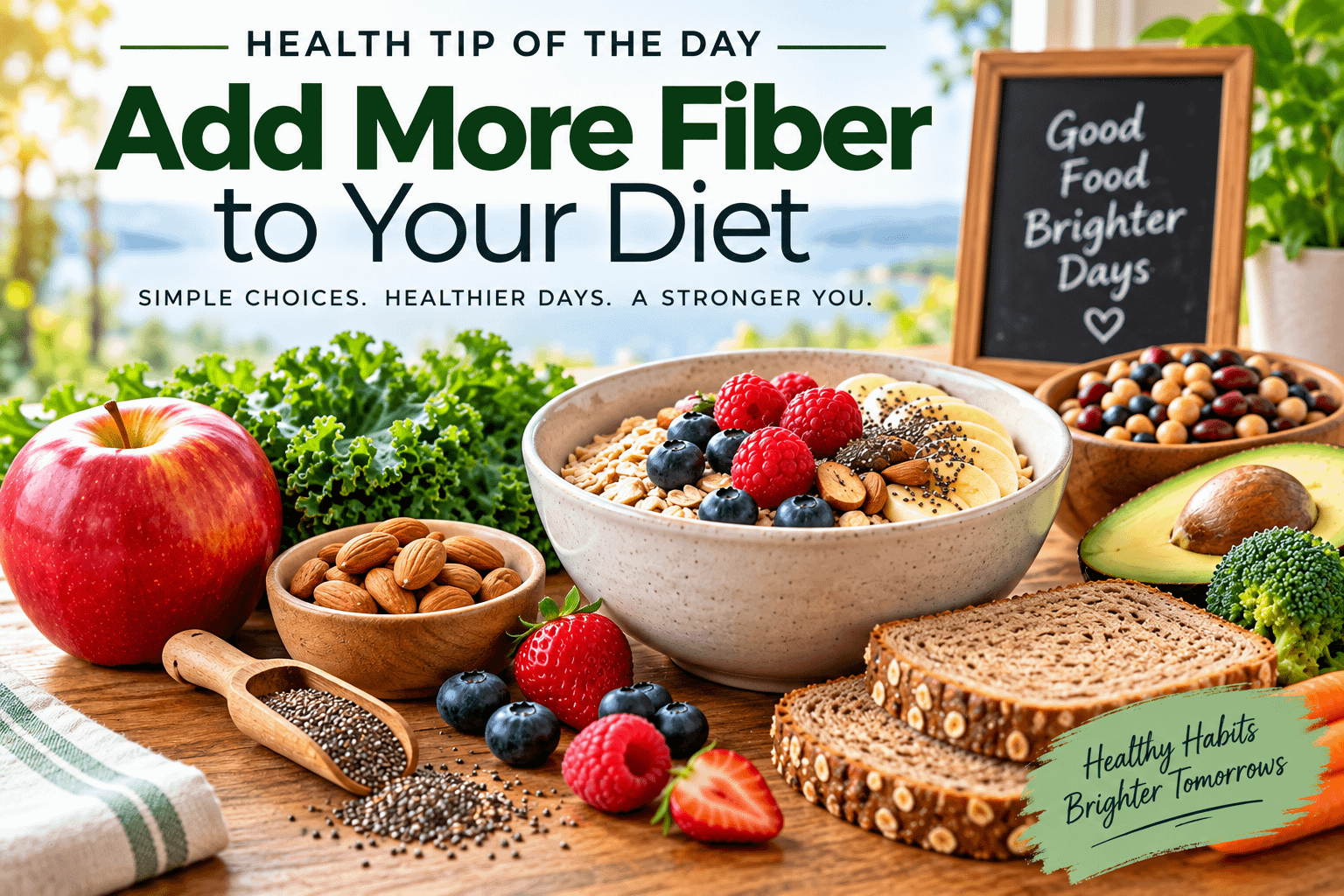
When people think about improving their diet, they often focus on calories, protein, sugar, carbohydrates, or fat. Those things can certainly matter, but there is another important part of nutrition that is easy to overlook:
Fiber.
Fiber may not receive the same attention as protein or the latest diet trend, but getting enough fiber can be an important part of a balanced eating pattern.
The good news is that adding more fiber doesn’t require buying expensive foods, following a complicated diet, or completely changing everything you eat.
You can start with simple foods you may already enjoy—beans, berries, apples, pears, oatmeal, vegetables, nuts, seeds, and whole grains.
Today’s health tip is simple:
Look for small opportunities to add more fiber-rich foods to your meals.
Those little choices can add up.
What Is Fiber?
Dietary fiber is a type of carbohydrate found mainly in plant foods.
Unlike many other carbohydrates, fiber isn’t completely broken down and absorbed by the body. Instead, it moves through the digestive system and plays several useful roles along the way.
Fiber is generally discussed in two categories: soluble and insoluble fiber.
Soluble fiber dissolves in water and forms a gel-like material during digestion. Foods containing soluble fiber include oats, beans, apples, citrus fruits and certain other plant foods.
Insoluble fiber adds bulk and helps material move through the digestive system. Whole grains, vegetables and other plant foods can provide insoluble fiber.
You don’t necessarily need to memorize which food contains which type.
A much easier approach is to eat a variety of fiber-rich plant foods.
Fiber Supports Healthy Digestion
One of fiber’s best-known benefits is supporting digestive regularity.
Nobody particularly enjoys talking about bowel movements, but digestive health is part of overall health.
Not eating enough fiber can contribute to constipation for some people.
Fiber adds bulk to stool and can help food and waste move through the digestive system.
However, there is an important detail:
When increasing fiber, increase it gradually.
Suddenly eating much more fiber than your body is accustomed to may cause bloating, gas or digestive discomfort.
Give your digestive system time to adjust.
It is also important to drink adequate fluids as you increase fiber.
Think of improving your fiber intake as a gradual lifestyle change rather than something you need to accomplish overnight.
Fiber Can Help You Feel Satisfied
Have you ever eaten something and felt hungry again surprisingly quickly?
The composition of a meal can affect how satisfying it feels.
Fiber-rich foods can help make meals more filling.
Consider the difference between drinking apple juice and eating a whole apple.
Both come from apples, but the whole fruit contains fiber that juice may have much less of depending on how it was processed.
The same principle applies to many foods.
Whole fruits, vegetables, beans, lentils and whole grains can add both volume and fiber to meals.
That can make them useful additions when you’re trying to build meals that leave you feeling satisfied.
Fiber Is Found in Everyday Foods
You don’t need specialty products to get more fiber.
Many common foods naturally contain it.
Examples include:
- Beans
- Lentils
- Chickpeas
- Oatmeal
- Whole-grain breads and cereals
- Brown rice
- Barley
- Apples
- Pears
- Raspberries
- Blackberries
- Oranges
- Broccoli
- Brussels sprouts
- Carrots
- Peas
- Sweet potatoes
- Avocados
- Almonds
- Chia seeds
- Flaxseeds
Instead of asking yourself, “How am I going to completely change my diet?” ask a much easier question:
What is one fiber-rich food I can add to this meal?
That question makes healthy eating feel much more manageable.
Start With Breakfast
Breakfast can be an easy opportunity to increase your fiber intake.
If you normally eat eggs, consider adding whole-grain toast and fruit.
If you enjoy oatmeal, top it with berries, chopped fruit, nuts or seeds.
If you eat cereal, compare nutrition labels and look for whole-grain options that contain more fiber.
If you make smoothies, consider using whole fruits and adding ingredients such as berries or chia seeds when appropriate for you.
You don’t need to turn breakfast into a complicated nutritional project.
One simple addition can make a difference.
For example:
Instead of: Eggs and bacon.
Try: Eggs, whole-grain toast and berries.
Or:
Instead of: Sweetened cereal.
Try: Oatmeal topped with blueberries and nuts.
Small changes are often easier to maintain than dramatic ones.
Add Beans to More Meals
Beans are one of the most versatile fiber-rich foods.
They can be added to:
Chili.
Soups.
Salads.
Tacos.
Burritos.
Rice bowls.
Casseroles.
Pasta dishes.
Even scrambled eggs.
Black beans, kidney beans, chickpeas, pinto beans and lentils can all provide fiber along with other nutrients.
You don’t have to become vegetarian to eat more beans.
You could simply use beans alongside meat or replace a portion of the meat in certain dishes.
For example, instead of making chili entirely with ground beef, try using some ground beef and additional beans.
You’ve increased the amount of plant food in the meal without completely changing a dish you already enjoy.
Eat the Whole Fruit More Often
Fruit can be an easy and enjoyable way to increase fiber.
Whenever practical, choose whole fruit rather than relying exclusively on fruit juice.
Try:
An apple with lunch.
A pear for an afternoon snack.
Berries with breakfast.
An orange after dinner.
Blackberries in yogurt.
Fruit can also help satisfy a desire for something naturally sweet.
Keep fruit where you can see it.
If apples or oranges are sitting on the counter, you’re more likely to remember them than if they’re hidden in the back of the refrigerator.
Sometimes healthier eating isn’t about willpower.
It’s about making the healthier option convenient.
Add Vegetables Instead of Trying to Create Perfect Meals
People sometimes make nutrition unnecessarily complicated.
They imagine that eating healthier means every meal must suddenly look like something from a nutrition textbook.
It doesn’t.
Start with the meals you’re already eating and add something.
Making pizza?
Add vegetables.
Making scrambled eggs?
Add spinach, peppers, onions or mushrooms.
Making pasta?
Add broccoli or another vegetable.
Making tacos?
Add beans, lettuce, tomatoes and avocado.
Making a sandwich?
Add lettuce, tomato or other vegetables you enjoy.
Making soup?
Add additional vegetables or beans.
Instead of thinking about everything you should remove from your diet, sometimes it is easier to think about what nutritious foods you can add.
Try the Half-and-Half Approach With Grains
If you’re accustomed to white rice, white pasta or refined grains, you don’t necessarily have to switch everything immediately.
Experiment.
Try mixing brown rice with white rice.
Try a whole-grain pasta and see whether you enjoy it.
Use whole-grain bread for some sandwiches.
Try oatmeal instead of a heavily refined breakfast option.
Your taste preferences can change gradually.
A food you aren’t sure about the first time may become something you enjoy after you’ve prepared it differently.
Healthy eating doesn’t need to feel like punishment.
Find nutritious foods that you genuinely enjoy.
Read Nutrition Labels
Food labels can help you compare similar products.
Two breads may look almost identical but contain different amounts of fiber.
The same can be true for cereal, tortillas, crackers and other packaged foods.
Take a few seconds to compare the Nutrition Facts labels.
Look at the fiber amount per serving and examine the ingredient list.
When choosing grain products, look for options that list a whole grain prominently among the ingredients.
You don’t have to obsess over every number.
Simply becoming more aware of what you’re buying can help you make more informed decisions.
Don’t Increase Fiber Too Quickly
If your current diet is relatively low in fiber, don’t suddenly attempt to dramatically increase it overnight.
Your digestive system may not appreciate that.
Instead, increase fiber gradually.
For example:
During the first few days, add a piece of fruit.
Then add a vegetable serving to another meal.
Later, switch one refined grain to a whole-grain option.
Then experiment with adding beans to a few meals each week.
Give your body time to adjust.
Healthy habits don’t have to happen all at once.
Remember Your Fluids
Fiber and hydration work together as part of healthy digestion.
As you add more fiber-rich foods, make sure you’re also drinking fluids throughout the day according to your individual needs.
Keep water nearby.
Drink with meals.
Take a reusable water bottle when you’re away from home.
If plain water becomes boring, you can add lemon, lime, cucumber or another flavor you enjoy.
The goal isn’t perfection.
It’s simply paying attention to your body’s needs.
Don’t Depend Entirely on Fiber Supplements
Fiber supplements can be useful in certain situations, but whole foods provide more than fiber.
An apple provides fiber along with vitamins and other plant compounds.
Beans provide fiber along with protein and minerals.
Vegetables provide fiber along with a variety of nutrients.
Whole grains can provide fiber, vitamins and minerals.
That’s why getting fiber from a variety of foods is generally a useful foundation.
If you’re considering supplements because of a medical issue or persistent digestive problem, discussing your situation with a healthcare professional can help you determine what’s appropriate.
Make Your Snacks Work Harder
Snacks are another opportunity to add fiber.
Instead of automatically reaching for cookies, candy or chips every time you’re hungry between meals, occasionally try something containing more fiber.
For example:
Apple slices with peanut butter.
Berries with yogurt.
Vegetables with hummus.
Pear slices.
Air-popped popcorn.
Whole-grain crackers.
Nuts and fruit.
You don’t have to eliminate every snack you enjoy.
A sustainable diet should leave room for enjoyment.
The goal is simply to make nutritious choices more often.
Build a Better Lunch
Lunch is another meal where small improvements can add up.
If you’re having a sandwich, choose a whole-grain bread and add vegetables.
If you’re eating soup, choose one containing beans or vegetables.
If you’re making a salad, add chickpeas, beans, vegetables, seeds or fruit.
If you’re eating leftovers, add a vegetable on the side.
If you’re having a rice bowl, include beans and vegetables.
Notice the pattern?
You don’t necessarily need completely different meals.
You can improve the nutritional value of meals you’re already eating.
Make Dinner More Colorful
Look at your dinner plate.
How many plant foods do you see?
If the answer is none, consider adding one.
Start with vegetables you actually enjoy.
You don’t have to eat kale simply because somebody on the internet says you should.
Maybe you prefer:
Roasted broccoli.
Corn.
Carrots.
Green beans.
Peas.
A baked sweet potato.
A side salad.
Brussels sprouts.
Mixed vegetables.
Find preparation methods that make vegetables taste good to you.
Roasting vegetables can produce a completely different flavor and texture than boiling them.
Season them.
Experiment with herbs and spices.
Healthy food doesn’t need to be bland.
Your Gut Benefits From Variety
Instead of eating the exact same fiber source every day, try eating a variety of plant foods over time.
Different fruits, vegetables, beans, nuts, seeds and whole grains provide different nutrients and types of fiber.
One week you might buy blueberries.
The next week, raspberries.
You might eat broccoli one night and carrots the next.
Try black beans in tacos and chickpeas in a salad.
Healthy eating becomes much more interesting when you explore different foods instead of forcing yourself to eat the same “healthy meal” repeatedly.
Healthy Eating Doesn’t Have to Be Expensive
There’s a common belief that eating healthier always costs significantly more.
Some specialty health products can certainly be expensive.
But many traditional fiber-rich foods are relatively simple staples.
Dried beans.
Lentils.
Oats.
Brown rice.
Frozen vegetables.
Seasonal fruit.
Potatoes with the skin.
Popcorn kernels.
Whole grains.
You don’t need foods labeled “superfood” to improve your diet.
Some of the healthiest changes can begin with basic ingredients that have been eaten for generations.
Frozen and Canned Foods Can Count
Fresh produce is wonderful, but it isn’t your only option.
Frozen vegetables and fruits can be convenient because they last longer and can reduce food waste.
Canned beans are especially useful.
Open the can, drain and rinse when appropriate, and they’re ready to add to many meals.
Canned vegetables and fruits can also be options; compare labels when you want to watch added sodium or added sugars.
Convenience matters.
A nutritious food that is easy enough for you to actually eat is more useful than fresh produce that repeatedly gets forgotten until it spoils.
Don’t Chase Perfection
One of the fastest ways to abandon a healthy lifestyle is believing you have to do everything perfectly.
You don’t.
You might eat oatmeal and berries for breakfast and pizza for dinner.
That’s okay.
You might eat plenty of vegetables one day and very few the next.
That’s okay too.
Health is built over time.
What matters is the overall pattern of your choices.
If you’re consistently adding more fruits, vegetables, beans, whole grains, nuts and seeds to your diet, you’re moving in a positive direction.
There is no prize for having a perfect diet.
The goal is to create eating habits you can realistically maintain.
A Simple Fiber Challenge
Try this simple challenge for the next seven days.
Each day, add one additional fiber-rich food to something you’re already eating.
Monday: Add berries to breakfast.
Tuesday: Add beans to lunch.
Wednesday: Add broccoli to dinner.
Thursday: Eat an apple for a snack.
Friday: Choose whole-grain bread.
Saturday: Add avocado or vegetables to your meal.
Sunday: Have oatmeal topped with fruit and nuts.
That’s it.
No extreme diet.
No complicated rules.
No forbidden foods.
You’re simply practicing the habit of adding nutritious foods to your routine.
After a week, continue with the foods you enjoyed most.
Small Changes Become Habits
One healthy meal won’t transform your health overnight.
Neither will one unhealthy meal destroy it.
The real power comes from what you do repeatedly.
One apple becomes a regular afternoon snack.
One bowl of oatmeal becomes your weekday breakfast.
One serving of vegetables becomes part of dinner.
Beans become a regular addition to tacos.
Whole-grain bread becomes the bread you automatically buy.
Eventually, you don’t have to think as much about those choices.
They become normal.
That’s how sustainable habits are often built—not through dramatic transformations, but through small decisions repeated often enough that they become part of everyday life.
Health Tip of the Day: Add One Fiber-Rich Food Today
Don’t worry about completely rebuilding your diet today.
Just add one fiber-rich food.
Have an apple.
Eat some berries.
Add beans to your tacos.
Put vegetables in your eggs.
Choose oatmeal for breakfast.
Add broccoli to dinner.
Try whole-grain bread.
Snack on some nuts.
Then tomorrow, look for another opportunity.
Better health doesn’t always require dramatic changes.
Sometimes it begins with something as simple as putting one more nutritious food on your plate.
What is one fiber-rich food you could add to your meals today?
Leave a ReplyCancel reply