
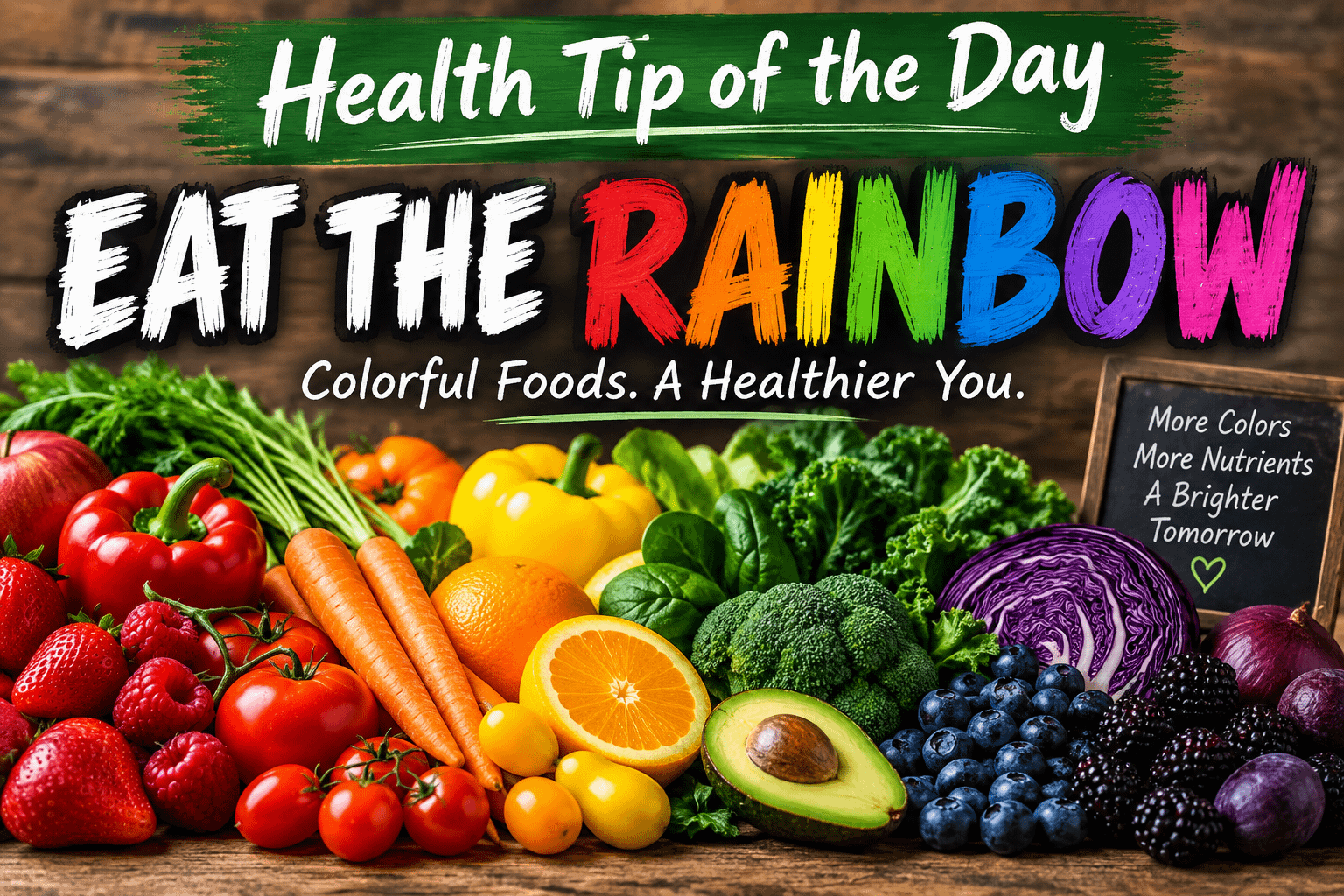
When people hear the phrase “eat the rainbow,” they might picture a colorful plate filled with strawberries, oranges, spinach, blueberries, carrots, and purple cabbage. That is essentially the idea—but there is an important health principle behind all those colors.
Eating the rainbow means regularly choosing fruits and vegetables from a variety of color groups instead of relying on the same few foods every day.
Different plants contain different combinations of vitamins, minerals, fiber, antioxidants, and naturally occurring plant compounds. By adding more colors to your meals, you can increase the variety of nutrients your body receives.
And the best part?
You don’t need an expensive diet plan, complicated recipes, or a cabinet full of supplements.
Sometimes improving your diet can begin with something as simple as adding another color to your plate.
Why Color Matters
The colors found naturally in fruits and vegetables aren’t there just to make food look appealing. Many colors come from plant compounds called phytonutrients or phytochemicals.
For example, tomatoes get much of their red color from lycopene. Carrots and sweet potatoes contain carotenoids. Blueberries contain pigments called anthocyanins.
These foods also provide different amounts of essential nutrients such as vitamin C, vitamin A precursors, potassium, folate, and dietary fiber.
You don’t need to memorize every compound or vitamin.
The easier rule is:
More natural colors usually means more nutritional variety.
Instead of worrying about creating a perfect diet, look at your plate and ask:
“How many colors am I eating today?”
Red Fruits and Vegetables
Red foods can bring plenty of flavor and nutrition to your meals.
Examples include:
- Tomatoes
- Strawberries
- Raspberries
- Watermelon
- Red peppers
- Cherries
- Red apples
- Pomegranate
- Red grapefruit
Tomatoes and watermelon are well-known sources of lycopene, while strawberries and red peppers provide vitamin C and other beneficial nutrients.
Try adding sliced strawberries to breakfast, tomatoes to a sandwich, or roasted red peppers to dinner.
Small additions count.
Orange and Yellow Foods
Orange and yellow fruits and vegetables are some of the easiest colorful foods to incorporate into everyday meals.
Think about:
- Carrots
- Sweet potatoes
- Pumpkin
- Oranges
- Tangerines
- Mangoes
- Peaches
- Pineapple
- Yellow peppers
- Winter squash
Many orange vegetables contain beta-carotene, which the body can convert into vitamin A. Vitamin A plays important roles in normal vision and immune function.
You don’t have to eat carrots every day to get these benefits. Rotate between sweet potatoes, squash, pumpkin, peppers, citrus fruits, and other colorful choices.
Green Foods
Green vegetables are nutritional powerhouses and deserve a regular place on the plate.
Options include:
- Spinach
- Kale
- Broccoli
- Brussels sprouts
- Green beans
- Asparagus
- Avocado
- Peas
- Romaine lettuce
- Collard greens
Depending on the food, green vegetables can provide nutrients including folate, vitamin K, vitamin C, potassium, and fiber.
One simple strategy is to make sure something green appears at either lunch or dinner.
Add spinach to scrambled eggs.
Put lettuce and avocado on a sandwich.
Serve broccoli alongside dinner.
Add spinach or kale to a smoothie.
You don’t have to completely change your meals. Add nutrition to meals you already enjoy.
Blue and Purple Foods
Blue and purple fruits and vegetables aren’t always eaten as frequently, which makes them an excellent category to intentionally add to your diet.
Examples include:
- Blueberries
- Blackberries
- Purple grapes
- Plums
- Eggplant
- Purple cabbage
- Purple potatoes
Many blue and purple plants contain anthocyanins, pigments responsible for their distinctive colors.
Blueberries are particularly easy to incorporate into breakfast. Add them to oatmeal, yogurt, cereal, smoothies, or whole-grain pancakes.
Purple cabbage can add color and crunch to salads, tacos, sandwiches, and slaws.
White and Brown Foods Count Too
“Eating the rainbow” doesn’t mean ignoring foods that aren’t brightly colored.
White, tan, and brown plant foods can still be extremely nutritious.
Consider:
- Cauliflower
- Mushrooms
- Garlic
- Onions
- Potatoes
- Parsnips
- Turnips
- Beans
Garlic and onions contain naturally occurring sulfur compounds, while potatoes provide nutrients including potassium and vitamin C.
Color is a helpful guide—not a rule that determines whether a food is healthy.
You Don’t Need Every Color at Every Meal
One mistake people can make when trying to improve their diet is turning a simple idea into another complicated set of rules.
You don’t need six different vegetables on your dinner plate tonight.
You don’t even need every color every day.
Instead, think about variety across the week.
Maybe breakfast includes blueberries and strawberries.
Lunch has spinach and tomatoes.
Dinner includes chicken with roasted broccoli, carrots, and sweet potatoes.
Tomorrow you might have an orange, avocado, purple cabbage, and green beans.
Over time, those different foods create nutritional variety.
An Easy Challenge: Add One Color
If your current diet doesn’t include many fruits and vegetables, don’t try changing everything overnight.
Start with one simple challenge:
Add one additional fruit or vegetable to your day.
If breakfast is normally eggs and toast, add berries or an orange.
If lunch is a turkey sandwich, add tomato, spinach, or avocado.
If dinner is chicken and rice, add broccoli, peppers, carrots, or another vegetable.
You aren’t necessarily taking foods away.
You’re adding something nutritious.
Once that becomes normal, add another.
Small improvements are often easier to maintain than dramatic dietary changes.
Frozen Fruits and Vegetables Are Fine
Eating more produce doesn’t mean everything has to be fresh.
Frozen fruits and vegetables can be convenient, nutritious, and sometimes less expensive—especially when certain produce isn’t in season.
Keep frozen berries available for smoothies or oatmeal.
Stock frozen broccoli, green beans, peas, carrots, or mixed vegetables for quick dinners.
Canned vegetables and fruits can also be useful. When appropriate, compare labels for added sodium or added sugars and choose options that fit your nutritional needs.
Healthy eating should be practical enough to work in everyday life.
Build a Colorful Grocery Cart
Your grocery cart is where eating the rainbow really begins.
Before checking out, take a quick look inside.
Do you see green?
Red?
Orange?
Purple or blue?
Instead of buying the exact same produce every week, occasionally choose something different.
If you normally buy apples, grab some berries.
If broccoli is your usual vegetable, try asparagus.
Instead of regular potatoes, occasionally choose sweet potatoes.
If your salads are mostly lettuce, add tomatoes, peppers, carrots, or purple cabbage.
You don’t have to abandon foods you enjoy. Expand around them.
Make Half Your Plate Fruits and Vegetables
Another easy visual strategy comes from the USDA’s MyPlate approach: make roughly half your plate fruits and vegetables, with the remaining portion generally divided between grains and protein.
You don’t need to measure every bite.
Think visually.
If dinner consists of grilled chicken, brown rice, broccoli, carrots, and a small fruit serving, you’ve created a meal containing multiple food groups and several colors without making nutrition complicated.
Fiber Is Another Big Benefit
Fruits and vegetables aren’t valuable only because of vitamins and antioxidants.
They’re also important sources of dietary fiber.
Fiber supports digestive health and can help with fullness. Higher-fiber dietary patterns are also associated with important cardiovascular and metabolic health benefits.
Whole fruits generally provide more fiber than fruit juice, which is one reason eating an orange or apple can be a better everyday choice than relying primarily on juice.
Don’t Chase Perfection
One unhealthy meal doesn’t ruin a healthy lifestyle.
One day without vegetables doesn’t erase your progress.
And eating a salad doesn’t automatically make everything else irrelevant.
Nutrition is about patterns.
The foods you eat repeatedly over weeks, months, and years matter far more than a single meal.
Instead of asking:
“Did I eat perfectly today?”
Try asking:
“Did I make at least one choice today that helped my body?”
Maybe you drank water instead of another sugary drink.
Maybe you added broccoli to dinner.
Maybe you chose berries for dessert.
Maybe you cooked at home instead of getting fast food.
Those choices add up.
Today’s Health Challenge
Take a look at what you plan to eat today and count the natural colors.
Then challenge yourself to add one color that is missing.
Red: strawberries or tomatoes.
Orange: carrots or sweet potatoes.
Yellow: pineapple or yellow peppers.
Green: spinach or broccoli.
Blue/Purple: blueberries or purple cabbage.
White/Brown: mushrooms, onions, garlic, or cauliflower.
It doesn’t have to be complicated or expensive.
Health Tip of the Day: Eat the Rainbow
Your body needs many different nutrients, and no single fruit or vegetable provides everything you need.
That’s why variety matters.
Fill your plate with different fruits, vegetables, whole foods, and colors whenever you can. Don’t worry about creating a picture-perfect meal. Focus on gradually creating a healthier pattern.
More colors. More variety. More opportunities to nourish your body.
The next time you’re preparing a meal, look at your plate before you start eating.
What color could you add today?
Leave a ReplyCancel reply