Sometimes the hardest thing to do is nothing.
We live in a world that constantly tells us to move faster, work harder, answer immediately, solve the problem, respond to the message, check the notification, and prepare for whatever comes next.
Even when our bodies finally stop moving, our minds often keep going.
You lie in bed thinking about tomorrow.
You replay a conversation from earlier.
You wonder whether you said the wrong thing.
You think about bills, work, family, relationships, responsibilities, mistakes, grief, disappointment, and everything you still need to accomplish.
Your body may be sitting in a chair, but mentally you’re running in ten different directions.
That’s why today’s health tip is simple:
Slow down. Sit quietly. Breathe. Meditate.
Meditation doesn’t require you to become a different person or completely empty your mind. You don’t need expensive equipment, a special room, or an hour of free time.
Sometimes five or ten quiet minutes can be enough to interrupt the constant noise and give yourself a chance to settle.
Your Mind Needs Quiet
Most of us understand physical exhaustion.
If you’ve been working all day, your feet hurt.
If you’ve exercised, your muscles become tired.
If you haven’t slept enough, your body lets you know.
Mental exhaustion isn’t always as obvious.
You may become irritable.
Small problems suddenly feel enormous.
You struggle to concentrate.
You can’t stop thinking.
You become impatient with people you normally enjoy being around.
You feel overwhelmed without knowing exactly why.
You might even sit down to relax and discover that you don’t remember how to relax anymore.
Meditation can provide a deliberate period of quiet in a day filled with stimulation.
It’s an opportunity to tell yourself:
For the next few minutes, I don’t have to solve anything.
Meditation Isn’t About Having an Empty Mind
Many people try meditation once and immediately decide they’re terrible at it.
They sit down.
Close their eyes.
Take a breath.
And within approximately ten seconds, they’re thinking about dinner.
Then they’re thinking about something that happened at work.
Then they’re remembering an argument from three years ago.
Then they’re wondering whether they remembered to pay the electric bill.
Suddenly they open their eyes and think:
“Well, that didn’t work.”
But meditation isn’t necessarily about eliminating thoughts.
Your brain produces thoughts.
That’s what brains do.
Meditation is more about learning to notice your thoughts without allowing every thought to carry you away.
Imagine sitting beside a river.
Leaves float past you on the water.
You don’t have to jump into the river and chase every leaf.
You can simply watch them pass.
Thoughts can be treated similarly.
Notice them.
Then let them move along.
Start With Five Minutes
If you’ve never meditated before, don’t make it complicated.
Find somewhere reasonably quiet.
Sit comfortably.
Put your phone on silent.
Set a timer for five minutes.
Close your eyes if that feels comfortable, or simply look downward and soften your gaze.
Then breathe naturally.
Pay attention to the air entering your nose.
Notice your chest or abdomen moving.
Notice yourself exhaling.
You don’t have to dramatically change your breathing.
Just notice it.
Eventually your mind will wander.
When you realize it happened, simply return your attention to your breathing.
No frustration.
No judgment.
Just return.
Five minutes later, you’re finished.
That’s enough.
Tomorrow, do it again.
Use Your Breath as an Anchor
When you’re stressed, angry, overwhelmed, or anxious, your thoughts can feel like they’re moving incredibly fast.
Your breath gives you something happening right now to concentrate on.
Yesterday isn’t happening right now.
Tomorrow isn’t happening right now.
The argument from this morning isn’t happening right now.
Your imagination about what might happen next week isn’t happening right now.
Your breath is.
Feel yourself inhale.
Feel yourself exhale.
If comfortable, allow your breathing to become slower and gentler rather than forcing huge breaths.
Think:
In.
Out.
That’s it.
Sometimes simplicity is exactly what an overwhelmed mind needs.
Notice Where You’re Holding Stress
Stress isn’t only something we experience mentally.
Our bodies can carry tension too.
You might clench your jaw without realizing it.
Your shoulders may remain raised.
Your hands might be tight.
Your forehead might be tense.
Your breathing might become shallow.
During meditation, slowly pay attention to your body.
Start with your face.
Relax your forehead.
Unclench your jaw.
Let your shoulders drop.
Relax your hands.
Notice your stomach.
Notice your legs.
Notice your feet.
You don’t need to force your entire body to relax.
Simply becoming aware of where you’re holding tension can be useful.
Meditate Before You React
Meditation isn’t only something to practice when everything is peaceful.
It can be especially useful when you’re angry or emotionally overwhelmed.
Imagine receiving a text message that makes you furious.
Your immediate reaction might be:
I’m responding right now.
But when emotions are intense, the first response that enters our minds isn’t always the response we ultimately want to send.
Instead, put the phone down.
Give yourself ten minutes.
Sit somewhere quiet.
Breathe.
Let the first wave of emotion settle.
Then read the message again.
You may still be angry.
You may still need to respond.
You may still need to establish a boundary.
But now you’re responding rather than simply reacting.
That difference can save relationships, prevent unnecessary arguments, and keep temporary emotions from creating permanent consequences.
Meditation Can Help You Slow Down at Night
For many people, bedtime is when their minds become loudest.
During the day, you’re distracted.
Then the lights go off.
Everything becomes quiet.
Suddenly your brain decides it’s time to review your entire life.
You remember mistakes.
You worry about tomorrow.
You replay conversations.
You create imaginary conversations that haven’t happened.
You think about problems you cannot possibly solve at midnight.
Instead of fighting every thought, try a few minutes of quiet meditation as part of your bedtime routine.
Put the phone away.
Dim the lights.
Get comfortable.
Pay attention to your breathing.
When tomorrow’s problems appear, remind yourself:
Tomorrow can wait until tomorrow.
You aren’t required to solve your entire life before falling asleep.
Try Meditating Outside
If sitting silently in a room doesn’t appeal to you, go outside.
Nature can provide a peaceful environment for mindfulness.
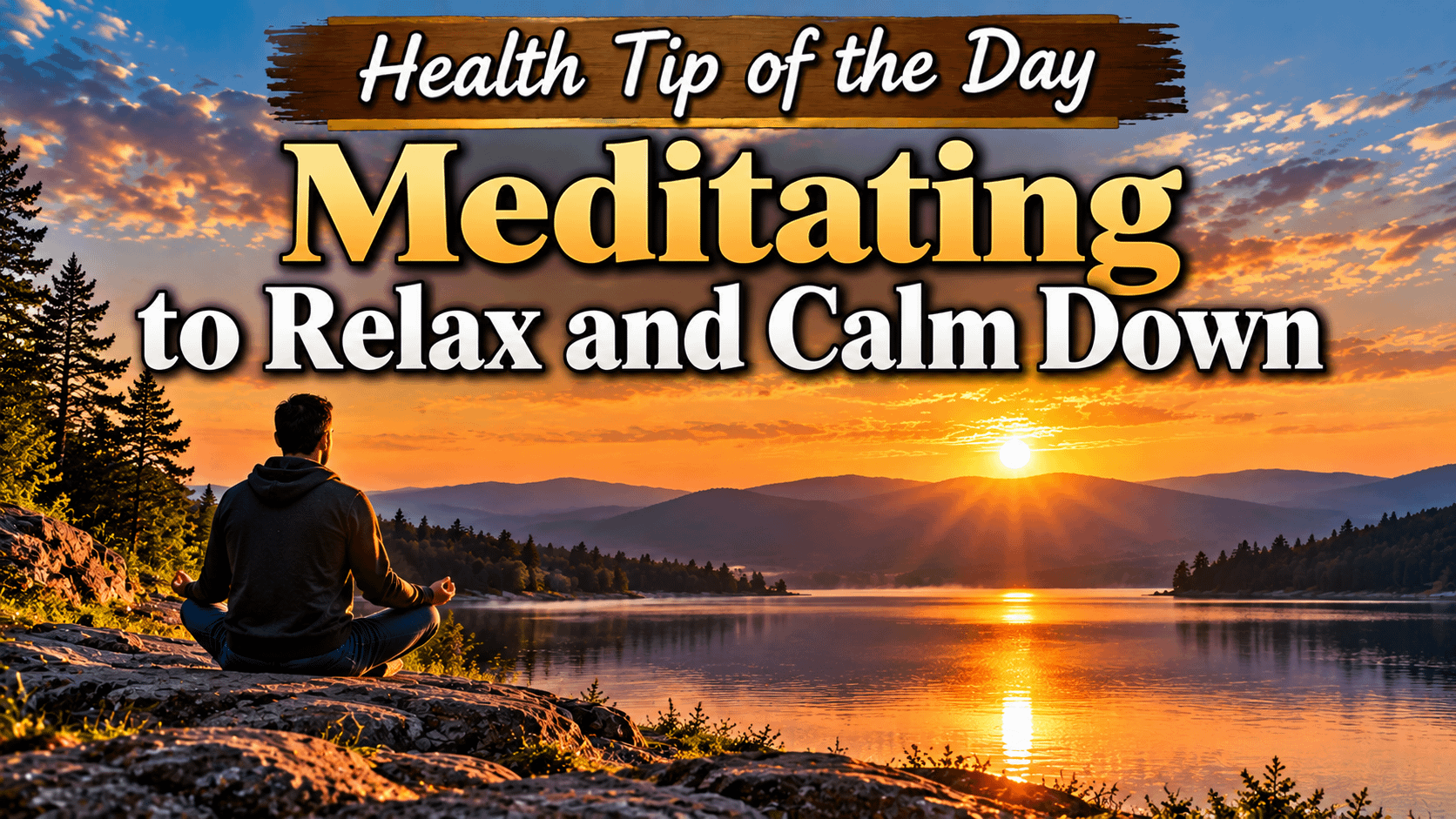
Sit beside a lake.
Walk along a river.
Visit a park.
Sit beneath a tree.
Listen to birds.
Watch clouds move.
Feel the breeze.
Notice sunlight coming through the trees.
Listen to water.
Instead of thinking about everything you need to accomplish, spend several minutes paying attention to what’s directly around you.
What can you see?
What can you hear?
What can you feel?
What can you smell?
Bring yourself back into the present.
Sometimes the mind becomes quieter when the surroundings become quieter.
Walking Meditation Counts Too
Meditation doesn’t always require sitting still.
You can practice mindfulness while walking.
Leave your headphones off occasionally.
Put your phone away.
Walk slowly enough to notice your surroundings.
Feel your feet touching the ground.
Notice your breathing.
Look at the trees.
Listen to what’s happening around you.
When your thoughts wander toward problems, acknowledge them and gently return your attention to your surroundings.
This can be particularly helpful for people who find traditional seated meditation uncomfortable or frustrating.
Meditation Can Be Combined With Prayer
For people of faith, meditation and prayer can naturally exist together.
You can begin by becoming quiet.
Take several slow breaths.
Then pray.
Talk honestly to God.
You don’t need complicated words.
Tell Him what’s bothering you.
Tell Him what you’re afraid of.
Express gratitude for what’s good.
Ask for wisdom about what you cannot figure out.
Ask for strength for what you’re facing.
Ask for peace when your mind won’t slow down.
Then spend some time quietly reflecting.
You might meditate on a short passage of Scripture or a simple truth you want to carry throughout your day.
Sometimes your prayer may be only a few words:
“God, calm my heart and guide me.”
Quiet doesn’t have to mean emptiness.
It can become a space for reflection, gratitude, prayer, and peace.
Stop Trying to Solve Everything
One reason our minds become overwhelmed is because we treat every thought like a problem requiring immediate attention.
You remember something.
Solve it.
You worry about something.
Analyze it.
You imagine something.
Prepare for it.
You remember something painful.
Replay it.
Meditation gives you permission to say:
Not right now.
That doesn’t mean you’re ignoring important responsibilities.
It means you’re recognizing that you don’t need to solve every problem during every minute of the day.
Problems can wait ten minutes.
Emails can wait.
Social media can wait.
Arguments can wait.
The world can continue without your immediate participation.
Give yourself permission to become unavailable for a few minutes.
Don’t Judge Your Meditation
Some meditation sessions will feel peaceful.
Others won’t.
You may sit quietly for ten minutes and feel wonderful afterward.
Another day you may spend the entire time distracted.
That’s okay.
Meditation isn’t a competition.
There is no scoreboard.
You’re not trying to become the world’s greatest meditator.
You’re practicing the ability to slow down, notice what’s happening, and return your attention to the present.
Your mind wandered?
Return.
It wandered again?
Return again.
That’s the practice.
Make It Part of Your Routine
Meditation is easier to remember when you connect it to something already in your schedule.
Try five minutes after waking up.
Or five minutes before breakfast.
Try it during your lunch break.
Try it when you arrive home from work.
Try it after an evening walk.
Try it before prayer.
Try it before bed.
You don’t need to dramatically restructure your day.
Start small.
Five minutes is approximately 0.35% of a 24-hour day.
Sometimes we tell ourselves we don’t have time to slow down when what we really mean is that we haven’t made slowing down a priority.
Put the Phone Away
If you’re trying to calm your mind, constantly checking your phone can work against that goal.
Notifications create interruptions.
Messages demand attention.
Social media gives your mind new information to process.
News gives you something else to worry about.
For your meditation period, consider putting your phone on silent or using a mode that reduces interruptions.
If you’re using it as a timer, start the timer and put it out of reach.
Those five or ten minutes belong to you.
Meditation Isn’t About Escaping Your Life
Meditation doesn’t make problems disappear.
Your bills still exist.
Your responsibilities remain.
Relationships may still need work.
Difficult decisions may still need to be made.
But calming yourself can help you approach those situations differently.
Instead of making decisions while overwhelmed, you may return with a clearer mind.
Instead of reacting immediately, you may think first.
Instead of allowing one frustrating moment to control the rest of your day, you may learn how to reset.
Meditation doesn’t remove you from reality.
Ideally, it helps you return to reality more grounded.
Know When You Need More Support
Meditation can be a useful relaxation and stress-management practice, but it isn’t a replacement for professional care when you need it.
If anxiety, depression, panic, severe stress, sleep difficulties, or other emotional problems are persistent or interfering with your everyday life, consider speaking with a qualified healthcare or mental-health professional.
Likewise, don’t assume every physical symptom is simply stress.
Persistent or concerning symptoms deserve appropriate medical evaluation.
Meditation can be one tool in your health toolbox.
It doesn’t have to be the only one.
Health Tip of the Day
Today, give yourself permission to stop.
Not forever.
Just for a few minutes.
Find somewhere comfortable.
Put your phone down.
Sit quietly.
Close your eyes if you want.
Relax your shoulders.
Unclench your jaw.
Take a slow, comfortable breath.
Then another.
Don’t worry about yesterday.
Don’t try to solve tomorrow.
Don’t think about what everyone else needs from you.
For these few minutes, simply exist in the moment you’re actually living.
When a thought appears, notice it.
Then return to your breathing.
When another thought appears, do the same thing.
You don’t have to fight your mind.
You don’t have to force yourself to feel peaceful.
Just practice becoming still.
The problems waiting for you won’t necessarily disappear.
But you may return to them calmer, clearer, and better prepared to decide what actually deserves your energy.
In a world constantly demanding that you do more, remember that taking care of yourself sometimes requires doing less.
Sometimes you don’t need another answer.
Sometimes you don’t need another conversation.
Sometimes you don’t need another hour scrolling through your phone trying to distract yourself.
Sometimes you simply need a quiet place, a few minutes, and a reminder:
Breathe.
Slow down.
Be still.
You don’t have to carry everything at the same time.
When life feels overwhelming, could you give yourself five quiet minutes today to breathe, meditate, and let your mind become still?