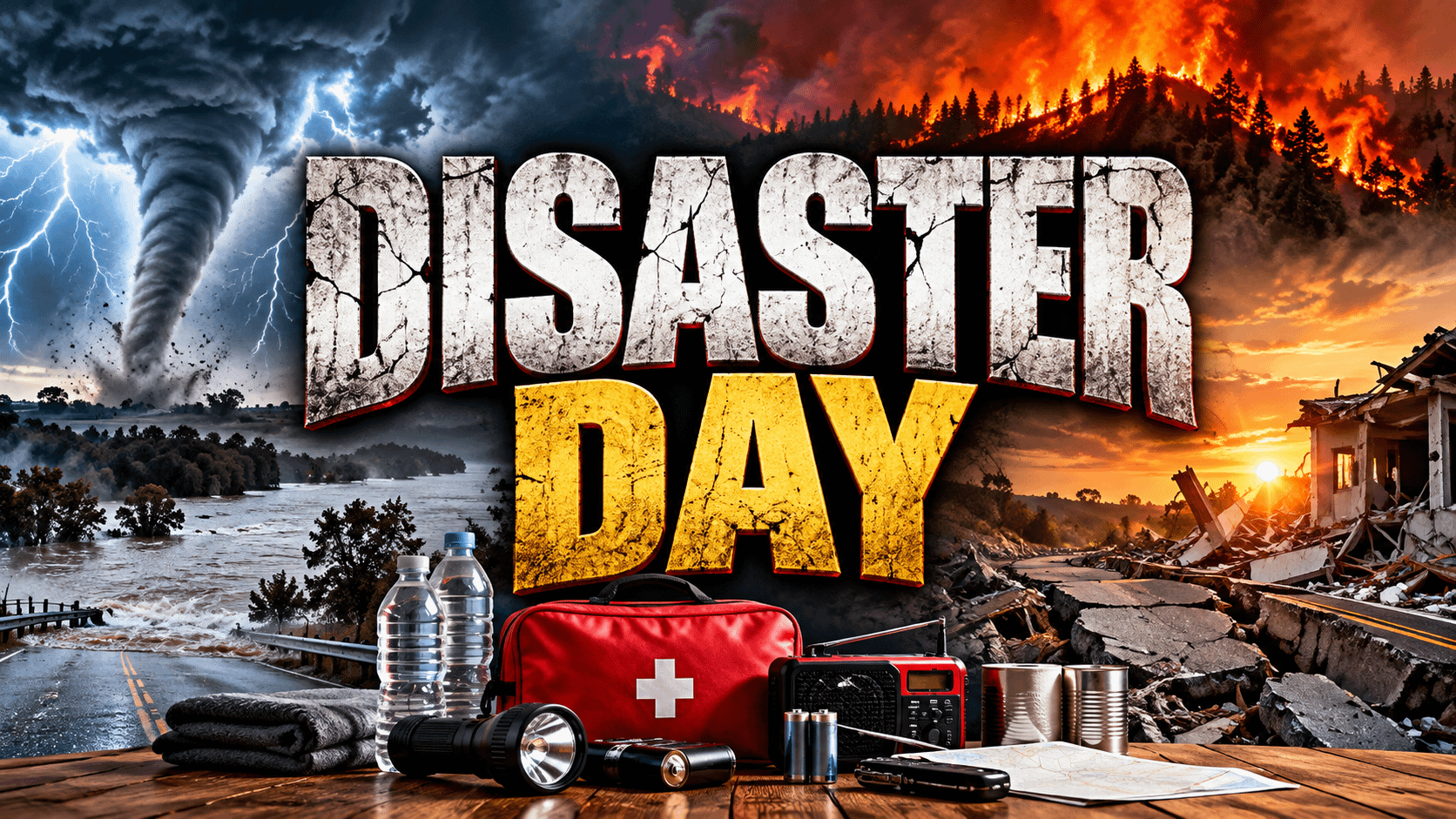
Disasters rarely arrive when we are ready for them.
An earthquake can strike without warning. A wildfire can suddenly threaten a community. Floodwaters can rise quickly. Severe storms can knock out electricity, damage homes, and make roads impossible to travel. Even disasters that come with some advance warning can change direction or become more dangerous than expected.
Disaster Day is a reminder that we cannot control every emergency, but we can control how prepared we are when one happens.
Preparation isn’t about living in fear. It is about taking reasonable steps today that could protect you, your family, your pets, and even your neighbors tomorrow.
What Is Disaster Day?
Disaster Day encourages people to think about emergencies before they happen.
Most of us go through our normal routines assuming that electricity will work, stores will remain open, drinking water will be available, cell phones will connect, and emergency services will be able to reach us quickly.
During a major disaster, some or all of those things can suddenly become unavailable.
That is why emergency preparedness matters.
Disaster Day gives us an opportunity to ask a simple but important question:
If something happened today, would I be ready?
Disasters Can Take Many Forms
The type of disaster you should prepare for depends partly on where you live, but emergencies can include earthquakes, wildfires, floods, hurricanes, tornadoes, severe thunderstorms, extreme heat, winter storms, landslides, power outages, and other unexpected events.
Some emergencies affect only a few homes. Others can affect entire communities or regions.
The goal isn’t to predict exactly what will happen.
The goal is to become better prepared for situations in which everyday services and routines are disrupted.
Start With an Emergency Plan
One of the easiest things a family can do is create an emergency plan.
Everyone in the household should know what to do if an emergency occurs.
Decide where you will meet if you cannot return home. Choose an emergency contact outside your immediate area. Talk about evacuation routes and determine how you would leave your neighborhood if your normal route were blocked.
Parents should also discuss emergency procedures with their children.
Know the emergency plans for their schools, workplaces, childcare facilities, and other places your family regularly visits.
During a disaster, confusion can quickly turn into panic. Having discussed these situations beforehand can make decisions easier.
Build an Emergency Supply Kit
Every household should consider keeping basic emergency supplies available.
Your needs will vary, but a preparedness kit may include:
- Water and nonperishable food
- Flashlights
- Extra batteries
- Battery-powered or hand-crank radio
- First-aid supplies
- Necessary medications
- Phone chargers and portable power banks
- Personal hygiene supplies
- Copies of important documents
- Emergency contact information
- Cash
- Blankets and extra clothing
- Basic tools
- Supplies for infants, older adults, or family members with specific needs
- Food, water, medication, carriers, and other necessities for pets
Check your supplies periodically. Replace expired food, medications, batteries, and other items when necessary.
You don’t have to purchase everything at once. Building an emergency kit a little at a time can make preparation more affordable.
Don’t Forget Your Medications
Medication planning can be especially important during an emergency.
If you or someone in your household depends on medication or medical equipment, think about what would happen during an extended power outage or evacuation.
Keep an updated medication list that includes medication names, dosages, prescribing doctors, and pharmacy information.
People who depend on electrically powered medical equipment should also consider backup-power options and discuss emergency planning with their healthcare provider or equipment supplier.
Have a Plan for Your Pets
Pets are family, too.
Unfortunately, they can sometimes be overlooked during emergency planning.
Keep pet food, water, medication, identification information, leashes, carriers, and other necessities ready.
Make sure identification tags and microchip information are current.
It is also worth identifying pet-friendly shelters, hotels, relatives, or friends who could help if you had to evacuate.
Never assume you will have time to figure everything out once an evacuation begins.
Know How You’ll Receive Emergency Information
During an emergency, accurate information matters.
Learn which emergency-alert systems are available where you live. Keep emergency notifications enabled on your phone when appropriate, and know which local government or emergency-management sources provide official information.
A battery-powered or hand-crank radio can also be valuable if electricity, internet service, or cellular networks are disrupted.
Rumors can spread rapidly during disasters, especially on social media. When possible, verify evacuation orders, shelter locations, road closures, and other critical information through official sources.
Prepare for Power Outages
A major emergency may leave your home without electricity for hours or even days.
Keep flashlights in easily accessible locations and make sure everyone knows where they are.
Portable battery banks can help keep phones charged, but they should also be kept charged themselves.
If you use a generator, follow the manufacturer’s instructions carefully. Generators can produce deadly carbon monoxide and should never be operated inside a home, garage, or other enclosed area.
Keep Your Vehicle Prepared
Your vehicle can become extremely important during an evacuation.
Try not to allow your fuel level or electric-vehicle charge to become critically low, particularly when severe weather or wildfire danger is elevated.
Consider keeping basic emergency supplies in your vehicle as well.
Depending on your circumstances, these could include water, snacks, a flashlight, phone charger, first-aid supplies, blanket, appropriate clothing, and copies of important contact information.
Know Your Evacuation Routes
If authorities tell you to evacuate, you may have only a limited amount of time.
Know several ways out of your neighborhood rather than relying on one route.
Roads may be blocked by flooding, fire, fallen trees, damaged infrastructure, traffic, or emergency operations.
Keep important items organized so you aren’t searching through the house while everyone else is trying to leave.
Your safety is more important than possessions.
Check on Your Neighbors
Preparedness isn’t only an individual responsibility.
Communities become stronger when people look out for one another.
During emergencies, older adults, people with disabilities, individuals living alone, and families facing other challenges may need additional assistance.
If it is safe to do so, check on your neighbors.
Sometimes something as simple as sharing information, providing bottled water, charging a phone, or making sure someone received an evacuation warning can make a tremendous difference.
Teach Children Without Frightening Them
Children should understand basic emergency procedures, but preparedness doesn’t have to be scary.
Teach them how and when to call 911.
Make sure they know their address and important phone numbers when age appropriate.
Explain where the family will meet during an emergency.
Practice evacuation plans occasionally so the procedures become familiar.
The purpose isn’t to make children afraid of disasters. It is to give them confidence that their family has a plan.
Preparation Creates Options
There is no emergency kit or disaster plan that can guarantee everyone’s safety.
Some disasters are simply too destructive and unpredictable.
But preparation can provide something extremely valuable:
options.
If you have water stored, you have an option when the water supply is disrupted.
If you have an evacuation plan, you have an option when you need to leave quickly.
If you have backup power, you have an option when electricity goes out.
If your important documents are organized, you have an option when you must leave home unexpectedly.
Small preparations can become extremely important when ordinary life suddenly isn’t ordinary anymore.
Don’t Wait Until Everyone Else Is Preparing
One of the worst times to begin preparing for an emergency is when everyone else is doing the same thing.
We have all seen what can happen before major storms or emergencies: stores become crowded, bottled water disappears, batteries sell out, gas stations develop long lines, and certain supplies become difficult to find.
Preparing beforehand reduces that pressure.
You don’t need a garage filled with survival equipment.
Start with the basics.
Buy a little extra water.
Put together a first-aid kit.
Charge your power banks.
Write down emergency contacts.
Talk with your family.
Check your smoke and carbon-monoxide alarms.
Learn your evacuation routes.
Then gradually improve your preparedness over time.
Disaster Day Is About Readiness, Not Fear
Thinking about disasters can be uncomfortable.
Nobody wants to imagine their home being threatened by a wildfire, an earthquake damaging their community, or a powerful storm forcing their family to evacuate.
But ignoring those possibilities doesn’t prevent them from happening.
Preparedness isn’t about expecting the worst every morning.
It is about respecting the unexpected enough to prepare for it.
Spend a few minutes today looking around your home and thinking about what you would need if the electricity went out, the water stopped running, or you were told you had 15 minutes to evacuate.
You may discover that you’re better prepared than you thought.
You may also discover a few things that need attention.
Either way, Disaster Day provides a valuable reminder:
Prepare before the emergency—not during it.
Because when disaster strikes, the preparations you make today could make all the difference tomorrow.
How prepared would you be if a disaster happened today?