
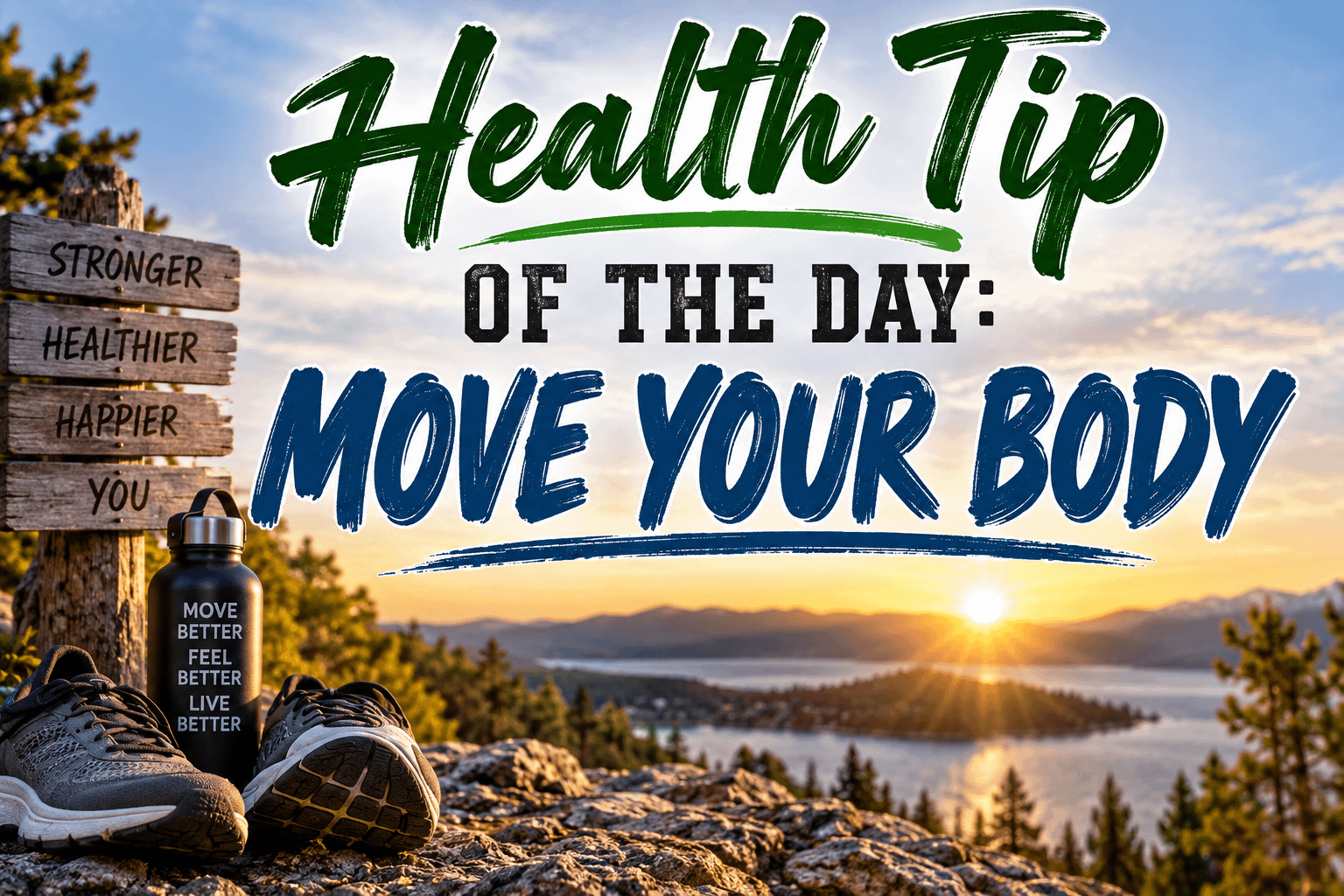
Sometimes the simplest health advice is also some of the most important: move your body.
You don’t need an expensive gym membership, complicated workout routine, or hours of free time to become more active. You don’t even have to consider yourself athletic.
You simply need to move.
Walk around the neighborhood. Stretch when you wake up. Work in the yard. Dance while you’re cleaning the house. Take the stairs. Play with your kids or grandkids. Ride a bike. Walk the dog. Do a few exercises while watching television.
The goal isn’t perfection.
The goal is to spend less time sitting still and more time reminding your body that it was designed to move.
Movement Is About More Than Losing Weight
When people hear the word “exercise,” they often immediately think about losing weight. While regular physical activity can certainly play an important role in weight management, the benefits of movement go far beyond what you see on the scale.
Regular physical activity can help support your heart, muscles, bones, mobility, balance, sleep, energy, and overall quality of life.
Movement can also support mental well-being.
A short walk outside may give you an opportunity to clear your head. Stretching can help you break up a stressful day. A workout can provide a healthy outlet when frustration has been building.
Sometimes movement isn’t about changing how your body looks.
It’s about helping your body continue doing the things you want it to do.
You Don’t Have to Start With an Hour
One of the biggest mistakes people make when trying to become healthier is believing that every workout has to be long and intense.
It doesn’t.
If you haven’t been active recently, even a few minutes of movement can be a meaningful place to begin.
Try taking a 10-minute walk.
If 10 minutes feels like too much, start with five.
Walk around your house. Walk to the mailbox. Stretch your legs. Stand up during television commercials. Put on your favorite song and move until it ends.
Then do it again later.
Small amounts of activity throughout the day can add up, and starting with manageable goals can make it easier to turn movement into a habit.
Walking Is One of the Simplest Places to Start
You don’t need fancy equipment to walk.
For many people, all it takes is a comfortable pair of shoes and a safe place to move.
Walking can also be adapted to your current fitness level. You can begin slowly and gradually increase your time, distance, or pace as your body becomes accustomed to the activity.
You might walk:
- Before breakfast
- During your lunch break
- After dinner
- Around a shopping center
- At a local park
- While talking on the phone
- Around your neighborhood
- On a treadmill
Don’t worry about whether someone else walks faster or farther.
You’re not competing with them.
You’re taking care of yourself.
Break Up Long Periods of Sitting
Modern life makes it incredibly easy to remain seated for hours.
We sit while working.
We sit while driving.
We sit while watching television.
We sit while scrolling through our phones.
Before we realize it, much of the day has disappeared without much movement.
Look for opportunities to interrupt those long periods of inactivity. Stand up periodically. Walk around for a few minutes. Stretch your shoulders and legs. Refill your water. Take the longer route to another room.
You don’t necessarily need to completely restructure your day.
Sometimes you simply need to add movement to the day you already have.
Find Movement You Actually Enjoy
If you hate running, you don’t have to become a runner.
If you don’t enjoy gyms, you don’t necessarily need a gym.
There are countless ways to be physically active.
You could swim, hike, garden, dance, bike, walk, play basketball, lift weights, do yoga, clean the house, play with your children, or explore a local trail.
The best type of movement is often one you can safely do and are willing to continue.
When movement feels like punishment, it can be difficult to stay consistent.
When it becomes something you enjoy—or at least something that makes you feel better afterward—it becomes much easier to make it part of your life.
Strength Matters Too
Walking and other aerobic activities are important, but don’t forget about your muscles.
Strengthening activities can help maintain muscle and support your ability to perform everyday tasks as you age.
You don’t necessarily need heavy weights.
Depending on your ability and health, strength training might include resistance bands, light dumbbells, machines, body-weight exercises, or other forms of resistance.
The key is progressing gradually and using proper technique.
Make Movement Part of Your Routine
Motivation comes and goes.
Habits are what keep us moving when motivation disappears.
Try attaching movement to something you already do.
After drinking your morning coffee, take a short walk.
After lunch, walk for 10 minutes.
When you finish work, stretch before sitting down for the evening.
When you’re watching television, stand up and move periodically.
The more movement becomes part of your normal routine, the less you have to negotiate with yourself about whether you’re going to do it.
Don’t Let an “All or Nothing” Mindset Stop You
Maybe you planned to exercise for 30 minutes but only had time for 10.
Move for 10.
Maybe you wanted to walk two miles but only managed half a mile.
You still moved.
Maybe you missed yesterday completely.
Move today.
A missed workout doesn’t erase your progress, and a short workout isn’t worthless simply because it wasn’t longer.
Health isn’t built through one perfect day.
It’s built through choices repeated over weeks, months, and years.
Listen to Your Body
There’s a difference between challenging yourself and ignoring warning signs.
Exercise shouldn’t mean pushing through severe pain, chest pain, faintness, or other concerning symptoms. People who have health conditions, significant mobility limitations, or haven’t exercised in a long time may want to talk with a qualified healthcare professional about an appropriate starting point.
Your goal isn’t to prove how tough you are.
Your goal is to become healthier.
The Long-Term Goal
For adults, public-health guidelines generally recommend working toward at least 150 minutes of moderate-intensity aerobic activity per week, along with muscle-strengthening activity on at least two days per week. People who aren’t currently reaching those levels don’t have to get there overnight.
Start where you are.
Build gradually.
Five minutes can become 10.
Ten minutes can become 20.
One walk can become a daily habit.
A few stretches can become a morning routine.
The important thing is to begin.
Today’s Health Challenge
Give yourself one simple challenge today:
Move your body for at least 10 minutes.
Take a walk.
Stretch.
Dance.
Garden.
Ride your bike.
Do a few exercises.
It doesn’t have to be impressive enough to post online. It doesn’t have to break a record. It doesn’t have to leave you exhausted.
It simply needs to get you moving.
Your body doesn’t need perfection from you.
It needs your attention, your consistency, and your willingness to take care of it.
What are you going to do today to get your body moving?
Leave a ReplyCancel reply