
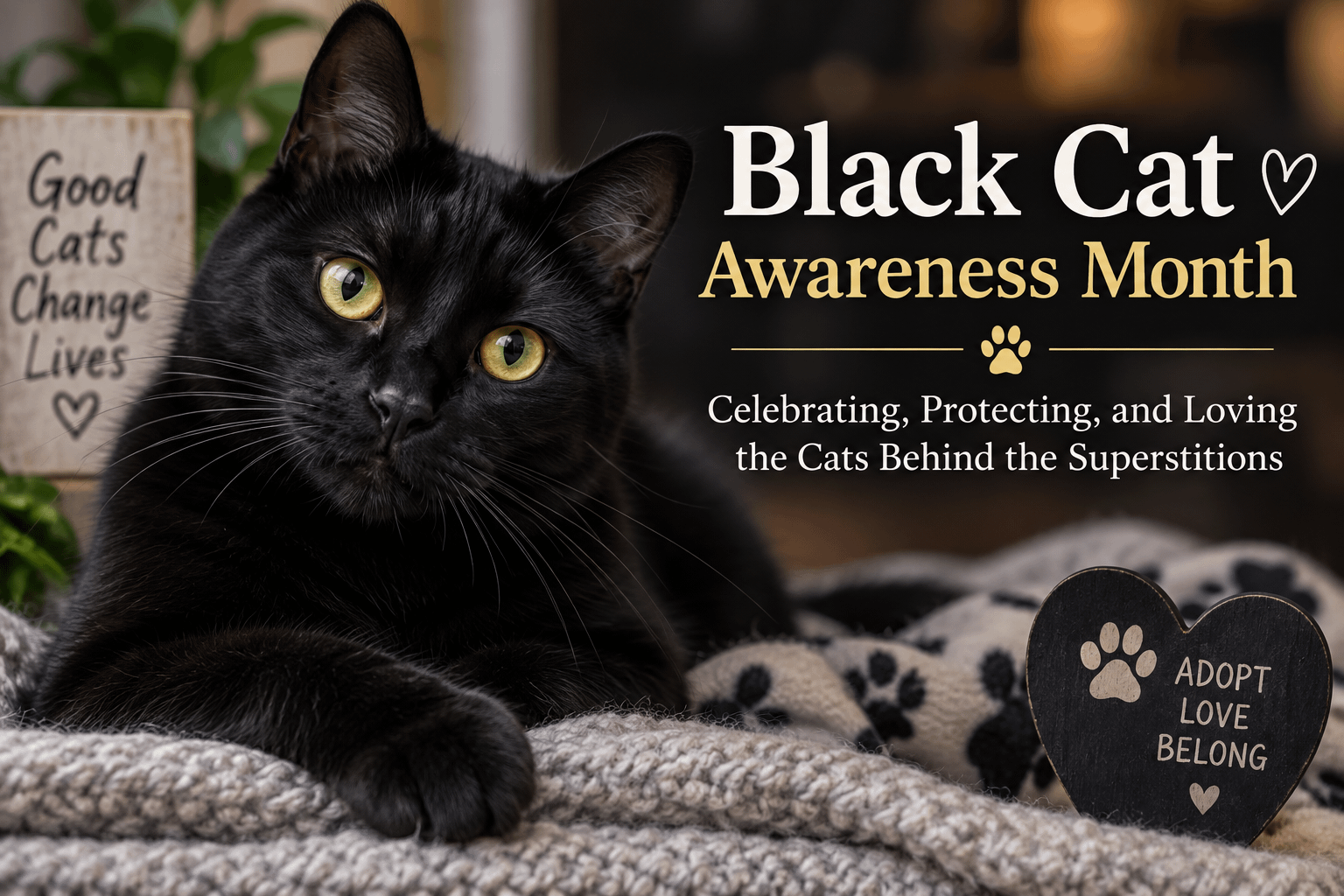
Black cats have spent centuries surrounded by mystery, folklore, superstition, and misunderstanding. They have appeared in legends, movies, Halloween decorations, and stories about witches and magic. Unfortunately, some of those old beliefs have contributed to negative stereotypes that still follow black cats today.
Black Cat Awareness Month is an opportunity to look beyond those myths and celebrate black cats for what they really are: beautiful, affectionate, playful, intelligent animals deserving of loving homes and compassionate treatment.
For animal lovers, the month is also a reminder that the color of an animal’s fur should never determine how we value it. Every cat has an individual personality, and behind those striking golden, green, or copper-colored eyes may be a companion waiting for someone to give them a chance.
Why Black Cats Deserve a Month of Awareness
Black cats are instantly recognizable, but that recognition hasn’t always worked in their favor.
Throughout history, different cultures have attached different meanings to black cats. Some traditions considered them symbols of prosperity or good fortune, while others connected them with bad luck, witchcraft, or supernatural events.
The negative beliefs became particularly powerful in Western folklore. Over generations, stories about black cats crossing someone’s path or accompanying witches became embedded in popular culture.
Today, most people understand these stories for what they are—superstitions.
A black cat isn’t an omen.
It isn’t a warning.
It isn’t unlucky.
It is simply a cat whose genetics gave it beautiful dark fur.
Black Cat Awareness Month encourages people to separate fictional stories from the real animals living in shelters, rescues, neighborhoods, and homes around the world.
The Beauty of a Black Cat
There is something undeniably striking about a black cat.
Their dark coats can look almost velvet-like. When sunlight hits their fur, some black cats even reveal subtle brown, reddish, or rusty undertones that aren’t noticeable indoors.
Then there are their eyes.
Against dark fur, yellow, amber, copper, and green eyes can appear especially dramatic.
But their beauty goes far beyond appearance.
Anyone who has shared a home with a black cat knows that they have the same enormous range of personalities found in cats of every other color.
Some are independent.
Some want to spend every possible moment sitting beside their person.
Some are fearless explorers.
Others are shy until they learn they can trust you.
Some are quiet observers.
And some will happily race through the house at three in the morning as though they are training for the feline Olympics.
Their coat color doesn’t determine their personality.
Getting to know the individual cat does.
Breaking the Bad-Luck Myth
One of the most persistent beliefs surrounding black cats is that encountering one somehow brings bad luck.
There is no factual basis for this superstition.
Interestingly, black cats haven’t even been considered unlucky everywhere. Depending on the culture and historical period, they have sometimes been associated with good fortune, prosperity, protection, or successful journeys.
That alone demonstrates how arbitrary superstition can be.
The same animal can be considered unlucky in one tradition and fortunate in another.
The cat hasn’t changed.
The human story surrounding it has.
Black Cat Awareness Month gives us an opportunity to replace superstition with understanding.
Instead of seeing a symbol, see the animal.
Instead of thinking about an old legend, notice the curious eyes looking back at you.
Black Cats and Halloween
October naturally brings additional attention to black cats because of their long association with Halloween.
Black-cat decorations appear everywhere alongside pumpkins, ghosts, witches, bats, and haunted houses.
There’s nothing inherently wrong with enjoying the classic Halloween image of a black cat with an arched back and glowing eyes. It has become an iconic part of the season.
But there is an important distinction between enjoying fictional imagery and allowing superstition to influence how real animals are treated.
Real black cats aren’t Halloween props.
They’re living animals that need food, shelter, veterinary care, safety, affection, and responsible owners just like any other pet.
Halloween can actually become an opportunity to change the conversation.
When children encounter stories about black cats being unlucky, adults can explain that these are old legends rather than facts.
One small conversation can help prevent another generation from carrying the same misconceptions forward.
Consider Adopting a Black Cat
One of the most meaningful ways to recognize Black Cat Awareness Month is to consider adopting a black cat if you’re already prepared to bring a cat into your family.
Visit a reputable animal shelter or rescue and spend some time meeting the cats.
Don’t choose entirely by appearance.
Ask staff or volunteers about each cat’s personality, activity level, history, temperament, and needs.
You might discover that the quiet black cat sitting toward the back of the enclosure becomes incredibly affectionate once it feels comfortable.
Or perhaps the energetic black kitten reaching through the bars immediately decides you’re its new best friend.
Adoption should always be a thoughtful, long-term decision. Cats may live well into their teens and sometimes beyond, so bringing one home means accepting responsibility for years of care.
But when the circumstances are right, adoption can change two lives—the animal’s and yours.
Already Have a Black Cat? Celebrate Them
If a black cat already shares your home, Black Cat Awareness Month is the perfect excuse to give your companion a little extra attention.
Spend additional time playing together.
Offer a favorite treat in moderation.
Introduce a new enrichment activity.
Take some photographs.
Upgrade a worn-out scratching post.
Create a comfortable place near a sunny window.
Schedule veterinary care if your cat is due for a checkup.
You can also share your cat’s personality with other people.
Post a favorite photograph and tell people something funny, sweet, or unusual about them.
Maybe your cat greets you at the door.
Perhaps they insist on sleeping on your pillow.
Maybe they chirp at birds through the window.
Perhaps they somehow know the exact moment you open a can of food from three rooms away.
Personal stories help people see black cats as individuals rather than symbols.
Support Your Local Animal Shelter
You don’t have to adopt a cat to make a difference.
Animal shelters and rescue organizations often depend heavily on volunteers, foster families, donations, and community support.
During Black Cat Awareness Month, consider contacting a reputable organization in your community and asking what it currently needs.
Depending on the organization, useful support could include food, litter, blankets, toys, cleaning supplies, monetary donations, foster homes, or volunteer assistance.
Another easy way to help is sharing adoption profiles.
A social media post takes only a few seconds, but it can introduce an adoptable cat to someone who otherwise might never have seen it.
Sometimes helping an animal find a home begins with simply helping the right person discover that animal.
Photographing Black Cats
Black cats sometimes present an interesting challenge for photographers.
Because their coats absorb so much light, facial features can disappear in poorly lit photographs. That can make it difficult to capture just how expressive and beautiful they are.
A few simple changes can help.
Use soft natural light whenever possible. Position the cat near a window without forcing it to stare directly into bright sunlight.
Choose a background that contrasts with dark fur.
Focus on the eyes.
Avoid extremely harsh lighting.
And, most importantly, be patient.
Instead of trying to force the perfect pose, allow the cat to become comfortable. Some of the best photographs happen when animals are simply being themselves.
A beautiful photograph can be especially valuable for shelters trying to promote animals available for adoption.
Teach Children Compassion Instead of Superstition
Black Cat Awareness Month also provides a simple lesson about something much bigger than cats.
It teaches us how easily stereotypes can develop.
For generations, people repeated stories about black cats without questioning where those beliefs came from. When those stories are repeated enough, fiction can begin influencing how people perceive something in real life.
Teaching children that black cats aren’t unlucky offers an opportunity to talk about kindness, critical thinking, and compassion.
Animals shouldn’t be judged because of their color or appearance.
They should be treated according to their needs and behavior.
It’s a small lesson with a powerful message.
Responsible Pet Ownership Matters
Celebrating cats also means recognizing the responsibilities that come with caring for them.
Cats require more than food and affection.
They need appropriate nutrition, fresh water, veterinary care, identification, enrichment, clean litter boxes, opportunities for exercise, safe environments, and attention to changes in their behavior or health.
Potential owners should also think carefully about the financial commitment.
Veterinary visits, vaccinations, food, litter, medication, emergency care, and other expenses can add up over the lifetime of an animal.
Adoption should never be an impulse decision based solely on a holiday or awareness month.
The best adoption happens when someone understands the responsibility and is ready to make a long-term commitment.
Every Black Cat Has a Story
Walk through an animal shelter and you’ll encounter dozens of stories you may never fully know.
One cat may have lived happily with someone for years before its owner died.
Another may have been found wandering outside.
A kitten may have been born in foster care.
Another cat may have been surrendered because a family’s circumstances changed.
Behind every cage door is an individual animal with experiences, preferences, fears, habits, and personality.
A label such as “black cat” tells you almost nothing about who that animal actually is.
Spend five minutes getting to know one, and you may discover an entirely different story.
Ways to Observe Black Cat Awareness Month
There are many simple ways to participate throughout the month:
- Consider adopting or fostering through a reputable shelter or rescue if you’re ready for the commitment.
- Donate supplies or money to an animal welfare organization.
- Volunteer at a shelter.
- Share adoption profiles for black cats looking for homes.
- Post positive stories about black cats.
- Correct harmful superstitions when you hear them presented as facts.
- Teach children that coat color has nothing to do with whether an animal deserves kindness.
- Celebrate the black cats already living in your family.
- Encourage responsible pet ownership and proper veterinary care.
You don’t need to do everything. Even one compassionate action can make a difference.
From Superstition to Appreciation
Perhaps the best thing about Black Cat Awareness Month is that it asks us to reconsider a story humans have been telling for generations.
For centuries, black cats have been surrounded by myths they never asked for.
They didn’t create the superstitions.
They didn’t choose to become symbols of Halloween, witchcraft, luck, or misfortune.
Humans created those stories.
That means humans can create a better one.
We can tell stories about black cats being adopted after months in a shelter.
Stories about the black kitten who became someone’s best friend.
Stories about the senior cat who finally found a quiet home.
Stories about the frightened rescue who eventually learned to trust again.
Stories about the cat who curls up beside someone during the hardest days of their life.
Those stories are far more meaningful than superstition.
Celebrate the Cat, Not the Myth
Black Cat Awareness Month reminds us that appearances and old legends should never determine the value of a living animal.
Behind that beautiful black coat is a cat capable of curiosity, mischief, affection, trust, companionship, and love.
Some will be adventurous.
Some will be shy.
Some will be independent.
Some will follow their humans from room to room.
Every one of them deserves to be judged as an individual rather than by a centuries-old superstition.
So this month, take another look at the black cats around you. Support the shelters caring for them, share the stories of those waiting for homes, celebrate the ones already loved, and help replace outdated myths with compassion.
Because a black cat crossing your path isn’t bad luck.
Sometimes it might simply be a cat looking for somewhere safe to go.
What is one thing you love most about black cats?
Leave a ReplyCancel reply