
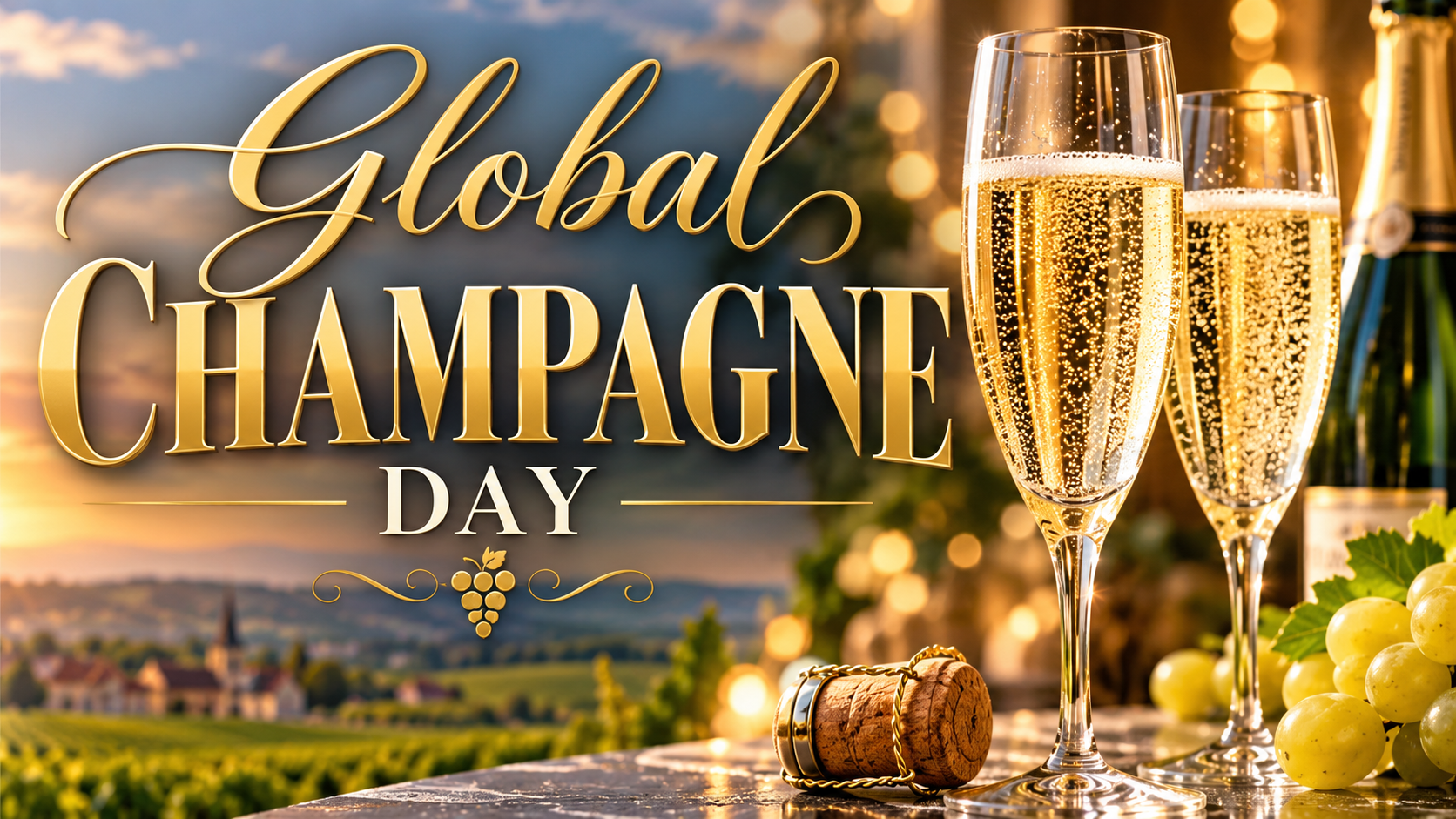
There is something about the sound of a champagne cork popping that immediately feels like a celebration. Whether it marks a wedding, anniversary, promotion, holiday, championship, birthday, or simply a memorable evening with friends, champagne has become one of the world’s most recognizable symbols of celebration.
Global Champagne Day is an opportunity to raise a glass to the history, craftsmanship, culture, and traditions surrounding this famous sparkling wine. It is also a day to appreciate the people and region responsible for producing authentic Champagne.
Champagne is more than bubbles in a beautiful glass. Behind every bottle is a fascinating story involving geography, generations of winemaking knowledge, careful production, and centuries of cultural tradition.
So, whether you already love Champagne or simply enjoy learning about the history behind international celebrations, Global Champagne Day offers plenty to discover.
What Is Global Champagne Day?
Global Champagne Day is a worldwide celebration dedicated to Champagne and the traditions surrounding it.
Wine lovers, restaurants, wineries, retailers, hospitality professionals, and Champagne producers may mark the occasion by opening bottles, hosting tastings, preparing special meals, or sharing information about Champagne.
It is especially fitting that the celebration takes place during the fall, when many people begin preparing for the holiday season. Champagne has long been associated with Christmas, New Year’s Eve, weddings, anniversaries, and other important occasions.
But Global Champagne Day reminds us that Champagne does not have to be reserved exclusively for major celebrations.
Sometimes simply being together is worth celebrating.
Champagne Comes From Champagne
One of the most important things to understand about Champagne is that the name represents more than a style of sparkling wine.
Authentic Champagne comes from the Champagne region of France.
Sparkling wines are produced throughout the world, and many are excellent. However, wines produced elsewhere generally use other names rather than Champagne.
The Champagne region’s climate, soil, vineyards, grape varieties, and centuries of winemaking experience have helped create the distinctive characteristics associated with the wine.
This connection between a product and its place of origin is one reason Champagne has such a powerful identity.
When you open a bottle of Champagne, you are experiencing something connected to a particular region and generations of winemaking tradition.
The Long History of Champagne
Wine production in the Champagne region stretches back centuries.
However, the sparkling Champagne we recognize today developed gradually.
Historically, bubbles in wine were not always considered desirable. Fermentation could stop during colder winter temperatures and begin again as temperatures increased. When fermentation restarted inside a sealed container, carbon dioxide could become trapped in the wine.
That created bubbles.
Eventually, improvements in bottles, closures, blending, and production techniques helped winemakers deliberately produce sparkling wines with greater consistency.
Over time, Champagne developed an international reputation.
European royal courts and wealthy families helped make it fashionable, and its connection with luxury and important occasions continued growing.
By the 18th and 19th centuries, Champagne houses were expanding their businesses and exporting bottles around the world.
Champagne eventually became something much larger than wine.
It became a symbol.
Why Champagne Became the Drink of Celebration
Think about some of life’s biggest moments.
A newly married couple raises Champagne glasses.
Friends toast a promotion.
Families celebrate an anniversary.
Athletes sometimes spray sparkling wine after winning championships.
At midnight on New Year’s Eve, millions of people around the world raise glasses while welcoming another year.
Why Champagne?
Part of the answer comes from history.
For generations, Champagne was associated with royalty, wealth, prestige, and luxury. Because it was often served during important occasions, people gradually connected Champagne itself with celebration.
Eventually, that tradition spread far beyond wealthy social circles.
Today, opening sparkling wine often communicates one simple message:
Something special is happening.
That symbolism may be Champagne’s greatest cultural legacy.
What Makes Champagne Sparkle?
Those famous bubbles aren’t simply added to traditional Champagne like carbonation is added to a soft drink.
Champagne undergoes a production process involving a second fermentation in the bottle.
After the initial wine is produced, winemakers create a blend and prepare the wine for another fermentation. Yeast and sugar are introduced, and the bottle is sealed.
During the second fermentation, carbon dioxide develops.
Because the bottle is sealed, that gas cannot escape.
Instead, it dissolves into the wine.
When the bottle is eventually opened, the pressure is released and the carbon dioxide produces the streams of bubbles associated with Champagne.
The bottles then undergo additional steps involving aging and removing the yeast sediment before being prepared for sale.
It is a labor-intensive process requiring patience and expertise.
The Grapes Behind Champagne
Several grape varieties are permitted in Champagne production, although three are particularly famous:
Chardonnay
Chardonnay can contribute freshness, citrus characteristics, elegance, and acidity.
Pinot Noir
Pinot Noir can provide body, structure, and depth.
Meunier
Meunier often contributes fruitiness and approachability.
Winemakers can combine grapes from different vineyards, varieties, and sometimes different years to create a particular house style.
That blending process is part science, part tradition, and part art.
What Does Brut Mean?
Anyone shopping for Champagne has probably noticed words such as Brut, Extra Brut, or Demi-Sec on bottles.
These terms generally indicate sweetness levels.
Brut is among the most common styles and is relatively dry.
Extra Brut is even drier.
Brut Nature contains very little added sweetness.
Moving toward sweeter styles, consumers may encounter terms including Extra Dry, Sec, and Demi-Sec.
Interestingly, Extra Dry is actually sweeter than Brut despite what the name might suggest.
Understanding these classifications can make choosing Champagne easier.
Someone who prefers crisp, dry sparkling wine might gravitate toward Brut, while someone who enjoys something sweeter might prefer Demi-Sec.
Champagne and Food
Champagne is often treated primarily as a toast, but it can also be remarkably versatile with food.
Its acidity and bubbles can complement rich, salty, creamy, or fried dishes.
Depending on the Champagne style, possible pairings include seafood, oysters, smoked salmon, cheeses, chicken, French fries, potato chips, sushi, creamy pasta dishes, appetizers, fruit, pastries, and desserts.
Yes, even something as simple as French fries can work surprisingly well.
You don’t necessarily need an elaborate gourmet meal.
Part of the fun of Global Champagne Day can be experimenting with combinations you might not normally consider.
Choosing the Right Glass
The tall, narrow Champagne flute became popular because its shape helps showcase the bubbles beautifully.
But it isn’t the only option.
Some wine professionals prefer glasses with slightly wider bowls because they provide more room for Champagne’s aromas to develop.
Then there is the coupe—the shallow, wide Champagne glass associated with vintage Hollywood parties and elegant celebrations.
Each glass creates a slightly different experience.
For a casual Global Champagne Day celebration, however, don’t worry too much about having the “perfect” glass.
The people around the table matter more than the stemware.
How to Properly Open Champagne
Opening Champagne can be exciting, but remember that the bottle contains significant pressure.
The goal isn’t necessarily to launch the cork across the room.
First, chill the bottle properly. Remove the foil, loosen the wire cage while maintaining control of the cork, and keep the bottle pointed away from yourself and everyone around you.
Hold the cork securely while slowly rotating the bottle.
With controlled pressure, the cork should gradually release.
Ideally, you’ll hear a gentle pop rather than an explosion.
And unless you’re celebrating a championship victory, keeping the Champagne inside the bottle is generally preferable to spraying it everywhere.
Fun Ways to Celebrate Global Champagne Day
Global Champagne Day can be as simple or elaborate as you want.
You might organize a small tasting featuring several Champagne styles, prepare a dinner built around Champagne-friendly foods, learn about the Champagne region of France, or research the differences between Champagne and other sparkling wines.
You could also create a Champagne-and-cheese board, make Champagne cocktails, visit a wine shop for recommendations, or simply enjoy a glass while spending time with someone important to you.
If you don’t drink alcohol, you can still participate in the spirit of the occasion.
Non-alcoholic sparkling wines, sparkling grape juice, mocktails, or sparkling cider can provide the celebratory experience without alcohol.
The most important part isn’t what is inside the glass.
It’s recognizing something worth celebrating.
Champagne vs. Other Sparkling Wines
Champagne may be the world’s most famous sparkling wine, but it certainly isn’t the only one.
Italy is famous for Prosecco.
Spain is known for Cava.
France produces sparkling wines outside Champagne as well, including various styles of Crémant.
Sparkling wines are also produced throughout the United States and in countries including Australia, Germany, South Africa, and England.
Each region has its own grapes, production techniques, climate, and traditions.
Exploring these differences can make Global Champagne Day an educational experience as well as a celebration.
Champagne Cocktails
Champagne can also serve as the foundation for classic cocktails.
One of the best-known examples is the traditional Champagne Cocktail, typically made with a sugar cube, bitters, Champagne, and a citrus garnish.
Another famous option is the French 75, traditionally combining gin, lemon juice, sugar, and Champagne.
Mimosas combine sparkling wine with orange juice and remain popular for brunch.
There is also the Kir Royale, combining Champagne with crème de cassis.
These drinks demonstrate how Champagne can move beyond the traditional toast and become part of creative cocktail culture.
More Than Luxury
Champagne’s reputation for luxury is undeniable.
But perhaps Global Champagne Day offers an opportunity to think differently about celebration itself.
We sometimes believe celebrations should only happen when something enormous occurs.
A wedding.
A graduation.
A new job.
A major birthday.
A championship.
But life contains smaller victories that deserve recognition too.
Finishing a difficult week can be worth celebrating.
Reconnecting with an old friend can be worth celebrating.
Reaching a personal goal can be worth celebrating.
Having dinner with people you love can be worth celebrating.
Sometimes waking up and realizing you made it through something you once thought you couldn’t survive is worth celebrating.
Life doesn’t always give us perfect circumstances.
That doesn’t mean we have to stop recognizing the good moments when they arrive.
A Toast to Life
Perhaps that is why Champagne has remained such a powerful symbol for generations.
Opening a bottle represents optimism.
It says that this moment matters.
It says that something—or someone—is worth raising a glass to.
Every person has something different they might toast.
Some toast new beginnings.
Some celebrate achievements.
Others celebrate friendships, family, love, healing, or second chances.
And sometimes the toast is simply:
We’re still here.
There is something meaningful about recognizing that.
Celebrating Responsibly
If Champagne or another alcoholic beverage is part of your celebration, enjoy it responsibly.
Never drink and drive. Arrange a designated driver, rideshare, taxi, public transportation, or another safe way home when necessary.
Champagne can be part of a memorable occasion, but safety should always remain more important than the drink.
Non-alcoholic alternatives can also make celebrations welcoming to people who don’t drink.
Final Thoughts
Global Champagne Day celebrates one of the world’s most recognizable wines, but its meaning extends beyond vineyards and bottles.
Champagne represents history, craftsmanship, tradition, and celebration.
For centuries, those famous bubbles have accompanied people during some of life’s most important moments.
But you don’t need a wedding, promotion, anniversary, or New Year’s Eve countdown to appreciate the idea behind the tradition.
Life itself gives us reasons to celebrate.
Some are enormous.
Others are quiet and easily overlooked.
Global Champagne Day can serve as a reminder to recognize both.
Spend time with people you care about. Celebrate how far you’ve come. Remember the people who helped you along the way. Appreciate the moments that make ordinary days meaningful.
And whether you’re raising Champagne, sparkling cider, a mocktail, or simply your favorite drink, make the toast count.
What person, accomplishment, memory, or moment in your life would you raise a glass to today?


Leave a ReplyCancel reply