
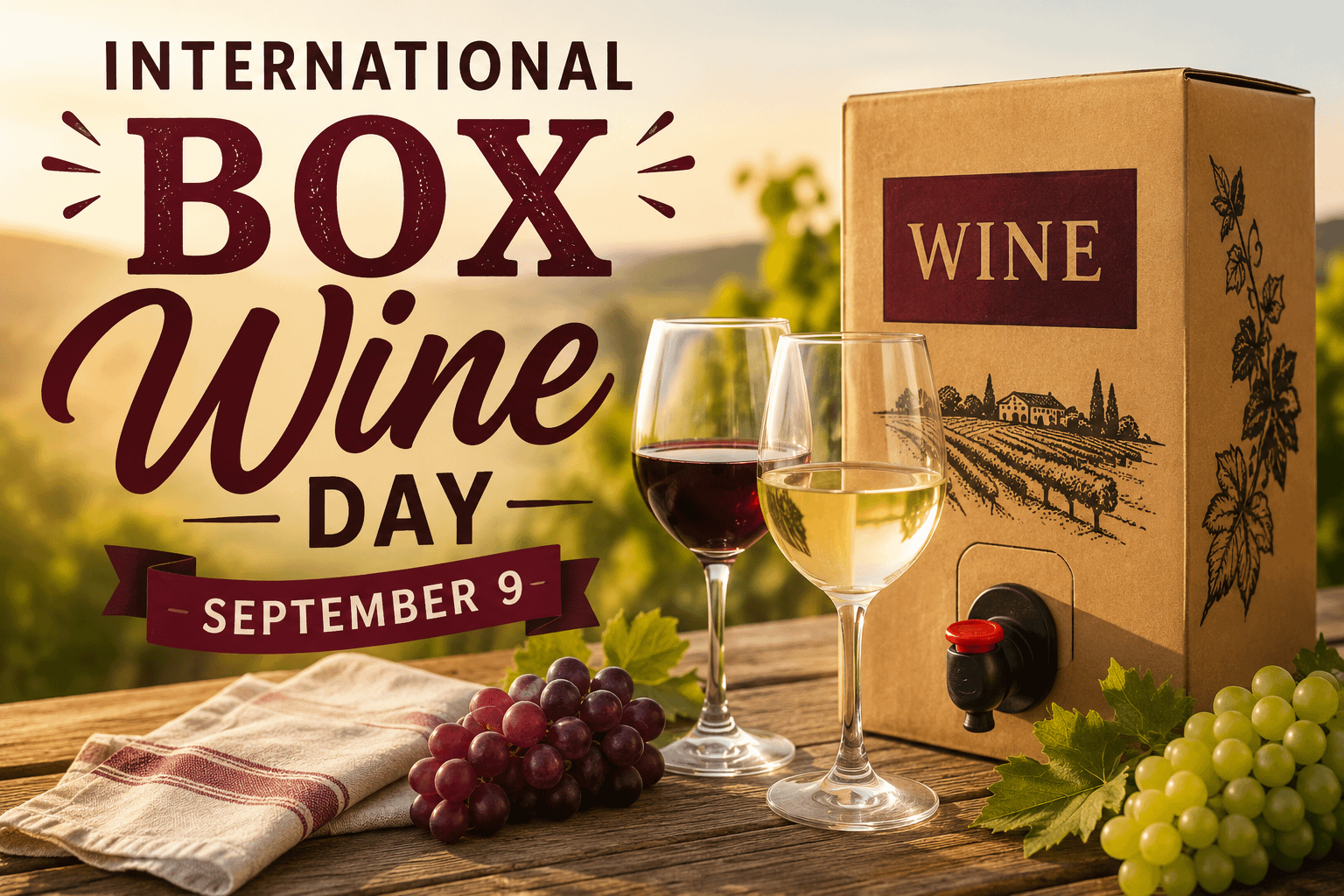
Wine celebrations often bring to mind elegant bottles, carefully selected vintages, corkscrews, and perfectly shaped glasses. But International Box Wine Day gives wine lovers an opportunity to celebrate a very different side of wine culture—one that is casual, convenient, affordable, and increasingly respected.
Observed each year on September 9, International Box Wine Day celebrates boxed wine and the people who appreciate the simplicity of pouring a glass straight from the tap. Once dismissed as an inexpensive alternative to bottled wine, boxed wine has undergone a major transformation. Today, consumers can find everything from approachable everyday reds and whites to premium wines packaged inside boxes.
The holiday is a reminder that enjoying wine doesn’t always have to involve expensive bottles or formal occasions. Sometimes all you need is good company, a comfortable setting, and a box ready to pour.
What Is International Box Wine Day?
International Box Wine Day is a celebration dedicated to wine packaged in boxes rather than traditional glass bottles.
Boxed wine typically consists of a cardboard outer container holding a flexible, airtight bag filled with wine. A small tap or spout allows the wine to be poured without removing the bag from the box.
The packaging might not carry the romance associated with pulling a cork from a bottle, but it offers some practical advantages that have helped boxed wine develop a loyal following.
International Box Wine Day is an opportunity to recognize those advantages while encouraging wine drinkers to reconsider some of the stereotypes surrounding boxed wine.
After all, packaging doesn’t necessarily determine what’s inside.
The History of Boxed Wine
Although humans have been producing wine for thousands of years, boxed wine is a relatively modern invention.
The concept began developing during the 20th century as winemakers searched for alternative methods of storing and distributing wine. One of the most important innovations was the bag-in-box packaging system.
Instead of pouring wine directly into a cardboard container, producers place it inside a flexible plastic bag. The bag is then protected by the cardboard box.
As wine is dispensed, the bag contracts.
This design significantly reduces the amount of air that reaches the remaining wine, helping it stay fresh longer after opening compared with many traditional bottles.
The concept became particularly popular in Australia before spreading into other wine markets around the world.
Over time, boxed wine became closely associated with inexpensive table wines and large gatherings. That reputation followed the format for decades.
But things have changed.
Modern winemakers increasingly recognize that boxes are simply another form of packaging. Higher-quality wines have entered the category, giving consumers far more choices than previous generations had.
Boxed Wine Has Come a Long Way
Mention boxed wine to someone who remembers drinking it decades ago, and you might receive a skeptical reaction.
For years, boxed wine had an image problem.
It was frequently viewed as something purchased primarily because it was inexpensive. Wine enthusiasts often considered bottled wine more sophisticated, while boxes were associated with parties, college gatherings, picnics, and budget-conscious households.
That perception doesn’t tell the whole story anymore.
Today’s boxed-wine market includes many different styles and quality levels. Consumers can find varieties such as:
- Cabernet Sauvignon
- Pinot Noir
- Merlot
- Chardonnay
- Sauvignon Blanc
- Pinot Grigio
- Rosé
- Red blends
- White blends
The growing selection has helped introduce boxed wine to consumers who might previously have ignored it.
Rather than being embarrassed about putting a box of wine on the table, some wine drinkers now intentionally choose boxed wine because of its practicality.
Why Boxed Wine Stays Fresh Longer
One of boxed wine’s greatest advantages becomes noticeable after you open it.
Opening a traditional bottle exposes the wine to oxygen. Oxygen can initially help certain wines open up and develop their aromas, but prolonged exposure eventually causes oxidation.
Once oxidation progresses, the wine’s flavor and aroma begin deteriorating.
That’s why an opened bottle of wine generally shouldn’t be forgotten in the refrigerator for weeks.
Boxed wine works differently.
Inside the cardboard box is a sealed bag. When you pour wine through the tap, the bag gradually collapses rather than filling with outside air.
Less oxygen reaches the remaining wine.
As a result, many boxed wines can maintain their quality for several weeks after opening when stored according to the producer’s directions.
That makes the format particularly useful for someone who enjoys an occasional glass but doesn’t want to finish an entire bottle within a few days.
You can pour what you want and save the rest for another evening.
More Wine, Less Packaging
Another obvious advantage of boxed wine is capacity.
Many standard wine bottles contain 750 milliliters. A common three-liter box contains the equivalent of approximately four standard bottles of wine.
That can make boxed wine especially convenient when serving larger groups.
Instead of opening bottle after bottle, guests can simply use the built-in tap.
There are also practical packaging advantages. Glass bottles are heavy, take up considerable space, and require substantial packaging during transportation.
A cardboard box is generally lighter and easier to stack and transport.
The environmental picture depends on materials, manufacturing, recycling availability, transportation, and other factors, but the reduced weight and packaging efficiency are among the reasons boxed formats have attracted interest from environmentally conscious consumers and producers.
Perfect for Casual Gatherings
Not every glass of wine needs to be served during a formal dinner.
Boxed wine fits particularly well with casual occasions.
Think about a backyard barbecue with friends and family. Instead of worrying about opening multiple bottles, you can place a box of red, white, or rosé on a table and allow adult guests to serve themselves responsibly.
The same convenience can work well for picnics, camping trips, game nights, holiday gatherings, cookouts, birthday parties, tailgating events where permitted, and other relaxed celebrations.
Because boxes are generally easier to transport than several glass bottles, they’re particularly useful when portability matters.
And there are no corks to lose or corkscrews to remember.
Boxed Wine and Food Pairings
International Box Wine Day is an excellent excuse to experiment with wine and food pairings.
You don’t need an expensive meal, either.
Boxed wine is perfectly suited to everyday foods.
A bold Cabernet Sauvignon or red blend can work wonderfully alongside grilled steak, hamburgers, barbecue ribs, roasted meats, or hearty pasta dishes.
Pinot Noir can complement roasted chicken, mushrooms, pork, salmon, and earthy dishes.
Chardonnay pairs nicely with chicken, seafood, creamy pasta, cheeses, and buttery dishes.
Sauvignon Blanc is a refreshing choice alongside salads, seafood, grilled vegetables, goat cheese, and citrus-forward dishes.
Rosé is especially versatile. Try it with pizza, charcuterie, grilled chicken, seafood, tacos, fruit, or lighter appetizers.
One of the pleasures of wine is discovering combinations that work for your individual taste.
There aren’t always rigid rules.
If you enjoy the combination, it’s a good pairing for you.
Boxed Wine and Pizza
There may be few combinations more appropriate for International Box Wine Day than pizza and wine.
Pizza is casual, customizable, shareable, and perfect for gatherings—the same environments where boxed wine shines.
A pepperoni or meat-lover’s pizza can pair beautifully with a medium- to full-bodied red.
A vegetable pizza may work well with Pinot Noir, Sauvignon Blanc, or a dry rosé.
White pizzas featuring garlic, chicken, spinach, mushrooms, or creamy sauces can pair nicely with Chardonnay.
Even a simple cheese pizza gives you plenty of pairing possibilities.
Invite a few friends over, order several different pizzas, open a couple varieties of boxed wine, and turn September 9 into an informal tasting night.
Create Your Own Boxed Wine Tasting
One fun way to celebrate International Box Wine Day is by conducting a blind tasting.
Choose several boxed wines from different producers or varieties.
Cover the boxes so participants can’t see the brands, then pour small samples into numbered glasses.
Have everyone evaluate each wine based on:
Appearance: What color is the wine?
Aroma: What fruits, spices, herbs, flowers, or other aromas can you identify?
Flavor: Is it fruity, dry, sweet, earthy, spicy, crisp, rich, or smooth?
Body: Does it feel light, medium, or full-bodied?
Finish: How long do the flavors remain after swallowing?
Overall enjoyment: Would you drink another glass?
The results might surprise everyone.
Removing the packaging and brand name can eliminate preconceived opinions about what a boxed wine is “supposed” to taste like.
Boxed Wine Can Help Reduce Waste
Imagine opening a bottle because you want one glass of wine with dinner.
You drink the glass, put the cork back into the bottle, and place it in the refrigerator.
Then life gets busy.
Several days pass.
Eventually, you remember the bottle and discover that the wine no longer tastes as enjoyable as it did when you opened it.
For occasional wine drinkers, this can result in wasted wine.
The bag-in-box system helps address that problem by limiting the wine’s exposure to oxygen.
Instead of feeling pressured to finish an entire bottle quickly, you can pour individual servings over a longer period.
That convenience is one of the strongest arguments for boxed wine.
Don’t Judge Wine by Its Container
Wine culture can sometimes become overly focused on appearances.
Beautiful labels, elaborate bottles, expensive corks, famous regions, vintage years, and impressive prices can influence expectations before someone ever tastes what’s inside.
International Box Wine Day challenges some of those assumptions.
A cardboard box isn’t glamorous.
That’s part of its charm.
Boxed wine isn’t pretending to be something it’s not. It’s designed around practicality.
You open the tap.
You pour the wine.
You enjoy it.
And when producers put quality wine inside practical packaging, consumers get the best of both worlds.
How to Celebrate International Box Wine Day
September 9 offers plenty of easy ways for adults of legal drinking age to participate.
Pick up a boxed wine you’ve never tried and compare it with your usual bottled selection.
Host a casual wine tasting and ask friends to bring different varieties.
Plan a pizza-and-wine evening.
Build a charcuterie board with cheeses, crackers, cured meats, nuts, fruit, olives, and other snacks.
Enjoy a glass with dinner.
Take a boxed wine to an appropriate adult gathering where alcohol is permitted.
You could even conduct a blind comparison between boxed and bottled wines at similar price points.
The goal doesn’t need to be proving that one packaging format is superior.
It’s simply about exploring something different.
A Few Tips for Enjoying Boxed Wine
Boxed wine may be casual, but a few simple steps can improve the experience.
Serve it at the right temperature. White and rosé wines generally taste better chilled, while many reds are best served slightly cooler than typical indoor room temperature.
Use a wine glass when possible. The shape of a glass can help concentrate aromas and improve the overall tasting experience.
Store it properly. Follow the producer’s storage recommendations, particularly after opening.
Check the packaging date or freshness information. Boxed wines are generally designed for relatively early consumption rather than years of cellar aging.
Experiment with varieties. If one boxed wine doesn’t impress you, don’t assume they’re all alike. Producers, grapes, regions, and winemaking methods can produce dramatically different results.
Most importantly, drink what you actually enjoy.
Wine Doesn’t Have to Be Complicated
Perhaps the best lesson behind International Box Wine Day is that wine doesn’t have to feel intimidating.
You don’t need to memorize every grape-growing region.
You don’t need to know hundreds of tasting terms.
You don’t need an expensive collection.
And you certainly don’t need to pretend you enjoy a wine simply because someone tells you it’s prestigious.
Wine can simply be something enjoyed responsibly with a good meal or among friends.
Boxed wine embraces that uncomplicated approach.
There’s something refreshingly straightforward about walking over to a box, pressing the tap, filling your glass, and returning to the conversation.
No ceremony required.
Responsible Enjoyment Matters
As with every celebration involving alcohol, International Box Wine Day should be enjoyed responsibly.
Because boxed wine contains multiple bottle equivalents, it can be harder to visually recognize how much has been consumed. With a bottle, you can easily see the wine level dropping. With an opaque box, that’s not always possible.
Measure servings when necessary, pace yourself, eat while drinking, alternate alcoholic beverages with water, and never drive while impaired.
Anyone who doesn’t drink alcohol can still participate in a gathering with alcohol-free wine alternatives, sparkling juices, mocktails, or other nonalcoholic beverages.
A celebration should always be about enjoying the people and experience—not about how much anyone drinks.
International Box Wine Day Is a Celebration of Keeping It Simple
International Box Wine Day may not have the elegance associated with some traditional wine celebrations, but that’s precisely what makes it enjoyable.
It celebrates convenience.
It celebrates affordability.
It celebrates innovation in packaging.
And most importantly, it reminds us that good experiences don’t necessarily have to come wrapped in expensive packages.
Boxed wine has evolved considerably from the stereotypes that once defined it. With more producers exploring the format and consumers becoming increasingly comfortable with alternative packaging, the humble wine box has earned a legitimate place at the table.
So when September 9 arrives, grab your favorite boxed red, white, rosé, or blend, prepare something delicious to eat, invite a few friends over, and raise a glass to a format that proves wine doesn’t always need a cork to be worth enjoying.
What type of boxed wine would you choose to pour for International Box Wine Day—red, white, rosé, or something completely different?
Leave a ReplyCancel reply