
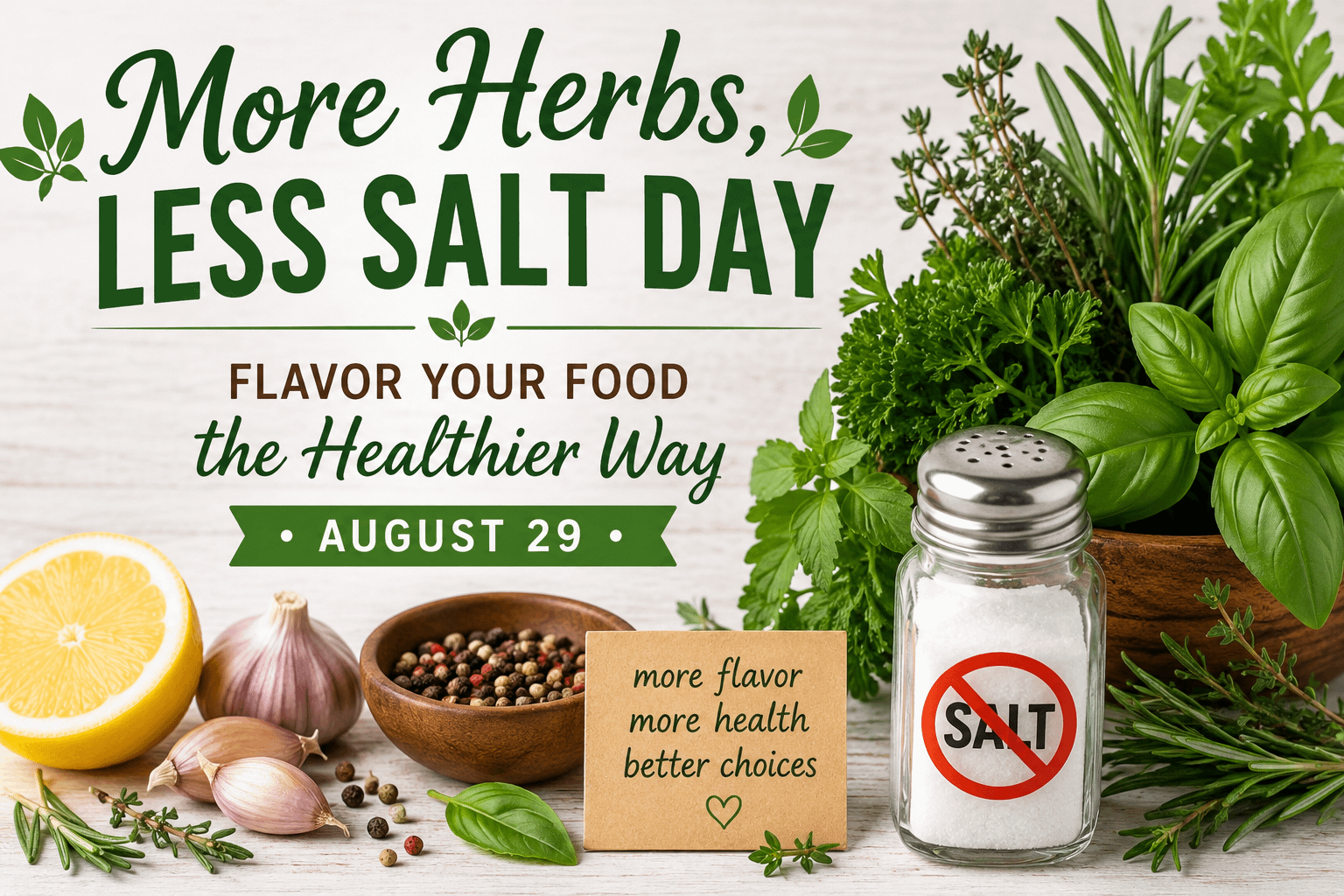
Every year on August 29, More Herbs, Less Salt Day encourages us to make a simple change in the kitchen: reach for herbs and spices before reaching for the salt shaker.
It may sound like a small adjustment, but it can completely change the way we think about flavor.
Salt has been used for thousands of years to season and preserve food, and sodium itself is something our bodies need in appropriate amounts. The problem is that modern diets can contain a considerable amount of sodium from packaged foods, restaurant meals, sauces, condiments, snacks, processed meats, soups, and other everyday foods.
That means the salt we sprinkle onto our meals isn’t always the only—or even the biggest—source of sodium in our diets.
More Herbs, Less Salt Day gives us an opportunity to pay closer attention to what we’re eating while discovering something exciting along the way:
Food doesn’t need to be heavily salted to be delicious.
Herbs, spices, citrus, garlic, ginger, peppers, vinegars, and countless other ingredients can create incredible layers of flavor.
August 29 is the perfect day to explore them.
What Is More Herbs, Less Salt Day?
More Herbs, Less Salt Day is observed annually on August 29 as a reminder to explore healthier and more creative ways to season food.
The idea is simple.
Instead of automatically adding more salt, experiment with ingredients such as:
- Basil
- Rosemary
- Thyme
- Oregano
- Parsley
- Cilantro
- Dill
- Mint
- Sage
- Chives
- Garlic
- Ginger
- Black pepper
- Paprika
- Cumin
- Turmeric
- Chili powder
- Lemon
- Lime
- Vinegar
The goal isn’t necessarily to eliminate salt completely.
Instead, the day encourages awareness, moderation, experimentation, and creativity.
You might be surprised by how much flavor you can create without relying primarily on sodium.
Why Salt Has Become Such an Important Part of Food
Salt has played an enormous role in human history.
Long before refrigerators and modern food preservation techniques existed, salt helped people preserve meat, fish, vegetables, and other foods for longer periods.
It became so valuable that salt production and trade helped shape economies and communities around the world.
Salt remains an essential ingredient in cooking today.
It can enhance sweetness, reduce bitterness, improve texture, preserve foods, and bring other flavors forward.
The message of More Herbs, Less Salt Day isn’t that salt is the enemy.
Rather, it’s about recognizing that salt is only one tool in an enormous culinary toolbox.
Sometimes we simply use it because it’s familiar.
This observance encourages us to open the rest of the toolbox.
Understanding Sodium in Our Diets
Sodium is an essential mineral that helps the body perform important functions, including maintaining fluid balance and supporting proper nerve and muscle function.
However, consuming too much sodium regularly can be associated with increased blood pressure and greater cardiovascular risk for some people.
One challenge is that sodium can appear in places we don’t immediately expect.
You might carefully avoid adding salt at dinner while still consuming substantial sodium throughout the day from prepared foods.
Common sources can include:
- Pizza
- Sandwiches
- Deli meats
- Bacon and sausage
- Canned soups
- Frozen dinners
- Chips
- Crackers
- Sauces
- Salad dressings
- Fast food
- Restaurant meals
- Packaged seasoning mixes
- Certain breads and baked goods
That’s why reading nutrition labels can be useful.
Instead of assuming something is low in sodium because it doesn’t taste especially salty, check the label and compare similar products.
The Wonderful World of Herbs
One of the best parts about celebrating More Herbs, Less Salt Day is discovering just how many herbs are available.
Each herb brings something different to the kitchen.
Some are bright and refreshing.
Others are earthy.
Some are sweet.
Others are peppery or slightly bitter.
Learning which herbs complement different foods can completely transform everyday cooking.
Let’s explore some favorites.
Basil
Basil is one of the world’s most recognizable culinary herbs.
Its slightly sweet, peppery aroma pairs beautifully with:
- Tomatoes
- Pasta
- Pizza
- Chicken
- Mozzarella
- Vegetables
- Salads
- Soups
Fresh basil can instantly brighten a simple tomato salad.
Try combining sliced tomatoes, fresh basil, mozzarella, olive oil, and a splash of balsamic vinegar.
You may find that the fresh ingredients provide so much flavor that very little additional salt is needed.
Rosemary
Rosemary has a powerful woody aroma that works especially well with roasted foods.
Try rosemary with:
- Potatoes
- Chicken
- Turkey
- Pork
- Carrots
- Squash
- Bread
- Beans
One easy combination is roasted potatoes tossed with olive oil, rosemary, garlic, and black pepper.
The rosemary and garlic provide a strong flavor profile without requiring heavy seasoning with salt.
Thyme
Thyme is incredibly versatile.
Its earthy flavor works beautifully in:
- Soups
- Stews
- Chicken
- Vegetables
- Beans
- Sauces
- Roasted meats
- Potatoes
Because thyme blends well with other herbs, it’s also a great ingredient in homemade seasoning mixes.
Oregano
Oregano is famous for its role in Mediterranean and Italian-inspired cooking.
It pairs well with:
- Tomatoes
- Pasta sauces
- Pizza
- Chicken
- Fish
- Vegetables
- Beans
- Salads
Combine oregano with garlic, basil, black pepper, and red pepper flakes for a flavorful Italian-style seasoning mixture.
Parsley
Parsley sometimes gets dismissed as decoration, but it can contribute bright, fresh flavor to meals.
Try parsley with:
- Potatoes
- Fish
- Chicken
- Pasta
- Eggs
- Soups
- Salads
- Vegetables
Fresh parsley combined with garlic and lemon can create an especially refreshing flavor.
Cilantro
Cilantro has a bold, distinctive flavor commonly found in Mexican, Latin American, Indian, Middle Eastern, and Asian cuisines.
Try it with:
- Tacos
- Salsa
- Rice
- Beans
- Chicken
- Fish
- Soups
- Salads
- Lime
Fresh cilantro and lime juice can transform a simple bowl of rice and beans.
Dill
Dill brings a fresh, slightly grassy flavor that pairs wonderfully with:
- Salmon
- Other fish
- Potatoes
- Cucumbers
- Yogurt sauces
- Eggs
- Salads
Try mixing fresh dill with plain Greek yogurt, lemon juice, garlic, and black pepper for a simple sauce.
Mint
Mint isn’t just for desserts or beverages.
Fresh mint can add brightness to:
- Fruit
- Salads
- Yogurt
- Lamb
- Chicken
- Vegetables
- Tea
- Mocktails
Watermelon, cucumber, mint, and lime can create a refreshing summer combination perfect for late August.
Sage
Sage has a strong earthy flavor that works particularly well with autumn-inspired dishes.
Try sage with:
- Chicken
- Turkey
- Pork
- Squash
- Potatoes
- Stuffing
- Beans
Because sage has such a distinctive flavor, even a small amount can dramatically change a dish.
Chives
Chives provide a mild onion-like flavor without overwhelming other ingredients.
They’re delicious with:
- Eggs
- Potatoes
- Soups
- Salads
- Vegetables
- Yogurt dips
Sprinkling fresh chives over scrambled eggs or baked potatoes can provide extra flavor and color.
Don’t Forget About Spices
Herbs are only part of the story.
Your spice cabinet contains another world of possibilities.
Spices can provide heat, sweetness, smokiness, earthiness, warmth, or complexity.
Some useful options include:
Black pepper for sharpness and heat.
Paprika for mild sweetness and color.
Smoked paprika for rich, smoky flavor.
Cumin for warm, earthy depth.
Turmeric for earthiness and color.
Cinnamon for warmth in both sweet and savory dishes.
Ginger for bright, spicy flavor.
Cayenne pepper for heat.
Chili powder for bold Southwestern-inspired flavor.
Red pepper flakes for a quick spicy kick.
Combining herbs and spices is where cooking becomes especially interesting.
Garlic: One of the Kitchen’s Greatest Flavor Builders
If you’re trying to reduce your reliance on salt, garlic can become one of your best friends.
Fresh garlic, roasted garlic, garlic powder, and granulated garlic each provide slightly different experiences.
Roasting garlic is particularly interesting because it transforms garlic’s sharpness into something softer, sweeter, and richer.
Try roasted garlic with vegetables, potatoes, chicken, pasta, or homemade sauces.
Garlic also combines beautifully with herbs.
Some classic combinations include:
Garlic + rosemary + black pepper
Garlic + basil + oregano
Garlic + parsley + lemon
Garlic + thyme + paprika
With combinations like these, reducing salt doesn’t have to mean sacrificing flavor.
Citrus Can Make Food Come Alive
Sometimes a dish doesn’t need more salt.
It needs acidity.
Fresh lemon or lime juice can brighten food and make existing flavors stand out.
Try lemon with:
- Chicken
- Salmon
- Broccoli
- Asparagus
- Potatoes
- Pasta
- Salads
Try lime with:
- Tacos
- Chicken
- Rice
- Beans
- Avocado
- Corn
- Fish
Don’t forget the zest.
Lemon and lime zest contain aromatic oils that provide intense citrus flavor without adding sodium.
Vinegar Is Another Powerful Flavor Tool
Different vinegars can completely change a meal.
Experiment with:
- Balsamic vinegar
- Apple cider vinegar
- Red wine vinegar
- White wine vinegar
- Rice vinegar
A splash of vinegar can bring brightness and balance to vegetables, salads, marinades, beans, and sauces.
The key is experimentation.
You may discover that what you thought needed salt actually needed acidity.
Try Homemade Salt-Free Seasoning Blends
Making your own seasoning blends gives you more control over what’s going into your food.
Italian-Inspired Blend
Combine:
- Basil
- Oregano
- Thyme
- Rosemary
- Garlic powder
- Onion powder
- Black pepper
Use it on pasta, chicken, vegetables, potatoes, or homemade pizza.
Smoky Blend
Combine:
- Smoked paprika
- Garlic powder
- Onion powder
- Cumin
- Black pepper
- Chili powder
Try it on chicken, roasted vegetables, potatoes, or beans.
Lemon Herb Blend
Combine:
- Dried parsley
- Dill
- Thyme
- Garlic powder
- Onion powder
- Black pepper
- Dried lemon peel, if available
It’s especially good with fish and chicken.
Spicy Southwest Blend
Combine:
- Chili powder
- Cumin
- Paprika
- Garlic powder
- Onion powder
- Oregano
- Cayenne pepper
Use it for tacos, fajitas, beans, rice bowls, or grilled vegetables.
Making seasoning blends at home can also become a fun way to experiment with flavors you might otherwise overlook.
Fresh Herbs vs. Dried Herbs
Both fresh and dried herbs can be excellent.
You don’t need to choose one over the other.
Fresh herbs are especially useful when you want brightness and freshness.
Dried herbs are convenient because they can remain in your pantry and be ready whenever you need them.
Fresh herbs such as basil, cilantro, parsley, mint, dill, and chives are often delicious when added toward the end of cooking.
Dried herbs such as oregano, rosemary, thyme, and sage often work beautifully when they’re given time to cook and release their flavors.
Because dried herbs are generally more concentrated than fresh herbs, you typically need less.
Start Your Own Kitchen Herb Garden
More Herbs, Less Salt Day is a perfect excuse to start growing herbs.
And you don’t necessarily need a backyard.
Many herbs grow well in containers.
A sunny windowsill, patio, porch, balcony, or small outdoor area may be enough depending on the herb and local growing conditions.
Consider starting with:
- Basil
- Mint
- Rosemary
- Parsley
- Thyme
- Chives
- Cilantro
- Oregano
Growing your own herbs has several advantages.
You can pick what you need.
You may waste less.
Fresh herbs are readily available.
And gardening can make cooking more interactive.
There’s something satisfying about clipping fresh basil or rosemary from a plant and immediately adding it to dinner.
Make Vegetables More Exciting
One reason some people say they don’t enjoy vegetables is because they haven’t discovered preparation methods they actually like.
Plain steamed broccoli and roasted broccoli with garlic, lemon, black pepper, and herbs can taste like completely different foods.
Experiment with combinations such as:
Broccoli: garlic + lemon + black pepper
Carrots: thyme + black pepper + garlic
Zucchini: basil + oregano + garlic
Potatoes: rosemary + garlic + paprika
Cauliflower: turmeric + cumin + black pepper
Green beans: garlic + lemon + parsley
Corn: lime + chili powder + cilantro
Mushrooms: thyme + garlic + black pepper
Roasting vegetables can also bring out natural sweetness and deepen their flavor.
Give Your Taste Buds Time
If you’ve eaten heavily salted foods for years, lower-sodium meals may initially taste different.
That doesn’t necessarily mean they’ll always seem bland.
Taste preferences can adjust.
Instead of making a dramatic change overnight, gradually reduce the amount of salt you’re using while increasing other flavors.
Add garlic.
Try fresh herbs.
Experiment with pepper.
Squeeze lemon over the finished meal.
Add a splash of vinegar.
Use smoked paprika.
Try roasting instead of boiling.
Over time, you may begin noticing flavors you previously missed.
Watch for Sodium Beyond the Salt Shaker
One of the biggest lessons of More Herbs, Less Salt Day is that sodium awareness extends beyond table salt.
Take a look at some of the packaged foods in your kitchen.
Check the nutrition labels.
You might be surprised.
Compare similar products when shopping and see whether lower-sodium alternatives are available.
Canned beans, vegetables, soups, sauces, broths, frozen meals, and condiments can vary considerably between brands.
Small choices can make a difference.
Cooking More Meals at Home
Preparing meals at home gives you greater control over how they’re seasoned.
Instead of relying entirely on packaged sauces and seasoning packets, you can build flavors yourself.
For example, a simple chicken dinner could include:
Chicken seasoned with garlic, rosemary, thyme, paprika, and black pepper.
Roasted potatoes seasoned with rosemary and garlic.
Broccoli finished with lemon juice and black pepper.
Suddenly, you’ve created an entire meal packed with flavor without making salt the centerpiece.
Turn More Herbs, Less Salt Day Into a Family Challenge
Make August 29 interactive.
Place several herbs and spices on the kitchen counter and let everyone smell them.
Choose a familiar meal and experiment with different seasoning combinations.
Ask family members which combinations they prefer.
You could even conduct a taste test.
Try potatoes seasoned three different ways:
Rosemary + garlic
Paprika + black pepper
Parsley + lemon + garlic
Vote on the favorite.
Activities like this can teach children—and adults—that healthier cooking doesn’t have to mean boring cooking.
Explore Flavors From Around the World
Another great way to reduce reliance on salt is to explore cuisines known for using complex combinations of herbs, spices, aromatics, and acids.
Mediterranean-inspired cooking might incorporate:
Oregano, basil, rosemary, garlic, lemon, and olive oil.
Mexican-inspired cooking might feature:
Cilantro, cumin, chili peppers, lime, garlic, and oregano.
Indian-inspired cooking can include:
Turmeric, cumin, coriander, ginger, garlic, cardamom, and numerous other spices.
Middle Eastern-inspired cooking may feature:
Parsley, mint, cumin, sumac, garlic, and lemon.
Asian-inspired dishes might incorporate:
Ginger, garlic, scallions, chilies, citrus, herbs, and vinegars.
Exploring different culinary traditions reminds us that flavor can come from an extraordinary variety of ingredients.
Simple Ways to Celebrate More Herbs, Less Salt Day
You don’t need to completely redesign your diet.
Choose one or two simple activities.
You could:
- Cook one meal without adding salt at the table.
- Try a new herb.
- Buy a fresh herb you’ve never cooked with.
- Create a homemade salt-free seasoning blend.
- Read sodium labels on five foods in your pantry.
- Replace part of the salt in a recipe with herbs and spices.
- Add lemon or lime to a favorite meal.
- Start growing basil or another herb.
- Roast vegetables with herbs.
- Experiment with garlic.
- Compare lower-sodium versions of foods you regularly purchase.
- Make dinner from scratch.
- Try a new herb-and-spice combination.
- Share your favorite seasoning blend with someone else.
Even one small experiment can introduce you to a flavor you’ll continue using long after August 29.
More Flavor, Not Less
Perhaps the most important message of More Herbs, Less Salt Day is that reducing salt doesn’t have to mean reducing enjoyment.
Food is supposed to be flavorful.
It should smell wonderful.
It should look inviting.
It should be something we look forward to.
The goal is simply to expand our definition of flavor.
Salt is one flavor enhancer.
But so are garlic, ginger, lemon, lime, basil, rosemary, oregano, thyme, cilantro, mint, dill, paprika, cumin, pepper, vinegar, and dozens of other ingredients.
Once you start experimenting, your spice cabinet can become one of the most exciting places in your kitchen.
Small Changes Can Make a Difference
Healthy habits aren’t always created through dramatic transformations.
Sometimes they begin with small decisions.
Use slightly less salt today.
Add extra herbs tomorrow.
Read a nutrition label the next time you shop.
Try roasted garlic.
Grow some basil.
Squeeze fresh lemon over dinner.
Experiment with a spice you’ve never tried.
Those little choices can eventually become habits.
And habits can influence the way we eat for years.
Celebrate More Herbs, Less Salt Day on August 29
More Herbs, Less Salt Day gives us a chance to slow down and think about something we often do automatically: seasoning our food.
Before reaching for the salt shaker, open the spice cabinet.
Smell the rosemary.
Chop some basil.
Crush fresh garlic.
Slice a lemon.
Sprinkle on paprika.
Add fresh parsley.
Experiment.
Cooking becomes much more interesting when we stop depending on a single ingredient to create flavor.
This August 29, challenge yourself to prepare at least one meal where herbs, spices, aromatics, and fresh ingredients take center stage.
You might discover a new favorite recipe.
You might find a healthier way to prepare an old favorite.
Or you might simply discover that your food tastes even better than before.
More herbs. Less salt. More creativity. More possibilities. More flavor.
If you had to choose only one herb or spice to season your food for an entire week, which one would you choose—and what would you cook with it?
Leave a ReplyCancel reply