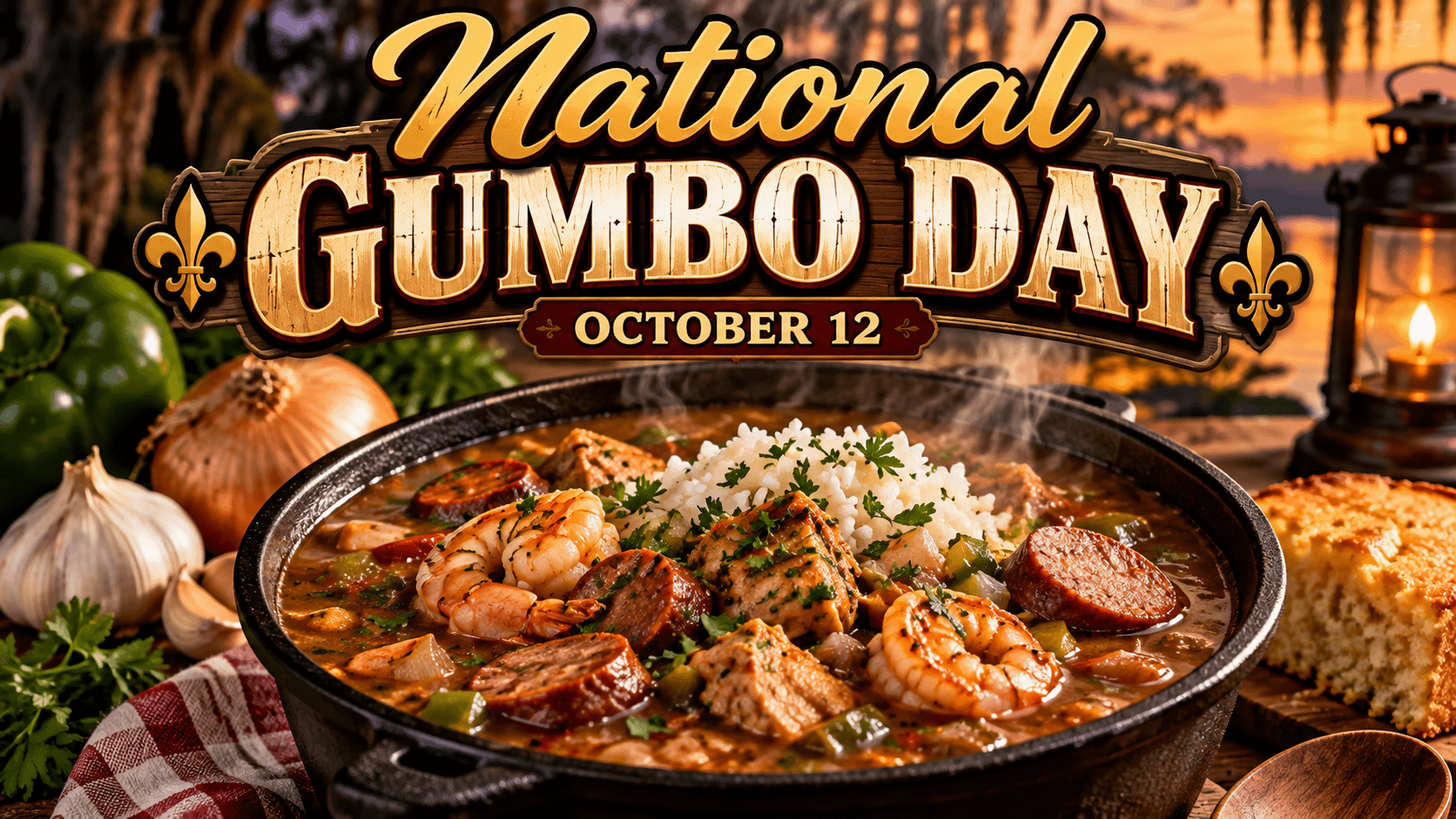
Every year on October 12, food lovers celebrate National Gumbo Day, a day dedicated to one of the most flavorful, comforting, and culturally rich dishes associated with Louisiana cuisine.
Gumbo is much more than a bowl of soup or stew. It represents generations of cooking traditions, cultural influences, family recipes, and communities gathering around the table. With its rich broth, vegetables, seasonings, meats, and seafood, gumbo is the kind of meal that warms you from the inside out.
Whether you prefer chicken and sausage gumbo, seafood gumbo, or a treasured family recipe passed down through generations, National Gumbo Day is the perfect excuse to put a big pot on the stove.
What Is Gumbo?
Gumbo is a hearty Louisiana dish generally made with a flavorful stock, vegetables, seasonings, and combinations of meat or seafood.
One of the most recognizable foundations of many gumbo recipes is the combination of onion, celery, and bell pepper, often called the “holy trinity” of Louisiana cooking.
Depending on the recipe, gumbo may include ingredients such as:
- Andouille sausage
- Chicken
- Shrimp
- Crab
- Crawfish
- Oysters
- Okra
- Filé powder
- Bell peppers
- Celery
- Onion
- Garlic
- Cajun or Creole seasonings
Many versions begin with a roux, traditionally made by cooking flour and fat together until the mixture develops a deep brown color and nutty flavor.
Gumbo is commonly served over rice, turning an already flavorful dish into a filling meal.
The Cultural Roots of Gumbo
Part of what makes gumbo so special is the mixture of culinary traditions behind it.
Louisiana’s food culture developed through the interaction of numerous peoples and traditions, including African, French, Spanish, Indigenous American, and other influences. Gumbo became one of the dishes most strongly associated with this cultural blending.
Even the word “gumbo” has historical connections to an African word for okra, an ingredient still found in many gumbo recipes today.
Over generations, families and communities developed their own versions. That is one reason there isn’t a single recipe that defines every bowl of gumbo.
Ask several Louisiana cooks how gumbo should be prepared, and you may receive several very different answers.
That’s part of its charm.
Cajun and Creole Gumbo
Gumbo is often associated with both Cajun and Creole cooking, although recipes vary considerably.
Some Creole-style versions may contain tomatoes, while many Cajun gumbo recipes rely heavily on a dark roux and traditionally leave tomatoes out.
Seafood gumbo might feature shrimp, crab, oysters, or crawfish. Chicken and sausage gumbo is another beloved version, especially when smoky andouille sausage is used.
There are also meatless traditions, including gumbo z’herbes, a greens-based Louisiana dish with deep cultural and religious history.
There really isn’t one universal gumbo.
The recipe often depends on the cook, family, region, available ingredients, and traditions passed down through generations.
The Secret Is Often in the Roux
For many gumbo cooks, everything begins with the roux.
A roux is made by slowly cooking flour with fat. As it cooks, the color gradually changes from pale to golden brown and eventually to a deep brown.
The darker it becomes, the deeper and more complex its flavor can become.
But making a dark roux requires attention.
It needs to be stirred carefully because flour can burn quickly. Once burned, the bitter flavor can affect the entire dish.
That patience is part of what makes homemade gumbo special.
You’re not simply throwing ingredients into a pot. You’re slowly building layers of flavor.
Chicken and Sausage Gumbo
One of the easiest versions to make at home is chicken and sausage gumbo.
Ingredients
For the roux:
1/2 cup vegetable oil
1/2 cup all-purpose flour
For the gumbo:
1 large onion, diced
1 green bell pepper, diced
2 celery stalks, diced
3 cloves garlic, minced
12 ounces andouille sausage, sliced
1 1/2 pounds boneless chicken thighs, cut into pieces
6 cups chicken stock
2 bay leaves
1 teaspoon smoked paprika
1 teaspoon dried thyme
1/2 teaspoon cayenne pepper, or to taste
1 teaspoon Cajun seasoning
Salt and black pepper to taste
2 green onions, sliced
Fresh parsley, chopped
Cooked white rice for serving
Directions
Begin by making the roux.
Heat the oil in a heavy pot or Dutch oven over medium to medium-low heat. Gradually whisk in the flour.
Continue cooking and stirring constantly until the roux becomes deep brown. Don’t rush this part. A good roux takes patience.
Once the roux reaches the desired color, add the onion, bell pepper, and celery. Cook for several minutes until the vegetables begin to soften.
Add the garlic and cook briefly.
Stir in the sausage and chicken.
Slowly add the chicken stock while stirring. Add the bay leaves, paprika, thyme, cayenne, Cajun seasoning, salt, and pepper.
Bring the mixture to a gentle simmer.
Allow the gumbo to cook until the chicken is tender and the flavors have had time to develop, roughly 45 minutes to an hour, stirring occasionally.
Remove the bay leaves.
Taste and adjust the seasonings.
Serve the gumbo in bowls with cooked white rice and finish with sliced green onions and fresh parsley.
Seafood Gumbo
If you’re a seafood lover, National Gumbo Day is also an excellent opportunity to make seafood gumbo.
Depending on what is available, you can use:
Shrimp, crab, crawfish, oysters, or combinations of several types of seafood.
Seafood should generally be added toward the end of cooking so it doesn’t become tough or overcooked.
A pot filled with rich stock, vegetables, seasonings, shrimp, crab, and rice can turn an ordinary October evening into something memorable.
Gumbo Gets Better With Time
Like many soups and stews, gumbo can taste even better after the flavors have had time to come together.
That makes it an excellent dish for gatherings.
Make a large pot, invite family or friends over, cook some rice, and allow everyone to serve themselves.
It is difficult to beat a steaming bowl of gumbo when the weather starts getting cooler.
How to Celebrate National Gumbo Day
The obvious way to celebrate October 12 is to eat gumbo.
Make your favorite recipe at home or visit a local restaurant that serves Louisiana, Cajun, or Creole cuisine.
If you’ve never made gumbo before, use National Gumbo Day as your reason to try.
You could also turn it into a family cooking night. Get everyone involved in chopping vegetables, preparing the rice, seasoning the gumbo, and setting the table.
If your family already has a gumbo recipe, today is a wonderful opportunity to preserve it. Write it down, including the little techniques that might never appear in a standard recipe.
Those small details are often what make family recipes special.
More Than Just Food
Some dishes are memorable because of how they taste.
Others become important because of the memories attached to them.
Gumbo can be both.
A large pot of gumbo is designed for sharing. It can bring people around the table, encourage conversation, and create memories that last long after the bowls have been emptied.
Food has always had an incredible ability to connect generations.
Recipes tell stories.
They remind us where people came from, what ingredients were available, how traditions evolved, and how families created something meaningful from what they had.
Gumbo is a powerful example of that history.
Celebrate With a Bowl
On October 12, celebrate National Gumbo Day by enjoying one of Louisiana’s most famous dishes.
Make chicken and sausage gumbo. Prepare a seafood version. Visit your favorite Cajun or Creole restaurant. Or finally ask a family member to teach you the gumbo recipe you’ve enjoyed for years.
However you celebrate, take your time.
Let the roux darken.
Let the gumbo simmer.
Fill the kitchen with the smell of onions, peppers, celery, sausage, spices, and stock.
Then gather around the table and enjoy a dish with generations of history behind it.
What’s your favorite kind of gumbo—chicken and sausage, seafood, or something completely different?